BENZODIAZEPINES Diazepam, Midazolam,
Temazepam etc.
WHY ?
The most common substance present in drug-induced deaths in
2018 were benzodiazepines, identified in 883 deaths (51%).
The rate of drug-induced deaths in 2018 was higher in Regional and
remote areas (7.2 per 100,000 population) compared with Major
cities (6.8 per 100,000 population).
Reference:
https://www.aihw.gov.au/reports/alcohol/alcohol-tobacco-other-
drugs-australia/contents/impacts/health-impacts
MECHANISM AND USE
Benzodiazepines potentiate the inhibitory effects of GABA throughout
the CNS, resulting in:
1) anxiolytic
2) sedative
3) hypnotic
4) muscle relaxant
5) antiepileptic effects.
Reference: Australian Medicines Handbook
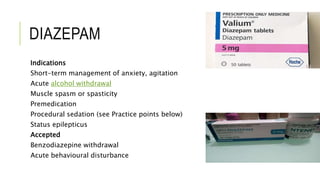
DIAZEPAM
Indications
Short-term management of anxiety, agitation
Acute alcohol withdrawal
Muscle spasm or spasticity
Premedication
Procedural sedation (see Practice points below)
Status epilepticus
Accepted
Benzodiazepine withdrawal
Acute behavioural disturbance
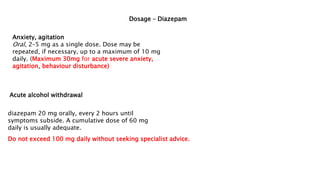
diazepam 20 mg orally, every 2 hours until
symptoms subside. A cumulative dose of 60 mg
daily is usually adequate.
Do not exceed 100 mg daily without seeking specialist advice.
Acute alcohol withdrawal
Anxiety, agitation
Oral, 2–5 mg as a single dose. Dose may be
repeated, if necessary, up to a maximum of 10 mg
daily. (Maximum 30mg for acute severe anxiety,
agitation, behaviour disturbance)
Dosage – Diazepam
MIDAZOLAM
Indications
Procedural sedation
Induction of anaesthesia
Sedation during ventilation
Premedication
Accepted
Status epilepticus
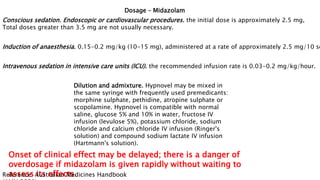
Dosage – Midazolam
Conscious sedation. Endoscopic or cardiovascular procedures. the initial dose is approximately 2.5 mg,
Total doses greater than 3.5 mg are not usually necessary.
Induction of anaesthesia. 0.15-0.2 mg/kg (10-15 mg), administered at a rate of approximately 2.5 mg/10 se
Intravenous sedation in intensive care units (ICU). the recommended infusion rate is 0.03-0.2 mg/kg/hour.
Dilution and admixture. Hypnovel may be mixed in
the same syringe with frequently used premedicants:
morphine sulphate, pethidine, atropine sulphate or
scopolamine. Hypnovel is compatible with normal
saline, glucose 5% and 10% in water, fructose IV
infusion (levulose 5%), potassium chloride, sodium
chloride and calcium chloride IV infusion (Ringer's
solution) and compound sodium lactate IV infusion
(Hartmann's solution).
Onset of clinical effect may be delayed; there is a danger of
overdosage if midazolam is given rapidly without waiting to
assess its effects.
Reference: Australian Medicines Handbook
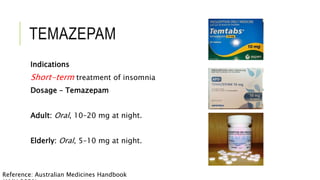
TEMAZEPAM
Indications
Short-term treatment of insomnia
Dosage – Temazepam
Adult: Oral, 10–20 mg at night.
Elderly: Oral, 5–10 mg at night.
Reference: Australian Medicines Handbook
PRACTICE POINTS
Reserve for short-term (2–4 weeks) or intermittent use only; they
should be part of a broader treatment plan, not a first or sole
treatment
Benzodiazepines are occasionally used short term (up to 2 weeks) to
manage agitation or insomnia when starting antidepressants (eg in
panic disorder)
Benzodiazepines are sometimes misused for their euphoric and
sedative effects, both alone and with other drugs
Some data suggest that cognitive dysfunction associated with long-
term use may not be fully reversible
Reference: Australian Medicines Handbook
WITHDRAWAL SYMPTOMS
Suddenly stopping treatment (or reducing or tapering the dose too
quickly) in dependent people may produce withdrawal symptoms,
including anxiety, dysphoria, irritability, insomnia, nightmares,
sweating, memory impairment, hallucinations, hypertension,
tachycardia, psychosis, tremors and seizures
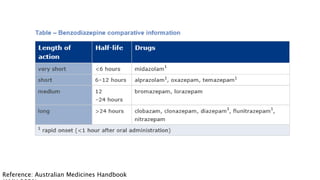
After stopping short-acting benzodiazepines, eg alprazolam, these
may occur within a few hours; for those that are longer acting, eg
diazepam, they may take days or weeks; they can last for several
weeks or longer after prolonged use
Reference: Australian Medicines Handbook

Benzodiazepines

  • 1.
  • 2.
    WHY ? The mostcommon substance present in drug-induced deaths in 2018 were benzodiazepines, identified in 883 deaths (51%). The rate of drug-induced deaths in 2018 was higher in Regional and remote areas (7.2 per 100,000 population) compared with Major cities (6.8 per 100,000 population). Reference: https://www.aihw.gov.au/reports/alcohol/alcohol-tobacco-other- drugs-australia/contents/impacts/health-impacts
  • 3.
    MECHANISM AND USE Benzodiazepinespotentiate the inhibitory effects of GABA throughout the CNS, resulting in: 1) anxiolytic 2) sedative 3) hypnotic 4) muscle relaxant 5) antiepileptic effects.
  • 4.
  • 5.
    DIAZEPAM Indications Short-term management ofanxiety, agitation Acute alcohol withdrawal Muscle spasm or spasticity Premedication Procedural sedation (see Practice points below) Status epilepticus Accepted Benzodiazepine withdrawal Acute behavioural disturbance
  • 6.
    diazepam 20 mgorally, every 2 hours until symptoms subside. A cumulative dose of 60 mg daily is usually adequate. Do not exceed 100 mg daily without seeking specialist advice. Acute alcohol withdrawal Anxiety, agitation Oral, 2–5 mg as a single dose. Dose may be repeated, if necessary, up to a maximum of 10 mg daily. (Maximum 30mg for acute severe anxiety, agitation, behaviour disturbance) Dosage – Diazepam
  • 7.
    MIDAZOLAM Indications Procedural sedation Induction ofanaesthesia Sedation during ventilation Premedication Accepted Status epilepticus
  • 8.
    Dosage – Midazolam Conscioussedation. Endoscopic or cardiovascular procedures. the initial dose is approximately 2.5 mg, Total doses greater than 3.5 mg are not usually necessary. Induction of anaesthesia. 0.15-0.2 mg/kg (10-15 mg), administered at a rate of approximately 2.5 mg/10 se Intravenous sedation in intensive care units (ICU). the recommended infusion rate is 0.03-0.2 mg/kg/hour. Dilution and admixture. Hypnovel may be mixed in the same syringe with frequently used premedicants: morphine sulphate, pethidine, atropine sulphate or scopolamine. Hypnovel is compatible with normal saline, glucose 5% and 10% in water, fructose IV infusion (levulose 5%), potassium chloride, sodium chloride and calcium chloride IV infusion (Ringer's solution) and compound sodium lactate IV infusion (Hartmann's solution). Onset of clinical effect may be delayed; there is a danger of overdosage if midazolam is given rapidly without waiting to assess its effects. Reference: Australian Medicines Handbook
  • 9.
    TEMAZEPAM Indications Short-term treatment ofinsomnia Dosage – Temazepam Adult: Oral, 10–20 mg at night. Elderly: Oral, 5–10 mg at night. Reference: Australian Medicines Handbook
  • 10.
    PRACTICE POINTS Reserve forshort-term (2–4 weeks) or intermittent use only; they should be part of a broader treatment plan, not a first or sole treatment Benzodiazepines are occasionally used short term (up to 2 weeks) to manage agitation or insomnia when starting antidepressants (eg in panic disorder) Benzodiazepines are sometimes misused for their euphoric and sedative effects, both alone and with other drugs Some data suggest that cognitive dysfunction associated with long- term use may not be fully reversible Reference: Australian Medicines Handbook
  • 11.
    WITHDRAWAL SYMPTOMS Suddenly stoppingtreatment (or reducing or tapering the dose too quickly) in dependent people may produce withdrawal symptoms, including anxiety, dysphoria, irritability, insomnia, nightmares, sweating, memory impairment, hallucinations, hypertension, tachycardia, psychosis, tremors and seizures After stopping short-acting benzodiazepines, eg alprazolam, these may occur within a few hours; for those that are longer acting, eg diazepam, they may take days or weeks; they can last for several weeks or longer after prolonged use Reference: Australian Medicines Handbook