1
2
3
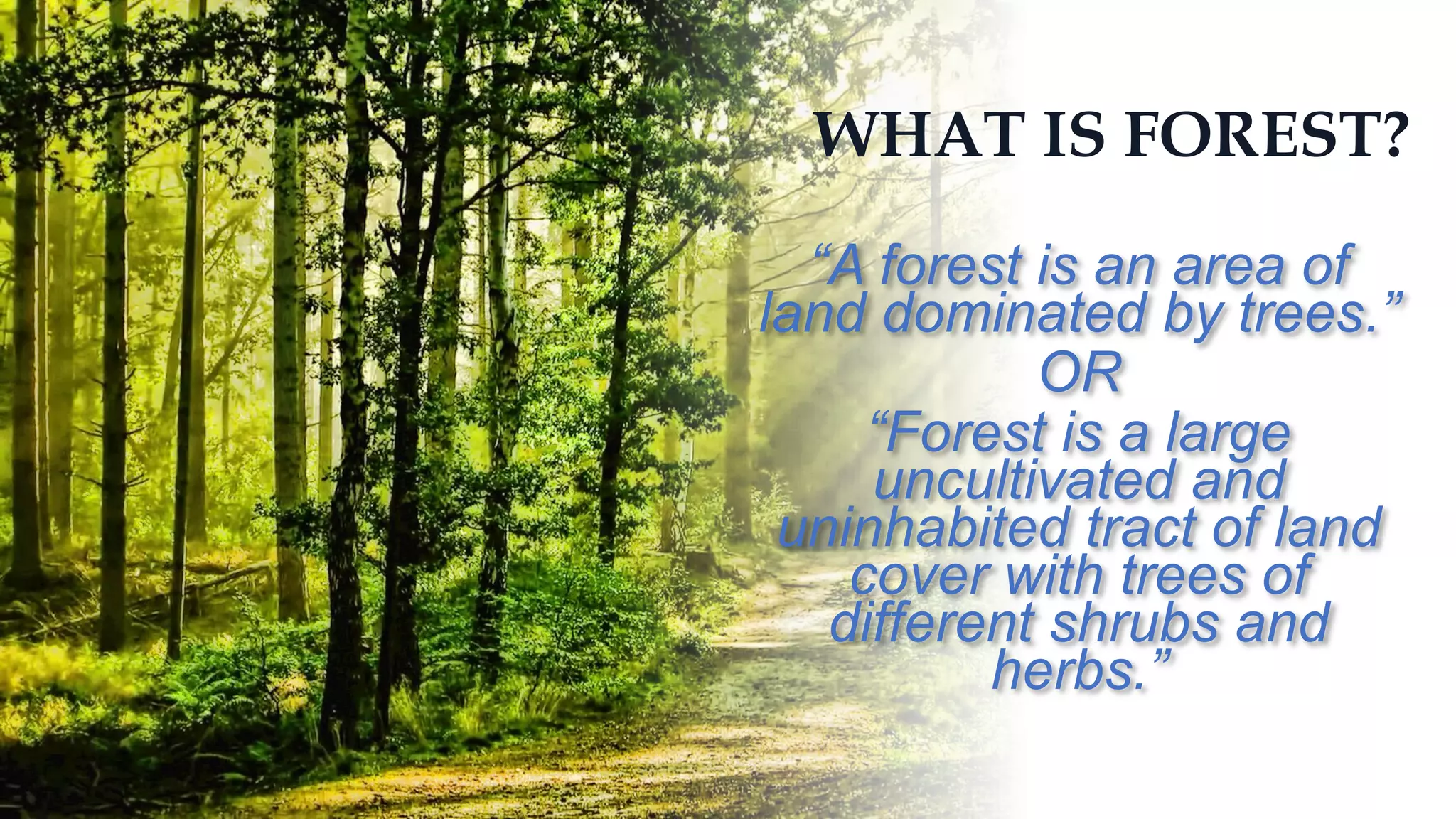
WHAT IS FOREST?
“A forest is an area of
land dominated by trees.”
OR
“Forest is a large
uncultivated and
uninhabited tract of land
cover with trees of
different shrubs and
herbs.”
5
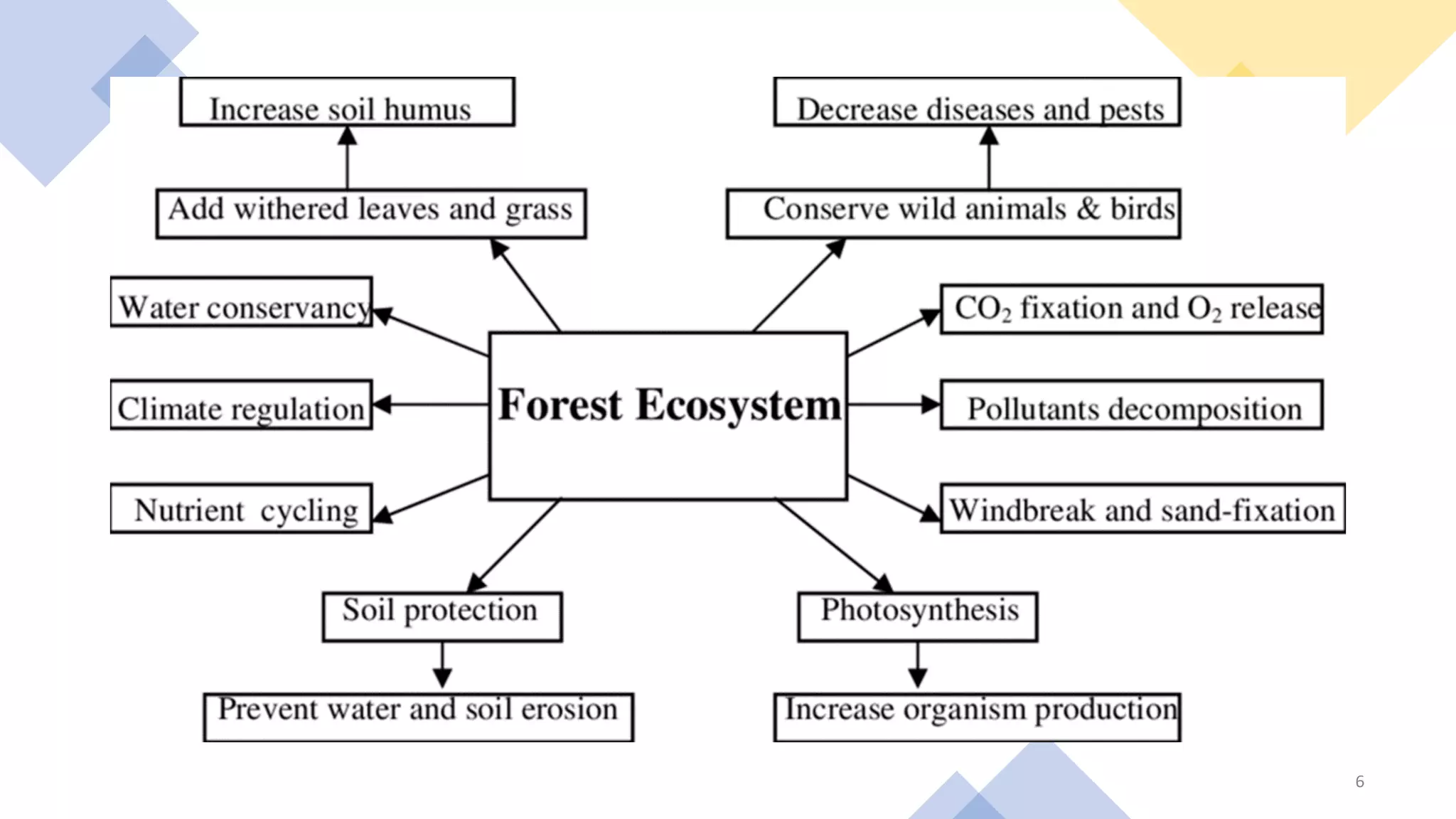
➢ Forests occupy roughly 40% of the total land.
➢ Forest ecosystems are areas of the landscape that are
dominated by trees.
➢ It consist of biologically integrated communities of plants,
animals and microbes, together with the local soils (substrates)
and atmospheres (climates) with which they interact.
➢ Only diffused light reaches the ground.
➢ The floor of the forest is carpeted by plants, lichen and mosses.
6
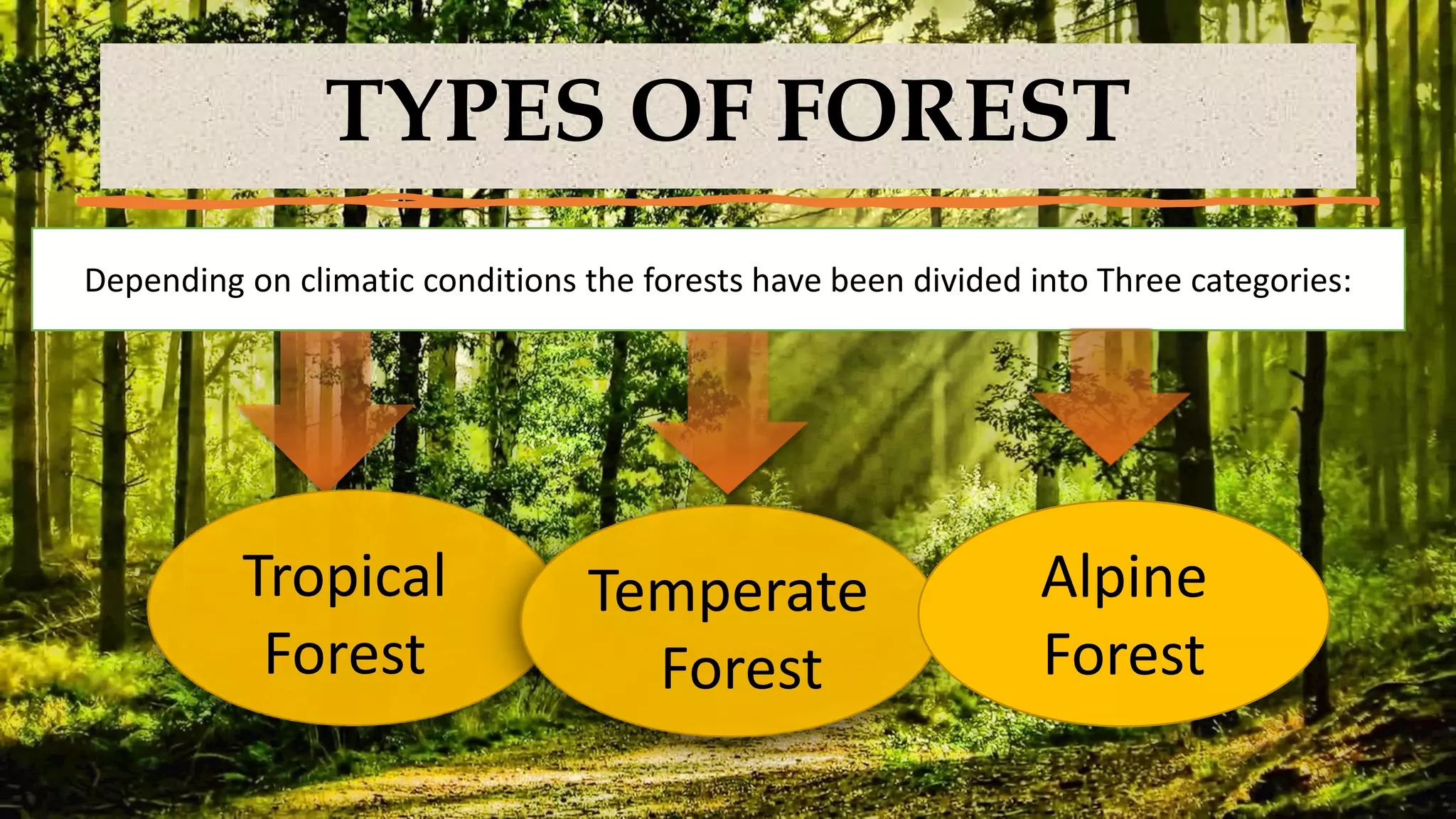
TYPES OF FOREST
Tropical
Forest
Temperate
Forest
Depending on climatic conditions the forests have been divided into Three categories:
Alpine
Forest
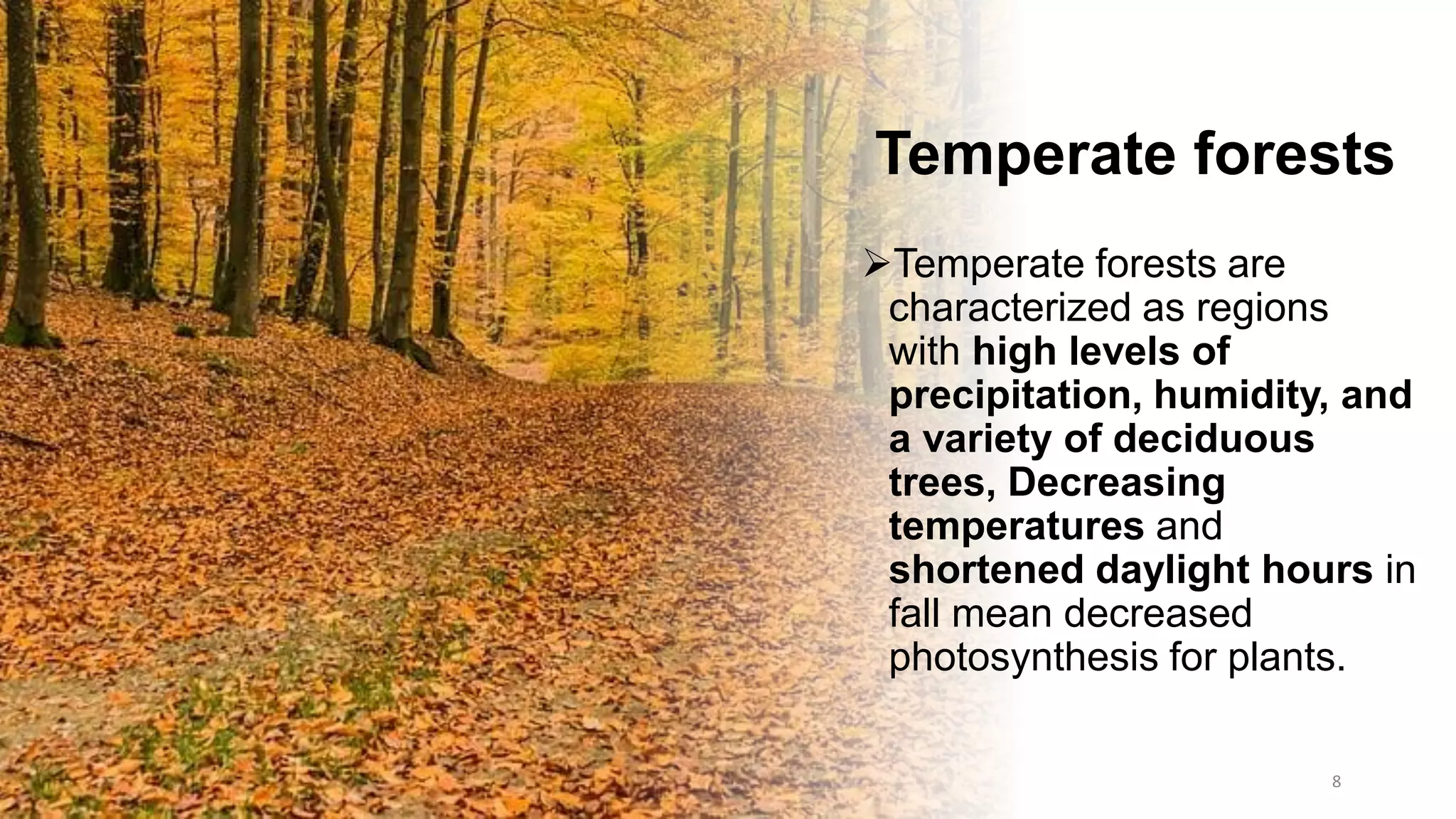
Temperate forests
➢Temperate forests are
characterized as regions
with high levels of
precipitation, humidity, and
a variety of deciduous
trees, Decreasing
temperatures and
shortened daylight hours in
fall mean decreased
photosynthesis for plants.
8
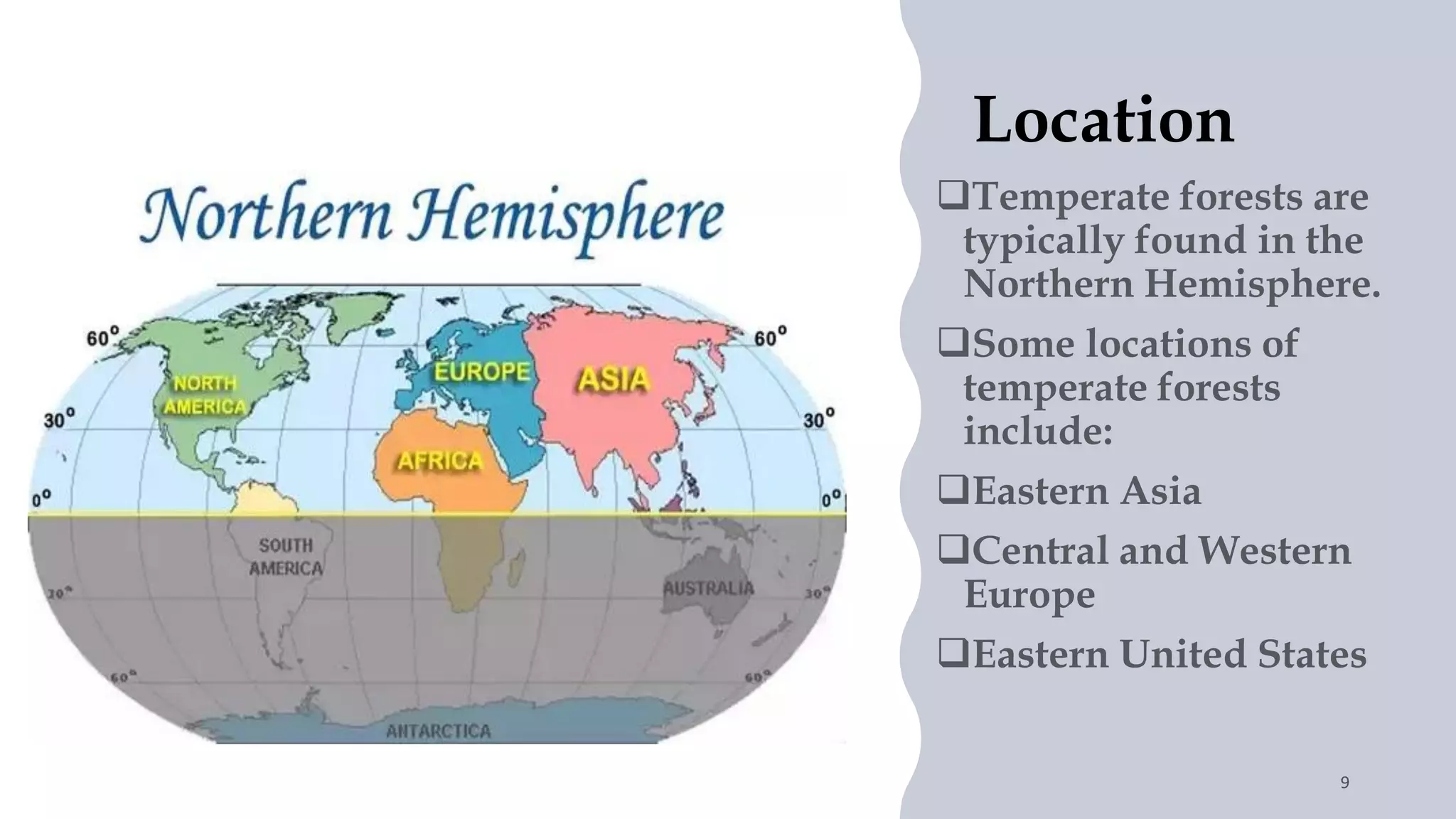
Location
Climate
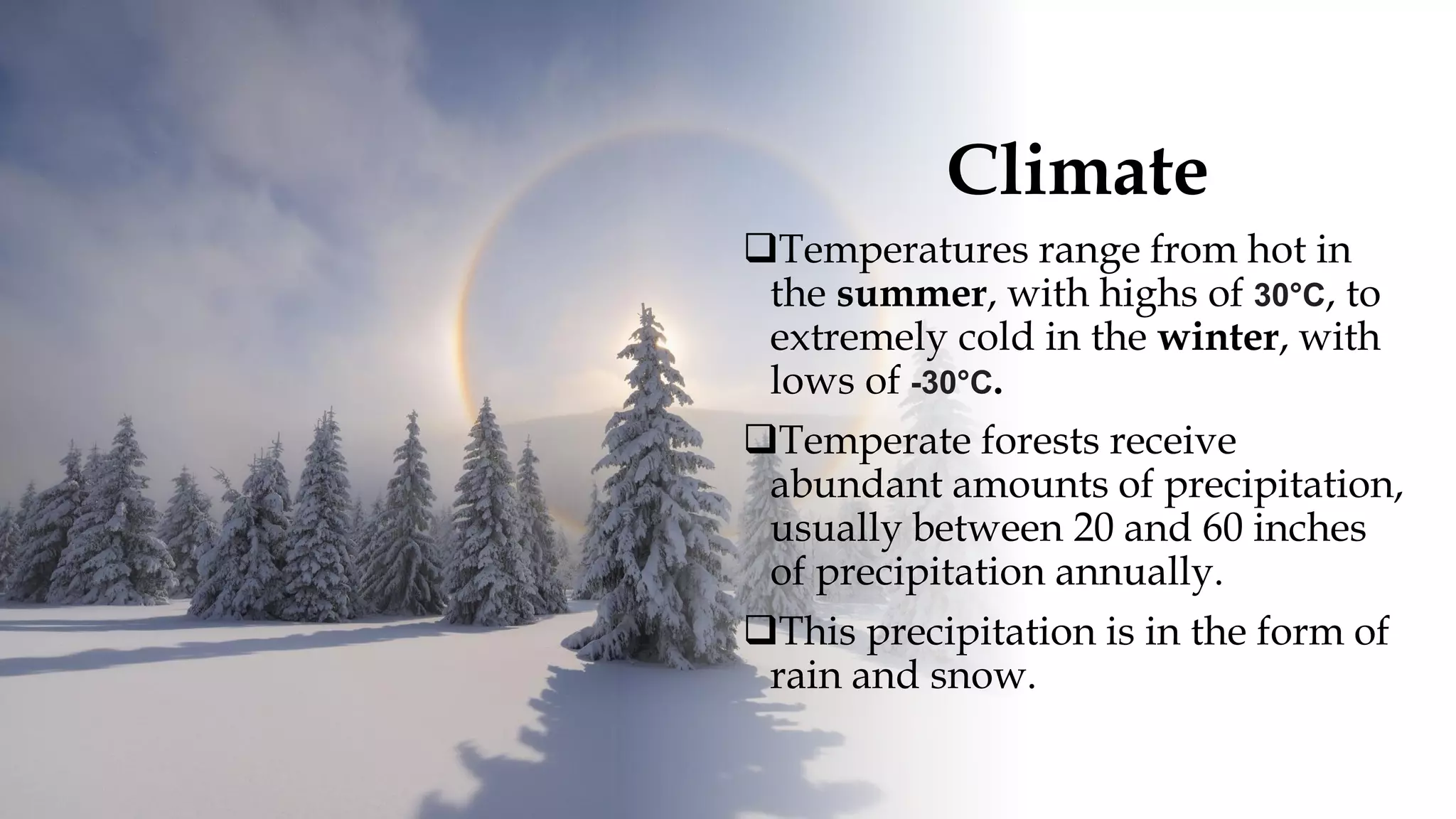
❑Temperatures range from hot in
the summer, with highs of 30°C, to
extremely cold in the winter, with
lows of -30°C.
❑Temperate forests receive
abundant amounts of precipitation,
usually between 20 and 60 inches
of precipitation annually.
❑This precipitation is in the form of
rain and snow.
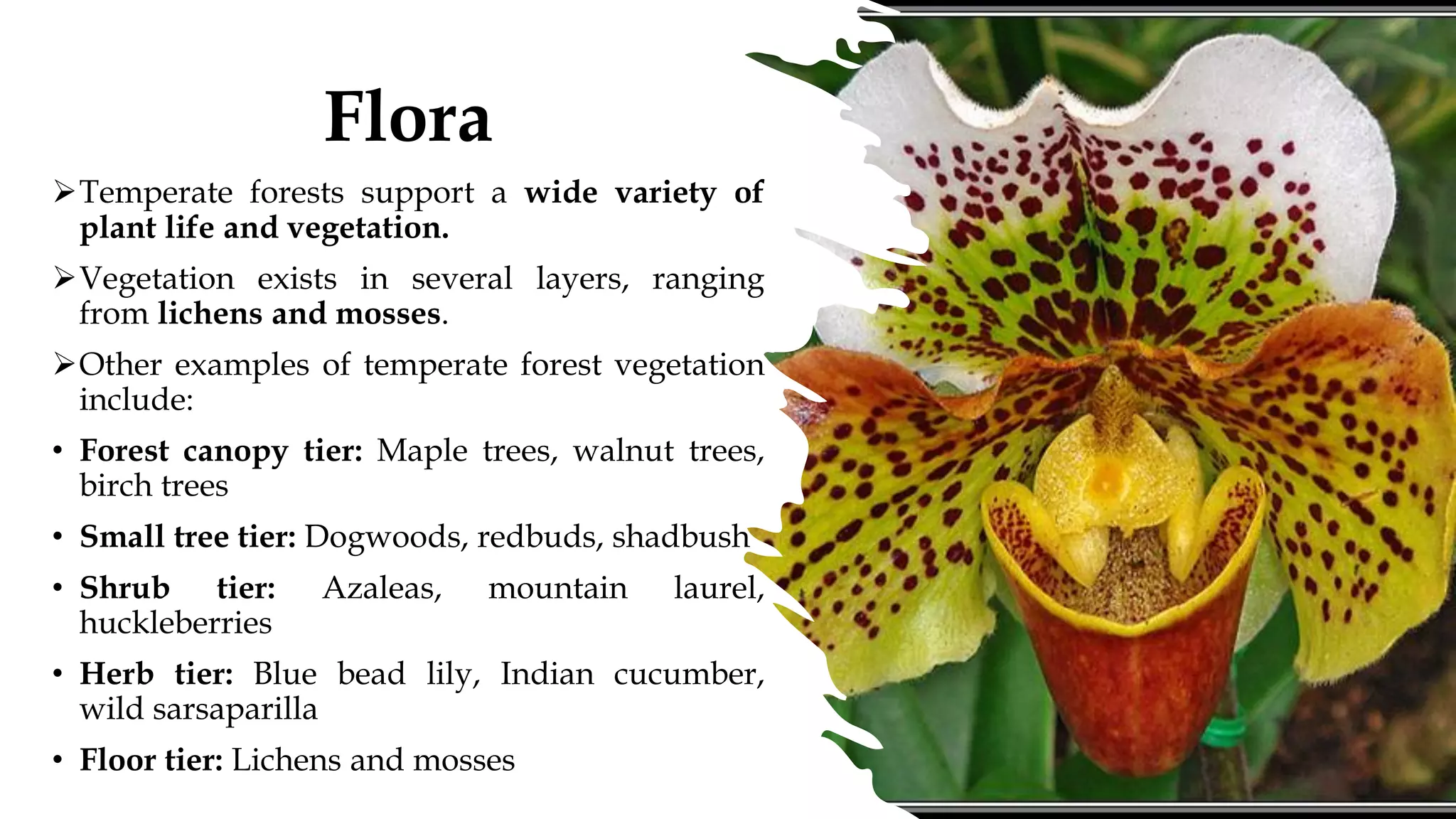
Flora
➢Temperate forests support a wide variety of
plant life and vegetation.
➢Vegetation exists in several layers, ranging
from lichens and mosses.
➢Other examples of temperate forest vegetation
include:
• Forest canopy tier: Maple trees, walnut trees,
birch trees
• Small tree tier: Dogwoods, redbuds, shadbush
• Shrub tier: Azaleas, mountain laurel,
huckleberries
• Herb tier: Blue bead lily, Indian cucumber,
wild sarsaparilla
• Floor tier: Lichens and mosses
12
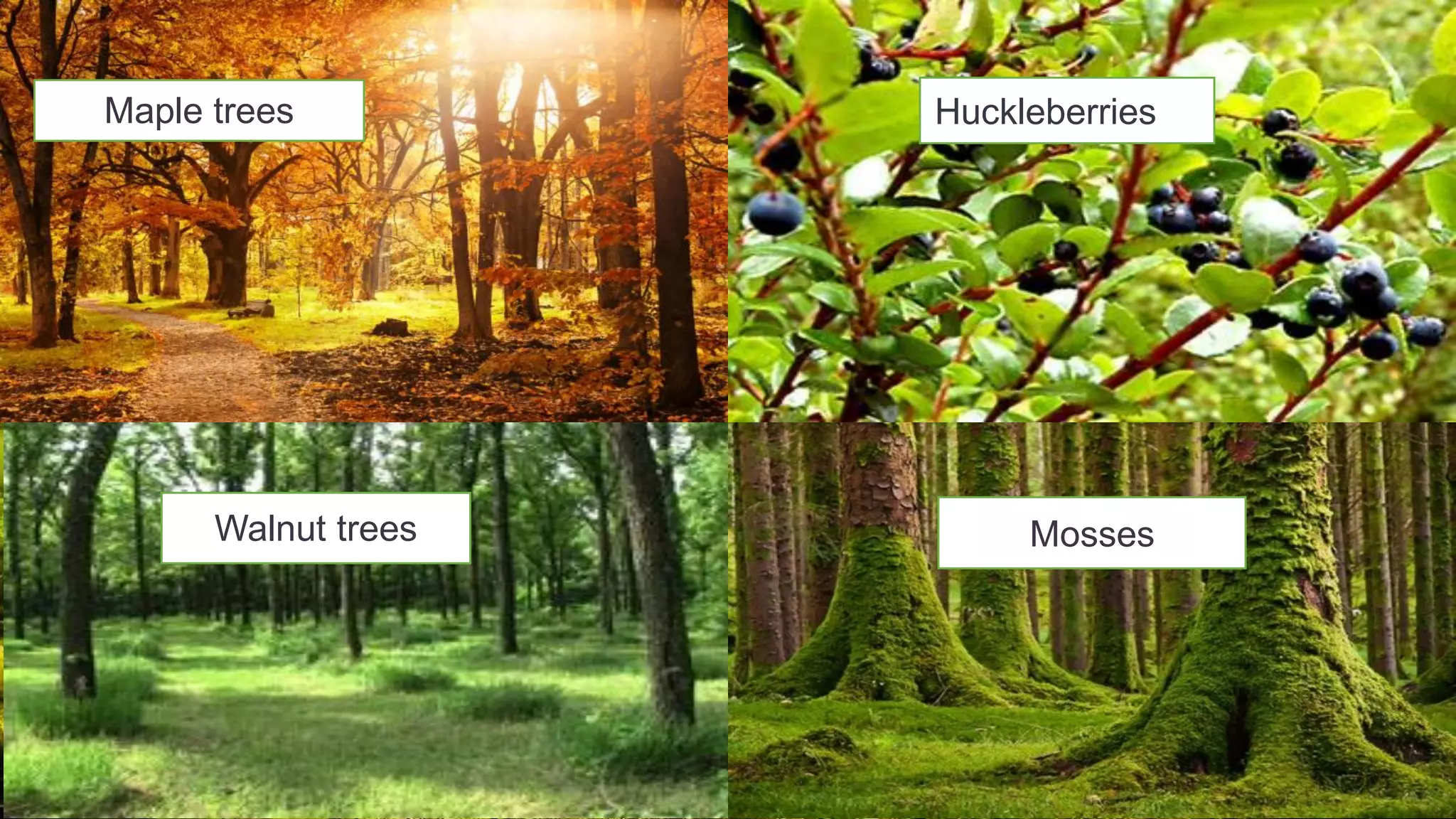
Maple trees Huckleberries
Walnut trees Mosses
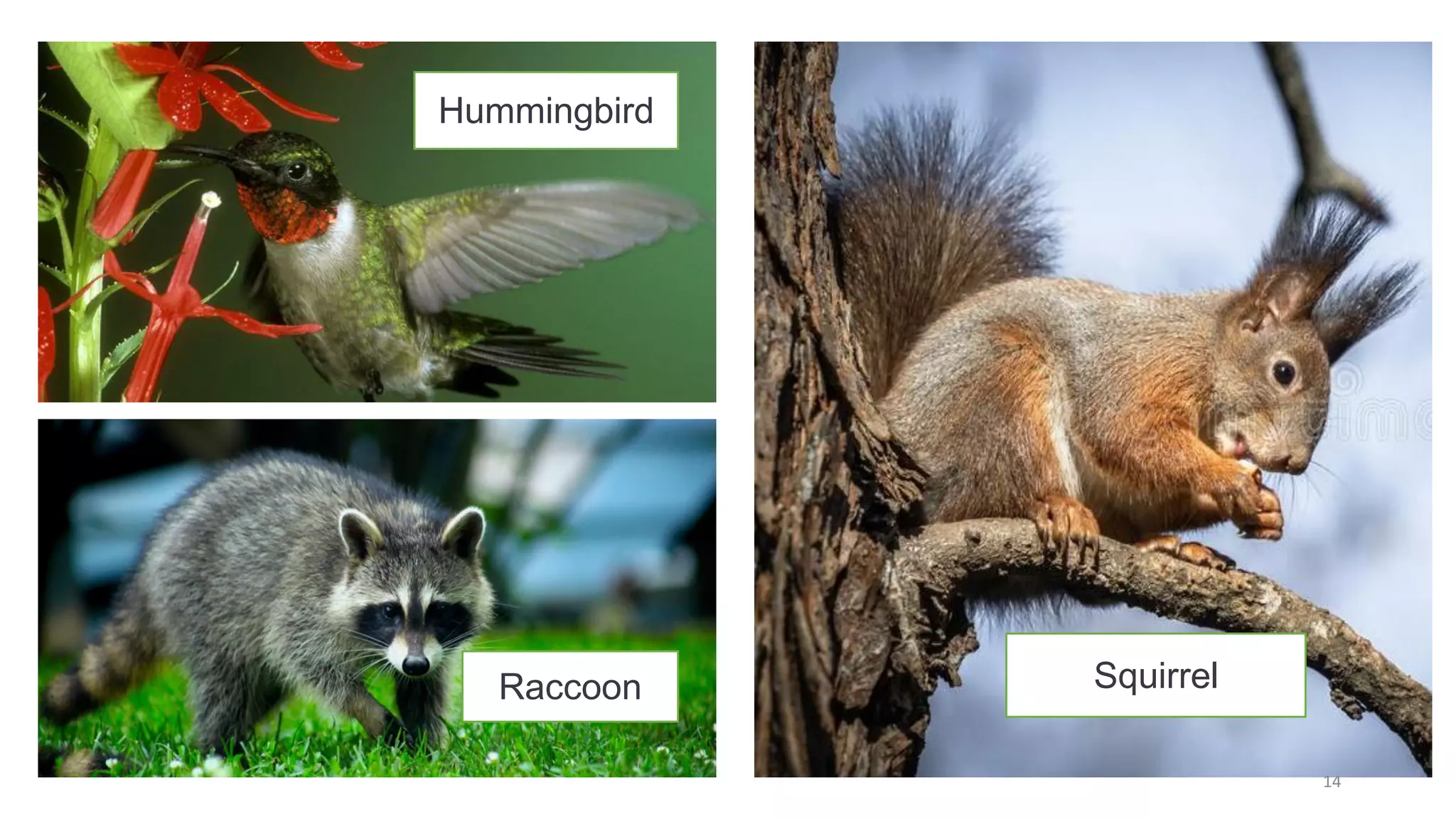
Fauna
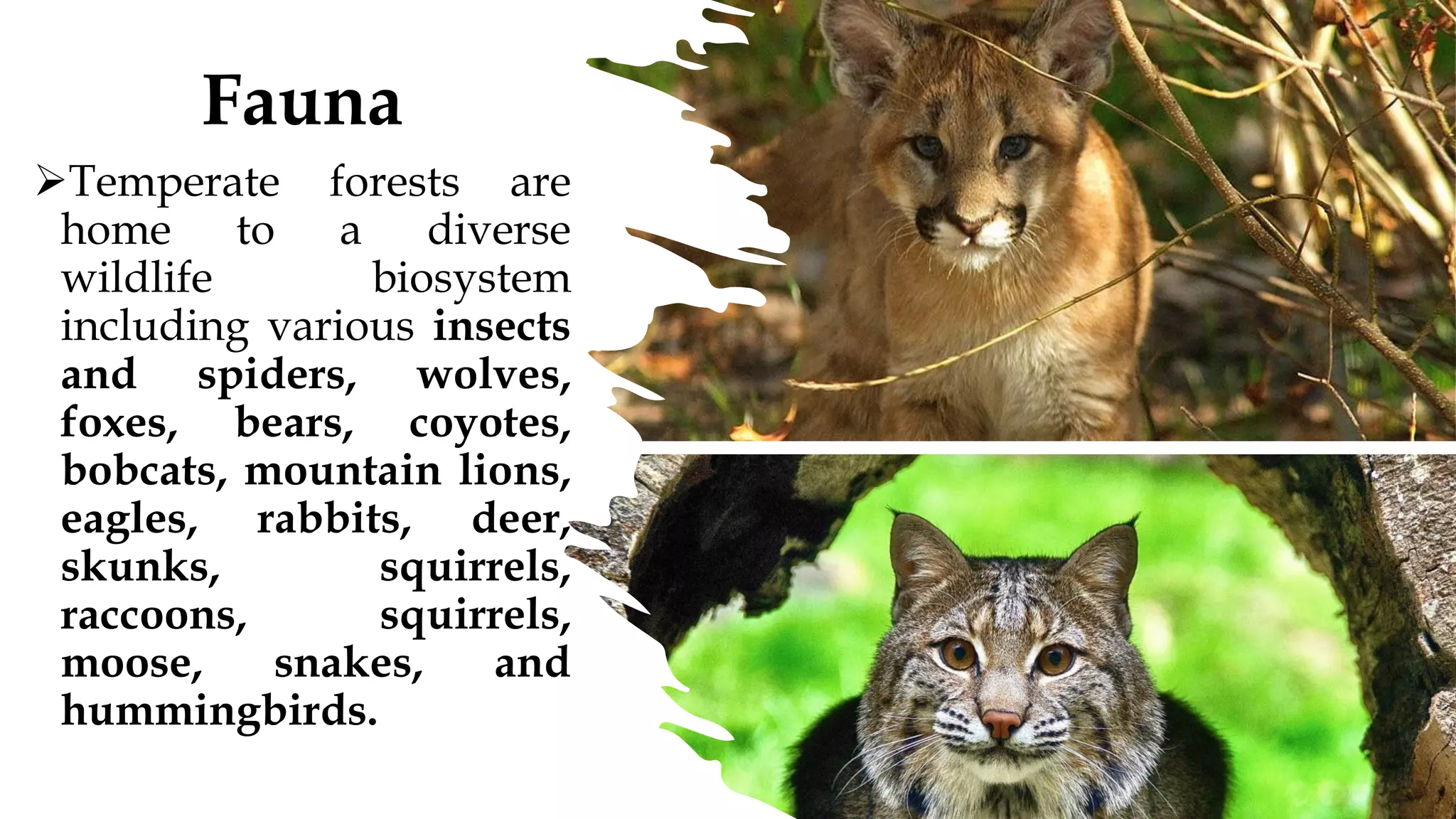
➢Temperate forests are
home to a diverse
wildlife biosystem
including various insects
and spiders, wolves,
foxes, bears, coyotes,
bobcats, mountain lions,
eagles, rabbits, deer,
skunks, squirrels,
raccoons, squirrels,
moose, snakes, and
hummingbirds.
14
Hummingbird
Raccoon Squirrel
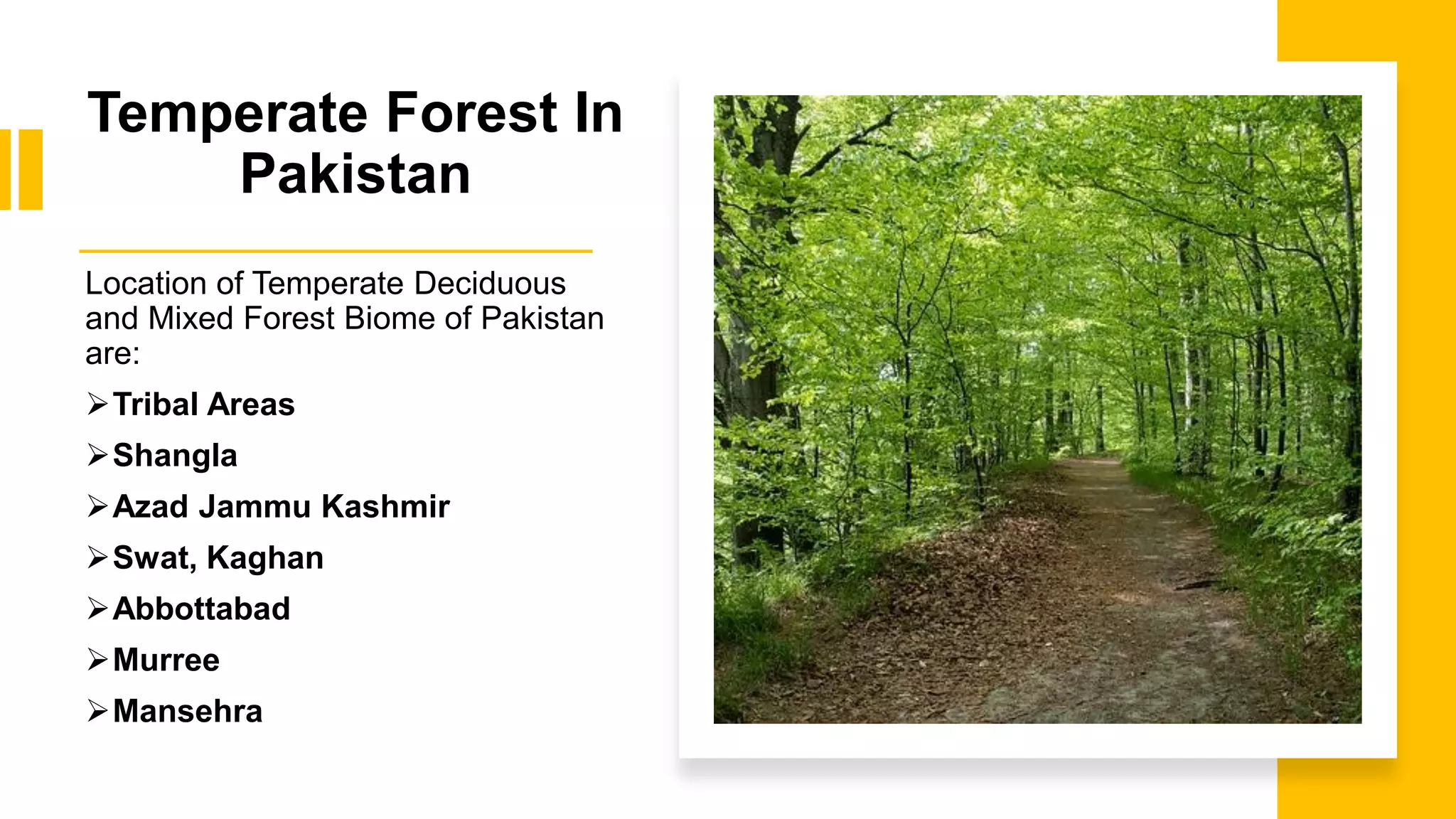
Temperate Forest In
Pakistan
Location of Temperate Deciduous
and Mixed Forest Biome of Pakistan
are:
➢Tribal Areas
➢Shangla
➢Azad Jammu Kashmir
➢Swat, Kaghan
➢Abbottabad
➢Murree
➢Mansehra
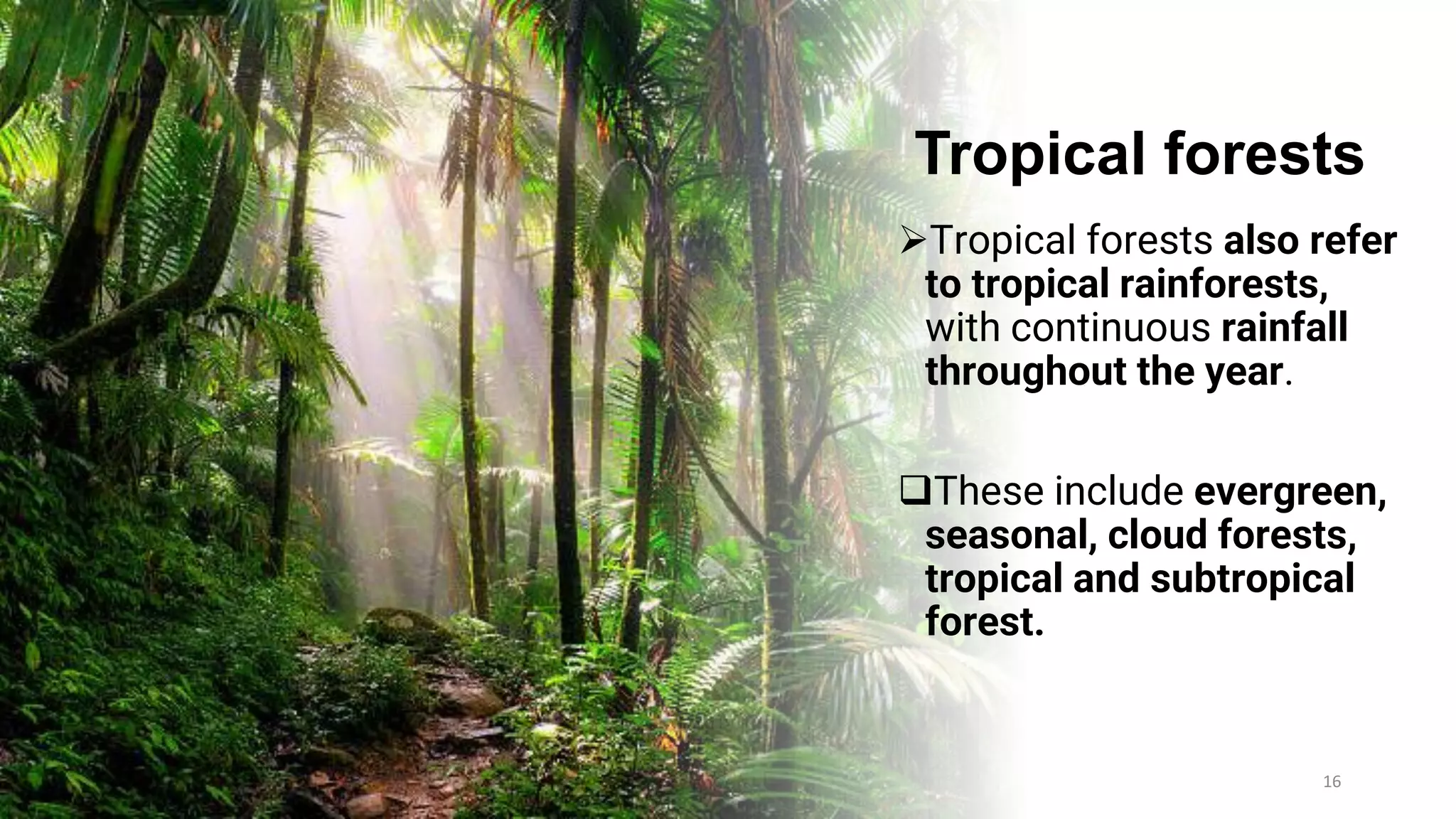
Tropical forests
➢Tropical forests also refer
to tropical rainforests,
with continuous rainfall
throughout the year.
❑These include evergreen,
seasonal, cloud forests,
tropical and subtropical
forest.
16
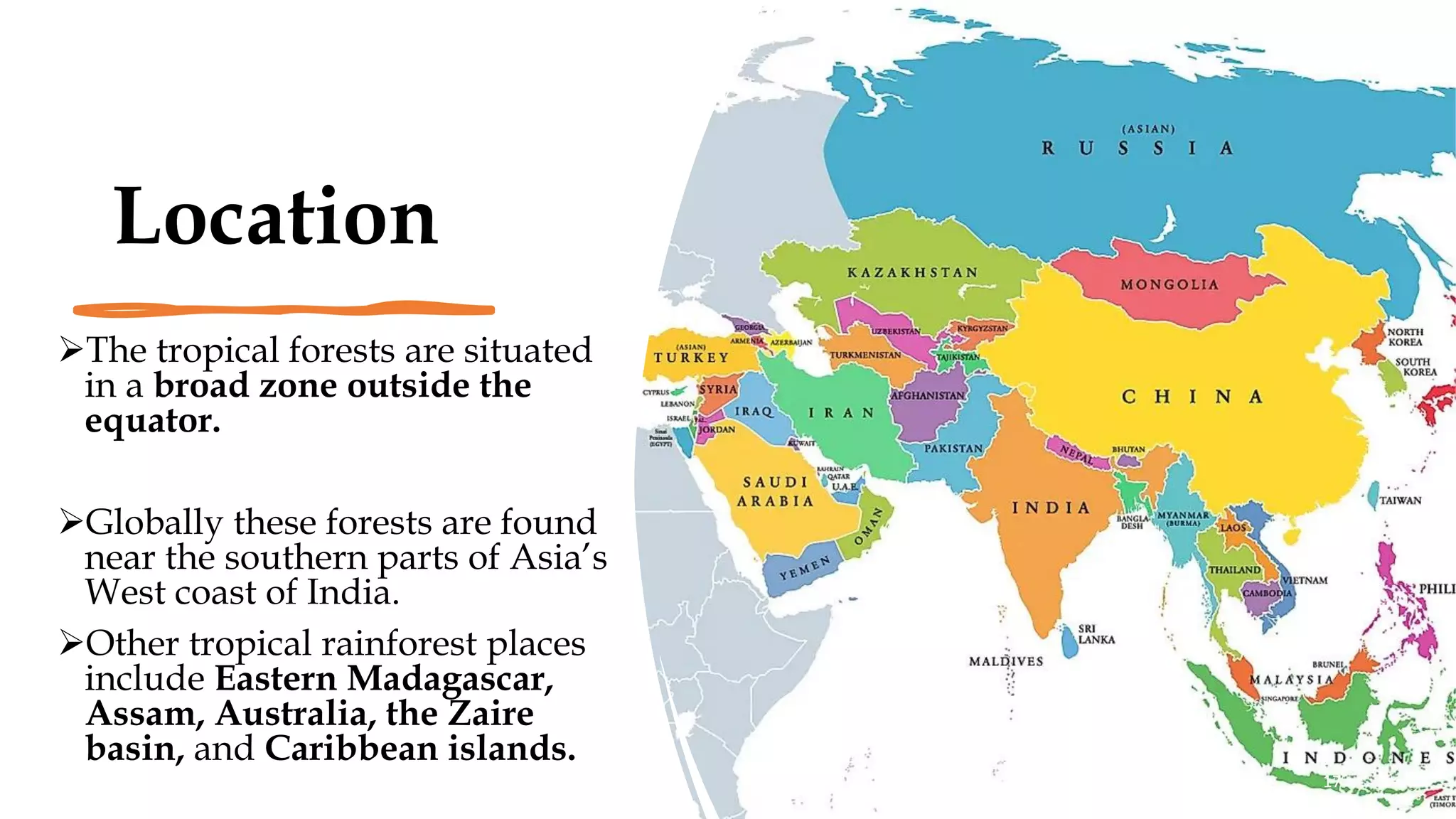
Location
➢The tropical forests are situated
in a broad zone outside the
equator.
➢Globally these forests are found
near the southern parts of Asia’s
West coast of India.
➢Other tropical rainforest places
include Eastern Madagascar,
Assam, Australia, the Zaire
basin, and Caribbean islands.
17
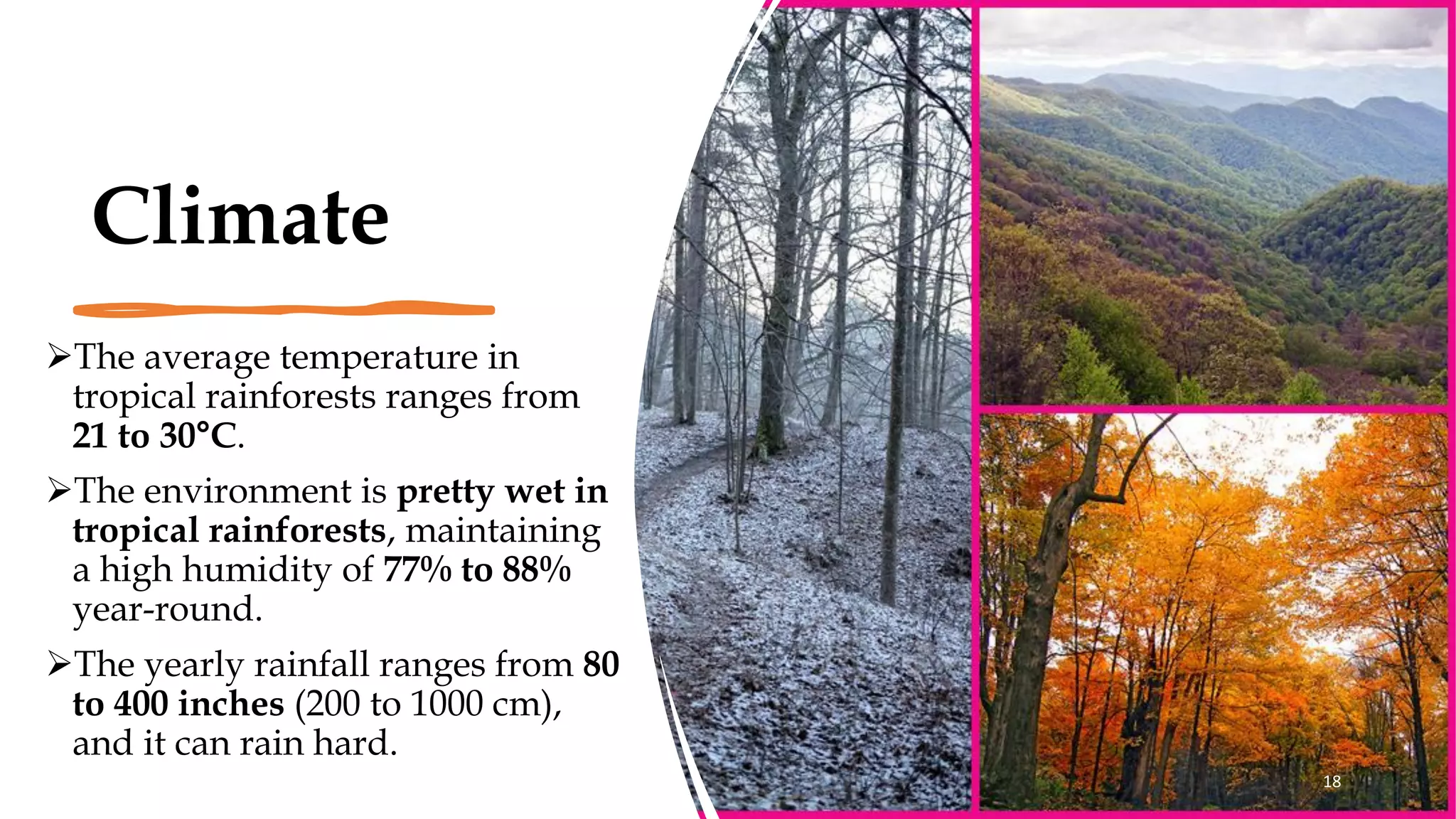
Climate
➢The average temperature in
tropical rainforests ranges from
21 to 30°C.
➢The environment is pretty wet in
tropical rainforests, maintaining
a high humidity of 77% to 88%
year-round.
➢The yearly rainfall ranges from 80
to 400 inches (200 to 1000 cm),
and it can rain hard.
18
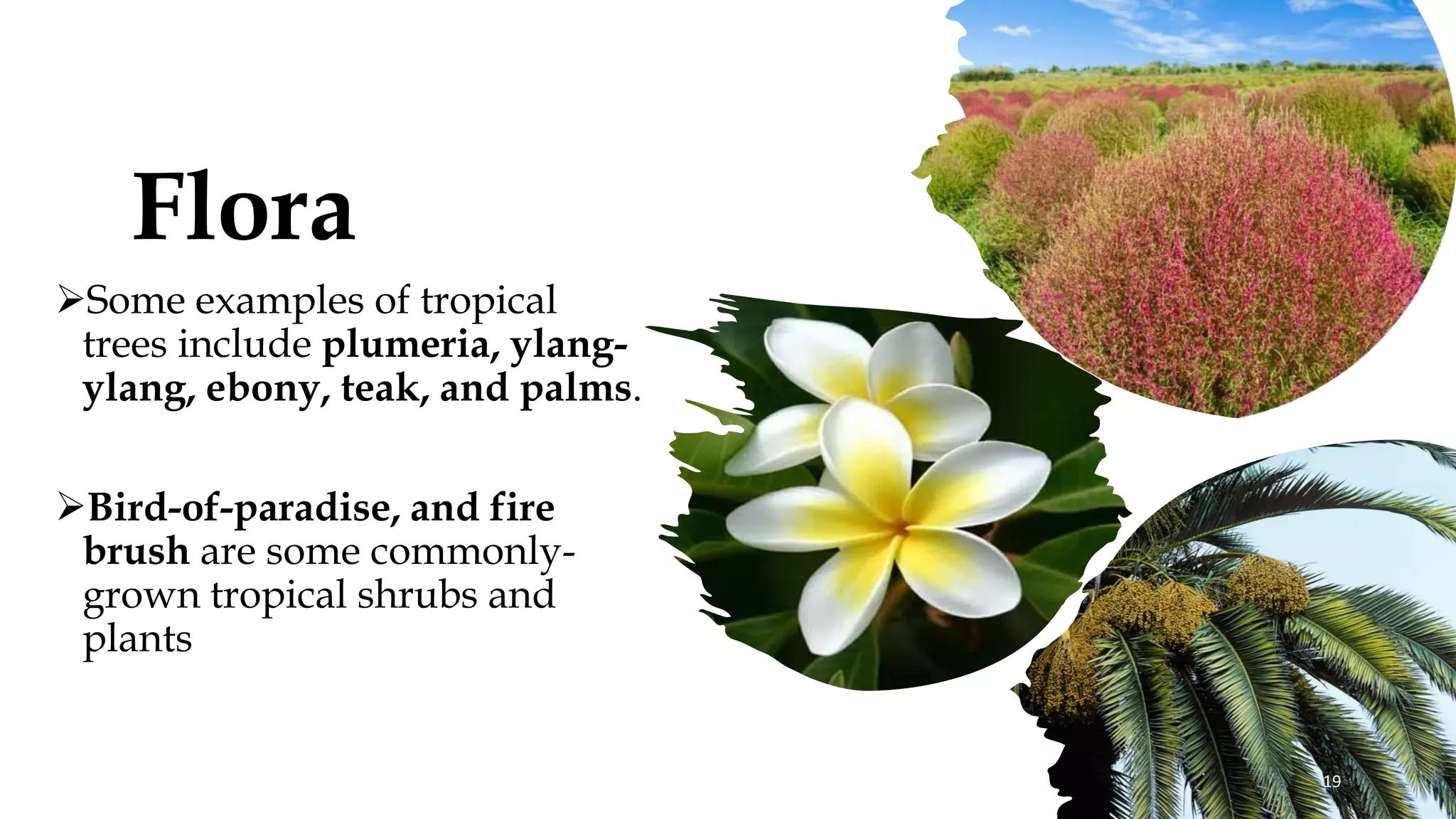
Flora
➢Some examples of tropical
trees include plumeria, ylang-
ylang, ebony, teak, and palms.
➢Bird-of-paradise, and fire
brush are some commonly-
grown tropical shrubs and
plants
19
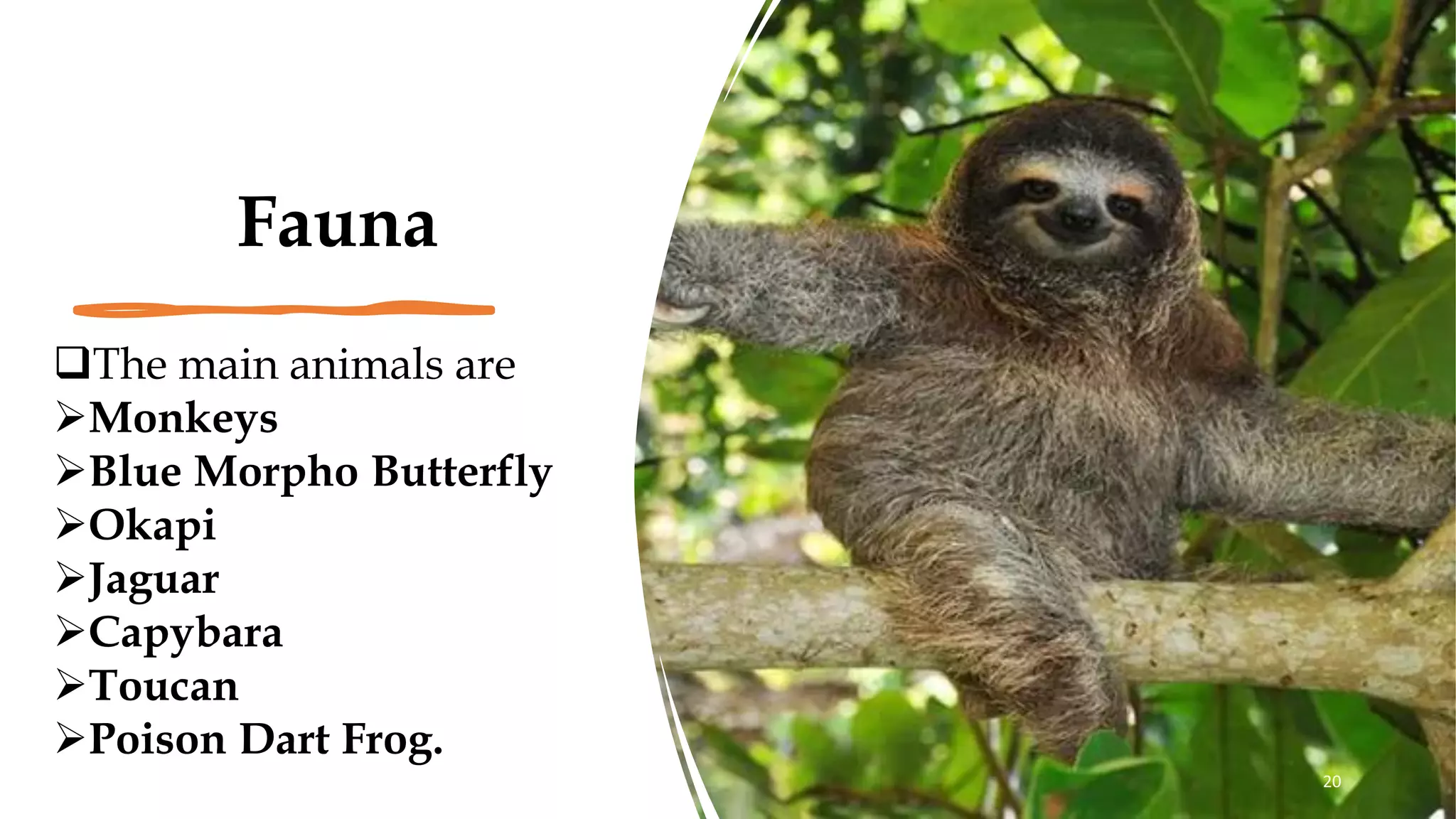
Fauna
❑The main animals are
➢Monkeys
➢Blue Morpho Butterfly
➢Okapi
➢Jaguar
➢Capybara
➢Toucan
➢Poison Dart Frog.
20
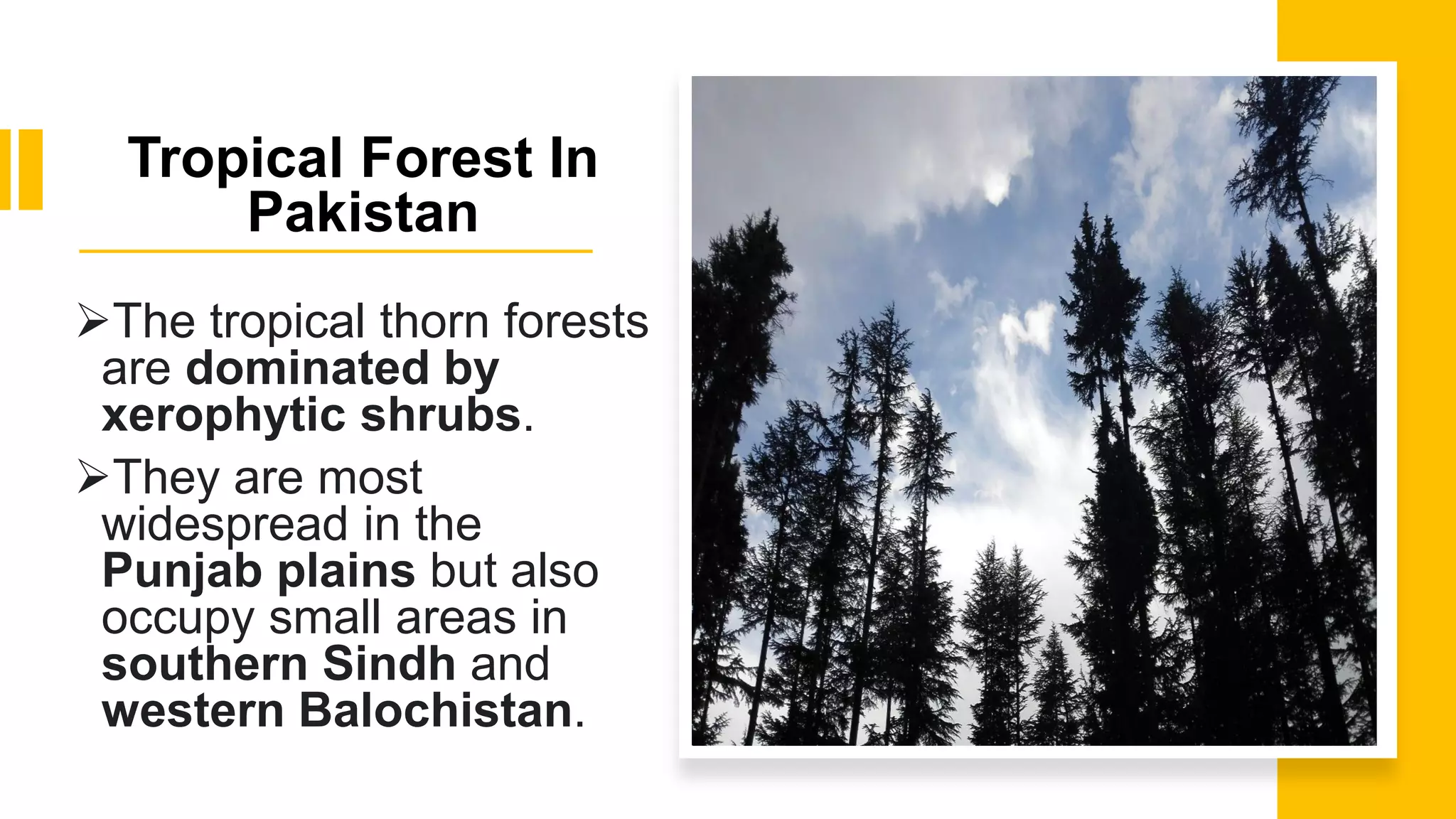
Tropical Forest In
Pakistan
➢The tropical thorn forests
are dominated by
xerophytic shrubs.
➢They are most
widespread in the
Punjab plains but also
occupy small areas in
southern Sindh and
western Balochistan.
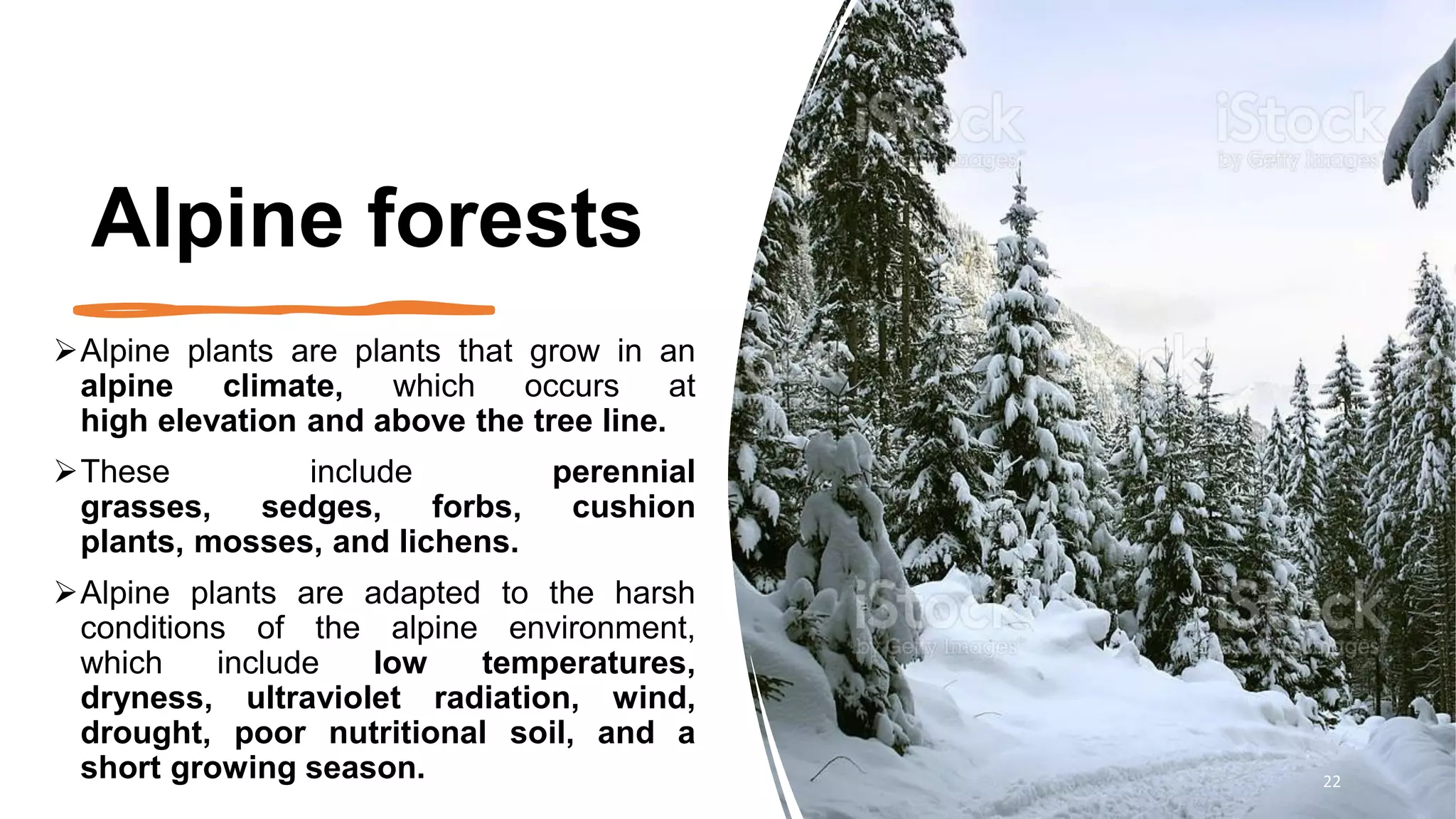
Alpine forests
➢Alpine plants are plants that grow in an
alpine climate, which occurs at
high elevation and above the tree line.
➢These include perennial
grasses, sedges, forbs, cushion
plants, mosses, and lichens.
➢Alpine plants are adapted to the harsh
conditions of the alpine environment,
which include low temperatures,
dryness, ultraviolet radiation, wind,
drought, poor nutritional soil, and a
short growing season. 22
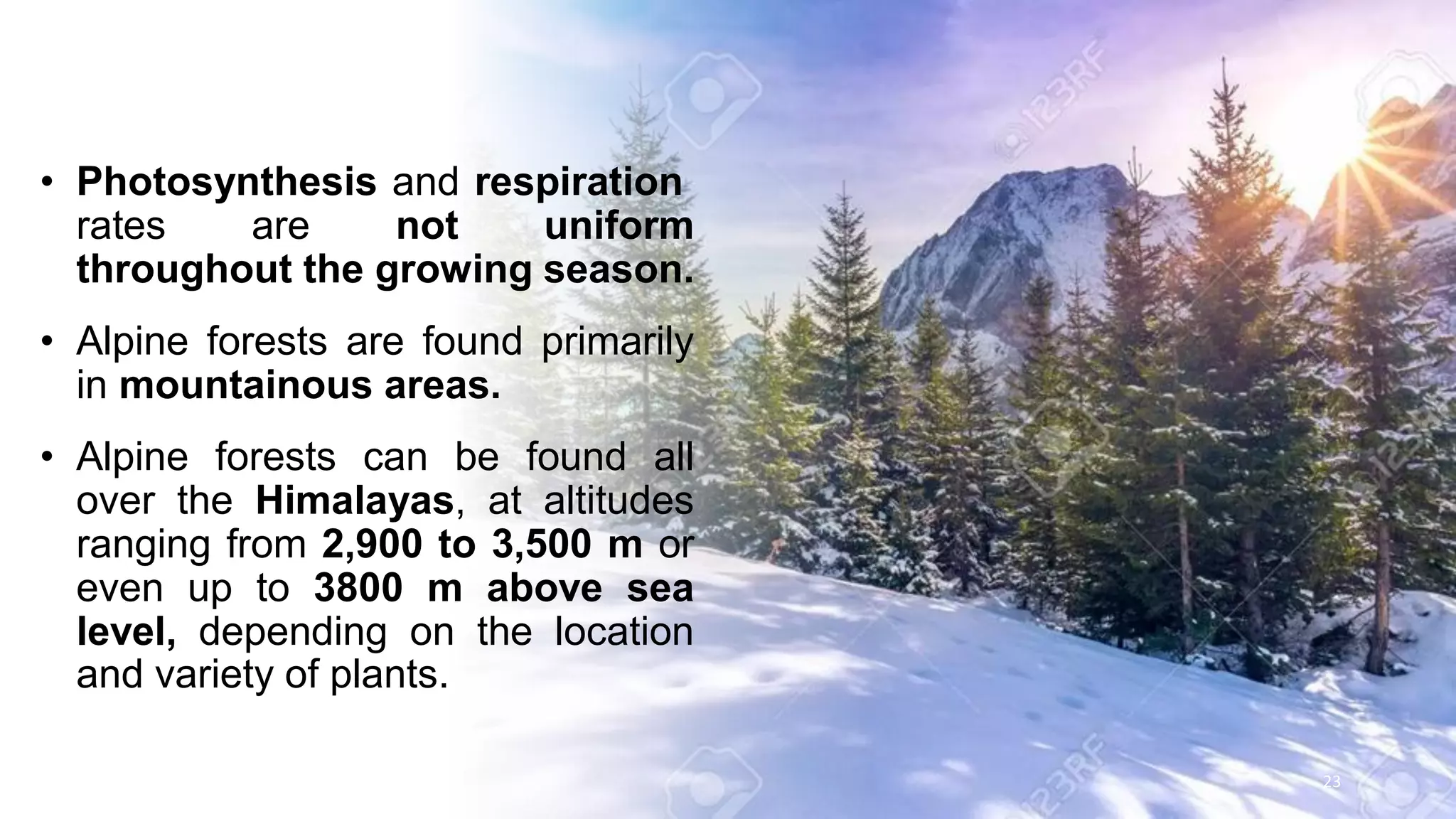
• Photosynthesis and respiration
rates are not uniform
throughout the growing season.
• Alpine forests are found primarily
in mountainous areas.
• Alpine forests can be found all
over the Himalayas, at altitudes
ranging from 2,900 to 3,500 m or
even up to 3800 m above sea
level, depending on the location
and variety of plants.
23
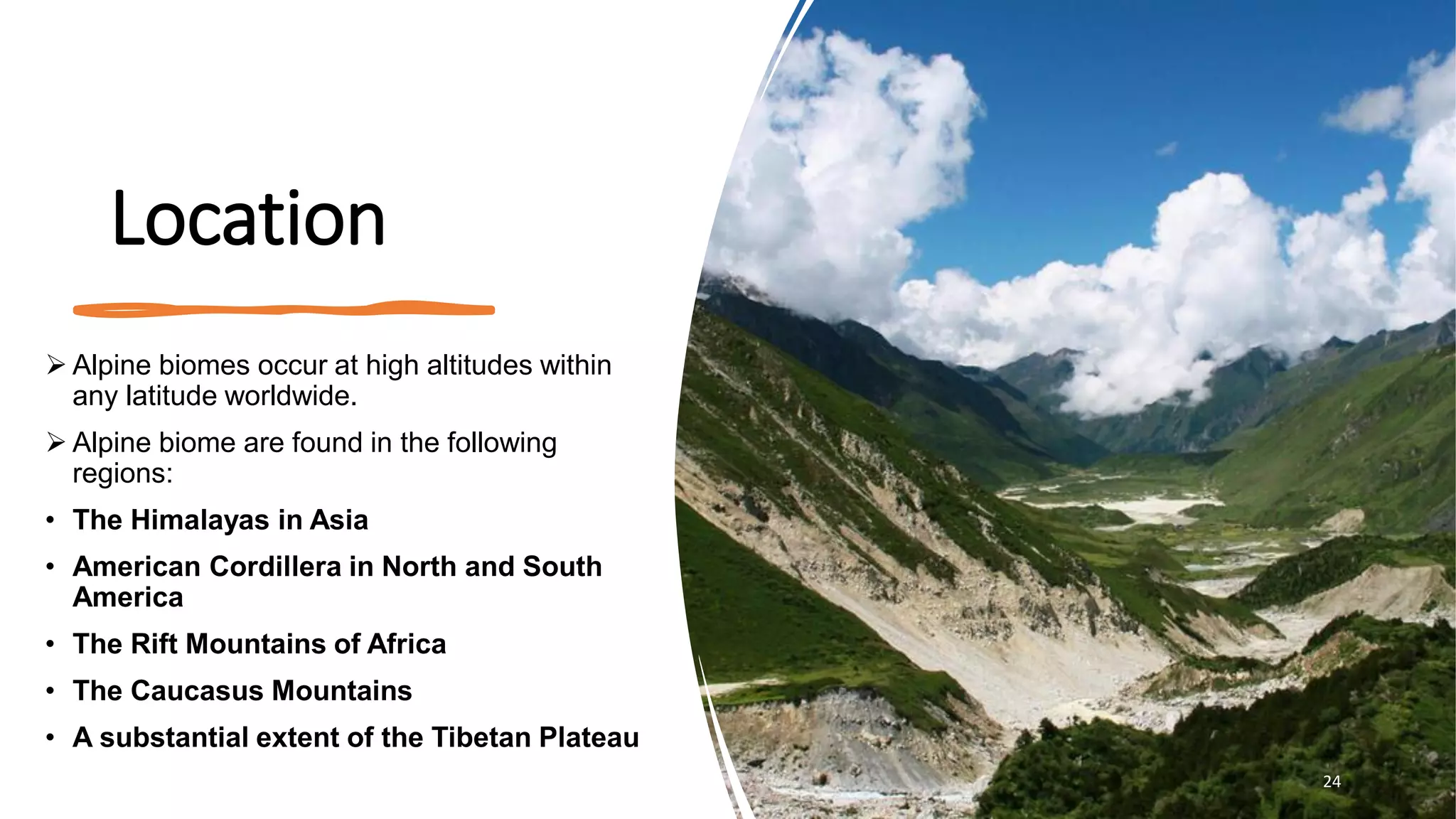
Location
➢ Alpine biomes occur at high altitudes within
any latitude worldwide.
➢ Alpine biome are found in the following
regions:
• The Himalayas in Asia
• American Cordillera in North and South
America
• The Rift Mountains of Africa
• The Caucasus Mountains
• A substantial extent of the Tibetan Plateau
24
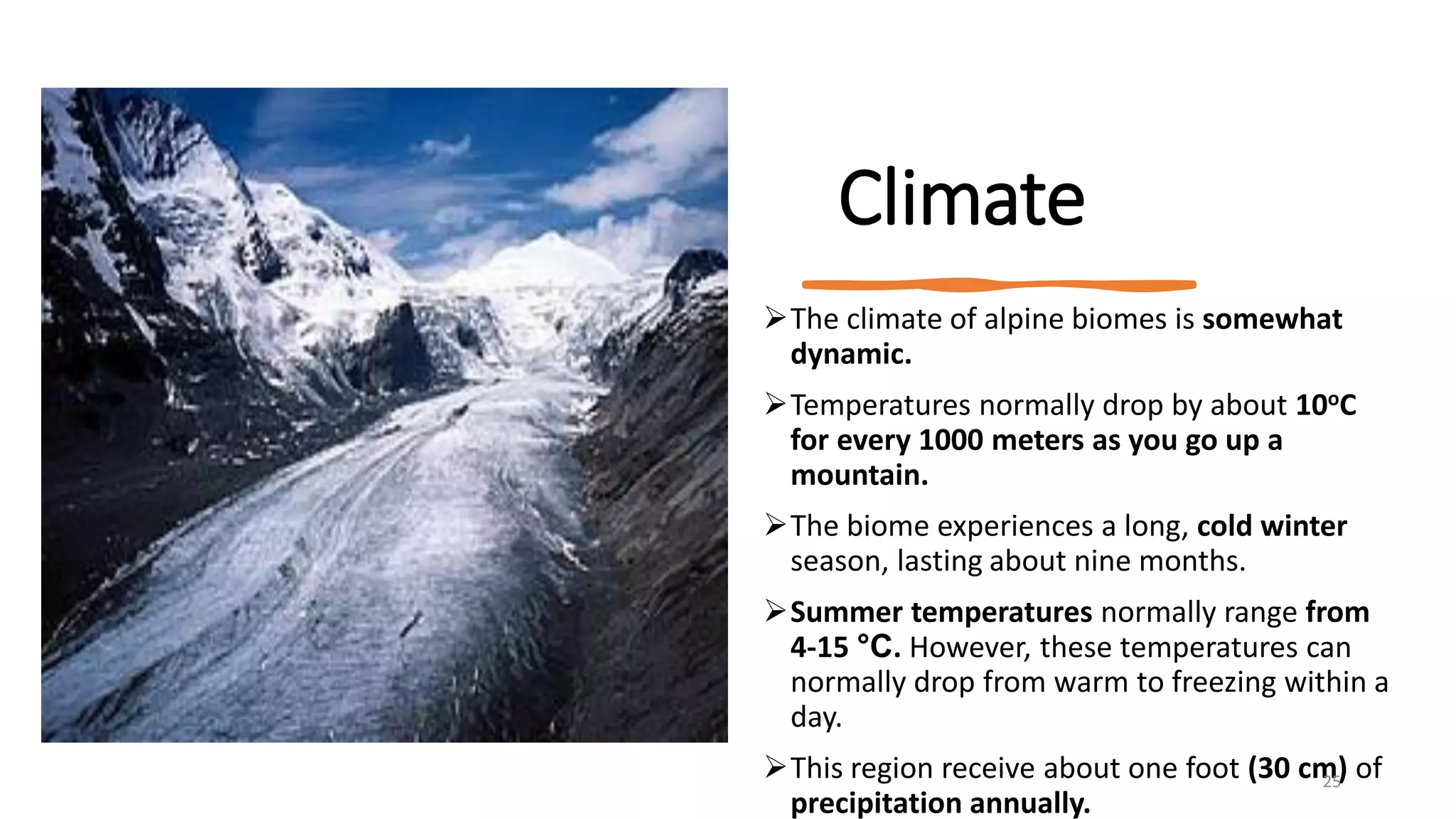
Climate
➢The climate of alpine biomes is somewhat
dynamic.
➢Temperatures normally drop by about 10oC
for every 1000 meters as you go up a
mountain.
➢The biome experiences a long, cold winter
season, lasting about nine months.
➢Summer temperatures normally range from
4-15 °C. However, these temperatures can
normally drop from warm to freezing within a
day.
➢This region receive about one foot (30 cm) of
precipitation annually.
25
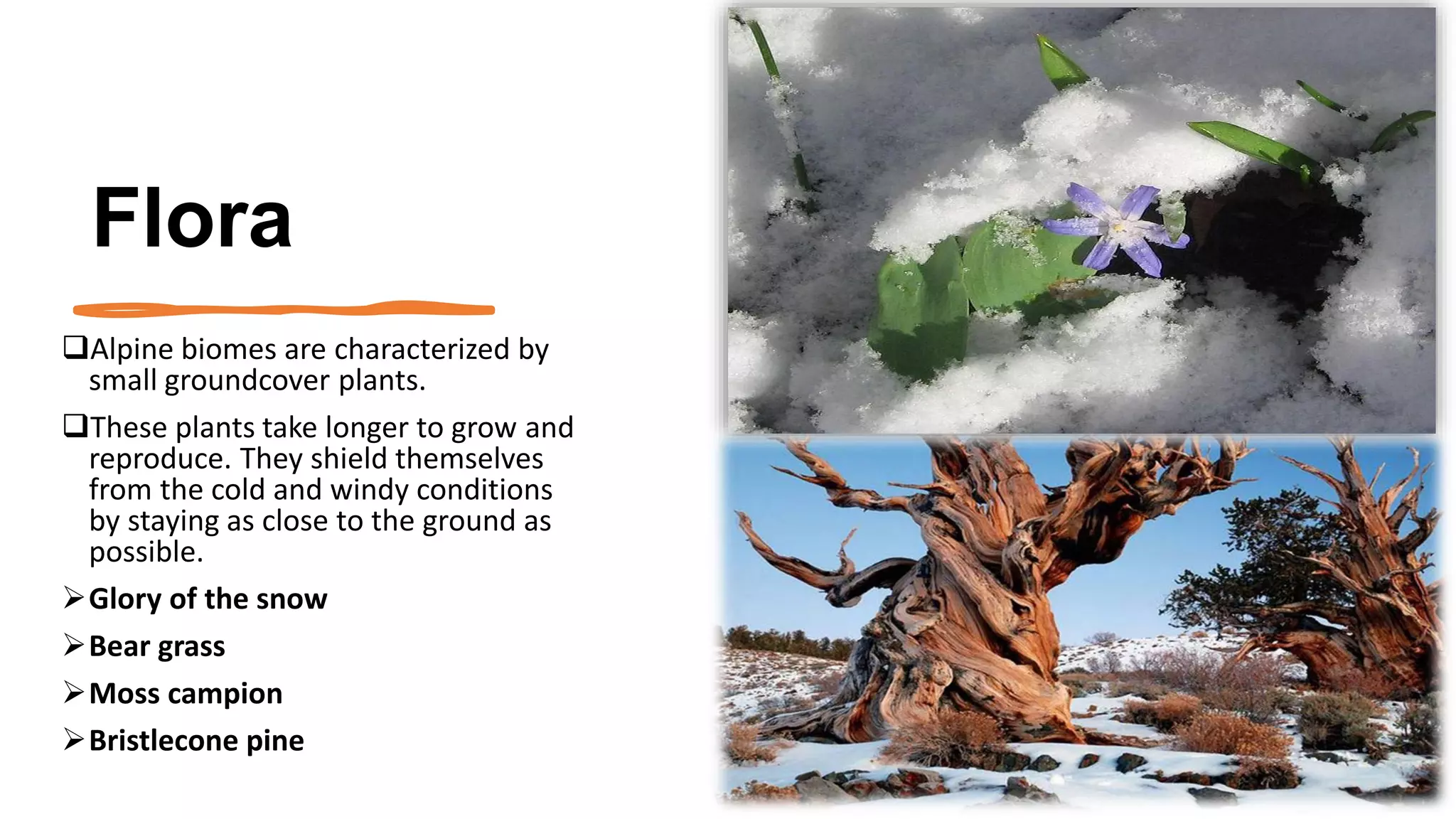
Flora
❑Alpine biomes are characterized by
small groundcover plants.
❑These plants take longer to grow and
reproduce. They shield themselves
from the cold and windy conditions
by staying as close to the ground as
possible.
➢Glory of the snow
➢Bear grass
➢Moss campion
➢Bristlecone pine
26
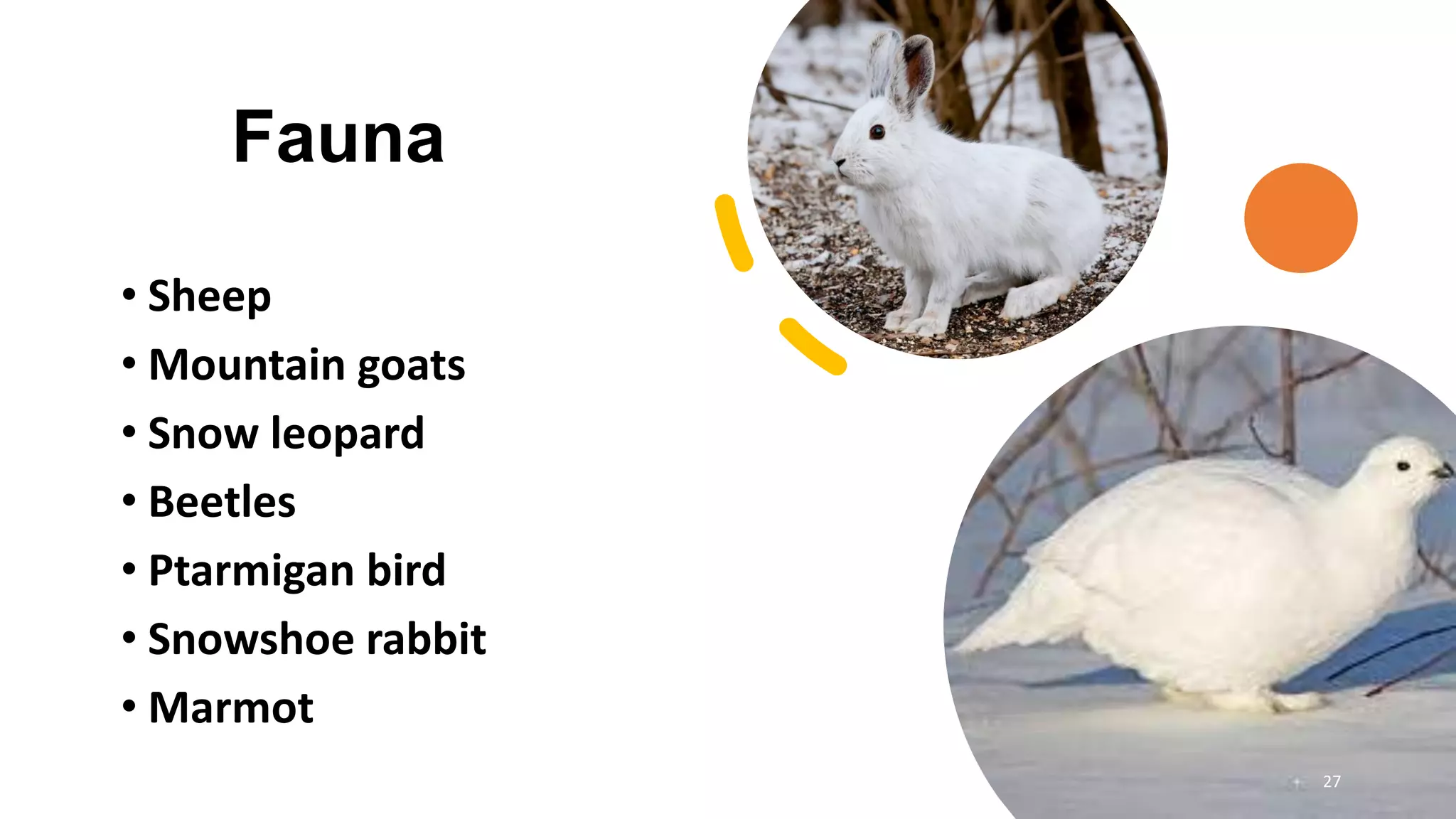
Fauna
• Sheep
• Mountain goats
• Snow leopard
• Beetles
• Ptarmigan bird
• Snowshoe rabbit
• Marmot
27
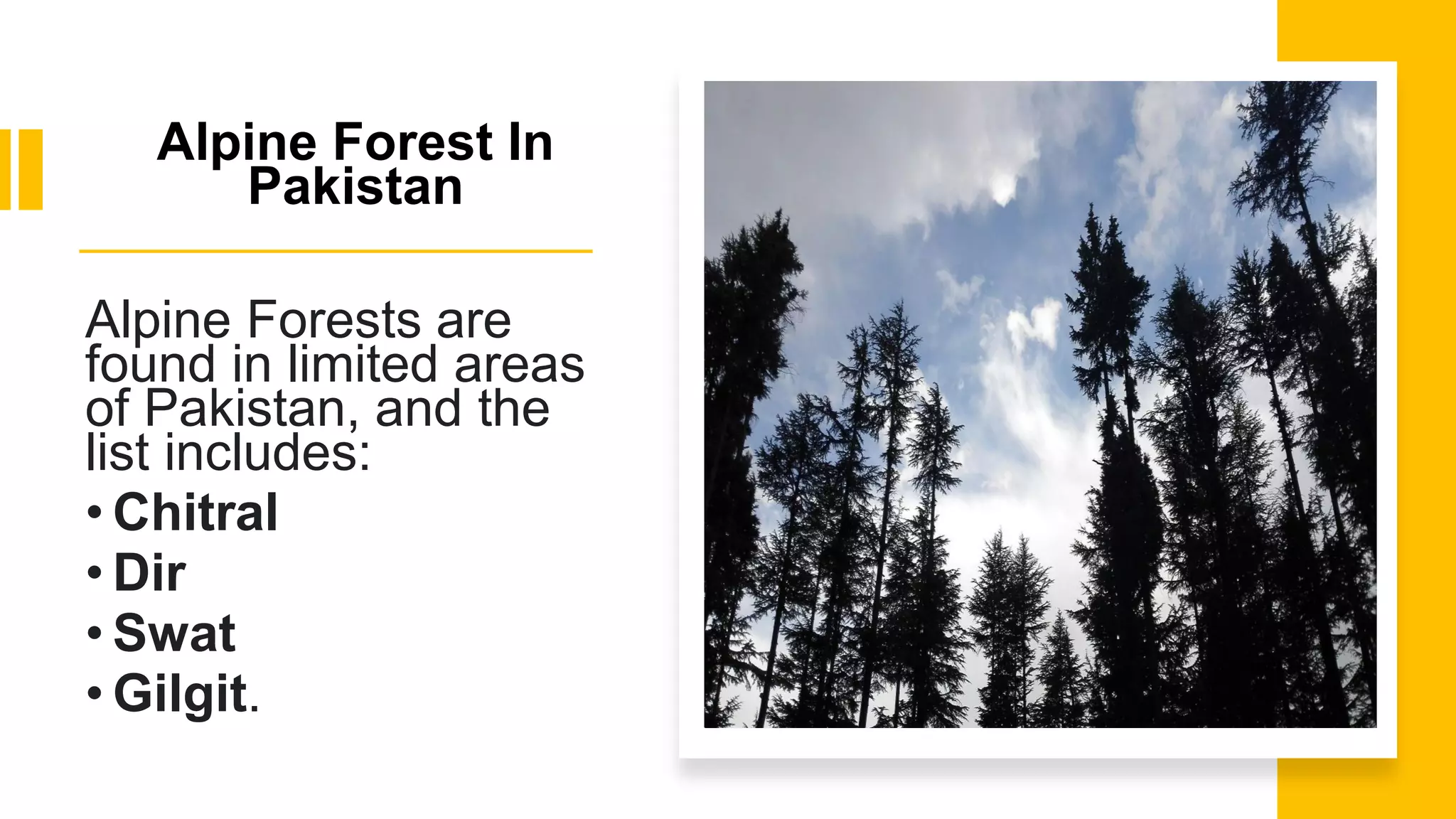
Alpine Forest In
Pakistan
Alpine Forests are
found in limited areas
of Pakistan, and the
list includes:
• Chitral
• Dir
• Swat
• Gilgit.
29
30
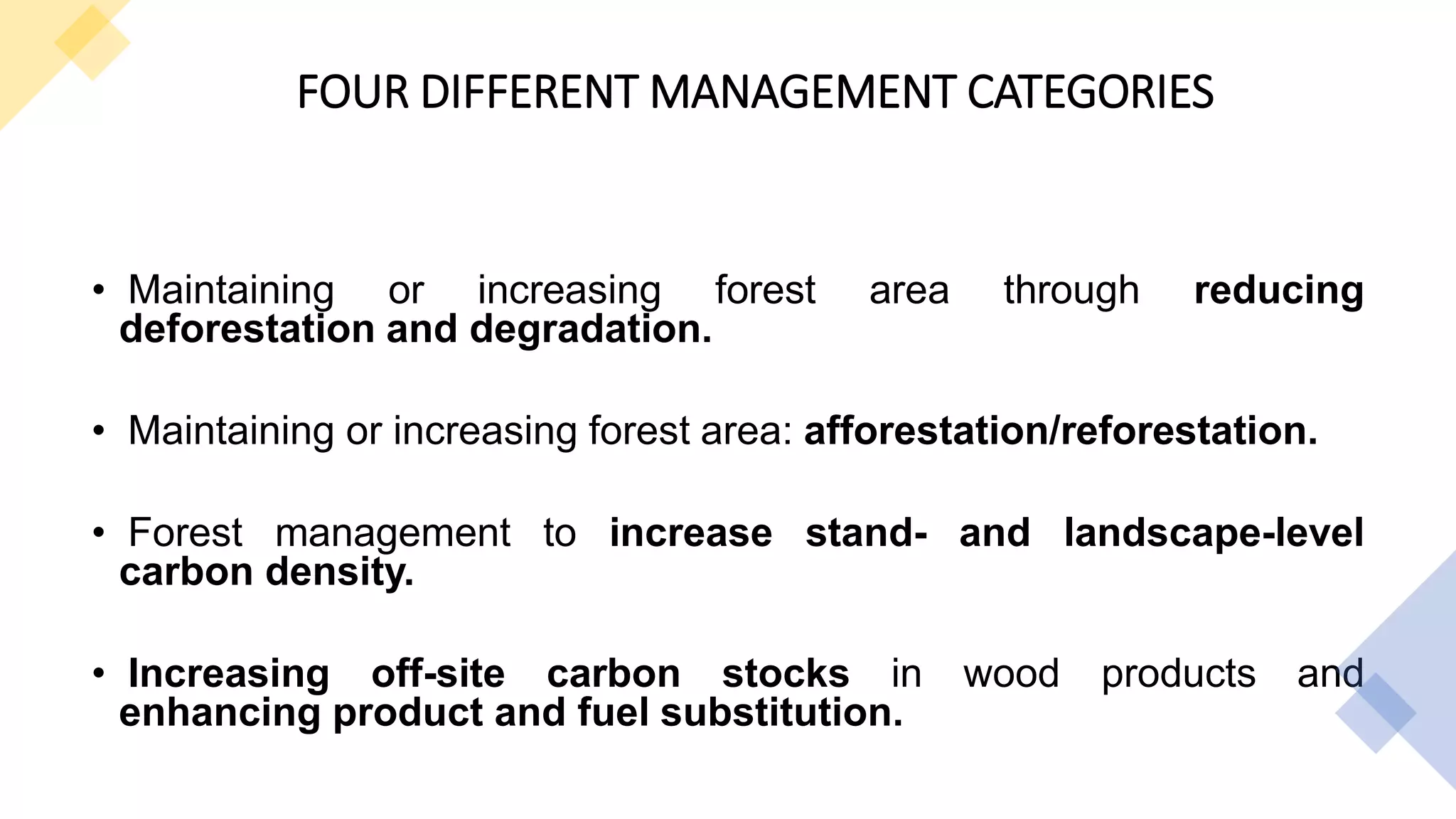
FOUR DIFFERENT MANAGEMENT CATEGORIES
• Maintaining or increasing forest area through reducing
deforestation and degradation.
• Maintaining or increasing forest area: afforestation/reforestation.
• Forest management to increase stand- and landscape-level
carbon density.
• Increasing off-site carbon stocks in wood products and
enhancing product and fuel substitution.
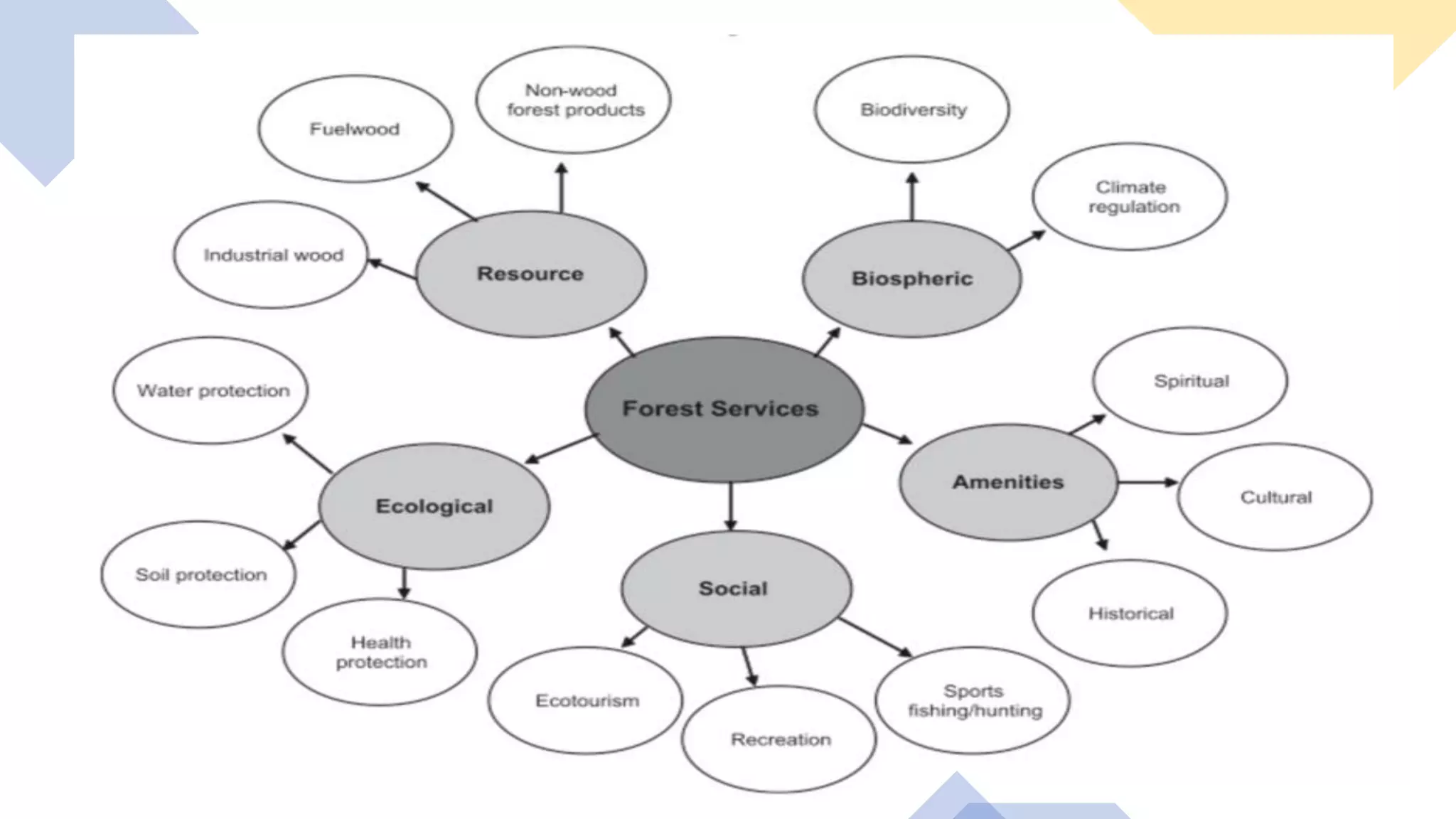
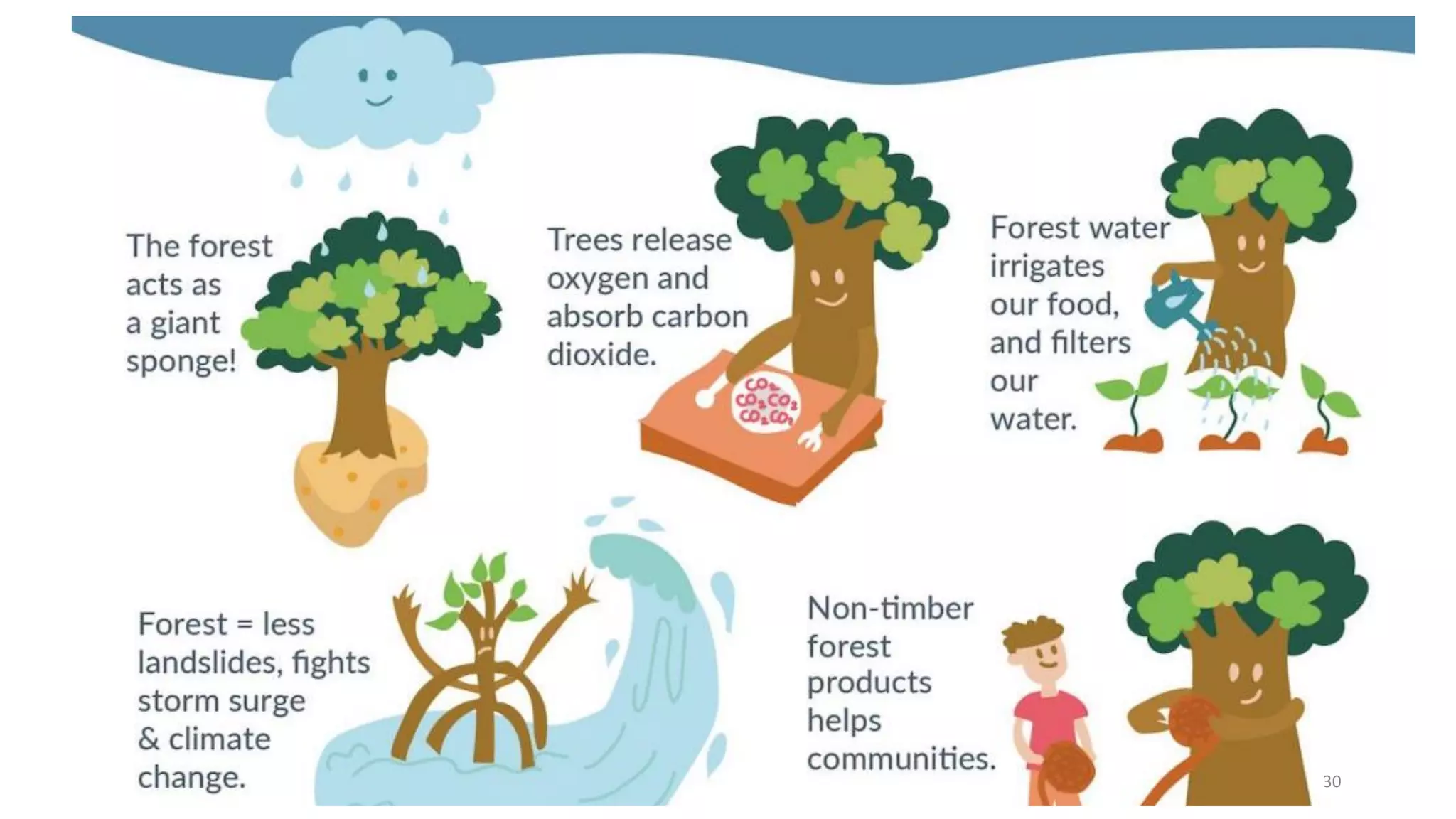
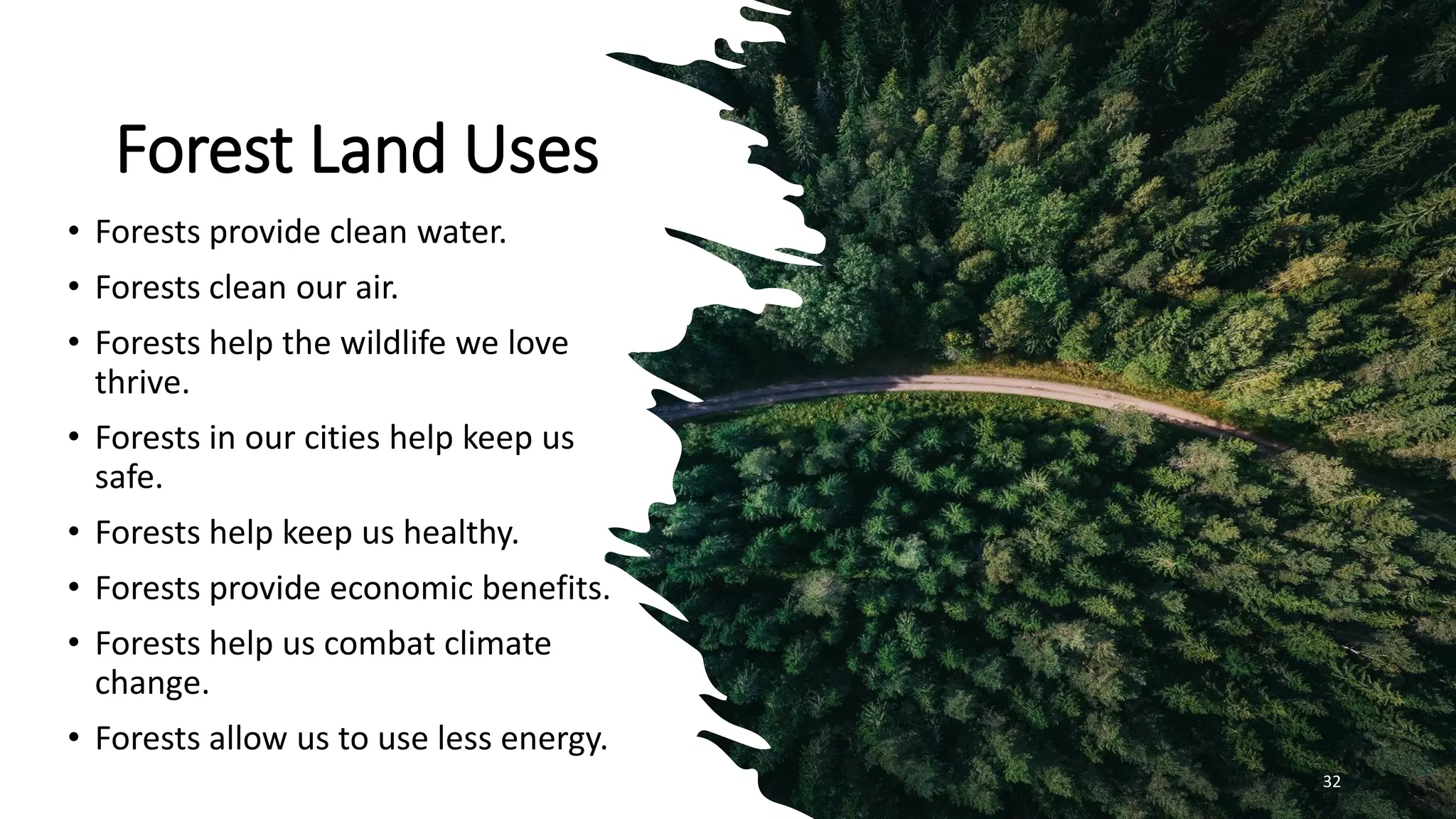
Forest Land Uses
• Forests provide clean water.
• Forests clean our air.
• Forests help the wildlife we love
thrive.
• Forests in our cities help keep us
safe.
• Forests help keep us healthy.
• Forests provide economic benefits.
• Forests help us combat climate
change.
• Forests allow us to use less energy.
32
33

Forest and its importance, Management and land uses.pdf

  • 1.
  • 2.
  • 3.
  • 4.
    WHAT IS FOREST? “Aforest is an area of land dominated by trees.” OR “Forest is a large uncultivated and uninhabited tract of land cover with trees of different shrubs and herbs.”
  • 5.
    5 ➢ Forests occupyroughly 40% of the total land. ➢ Forest ecosystems are areas of the landscape that are dominated by trees. ➢ It consist of biologically integrated communities of plants, animals and microbes, together with the local soils (substrates) and atmospheres (climates) with which they interact. ➢ Only diffused light reaches the ground. ➢ The floor of the forest is carpeted by plants, lichen and mosses.
  • 6.
  • 7.
    TYPES OF FOREST Tropical Forest Temperate Forest Dependingon climatic conditions the forests have been divided into Three categories: Alpine Forest
  • 8.
    Temperate forests ➢Temperate forestsare characterized as regions with high levels of precipitation, humidity, and a variety of deciduous trees, Decreasing temperatures and shortened daylight hours in fall mean decreased photosynthesis for plants. 8
  • 9.
  • 10.
    Climate ❑Temperatures range fromhot in the summer, with highs of 30°C, to extremely cold in the winter, with lows of -30°C. ❑Temperate forests receive abundant amounts of precipitation, usually between 20 and 60 inches of precipitation annually. ❑This precipitation is in the form of rain and snow.
  • 11.
    Flora ➢Temperate forests supporta wide variety of plant life and vegetation. ➢Vegetation exists in several layers, ranging from lichens and mosses. ➢Other examples of temperate forest vegetation include: • Forest canopy tier: Maple trees, walnut trees, birch trees • Small tree tier: Dogwoods, redbuds, shadbush • Shrub tier: Azaleas, mountain laurel, huckleberries • Herb tier: Blue bead lily, Indian cucumber, wild sarsaparilla • Floor tier: Lichens and mosses
  • 12.
  • 13.
    Fauna ➢Temperate forests are hometo a diverse wildlife biosystem including various insects and spiders, wolves, foxes, bears, coyotes, bobcats, mountain lions, eagles, rabbits, deer, skunks, squirrels, raccoons, squirrels, moose, snakes, and hummingbirds.
  • 14.
  • 15.
    Temperate Forest In Pakistan Locationof Temperate Deciduous and Mixed Forest Biome of Pakistan are: ➢Tribal Areas ➢Shangla ➢Azad Jammu Kashmir ➢Swat, Kaghan ➢Abbottabad ➢Murree ➢Mansehra
  • 16.
    Tropical forests ➢Tropical forestsalso refer to tropical rainforests, with continuous rainfall throughout the year. ❑These include evergreen, seasonal, cloud forests, tropical and subtropical forest. 16
  • 17.
    Location ➢The tropical forestsare situated in a broad zone outside the equator. ➢Globally these forests are found near the southern parts of Asia’s West coast of India. ➢Other tropical rainforest places include Eastern Madagascar, Assam, Australia, the Zaire basin, and Caribbean islands. 17
  • 18.
    Climate ➢The average temperaturein tropical rainforests ranges from 21 to 30°C. ➢The environment is pretty wet in tropical rainforests, maintaining a high humidity of 77% to 88% year-round. ➢The yearly rainfall ranges from 80 to 400 inches (200 to 1000 cm), and it can rain hard. 18
  • 19.
    Flora ➢Some examples oftropical trees include plumeria, ylang- ylang, ebony, teak, and palms. ➢Bird-of-paradise, and fire brush are some commonly- grown tropical shrubs and plants 19
  • 20.
    Fauna ❑The main animalsare ➢Monkeys ➢Blue Morpho Butterfly ➢Okapi ➢Jaguar ➢Capybara ➢Toucan ➢Poison Dart Frog. 20
  • 21.
    Tropical Forest In Pakistan ➢Thetropical thorn forests are dominated by xerophytic shrubs. ➢They are most widespread in the Punjab plains but also occupy small areas in southern Sindh and western Balochistan.
  • 22.
    Alpine forests ➢Alpine plantsare plants that grow in an alpine climate, which occurs at high elevation and above the tree line. ➢These include perennial grasses, sedges, forbs, cushion plants, mosses, and lichens. ➢Alpine plants are adapted to the harsh conditions of the alpine environment, which include low temperatures, dryness, ultraviolet radiation, wind, drought, poor nutritional soil, and a short growing season. 22
  • 23.
    • Photosynthesis andrespiration rates are not uniform throughout the growing season. • Alpine forests are found primarily in mountainous areas. • Alpine forests can be found all over the Himalayas, at altitudes ranging from 2,900 to 3,500 m or even up to 3800 m above sea level, depending on the location and variety of plants. 23
  • 24.
    Location ➢ Alpine biomesoccur at high altitudes within any latitude worldwide. ➢ Alpine biome are found in the following regions: • The Himalayas in Asia • American Cordillera in North and South America • The Rift Mountains of Africa • The Caucasus Mountains • A substantial extent of the Tibetan Plateau 24
  • 25.
    Climate ➢The climate ofalpine biomes is somewhat dynamic. ➢Temperatures normally drop by about 10oC for every 1000 meters as you go up a mountain. ➢The biome experiences a long, cold winter season, lasting about nine months. ➢Summer temperatures normally range from 4-15 °C. However, these temperatures can normally drop from warm to freezing within a day. ➢This region receive about one foot (30 cm) of precipitation annually. 25
  • 26.
    Flora ❑Alpine biomes arecharacterized by small groundcover plants. ❑These plants take longer to grow and reproduce. They shield themselves from the cold and windy conditions by staying as close to the ground as possible. ➢Glory of the snow ➢Bear grass ➢Moss campion ➢Bristlecone pine 26
  • 27.
    Fauna • Sheep • Mountaingoats • Snow leopard • Beetles • Ptarmigan bird • Snowshoe rabbit • Marmot 27
  • 28.
    Alpine Forest In Pakistan AlpineForests are found in limited areas of Pakistan, and the list includes: • Chitral • Dir • Swat • Gilgit.
  • 29.
  • 30.
  • 31.
    FOUR DIFFERENT MANAGEMENTCATEGORIES • Maintaining or increasing forest area through reducing deforestation and degradation. • Maintaining or increasing forest area: afforestation/reforestation. • Forest management to increase stand- and landscape-level carbon density. • Increasing off-site carbon stocks in wood products and enhancing product and fuel substitution.
  • 32.
    Forest Land Uses •Forests provide clean water. • Forests clean our air. • Forests help the wildlife we love thrive. • Forests in our cities help keep us safe. • Forests help keep us healthy. • Forests provide economic benefits. • Forests help us combat climate change. • Forests allow us to use less energy. 32
  • 33.