What is Allelopathy?
The word allelopathy derives from two separate words.
They are allelon which means "of each other", and pathos which means "to
suffer".
Allelopathy refers to the chemical inhibition of one species by
another. The "inhibitory" chemical is released into the
environment where it affects the development and growth of
neighboring plants.
Allelopathic chemicals can be present in any part of the plant.
They can be found in leaves, flowers, roots, fruits, or stems. They can also
be found in the surrounding soil.
Allelopathy: Allelopathy is the production of chemical(s) or
exudates by living and decaying plant species which interfere with
the germination, growth or development of another plant species or
microorganism sharing the same habitat.
Examples of allelopathic plants:
1. Black walnut (Juglans nigra)
2. Sorghum
3. Lantana
4. Imperata cylindrica is allelopathic on tomato, cucumber, maize
rice, glnut, olera, cowpea, pepper.
5. Cyperus esculentus– is allelopathic a rice, maize
6. C. rotundus – is allelopathic on barley
Plant canopy: Major effect of plant canopy is to shade
the understorey plants and limit their ability to synthesize
carbohydrates.
A competitive crop should be able to establish complete
ground cover.
Some low grow crops which can provide early ground
cover and shade out weeds when intercropped with other
crops are melon and sweat potato
 Allelopathy refers to the beneficial or harmful effects of one
plant on another plant, both crop and weed species, from
the release of biochemicals, known as allelochemicals, from
plant parts by leaching, root exudation, volatilization, residue
decomposition, and other processes in both natural and
agricultural systems.
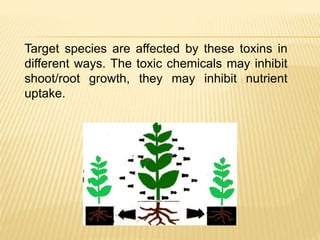
Target species are affected by these toxins in
different ways. The toxic chemicals may inhibit
shoot/root growth, they may inhibit nutrient
uptake.
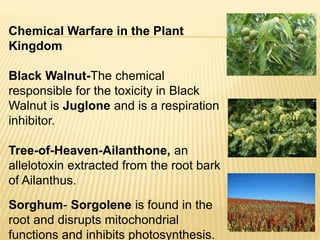
Chemical Warfare in the Plant
Kingdom
Black Walnut-The chemical
responsible for the toxicity in Black
Walnut is Juglone and is a respiration
inhibitor.
Tree-of-Heaven-Ailanthone, an
allelotoxin extracted from the root bark
of Ailanthus.
Sorghum- Sorgolene is found in the
root and disrupts mitochondrial
functions and inhibits photosynthesis.
EXAMPLES OF ALLELOPATHIC CHEMICAL INCLUDES
 Caffeic acid
 Chlorogenic acid
 Ferulic acid
 Gallic acid
 Vanillic acid
 Vanillin
PRODUCTION OF ALLELOCHEMICAL
 Allelochemical produce by weeds affect crops. They
are produced by any plant organ, with roots, seeds,
leaves being the most common sources flower and
fruits may also produce allelopathic chemical but
these are of less value in term of allelopathic effect.
 Allelochemical enter the environment though
volatilization foliage leaching or root exudation. They
may also result from decomposition of plant residues,
numerous chemicals present in plant material, are
also released when plant residues are left on the soil
surface after harvest or they are released during
decomposition of the plant residues.

Have you noticed allelopathy or allelopathic-like
influences in your neighborhood?Elsewhere?
Why is studying allelopathy important?
What are some beneficial implications of
allelopathy? How can these be used for the
betterment of the planet?

allelopathyPpt.pptx

  • 1.
    What is Allelopathy? Theword allelopathy derives from two separate words. They are allelon which means "of each other", and pathos which means "to suffer". Allelopathy refers to the chemical inhibition of one species by another. The "inhibitory" chemical is released into the environment where it affects the development and growth of neighboring plants. Allelopathic chemicals can be present in any part of the plant. They can be found in leaves, flowers, roots, fruits, or stems. They can also be found in the surrounding soil.
  • 2.
    Allelopathy: Allelopathy isthe production of chemical(s) or exudates by living and decaying plant species which interfere with the germination, growth or development of another plant species or microorganism sharing the same habitat. Examples of allelopathic plants: 1. Black walnut (Juglans nigra) 2. Sorghum 3. Lantana 4. Imperata cylindrica is allelopathic on tomato, cucumber, maize rice, glnut, olera, cowpea, pepper. 5. Cyperus esculentus– is allelopathic a rice, maize 6. C. rotundus – is allelopathic on barley
  • 3.
    Plant canopy: Majoreffect of plant canopy is to shade the understorey plants and limit their ability to synthesize carbohydrates. A competitive crop should be able to establish complete ground cover. Some low grow crops which can provide early ground cover and shade out weeds when intercropped with other crops are melon and sweat potato
  • 4.
     Allelopathy refersto the beneficial or harmful effects of one plant on another plant, both crop and weed species, from the release of biochemicals, known as allelochemicals, from plant parts by leaching, root exudation, volatilization, residue decomposition, and other processes in both natural and agricultural systems.
  • 5.
    Target species areaffected by these toxins in different ways. The toxic chemicals may inhibit shoot/root growth, they may inhibit nutrient uptake.
  • 6.
    Chemical Warfare inthe Plant Kingdom Black Walnut-The chemical responsible for the toxicity in Black Walnut is Juglone and is a respiration inhibitor. Tree-of-Heaven-Ailanthone, an allelotoxin extracted from the root bark of Ailanthus. Sorghum- Sorgolene is found in the root and disrupts mitochondrial functions and inhibits photosynthesis.
  • 7.
    EXAMPLES OF ALLELOPATHICCHEMICAL INCLUDES  Caffeic acid  Chlorogenic acid  Ferulic acid  Gallic acid  Vanillic acid  Vanillin
  • 8.
    PRODUCTION OF ALLELOCHEMICAL Allelochemical produce by weeds affect crops. They are produced by any plant organ, with roots, seeds, leaves being the most common sources flower and fruits may also produce allelopathic chemical but these are of less value in term of allelopathic effect.  Allelochemical enter the environment though volatilization foliage leaching or root exudation. They may also result from decomposition of plant residues, numerous chemicals present in plant material, are also released when plant residues are left on the soil surface after harvest or they are released during decomposition of the plant residues. 
  • 9.
    Have you noticedallelopathy or allelopathic-like influences in your neighborhood?Elsewhere? Why is studying allelopathy important? What are some beneficial implications of allelopathy? How can these be used for the betterment of the planet?