

Alien species
Definitions
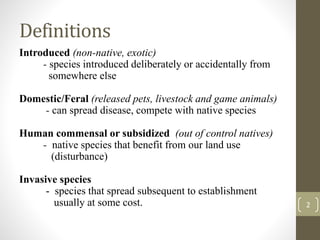
Introduced (non-native, exotic)
- species introduced deliberately or accidentally from
somewhere else
Domestic/Feral (released pets, livestock and game animals)
- can spread disease, compete with native species
Human commensal or subsidized (out of control natives)
- native species that benefit from our land use
(disturbance)
Invasive species
- species that spread subsequent to establishment
usually at some cost. 2
Nature of introductions
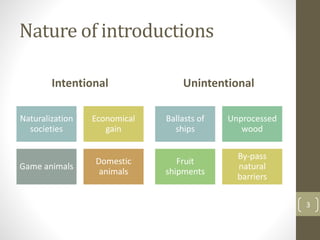
Intentional
Naturalization
societies
Economical
gain
Game animals
Domestic
animals
Unintentional
Ballasts of
ships
Unprocessed
wood
Fruit
shipments
By-pass
natural
barriers
3
Vectors of invasion into
ecosystems
Intentional
Release of
Target
Species into
Containment
Escapes from Zoos and Botanical
Gardens
Farmed Species
Aquaculture
Research
Intentional
Release of
Target
Species into
the
Environment
Plants for Agriculture
Plants for Forestry
Plants for Soil Improvements (fire suppression, erosion control)
Ornamental Plants
Birds and Mammals for Hunting
Biological Control
Released Pets and Pet Trade
4
Vectors of invasion into
ecosystems
Release of
Non-Target
Species
(AKA
“Accidental”
Releases):
Contaminants or Hitchhikers with Produce
Contaminants or Hitchhikers with Ornamental Plants
Contaminants or Hitchhikers with Aquaculture
Timber
Contaminants of Seed Stock
Cars
Planes
Hitchhikers with Packing Material, Cargo
Ballast in ships
Hull Fouling
Tourists, Luggage
Canals
5
Why study biological
invasions?
Consequences
Threaten biodiversity
Costly
Widespread
Unique opportunities for
research
Community ecology
Animal behavior
Evolution
6
Estimated annual costs associated with
non-native species
Group Cost (in millions, US $)
Plants 34,000
Mammals 37,000
Birds 2,000
Fishes 1,000
Anthropods 19,000
Mollusks 1,200
Microbes 41,000
All organisms over $136 billion per year
7
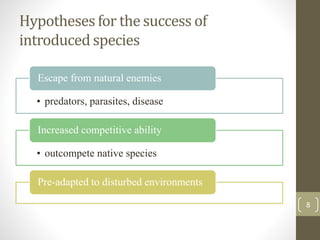
Hypotheses for the success of
introduced species
• predators, parasites, disease
Escape from natural enemies
• outcompete native species
Increased competitive ability
Pre-adapted to disturbed environments
8
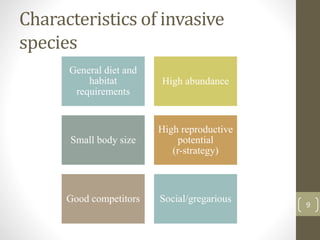
Characteristics of invasive
species
General diet and
habitat
requirements
High abundance
Small body size
High reproductive
potential
(r-strategy)
Good competitors Social/gregarious
9
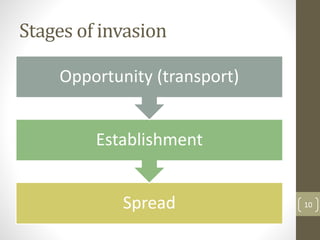
Stages of invasion
Spread
Establishment
Opportunity (transport)
10
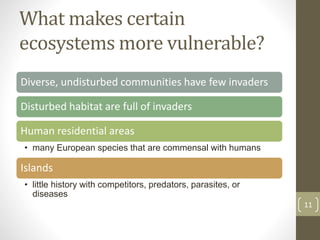
What makes certain
ecosystems more vulnerable?
Diverse, undisturbed communities have few invaders
Disturbed habitat are full of invaders
Human residential areas
• many European species that are commensal with humans
Islands
• little history with competitors, predators, parasites, or
diseases
11
12
13

Alien species

  • 1.
  • 2.
    Definitions Introduced (non-native, exotic) -species introduced deliberately or accidentally from somewhere else Domestic/Feral (released pets, livestock and game animals) - can spread disease, compete with native species Human commensal or subsidized (out of control natives) - native species that benefit from our land use (disturbance) Invasive species - species that spread subsequent to establishment usually at some cost. 2
  • 3.
    Nature of introductions Intentional Naturalization societies Economical gain Gameanimals Domestic animals Unintentional Ballasts of ships Unprocessed wood Fruit shipments By-pass natural barriers 3
  • 4.
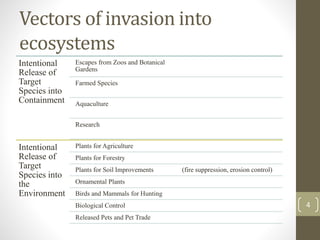
    Vectors of invasioninto ecosystems Intentional Release of Target Species into Containment Escapes from Zoos and Botanical Gardens Farmed Species Aquaculture Research Intentional Release of Target Species into the Environment Plants for Agriculture Plants for Forestry Plants for Soil Improvements (fire suppression, erosion control) Ornamental Plants Birds and Mammals for Hunting Biological Control Released Pets and Pet Trade 4
  • 5.
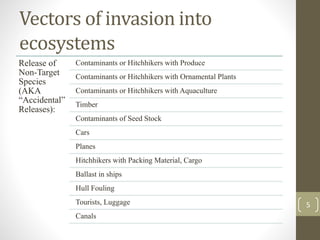
    Vectors of invasioninto ecosystems Release of Non-Target Species (AKA “Accidental” Releases): Contaminants or Hitchhikers with Produce Contaminants or Hitchhikers with Ornamental Plants Contaminants or Hitchhikers with Aquaculture Timber Contaminants of Seed Stock Cars Planes Hitchhikers with Packing Material, Cargo Ballast in ships Hull Fouling Tourists, Luggage Canals 5
  • 6.
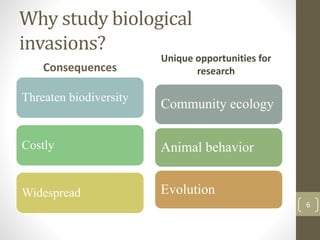
    Why study biological invasions? Consequences Threatenbiodiversity Costly Widespread Unique opportunities for research Community ecology Animal behavior Evolution 6
  • 7.
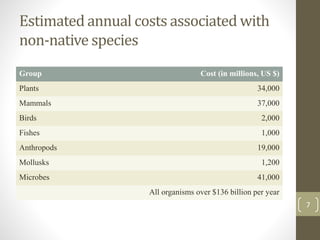
    Estimated annual costsassociated with non-native species Group Cost (in millions, US $) Plants 34,000 Mammals 37,000 Birds 2,000 Fishes 1,000 Anthropods 19,000 Mollusks 1,200 Microbes 41,000 All organisms over $136 billion per year 7
  • 8.
    Hypotheses for thesuccess of introduced species • predators, parasites, disease Escape from natural enemies • outcompete native species Increased competitive ability Pre-adapted to disturbed environments 8
  • 9.
    Characteristics of invasive species Generaldiet and habitat requirements High abundance Small body size High reproductive potential (r-strategy) Good competitors Social/gregarious 9
  • 10.
  • 11.
    What makes certain ecosystemsmore vulnerable? Diverse, undisturbed communities have few invaders Disturbed habitat are full of invaders Human residential areas • many European species that are commensal with humans Islands • little history with competitors, predators, parasites, or diseases 11
  • 12.
  • 13.

Editor's Notes