Global BiodiversityGlobal Biodiversity
What is Biodiversity?
We’ll get to that, but
first. . . .
Let’s take a step back
in time.
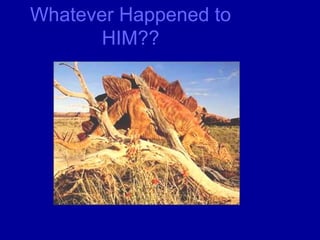
Whatever Happened to
HIM??
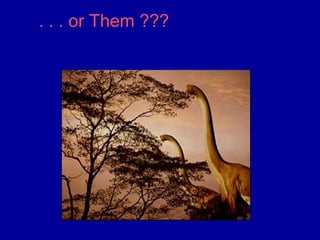
. . . or Them ???
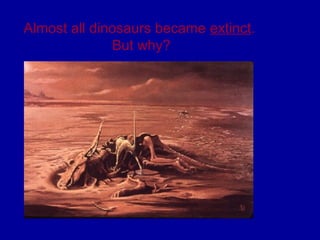
Almost all dinosaurs became extinct.
But why?
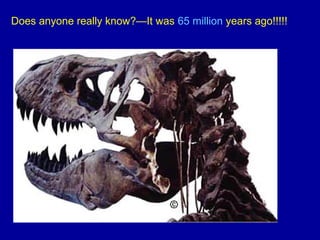
Does anyone really know?—It was 65 million years ago!!!!!
Could it have been “natural”
extinction?
Natural extinction happens when a
species fails to adapt to the
environment (or changes in the
environment) as efficiently as other
species and eventually dies off.
May have played a role, but scientists think there
was a more dramatic contributing cause . . .
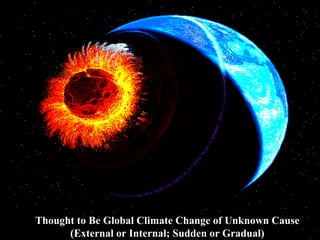
Thought to Be Global Climate Change of Unknown Cause
(External or Internal; Sudden or Gradual)
Mass Extinction
• When more than 50% (half) of all known,
living species become extinct in a short
period of time (less than 2 million years)
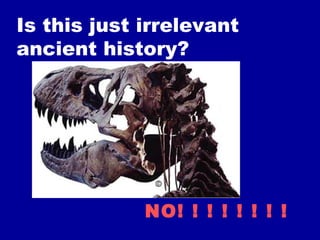
Is this just irrelevant
ancient history?
NO! ! ! ! ! ! ! !
Why it’s relevant:
• The mass extinction involving the
dinosaurs was only one in a series of
known mass extinctions. There have
been others. Some scientists think we are
on the verge of yet another in our
lifetimes.
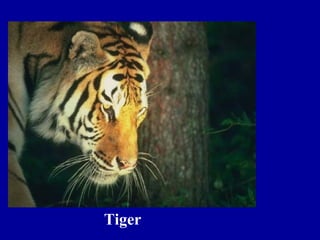
Tiger
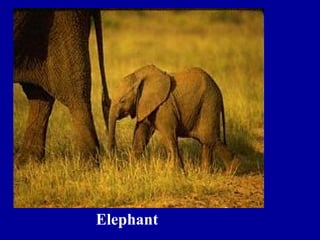
Elephant
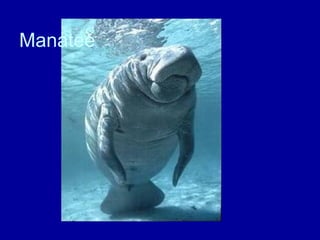
Manatee
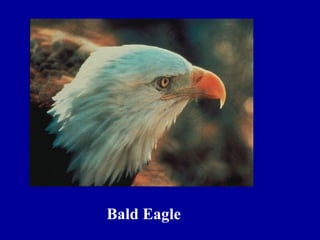
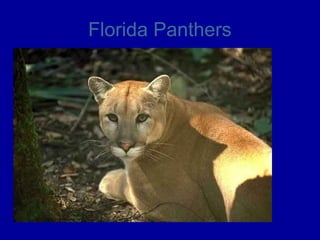
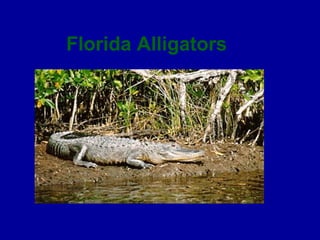
Bald Eagle
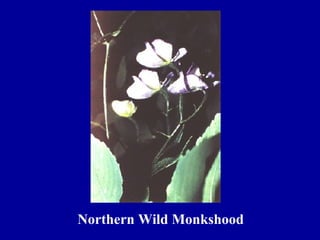
Northern Wild Monkshood
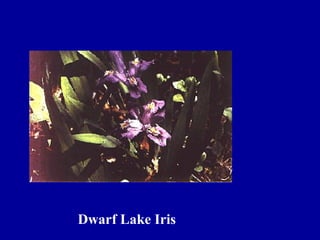
Dwarf Lake Iris
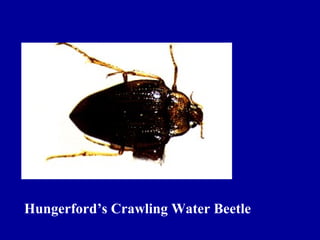
Hungerford’s Crawling Water Beetle
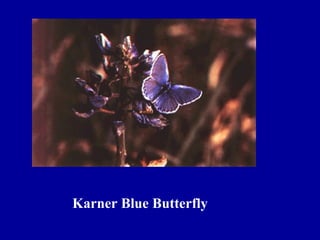
Karner Blue Butterfly
What do these species have
in common with dinosaurs?
They, too could
become EXTINCT!
Species
• Group of organisms capable of
interbreeding (reproducing) with each
other but not with other groups.
Species at Risk—
2 types
• “Endangered Species”: Species that are at
risk of becoming extinct in the near future
throughout much or all of their habitat range.
• “Threatened Species”: Species that are at
risk but not yet in as much danger as
endangered species. They are likely to become
endangered in the near future.
Notes About Endangered
and Threatened Species
• NOT JUST ANIMAL SPECIES! Includes
plant and insect species as well.
• Worldwide, there are at least 1832
endangered or threatened species. And
that’s just the official list!
• Over 1,000 are found in the United States.
• About half the counties in the U.S. contain
endangered or threatened species.
What’s the connection
between endangered
species and “biodiversity?”
Biodiversity is…
• Variety among all levels of life on
Earth. The two main levels for
thinking about biodiversity are the
species level and the ecosystems
level.
• We’ll discuss the current threats to
biodiversity by first looking at species,
then we’ll discuss ecosystems. The
same threats affect both levels of
biodiversity.
(Among other
things) WE DO!!
What threatens biodiversity today?
Human civilization and economic
activity put pressure on aspects of
biodiversity. The present rate of
extinction is believed to be much
higher than can be explained totally
by natural causes. We must be
careful to balance our needs with
those of other species.
Three major human-related threats
to biodiversity
• Trade (and illegal poaching)
• Development/ Loss of
Habitat
• Pollution
Threat One: Trade
• What is trade? Trade is traffic in goods,
such as by gift, barter (swapping), or sale.
• People all over the world engage in trade,
on the local, national, or global level.
• Sometimes when species are taken from
the wild or from other settings to be traded,
we refer to this as harvesting the species.
How do harvesting and trade affect
species?
• Some species are hunted for their meat,
their fur, or other parts of their body (such
as elephants for their ivory). Some are
sought as pets. Some of this trade is legal,
but some is illegal (poaching).
• If too many species are hunted or harvested
too quickly, the species population may
shrink. Not enough young are born to
become adults and make up for those being
harvested.
• Other animals can be indirectly harmed in
the process of other animals being hunted
or harvested (such as dolphins caught in
tuna nets).
What is Poaching?
The illegal practice of trespassing on private
or protected property (such as national parks
or wildlife preserves) to hunt, fish, or steal
game.
Also includes illegally removing game, fish,
plants, or parts of animals to trade illegally.
Illegal hunting is a major problem for certain
wildlife populations around the world. In
some areas poaching is devastating wildlife
and its ecosystems.
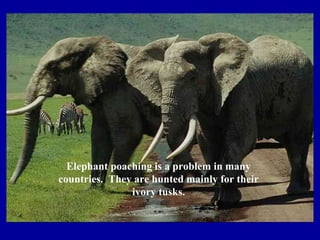
Elephant poaching is a problem in many
countries. They are hunted mainly for their
ivory tusks.
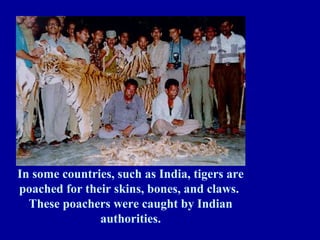
In some countries, such as India, tigers are
poached for their skins, bones, and claws.
These poachers were caught by Indian
authorities.
Why poach?
• As species become more and more
endangered, each remaining specimen
becomes more and more valuable. Some
people are willing to pay a lot of money to
get rare goods associated with these
species. This creates an incentive for
people to hunt, or “take” the species, even
though they are protected by law. The
poachers want to make money from this,
which usually is more than they could make
at other jobs.
Regulating Poaching
• Many individual countries have enacted specific
laws outlawing poaching of various species and
their products.
• Some international laws have also been put in
place to outlaw trade in endangered species.
• But the behavior is difficult to control. Sale of
poached goods provides income for the
poachers, who do not want to stop.
Some plants are illegally traded
too!
• Agarwood, the fragrant wood produced by a
species of the Asian Aquilaria tree family,
may be over-exploited to commercial
extinction due to over harvesting and illegal
trade.
• Ocean plants are also sometimes illegally
traded, which harms other species in their
ecosystems
Threat Two: Development
“Development” refers
to processes that
transform a place to
make it suitable for
commercial or
residential purposes.
Destroying animal’s habitats
Destroying some animals’ food sources
(such as plants)
Bringing pollution to previously
clean areas
Development can threaten
biodiversity by:
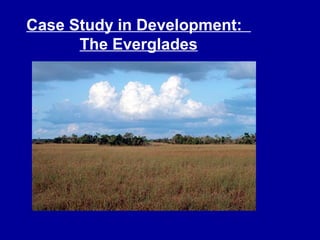
Case Study in Development:
The Everglades
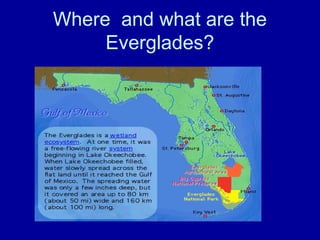
Where and what are the
Everglades?
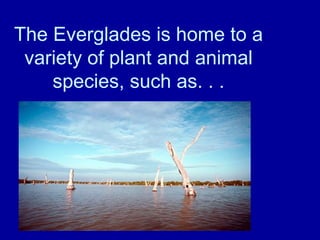
The Everglades is home to a
variety of plant and animal
species, such as. . .
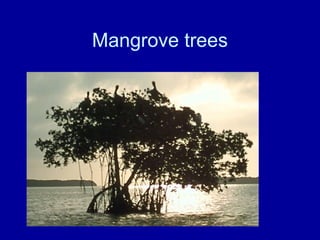
Mangrove trees
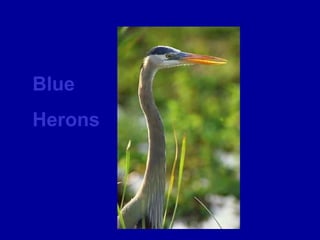
Blue
Herons
Florida Panthers
Florida Alligators
How are the species of the
Everglades threatened by
development?
• 900 people move to Florida each day
• 39 million people vacation in Florida
annually
• 12 million people spend the winter in
Florida
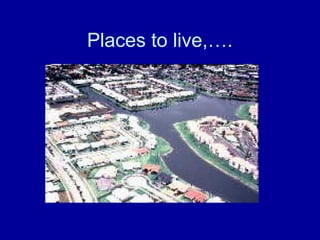
And all those people need…
Places to live,….

Global biodiversity

  • 1.
  • 2.
    What is Biodiversity? We’llget to that, but first. . . . Let’s take a step back in time.
  • 3.
  • 4.
    . . .or Them ???
  • 5.
    Almost all dinosaursbecame extinct. But why?
  • 6.
    Does anyone reallyknow?—It was 65 million years ago!!!!!
  • 7.
    Could it havebeen “natural” extinction? Natural extinction happens when a species fails to adapt to the environment (or changes in the environment) as efficiently as other species and eventually dies off. May have played a role, but scientists think there was a more dramatic contributing cause . . .
  • 8.
    Thought to BeGlobal Climate Change of Unknown Cause (External or Internal; Sudden or Gradual)
  • 9.
    Mass Extinction • Whenmore than 50% (half) of all known, living species become extinct in a short period of time (less than 2 million years)
  • 10.
    Is this justirrelevant ancient history? NO! ! ! ! ! ! ! !
  • 11.
    Why it’s relevant: •The mass extinction involving the dinosaurs was only one in a series of known mass extinctions. There have been others. Some scientists think we are on the verge of yet another in our lifetimes.
  • 12.
  • 13.
  • 14.
  • 15.
  • 16.
  • 17.
  • 18.
  • 19.
  • 20.
    What do thesespecies have in common with dinosaurs? They, too could become EXTINCT!
  • 21.
    Species • Group oforganisms capable of interbreeding (reproducing) with each other but not with other groups.
  • 22.
    Species at Risk— 2types • “Endangered Species”: Species that are at risk of becoming extinct in the near future throughout much or all of their habitat range. • “Threatened Species”: Species that are at risk but not yet in as much danger as endangered species. They are likely to become endangered in the near future.
  • 23.
    Notes About Endangered andThreatened Species • NOT JUST ANIMAL SPECIES! Includes plant and insect species as well. • Worldwide, there are at least 1832 endangered or threatened species. And that’s just the official list! • Over 1,000 are found in the United States. • About half the counties in the U.S. contain endangered or threatened species.
  • 24.
    What’s the connection betweenendangered species and “biodiversity?”
  • 25.
    Biodiversity is… • Varietyamong all levels of life on Earth. The two main levels for thinking about biodiversity are the species level and the ecosystems level. • We’ll discuss the current threats to biodiversity by first looking at species, then we’ll discuss ecosystems. The same threats affect both levels of biodiversity.
  • 26.
    (Among other things) WEDO!! What threatens biodiversity today? Human civilization and economic activity put pressure on aspects of biodiversity. The present rate of extinction is believed to be much higher than can be explained totally by natural causes. We must be careful to balance our needs with those of other species.
  • 27.
    Three major human-relatedthreats to biodiversity • Trade (and illegal poaching) • Development/ Loss of Habitat • Pollution
  • 28.
    Threat One: Trade •What is trade? Trade is traffic in goods, such as by gift, barter (swapping), or sale. • People all over the world engage in trade, on the local, national, or global level. • Sometimes when species are taken from the wild or from other settings to be traded, we refer to this as harvesting the species.
  • 29.
    How do harvestingand trade affect species? • Some species are hunted for their meat, their fur, or other parts of their body (such as elephants for their ivory). Some are sought as pets. Some of this trade is legal, but some is illegal (poaching). • If too many species are hunted or harvested too quickly, the species population may shrink. Not enough young are born to become adults and make up for those being harvested. • Other animals can be indirectly harmed in the process of other animals being hunted or harvested (such as dolphins caught in tuna nets).
  • 30.
    What is Poaching? Theillegal practice of trespassing on private or protected property (such as national parks or wildlife preserves) to hunt, fish, or steal game. Also includes illegally removing game, fish, plants, or parts of animals to trade illegally. Illegal hunting is a major problem for certain wildlife populations around the world. In some areas poaching is devastating wildlife and its ecosystems.
  • 31.
    Elephant poaching isa problem in many countries. They are hunted mainly for their ivory tusks.
  • 32.
    In some countries,such as India, tigers are poached for their skins, bones, and claws. These poachers were caught by Indian authorities.
  • 33.
    Why poach? • Asspecies become more and more endangered, each remaining specimen becomes more and more valuable. Some people are willing to pay a lot of money to get rare goods associated with these species. This creates an incentive for people to hunt, or “take” the species, even though they are protected by law. The poachers want to make money from this, which usually is more than they could make at other jobs.
  • 34.
    Regulating Poaching • Manyindividual countries have enacted specific laws outlawing poaching of various species and their products. • Some international laws have also been put in place to outlaw trade in endangered species. • But the behavior is difficult to control. Sale of poached goods provides income for the poachers, who do not want to stop.
  • 35.
    Some plants areillegally traded too! • Agarwood, the fragrant wood produced by a species of the Asian Aquilaria tree family, may be over-exploited to commercial extinction due to over harvesting and illegal trade. • Ocean plants are also sometimes illegally traded, which harms other species in their ecosystems
  • 36.
    Threat Two: Development “Development”refers to processes that transform a place to make it suitable for commercial or residential purposes.
  • 37.
    Destroying animal’s habitats Destroyingsome animals’ food sources (such as plants) Bringing pollution to previously clean areas Development can threaten biodiversity by:
  • 38.
    Case Study inDevelopment: The Everglades
  • 39.
    Where and whatare the Everglades?
  • 40.
    The Everglades ishome to a variety of plant and animal species, such as. . .
  • 41.
  • 42.
  • 43.
  • 44.
  • 45.
    How are thespecies of the Everglades threatened by development? • 900 people move to Florida each day • 39 million people vacation in Florida annually • 12 million people spend the winter in Florida And all those people need…
  • 46.

Editor's Notes

  • #15 The large mammals spend a lot of time close to the top of the water, which brings them into contact with recreational boaters frequently.
  • #16 DDT was banned in the United States in 1972. Many other countries are looking to phase out the chemical. Laws were passed to protect them from illegal hunting. Special protected areas, called refuges were created all over the United States for eagles to live and breed.
  • #26 A third component is genetic material, but this may be difficult to explain.
  • #32 In the 1970s, the global demand for ivory threatened to make the elephant extinct. Poachers, with access to automatic weapons derived from civil wars and international arms sales, were killing herds of elephants faster than ever before. From 1970 to 1985, the total elephant population of Africa decreased by half. At a 1989, CITES (Convention on International Trade in Endangered Species of Wildlife Fauna and Flora) meeting, 115 countries decided to ban the international trade of ivory in the hopes of restoring elephant populations to healthy levels. The years 1996 and 1997 witnessed an effort of southern African countries to lift, at least partially, this ban. Elephant populations in Africa as a whole are increasing, in part, thanks to the CITES ban and listing of elephants on the most endangered species list.
  • #33 Caption (from internet): Seizure of a tiger skin and tiger bones at Ramnagar near Corbett National Park (U.P.) (India). The two offenders are sitting on the ground. They are surrounded by members of the U.P. Forest Departrment, who carried out the operation assisted by WPSI. The two offenders are sitting on the ground. People standing belong to the U.P. Forest Department