Challenging LearningJames Nottingham    www.p4c.comwww.jamesnottingham.co.uk
Praise can make pupils scared of challengeOur praise often teaches pupils that easy success means they are intelligent and, by implication, that errors and effort mean they are not. Prof Carol Dweck, Mindset
Focusing on learning“Pupils show greater motivation, are better behaved and are more likely to be independent and strategic thinkers when teachers are not obsessed by grades.”“If there is one new thing we need in our school system right now, it is a well-developed focus on learning.”Chris Watkins, Institute of Education, Aug 2010From an analysis of 100 international studies on how children learn
Carol Dweckwww.carol-dweck.co.uk
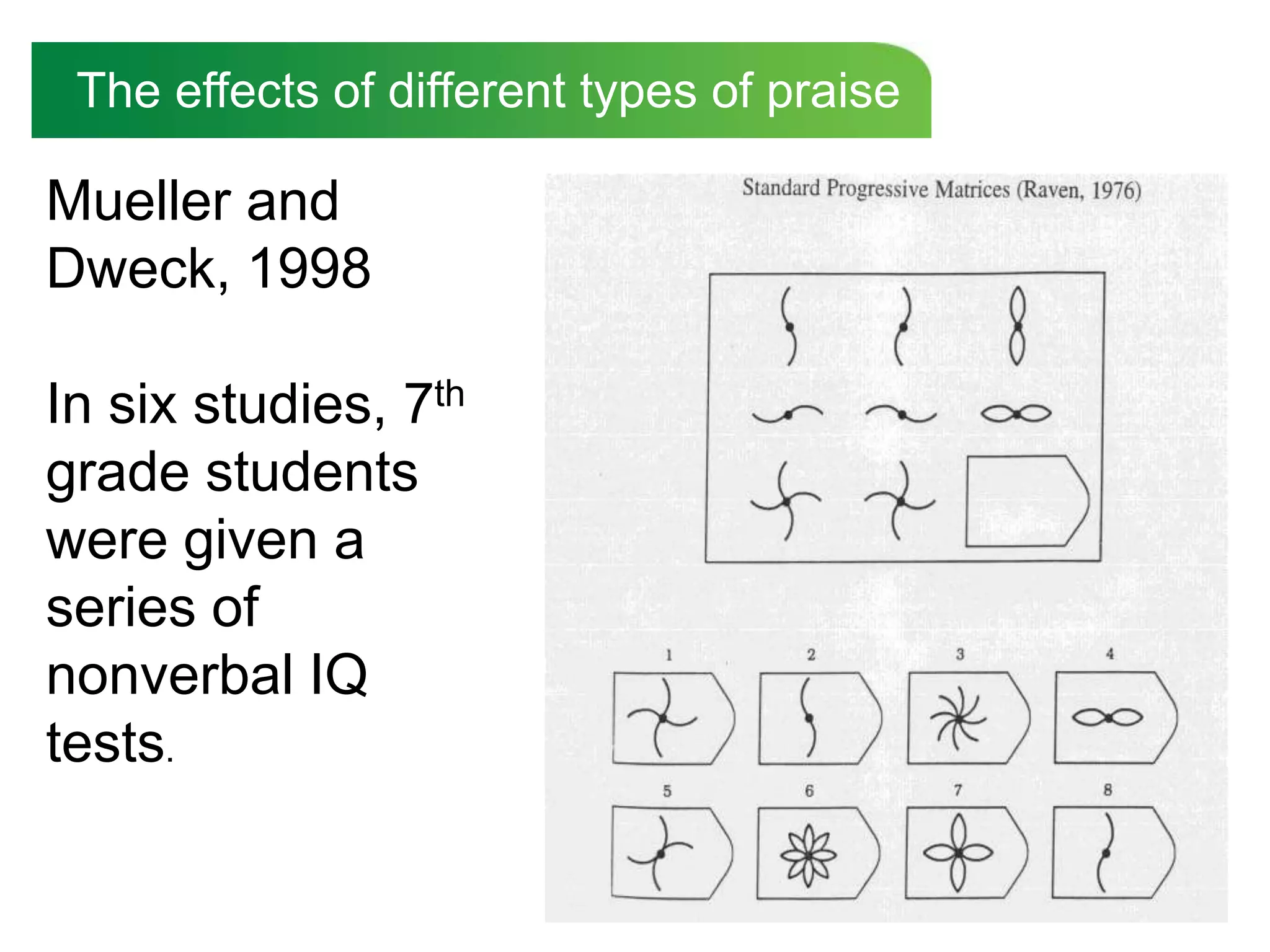
The effects of different types of praise Mueller and Dweck, 1998In six studies, 7th grade students were given a series of nonverbal IQ tests.
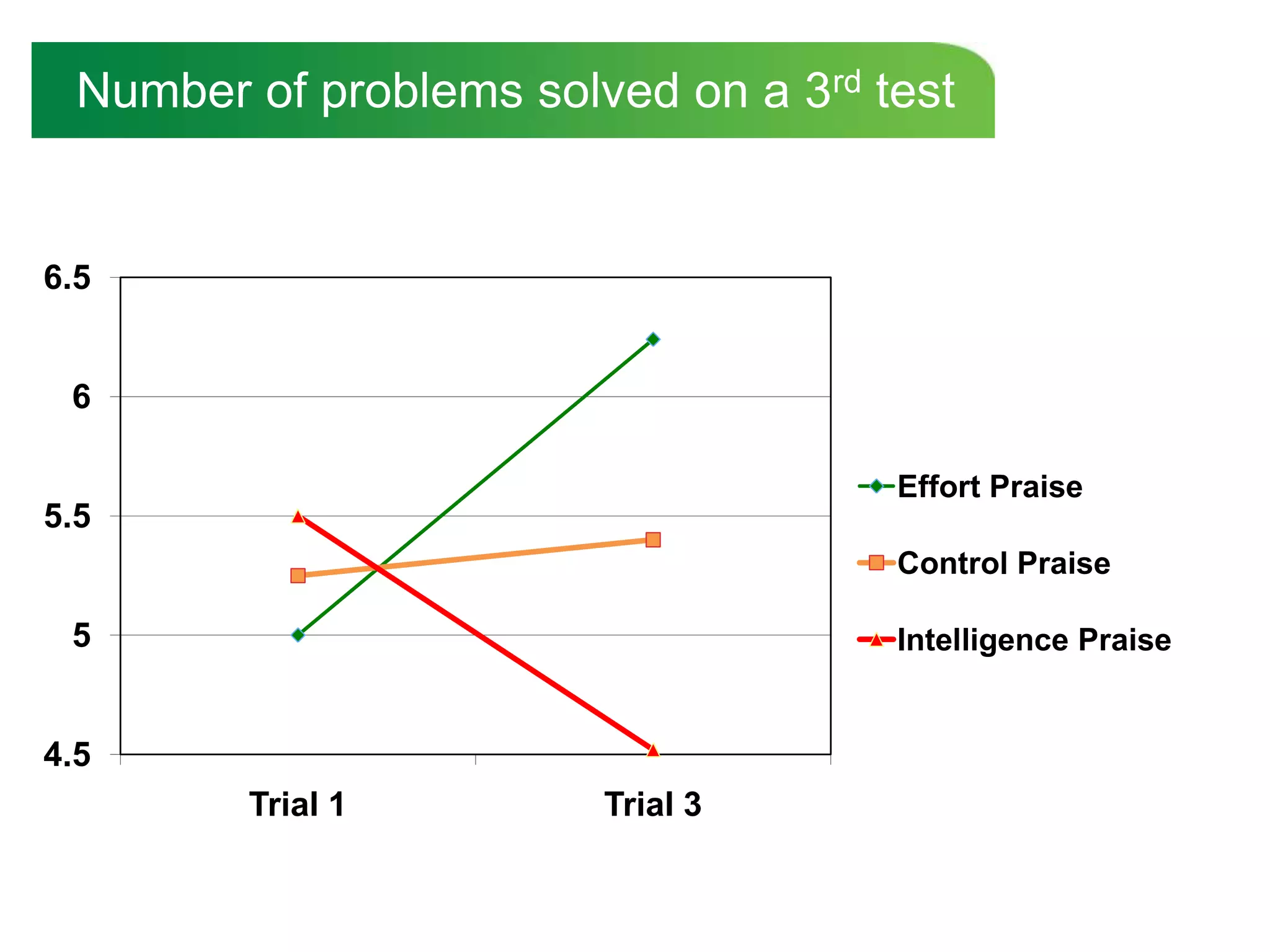
Mueller and Dweck, 1998Intelligence praise“Wow, that’s a really good score. You must be smart at this.” Process praise“Wow, that’s a really good score. You must have tried really hard.”Control-group praise“Wow, that’s a really good score.”
Number of problems solved on a 3rd test
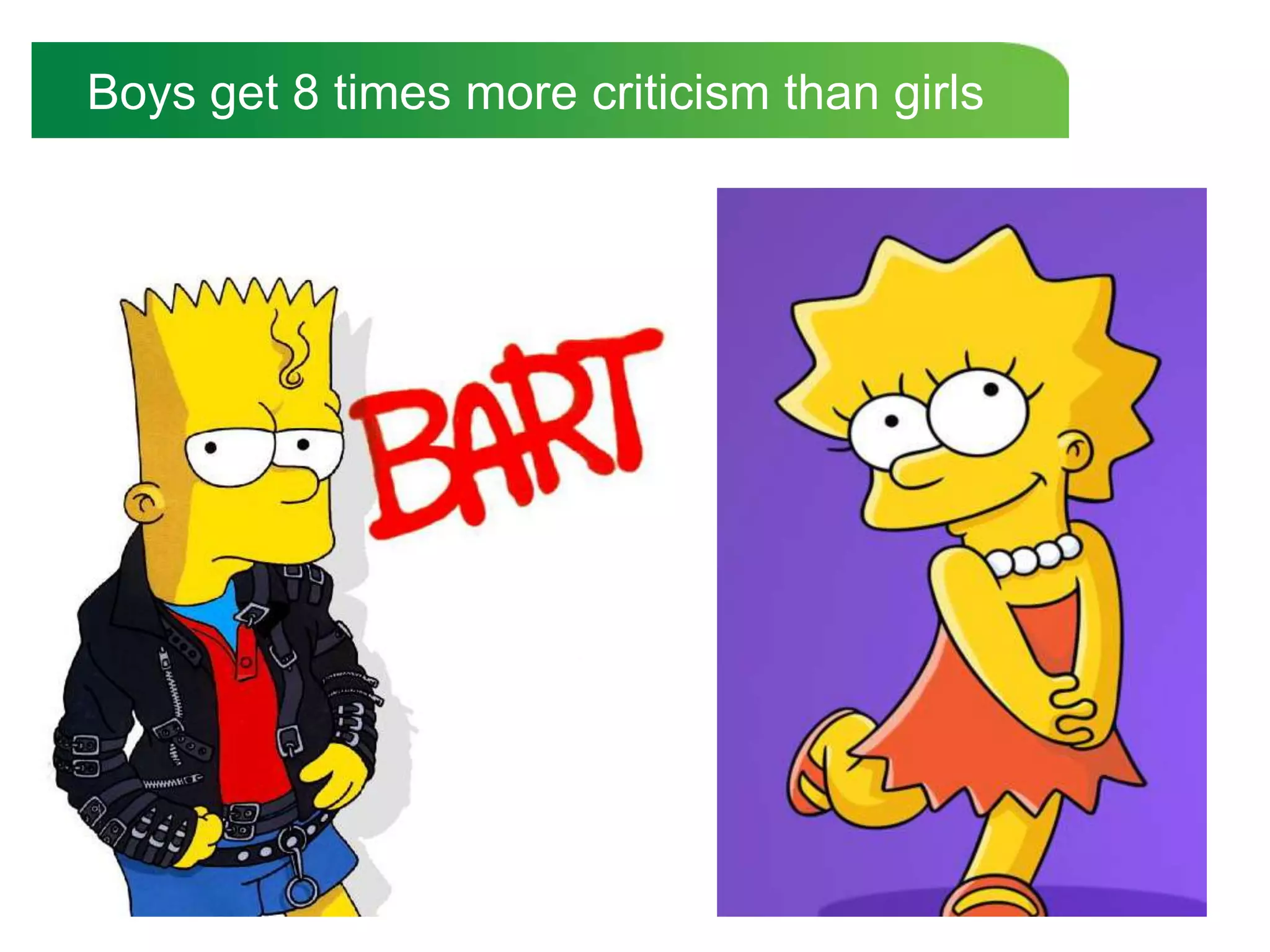
Boys get 8 times more criticism than girls
The effects of praiseSwimming“You do your best swimming when you concentrate and try your best to do what Chris is asking you to do”Ballet“What a beautiful ballerina!”
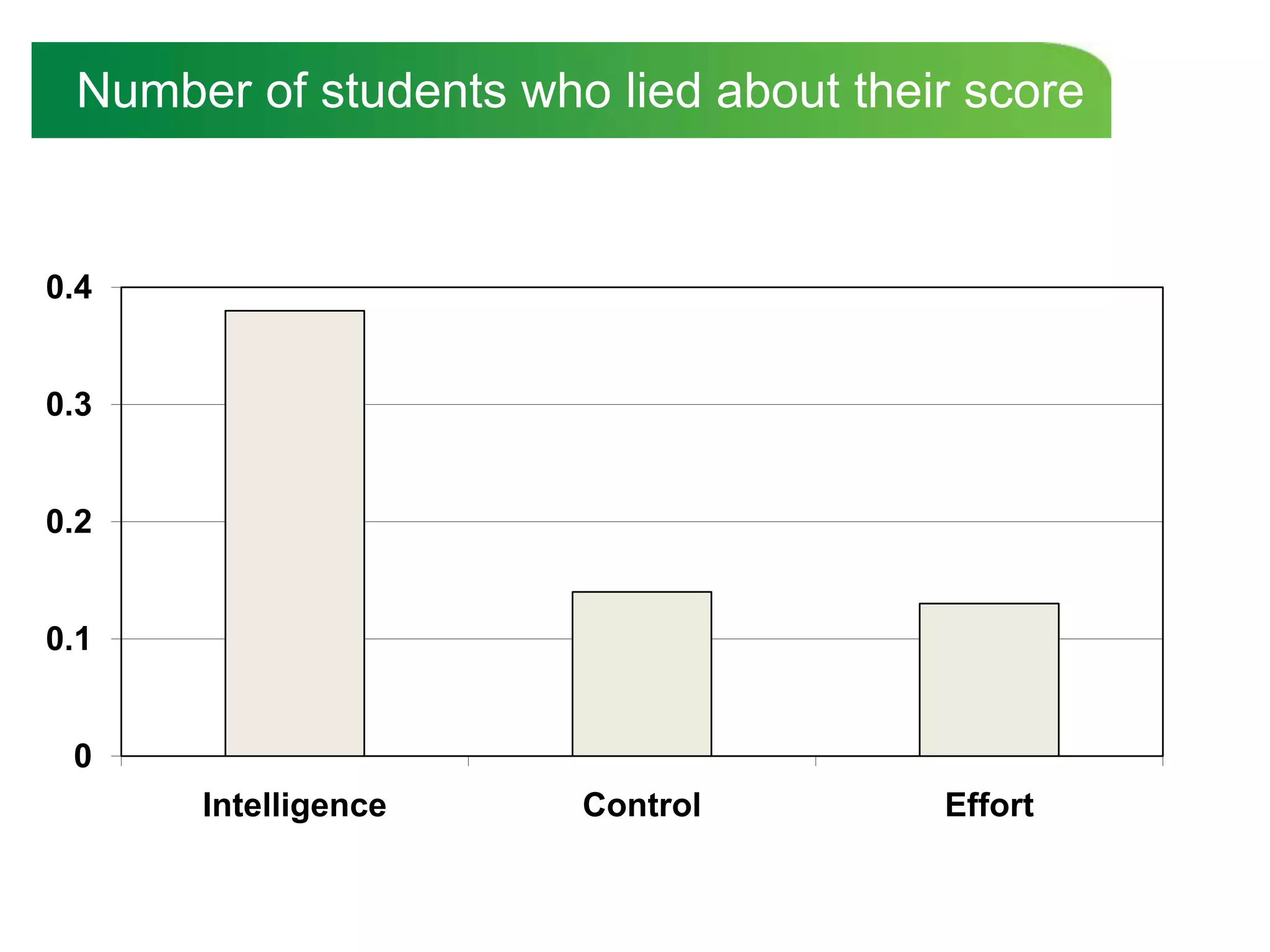
Number of students who lied about their score
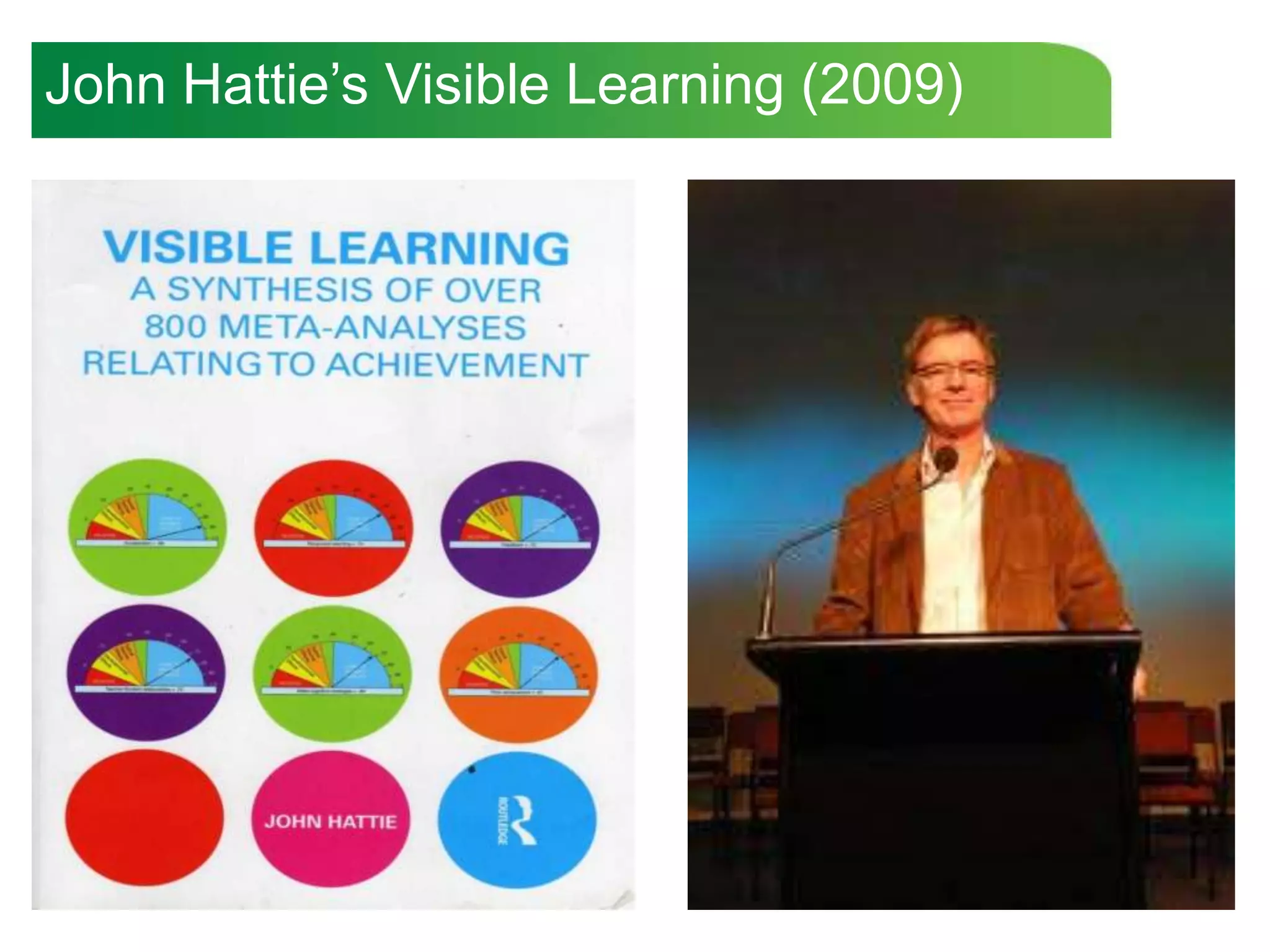
John Hattie’s Visible Learning (2009)
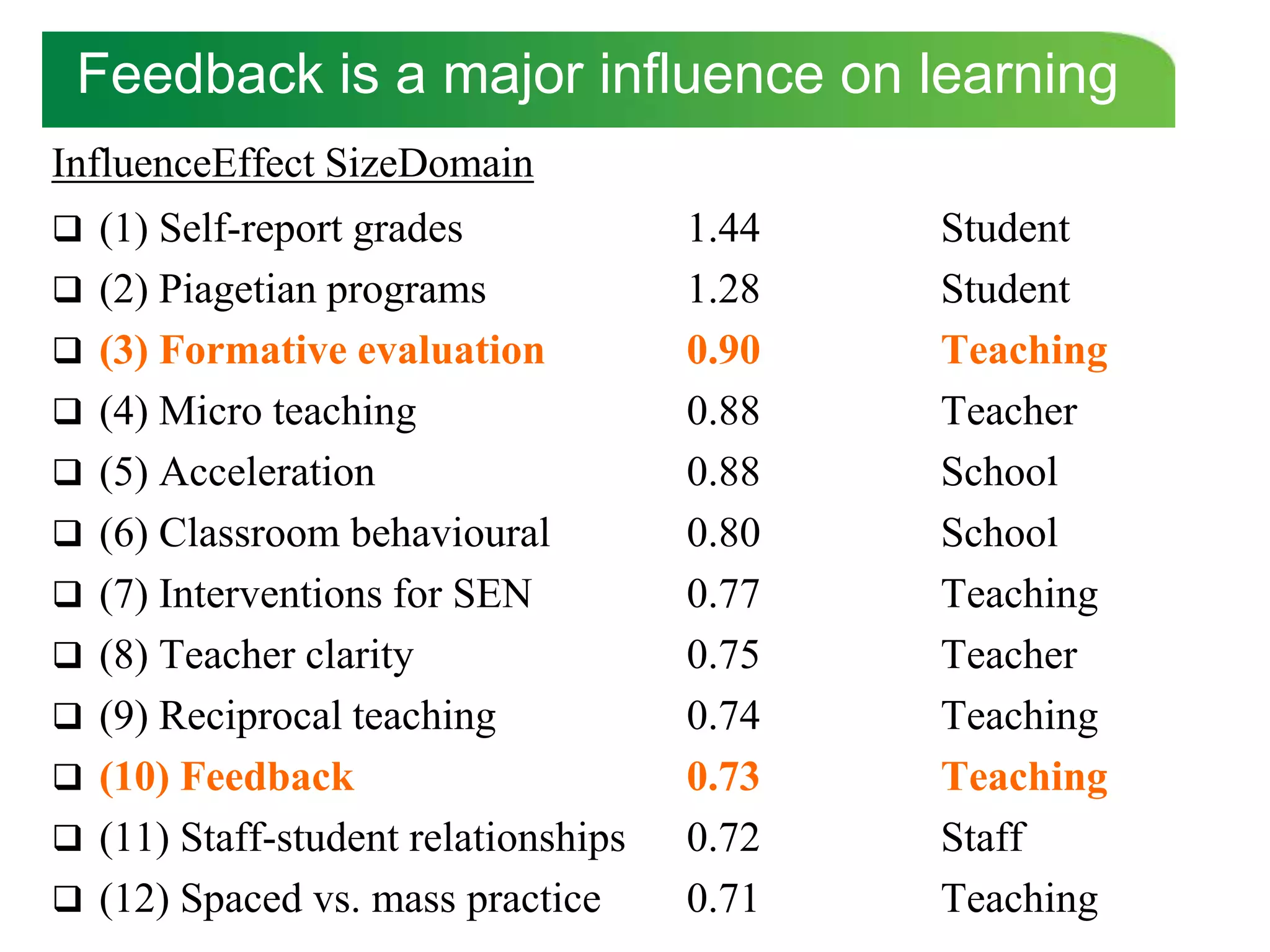
Feedback is a major influence on learningInfluenceEffect SizeDomain(1) Self-report grades		1.44		Student
(2) Piagetian programs		1.28		Student
(3) Formative evaluation		0.90		Teaching
(4) Micro teaching			0.88		Teacher
(5) Acceleration 			0.88		School
(6) Classroom behavioural		0.80		School
(7) Interventions for SEN		0.77		Teaching
(8) Teacher clarity			0.75		Teacher
(9) Reciprocal teaching		0.74		Teaching
(10) Feedback			0.73		Teaching
(11) Staff-student relationships	0.72		Staff
(12) Spaced vs. mass practice	0.71		TeachingRewards, rewards, rewards10/10
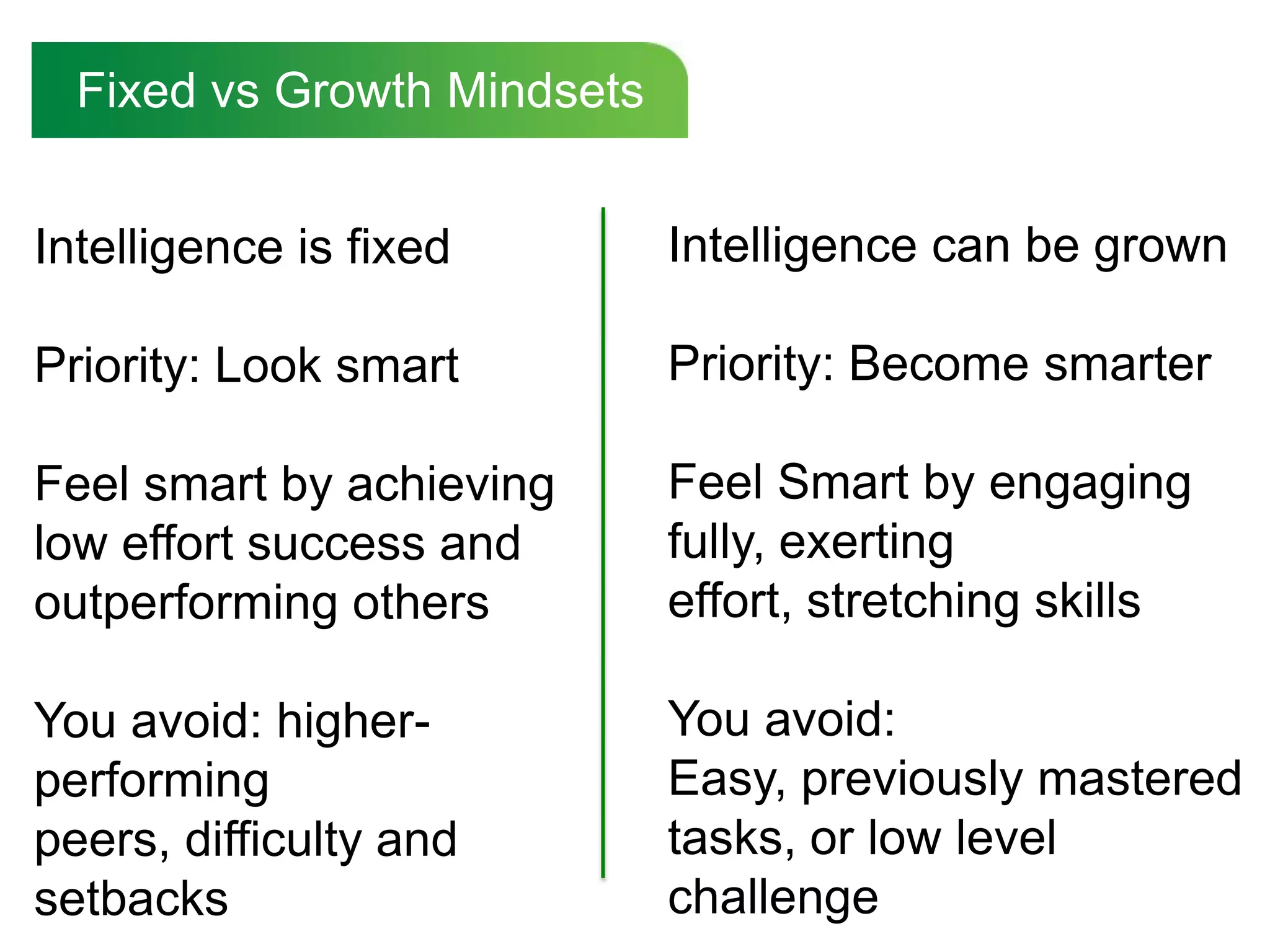
Fixed vs Growth MindsetsIntelligence can be grownPriority: Become smarterFeel Smart by engaging fully, exerting effort, stretching skillsYou avoid: Easy, previously mastered tasks, or low level challengeIntelligence is fixedPriority: Look smartFeel smart by achieving low effort success and outperforming othersYou avoid: higher-performing peers, difficulty and setbacks
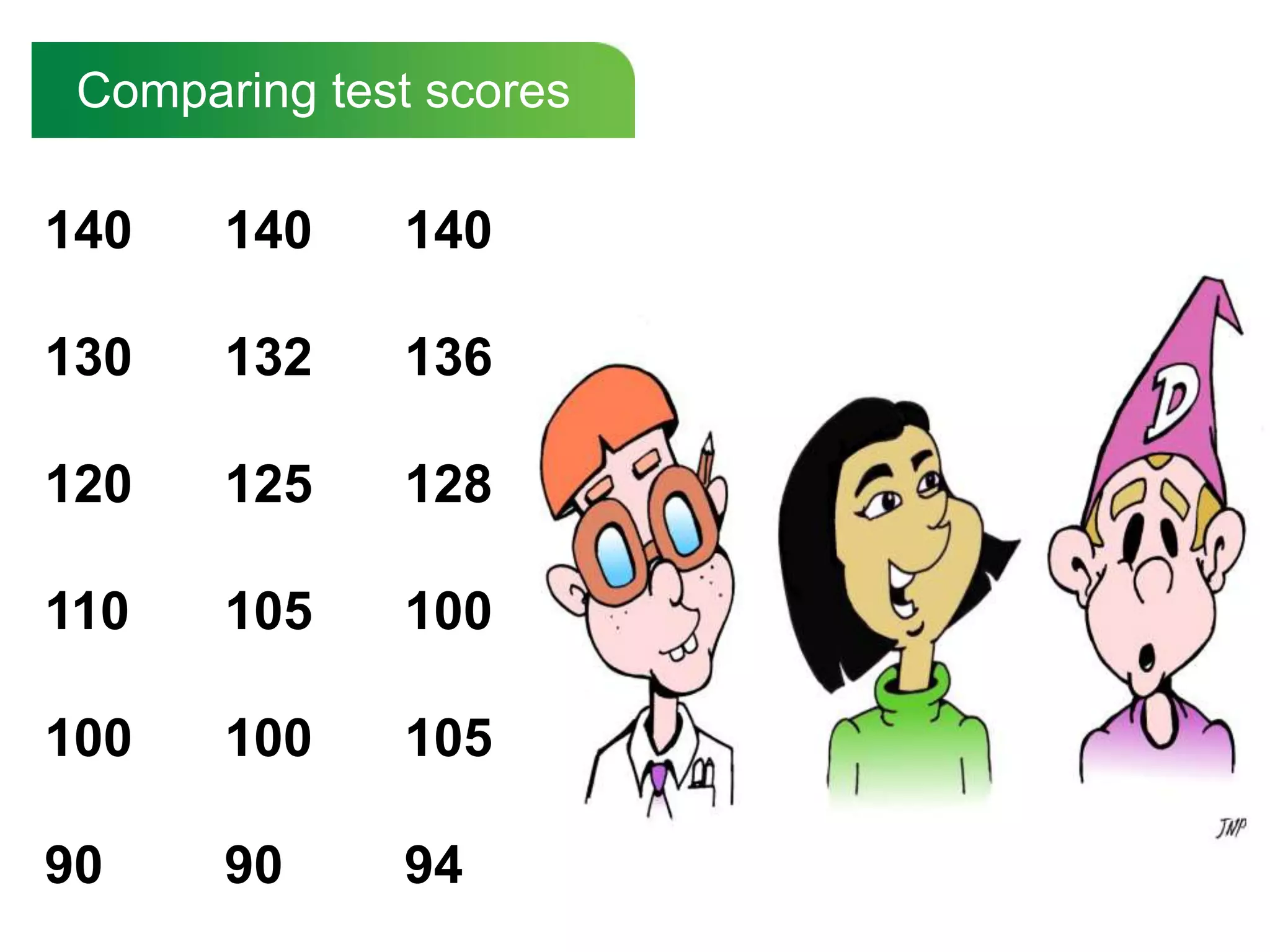
Comparing test scores140130120110100901401321251051009014013612810010594
Evelyn Glennie – Growth Mindset ?
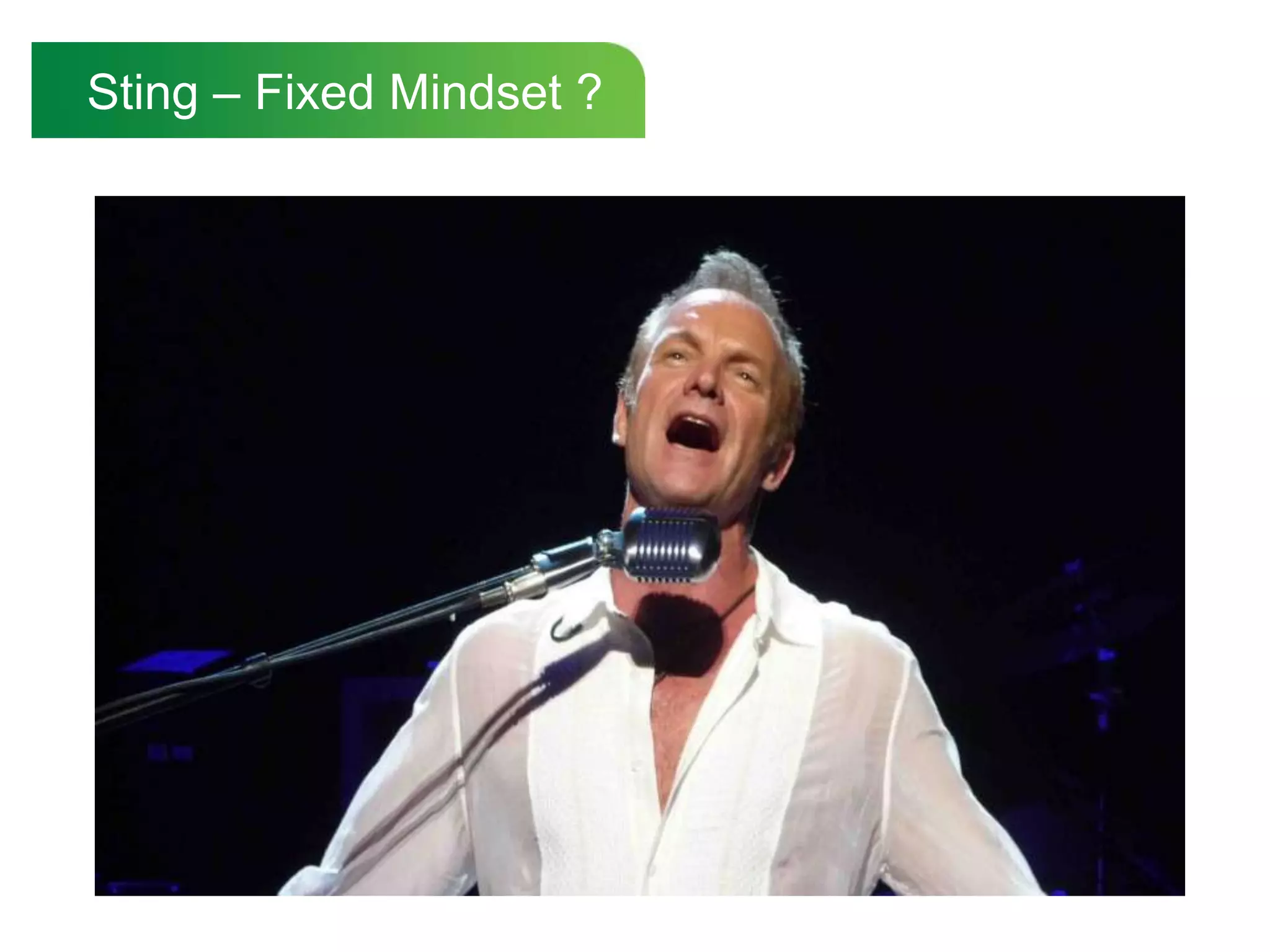
Sting – Fixed Mindset ?
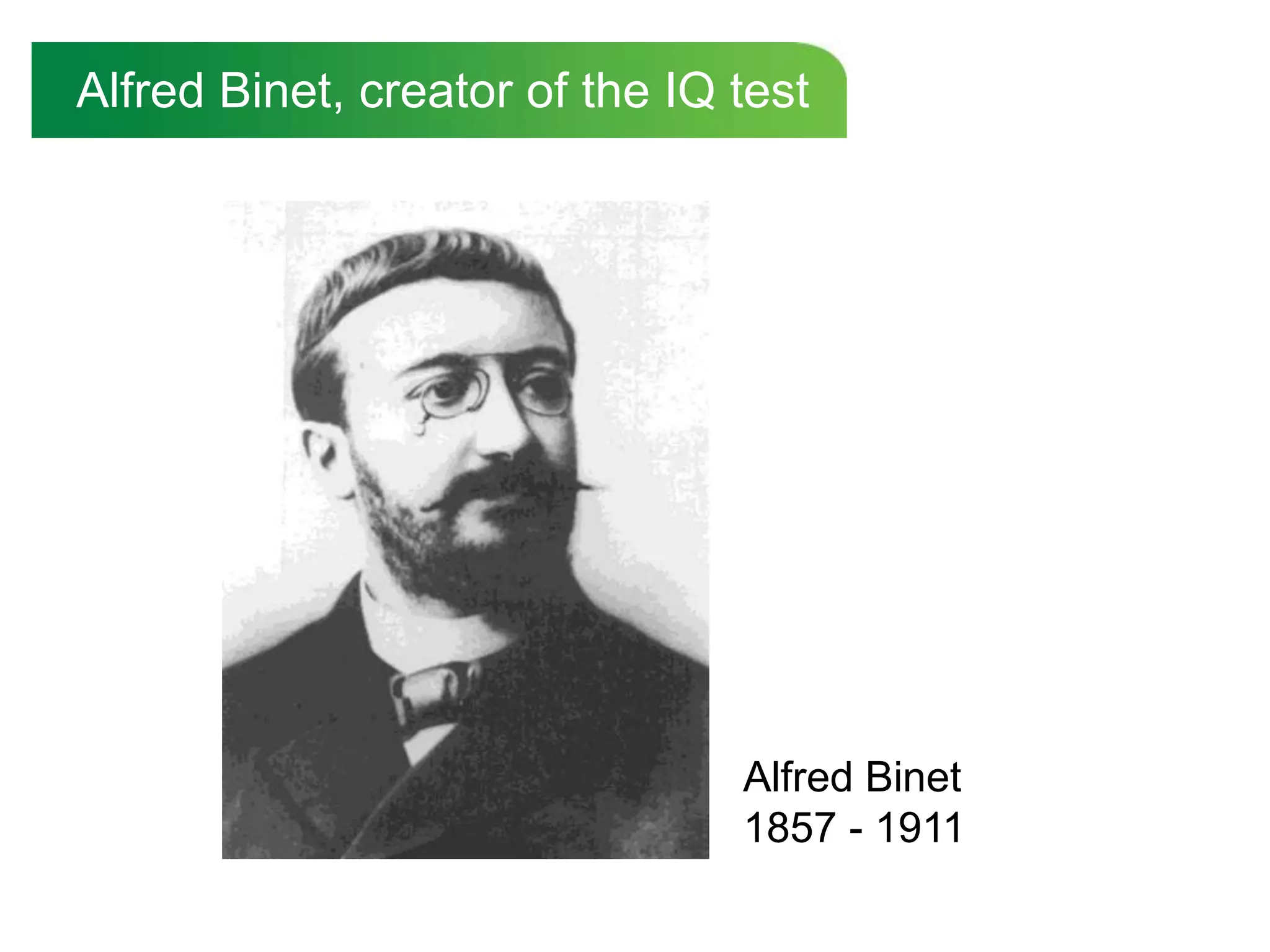
Alfred Binet, creator of the IQ testAlfred Binet1857 - 1911
How would you change the following praise?Clever girl!Gifted musicianBrilliant mathematicianBright boyTop of the class!By far the best
What do (spellings) tests encourage?
An alternative way to administer testsThinkingWonderingDecisionUnderstandingReflectionKnowledgeArgumentOpinionConclusionJustificationPre-test; Marks Out of 107, 8, 9 or 10New Set of Spellings4, 5, or 6Correct Set0, 1, 2 or 3Additional coaching169
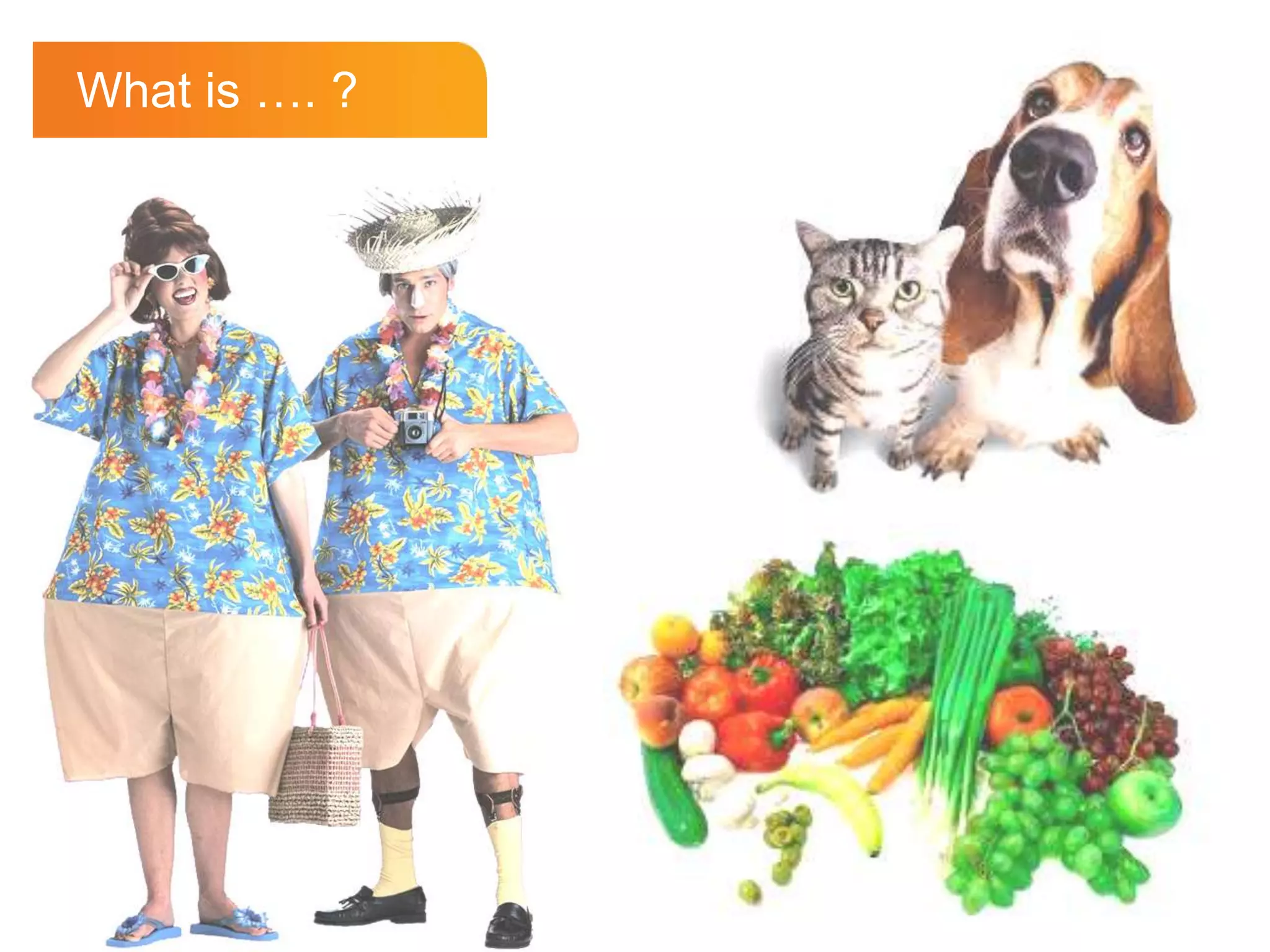
What is …. ?
The Learning ChallengeConceptConflictClarity12ConfusionThe Pit188
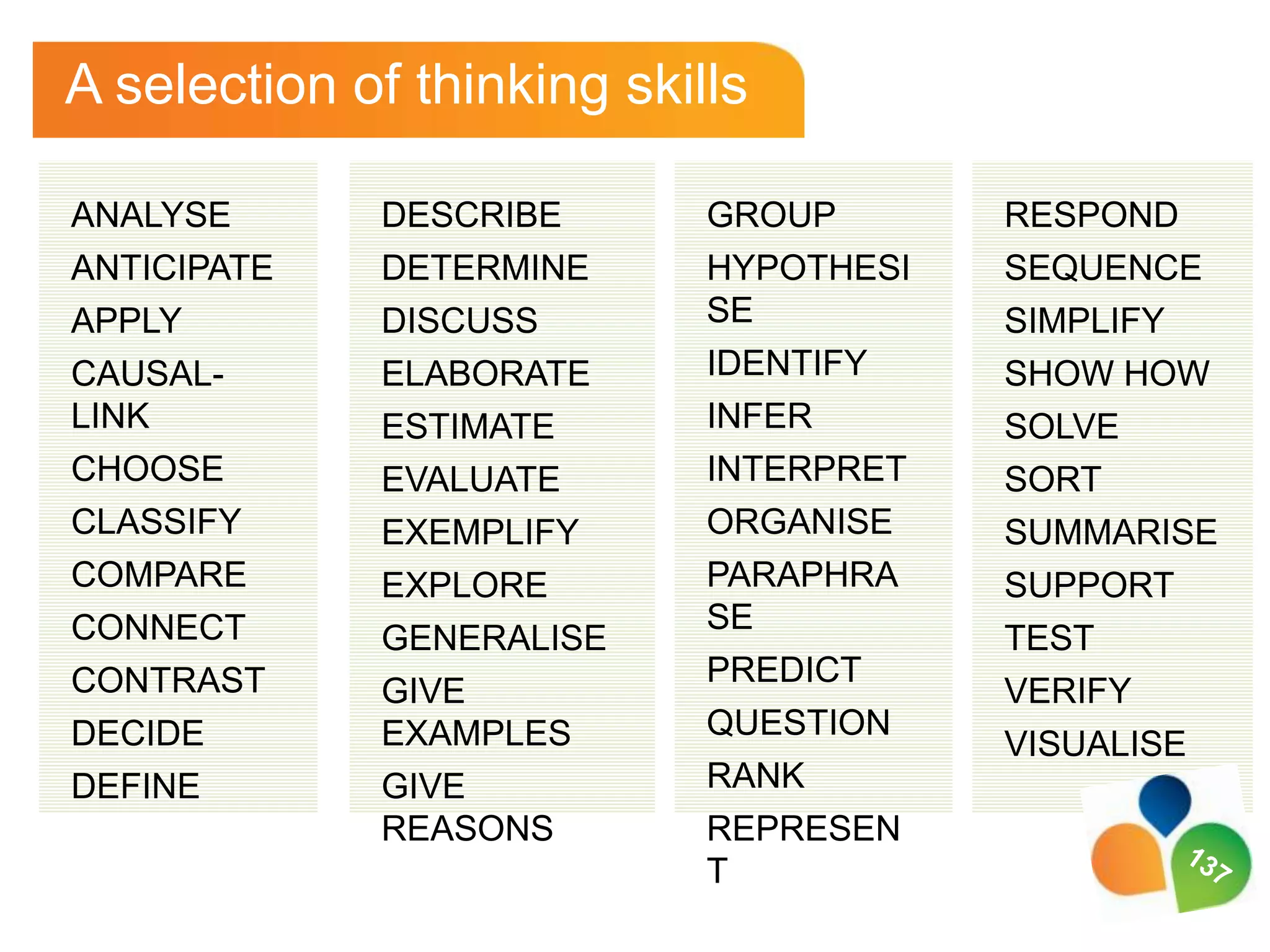
A selection of thinking skillsGROUPHYPOTHESISEIDENTIFYINFERINTERPRETORGANISEPARAPHRASEPREDICTQUESTIONRANKREPRESENTRESPONDSEQUENCESIMPLIFYSHOW HOWSOLVESORTSUMMARISESUPPORTTESTVERIFYVISUALISEANALYSEANTICIPATEAPPLYCAUSAL-LINKCHOOSECLASSIFYCOMPARE CONNECTCONTRASTDECIDEDEFINEDESCRIBE DETERMINEDISCUSSELABORATEESTIMATEEVALUATEEXEMPLIFYEXPLOREGENERALISEGIVE EXAMPLESGIVE REASONS137
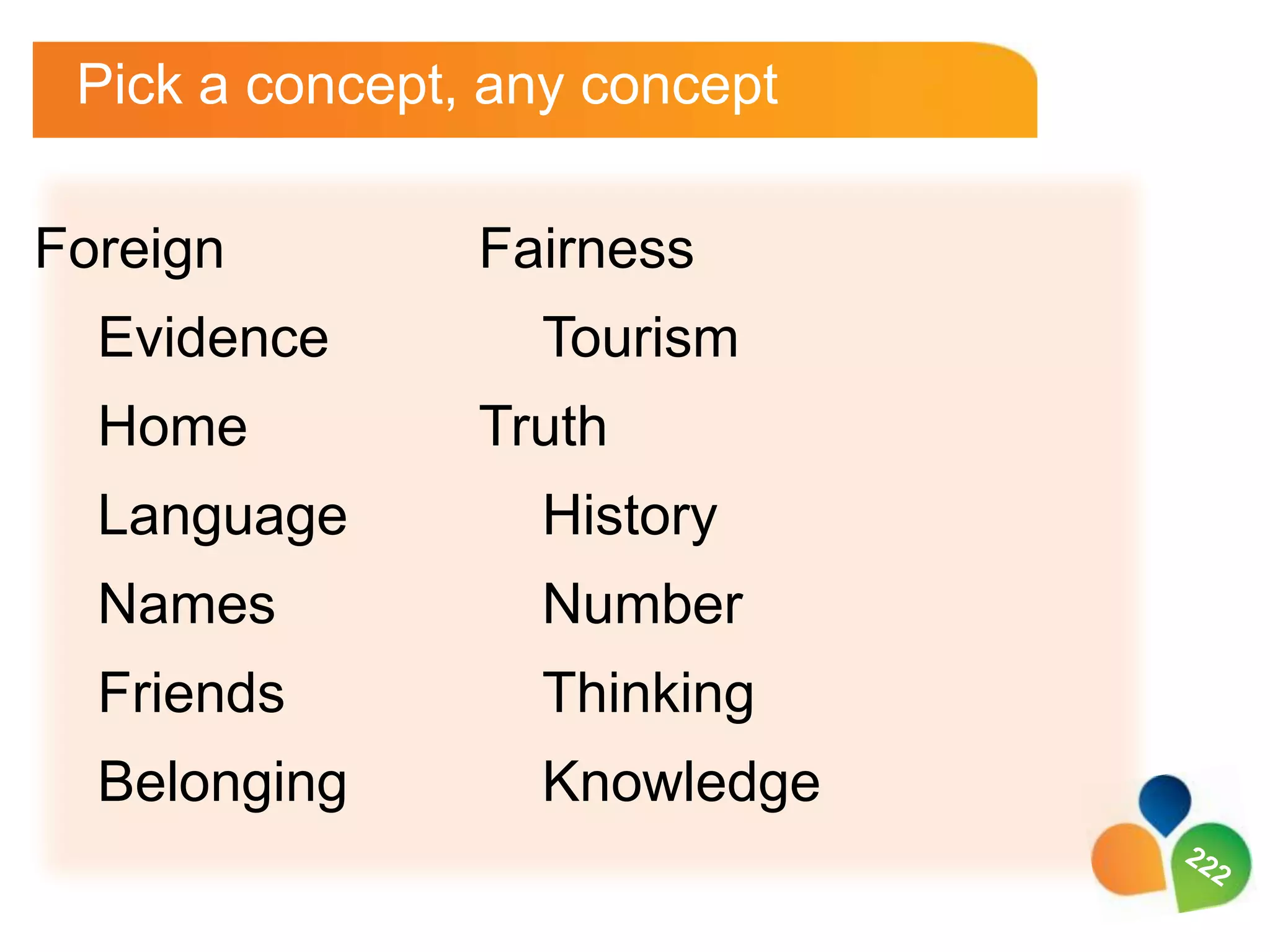
Pick a concept, any conceptForeign				Fairness 	Evidence				Tourism	Home				Truth	Language				History	Names					Number	Friends					Thinking 	Belonging				Knowledge222
Recent Demo Lesson Concepts	Is it possible to have no weather?  	(Yr 7)	Are habits the same as addictions?  (Yr 8)	What’s the difference between tragedy and 	romance? (Yr 9)	What is culture? (Yr 10)	Is zero the same as nothing? (Yr 11)

Alderbrook School