Falconbrook Primary School, P4C and Learning


   „We now accept the fact that learning is a
     lifelong process of keeping abreast of
    change. And the most pressing task is to
           teach people how to learn.‟
             Peter Drucker, 1909–2005
   (Described by Business Week as ‘the man who
              invented management’)


 jamesnottingham.co.ukchallenginglearning.com
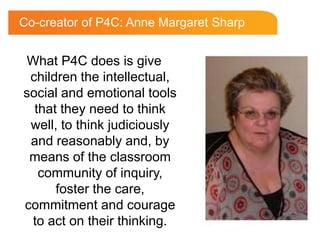
Co-creator of P4C: Anne Margaret Sharp


What P4C does is give
 children the intellectual,
social and emotional tools
  that they need to think
 well, to think judiciously
 and reasonably and, by
 means of the classroom
   community of inquiry,
      foster the care,
commitment and courage
 to act on their thinking.
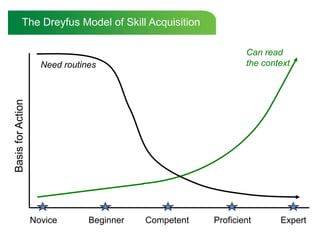
The Dreyfus Model of Skill Acquisition

                                                               Can read
                     Need routines                             the context
Basis for Action


                   Novice       Beginner   Competent   Proficient      Expert
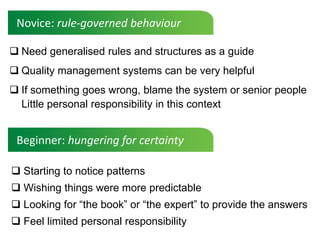
Novice: rule-governed behaviour

 Need generalised rules and structures as a guide
 Quality management systems can be very helpful
 If something goes wrong, blame the system or senior people
  Little personal responsibility in this context


 Beginner: hungering for certainty

 Starting to notice patterns
 Wishing things were more predictable
 Looking for “the book” or “the expert” to provide the answers
 Feel limited personal responsibility
Competent: planned & analytical

 Efficient and organised
 Can assess relative importance and urgency
 Can readily describe and explain actions
 Feel personal responsibility for outcomes

 Proficient: strategic and able to read context

 Seldom surprised, have learned what to expect
 Have organised knowledge into wise sayings
 Sometimes forget to explain complexities of the big picture to
analytical competent colleagues
 Rapid, fluid, involved, intuitive type of behaviour
Expert: right thing at the right time

Highly intuitive, based on huge store of wisdom
Great capacity to handle the unexpected
Highly nuanced behaviour, very context specific
Often there are no words to describe expert
 performance, and often it is subconscious anyway
Hard to fit this into quality systems
Performance drops if generalised rules are imposed
Usually does not make for good teaching of novices,
 but great for teaching competent people
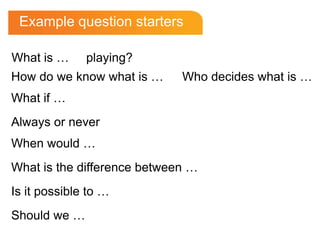
Most P4C sessions begin with a stimulus
Example question starters

What is …     playing?
How do we know what is …     Who decides what is …
What if …
Always or never
When would …
What is the difference between …
Is it possible to …
Should we …
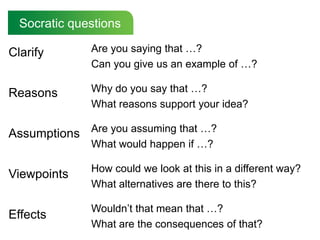
Socratic questions

Clarify       Are you saying that …?
              Can you give us an example of …?

Reasons       Why do you say that …?
              What reasons support your idea?

Assumptions Are you assuming that …?
              What would happen if …?

              How could we look at this in a different way?
Viewpoints
              What alternatives are there to this?

              Wouldn‟t that mean that …?
Effects
              What are the consequences of that?
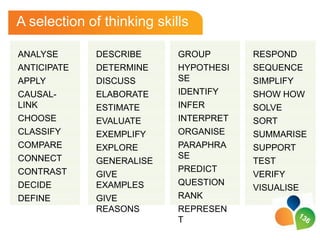
A selection of thinking skills

ANALYSE      DESCRIBE       GROUP       RESPOND
ANTICIPATE   DETERMINE      HYPOTHESI   SEQUENCE
APPLY        DISCUSS        SE          SIMPLIFY
CAUSAL-      ELABORATE      IDENTIFY    SHOW HOW
LINK         ESTIMATE       INFER       SOLVE
CHOOSE       EVALUATE       INTERPRET   SORT
CLASSIFY     EXEMPLIFY      ORGANISE    SUMMARISE
COMPARE      EXPLORE        PARAPHRA    SUPPORT
CONNECT                     SE
             GENERALISE                 TEST
CONTRAST                    PREDICT
             GIVE                       VERIFY
DECIDE       EXAMPLES       QUESTION
                                        VISUALISE
DEFINE       GIVE           RANK
             REASONS        REPRESEN
                            T
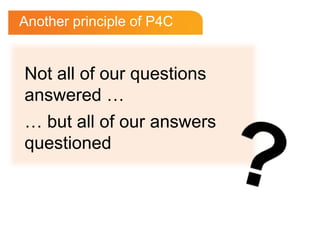
Another principle of P4C


Not all of our questions
answered …
… but all of our answers
questioned
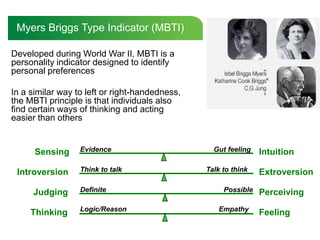
Myers Briggs Type Indicator (MBTI)

Developed during World War II, MBTI is a
personality indicator designed to identify
personal preferences

In a similar way to left or right-handedness,
the MBTI principle is that individuals also
find certain ways of thinking and acting
easier than others


      Sensing     Evidence                        Gut feeling   Intuition

 Introversion     Think to talk                 Talk to think   Extroversion

     Judging      Definite                           Possible   Perceiving
                  Logic/Reason                     Empathy
     Thinking                                                   Feeling
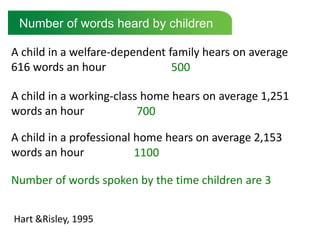
Number of words heard by children

A child in a welfare-dependent family hears on average
616 words an hour               500

A child in a working-class home hears on average 1,251
words an hour             700

A child in a professional home hears on average 2,153
words an hour             1100

Number of words spoken by the time children are 3


Hart &Risley, 1995
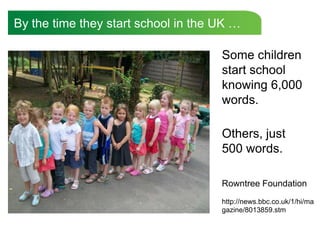
By the time they start school in the UK …

                                     Some children
                                     start school
                                     knowing 6,000
                                     words.

                                     Others, just
                                     500 words.

                                     Rowntree Foundation
                                     http://news.bbc.co.uk/1/hi/ma
                                     gazine/8013859.stm
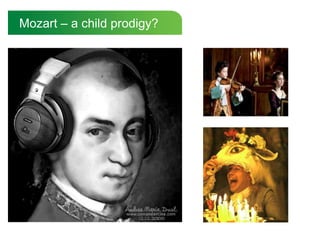
Mozart – a child prodigy?
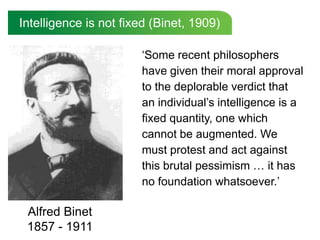
Intelligence is not fixed (Binet, 1909)

                       „Some recent philosophers
                       have given their moral approval
                       to the deplorable verdict that
                       an individual‟s intelligence is a
                       fixed quantity, one which
                       cannot be augmented. We
                       must protest and act against
                       this brutal pessimism … it has
                       no foundation whatsoever.‟

 Alfred Binet
 1857 - 1911
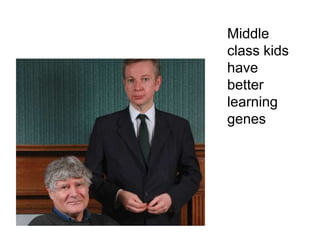
Middle
class kids
have
better
learning
genes
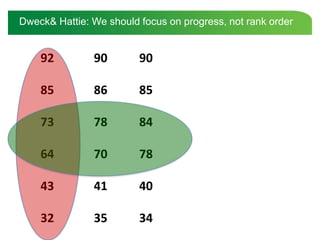
Dweck& Hattie: We should focus on progress, not rank order


    92         90        90

    85         86        85

    73         78        84

    64         70        78

    43         41        40

    32         35        34
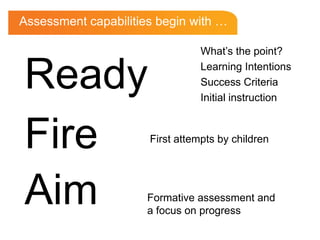
Assessment capabilities begin with …

                                 What‟s the point?


Ready                            Learning Intentions
                                 Success Criteria
                                 Initial instruction


Fire                  First attempts by children


Aim                   Formative assessment and
                      a focus on progress
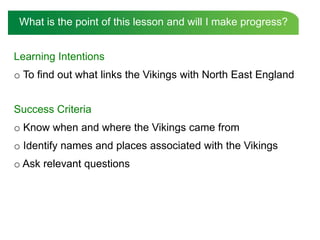
What is the point of this lesson and will I make progress?


Learning Intentions
o To find out what links the Vikings with North East England


Success Criteria
o Know when and where the Vikings came from
o Identify names and places associated with the Vikings
o Ask relevant questions
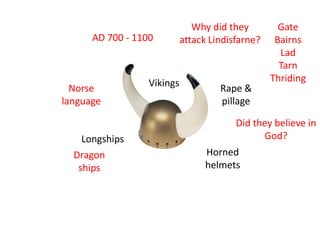
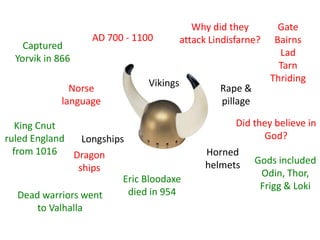
Why did they         Gate
      AD 700 - 1100         attack Lindisfarne?    Bairns
                                                    Lad
                                                    Tarn
                  Vikings                         Thriding
  Norse                              Rape &
language                             pillage

                                         Did they believe in
    Longships                                  God?
  Dragon                          Horned
   ships                          helmets
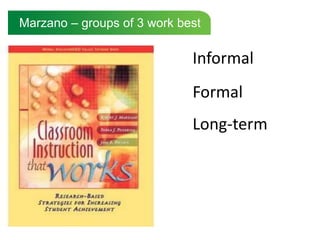
Marzano – groups of 3 work best

                             Informal
                             Formal
                             Long-term
Why did they         Gate
                    AD 700 - 1100          attack Lindisfarne?    Bairns
    Captured
                                                                   Lad
  Yorvik in 866
                                                                   Tarn
                                 Vikings                         Thriding
               Norse                                Rape &
             language                               pillage

   King Cnut                                            Did they believe in
ruled England      Longships                                  God?
  from 1016     Dragon                           Horned
                                                 helmets      Gods included
                  ships                                        Odin, Thor,
                            Eric Bloodaxe
                                                               Frigg & Loki
    Dead warriors went       died in 954
        to Valhalla
Year 7 – Food Unit

Learning Intentions
o Understand the process of hazard analysis and how it
applies to food


Success Criteria
o Use technical vocabulary
o Identify a wide range of types of hazard
o Communicate coherently
challenginglearning.com

p4c.coop

james@p4c.com

    @JamesNottinghm

Falconbrook School

  • 1.
    Falconbrook Primary School,P4C and Learning „We now accept the fact that learning is a lifelong process of keeping abreast of change. And the most pressing task is to teach people how to learn.‟ Peter Drucker, 1909–2005 (Described by Business Week as ‘the man who invented management’) jamesnottingham.co.ukchallenginglearning.com
  • 2.
    Co-creator of P4C:Anne Margaret Sharp What P4C does is give children the intellectual, social and emotional tools that they need to think well, to think judiciously and reasonably and, by means of the classroom community of inquiry, foster the care, commitment and courage to act on their thinking.
  • 3.
    The Dreyfus Modelof Skill Acquisition Can read Need routines the context Basis for Action Novice Beginner Competent Proficient Expert
  • 4.
    Novice: rule-governed behaviour Need generalised rules and structures as a guide  Quality management systems can be very helpful  If something goes wrong, blame the system or senior people Little personal responsibility in this context Beginner: hungering for certainty  Starting to notice patterns  Wishing things were more predictable  Looking for “the book” or “the expert” to provide the answers  Feel limited personal responsibility
  • 5.
    Competent: planned &analytical  Efficient and organised  Can assess relative importance and urgency  Can readily describe and explain actions  Feel personal responsibility for outcomes Proficient: strategic and able to read context  Seldom surprised, have learned what to expect  Have organised knowledge into wise sayings  Sometimes forget to explain complexities of the big picture to analytical competent colleagues  Rapid, fluid, involved, intuitive type of behaviour
  • 6.
    Expert: right thingat the right time Highly intuitive, based on huge store of wisdom Great capacity to handle the unexpected Highly nuanced behaviour, very context specific Often there are no words to describe expert performance, and often it is subconscious anyway Hard to fit this into quality systems Performance drops if generalised rules are imposed Usually does not make for good teaching of novices, but great for teaching competent people
  • 7.
    Most P4C sessionsbegin with a stimulus
  • 8.
    Example question starters Whatis … playing? How do we know what is … Who decides what is … What if … Always or never When would … What is the difference between … Is it possible to … Should we …
  • 9.
    Socratic questions Clarify Are you saying that …? Can you give us an example of …? Reasons Why do you say that …? What reasons support your idea? Assumptions Are you assuming that …? What would happen if …? How could we look at this in a different way? Viewpoints What alternatives are there to this? Wouldn‟t that mean that …? Effects What are the consequences of that?
  • 10.
    A selection ofthinking skills ANALYSE DESCRIBE GROUP RESPOND ANTICIPATE DETERMINE HYPOTHESI SEQUENCE APPLY DISCUSS SE SIMPLIFY CAUSAL- ELABORATE IDENTIFY SHOW HOW LINK ESTIMATE INFER SOLVE CHOOSE EVALUATE INTERPRET SORT CLASSIFY EXEMPLIFY ORGANISE SUMMARISE COMPARE EXPLORE PARAPHRA SUPPORT CONNECT SE GENERALISE TEST CONTRAST PREDICT GIVE VERIFY DECIDE EXAMPLES QUESTION VISUALISE DEFINE GIVE RANK REASONS REPRESEN T
  • 11.
    Another principle ofP4C Not all of our questions answered … … but all of our answers questioned
  • 12.
    Myers Briggs TypeIndicator (MBTI) Developed during World War II, MBTI is a personality indicator designed to identify personal preferences In a similar way to left or right-handedness, the MBTI principle is that individuals also find certain ways of thinking and acting easier than others Sensing Evidence Gut feeling Intuition Introversion Think to talk Talk to think Extroversion Judging Definite Possible Perceiving Logic/Reason Empathy Thinking Feeling
  • 13.
    Number of wordsheard by children A child in a welfare-dependent family hears on average 616 words an hour 500 A child in a working-class home hears on average 1,251 words an hour 700 A child in a professional home hears on average 2,153 words an hour 1100 Number of words spoken by the time children are 3 Hart &Risley, 1995
  • 14.
    By the timethey start school in the UK … Some children start school knowing 6,000 words. Others, just 500 words. Rowntree Foundation http://news.bbc.co.uk/1/hi/ma gazine/8013859.stm
  • 16.
    Mozart – achild prodigy?
  • 18.
    Intelligence is notfixed (Binet, 1909) „Some recent philosophers have given their moral approval to the deplorable verdict that an individual‟s intelligence is a fixed quantity, one which cannot be augmented. We must protest and act against this brutal pessimism … it has no foundation whatsoever.‟ Alfred Binet 1857 - 1911
  • 19.
  • 20.
    Dweck& Hattie: Weshould focus on progress, not rank order 92 90 90 85 86 85 73 78 84 64 70 78 43 41 40 32 35 34
  • 21.
    Assessment capabilities beginwith … What‟s the point? Ready Learning Intentions Success Criteria Initial instruction Fire First attempts by children Aim Formative assessment and a focus on progress
  • 22.
    What is thepoint of this lesson and will I make progress? Learning Intentions o To find out what links the Vikings with North East England Success Criteria o Know when and where the Vikings came from o Identify names and places associated with the Vikings o Ask relevant questions
  • 23.
    Why did they Gate AD 700 - 1100 attack Lindisfarne? Bairns Lad Tarn Vikings Thriding Norse Rape & language pillage Did they believe in Longships God? Dragon Horned ships helmets
  • 24.
    Marzano – groupsof 3 work best Informal Formal Long-term
  • 25.
    Why did they Gate AD 700 - 1100 attack Lindisfarne? Bairns Captured Lad Yorvik in 866 Tarn Vikings Thriding Norse Rape & language pillage King Cnut Did they believe in ruled England Longships God? from 1016 Dragon Horned helmets Gods included ships Odin, Thor, Eric Bloodaxe Frigg & Loki Dead warriors went died in 954 to Valhalla
  • 26.
    Year 7 –Food Unit Learning Intentions o Understand the process of hazard analysis and how it applies to food Success Criteria o Use technical vocabulary o Identify a wide range of types of hazard o Communicate coherently
  • 28.