The AISNSW Indian conference is
                           supported by the NSW Government


Philosophy for Children (P4C)

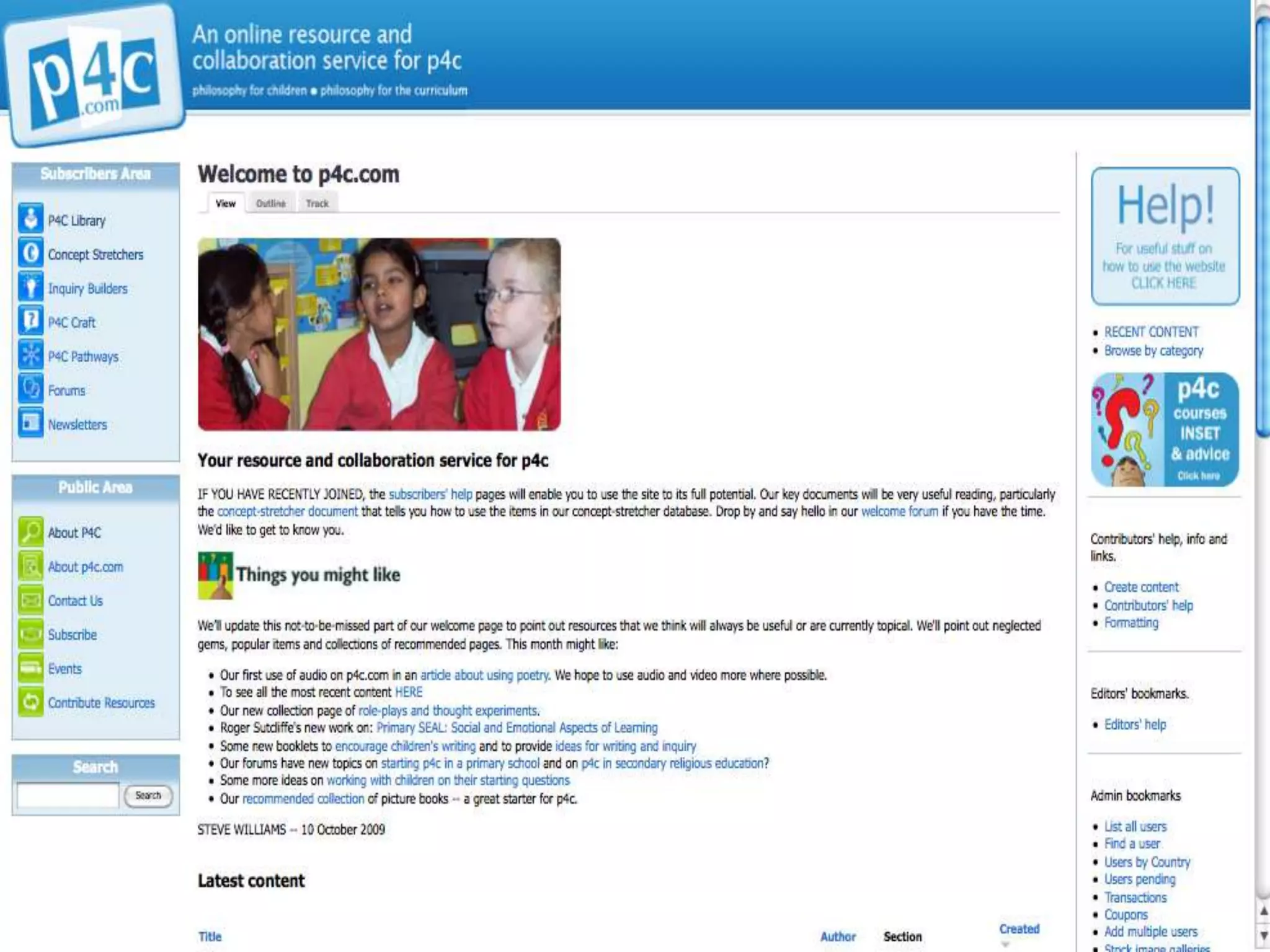
                                 www.p4c.com
      www.facebook.com/ChallengingLearning
                         @JamesNottinghm
P4C and thinking skills


      “No programme I am aware of
      is more likely to teach durable
      and transferable thinking skills
      than Philosophy for Children”

    Robert Sternberg
    President of the American Psychological Association


© The Association of Independent Schools of NSW
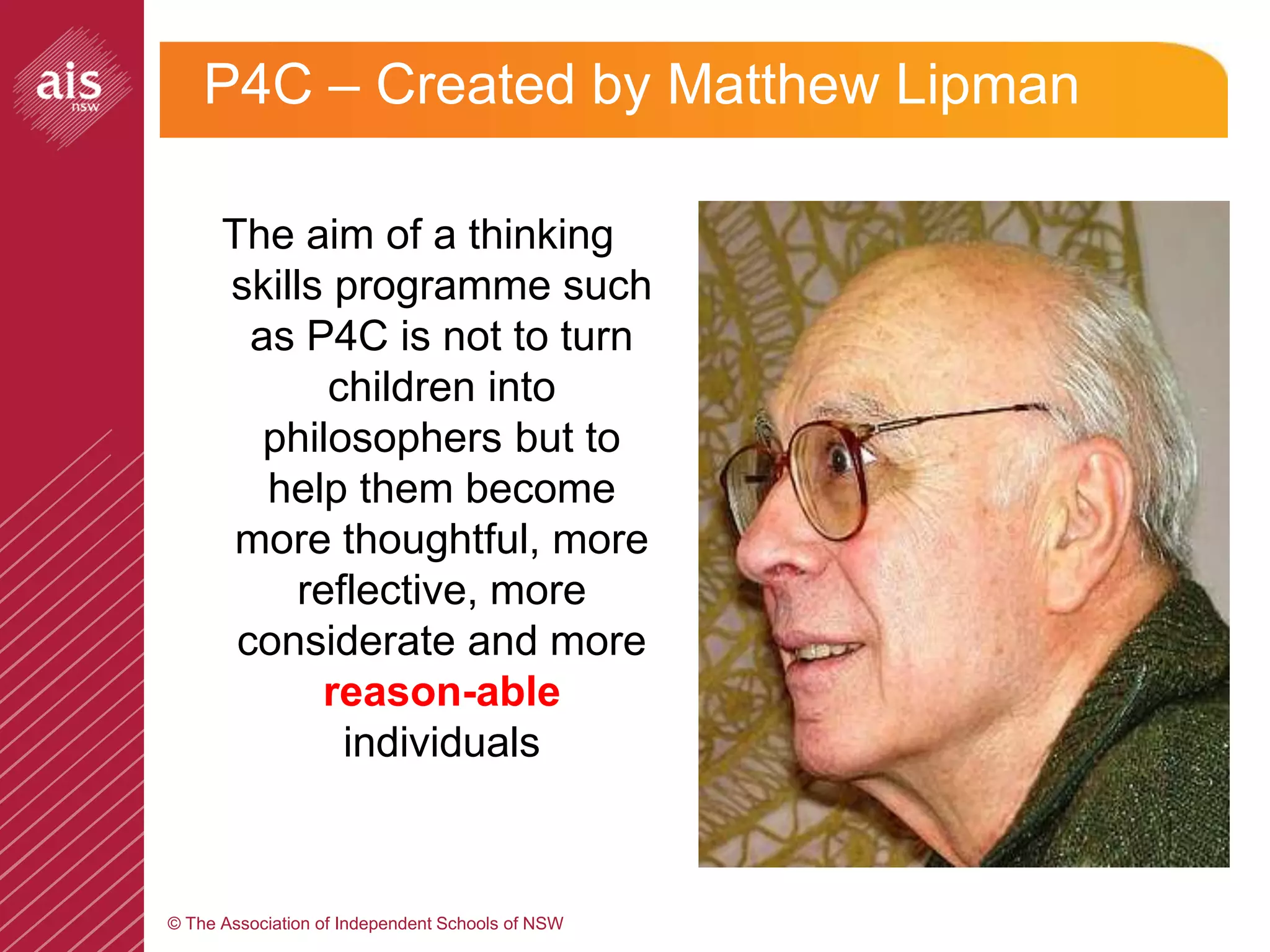
P4C – Created by Matthew Lipman

      The aim of a thinking
      skills programme such
        as P4C is not to turn
             children into
         philosophers but to
         help them become
       more thoughtful, more
           reflective, more
       considerate and more
            reason-able
              individuals


© The Association of Independent Schools of NSW
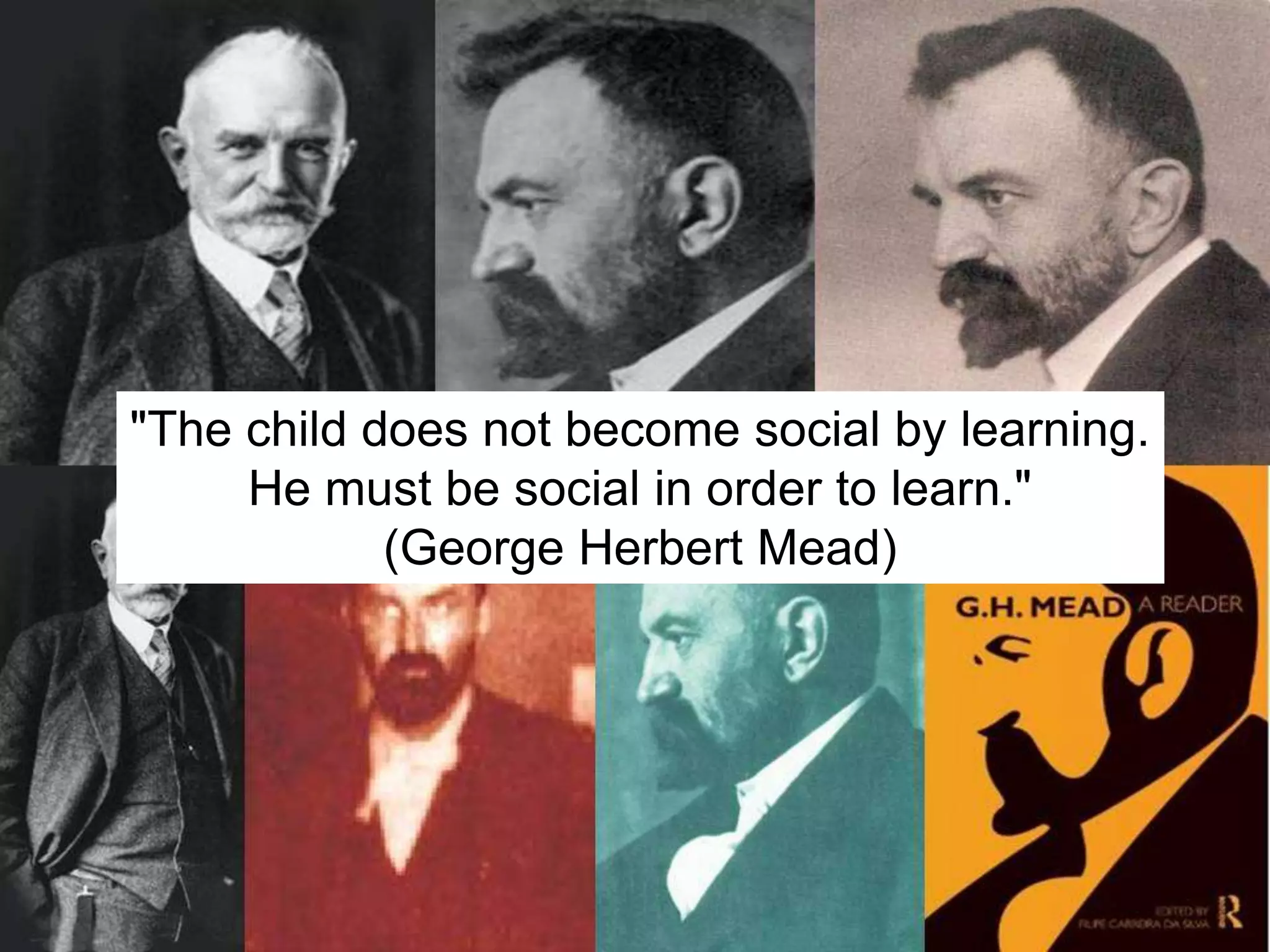
"The child does not become social by learning.
     He must be social in order to learn."
            (George Herbert Mead)
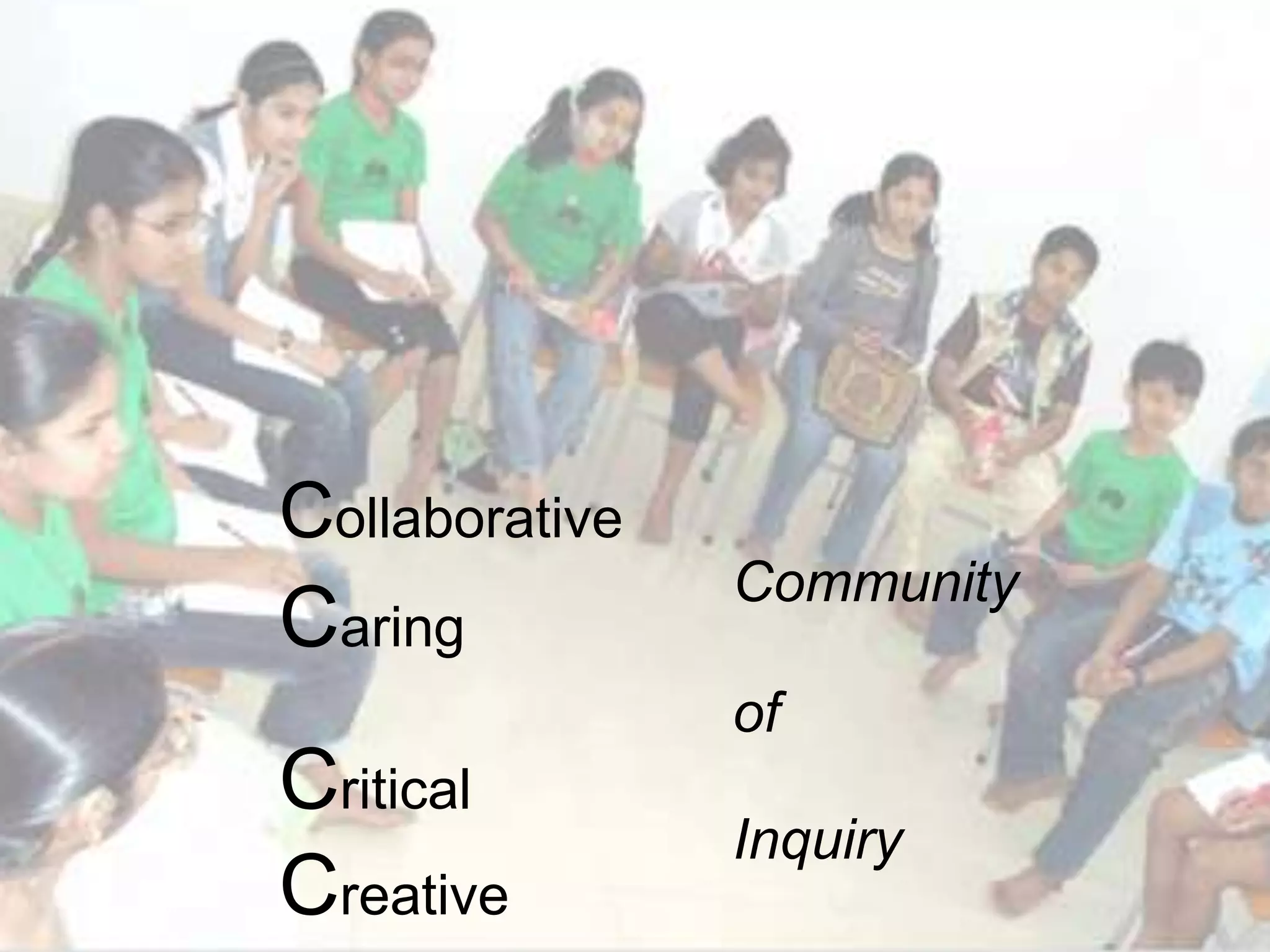
Collaborative
                Community
Caring
                of
Critical
                Inquiry
Creative
The AISNSW Indian conference is
supported by the NSW Government
One way to summarise P4C …


         Not all of our questions
         answered …
         … but all of our answers
         questioned


© The Association of Independent Schools of NSW
Typical format for P4C
   1. Sit in a circle
   2. Warm-up game
   3. Story (or other stimulus)
   4. Identify the concepts
   5. Create (philosophical) questions
   6. Vote for the best (or favourite) question
   7. Share first thoughts
   8. Ask for reasons
   9. Check for understanding
   10. Create cognitive conflict around the concept
   11. Compare the concept with other concepts
   12. Draw conclusions
© The Association of Independent Schools of NSW
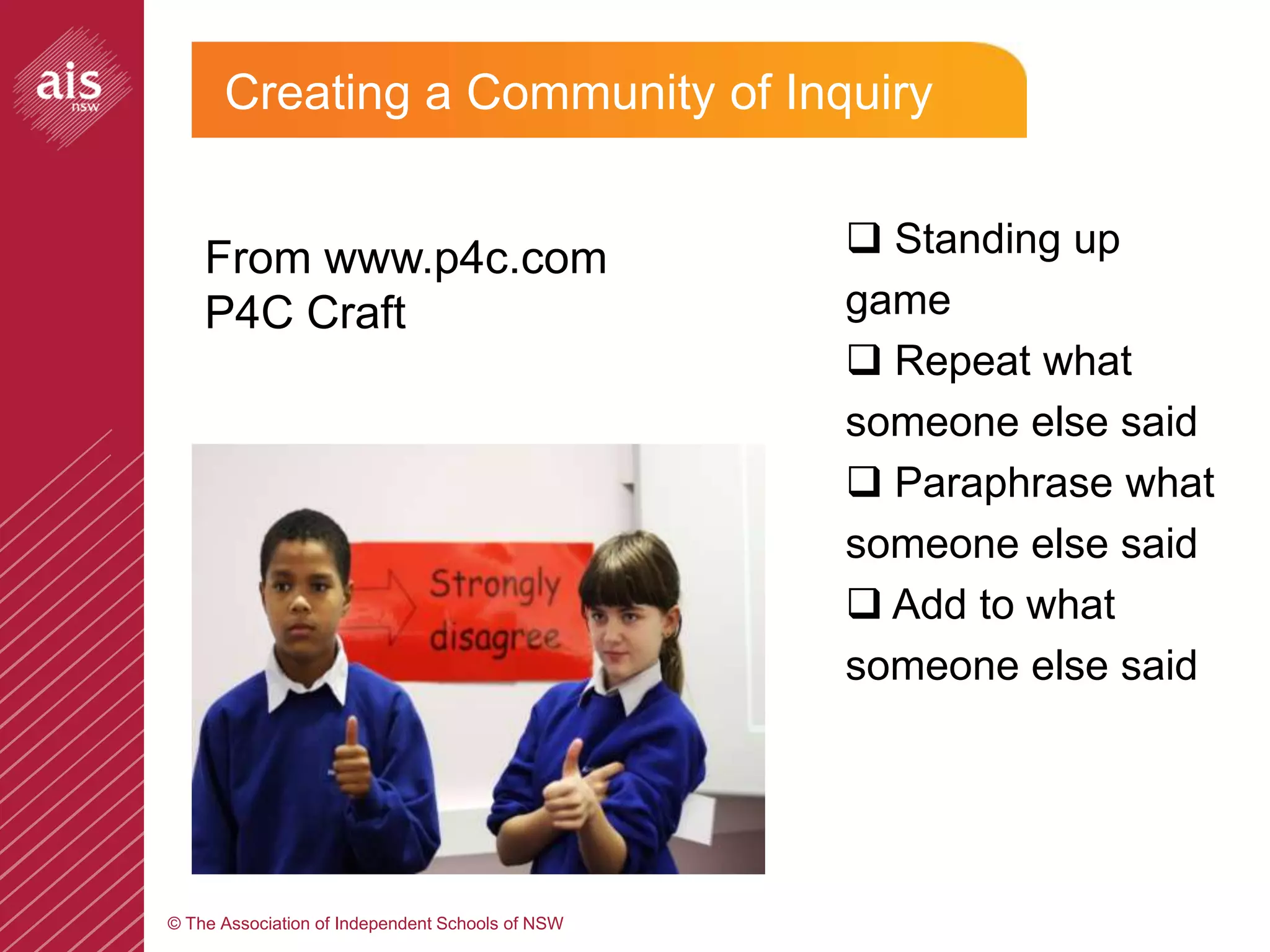
Creating a Community of Inquiry


    From www.p4c.com                               Standing up
    P4C Craft                                     game
                                                   Repeat what
                                                  someone else said
                                                   Paraphrase what
                                                  someone else said
                                                   Add to what
                                                  someone else said


© The Association of Independent Schools of NSW
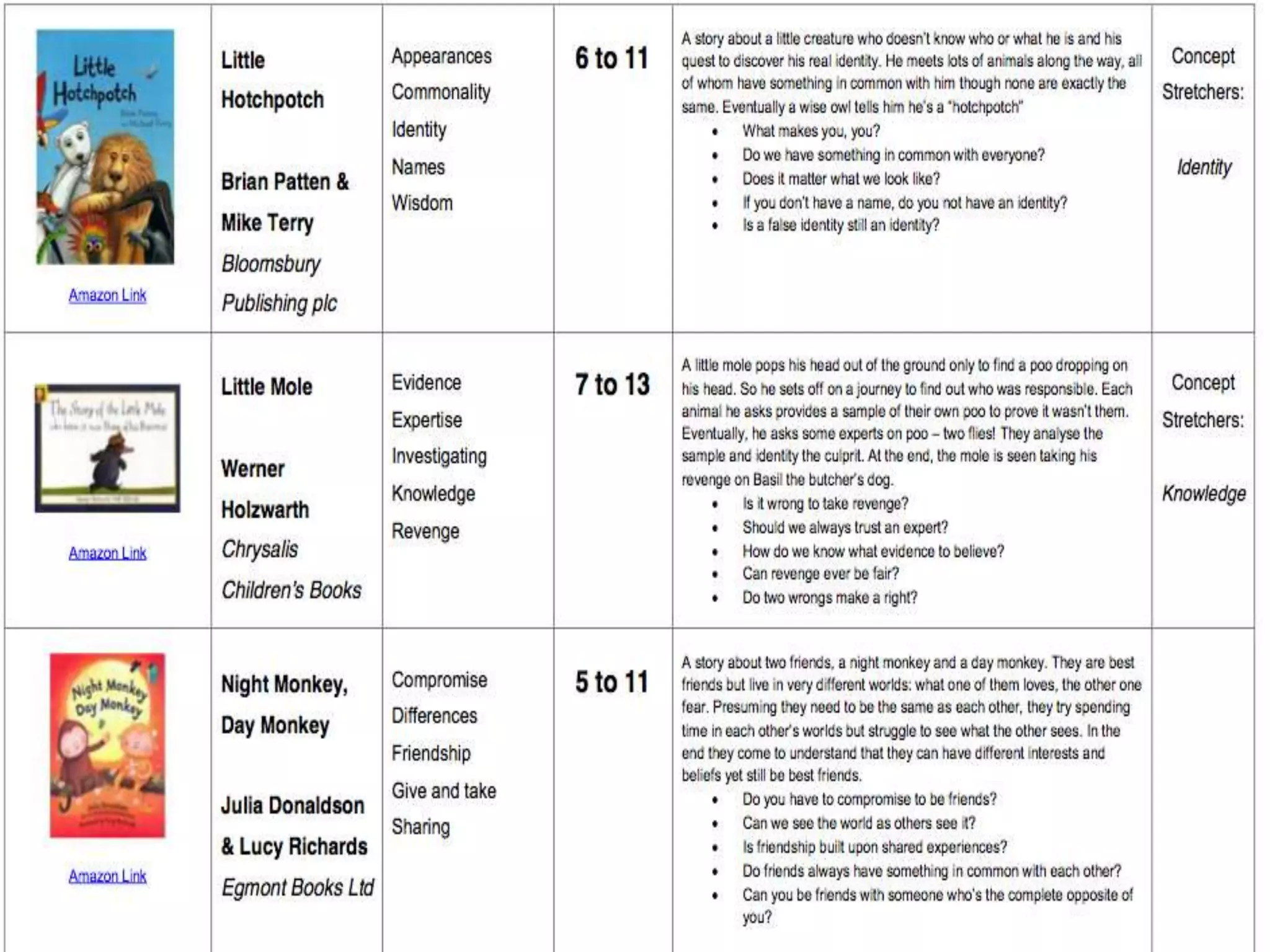
The Gruffalo
By Donaldson & Scheffler
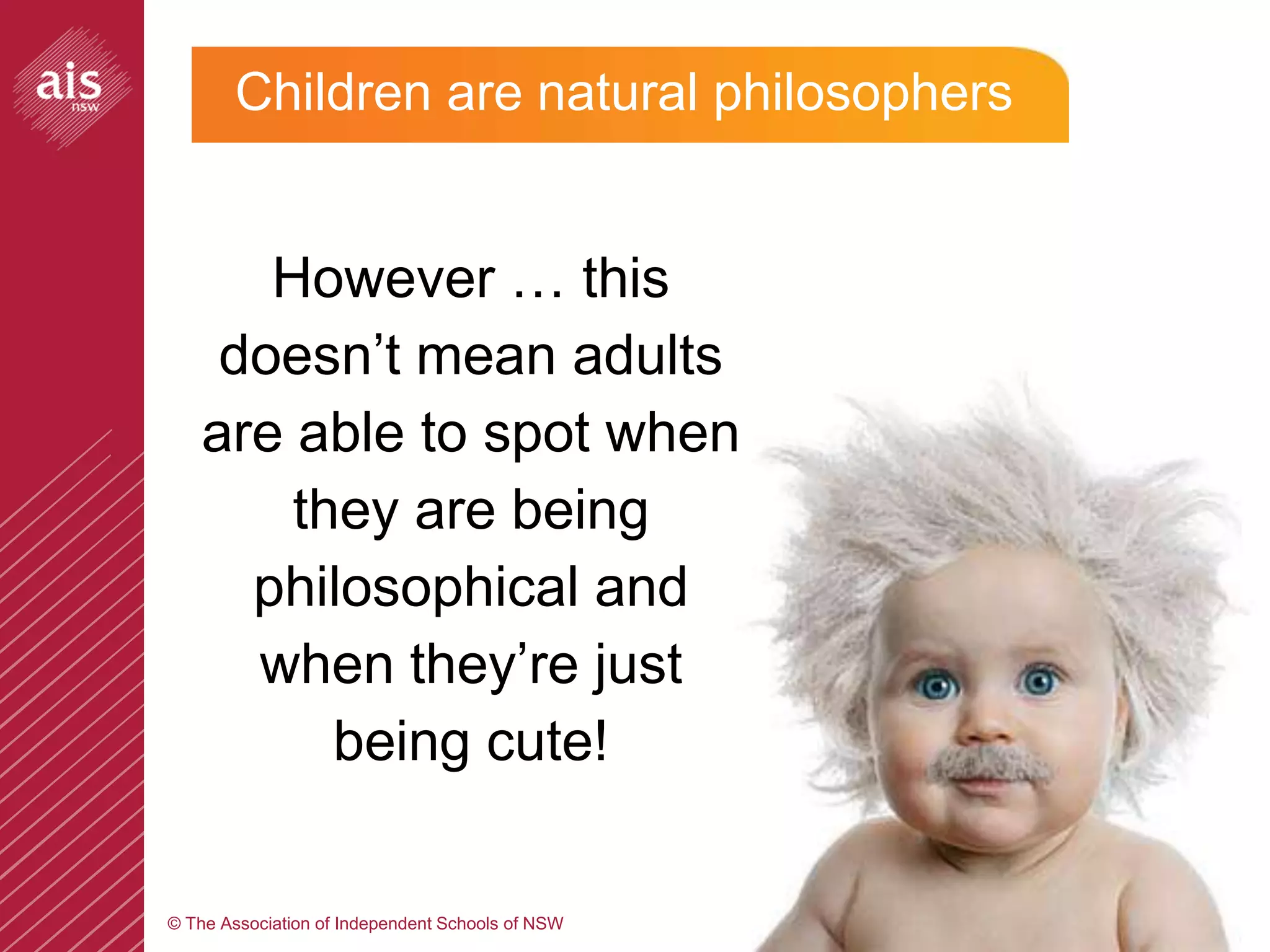
Children are natural philosophers


       However … this
     doesn’t mean adults
    are able to spot when
        they are being
      philosophical and
      when they’re just
          being cute!

© The Association of Independent Schools of NSW
Example question starters

What is …
How do we know what is …     Who decides what is …
What if …
Always or never
When would …
What is the difference between …
Is it possible to …
Should we …
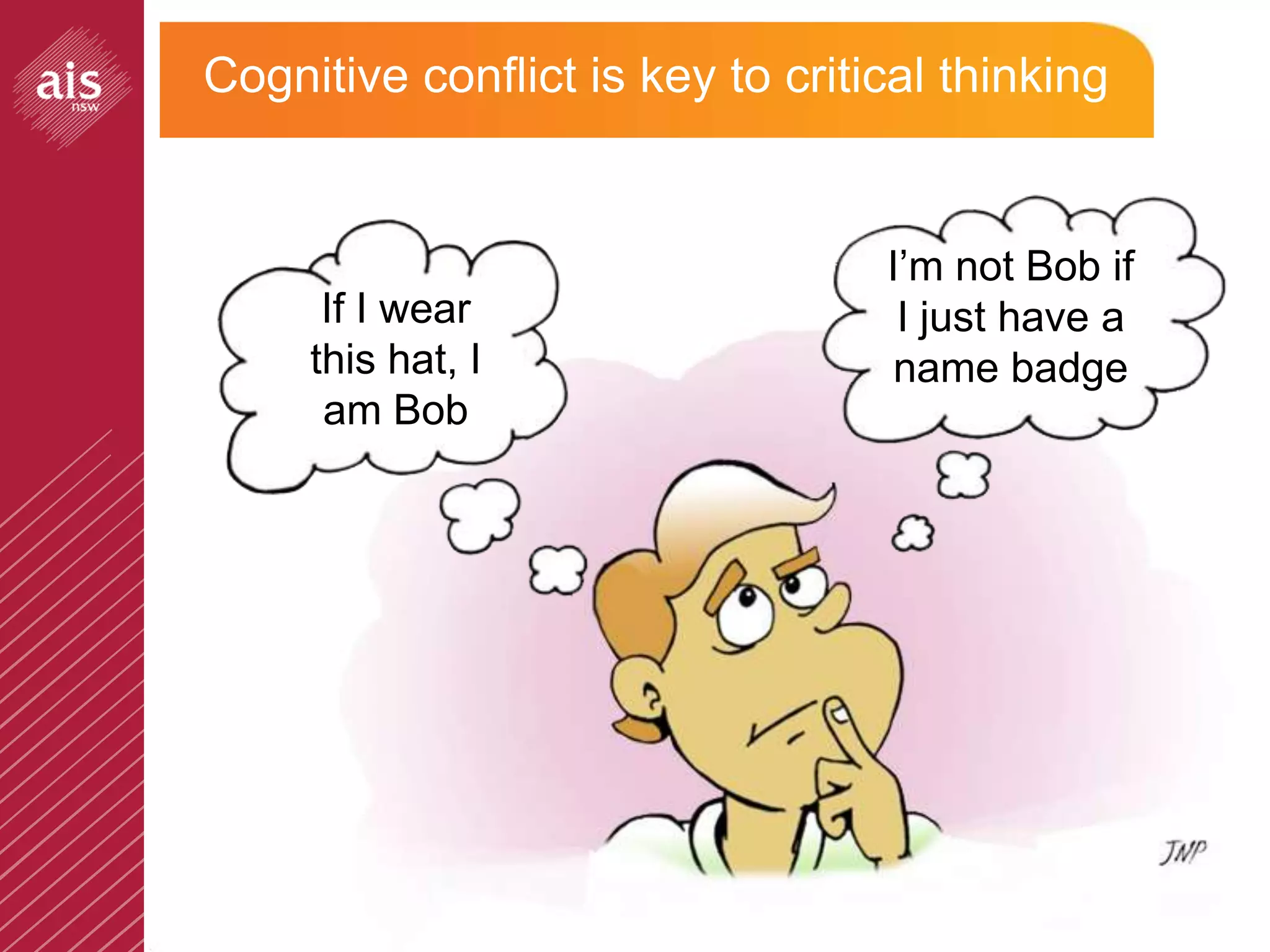
Cognitive conflict is key to critical thinking


                                                  I’m not Bob if
                 If I wear                         I just have a
                this hat, I                        name badge
                 am Bob


© The Association of Independent Schools of NSW
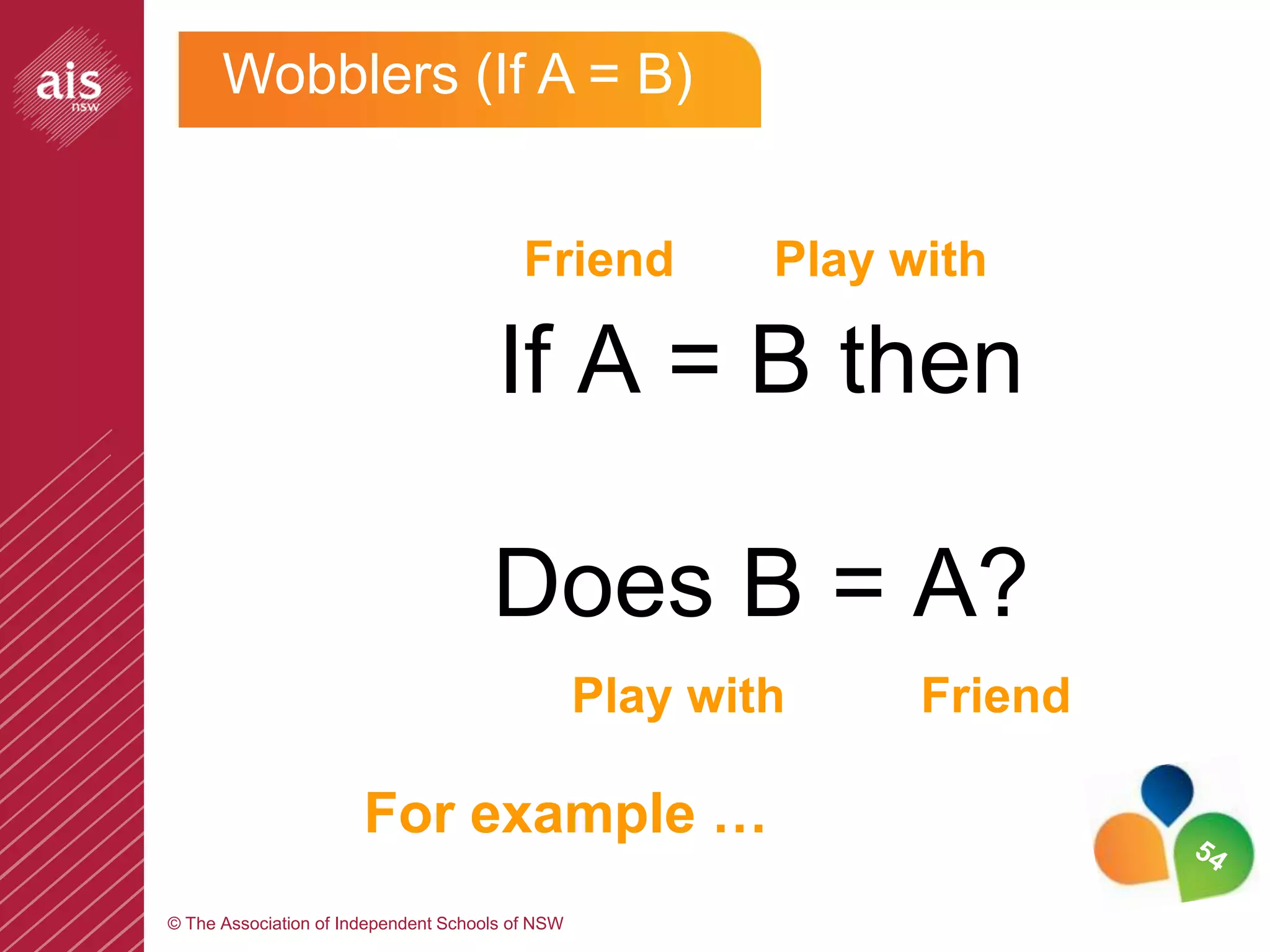
Wobblers (If A = B)


                                          Friend          Play with

                                       If A = B then

                                      Does B = A?
                                                  Play with     Friend

                       For example …
© The Association of Independent Schools of NSW
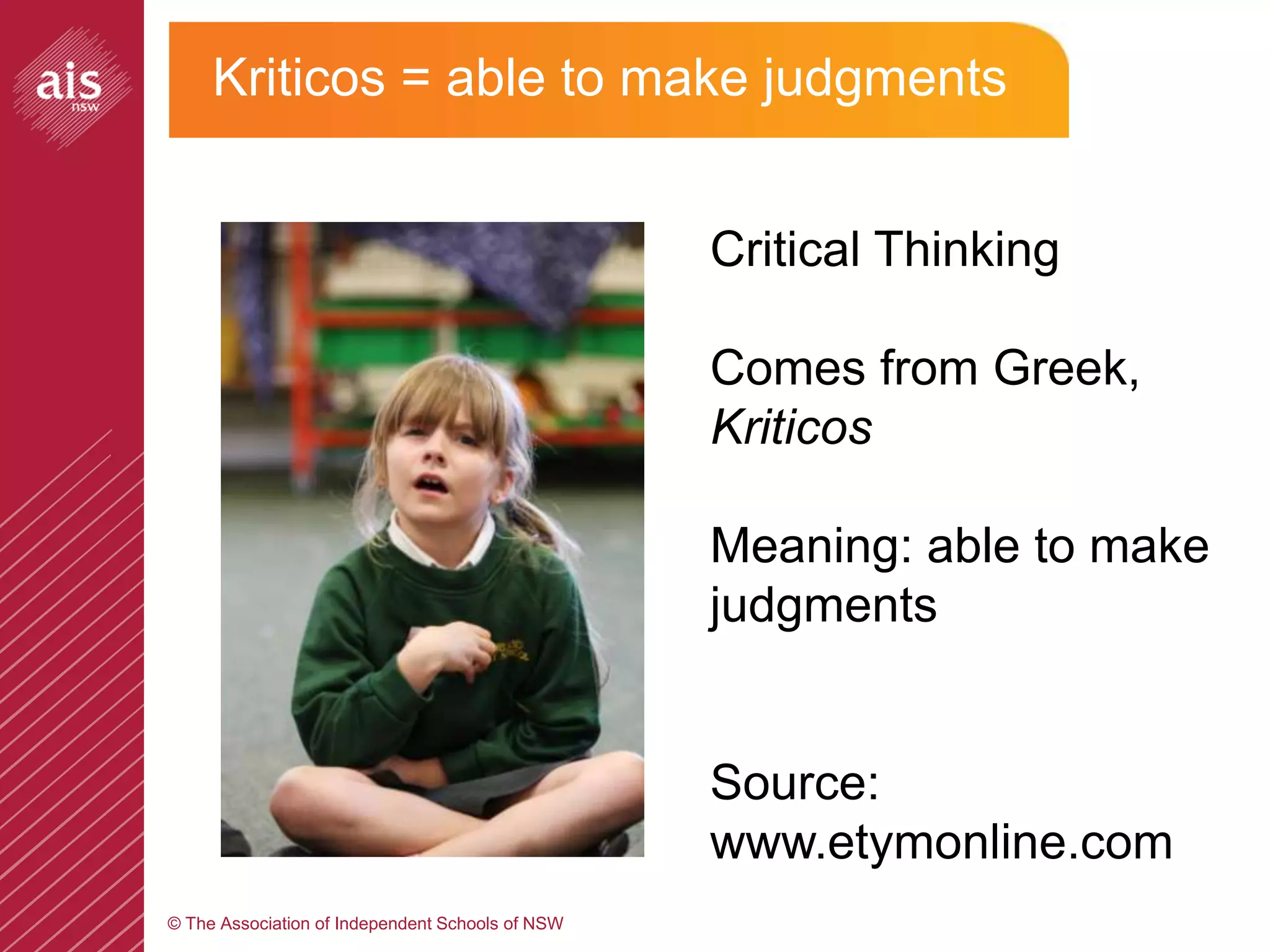
Kriticos = able to make judgments


                                                  Critical Thinking

                                                  Comes from Greek,
                                                  Kriticos

                                                  Meaning: able to make
                                                  judgments


                                                  Source:
                                                  www.etymonline.com
© The Association of Independent Schools of NSW
Quotes from Socrates (469 – 399 BC)

     1. The only true wisdom is in knowing you know
     nothing
     2. The unexamined life is not worth living
     3. Wisdom begins in wonder

     4. It is not living that matters, but living rightly

     5. True wisdom comes to each of us when we realize
     how little we understand about life, ourselves, and the
     world around us

     6. By all means, marry. If you get a good wife, you'll
     become happy; if you get a bad one, you'll become a
     philosopher
© The Association of Independent Schools of NSW
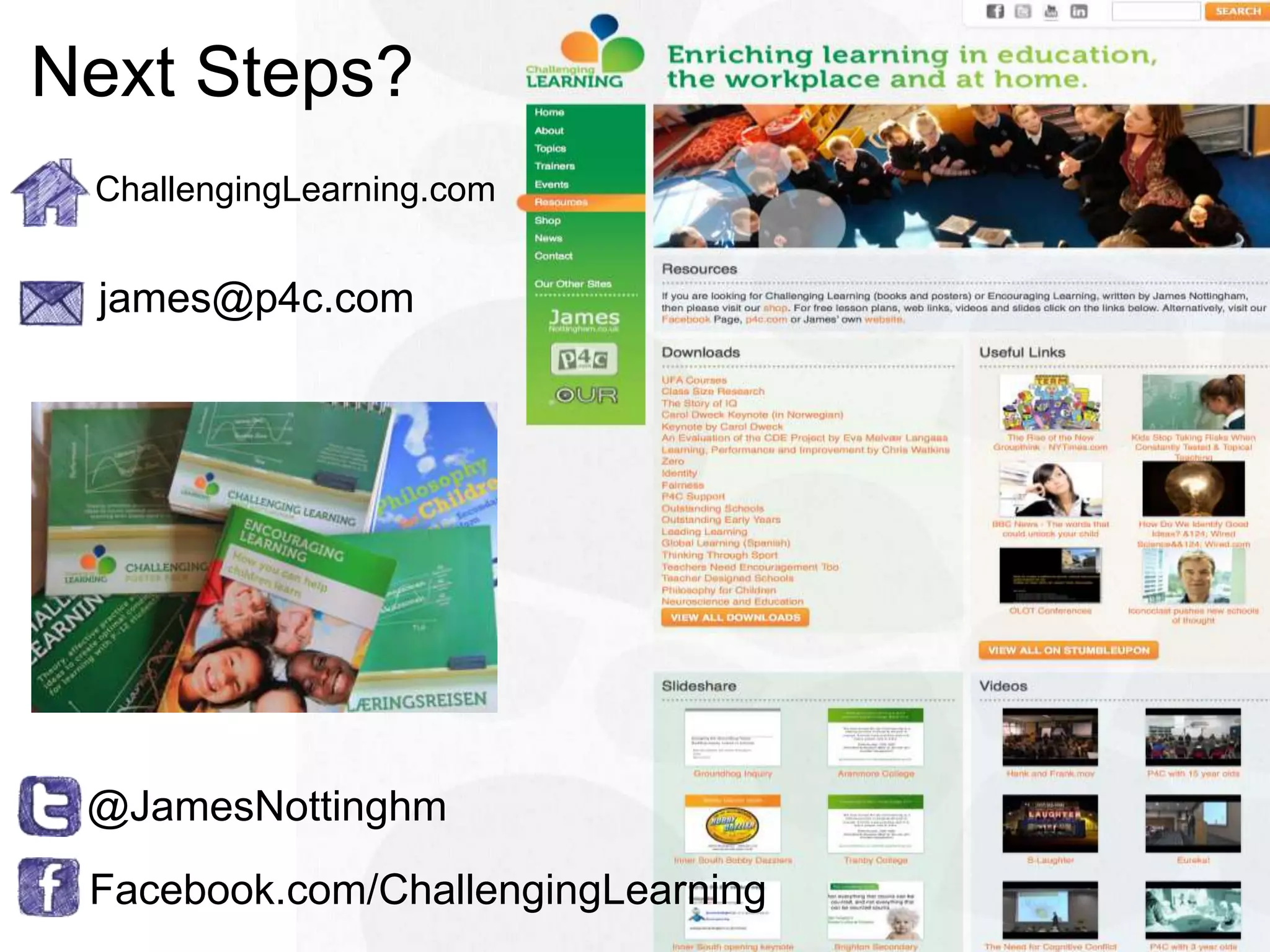
Next Steps?
 ChallengingLearning.com


 james@p4c.com


 @JamesNottinghm
 Facebook.com/ChallengingLearning

P4C India

  • 1.
    The AISNSW Indianconference is supported by the NSW Government Philosophy for Children (P4C) www.p4c.com www.facebook.com/ChallengingLearning @JamesNottinghm
  • 2.
    P4C and thinkingskills “No programme I am aware of is more likely to teach durable and transferable thinking skills than Philosophy for Children” Robert Sternberg President of the American Psychological Association © The Association of Independent Schools of NSW
  • 3.
    P4C – Createdby Matthew Lipman The aim of a thinking skills programme such as P4C is not to turn children into philosophers but to help them become more thoughtful, more reflective, more considerate and more reason-able individuals © The Association of Independent Schools of NSW
  • 4.
    "The child doesnot become social by learning. He must be social in order to learn." (George Herbert Mead)
  • 5.
    Collaborative Community Caring of Critical Inquiry Creative
  • 6.
    The AISNSW Indianconference is supported by the NSW Government
  • 9.
    One way tosummarise P4C … Not all of our questions answered … … but all of our answers questioned © The Association of Independent Schools of NSW
  • 10.
    Typical format forP4C 1. Sit in a circle 2. Warm-up game 3. Story (or other stimulus) 4. Identify the concepts 5. Create (philosophical) questions 6. Vote for the best (or favourite) question 7. Share first thoughts 8. Ask for reasons 9. Check for understanding 10. Create cognitive conflict around the concept 11. Compare the concept with other concepts 12. Draw conclusions © The Association of Independent Schools of NSW
  • 11.
    Creating a Communityof Inquiry From www.p4c.com  Standing up P4C Craft game  Repeat what someone else said  Paraphrase what someone else said  Add to what someone else said © The Association of Independent Schools of NSW
  • 12.
  • 13.
    Children are naturalphilosophers However … this doesn’t mean adults are able to spot when they are being philosophical and when they’re just being cute! © The Association of Independent Schools of NSW
  • 14.
    Example question starters Whatis … How do we know what is … Who decides what is … What if … Always or never When would … What is the difference between … Is it possible to … Should we …
  • 15.
    Cognitive conflict iskey to critical thinking I’m not Bob if If I wear I just have a this hat, I name badge am Bob © The Association of Independent Schools of NSW
  • 16.
    Wobblers (If A= B) Friend Play with If A = B then Does B = A? Play with Friend For example … © The Association of Independent Schools of NSW
  • 17.
    Kriticos = ableto make judgments Critical Thinking Comes from Greek, Kriticos Meaning: able to make judgments Source: www.etymonline.com © The Association of Independent Schools of NSW
  • 18.
    Quotes from Socrates(469 – 399 BC) 1. The only true wisdom is in knowing you know nothing 2. The unexamined life is not worth living 3. Wisdom begins in wonder 4. It is not living that matters, but living rightly 5. True wisdom comes to each of us when we realize how little we understand about life, ourselves, and the world around us 6. By all means, marry. If you get a good wife, you'll become happy; if you get a bad one, you'll become a philosopher © The Association of Independent Schools of NSW
  • 19.
    Next Steps? ChallengingLearning.com james@p4c.com @JamesNottinghm Facebook.com/ChallengingLearning