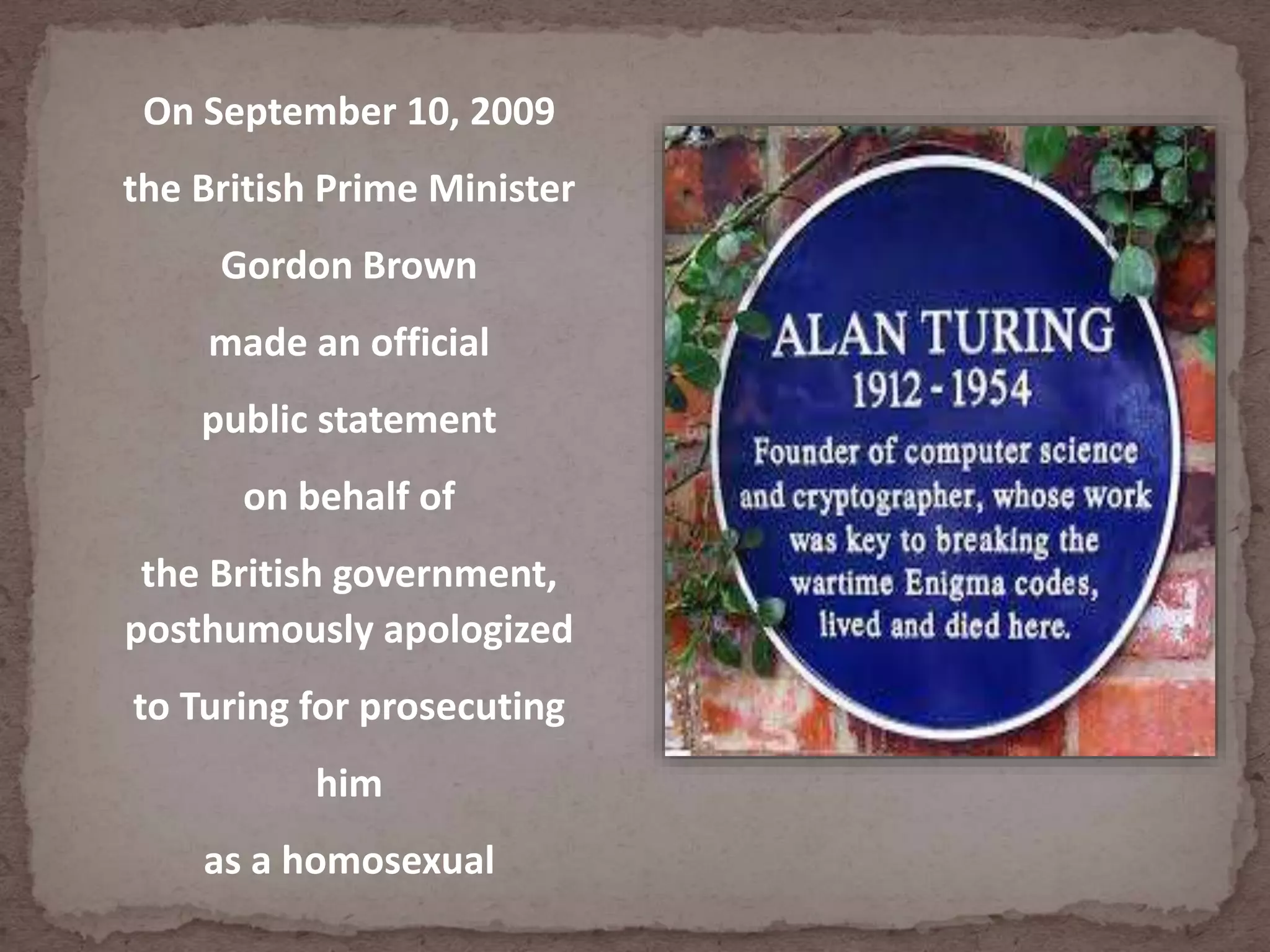
ALAN TURING (1912-1954)
Alan Turing
was not
a well
known figure
during
his
lifetime
He was born in London
and was educated
at a top private school.
In 1931 he entered
the University of Cambridge
to study mathematics.
He worked on
the “probability theory”
and took
the Mathematics degree
with distinction
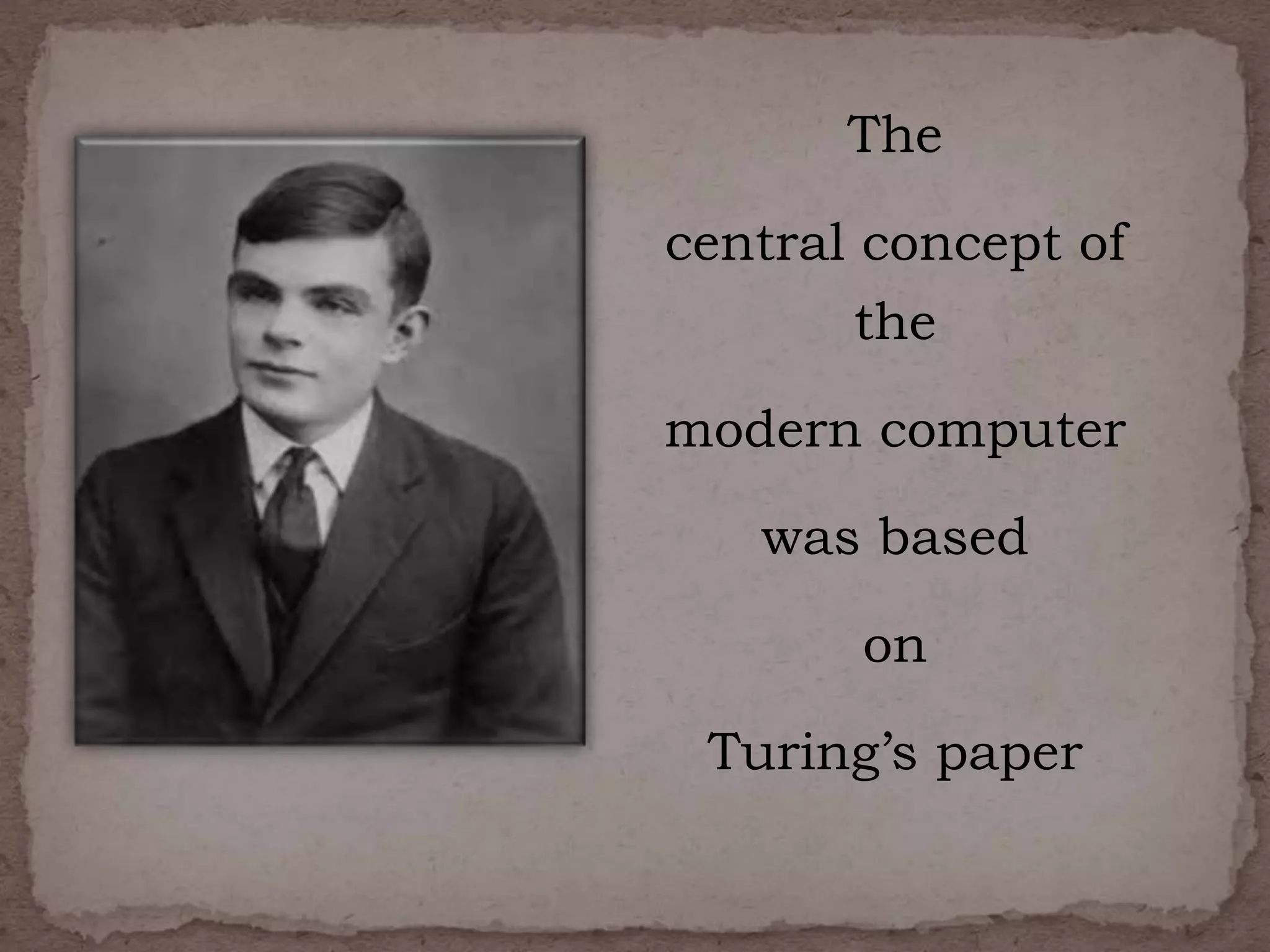
The
central concept of
the
modern computer
was based
on
Turing’s paper
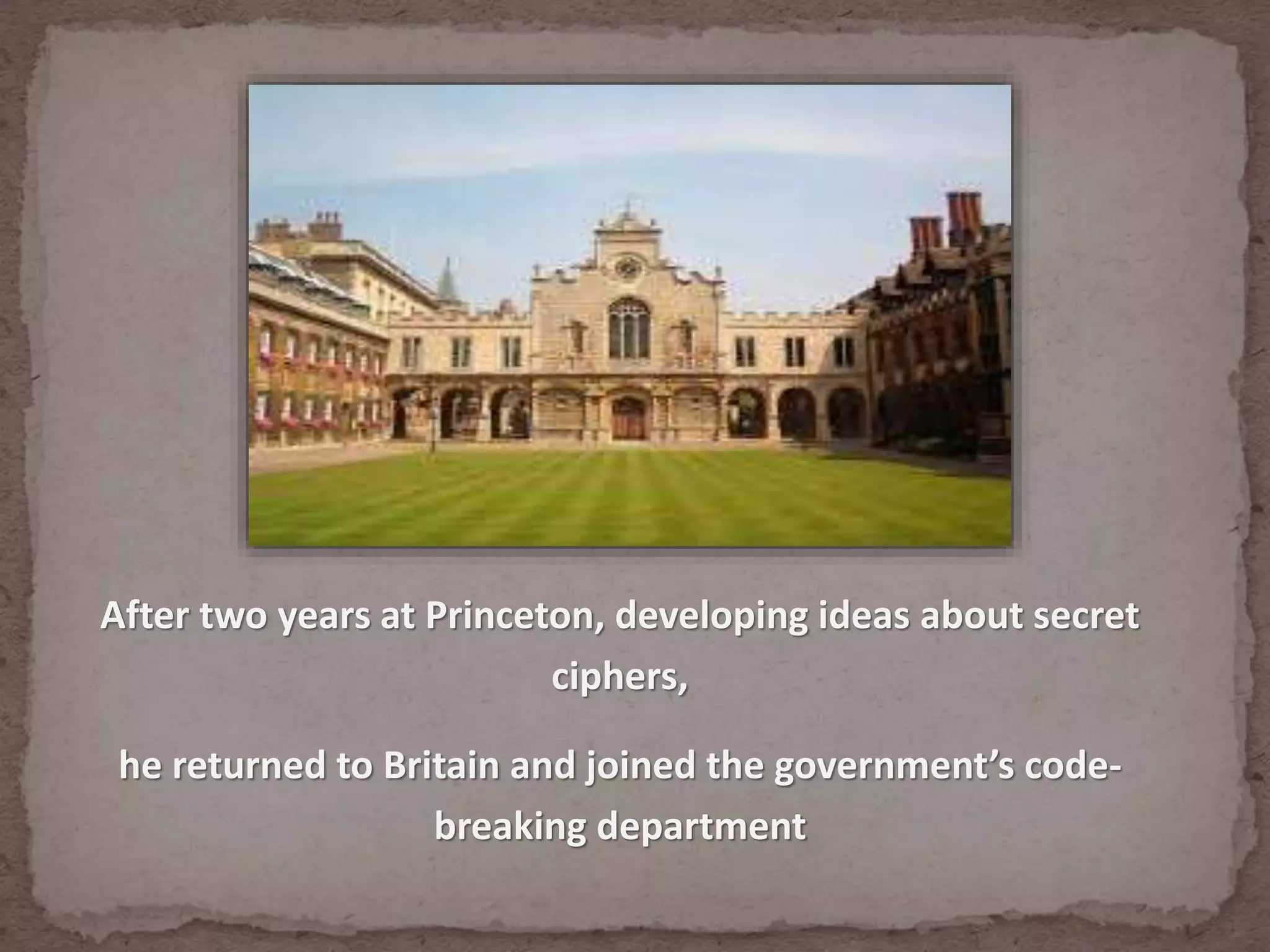
After two years at Princeton, developing ideas about secret
ciphers,
he returned to Britain and joined the government’s code-
breaking department
During
the Second World War,
Turing
worked for
the Government Code and
Cypher School
at Bletchley Park,
Britain's codebreaking
organization
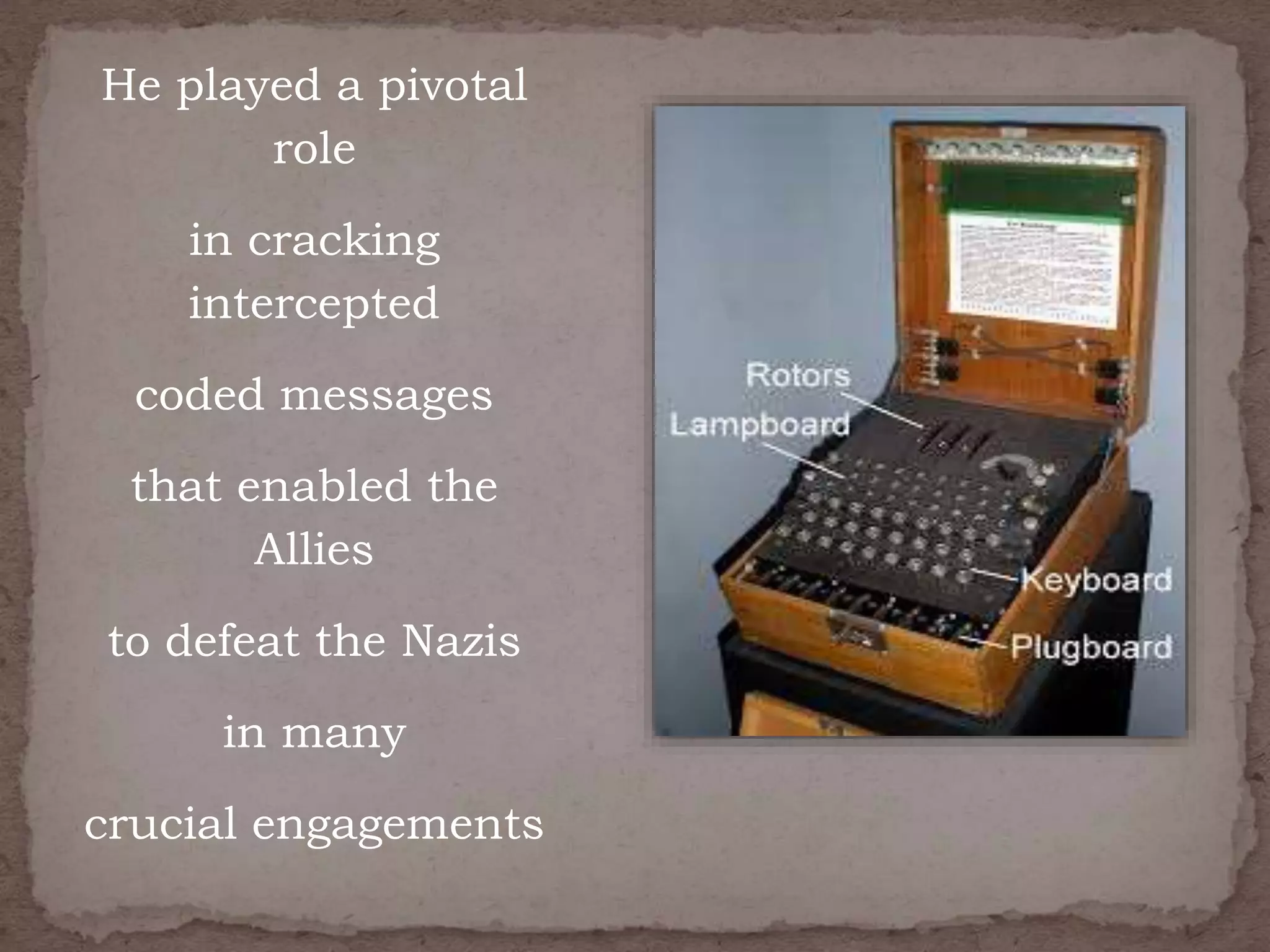
and developed a new machine
(the ‘Bombe’)
capable of breaking “Enigma” messages
He played a pivotal
role
in cracking
intercepted
coded messages
that enabled the
Allies
to defeat the Nazis
in many
crucial engagements
It
has been estimated
that
this work
shortened
the war
in Europe
by as many as
two to four years
In March 1946, Turing produced a detailed design of what was called the
Automatic Computing Engine (ACE)
This was a digital computer in the modern sense,
storing programmes in its memory
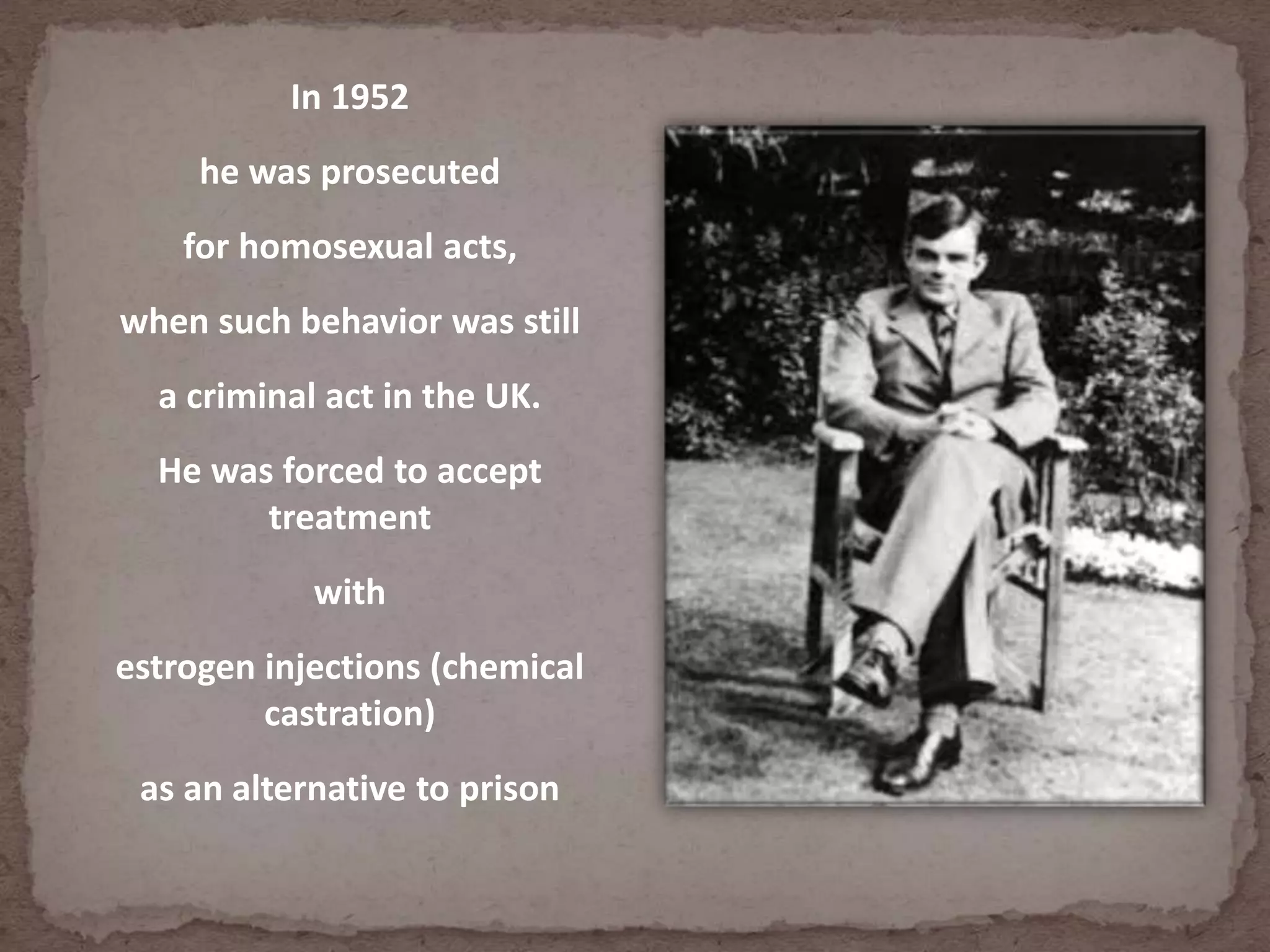
In 1952
he was prosecuted
for homosexual acts,
when such behavior was still
a criminal act in the UK.
He was forced to accept
treatment
with
estrogen injections (chemical
castration)
as an alternative to prison
Alan Turing died in 1954, 16 days before
his 42nd birthday, from cyanide poisoning
On September 10, 2009
the British Prime Minister
Gordon Brown
made an official
public statement
on behalf of
the British government,
posthumously apologized
to Turing for prosecuting
him
as a homosexual

Alan turing

  • 1.
  • 2.
    Alan Turing was not awell known figure during his lifetime
  • 4.
    He was bornin London and was educated at a top private school. In 1931 he entered the University of Cambridge to study mathematics. He worked on the “probability theory” and took the Mathematics degree with distinction
  • 6.
    The central concept of the moderncomputer was based on Turing’s paper
  • 7.
    After two yearsat Princeton, developing ideas about secret ciphers, he returned to Britain and joined the government’s code- breaking department
  • 8.
    During the Second WorldWar, Turing worked for the Government Code and Cypher School at Bletchley Park, Britain's codebreaking organization
  • 9.
    and developed anew machine (the ‘Bombe’) capable of breaking “Enigma” messages
  • 10.
    He played apivotal role in cracking intercepted coded messages that enabled the Allies to defeat the Nazis in many crucial engagements
  • 11.
    It has been estimated that thiswork shortened the war in Europe by as many as two to four years
  • 12.
    In March 1946,Turing produced a detailed design of what was called the Automatic Computing Engine (ACE) This was a digital computer in the modern sense, storing programmes in its memory
  • 13.
    In 1952 he wasprosecuted for homosexual acts, when such behavior was still a criminal act in the UK. He was forced to accept treatment with estrogen injections (chemical castration) as an alternative to prison
  • 14.
    Alan Turing diedin 1954, 16 days before his 42nd birthday, from cyanide poisoning
  • 15.
    On September 10,2009 the British Prime Minister Gordon Brown made an official public statement on behalf of the British government, posthumously apologized to Turing for prosecuting him as a homosexual