Prepared by:
Mr. M. Shivanandha Reddy
Suctioning
Definition
Aspirating secretion through a catheter
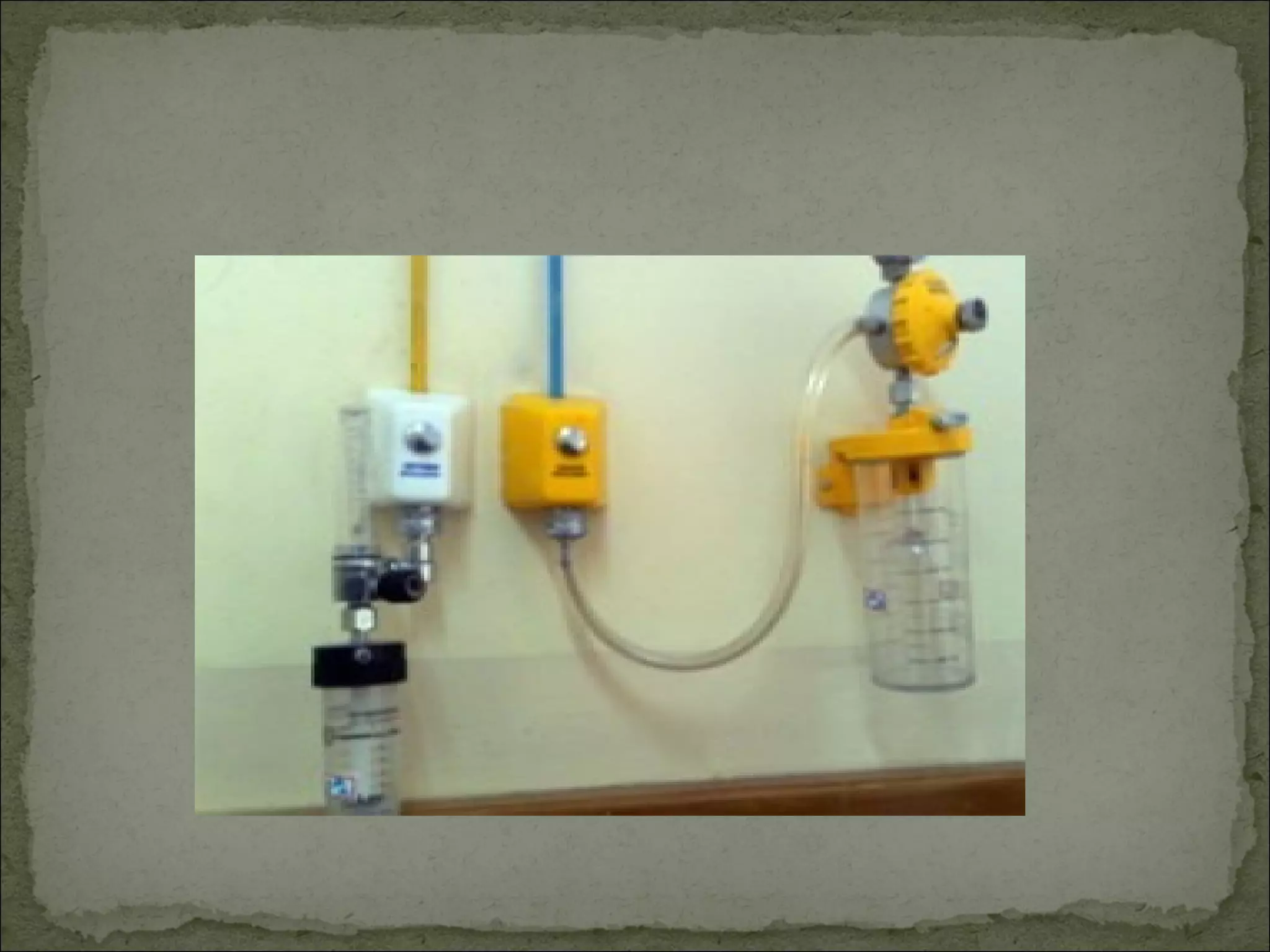
connected to a suction machine or wall
suction outlet.
Sites for Suctioning
OropharyngealNasopharyngeal
Endotracheal.
Tracheostomy
Oropharyngeal &
Nasopharyngeal
suctioning
Endotracheal &
Tracheostomy suctioning
Remove secretion from
the upper respiratory
tract .
Remove secretion from the trachea
and bronchi or the lower respiratory
tract .
Tracheal/
Endotracheal
suction
Oral / Nasal
suction
1- maintain
oral/ nasal
hygiene.
2- comfort for
the patient.
3- remove
blood and
vomit in an
emergency
situation.
Remove
pulmonary
secretions in
patients who
are unable to
cough and clear
their own
secretions
effectively.
P
U
R
P
O
S
E
S
of
S
u
C
T
I
O
N
I
N
G
Oropharyngeal and
Nasopharyngeal suctioning
required for:
1- Patient who has undergone head and
neck surgery.
2- Signs of respiratory distress .
3- Evidence of unable to cough up and
expectorate secreations .
Indications
5- Obtain sample of secretion for diagnostic
purposes
6- Prevent infection.
Tracheal suctioning required for :
1- Patients unable to clear their secretions
themselves.
2- patients with mechanical ventilation.
Abnormal respiratory rate.
Adventitious sounds on inspiration or
expiration.
Nasal secretions.
Gurglin.
Drooling.
Restlessness.
Gastric secretions or vomitus in mouth.
Coughing without clearing secretions from.
Wall Unit Portable Unite
Adult 100to 120 mm Hg . 10to 15 mm Hg
Child 95to 110 mm Hg. 5to 10 mm Hg
Infant 50to 95 mm Hg. 2to 5 mm Hg
Setting the Correct
Pressure
The
procedure
E
Q
U
I
P
M
E
N
T
1- Towel or moisture resistant pad .
2- Portable or wall suctioning
machine with tubing and collection
receptor.
3- sterile disposable container for
fluids .
4- Sterile normal saline or water.
E
Q
U
I
P
M
E
N
T
The procedure Cont’
5- Sterile gloves .
6- Goggles or face shield .
7- Sterile Suction Catheter (12-14 F
for adults & 8-10 F for children) .
8- Water – soluble lubricant .
10- Sterile gauzes.
11- Moisture resistant disposable bag.
12- Sputum cup .
Before beginning,
1. Check your facility's Doctor’s order
2. Review the patient’s blood gas
values
3. Check vital signs
4. Evaluate the patient’s ability to
cough & deep-breathe to determine
her ability to move secretions
Explain the procedure to the patient even if she
is unresponsive
Inform her that suctioning may stimulate
transient coughing or gagging {tell that
coughing helps to mobilize secretions}
Reassure the patient through out the
procedure to minimize anxiety & fear which
can increase oxygen consumption
The procedure Cont’
•Wash your hands
•Place the patient in semi-fowler's or high
fowler’s position, to promote
•lung expansion & effective coughing
•Turn on the suction from the portable unit
The procedure Cont’
Set the pressure according to your facility's
policy
The pressure is usually set between 80 & 120
mm hg; (higher pressure cause excessive
trauma without enhancing secretion removal.)
Occlude the end of the connection tubing to
check suction pressure.
Using strict aseptic technique, open the
suction catheter kit, disposable container &
gloves
Consider your dominant hand sterile & your
non dominant hand non sterile
Using your non dominate hand, pour the
sterile water or saline into the sterile
container
-With your non dominant hand, place a small
amount of water- soluble lubricant on the
sterile area. The lubricant is used to
facilitated passage of the catheter during
nasopharyngeal suctioning.
Pick up the catheter with your dominant
(sterile) hand, & attach it to the connecting
tubing
Use your non dominant hand to control
the suction valve while your dominant hand
manipulates the catheter.
Instruct the patient to cough & breathe
slowly & deeply several times before
beginning suction. Coughing helps loosen
secretions & may decrease the amount of
suctioning necessary.
Apply intermittent suction for no more than
5 seconds by placing and releasing non-
dominant thumb over vent of catheter
Slowly withdraw catheter while rotating it
back and forth between the dominant
thumb and forefinger. Encourage patient to
cough.
Replace oxygen device if applicable
Documentation
• Record the
procedure :
The amount .
Consistency .
Color .
Odor of the mucus .
Client breathing status
before and after.
•
Complications
Trauma to
the airway
Hypoxemia
Cardiac
dysrhythmi
a
Nosocomial
infection
Never suction more than 10 seconds at a time
to prevent hypoxia
Do not apply suction pressure during
insertion catheter
Pre-oxygenate the patient
Wait 3 minutes interval before each suction
Use gentle insertion & manipulation of
catheter
Lubricate catheter before to inserting
Monitor pt’s pulse
Follow strict aseptic technique
Suction patient only when needs
Airway suctioning

Airway suctioning

  • 1.
    Prepared by: Mr. M.Shivanandha Reddy
  • 2.
    Suctioning Definition Aspirating secretion througha catheter connected to a suction machine or wall suction outlet.
  • 5.
  • 6.
    Oropharyngeal & Nasopharyngeal suctioning Endotracheal & Tracheostomysuctioning Remove secretion from the upper respiratory tract . Remove secretion from the trachea and bronchi or the lower respiratory tract .
  • 7.
    Tracheal/ Endotracheal suction Oral / Nasal suction 1-maintain oral/ nasal hygiene. 2- comfort for the patient. 3- remove blood and vomit in an emergency situation. Remove pulmonary secretions in patients who are unable to cough and clear their own secretions effectively. P U R P O S E S of S u C T I O N I N G
  • 8.
    Oropharyngeal and Nasopharyngeal suctioning requiredfor: 1- Patient who has undergone head and neck surgery. 2- Signs of respiratory distress . 3- Evidence of unable to cough up and expectorate secreations . Indications
  • 9.
    5- Obtain sampleof secretion for diagnostic purposes 6- Prevent infection. Tracheal suctioning required for : 1- Patients unable to clear their secretions themselves. 2- patients with mechanical ventilation.
  • 10.
    Abnormal respiratory rate. Adventitioussounds on inspiration or expiration. Nasal secretions. Gurglin. Drooling. Restlessness. Gastric secretions or vomitus in mouth. Coughing without clearing secretions from.
  • 11.
    Wall Unit PortableUnite Adult 100to 120 mm Hg . 10to 15 mm Hg Child 95to 110 mm Hg. 5to 10 mm Hg Infant 50to 95 mm Hg. 2to 5 mm Hg Setting the Correct Pressure
  • 12.
    The procedure E Q U I P M E N T 1- Towel ormoisture resistant pad . 2- Portable or wall suctioning machine with tubing and collection receptor. 3- sterile disposable container for fluids . 4- Sterile normal saline or water.
  • 13.
    E Q U I P M E N T The procedure Cont’ 5-Sterile gloves . 6- Goggles or face shield . 7- Sterile Suction Catheter (12-14 F for adults & 8-10 F for children) . 8- Water – soluble lubricant . 10- Sterile gauzes. 11- Moisture resistant disposable bag. 12- Sputum cup .
  • 14.
    Before beginning, 1. Checkyour facility's Doctor’s order 2. Review the patient’s blood gas values 3. Check vital signs 4. Evaluate the patient’s ability to cough & deep-breathe to determine her ability to move secretions
  • 15.
    Explain the procedureto the patient even if she is unresponsive Inform her that suctioning may stimulate transient coughing or gagging {tell that coughing helps to mobilize secretions} Reassure the patient through out the procedure to minimize anxiety & fear which can increase oxygen consumption
  • 16.
    The procedure Cont’ •Washyour hands •Place the patient in semi-fowler's or high fowler’s position, to promote •lung expansion & effective coughing •Turn on the suction from the portable unit
  • 17.
    The procedure Cont’ Setthe pressure according to your facility's policy The pressure is usually set between 80 & 120 mm hg; (higher pressure cause excessive trauma without enhancing secretion removal.) Occlude the end of the connection tubing to check suction pressure.
  • 18.
    Using strict aseptictechnique, open the suction catheter kit, disposable container & gloves Consider your dominant hand sterile & your non dominant hand non sterile Using your non dominate hand, pour the sterile water or saline into the sterile container
  • 19.
    -With your nondominant hand, place a small amount of water- soluble lubricant on the sterile area. The lubricant is used to facilitated passage of the catheter during nasopharyngeal suctioning.
  • 20.
    Pick up thecatheter with your dominant (sterile) hand, & attach it to the connecting tubing Use your non dominant hand to control the suction valve while your dominant hand manipulates the catheter.
  • 21.
    Instruct the patientto cough & breathe slowly & deeply several times before beginning suction. Coughing helps loosen secretions & may decrease the amount of suctioning necessary. Apply intermittent suction for no more than 5 seconds by placing and releasing non- dominant thumb over vent of catheter
  • 22.
    Slowly withdraw catheterwhile rotating it back and forth between the dominant thumb and forefinger. Encourage patient to cough. Replace oxygen device if applicable
  • 23.
    Documentation • Record the procedure: The amount . Consistency . Color . Odor of the mucus . Client breathing status before and after. •
  • 24.
  • 25.
    Never suction morethan 10 seconds at a time to prevent hypoxia Do not apply suction pressure during insertion catheter Pre-oxygenate the patient Wait 3 minutes interval before each suction Use gentle insertion & manipulation of catheter Lubricate catheter before to inserting Monitor pt’s pulse
  • 26.
    Follow strict aseptictechnique Suction patient only when needs