

Rahul Sharma
Assistant Lecturer
IGSCON, Amethi
1- Definition of suctioning .
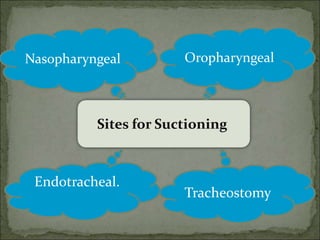
2- Sites for suction .
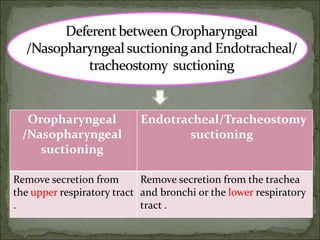
3- Deferent between oropharyngeal /
nasopharyngeal suctioning and
endotracheal / tracheostomy suctioning .
4- Purposes for suctioning .
5- Indications for suctioning.
6- Choosing the right size catheter.
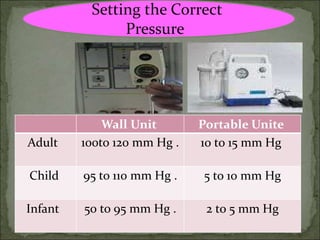
7- Setting the correct pressure .
8- The procedure .
9- Documentation.
10- Complications of suctioning .
11- Techniques to minimize or decrease the
complications .
Suctioning
Definition
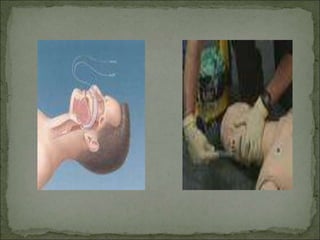
Aspirating secretion through a catheter
connected to a suction machine or wall
suction outlet.
Sites for Suctioning
OropharyngealNasopharyngeal
Endotracheal.
Tracheostomy
Endotracheal/Tracheostomy
suctioning
Oropharyngeal
/Nasopharyngeal
suctioning
Remove secretion from the trachea
and bronchi or the lower respiratory
tract .
Remove secretion from
the upper respiratory tract
.
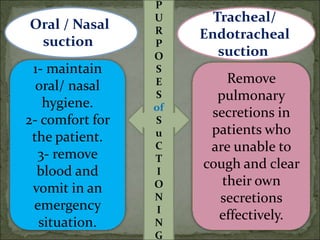
Tracheal/
Endotracheal
suction
Oral / Nasal
suction
1- maintain
oral/ nasal
hygiene.
2- comfort for
the patient.
3- remove
blood and
vomit in an
emergency
situation.
Remove
pulmonary
secretions in
patients who
are unable to
cough and clear
their own
secretions
effectively.
P
U
R
P
O
S
E
S
of
S
u
C
T
I
O
N
I
N
G
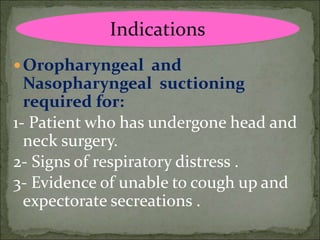
Oropharyngeal and
Nasopharyngeal suctioning
required for:
1- Patient who has undergone head and
neck surgery.
2- Signs of respiratory distress .
3- Evidence of unable to cough up and
expectorate secreations .
Indications
5- Obtain sample of secretion for diagnostic
purposes
6- Prevent infection.
 Tracheal suctioning required for :
1- Patients unable to clear their secretions
themselves.
2- patients with mechanical ventilation.
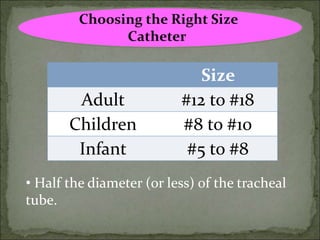
Size
#12 to #18Adult
#8 to #10Children
#5 to #8Infant
• Half the diameter (or less) of the tracheal
tube.
Choosing the Right Size
Catheter
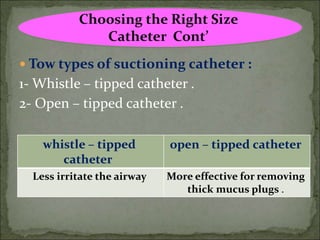
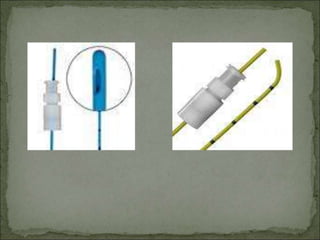
 Tow types of suctioning catheter :
1- Whistle – tipped catheter .
2- Open – tipped catheter .
open – tipped catheterwhistle – tipped
catheter
More effective for removing
thick mucus plugs .
Less irritate the airway
Choosing the Right Size
Catheter Cont’
Portable UniteWall Unit
10 to 15 mm Hg100to 120 mm Hg .Adult
5 to 10 mm Hg95 to 110 mm Hg .Child
2 to 5 mm Hg50 to 95 mm Hg .Infant
Setting the Correct
Pressure
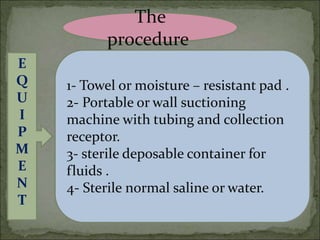
The
procedure
E
Q
U
I
P
M
E
N
T
1- Towel or moisture – resistant pad .
2- Portable or wall suctioning
machine with tubing and collection
receptor.
3- sterile deposable container for
fluids .
4- Sterile normal saline or water.
E
Q
U
I
P
M
E
N
T
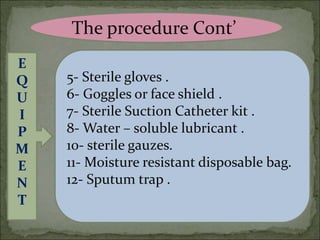
The procedure Cont’
5- Sterile gloves .
6- Goggles or face shield .
7- Sterile Suction Catheter kit .
8- Water – soluble lubricant .
10- sterile gauzes.
11- Moisture resistant disposable bag.
12- Sputum trap .
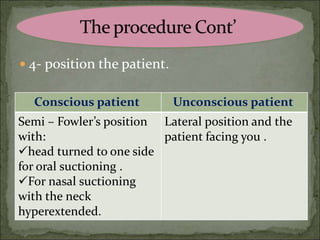
 4- position the patient.
Unconscious patientConscious patient
Lateral position and the
patient facing you .
Semi – Fowler’s position
with:
head turned to one side
for oral suctioning .
For nasal suctioning
with the neck
hyperextended.
5- prepare the equipment .
6- make approximate measure of the depth
for the insertion of the catheter and test the
equipment .
7- lubricate and introduce the catheter :
The procedure Cont’
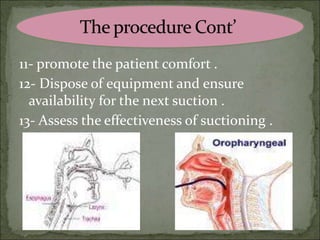
 For Oropharyngeal
suctioning :
Pull the tongue
forward .
Do not apply suction
during insertion .
Advance the
catheter about 10 to 15
cm along on side of
the mouth into
oropharynx.
The procedure Cont’
 For Nasopharyngeal
suction
Advance the
catheter along the
nasal cavity with out
suctioning.
 Never force the
catheter against an
obstruction .
8- Perform suctioning .
9- clean the catheter and apply suction again :
Wipe off the catheter with sterile
gauze.
Flash the catheter with sterile water or
saline.
Relubricate the catheter and repeat
suctioning until the air passage is clear.
Allow 20 t0 30 second intervals
between each suction and limit
suctioning to 5 minutes in total .
Alternate nares for repeat suctioning.
Encourage the client to breath deeply
and to cough between suctioning .
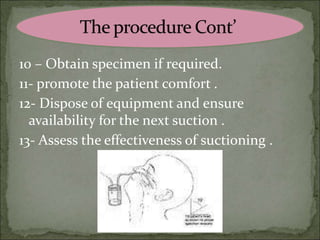
10 – Obtain specimen if required.
11- promote the patient comfort .
12- Dispose of equipment and ensure
availability for the next suction .
13- Assess the effectiveness of suctioning .
11- promote the patient comfort .
12- Dispose of equipment and ensure
availability for the next suction .
13- Assess the effectiveness of suctioning .
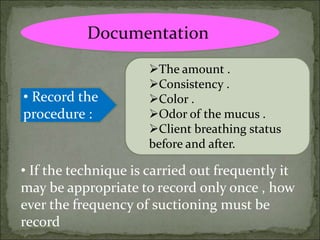
Documentation
• Record the
procedure :
The amount .
Consistency .
Color .
Odor of the mucus .
Client breathing status
before and after.
• If the technique is carried out frequently it
may be appropriate to record only once , how
ever the frequency of suctioning must be
record
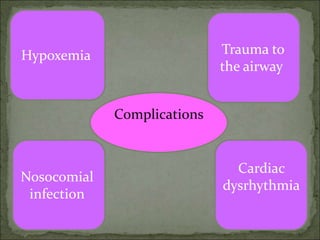
Complications
Trauma to
the airway
Hypoxemia
Cardiac
dysrhythmia
Nosocomial
infection
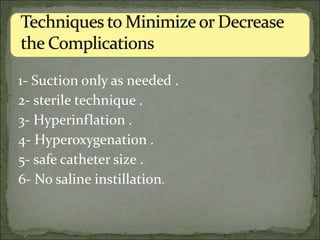
1- Suction only as needed .
2- sterile technique .
3- Hyperinflation .
4- Hyperoxygenation .
5- safe catheter size .
6- No saline instillation.
Thank you for your
listening

Airway Suctioning

  • 2.
  • 3.
    1- Definition ofsuctioning . 2- Sites for suction . 3- Deferent between oropharyngeal / nasopharyngeal suctioning and endotracheal / tracheostomy suctioning . 4- Purposes for suctioning . 5- Indications for suctioning. 6- Choosing the right size catheter.
  • 4.
    7- Setting thecorrect pressure . 8- The procedure . 9- Documentation. 10- Complications of suctioning . 11- Techniques to minimize or decrease the complications .
  • 5.
    Suctioning Definition Aspirating secretion througha catheter connected to a suction machine or wall suction outlet.
  • 6.
  • 7.
    Endotracheal/Tracheostomy suctioning Oropharyngeal /Nasopharyngeal suctioning Remove secretion fromthe trachea and bronchi or the lower respiratory tract . Remove secretion from the upper respiratory tract .
  • 8.
    Tracheal/ Endotracheal suction Oral / Nasal suction 1-maintain oral/ nasal hygiene. 2- comfort for the patient. 3- remove blood and vomit in an emergency situation. Remove pulmonary secretions in patients who are unable to cough and clear their own secretions effectively. P U R P O S E S of S u C T I O N I N G
  • 9.
    Oropharyngeal and Nasopharyngeal suctioning requiredfor: 1- Patient who has undergone head and neck surgery. 2- Signs of respiratory distress . 3- Evidence of unable to cough up and expectorate secreations . Indications
  • 10.
    5- Obtain sampleof secretion for diagnostic purposes 6- Prevent infection.  Tracheal suctioning required for : 1- Patients unable to clear their secretions themselves. 2- patients with mechanical ventilation.
  • 11.
    Size #12 to #18Adult #8to #10Children #5 to #8Infant • Half the diameter (or less) of the tracheal tube. Choosing the Right Size Catheter
  • 12.
     Tow typesof suctioning catheter : 1- Whistle – tipped catheter . 2- Open – tipped catheter . open – tipped catheterwhistle – tipped catheter More effective for removing thick mucus plugs . Less irritate the airway Choosing the Right Size Catheter Cont’
  • 14.
    Portable UniteWall Unit 10to 15 mm Hg100to 120 mm Hg .Adult 5 to 10 mm Hg95 to 110 mm Hg .Child 2 to 5 mm Hg50 to 95 mm Hg .Infant Setting the Correct Pressure
  • 15.
    The procedure E Q U I P M E N T 1- Towel ormoisture – resistant pad . 2- Portable or wall suctioning machine with tubing and collection receptor. 3- sterile deposable container for fluids . 4- Sterile normal saline or water.
  • 16.
    E Q U I P M E N T The procedure Cont’ 5-Sterile gloves . 6- Goggles or face shield . 7- Sterile Suction Catheter kit . 8- Water – soluble lubricant . 10- sterile gauzes. 11- Moisture resistant disposable bag. 12- Sputum trap .
  • 17.
     4- positionthe patient. Unconscious patientConscious patient Lateral position and the patient facing you . Semi – Fowler’s position with: head turned to one side for oral suctioning . For nasal suctioning with the neck hyperextended.
  • 19.
    5- prepare theequipment . 6- make approximate measure of the depth for the insertion of the catheter and test the equipment . 7- lubricate and introduce the catheter :
  • 20.
    The procedure Cont’ For Oropharyngeal suctioning : Pull the tongue forward . Do not apply suction during insertion . Advance the catheter about 10 to 15 cm along on side of the mouth into oropharynx.
  • 21.
    The procedure Cont’ For Nasopharyngeal suction Advance the catheter along the nasal cavity with out suctioning.  Never force the catheter against an obstruction .
  • 22.
    8- Perform suctioning. 9- clean the catheter and apply suction again : Wipe off the catheter with sterile gauze. Flash the catheter with sterile water or saline. Relubricate the catheter and repeat suctioning until the air passage is clear.
  • 23.
    Allow 20 t030 second intervals between each suction and limit suctioning to 5 minutes in total . Alternate nares for repeat suctioning. Encourage the client to breath deeply and to cough between suctioning .
  • 24.
    10 – Obtainspecimen if required. 11- promote the patient comfort . 12- Dispose of equipment and ensure availability for the next suction . 13- Assess the effectiveness of suctioning .
  • 25.
    11- promote thepatient comfort . 12- Dispose of equipment and ensure availability for the next suction . 13- Assess the effectiveness of suctioning .
  • 26.
    Documentation • Record the procedure: The amount . Consistency . Color . Odor of the mucus . Client breathing status before and after. • If the technique is carried out frequently it may be appropriate to record only once , how ever the frequency of suctioning must be record
  • 27.
  • 28.
    1- Suction onlyas needed . 2- sterile technique . 3- Hyperinflation . 4- Hyperoxygenation . 5- safe catheter size . 6- No saline instillation.
  • 29.
    Thank you foryour listening