AIR LIFT
BIOREACTOR
BEENISH SARFRAZ
INTRODUCTION…
 typical motionless bioreactor where the internal
    circulation and mixing are achieved by bubbling air.”
   Employ forced/ pressurized air to circulate cells and
    nutrient medium.
   Can be used to culture cells that highly shear-sensitive.
   gas stream facilitate exchange of material between the gas
    phase and the medium.
    oxygen is usually transferred to the liquid, products are
    removed through exchange with the gas phase.
STRUCTURE/ DESIGN…
 Entire reactor is divided into 2 halves by a Draft tube:
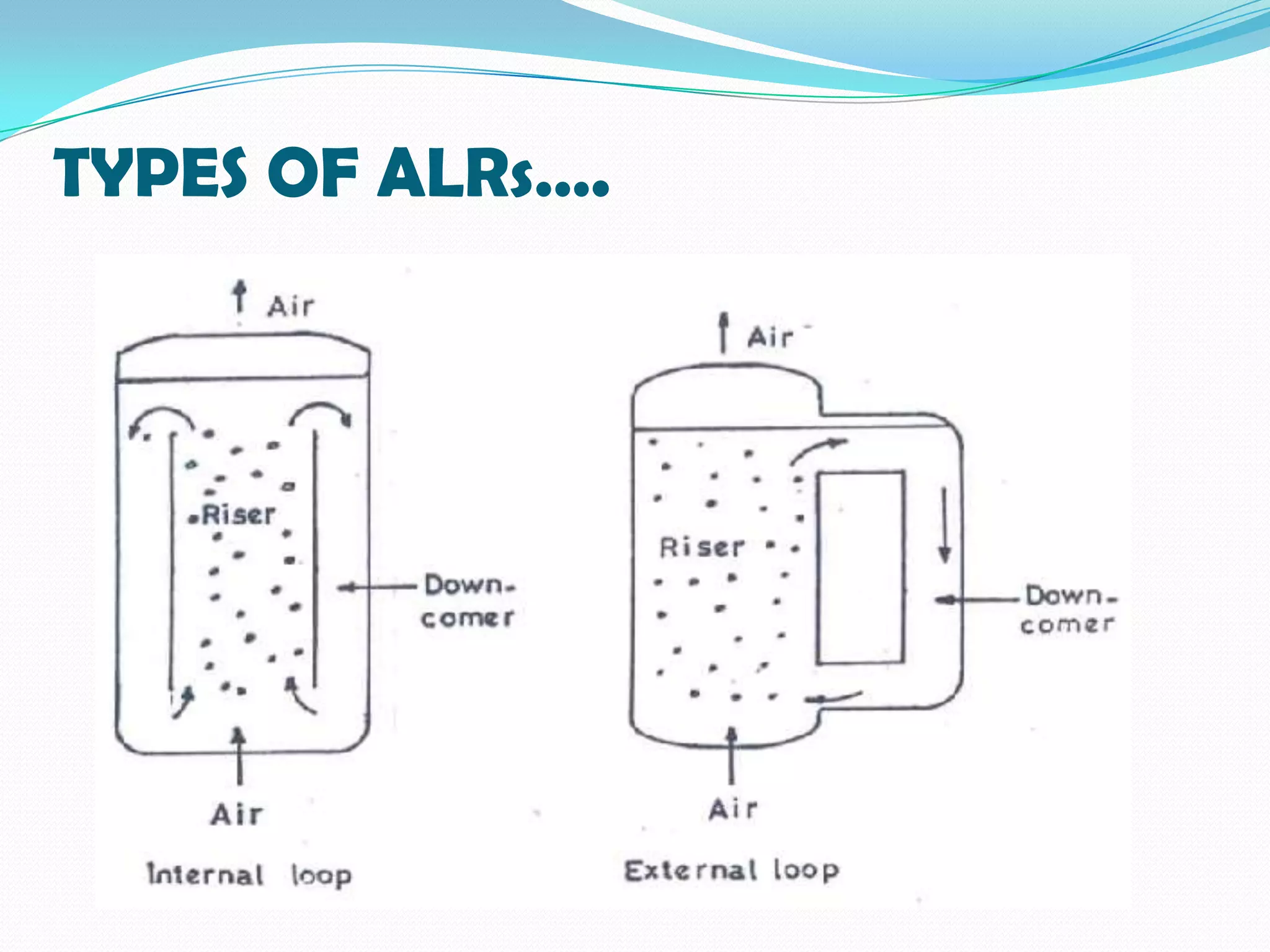
 inner gassed region ( Riser)
 outer ungassed region ( Down comer)

 Riser has gas injection connected- air moves upwards.

 Down comer region has degassed media and cells.

 Mean density gradient between riser and downcomer
  regions causes continuous circulation.
PARTS OF ALR… upward air flow.
 RISER: Connected gas injection-
 DOWNCOMER: degassed media+cells.
 BASE: Connected to Perforated nozzle bank/ plate/
  Sparger to pump pressurized air.
 HEAD SPACE: Gas release region, flocculation, foam
  accumulation etc.
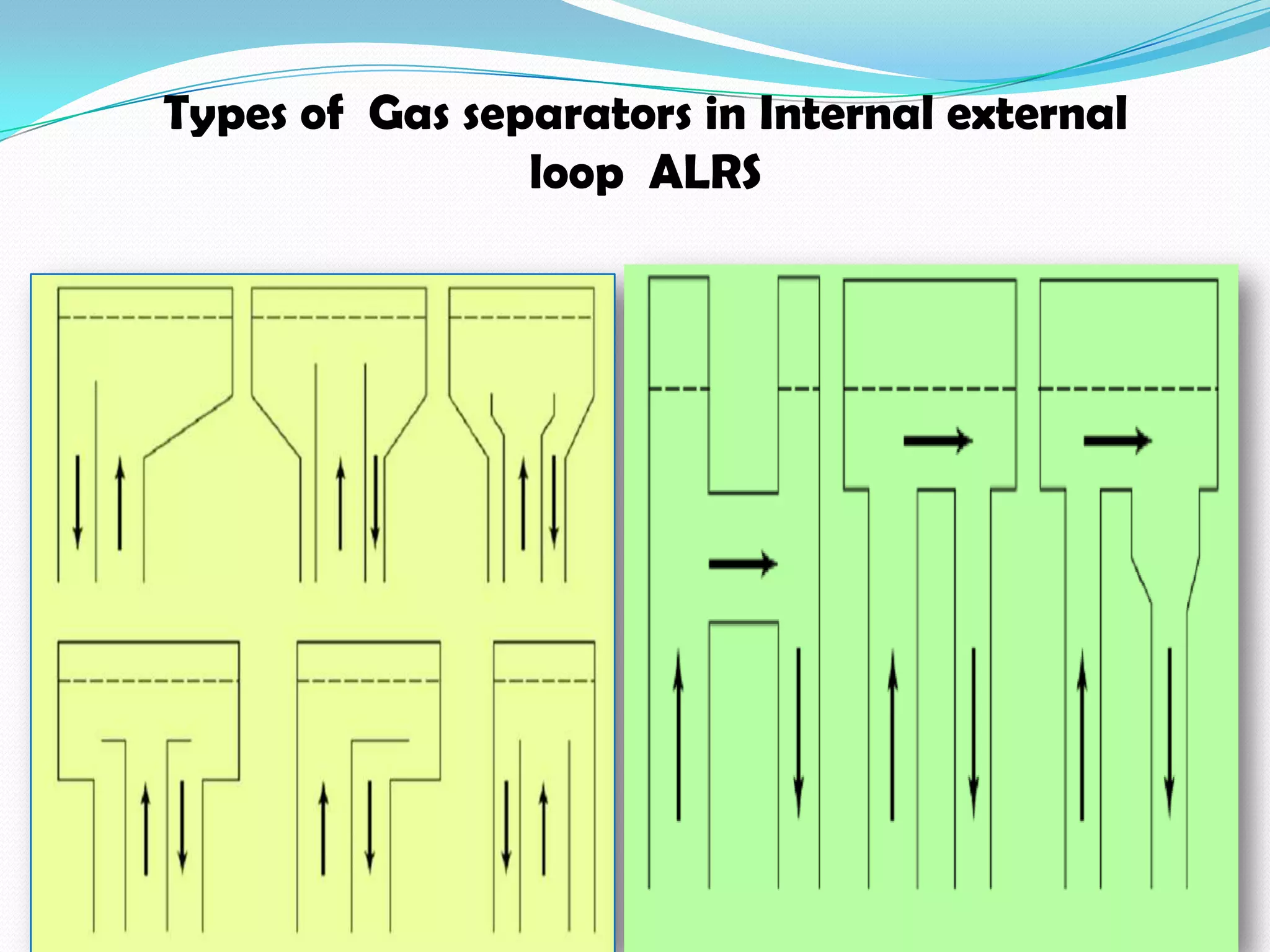
 GAS SEPARATOR:
   Facilitates gas/liquid recirculation
   maximizes gas residence time
   reduces gas friction in downcomer.
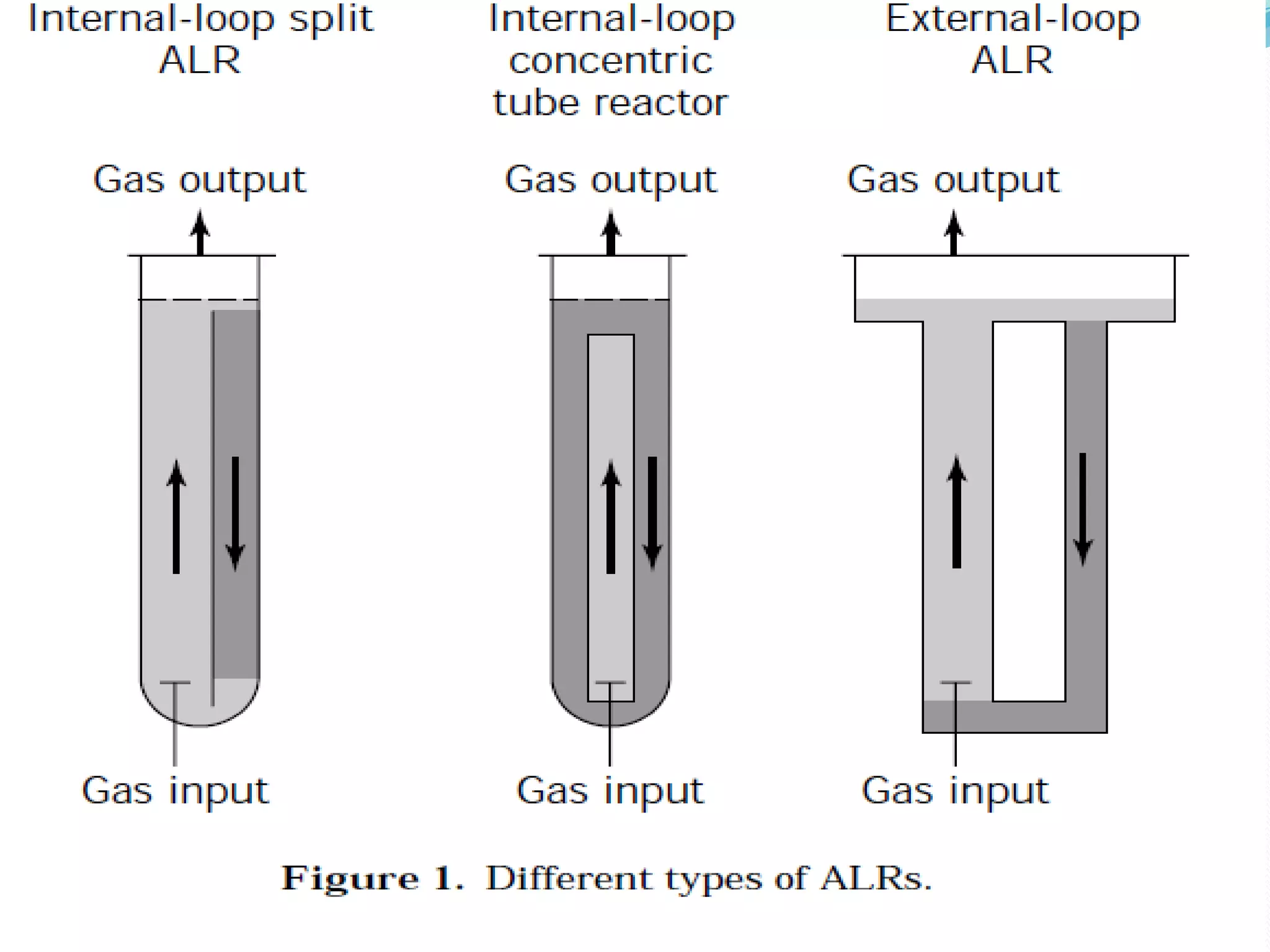
ALR TYPES DESCRIPTION
 INTERNAL LOOP ALR:
 baffles placed strategically in a single vessel create the
  channels required for the circulation
 shortest path that a bubble cover from the riser to the
  downcomer is a straight line

 EXTERNAL LOOP ALR: circulation takes place through
  separate and distinct conduits
 there is usually a minimum horizontal distance to be
  covered, increases the chances of disengagement of the
  bubbles
TYPES OF ALRs….
Types of Gas separators in Internal external
                loop ALRS
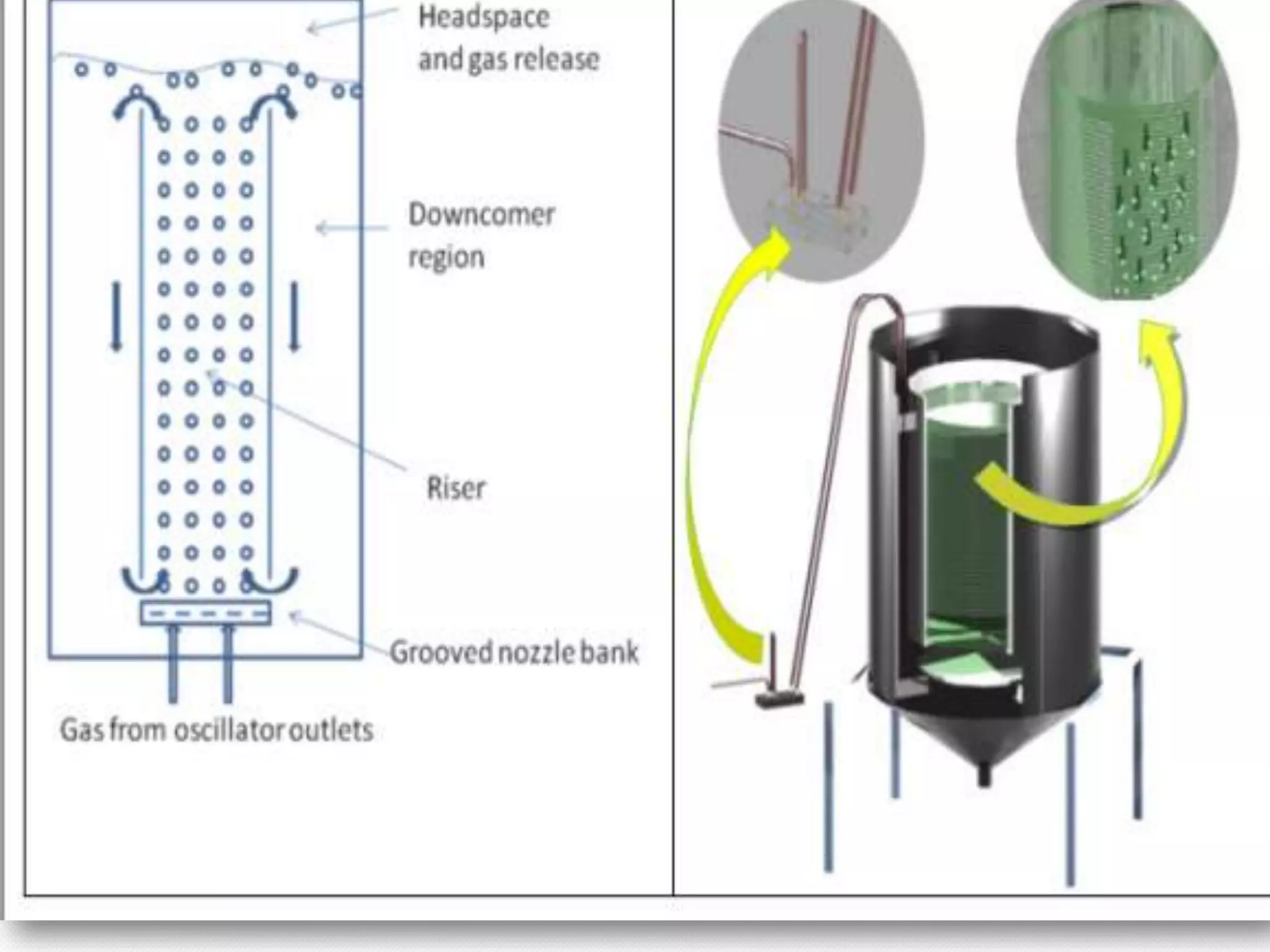
HOW AIRLIFT BIOREACTOR WORKS?

                          Headspace
                          region


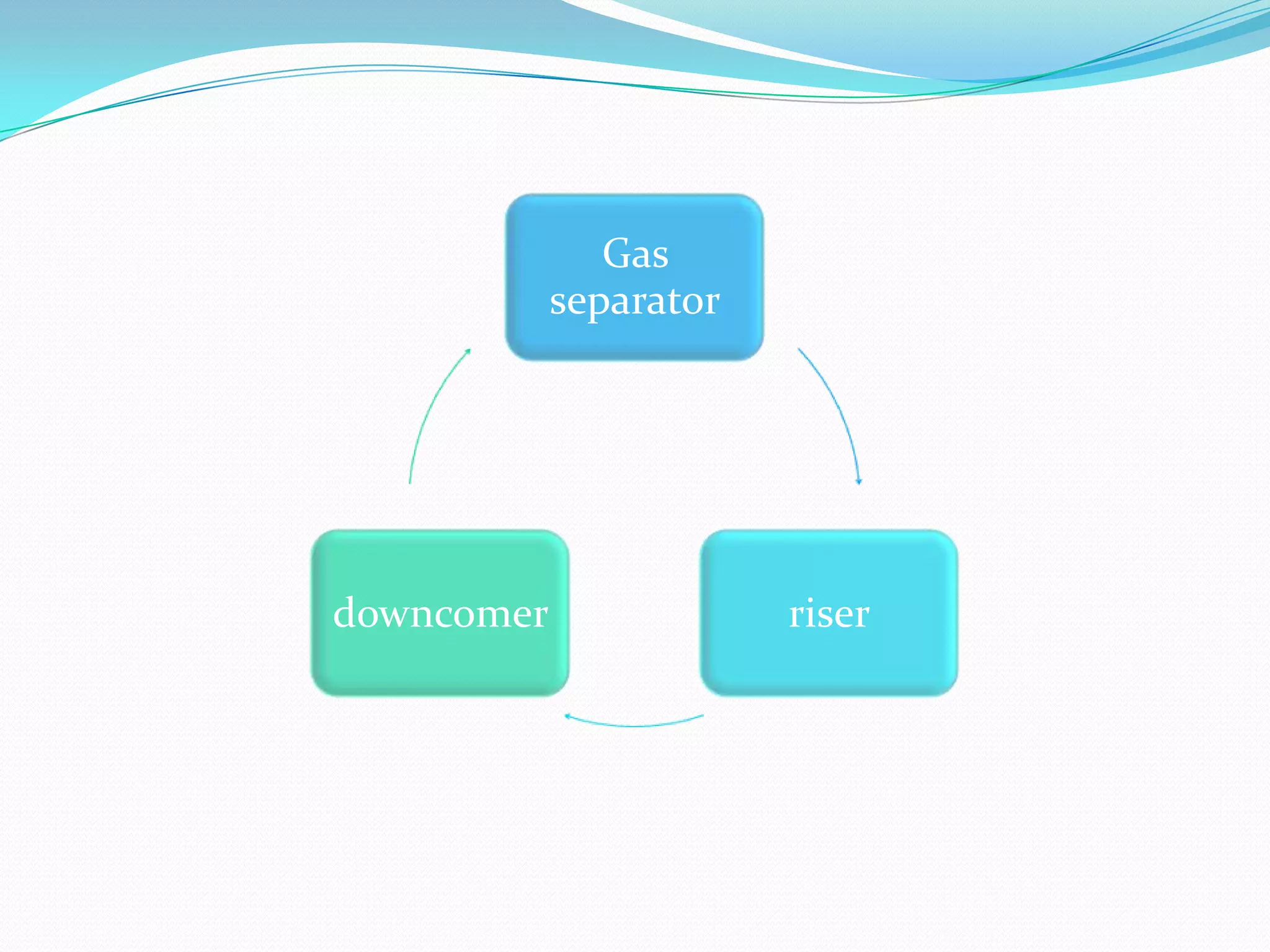
                           downcomer


                          riser


                           Grooved nozzle
                           bank
Gas
            separator


downcomer               riser
ALR features
 Gas separator
 Gas Holdup
a) Driving force circulation
 Shear stress


 Effect of liquid
a) Disengement of bubbles
•  Free rising velocity, liquid velocity, residence time of bubbles in gas
   separator
 Measuring The Liquid Velocity.
 use of tracers in the liquid. If a tracer is injected and two probes are installed in
  a section of the tube
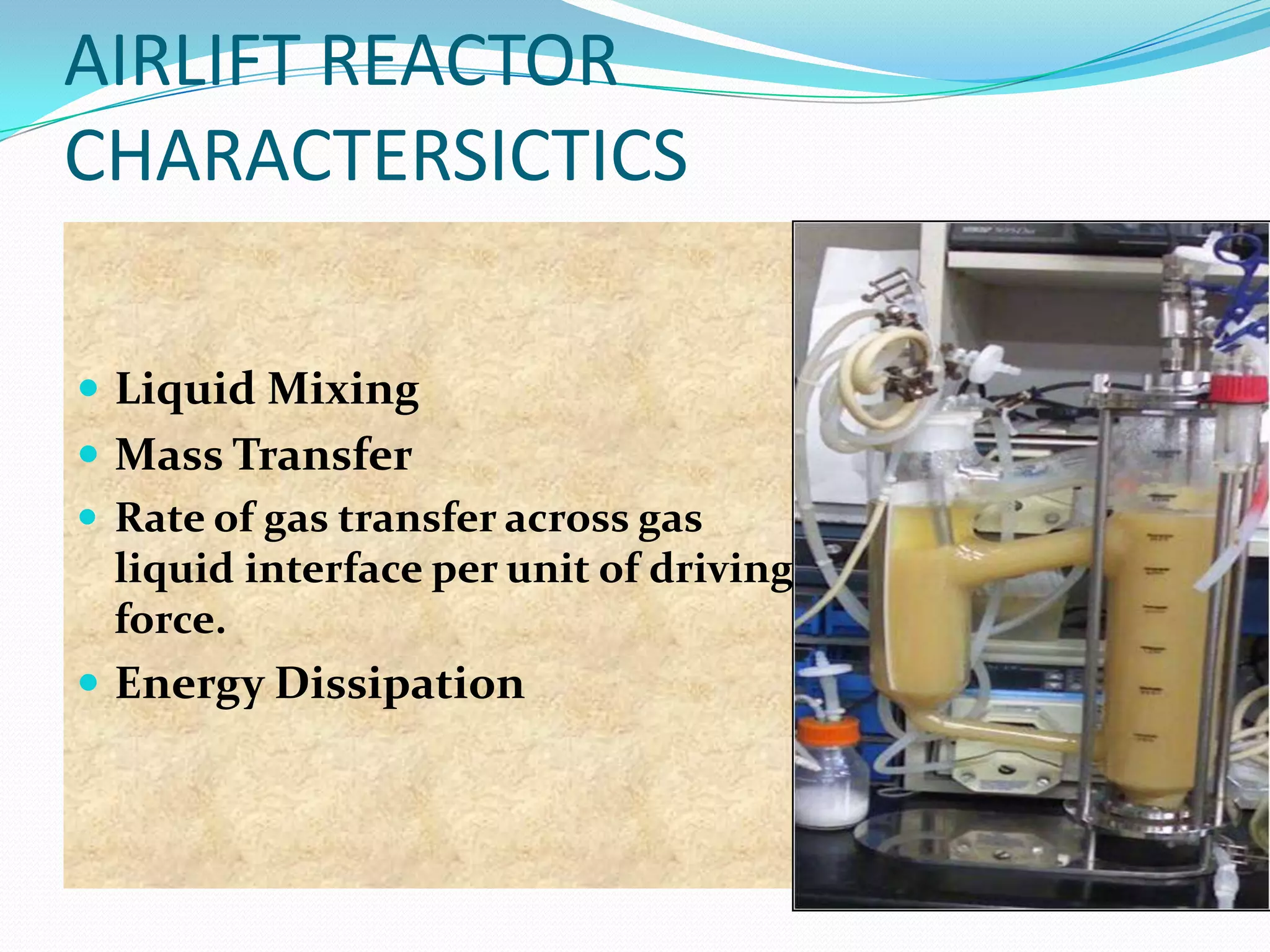
AIRLIFT REACTOR
CHARACTERSICTICS

 Liquid Mixing
 Mass Transfer
 Rate of gas transfer across gas
  liquid interface per unit of driving
  force.
 Energy Dissipation
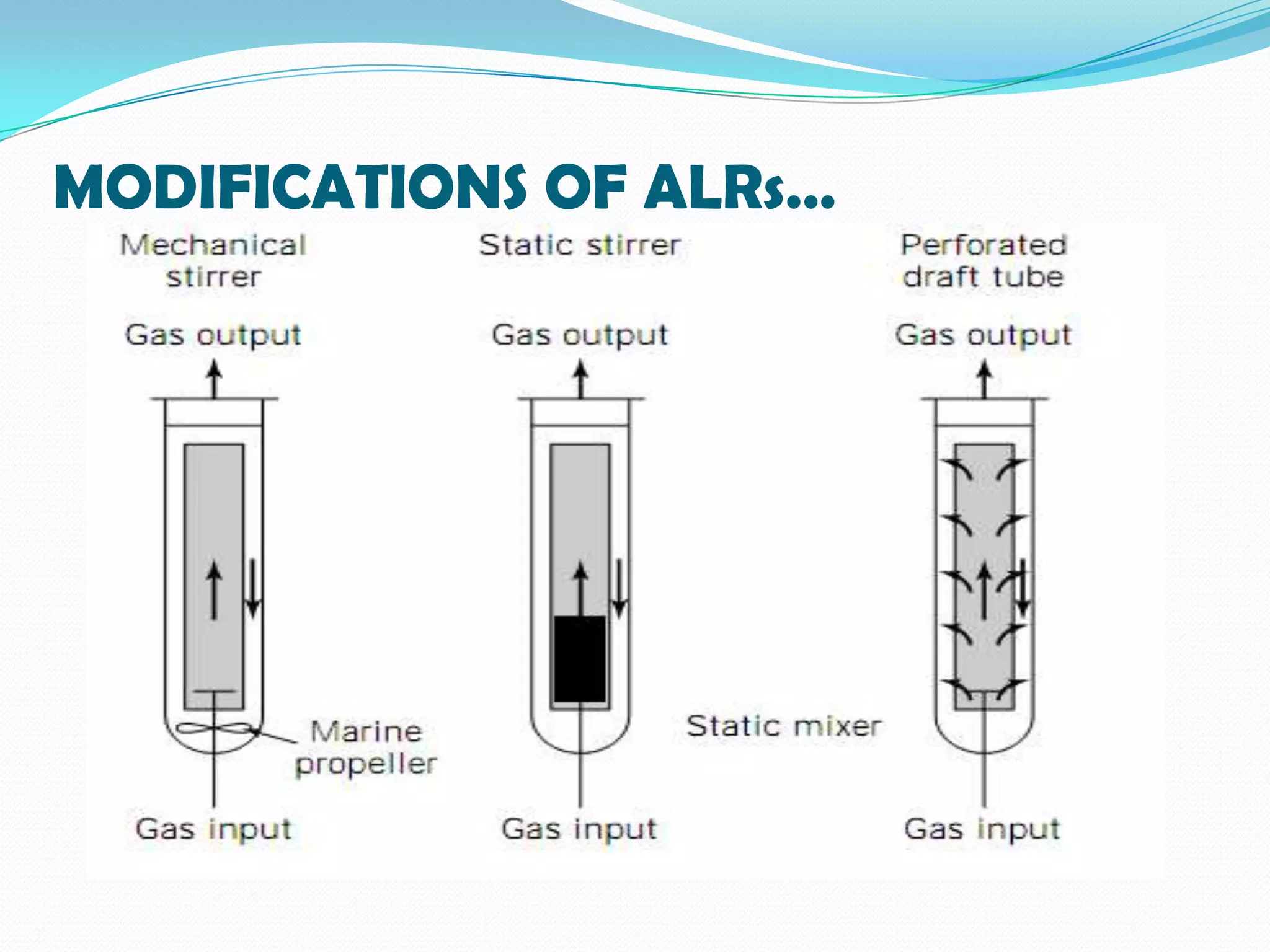
MODIFICATIONS OF ALRs…
ADVANTAGES OF ALRs…
Hence, homogenous mixing/ distribution of gas/ oxygen.
 Simple design with no moving parts or agitator for
  less maintenance, less risk of defects.
 Easier sterilization (no agitator shaft parts)
 Low Energy requirement Homogenous distribution of
  nutrients and shear force.
 DISADVANTAGES
 Greater air throughput and higher pressures needed
 Inefficient break the foam when foaming occurs
 NO bubbles breaker
USES….
 Mammalian cell cultures.


 Waste water treatment


 Biological processes involving biocatalysts as solids


 To produce biopharma proteins etc from fragile cells.

Airlift bioreactor ppt

  • 1.
  • 2.
    INTRODUCTION…  typical motionlessbioreactor where the internal circulation and mixing are achieved by bubbling air.”  Employ forced/ pressurized air to circulate cells and nutrient medium.  Can be used to culture cells that highly shear-sensitive.  gas stream facilitate exchange of material between the gas phase and the medium.  oxygen is usually transferred to the liquid, products are removed through exchange with the gas phase.
  • 3.
    STRUCTURE/ DESIGN…  Entirereactor is divided into 2 halves by a Draft tube:  inner gassed region ( Riser)  outer ungassed region ( Down comer)  Riser has gas injection connected- air moves upwards.  Down comer region has degassed media and cells.  Mean density gradient between riser and downcomer regions causes continuous circulation.
  • 5.
    PARTS OF ALR…upward air flow.  RISER: Connected gas injection-  DOWNCOMER: degassed media+cells.  BASE: Connected to Perforated nozzle bank/ plate/ Sparger to pump pressurized air.  HEAD SPACE: Gas release region, flocculation, foam accumulation etc.  GAS SEPARATOR: Facilitates gas/liquid recirculation maximizes gas residence time reduces gas friction in downcomer.
  • 6.
    ALR TYPES DESCRIPTION INTERNAL LOOP ALR:  baffles placed strategically in a single vessel create the channels required for the circulation  shortest path that a bubble cover from the riser to the downcomer is a straight line  EXTERNAL LOOP ALR: circulation takes place through separate and distinct conduits  there is usually a minimum horizontal distance to be covered, increases the chances of disengagement of the bubbles
  • 8.
  • 9.
    Types of Gasseparators in Internal external loop ALRS
  • 10.
    HOW AIRLIFT BIOREACTORWORKS? Headspace region downcomer riser Grooved nozzle bank
  • 11.
    Gas separator downcomer riser
  • 12.
    ALR features  Gasseparator  Gas Holdup a) Driving force circulation  Shear stress  Effect of liquid a) Disengement of bubbles • Free rising velocity, liquid velocity, residence time of bubbles in gas separator  Measuring The Liquid Velocity.  use of tracers in the liquid. If a tracer is injected and two probes are installed in a section of the tube
  • 13.
    AIRLIFT REACTOR CHARACTERSICTICS  LiquidMixing  Mass Transfer  Rate of gas transfer across gas liquid interface per unit of driving force.  Energy Dissipation
  • 14.
  • 15.
    ADVANTAGES OF ALRs… Hence,homogenous mixing/ distribution of gas/ oxygen.  Simple design with no moving parts or agitator for less maintenance, less risk of defects.  Easier sterilization (no agitator shaft parts)  Low Energy requirement Homogenous distribution of nutrients and shear force.  DISADVANTAGES  Greater air throughput and higher pressures needed  Inefficient break the foam when foaming occurs  NO bubbles breaker
  • 16.
    USES….  Mammalian cellcultures.  Waste water treatment  Biological processes involving biocatalysts as solids  To produce biopharma proteins etc from fragile cells.