Air Pollution and Control
(Elective-I)
Contents of Unit-I
The Structure of the atmosphere,
 Definition

and

scope

Pollution,
Scales of air pollution.

of

Air
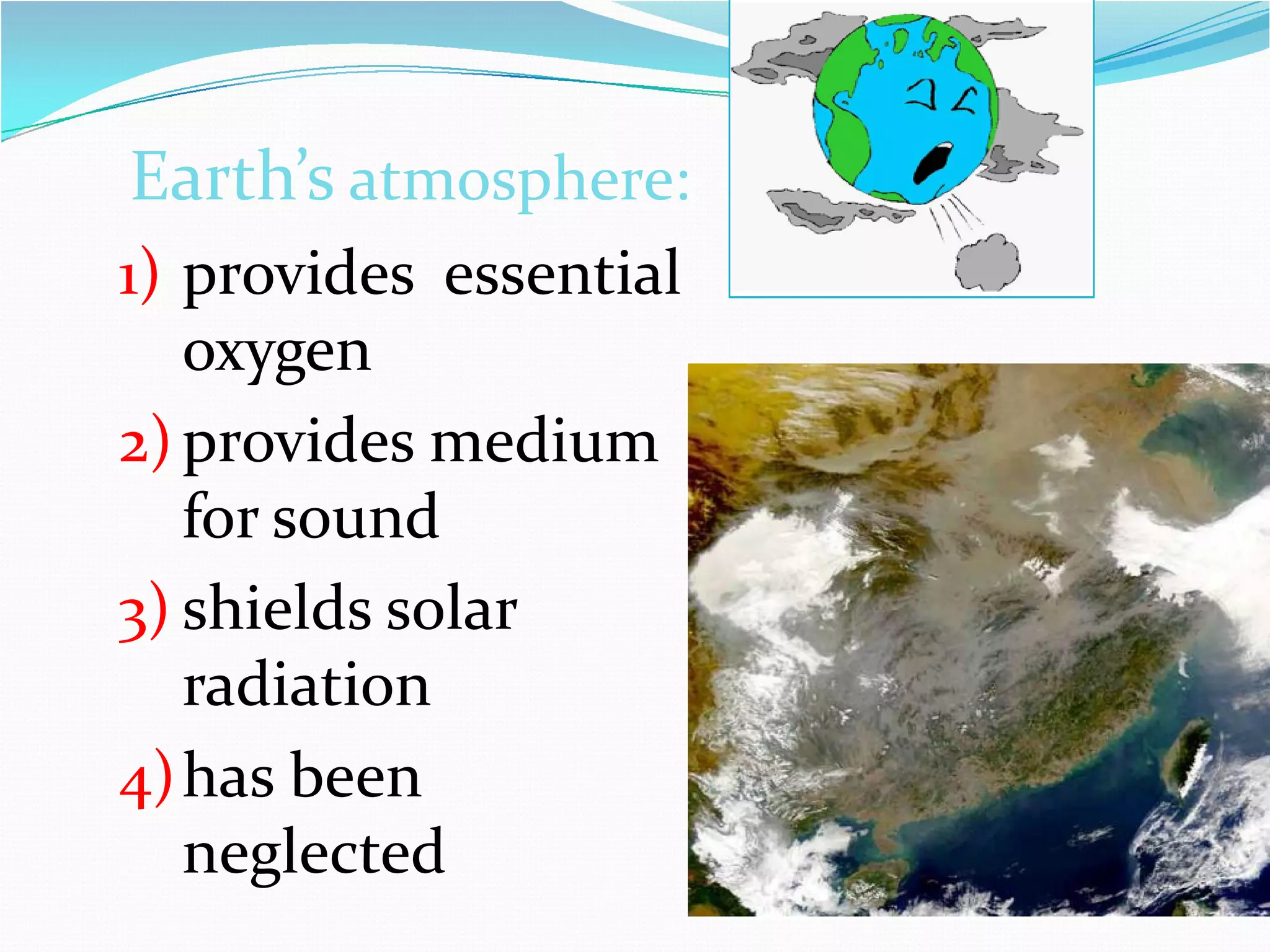
Earth’s atmosphere:
1) provides essential
oxygen
2) provides medium
for sound
3) shields solar
radiation
4) has been
neglected
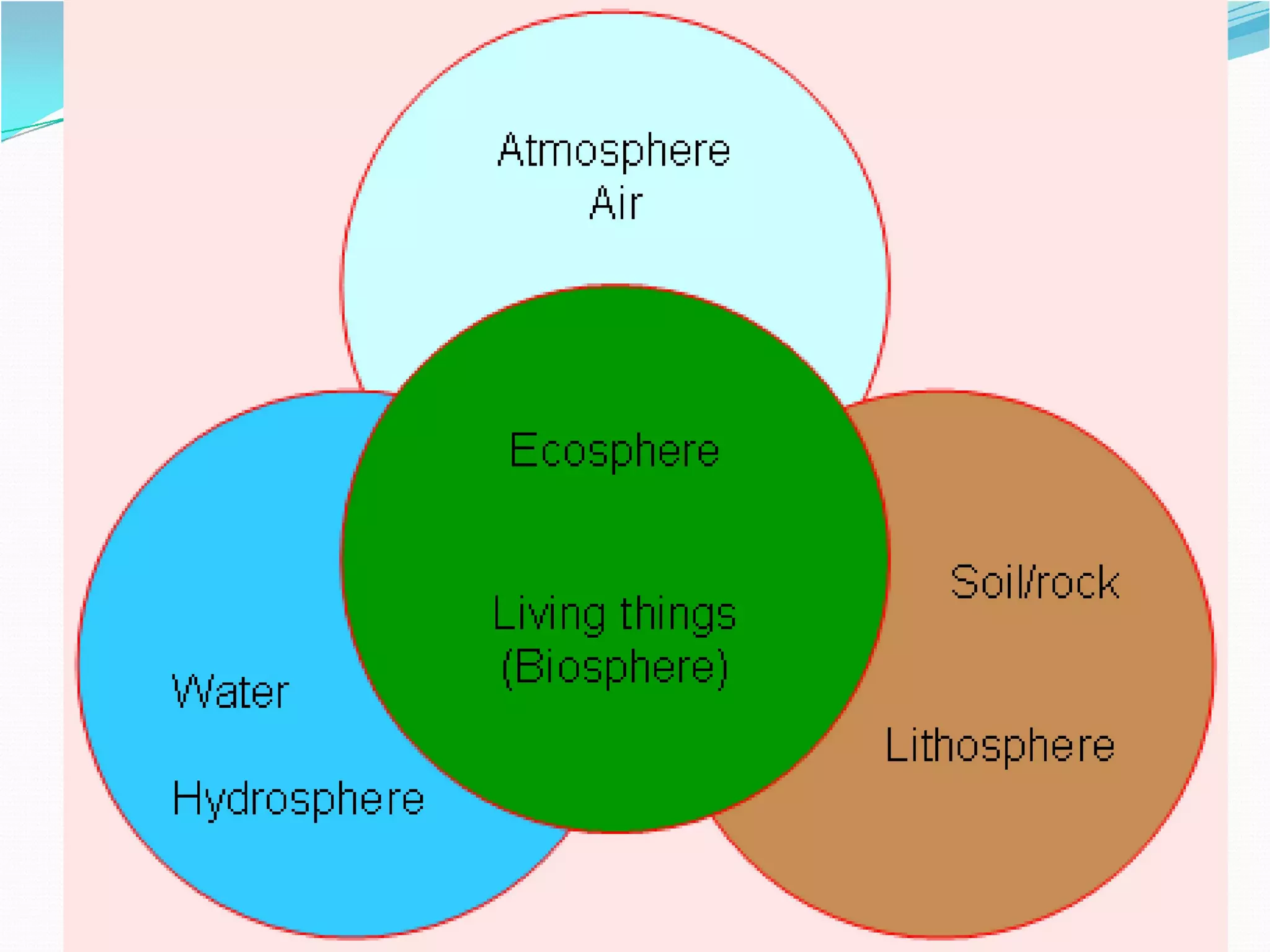
Earths’ great spheres
 Lithosphere- The lithosphere contains
all of the cold, hard solid land of the
planet's crust (surface), the semi-solid
land underneath the crust, and the
liquid land near the center of the planet
 HydrosphereThe
hydrosphere
contains all the solid, liquid, and
gaseous water of the plane
Biosphere-

The
biosphere
contains all the planet's living
things. This sphere includes all of
the microorganisms, plants, and
animals of Earth

Atmosphere-

The atmosphere
contains all the air in Earth's
system
Atmosphere
It is a mixture of gases that forms a layer
of about 500 km thick around the
earth.
- Bottom 10-15 km (Troposphere) are
most important part in terms of
Weather and Other aspects of
Biogeochemical cycle
- The lowest 600 meters of
Troposphere: Air Quality Studies
Composition of Air - 78%

nitrogen, 21% oxygen, 1% carbon
dioxide, water, other gases
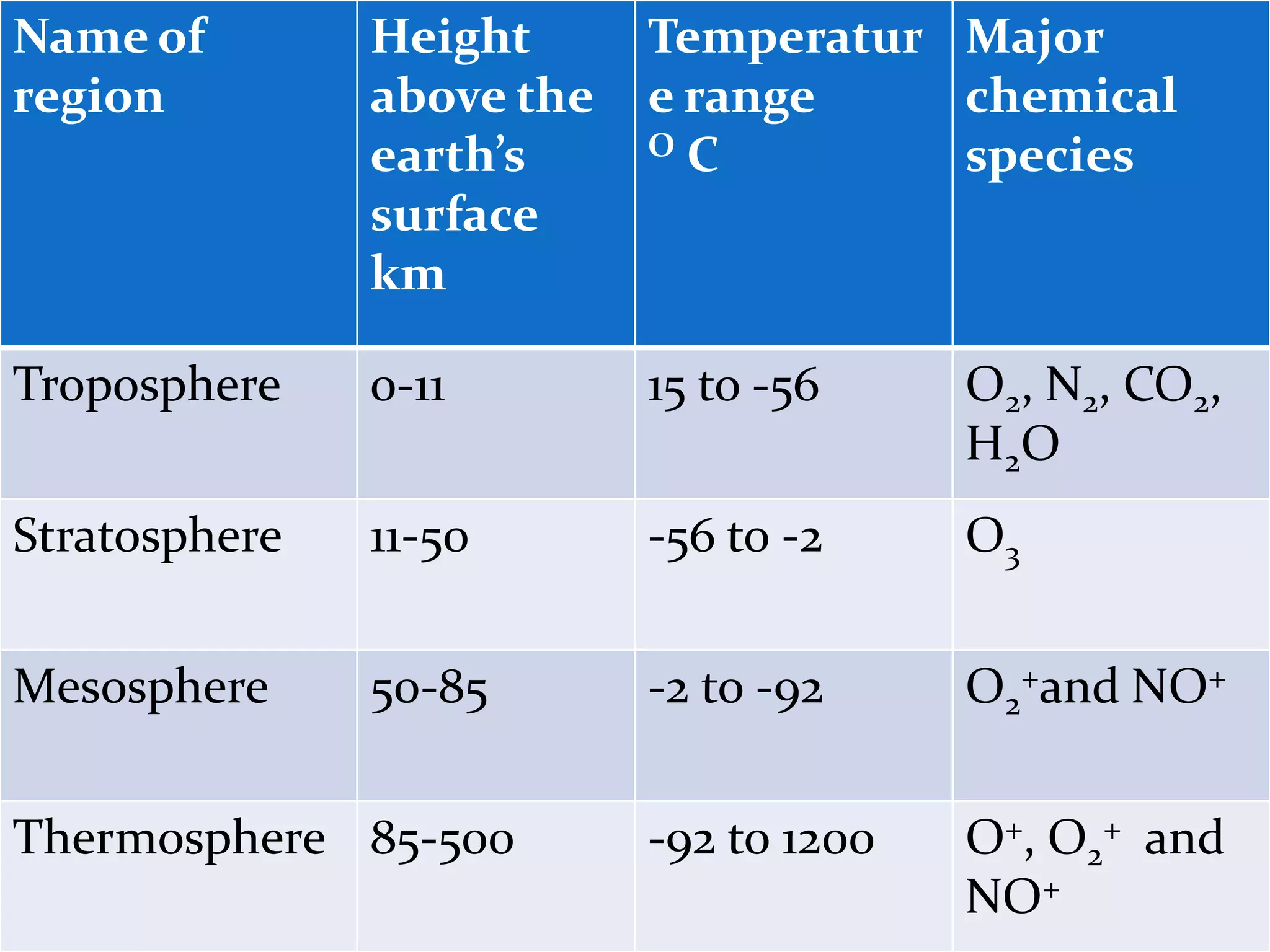
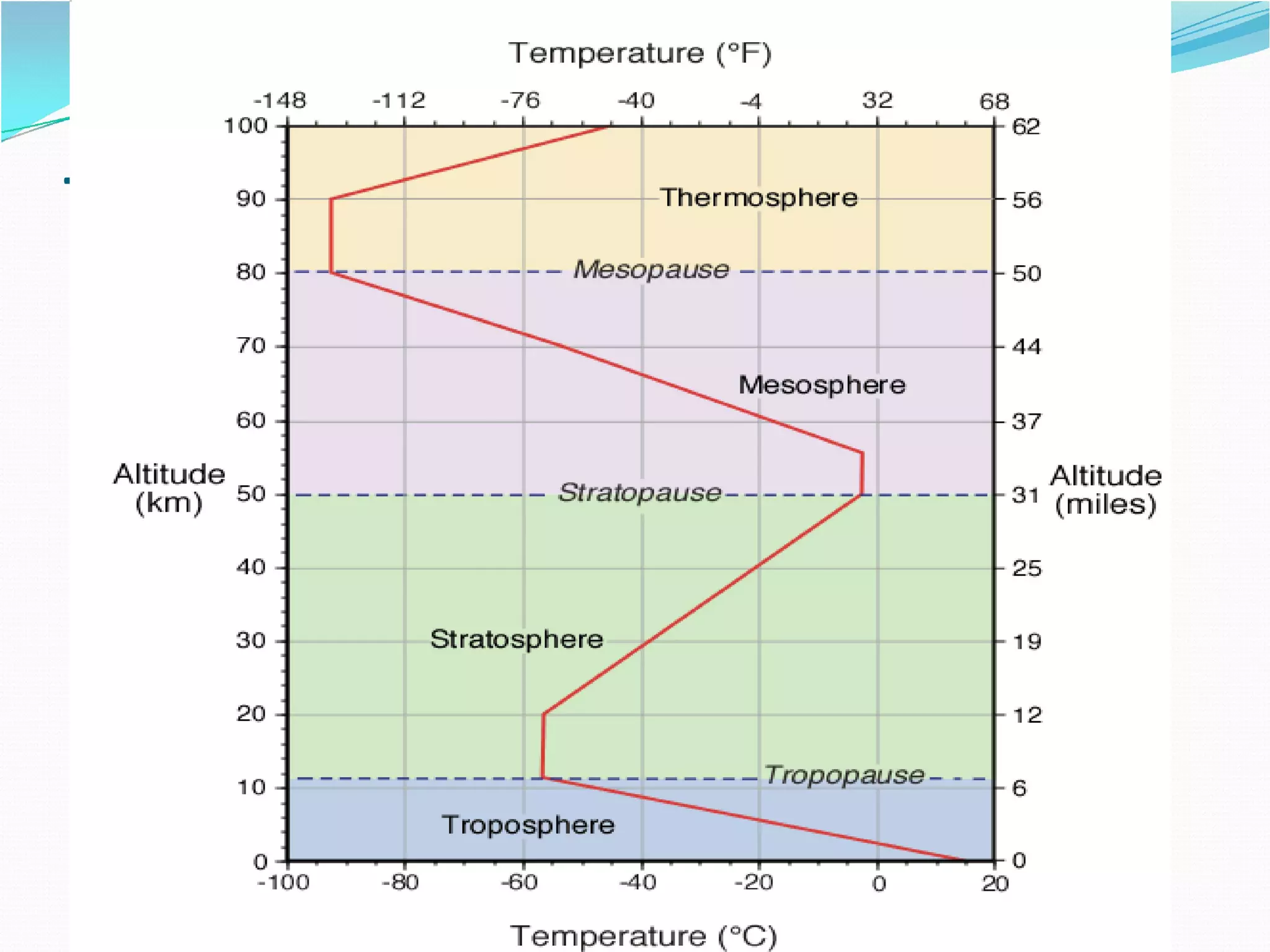
Divided into four zones:
- Troposphere
- Stratosphere
- Mesosphere
- Thermosphere
Name of
region

Height
above the
earth’s
surface
km

Temperatur Major
e range
chemical
OC
species

Troposphere

0-11

15 to -56

O2, N2, CO2,
H 2O

Stratosphere

11-50

-56 to -2

O3

Mesosphere

50-85

-2 to -92

O2+and NO+

-92 to 1200

O+, O2+ and
NO+

Thermosphere 85-500
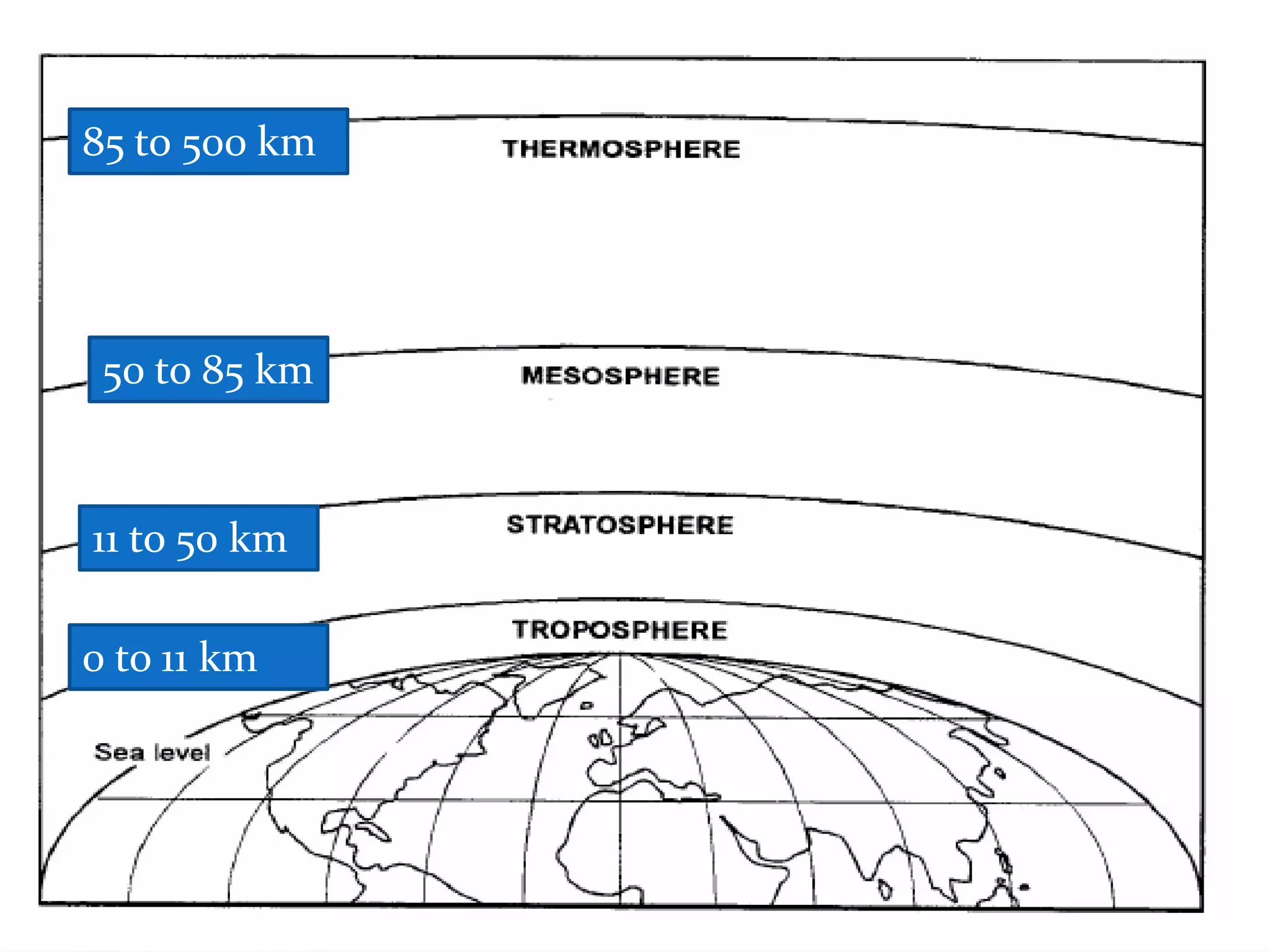
85 to 500 km

50 to 85 km

11 to 50 km
0 to 11 km
The structure of atmosphere
Definitions of air pollution
Air pollution is the introduction of

chemicals, particulate matter, or
biological materials that cause
harm or discomfort to humans or
other living organisms, or cause
damage to the natural environment
or built environment, into the
atmosphere.
Engineers joint council USA
 Air pollution means the presence in the
outdoor atmosphere of one or more
contaminants, such as dust, fumes, gas,
mist, odour, smoke or vapour, in
quantities, with characteristics, and of
duration such as to be injurious to
human, plant or animal life, or which
unreasonably
interfere
with
the
comfortable enjoyment of the property
American Medical Association
 An air pollution is the excessive
concentration of foreign matter in the
air which adversely affects the well
being of the individuals or causes
damage to property.
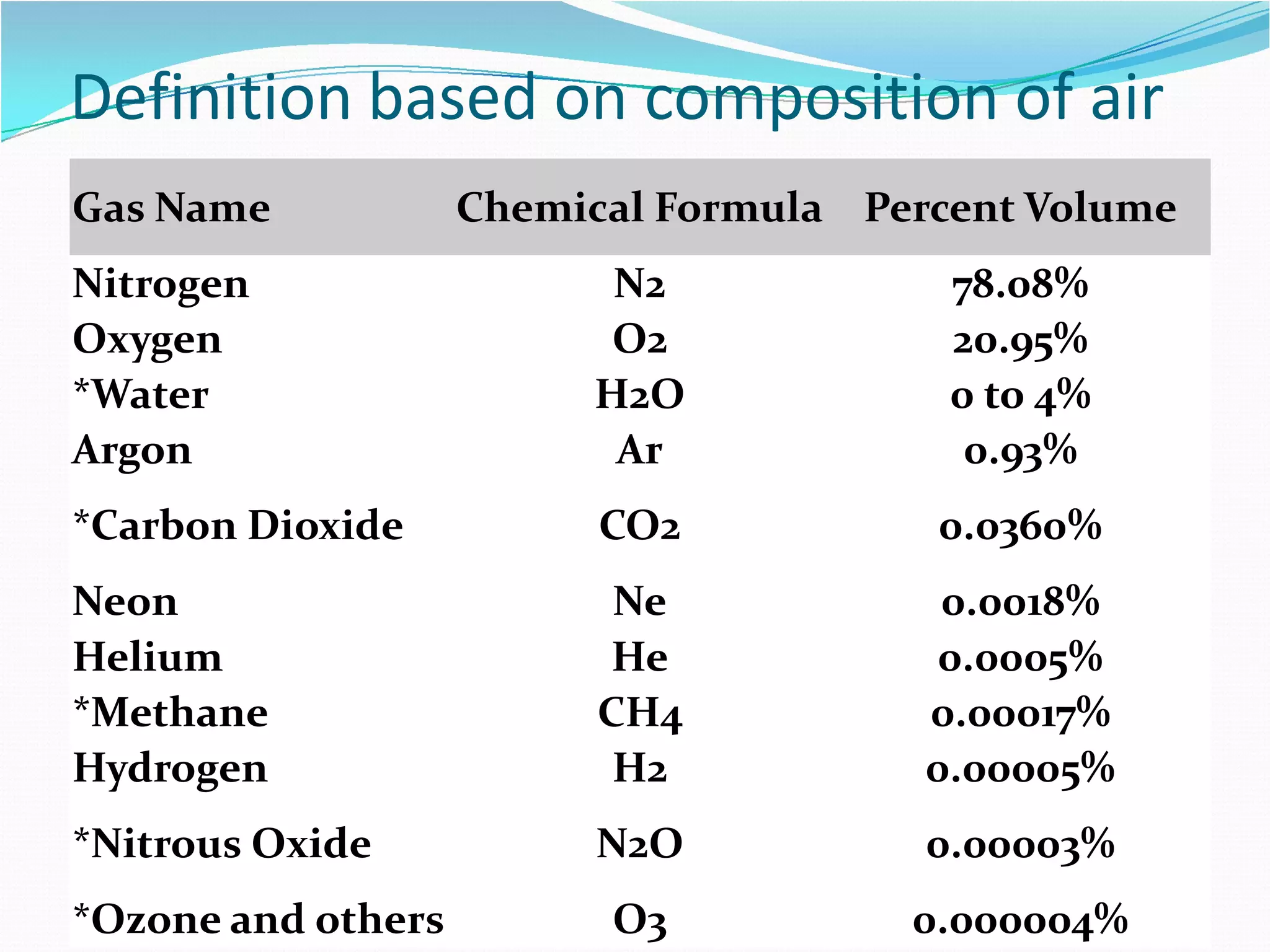
Definition based on composition of air
Gas Name

Chemical Formula Percent Volume

Nitrogen
Oxygen
*Water
Argon

N2
O2
H2O
Ar

78.08%
20.95%
0 to 4%
0.93%

*Carbon Dioxide

CO2

0.0360%

Neon
Helium
*Methane
Hydrogen

Ne
He
CH4
H2

0.0018%
0.0005%
0.00017%
0.00005%

*Nitrous Oxide

N2O

0.00003%

O3

0.000004%

*Ozone and others
 Another method of defining air pollution is
first to specify the composition of clean air
and then to classify all other materials or
increased amounts of those materials given in
composition of atmospheric air pollutants if
their presence results in damage to human
beings, plants and animals or materials.
 Thus according to this definition CO,
hydrogen, water vapours, ozone in a
concentration greater than 0.04 ppm
(0.000004% by volume) would be air
pollutants.
IS definition [IS-4167 (1966)]
 ‘Air pollution is presence in ambient
atmosphere of substances, generally
resulting from the activity of man, in
sufficient concentration, present for a
sufficient time and under circumstances
which interfere significantly with the
comfort, health or welfare of persons or
full use or enjoyment of property.’
Types of Air Pollution

Personal air exposure
It refers to exposure to dust, fumes

and gases to which an individual
exposes himself when he indulge
himself in smoking
Occupational air exposure
It represents the type of exposure

of individuals to potentially
harmful concentration of aerosols,
vapors, and gases in their working
environment.
Community air exposure
 This is most serious, complex, consists
of varieties of assortment of pollution
sources, meteorological factors, and
wide variety of adverse social,
economical, and health effects.
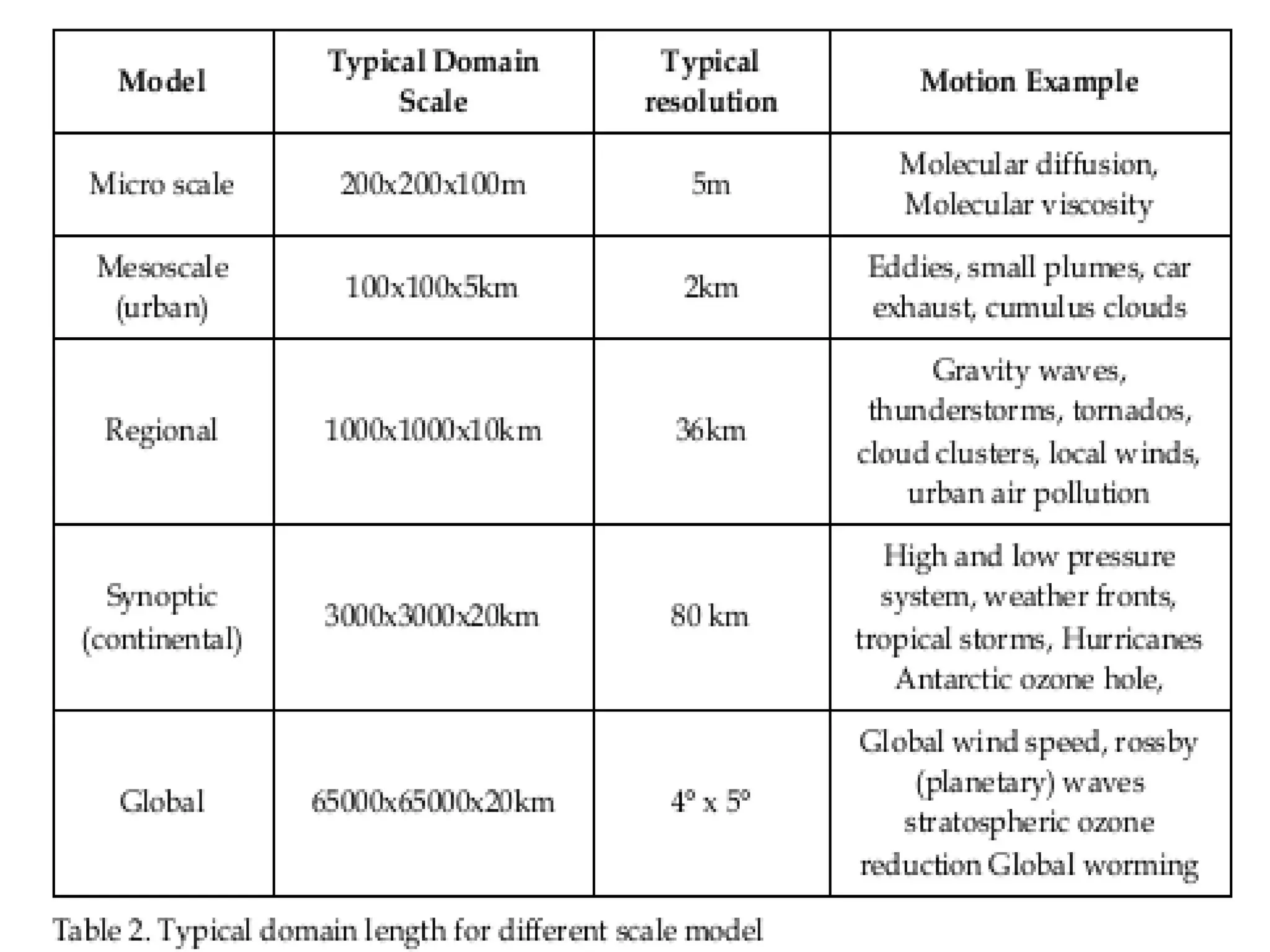
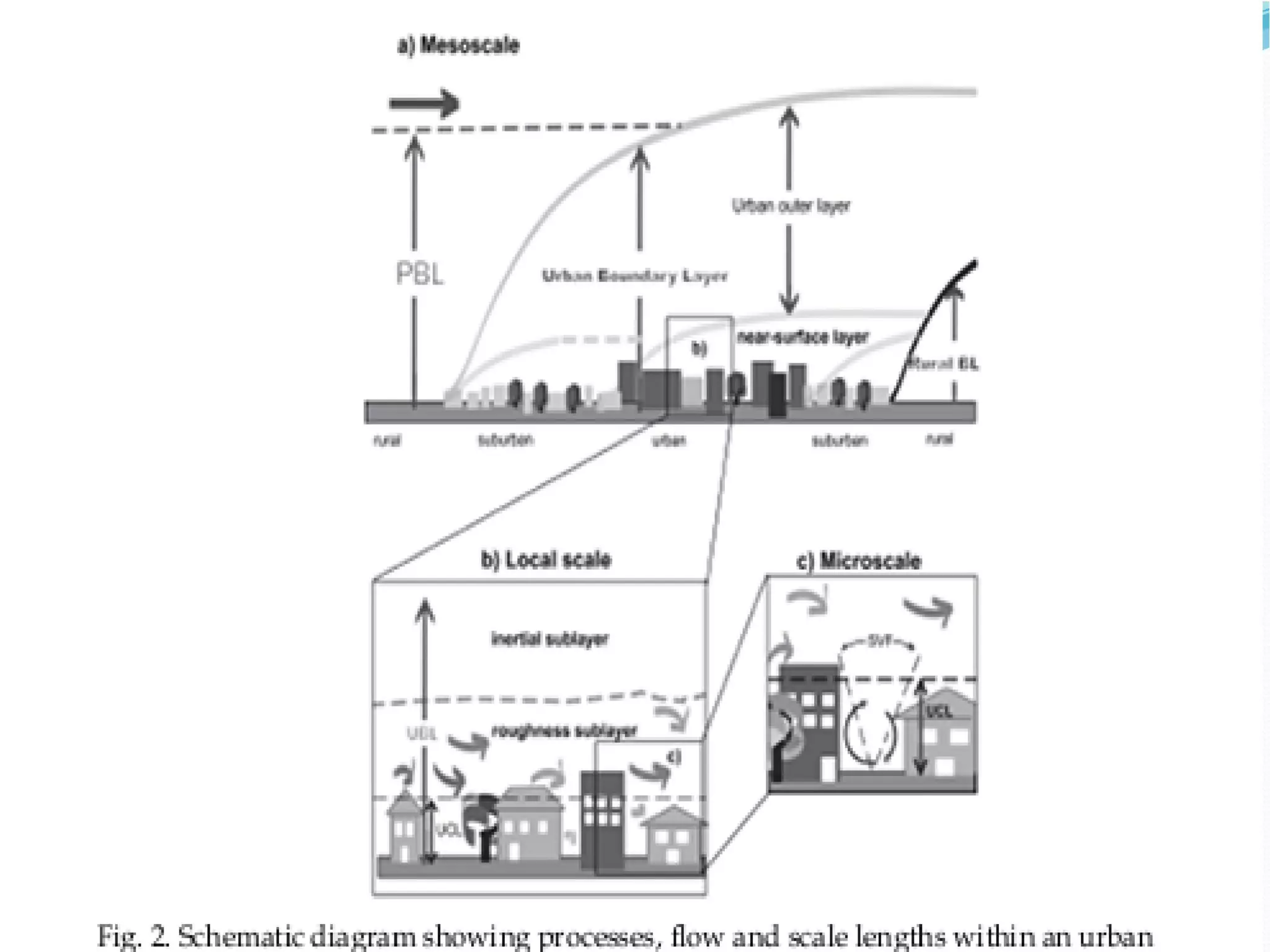
Air pollution problems may occur on
three scales:
i. Micro scale
ii. Meso-scale and
iii. Macro scale.
 Micro-scale problems range from those
covering less than a centimeter to those
the size of a house or slightly larger (few
meters to 100s of meter).
 Meso-scale air pollution problems are
those of a few hectares up to the size of a
city or county (local-to-regional ).
 Macro-scale problems extend from
counties to states, nations, and in the
broadest sense, the globe (regional-tocontinental scale)
Objective Questions
Q1. IS _____________ gives definition of air
pollution.
Q2. The lowest _______m of troposphere are
important for ___________________________
studies.
Q3. The line separating troposphere and
stratosphere is known as __________________ .
Q4. Smoking causes ____________ type of
exposure.
Q5. Thickness of atmosphere is about __ km.
Q6. ______________ problems range from
those covering less than a centimeter to
those the size of a house or slightly larger.
Q7. _____________ air pollution problems
are those of a few hectares up to the size
of a city or county.
Q8. ____________ problems extend from
counties to states, nations, and in the
broadest sense, the globe.
Theory questions

Q1. give IS definition of air pollution.
Also define air pollution based on
composition of clean air..
Q2. Write a detailed note on – ‘Structure
of the atmosphere’.
Q3. Explain various types of exposures
related to air pollution.
Q4. Explain different types of scales of air
pollution

AIR POLLUTION CONTROL L 2

  • 1.
    Air Pollution andControl (Elective-I)
  • 2.
    Contents of Unit-I TheStructure of the atmosphere,  Definition and scope Pollution, Scales of air pollution. of Air
  • 3.
    Earth’s atmosphere: 1) providesessential oxygen 2) provides medium for sound 3) shields solar radiation 4) has been neglected
  • 4.
    Earths’ great spheres Lithosphere- The lithosphere contains all of the cold, hard solid land of the planet's crust (surface), the semi-solid land underneath the crust, and the liquid land near the center of the planet  HydrosphereThe hydrosphere contains all the solid, liquid, and gaseous water of the plane
  • 5.
    Biosphere- The biosphere contains all theplanet's living things. This sphere includes all of the microorganisms, plants, and animals of Earth Atmosphere- The atmosphere contains all the air in Earth's system
  • 7.
    Atmosphere It is amixture of gases that forms a layer of about 500 km thick around the earth. - Bottom 10-15 km (Troposphere) are most important part in terms of Weather and Other aspects of Biogeochemical cycle - The lowest 600 meters of Troposphere: Air Quality Studies
  • 8.
    Composition of Air- 78% nitrogen, 21% oxygen, 1% carbon dioxide, water, other gases Divided into four zones: - Troposphere - Stratosphere - Mesosphere - Thermosphere
  • 9.
    Name of region Height above the earth’s surface km TemperaturMajor e range chemical OC species Troposphere 0-11 15 to -56 O2, N2, CO2, H 2O Stratosphere 11-50 -56 to -2 O3 Mesosphere 50-85 -2 to -92 O2+and NO+ -92 to 1200 O+, O2+ and NO+ Thermosphere 85-500
  • 10.
    85 to 500km 50 to 85 km 11 to 50 km 0 to 11 km
  • 11.
    The structure ofatmosphere
  • 12.
    Definitions of airpollution Air pollution is the introduction of chemicals, particulate matter, or biological materials that cause harm or discomfort to humans or other living organisms, or cause damage to the natural environment or built environment, into the atmosphere.
  • 13.
    Engineers joint councilUSA  Air pollution means the presence in the outdoor atmosphere of one or more contaminants, such as dust, fumes, gas, mist, odour, smoke or vapour, in quantities, with characteristics, and of duration such as to be injurious to human, plant or animal life, or which unreasonably interfere with the comfortable enjoyment of the property
  • 14.
    American Medical Association An air pollution is the excessive concentration of foreign matter in the air which adversely affects the well being of the individuals or causes damage to property.
  • 15.
    Definition based oncomposition of air Gas Name Chemical Formula Percent Volume Nitrogen Oxygen *Water Argon N2 O2 H2O Ar 78.08% 20.95% 0 to 4% 0.93% *Carbon Dioxide CO2 0.0360% Neon Helium *Methane Hydrogen Ne He CH4 H2 0.0018% 0.0005% 0.00017% 0.00005% *Nitrous Oxide N2O 0.00003% O3 0.000004% *Ozone and others
  • 16.
     Another methodof defining air pollution is first to specify the composition of clean air and then to classify all other materials or increased amounts of those materials given in composition of atmospheric air pollutants if their presence results in damage to human beings, plants and animals or materials.  Thus according to this definition CO, hydrogen, water vapours, ozone in a concentration greater than 0.04 ppm (0.000004% by volume) would be air pollutants.
  • 17.
    IS definition [IS-4167(1966)]  ‘Air pollution is presence in ambient atmosphere of substances, generally resulting from the activity of man, in sufficient concentration, present for a sufficient time and under circumstances which interfere significantly with the comfort, health or welfare of persons or full use or enjoyment of property.’
  • 18.
    Types of AirPollution Personal air exposure It refers to exposure to dust, fumes and gases to which an individual exposes himself when he indulge himself in smoking
  • 19.
    Occupational air exposure Itrepresents the type of exposure of individuals to potentially harmful concentration of aerosols, vapors, and gases in their working environment.
  • 20.
    Community air exposure This is most serious, complex, consists of varieties of assortment of pollution sources, meteorological factors, and wide variety of adverse social, economical, and health effects.
  • 22.
    Air pollution problemsmay occur on three scales: i. Micro scale ii. Meso-scale and iii. Macro scale.
  • 23.
     Micro-scale problemsrange from those covering less than a centimeter to those the size of a house or slightly larger (few meters to 100s of meter).  Meso-scale air pollution problems are those of a few hectares up to the size of a city or county (local-to-regional ).  Macro-scale problems extend from counties to states, nations, and in the broadest sense, the globe (regional-tocontinental scale)
  • 26.
    Objective Questions Q1. IS_____________ gives definition of air pollution. Q2. The lowest _______m of troposphere are important for ___________________________ studies. Q3. The line separating troposphere and stratosphere is known as __________________ . Q4. Smoking causes ____________ type of exposure. Q5. Thickness of atmosphere is about __ km.
  • 27.
    Q6. ______________ problemsrange from those covering less than a centimeter to those the size of a house or slightly larger. Q7. _____________ air pollution problems are those of a few hectares up to the size of a city or county. Q8. ____________ problems extend from counties to states, nations, and in the broadest sense, the globe.
  • 28.
    Theory questions Q1. giveIS definition of air pollution. Also define air pollution based on composition of clean air.. Q2. Write a detailed note on – ‘Structure of the atmosphere’. Q3. Explain various types of exposures related to air pollution. Q4. Explain different types of scales of air pollution