About air .......
Aboutair .......
is a mechanical mixture of gases :
Nitrogen
Oxygen
CO2
Other gases in trace, vapours, Ammonia, Suspended
matters ( Dust, Bacteria, Spores, vegetable debri).
Functions:
Supply of O2
Cooling, Hearing, Smell function
Transmission of disease agent
3.
More about air......
More about air ......
Rendered impure by
1. Respiration of man, animal and plants
2. Combustion of coal , gas, oil etc.
3. Decomposition of organic matters
4. Trade traffic and manufacturing process leads to
dust , fumes, vapours & gases.
Self cleansing mechanism by:
Wind
Sunlight
Rain
Plant life.
Defn. of AirPollution
Defn. of Air Pollution
Any visible or invisible particle or gas found in
the air that is not part of the original, normal
composition.
More illustrative defn.:
Presence in the ambient (surrounding) atmosphere
of substances (e.g., gases, mixtures of gases and
particulated matter) generated by the activities of
man in concentrations that interfere with human
health, safety or comfort, or injurious to vegetation
and animals; and other environmental media
resulting in chemicals entering the food chain or
being present in drinking-water and thereby
constituting additional source of human exposure.
6.
Sources of airpollution ....
Sources of air pollution ....
I. Natural Events: not very common
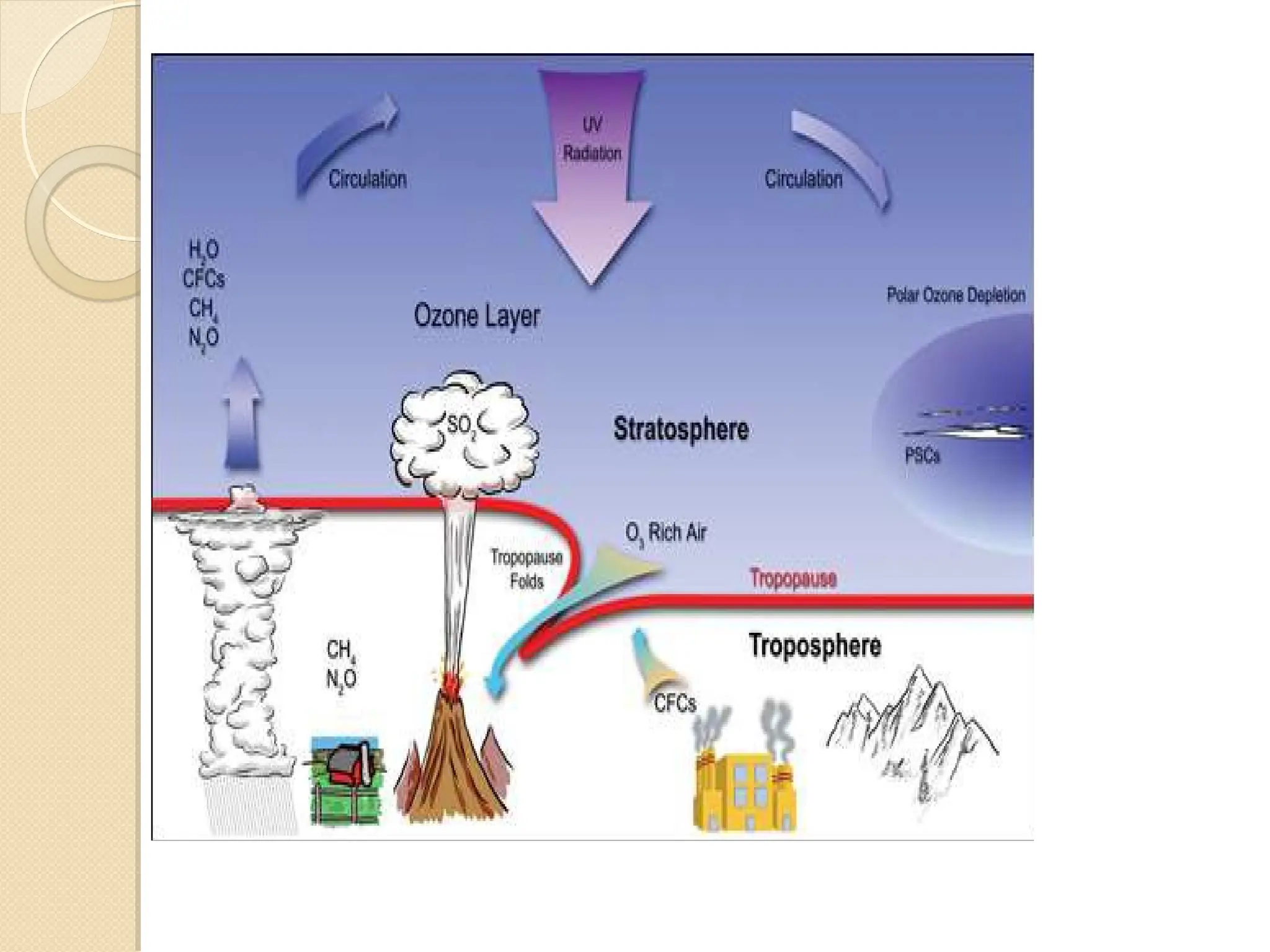
forest fires , volcanic eruptions,
pollen dispersal, evaporation of organics and
natural radioactivity.
1. Human activities that result in …….
a. Emissions from industries and
manufacturing activities
b. Burning Fossil Fuels
c. Agricultural activities
d. Mining operations
e. Indoor air pollution
8.
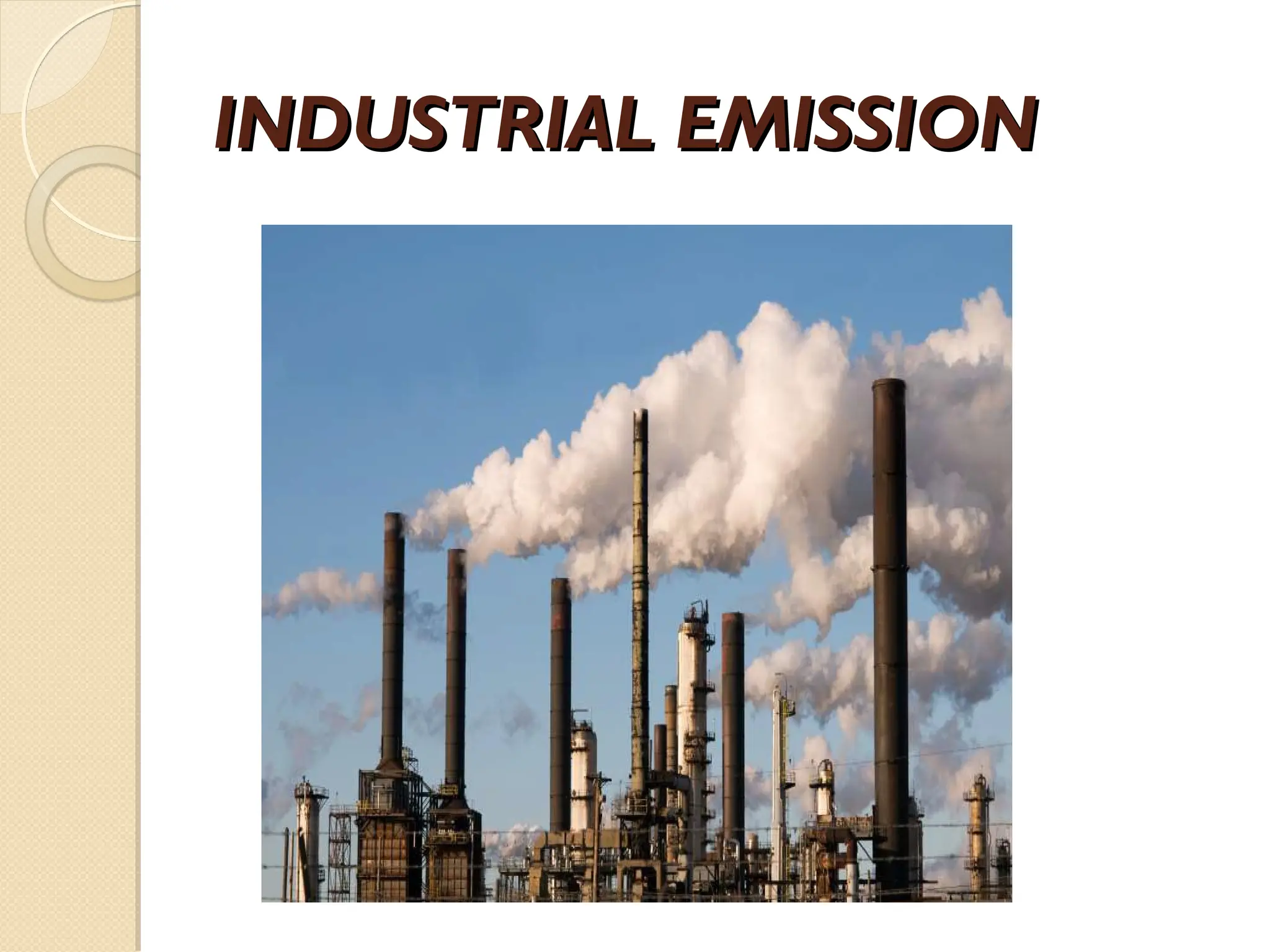
a. Emissions fromindustries and
manufacturing activities
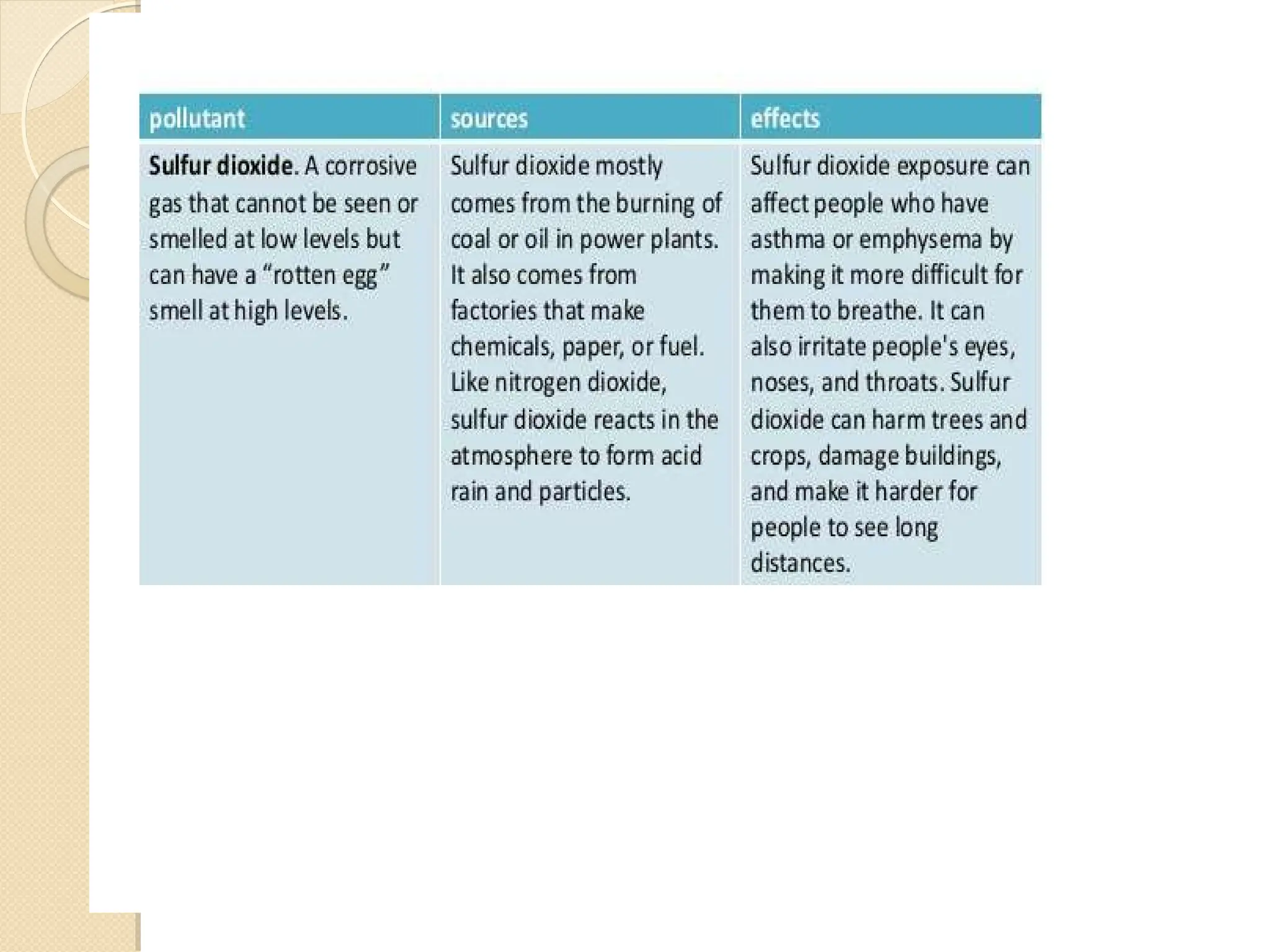
Waste incinerators, manufacturing
industries and power plants emit
through Chimneys high levels of
carbon monoxide, organic compounds, and
chemicals into the air.
Petroleum refineries also release lots of
hydrocarbons into the air.
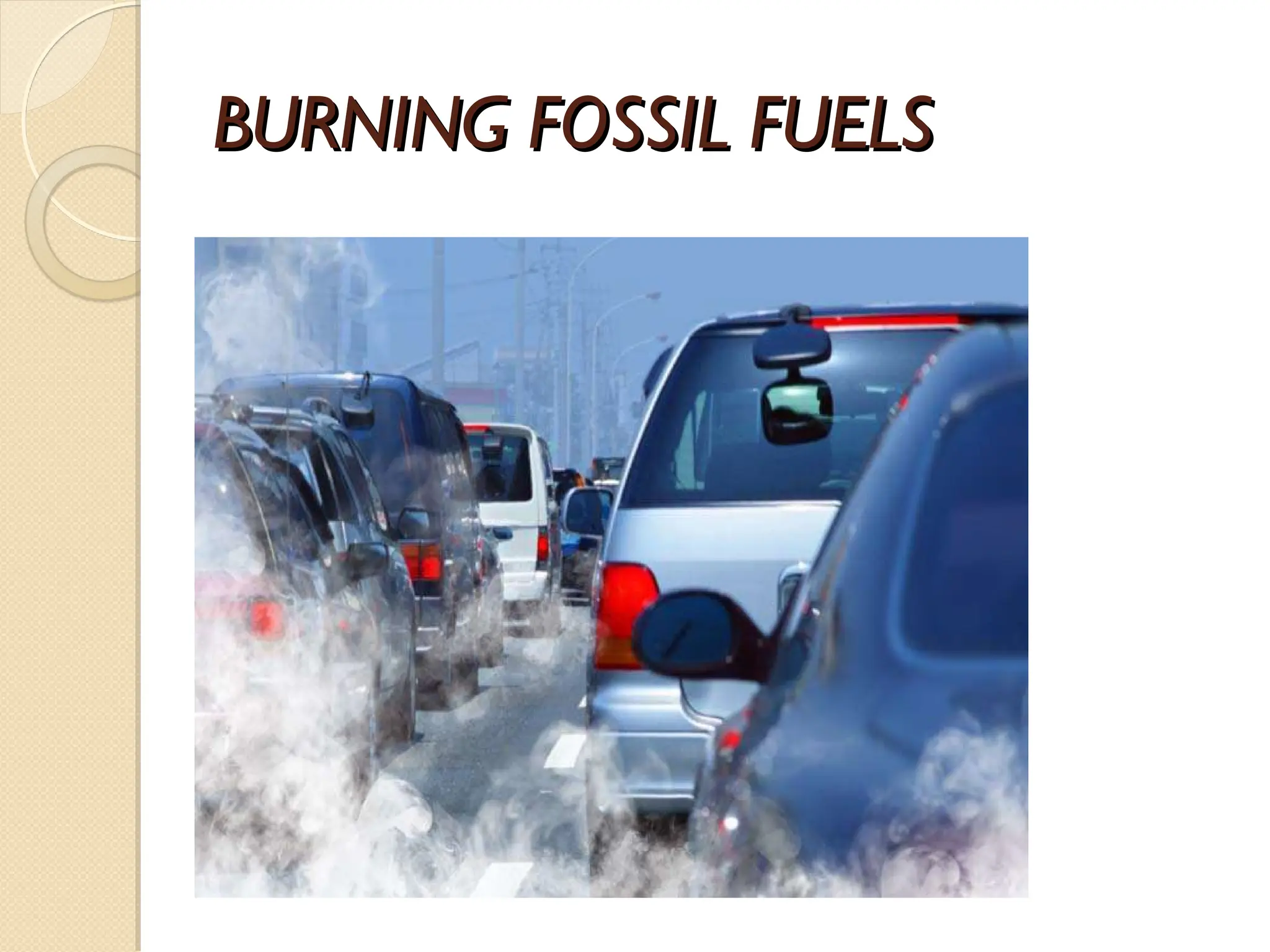
2. Burning FossilFuels
2. Burning Fossil Fuels
Cars and heavy duty trucks ,trains , shipping vessels
and airplanes all burn lots of fossil fuels to work.
Emissions from automobile engines contain both
primary and secondary pollutants. This is a major
cause of pollution, and one that is very difficult to
manage.
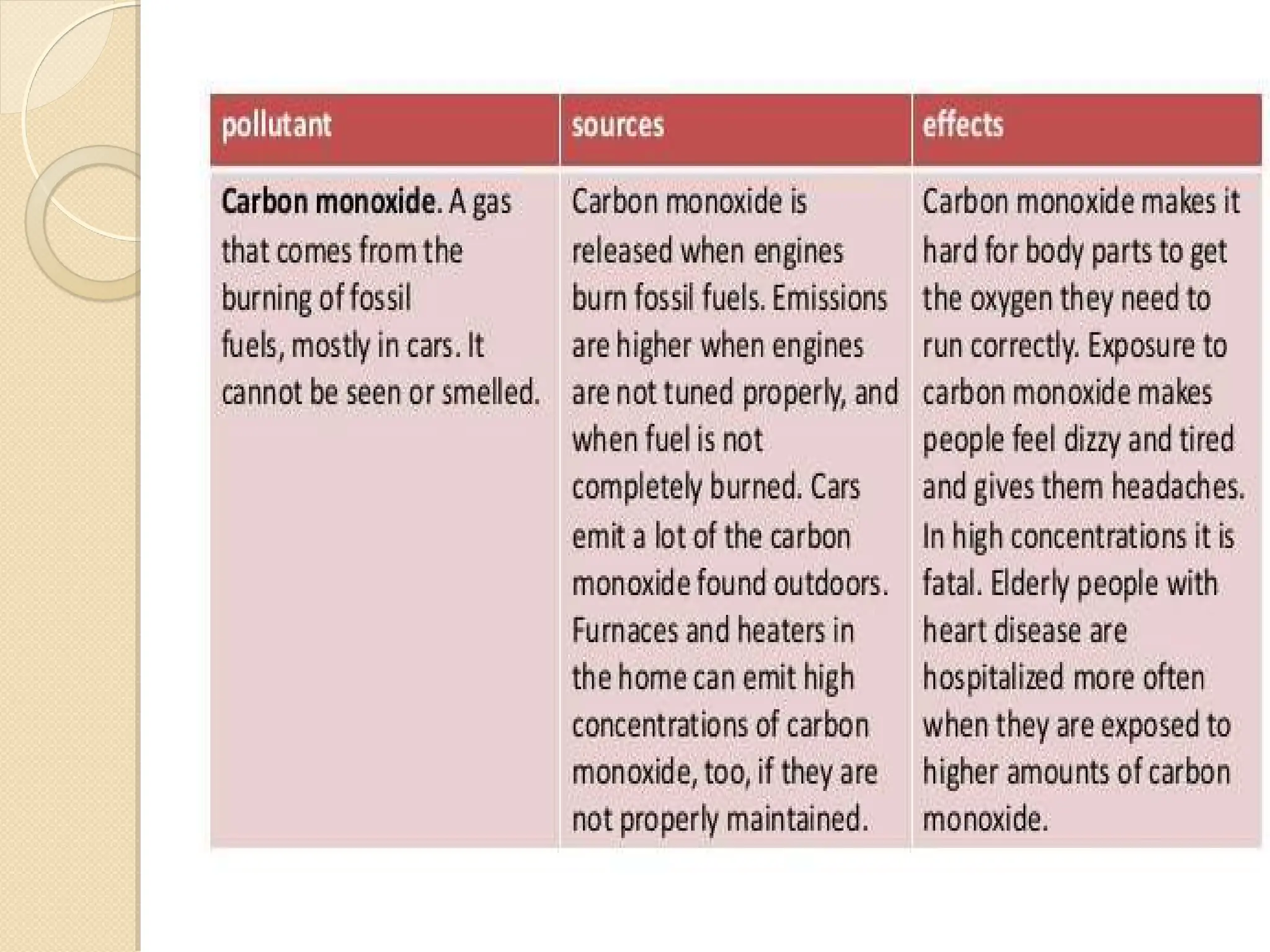
Fumes from car exhaust contain dangerous gases
such as carbon monoxide, oxides of nitrogen,
hydrocarbons and particulates. On their own, they
cause great harm to people who breath them.
3.Agricultural activities:
3.Agricultural activities:
Ammoniais a very common by
product from agriculture related
activities and is one of the most
hazardous gases in then atmosphere.
Use of insecticides, pesticides and
fertilizers in agricultural activities has
grown quite a lot. They emit harmful
chemicals into the air and can also
cause water pollution.
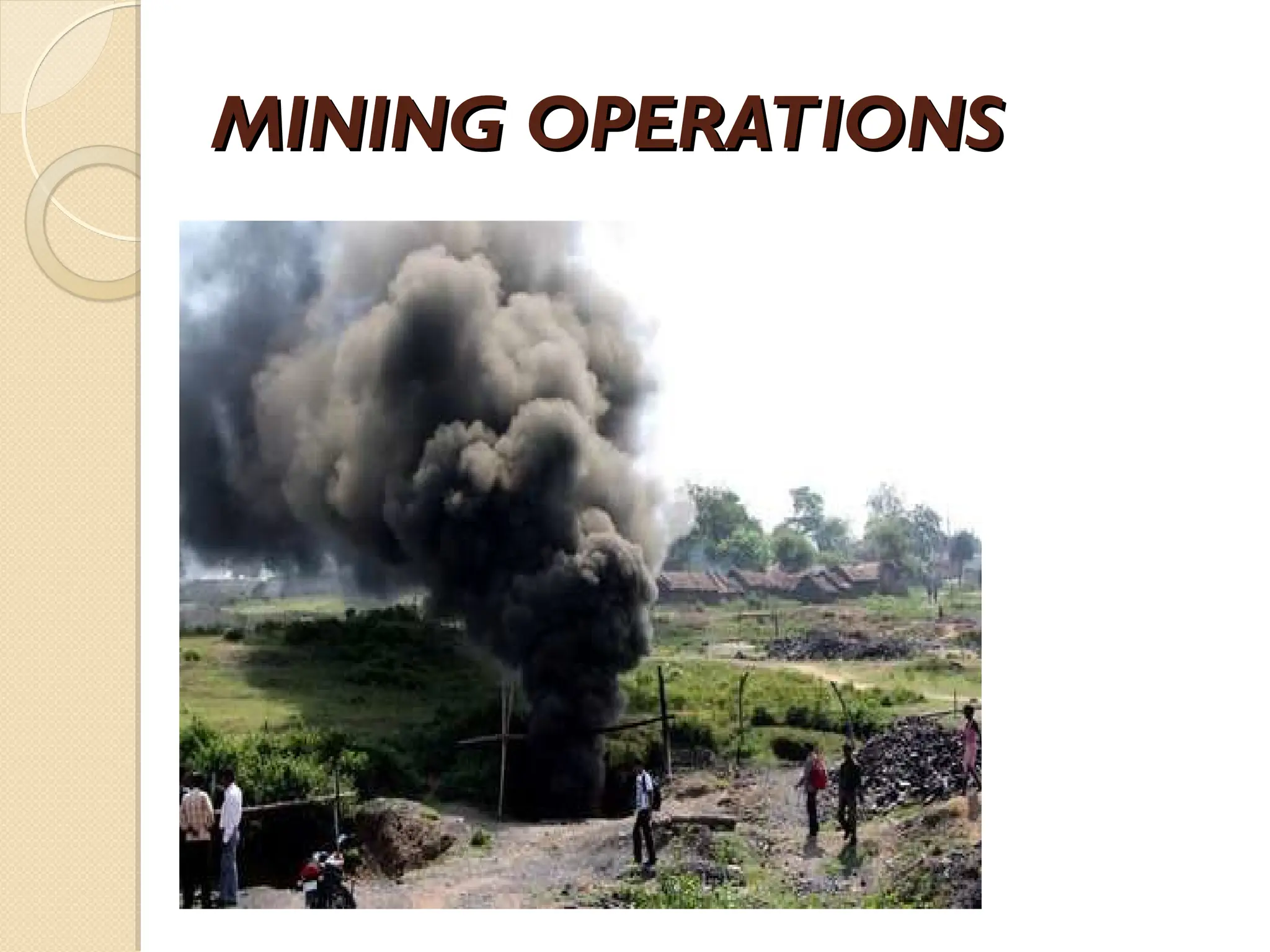
4. Mining operations:
4.Mining operations:
Mining is a process where in minerals
below the earth are extracted using
large equipments.
During the process dust and chemicals
are released in the air causing massive
air pollution.
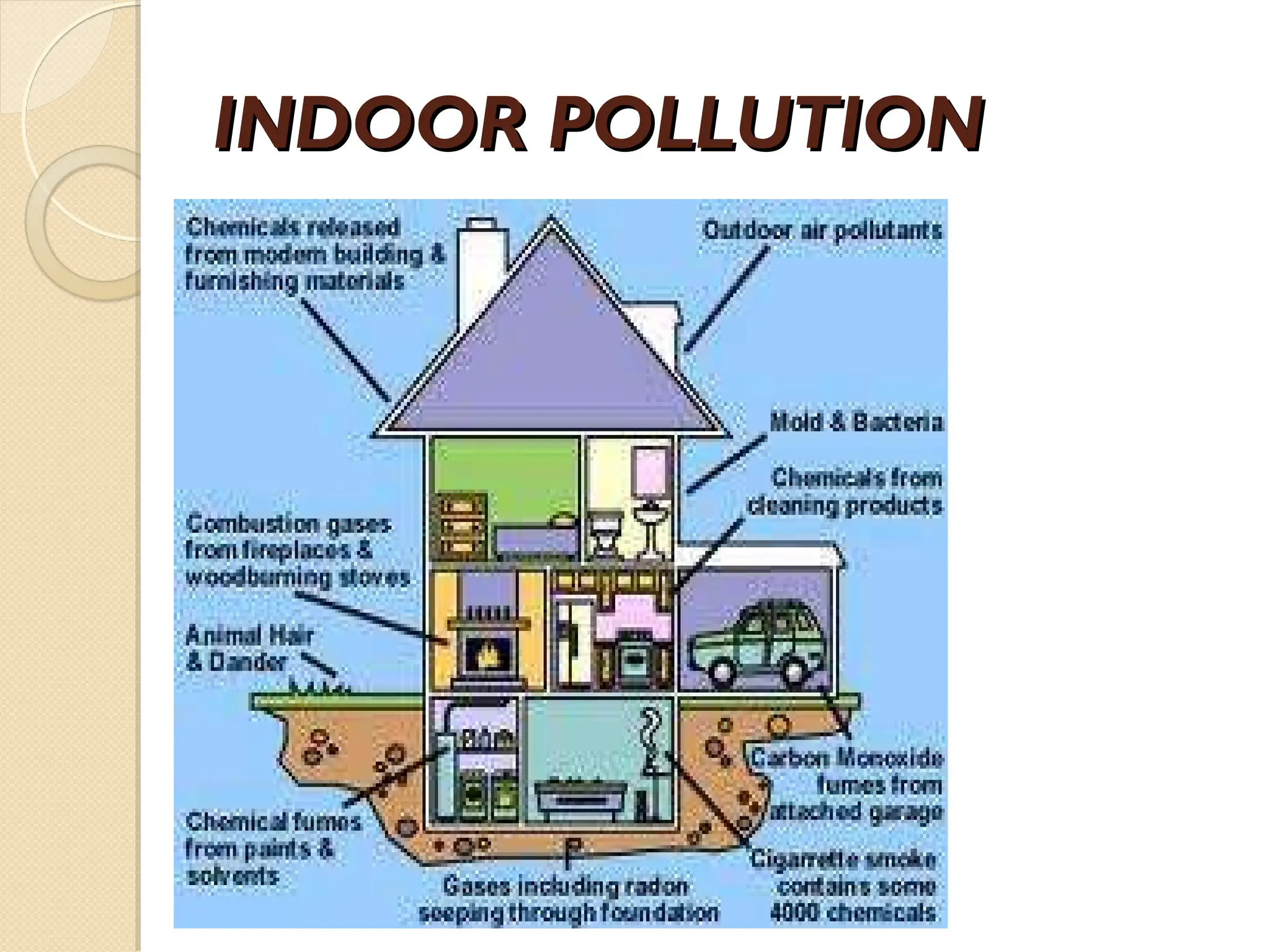
5. Indoor airpollution
5. Indoor air pollution
Household cleaning products, painting supplies emit toxic
chemicals in the air and cause air pollution. Newly painted
walls of your house creates some sort of smell which makes
breathing problem.
Suspended particulate matter popular by its acronym SPM, is
another cause of pollution. Referring to the particles afloat in
the air, SPM is usually caused by dust,combustion etc.
Cooking and heating with solid fuels on open fires or
traditional stoves results in high levels of indoor air pollution.
Indoor smoke contains a range of health damaging
pollutants, such as small particles and carbonmonoxide.
WHAT is airpollutant
WHAT is air pollutant
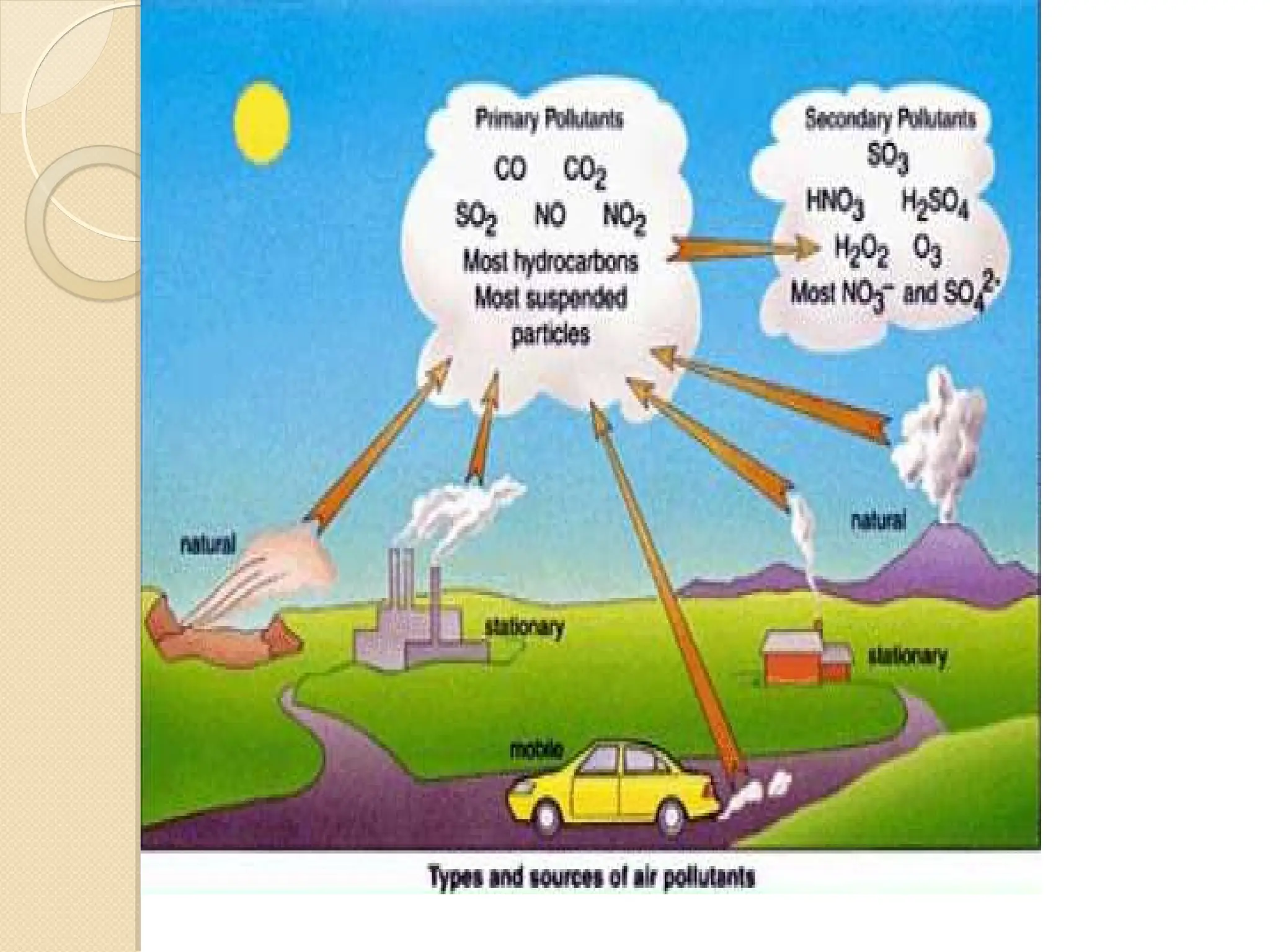
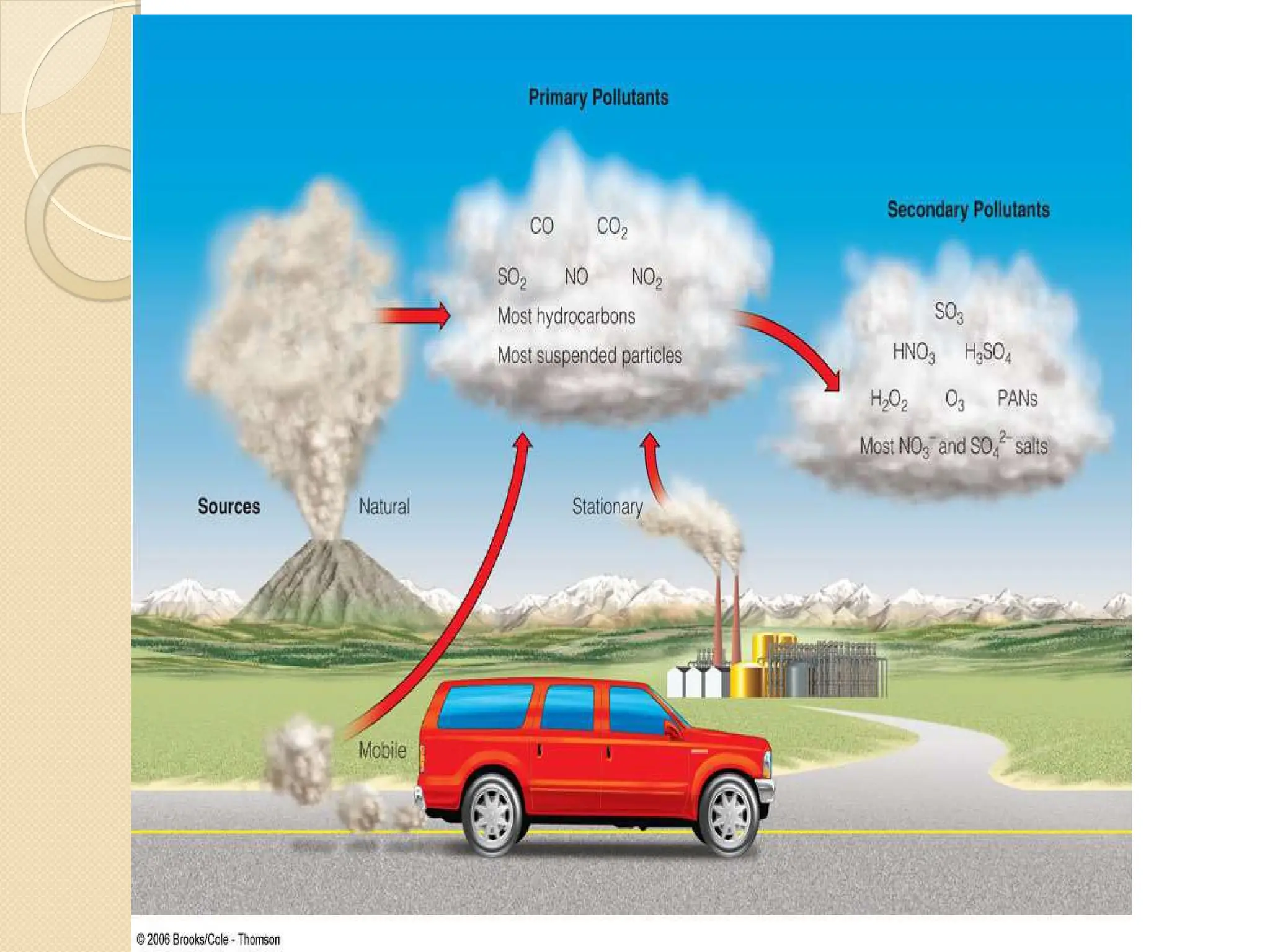
A substance in the air that can cause harm to
humans and the environment is known as an air
pollutant. Pollutants can be in the form of
solid particles, liquid droplets, or gases.
They may be:
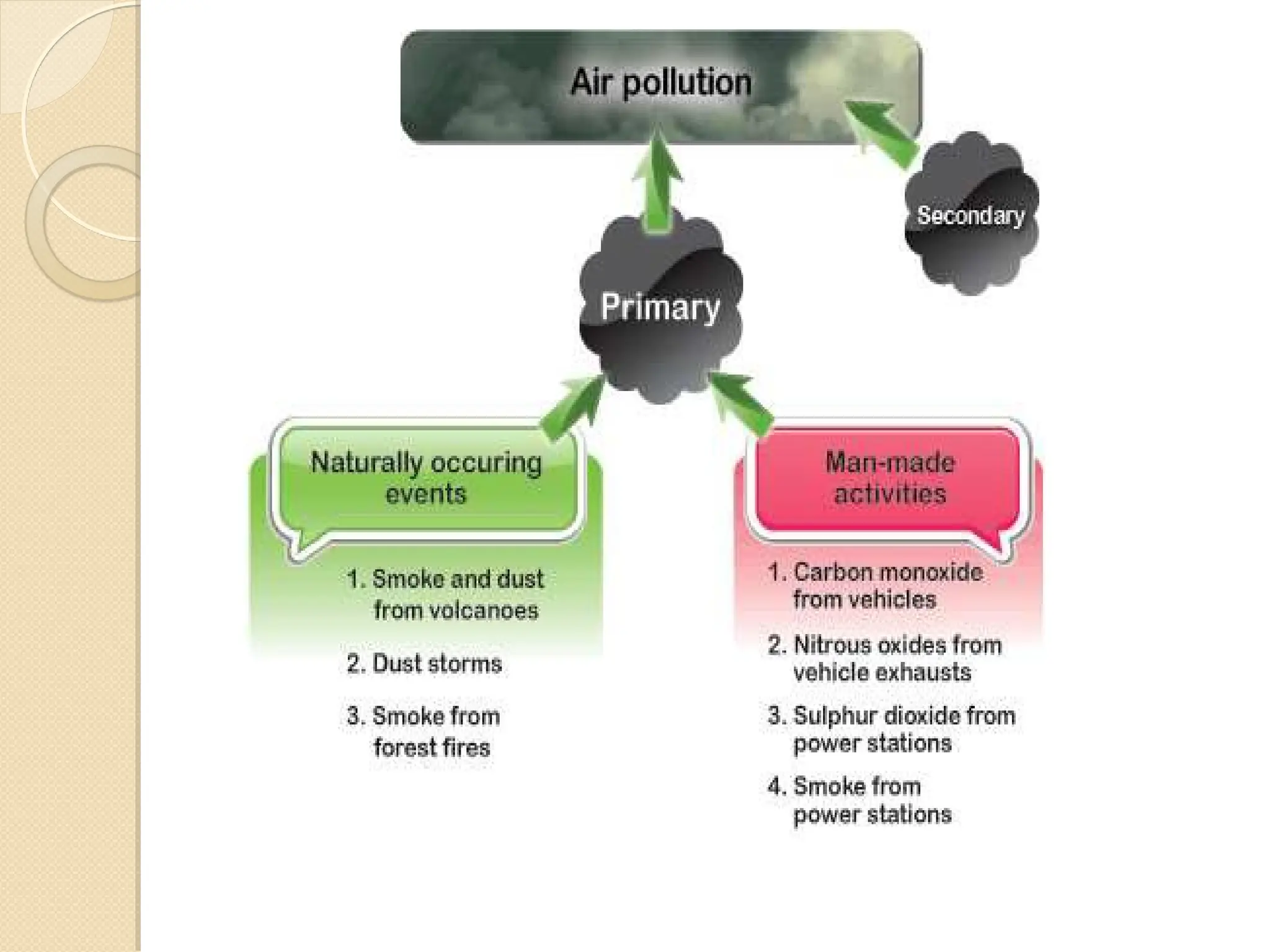
Primary : emitted from source into atmosphere ; and it is
measurable
Secondary : formed within atmosphere – arise from chemical
reaction e.g. O3 - cannot readily be measured.
21.
Some air -pollutants
Some air - pollutants
A. According to state: gaseous and particulate
B. According to dimensions / scale:
1. Local scale :- concentrated near source (e.g. burning
of biomass fuels)
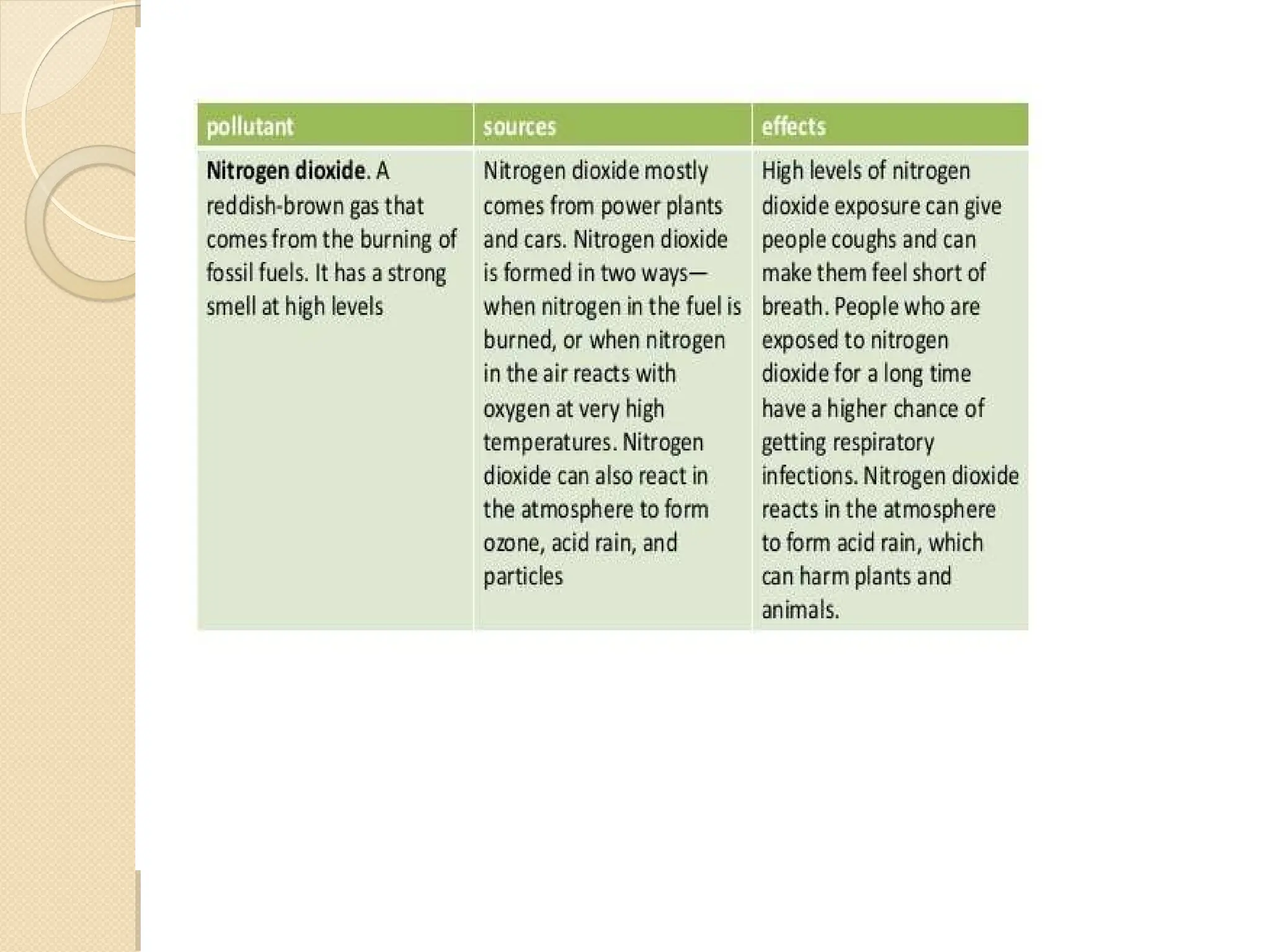
2. Urban scale :- nitrogen oxides, CO concentrated
more in cities.
3. Regional scale :- fine particles (<2.5 µm dia) and O3
and sulphates can be transported long range.
4. Hemisphere scale :- green house gases (CO2 ,
nitrous oxide, methane) distributed throughout
hemisphere.
30.
SOME SECONDARY
SOME SECONDARY
POLLUTANTS
POLLUTANTS
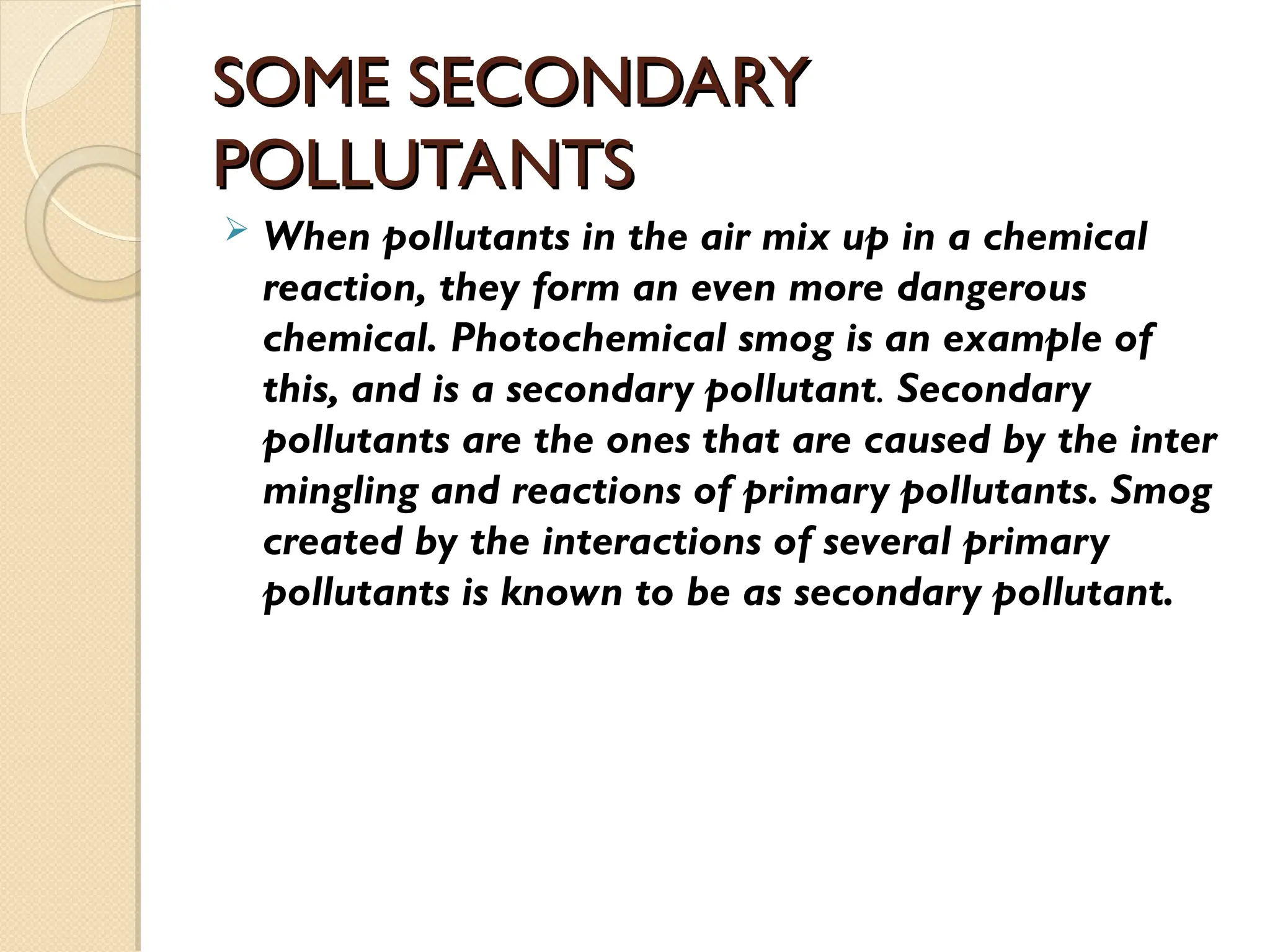
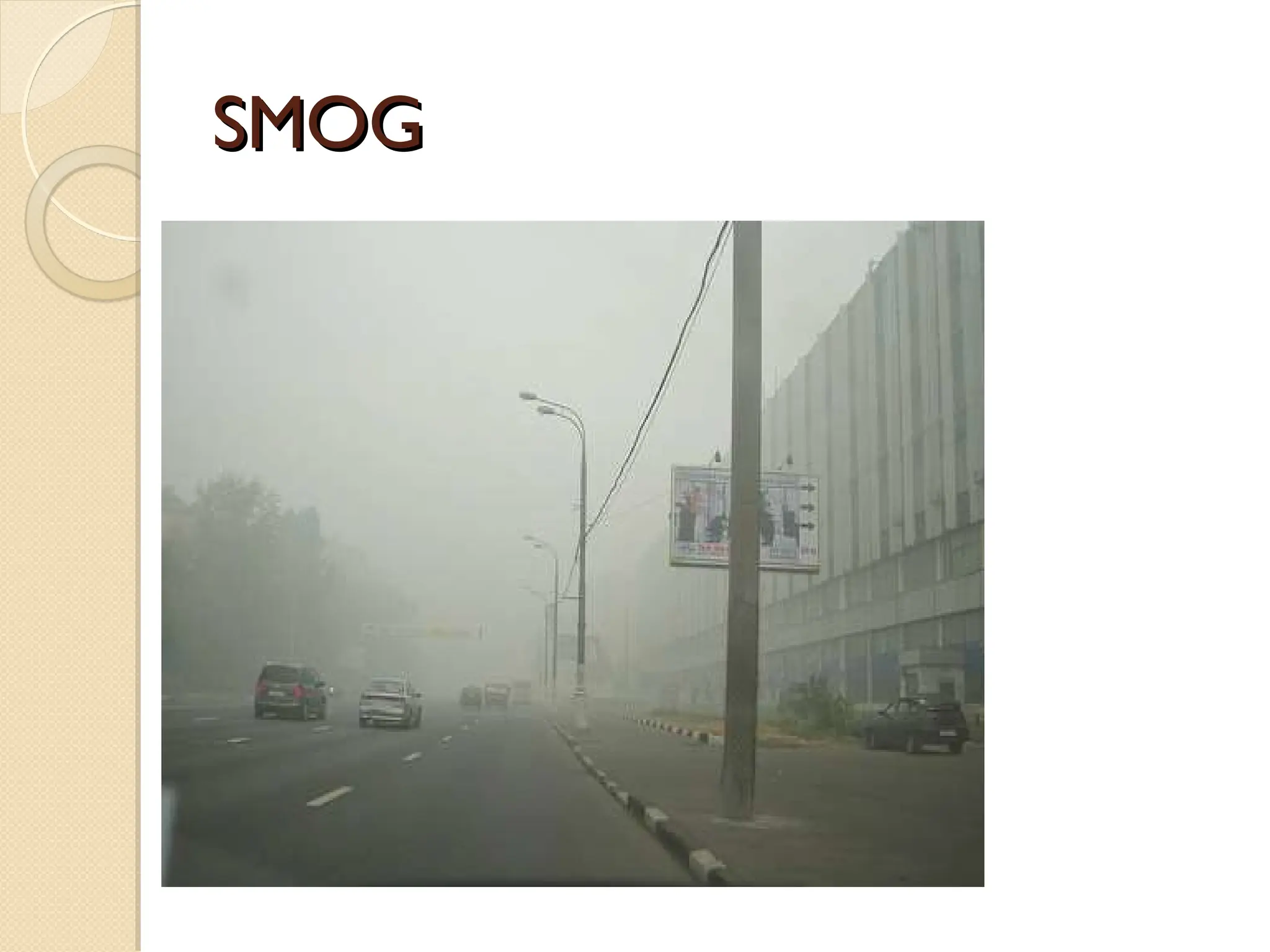
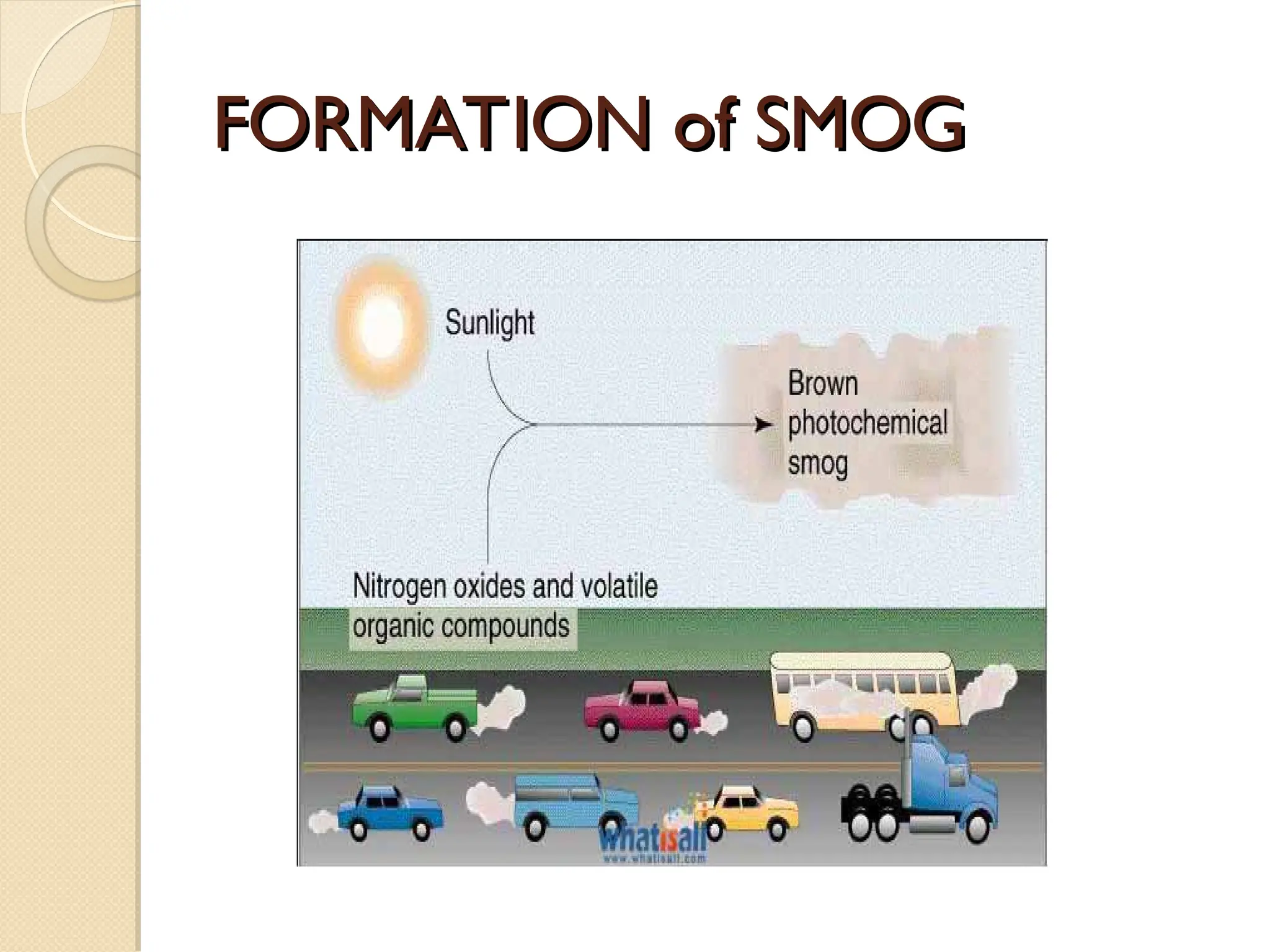
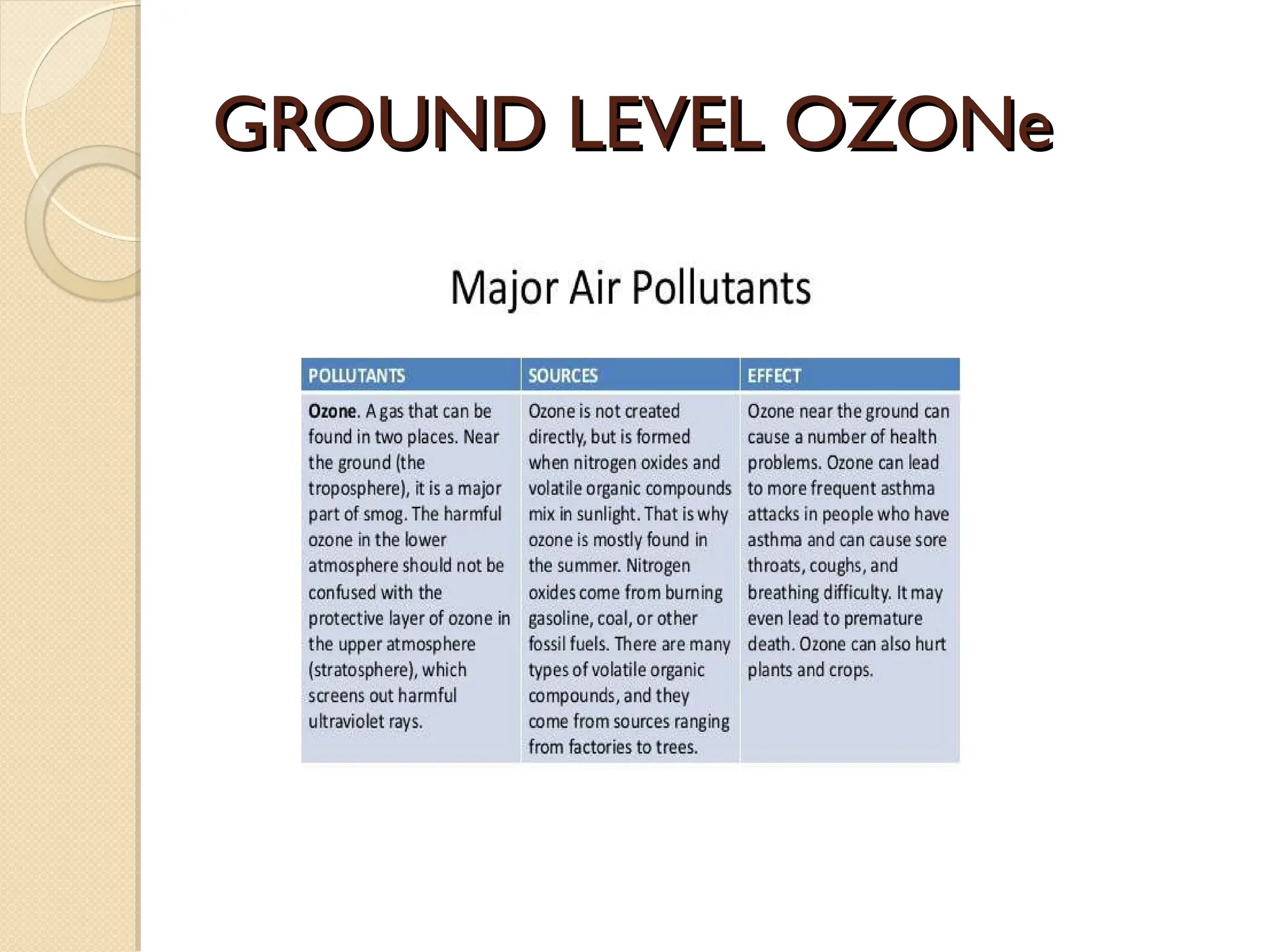
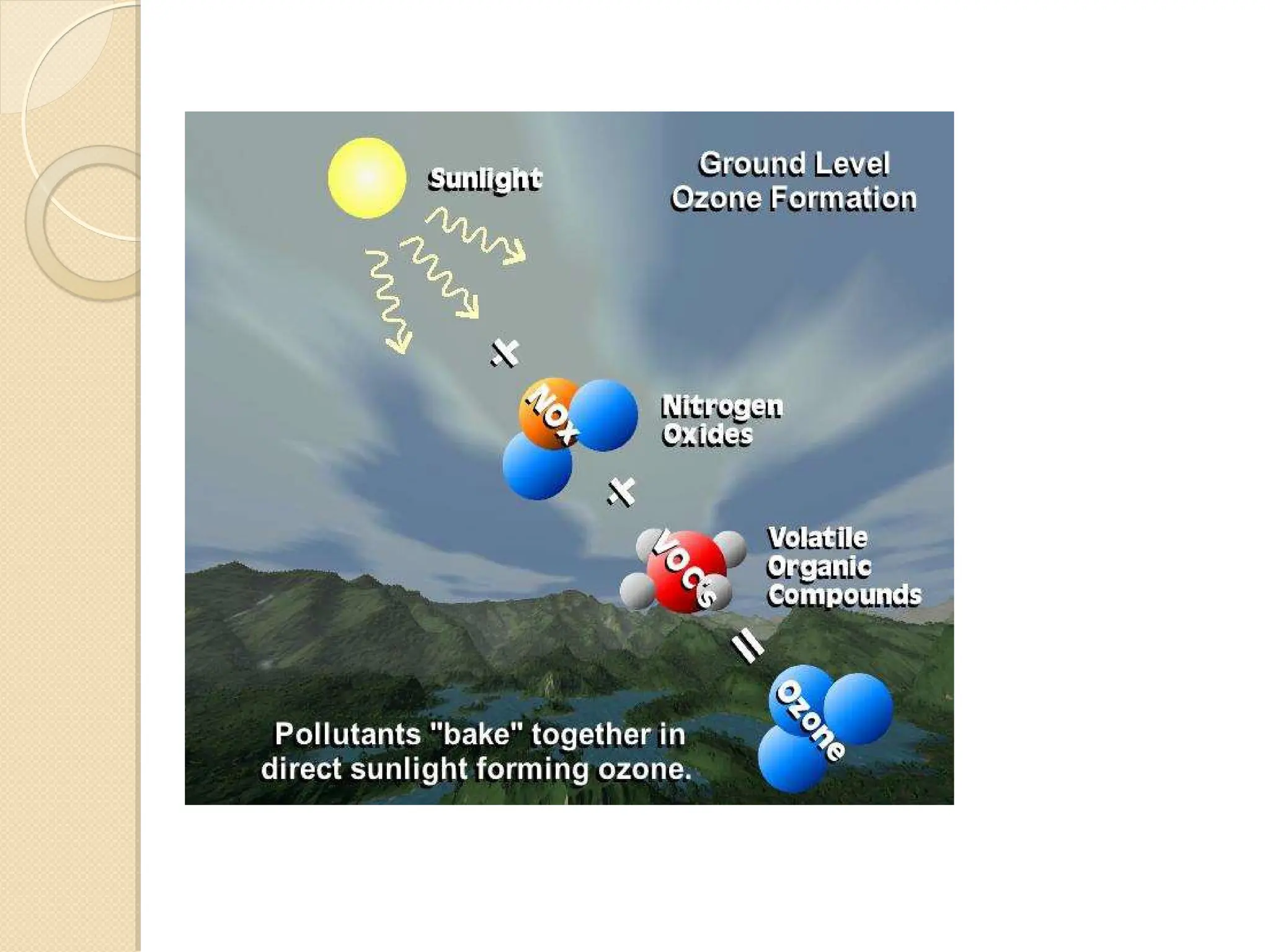
When pollutants in the air mix up in a chemical
reaction, they form an even more dangerous
chemical. Photochemical smog is an example of
this, and is a secondary pollutant. Secondary
pollutants are the ones that are caused by the inter
mingling and reactions of primary pollutants. Smog
created by the interactions of several primary
pollutants is known to be as secondary pollutant.
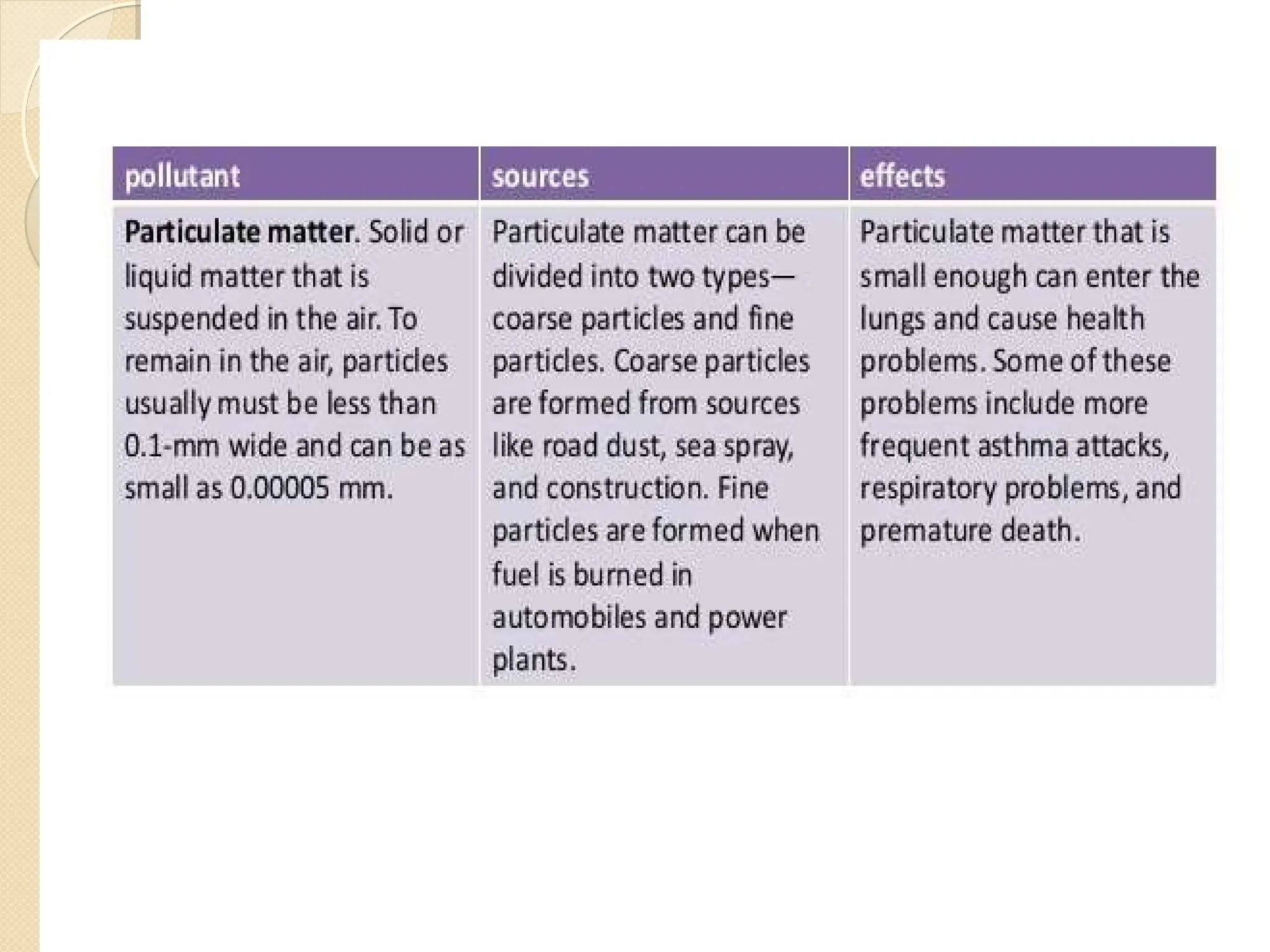
Particulate matters (SPM)…
Particulate matters (SPM) …
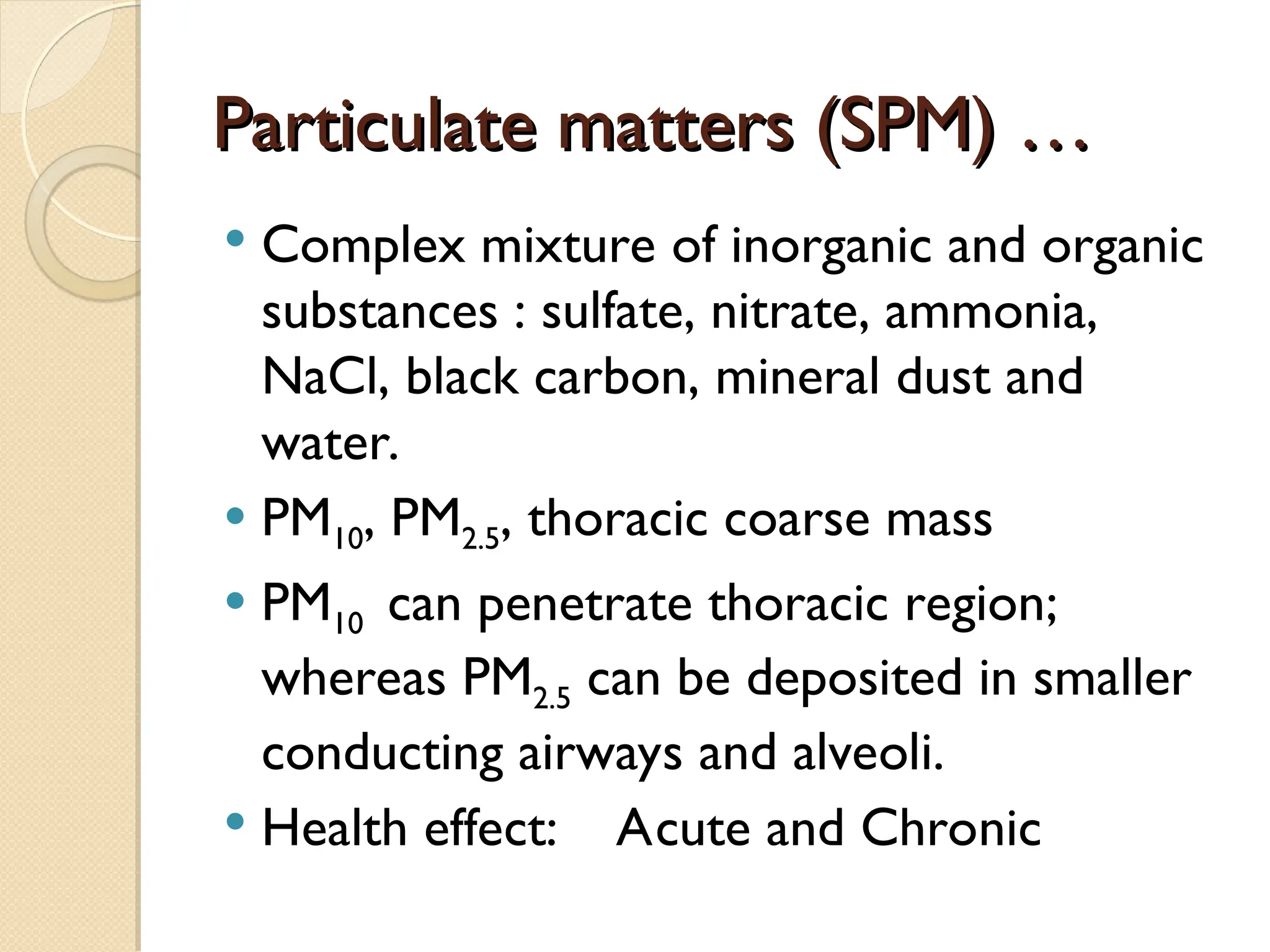
Complex mixture of inorganic and organic
substances : sulfate, nitrate, ammonia,
NaCl, black carbon, mineral dust and
water.
PM10, PM2.5, thoracic coarse mass
PM10 can penetrate thoracic region;
whereas PM2.5 can be deposited in smaller
conducting airways and alveoli.
Health effect: Acute and Chronic
37.
Guideline of SPM….
Guideline of SPM ….
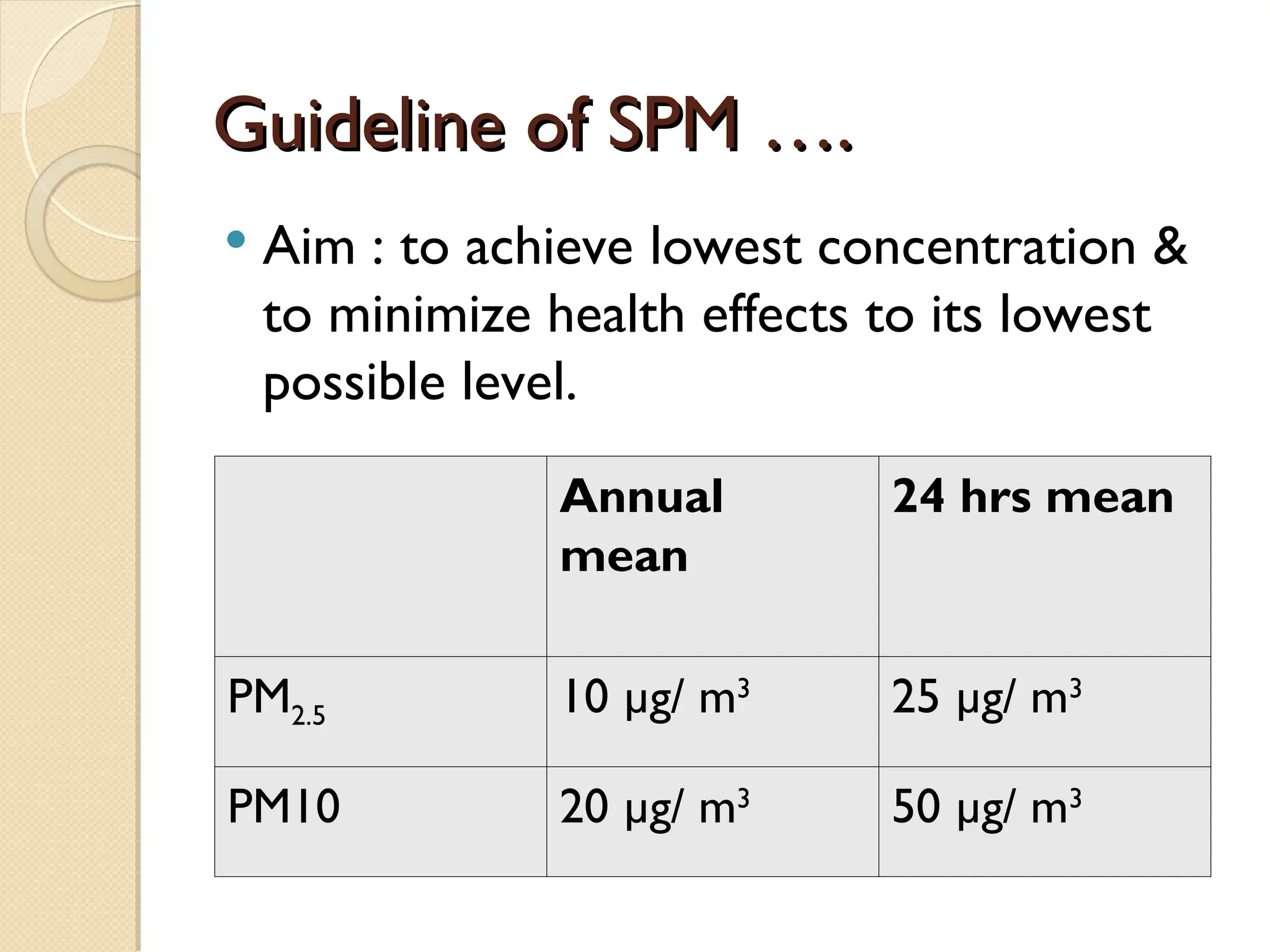
Aim : to achieve lowest concentration &
to minimize health effects to its lowest
possible level.
Annual
mean
24 hrs mean
PM2.5 10 µg/ m3
25 µg/ m3
PM10 20 µg/ m3
50 µg/ m3
38.
Effects of airpollution ……
Effects of air pollution ……
A. Health aspects
B. Social and economic aspects
39.
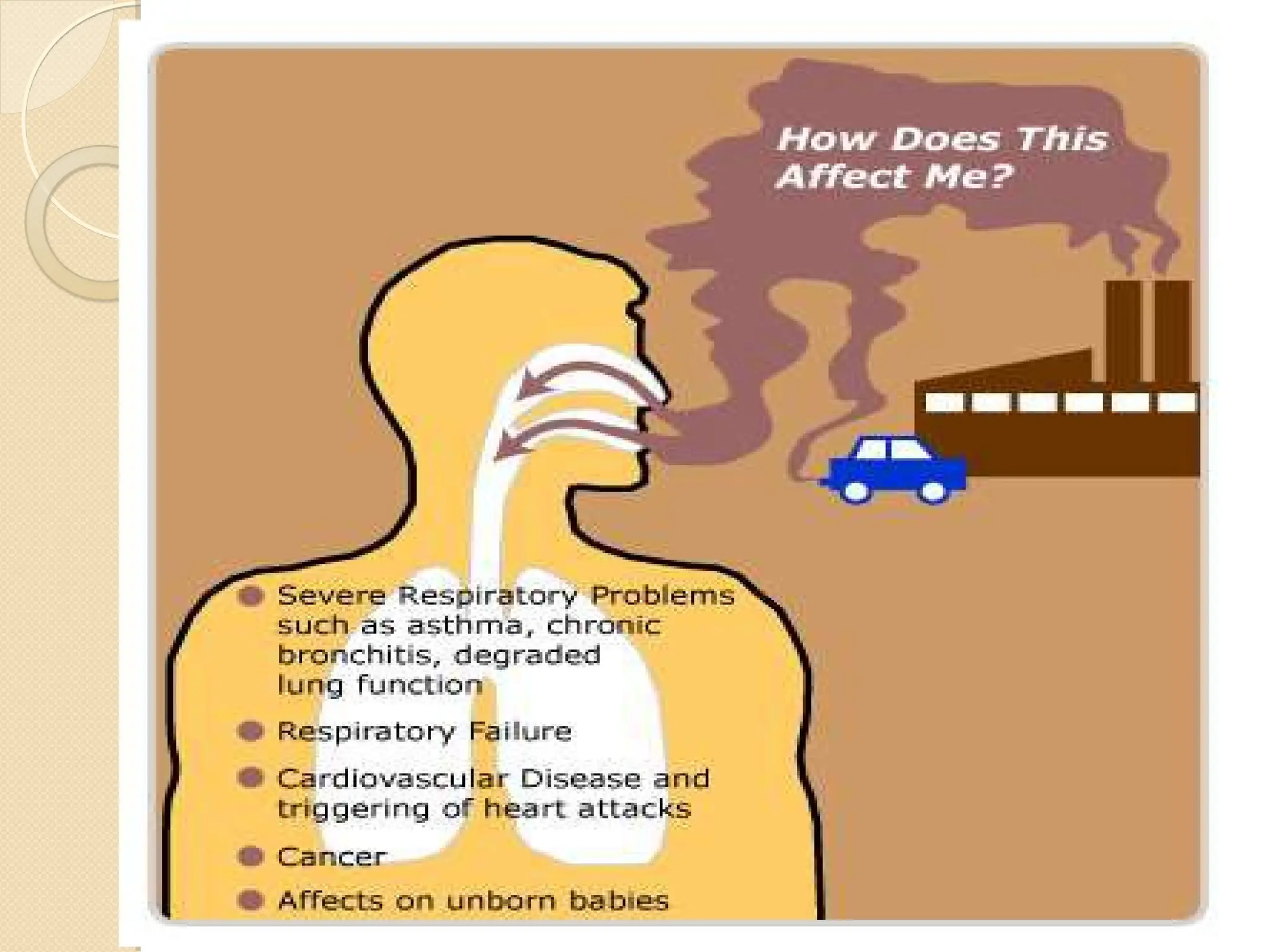
Health Effects
Health Effects
Someindividuals are much more
sensitive to pollutants than others.
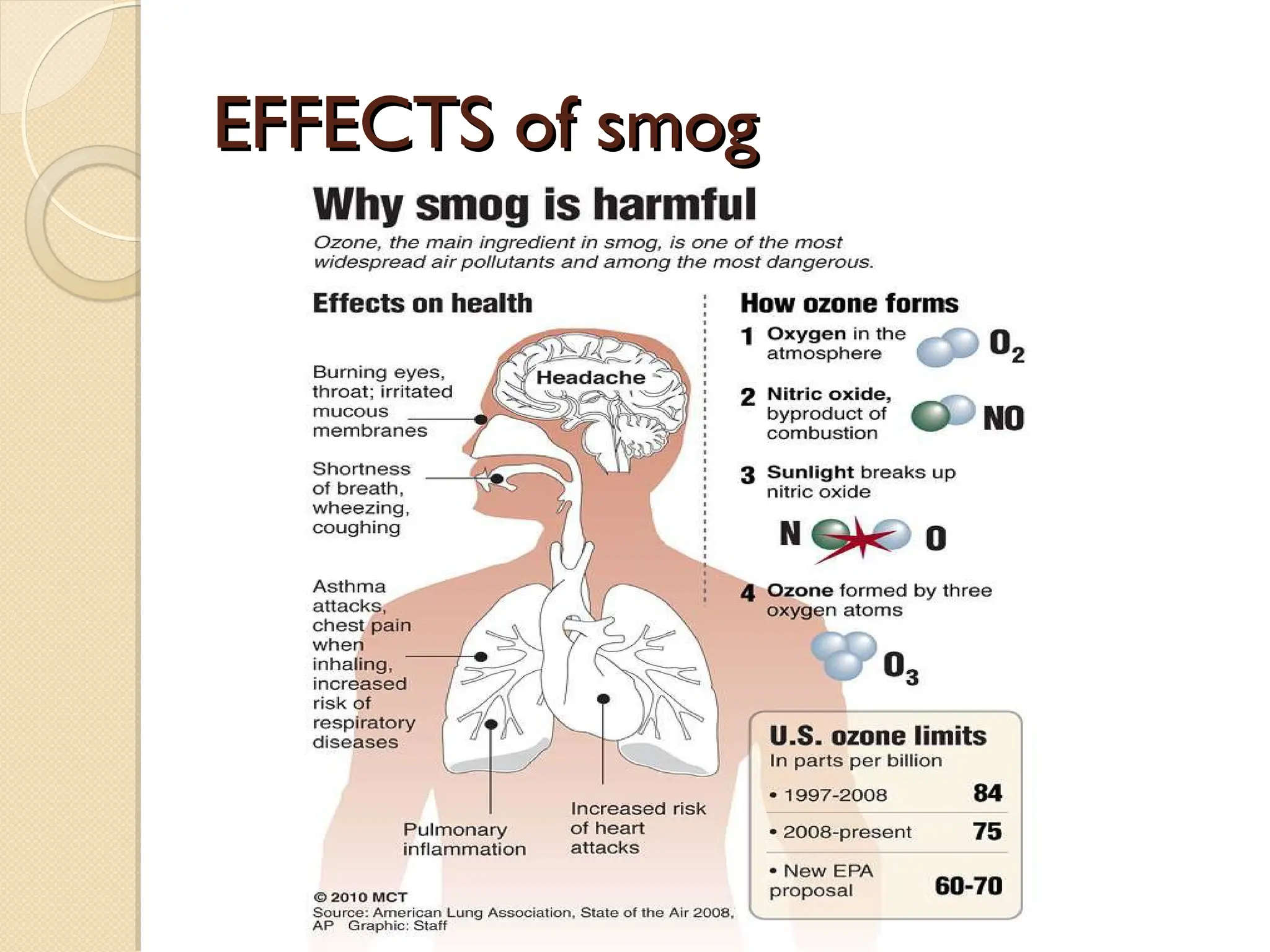
Air pollution can affect our health in
many ways
o short-term or immediate effect : on
respiratory system – suffocation to sudden
death
olong term or delayed effects : COPD, lung
cancer, br asthma, resp allergies.
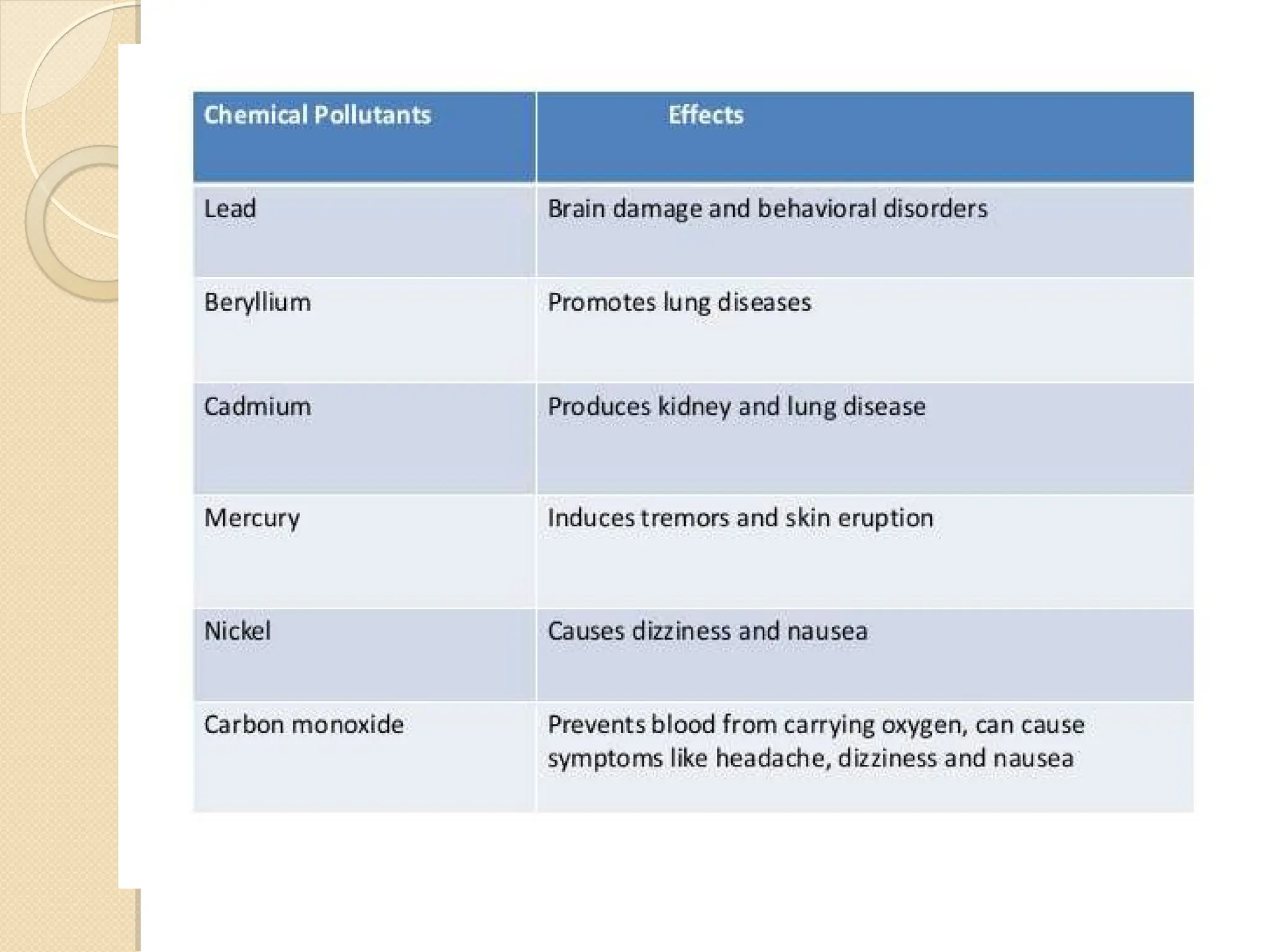
oLead (Pb) from automobile exhaust
dangerous to children (impaired
neuropsychological development)
40.
Social and economicaspects ….
Social and economic aspects ….
Destruction of plants & animal life;
Corrosion of metals, damage to buildings
Reduces visibility of towns
Soil and damage clothing.
42.
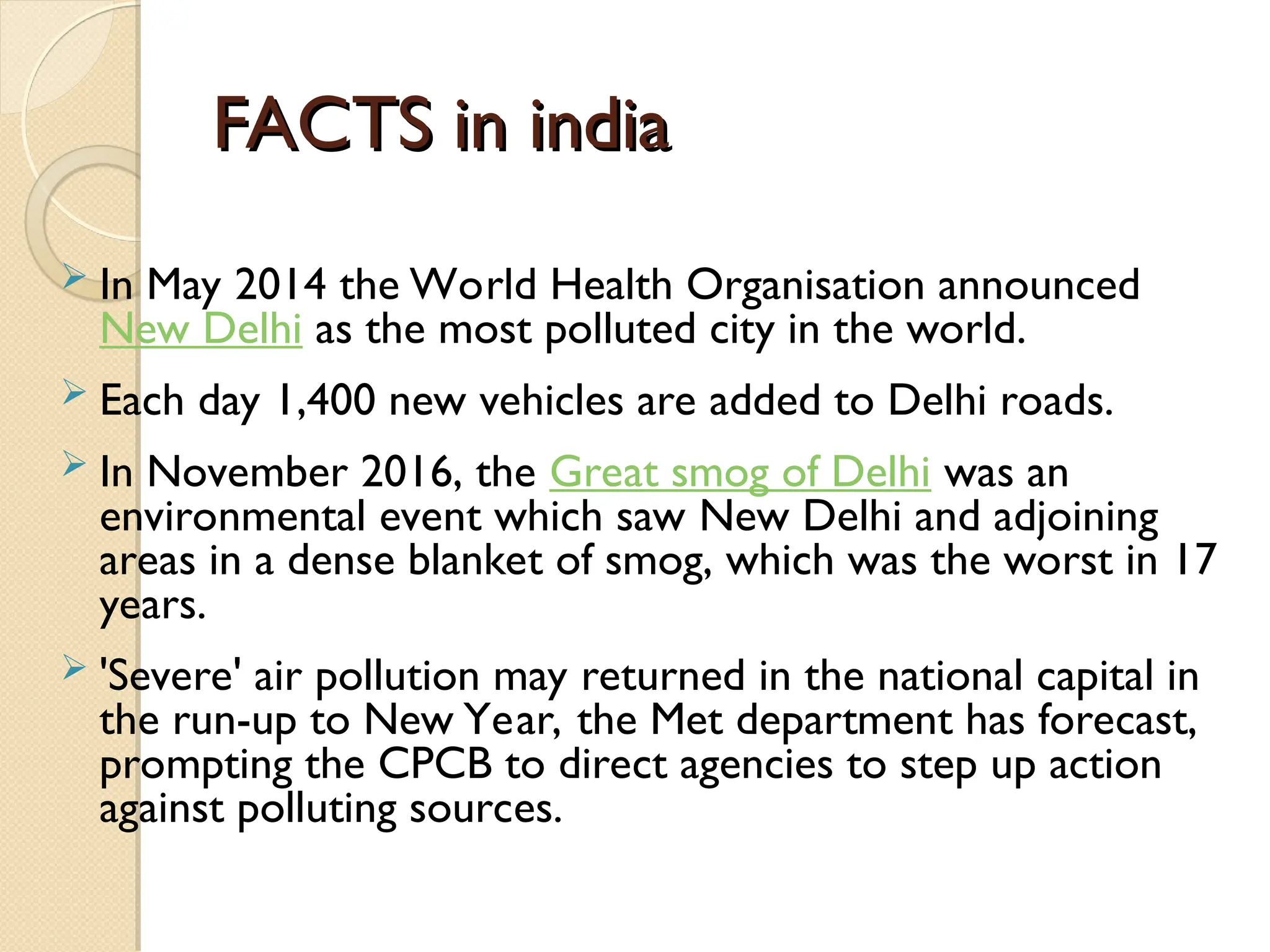
FACTS in india
FACTSin india
In May 2014 the World Health Organisation announced
New Delhi as the most polluted city in the world.
Each day 1,400 new vehicles are added to Delhi roads.
In November 2016, the Great smog of Delhi was an
environmental event which saw New Delhi and adjoining
areas in a dense blanket of smog, which was the worst in 17
years.
'Severe' air pollution may returned in the national capital in
the run-up to New Year, the Met department has forecast,
prompting the CPCB to direct agencies to step up action
against polluting sources.
43.
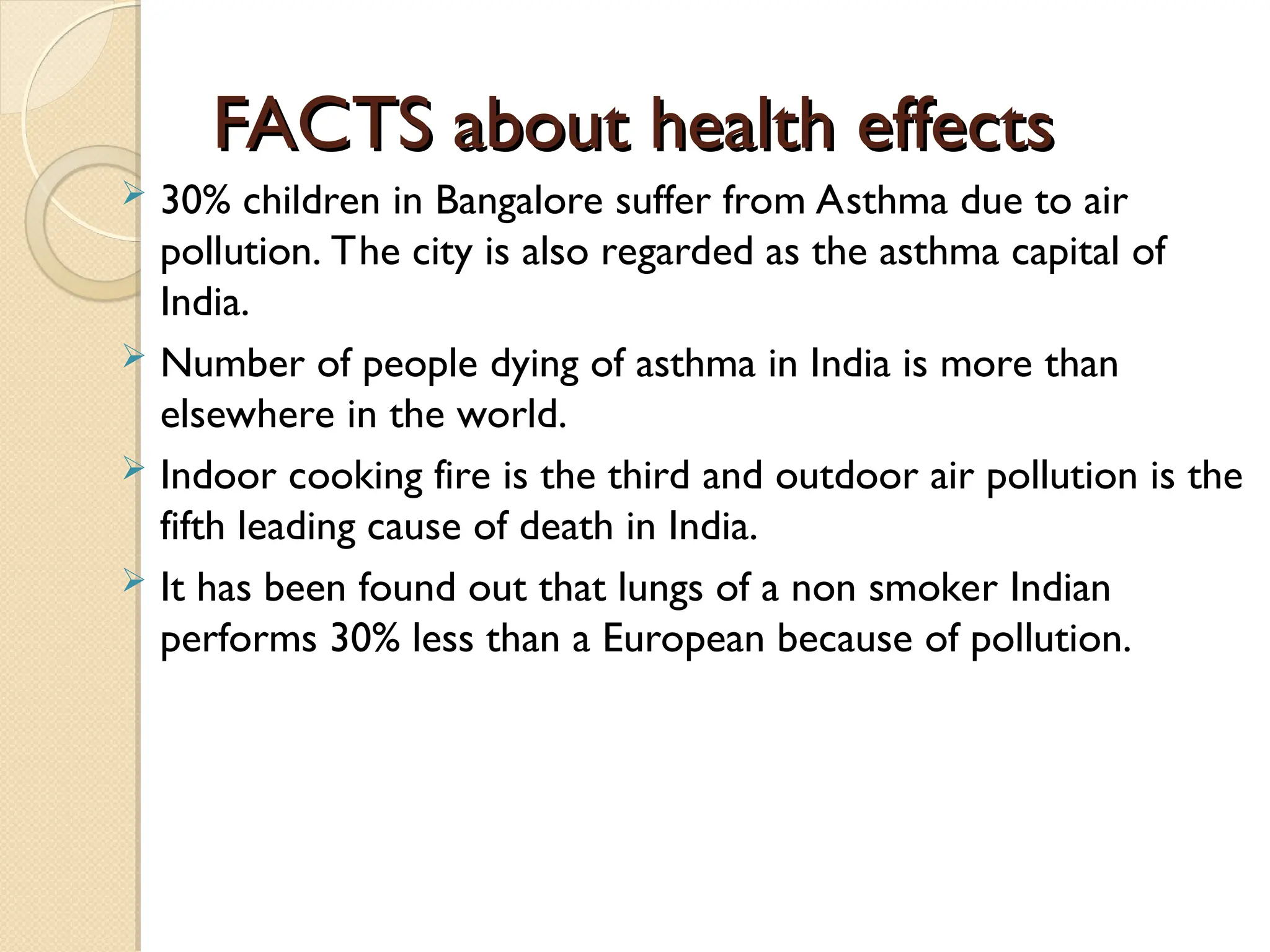
FACTS about healtheffects
FACTS about health effects
30% children in Bangalore suffer from Asthma due to air
pollution. The city is also regarded as the asthma capital of
India.
Number of people dying of asthma in India is more than
elsewhere in the world.
Indoor cooking fire is the third and outdoor air pollution is the
fifth leading cause of death in India.
It has been found out that lungs of a non smoker Indian
performs 30% less than a European because of pollution.
44.
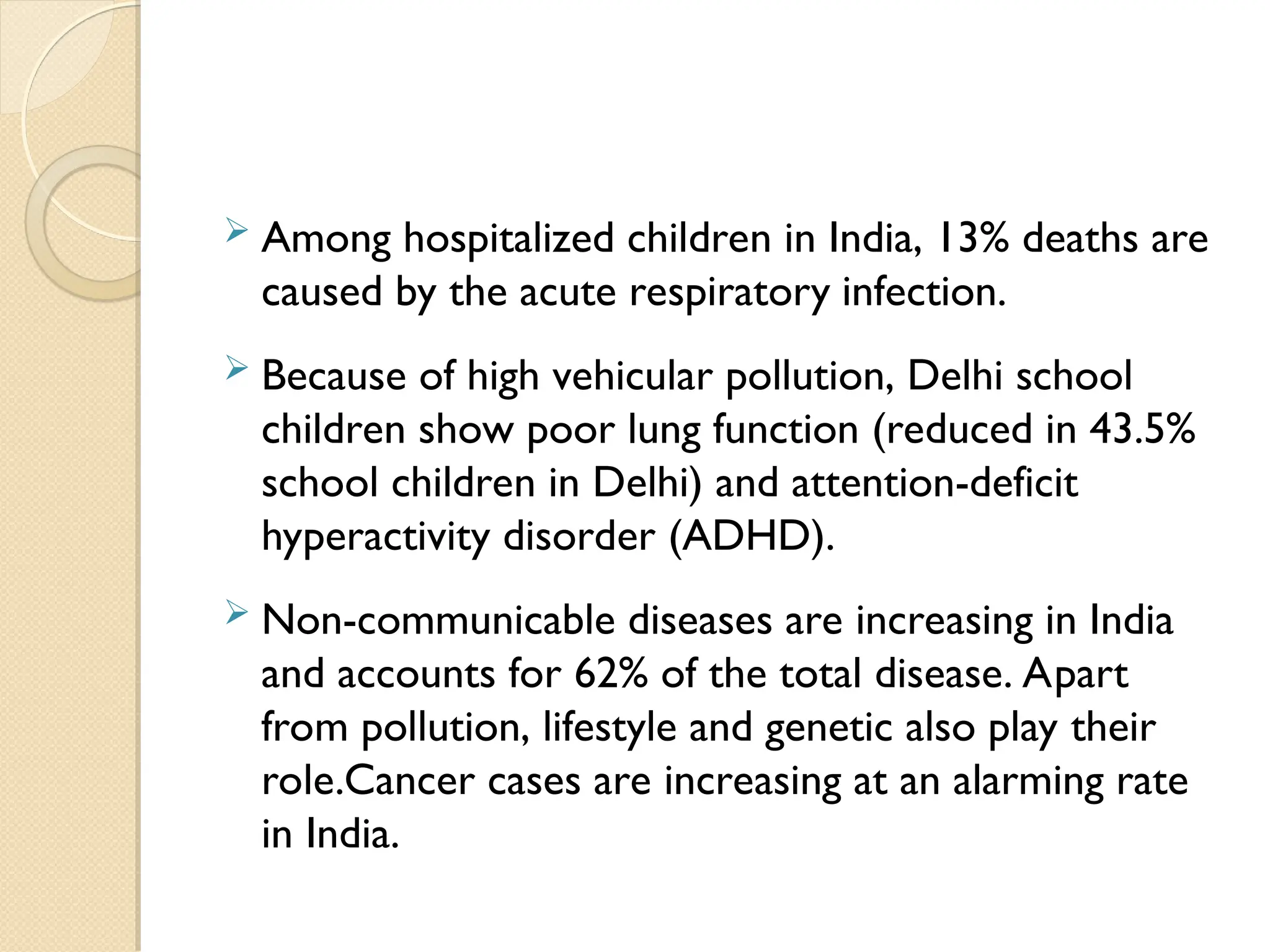
Among hospitalizedchildren in India, 13% deaths are
caused by the acute respiratory infection.
Because of high vehicular pollution, Delhi school
children show poor lung function (reduced in 43.5%
school children in Delhi) and attention-deficit
hyperactivity disorder (ADHD).
Non-communicable diseases are increasing in India
and accounts for 62% of the total disease. Apart
from pollution, lifestyle and genetic also play their
role.Cancer cases are increasing at an alarming rate
in India.
45.
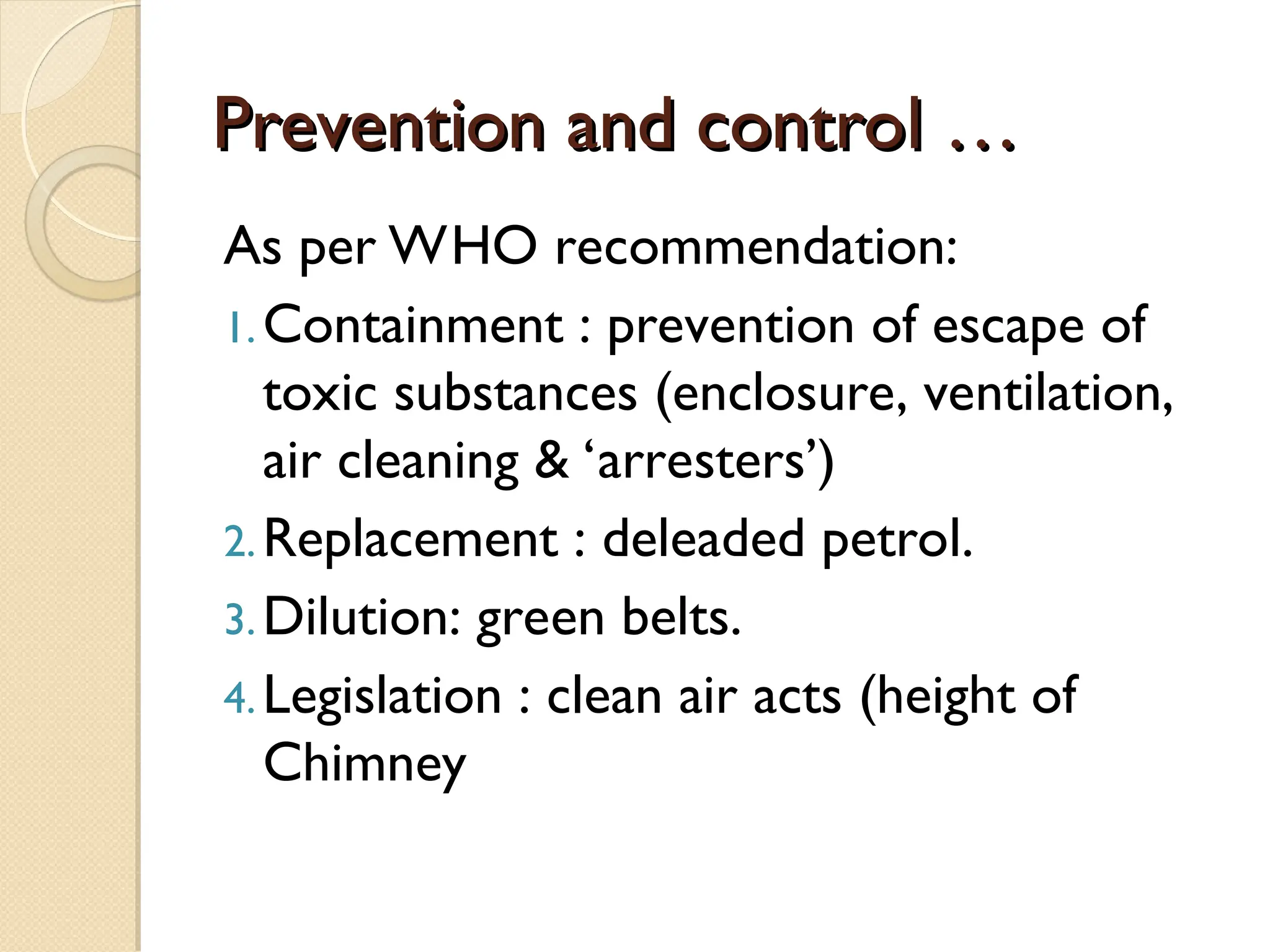
Prevention and control…
Prevention and control …
As per WHO recommendation:
1.Containment : prevention of escape of
toxic substances (enclosure, ventilation,
air cleaning & ‘arresters’)
2.Replacement : deleaded petrol.
3.Dilution: green belts.
4.Legislation : clean air acts (height of
Chimney
46.
FACTS about control
FACTSabout control
With air pollution worsening in New Delhi and beyond, Kashmir valley
has decided to step up efforts to combat its own worsening air quality.
The state government announced last month that it would begin enforcing
an existing ban on the burning of leaves and wood pruned from trees.
To deal with haze during winters, the Delhi government is mulling over
using anti-smog guns to bring down pollution level in the national capital.
Delhi government has directed schools in the national capital to spread
awareness among students about air pollution by conducting special
assemblies and inviting experts from technical organisations and civil
society.
47.
10 ways forcontrol
10 ways for control
Go Green – Adopting a green, environment friendly lifestyle
is by far the best way to protect ourselves and our children
from air pollution. This may involve making a number of
changes including contributing to tree planting efforts, using
fuel efficient, low-pollution vehicles, saving electricity,
reducing use of plastics, and use of solar energy as far as
possible.
Avoid High Pollution Areas – Avoid driving your kids to
school and back or to classes through high pollution areas
and the industrial parts of your city. Avoid biking with kids
through highly polluted arterial roads during peak traffic
hours. If you must, ensure that the car glasses are raised or
that the kids are using anti-pollution masks.
48.
Practice BreathingExercises – Teach children breathing
exercises that will improve lung capacity and help combat
the harmful effects of air pollution.
Invest In An Air Purifier – Air purifiers are a fantastic
investment. Not only do their clean the air of home, they
keep off dust particles and help combat asthma.
Use High-quality Face Mask –While buying a face mask,
however, do read the fine print. Many masks come with
an N95 certification which guarantees that we shall face
95 percent less exposure to air pollutants while wearing
the mask.
Cultivate House Plants – Many of us avoid growing indoor
plants due to fear of pollen and allergies. Quite a number
of plants, however, help clean the air by generating high
amounts of oxygen and cleaning up the mold.
49.
Quit Smoking– Smoking is not only harmful to us but also
to those around us. According to a news report from
September 2015, second hand smoking alone exposes the
lungs to 4,000 toxins and irritants that can damage the
lungs. Children and young adults exposed to smokers may
develop fibrosis or scarring of the lung tissue. While
avoiding smoking at home is essential, quitting altogether
is the best option.
Avoid Crackers and Burning Trash – Diwali is an
important festival, undoubtedly. But it is meant to be a
festival of lights.
Join Community Efforts – Community planting and
cleaning efforts are a great way of cleaning up the
neighbourhood. Form a carpool for school drops, create a
bikeway for children to cycle around the neighbourhood
Create Awareness
50.
Disinfection of air….
Disinfection of air ….
1. Mechanical ventilation
2. Ultraviolate radiation
3. Chemical mist
4. Dust control