
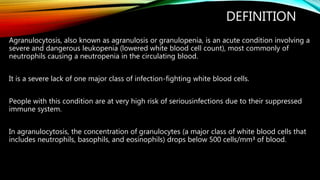
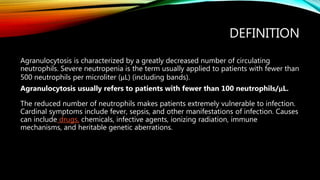
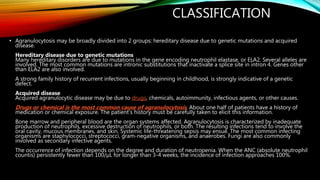



Agranulocytosis is a condition characterized by a severe lack of neutrophils in the blood which leaves the immune system highly vulnerable to infection. It can be either acquired, such as from drug exposure, or hereditary due to genetic mutations. Symptoms include sudden fever, chills, mouth sores, and bleeding gums that can progress to life-threatening sepsis if untreated. Treatment focuses on identifying and removing the cause, administering antibiotics to fight infection, and using colony-stimulating factors to shorten the duration of neutropenia. With prompt treatment, the risk of death from agranulocytosis is low.


![AGRANULOCYTOSIS AGRANULOCYTOSIS a[Autosaved].pptx](https://cdn.slidesharecdn.com/ss_thumbnails/vedikaagranulocytosisautosaved-250717143451-dded15fc-thumbnail.jpg?width=640&height=640&fit=bounds)


