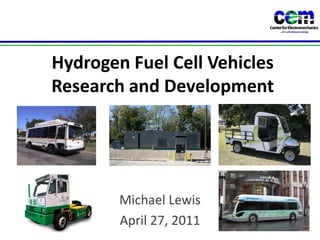
Hydrogen Fuel Cell VehiclesResearch and DevelopmentMichael LewisApril 27, 2011
Why Hydrogen and Fuel Cells?Ultimate Goal is to reduce emissions and                        dependence on foreign oilHydrogen is abundant and                                                                     can be produced from a                                                      variety of feedstockNatural Gas ReformationBiomass GasificationRenewable ElectrolysisHydrogen is a carbon free fuelHydrogen Fuel Cells are more efficient than traditional technologies and have zero emissions
Current ChallengesIf it was easy…Hydrogen production, distribution, and storageReduce cost on all frontsCO2 sequestering    Zero emissionsInnovative materials based storage is promisingFuel Cell cost and durabilityAdvances in membrane and component technology are ongoing and leading to decreased cost and increased reliabilityCurrent political environment is less favorable than in the past
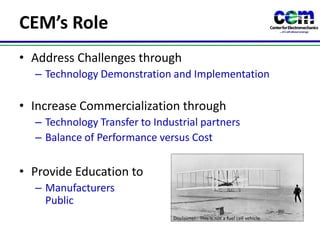
CEM’s RoleAddress Challenges throughTechnology Demonstration and ImplementationIncrease Commercialization throughTechnology Transfer to Industrial partnersBalance of Performance versus CostProvide Education toManufacturers                                                                and PublicDisclaimer:  This is not a fuel cell vehicle.
Early Hydrogen Fuel Cell WorkPlug-In Hybrid Fuel Cell Bus demonstration and evaluation (2007-2008)Excellent learning platform that has provided knowledge and experience for current and future programsInstalled first permanent Hydrogen Fueling Station in TexasUnique capability to produce and deliver compressed hydrogen for current and future hydrogen vehicle programs
Current and Ongoing WorkExtended Range Hydrogen Utility VehicleGoal:  To significantly increase range without reducing vehicle performanceHydrogen fuel cell retrofit of existing battery powered utility vehicleTwo vehicles in 8 monthsSponsored by Defense Logistics Agency and NAVSEA-CRANECurrently performing successfully halfway through 12 month demonstration at Warner Robins AFBProject Partners: Success in this program has led to other DLA opportunities.
Current and Ongoing WorkAustin Demonstration of Plug-In Hybrid Fuel Cell Transit Bus12-month revenue service under Capital MetroGoal: Reduce NOx and further commercial acceptance of hydrogen bus and fueling infrastructureProterra Hydrogen Fuel Cell Hybrid busFuel cell “plug-in” hybrid using advanced Li-ion batteriesIncreases fuel economy by 2-3X over conventional diesel busesTo be fueled using UT-CEM hydrogen stationProgram onset will included station upgrades to reformer and storage capacityFunding provided by TCEQ and FTA (through CTE)UT-CEM is the prime under TCEQ fundingProgram management, as well as bus and station evaluationProject Partners:GTI, CTE, Capital Metro, Proterra
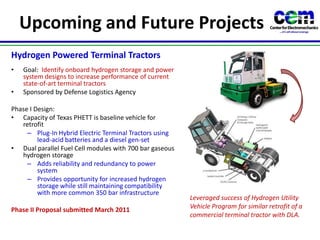
Upcoming and Future ProjectsHydrogen Powered Terminal TractorsGoal:  Identify onboard hydrogen storage and power system designs to increase performance of current state-of-art terminal tractorsSponsored by Defense Logistics AgencyPhase I Design:Capacity of Texas PHETT is baseline vehicle for retrofitPlug-In Hybrid Electric Terminal Tractors using lead-acid batteries and a diesel gen-setDual parallel Fuel Cell modules with 700 bar gaseous hydrogen storageAdds reliability and redundancy to power systemProvides opportunity for increased hydrogen storage while still maintaining compatibility with more common 350 bar infrastructurePhase II Proposal submitted March 2011Leveraged success of Hydrogen Utility Vehicle Program for similar retrofit of a commercial terminal tractor with DLA.
Upcoming and Future ProjectsElectric Transit Bus with On-route ChargingGoal:  Demonstrate transit technologies that reduce energy consumption and GHG emissionsFTA sponsored TIGGER awardTransit Investment for Greenhouse Gas and Energy ReductionPartners:  CTE, Proterra, Star Metro (Tallahassee, FL), VIA (San Antonio, TX)Star Metro – Conductive on-route charging with optional fuel cell packageVIA – Inductive on-route chargingCEM’s role:  data collection and evaluation, technical program managementOpportunity to collect data / knowledge on advanced batteries for future projects and other applicationsAll-electric derivative of the Proterra fuel cell transit bus
70 kWh of Li-ion batteries
Rapid charge in about 8 minutes (or less), 60% to 70% SOC swing

Advisory panel lewis

  • 1.
    Hydrogen Fuel CellVehiclesResearch and DevelopmentMichael LewisApril 27, 2011
  • 2.
    Why Hydrogen andFuel Cells?Ultimate Goal is to reduce emissions and dependence on foreign oilHydrogen is abundant and can be produced from a variety of feedstockNatural Gas ReformationBiomass GasificationRenewable ElectrolysisHydrogen is a carbon free fuelHydrogen Fuel Cells are more efficient than traditional technologies and have zero emissions
  • 3.
    Current ChallengesIf itwas easy…Hydrogen production, distribution, and storageReduce cost on all frontsCO2 sequestering  Zero emissionsInnovative materials based storage is promisingFuel Cell cost and durabilityAdvances in membrane and component technology are ongoing and leading to decreased cost and increased reliabilityCurrent political environment is less favorable than in the past
  • 4.
    CEM’s RoleAddress ChallengesthroughTechnology Demonstration and ImplementationIncrease Commercialization throughTechnology Transfer to Industrial partnersBalance of Performance versus CostProvide Education toManufacturers and PublicDisclaimer: This is not a fuel cell vehicle.
  • 5.
    Early Hydrogen FuelCell WorkPlug-In Hybrid Fuel Cell Bus demonstration and evaluation (2007-2008)Excellent learning platform that has provided knowledge and experience for current and future programsInstalled first permanent Hydrogen Fueling Station in TexasUnique capability to produce and deliver compressed hydrogen for current and future hydrogen vehicle programs
  • 6.
    Current and OngoingWorkExtended Range Hydrogen Utility VehicleGoal: To significantly increase range without reducing vehicle performanceHydrogen fuel cell retrofit of existing battery powered utility vehicleTwo vehicles in 8 monthsSponsored by Defense Logistics Agency and NAVSEA-CRANECurrently performing successfully halfway through 12 month demonstration at Warner Robins AFBProject Partners: Success in this program has led to other DLA opportunities.
  • 7.
    Current and OngoingWorkAustin Demonstration of Plug-In Hybrid Fuel Cell Transit Bus12-month revenue service under Capital MetroGoal: Reduce NOx and further commercial acceptance of hydrogen bus and fueling infrastructureProterra Hydrogen Fuel Cell Hybrid busFuel cell “plug-in” hybrid using advanced Li-ion batteriesIncreases fuel economy by 2-3X over conventional diesel busesTo be fueled using UT-CEM hydrogen stationProgram onset will included station upgrades to reformer and storage capacityFunding provided by TCEQ and FTA (through CTE)UT-CEM is the prime under TCEQ fundingProgram management, as well as bus and station evaluationProject Partners:GTI, CTE, Capital Metro, Proterra
  • 8.
    Upcoming and FutureProjectsHydrogen Powered Terminal TractorsGoal: Identify onboard hydrogen storage and power system designs to increase performance of current state-of-art terminal tractorsSponsored by Defense Logistics AgencyPhase I Design:Capacity of Texas PHETT is baseline vehicle for retrofitPlug-In Hybrid Electric Terminal Tractors using lead-acid batteries and a diesel gen-setDual parallel Fuel Cell modules with 700 bar gaseous hydrogen storageAdds reliability and redundancy to power systemProvides opportunity for increased hydrogen storage while still maintaining compatibility with more common 350 bar infrastructurePhase II Proposal submitted March 2011Leveraged success of Hydrogen Utility Vehicle Program for similar retrofit of a commercial terminal tractor with DLA.
  • 9.
    Upcoming and FutureProjectsElectric Transit Bus with On-route ChargingGoal: Demonstrate transit technologies that reduce energy consumption and GHG emissionsFTA sponsored TIGGER awardTransit Investment for Greenhouse Gas and Energy ReductionPartners: CTE, Proterra, Star Metro (Tallahassee, FL), VIA (San Antonio, TX)Star Metro – Conductive on-route charging with optional fuel cell packageVIA – Inductive on-route chargingCEM’s role: data collection and evaluation, technical program managementOpportunity to collect data / knowledge on advanced batteries for future projects and other applicationsAll-electric derivative of the Proterra fuel cell transit bus
  • 10.
    70 kWh ofLi-ion batteries
  • 11.
    Rapid charge inabout 8 minutes (or less), 60% to 70% SOC swing