

Vehicle Electrification—An International PerspectiveEd Pike, ICCTChuck Shulock, consultantJune 30, 2011
Presentation OverviewThe ICCT Electrification Studywww.theicct.org/2011/03/vehicle-electrification-policy-studyKey Findings on EVs and update on California, US, ChinaContext for Today’s DiscussionSlide 2
ICCT Electrification StudyPurposeInform the pending update of CA Zero Emission Vehicle ProgramPrimary focus is battery electric and fuel cell vehicles  (not plug hybrids)Four Tasks CompletedTechnology status, metrics, complementary policies, international lessons learnedResearchComprehensive review of recent studiesMeetings in Germany, France, UK, China, USSlide 3
Key FindingsSlide 4
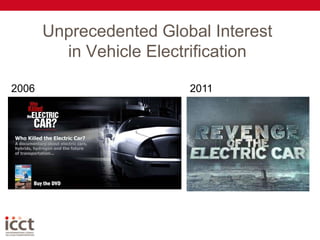
Unprecedented Global Interest in Vehicle Electrification20062011
Drivers for Global Interest Government Industrial policy, energy security, climate, air quality Top-down policy push from political leadershipAutomakersGain first mover advantage in emerging marketAvoid falling behind in technologyCustomersPent-up demand from early adoptersSlide 6
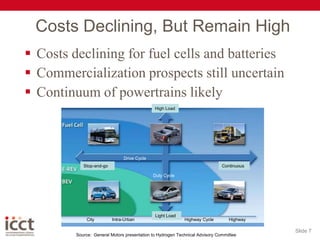
Costs Declining, But Remain HighCosts declining for fuel cells and batteriesCommercialization prospects still uncertainContinuum of powertrains likelySlide 7High LoadDrive CycleStop-and-goContinuousDuty CycleLight LoadHighwayHighway CycleIntra-UrbanCitySource:  General Motors presentation to Hydrogen Technical Advisory Committee
Need to Plan for “Second Wave” CustomersInitial rollouts well underwayGovernment incentivesManufacturer investmentWaiting lists for early models“Second wave” customers are risk averse, new emphasis neededReliabilityResale valueRangeSlide 8
InfrastructurePublic hydrogen refueling neededEvaluate use of initial plug-in infrastructure rollout before committing to additional public chargers beyond those already plannedSlide 9
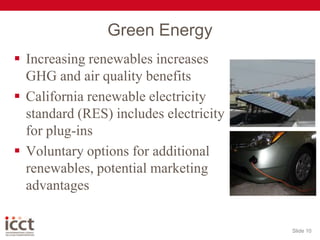
Green EnergyIncreasing renewables increases GHG and air quality benefitsCalifornia renewable electricity standard (RES) includes electricity for plug-insVoluntary options for additional renewables, potential marketing advantagesSlide 10
California, US, ChinaSlide 11
California Regulatory ProgramZEV MandateRequires large volume manufacturers to place increasing percentage of ZEVs in CAPV Greenhouse Gas StandardsLow Carbon Fuel Standard (LCFS) & RESLCFS credit amount based on electricity and hydrogen upstream production emissionsCap-and-Trade Upstream PV emissions in 2012, tailpipe in 2015Slide 12
ZEV Mandate “Value Added” Uniquely able to sustain progress during uncertainty and market challengeSets binding mid term deployment targetsTransitional push, ultimate goal is fleet averageIncentivizes all platformsBEVs, FCEVs, PHEVsCA policy portfolio focused on environmental outcomesZEV, tailpipe standards, LCFS, RESSlide 13
California EV SupportHydrogen infrastructure31 hydrogen fueling stations built or under construction pursuant to the California Hydrogen Highway program$53 million over several years for hydrogen infrastructure under the California AB 118 programPlug-in purchase incentives$5,000 per vehicle (will decline in 2011-2012)Slide 14
Other CA Activities of InterestFuel Cell PartnershipPlug-In Electric Vehicle CollaborativePublic Utilities Commission Infrastructure ProceedingsIncentive ProgramsDriveClean Website (Buyers’ Guide)Slide 15
US ProgramGoal1 million cumulative PHEVs by 2015$4.4 billion manufacturing grants/loans for BEVs, PHEVsUp to $7,500 federal purchase incentive plus some state incentivesAbout 20,000 federally funded charging stations plus some state fundedSlide 16
Chinese ProgramGoal100,000 BEVs in Beijing by 20155 million cumulative EVs/PHEVs by 20201 million EVs/PHEVs annually in 202020% to 30% market share by 2030Slide 17
Chinese ProgramIncentivesCNY100 billion ($15 billion) earmarked over 10 years for research and development for new energy vehicles and components National deployment incentives of $8,800 for a 20 kWh BEV and $6600 for 15 kWh PHEVCNY30 billion ($4.4 billion) over 10 years for infrastructureRegional deployment incentives can double purchase incentiveMany pilot projects underwaySlide 18
Context for Today’s DiscussionSlide 19
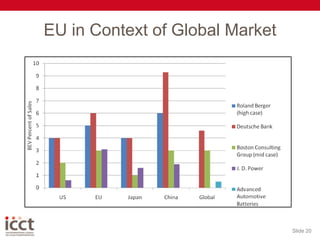
EU in Context of Global MarketSlide 20
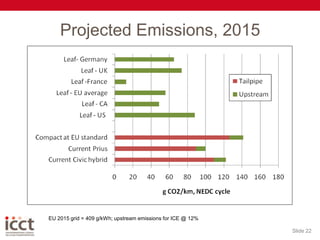
Upstream Emissions Increasingly ImportantPolicies for startup phase may not be appropriate for mature programAs vehicle numbers increase…Treatment of upstream emissions becomes more importantIncentives may not be workable or sustainable Slide 21
Projected Emissions, 2015Slide 22EU 2015 grid = 409 g/kWh; upstream emissions for ICE @ 12%
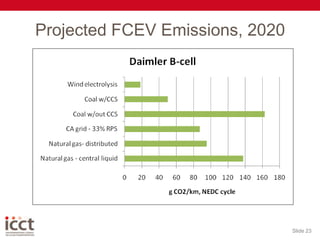
Projected FCEV Emissions, 2020Slide 23

Vehicle Electrification- an International Perspective

  • 1.
    Vehicle Electrification—An InternationalPerspectiveEd Pike, ICCTChuck Shulock, consultantJune 30, 2011
  • 2.
    Presentation OverviewThe ICCTElectrification Studywww.theicct.org/2011/03/vehicle-electrification-policy-studyKey Findings on EVs and update on California, US, ChinaContext for Today’s DiscussionSlide 2
  • 3.
    ICCT Electrification StudyPurposeInformthe pending update of CA Zero Emission Vehicle ProgramPrimary focus is battery electric and fuel cell vehicles (not plug hybrids)Four Tasks CompletedTechnology status, metrics, complementary policies, international lessons learnedResearchComprehensive review of recent studiesMeetings in Germany, France, UK, China, USSlide 3
  • 4.
  • 5.
    Unprecedented Global Interestin Vehicle Electrification20062011
  • 6.
    Drivers for GlobalInterest Government Industrial policy, energy security, climate, air quality Top-down policy push from political leadershipAutomakersGain first mover advantage in emerging marketAvoid falling behind in technologyCustomersPent-up demand from early adoptersSlide 6
  • 7.
    Costs Declining, ButRemain HighCosts declining for fuel cells and batteriesCommercialization prospects still uncertainContinuum of powertrains likelySlide 7High LoadDrive CycleStop-and-goContinuousDuty CycleLight LoadHighwayHighway CycleIntra-UrbanCitySource: General Motors presentation to Hydrogen Technical Advisory Committee
  • 8.
    Need to Planfor “Second Wave” CustomersInitial rollouts well underwayGovernment incentivesManufacturer investmentWaiting lists for early models“Second wave” customers are risk averse, new emphasis neededReliabilityResale valueRangeSlide 8
  • 9.
    InfrastructurePublic hydrogen refuelingneededEvaluate use of initial plug-in infrastructure rollout before committing to additional public chargers beyond those already plannedSlide 9
  • 10.
    Green EnergyIncreasing renewablesincreases GHG and air quality benefitsCalifornia renewable electricity standard (RES) includes electricity for plug-insVoluntary options for additional renewables, potential marketing advantagesSlide 10
  • 11.
  • 12.
    California Regulatory ProgramZEVMandateRequires large volume manufacturers to place increasing percentage of ZEVs in CAPV Greenhouse Gas StandardsLow Carbon Fuel Standard (LCFS) & RESLCFS credit amount based on electricity and hydrogen upstream production emissionsCap-and-Trade Upstream PV emissions in 2012, tailpipe in 2015Slide 12
  • 13.
    ZEV Mandate “ValueAdded” Uniquely able to sustain progress during uncertainty and market challengeSets binding mid term deployment targetsTransitional push, ultimate goal is fleet averageIncentivizes all platformsBEVs, FCEVs, PHEVsCA policy portfolio focused on environmental outcomesZEV, tailpipe standards, LCFS, RESSlide 13
  • 14.
    California EV SupportHydrogeninfrastructure31 hydrogen fueling stations built or under construction pursuant to the California Hydrogen Highway program$53 million over several years for hydrogen infrastructure under the California AB 118 programPlug-in purchase incentives$5,000 per vehicle (will decline in 2011-2012)Slide 14
  • 15.
    Other CA Activitiesof InterestFuel Cell PartnershipPlug-In Electric Vehicle CollaborativePublic Utilities Commission Infrastructure ProceedingsIncentive ProgramsDriveClean Website (Buyers’ Guide)Slide 15
  • 16.
    US ProgramGoal1 millioncumulative PHEVs by 2015$4.4 billion manufacturing grants/loans for BEVs, PHEVsUp to $7,500 federal purchase incentive plus some state incentivesAbout 20,000 federally funded charging stations plus some state fundedSlide 16
  • 17.
    Chinese ProgramGoal100,000 BEVsin Beijing by 20155 million cumulative EVs/PHEVs by 20201 million EVs/PHEVs annually in 202020% to 30% market share by 2030Slide 17
  • 18.
    Chinese ProgramIncentivesCNY100 billion($15 billion) earmarked over 10 years for research and development for new energy vehicles and components National deployment incentives of $8,800 for a 20 kWh BEV and $6600 for 15 kWh PHEVCNY30 billion ($4.4 billion) over 10 years for infrastructureRegional deployment incentives can double purchase incentiveMany pilot projects underwaySlide 18
  • 19.
    Context for Today’sDiscussionSlide 19
  • 20.
    EU in Contextof Global MarketSlide 20
  • 21.
    Upstream Emissions IncreasinglyImportantPolicies for startup phase may not be appropriate for mature programAs vehicle numbers increase…Treatment of upstream emissions becomes more importantIncentives may not be workable or sustainable Slide 21
  • 22.
    Projected Emissions, 2015Slide22EU 2015 grid = 409 g/kWh; upstream emissions for ICE @ 12%
  • 23.