Advance 
Organizer 
Lesson Plan 
By 
Armita Nurul Haq 
Dewi Chandrasari 
Ratna Mustika Wardani 
Norhandayani
Advance Organizer Lesson Plan 
 Subject: Writing I 
 Grade Level: First semester students university 
 Specific Content: Compound sentence and 
Simple Sentence 
 Specific Length of Lesson: 45-50 minutes 
 Instructional Objectives: 
 Students will be able to identify the parts and 
structure of simple sentences when given 
example sentences and/or the parts needed to 
make a simple sentence. 
 Learner will be able to demonstrate 
understanding of sentence parts and types.
 Instructional Objectives: 
 Students will be able to identify the parts and 
structure of compound sentences when given 
example sentences and/or the parts needed 
to make a simple sentence. 
 Learner will be able to demonstrate 
understanding of sentence parts and types. 
 Learner will be able to identify subject and 
predicate in a sentence, and recognize 
different types of sentences.
 State Content Standard/Grade Level 
Expectation: The students can understand 
the concept of simple sentence pattern in 
daily communication oral and written
 Long- terms Unit Objectives: 
 The students will be able to understand subject and predicate 
in a sentence, and recognize different types of sentences 
(simple sentence pattern) 
 Learner will be able to demonstrate understanding of 
sentence parts and types. 
 Yesterday’s Lesson: the concept of simple sentence 
 Tomorrow’s Lesson: Identify the pattern of simple sentence 
like subject and predicate in a sentence, and recognize 
different types of sentences
 Prerequisite Knowledge or Behaviors 
Needed: 
 Skill: writing skill, Group discussion skill 
 Concepts: Daily activities, subject and 
predicate in sentence 
 Behavior: Raising hand for answering the 
questions
Why is the content of Today’s Lesson relevant for your 
students? 
simple sentence helps the students to understand the pattern the 
simple sentence and enrich their knowledge to write sentence 
easily. 
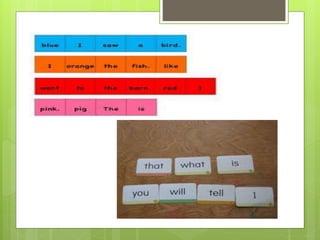
Materials: Jumble sentence card 
 Where are your materials to be kept until their use during the 
lesson? 
Teacher’s easel 
 When will your materials be passed out? 
the beginning of the lesson 
 How will materials be passed out? 
Teacher give jumble card to the students
 Model of Teaching: Advance Organizers 
 Procedures: 
List each procedure according to stage of advance 
organizer 
Preparation 
o The teacher gives previous lesson the concept of 
sentence 
Example: 
o A sentence is a group of words that expresses a 
complete thought. Are these 
Ayu walks to the park." 
She takes a friend with her. 
Climb a tree. 
 Asking questions related to the simple sentence 
 Explaining learning objectives and basic competence 
that want to be achieved.
Center activities 
Building knowledge of field: 
• Explaining simple sentence and 
pattern on the board, and identifying 
subject and predicator. 
• Practicing make a simple sentence 
and arrange the jumble card about 
simple sentence. 
 Examples:
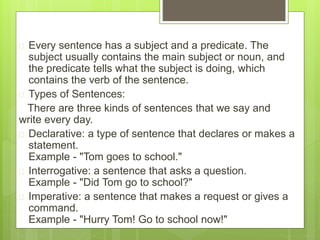
 Every sentence has a subject and a predicate. The 
subject usually contains the main subject or noun, and 
the predicate tells what the subject is doing, which 
contains the verb of the sentence. 
 Types of Sentences: 
There are three kinds of sentences that we say and 
write every day. 
 Declarative: a type of sentence that declares or makes a 
statement. 
Example - "Tom goes to school." 
 Interrogative: a sentence that asks a question. 
Example - "Did Tom go to school?" 
 Imperative: a sentence that makes a request or gives a 
command. 
Example - "Hurry Tom! Go to school now!"
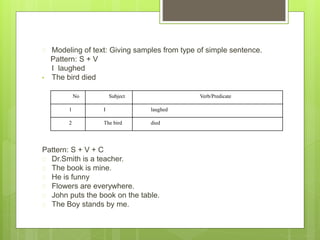
 Modeling of text: Giving samples from type of simple sentence. 
Pattern: S + V 
I laughed 
• The bird died 
No Subject Verb/Predicate 
1 I laughed 
2 The bird died 
Pattern: S + V + C 
 Dr.Smith is a teacher. 
 The book is mine. 
 He is funny 
 Flowers are everywhere. 
 John puts the book on the table. 
 The Boy stands by me.
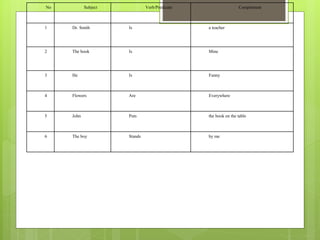
No Subject Verb/Predicate Complement 
1 Dr. Smith Is a teacher 
2 The book Is Mine 
3 He Is Funny 
4 Flowers Are Everywhere 
5 John Puts the book on the table 
6 The boy Stands by me
Closure 
 Inviting students to comment and ask 
questions. 
 Asking students’ difficulties in learning 
process. 
 Making reflection with students about the 
simple sentence. 
 Summarizing the materials. 
 Making description about the simple sentence
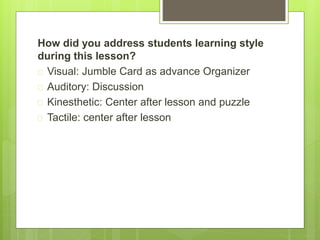
How did you address students learning style 
during this lesson? 
 Visual: Jumble Card as advance Organizer 
 Auditory: Discussion 
 Kinesthetic: Center after lesson and puzzle 
 Tactile: center after lesson
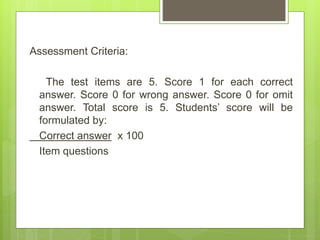
Assessment Criteria: 
The test items are 5. Score 1 for each correct 
answer. Score 0 for wrong answer. Score 0 for omit 
answer. Total score is 5. Students’ score will be 
formulated by: 
Correct answer x 100 
Item questions
Resources can assist you: 
 http://www.instructorweb.com/lesson/sentenc 
estructure.asp 
 http://wps.ablongman.com/long_longman_ohb 
_1/27/7023/1797917.cw/content/index.html
How will you provide practice for this 
objective? 
This will be a highly interactive unit with a 
combination of Direct Instruction lessons, 
jumble cards, small group projects and 
presentations, center activities

Advance organizer lesson plan

  • 1.
    Advance Organizer LessonPlan By Armita Nurul Haq Dewi Chandrasari Ratna Mustika Wardani Norhandayani
  • 2.
    Advance Organizer LessonPlan  Subject: Writing I  Grade Level: First semester students university  Specific Content: Compound sentence and Simple Sentence  Specific Length of Lesson: 45-50 minutes  Instructional Objectives:  Students will be able to identify the parts and structure of simple sentences when given example sentences and/or the parts needed to make a simple sentence.  Learner will be able to demonstrate understanding of sentence parts and types.
  • 3.
     Instructional Objectives:  Students will be able to identify the parts and structure of compound sentences when given example sentences and/or the parts needed to make a simple sentence.  Learner will be able to demonstrate understanding of sentence parts and types.  Learner will be able to identify subject and predicate in a sentence, and recognize different types of sentences.
  • 4.
     State ContentStandard/Grade Level Expectation: The students can understand the concept of simple sentence pattern in daily communication oral and written
  • 5.
     Long- termsUnit Objectives:  The students will be able to understand subject and predicate in a sentence, and recognize different types of sentences (simple sentence pattern)  Learner will be able to demonstrate understanding of sentence parts and types.  Yesterday’s Lesson: the concept of simple sentence  Tomorrow’s Lesson: Identify the pattern of simple sentence like subject and predicate in a sentence, and recognize different types of sentences
  • 6.
     Prerequisite Knowledgeor Behaviors Needed:  Skill: writing skill, Group discussion skill  Concepts: Daily activities, subject and predicate in sentence  Behavior: Raising hand for answering the questions
  • 7.
    Why is thecontent of Today’s Lesson relevant for your students? simple sentence helps the students to understand the pattern the simple sentence and enrich their knowledge to write sentence easily. Materials: Jumble sentence card  Where are your materials to be kept until their use during the lesson? Teacher’s easel  When will your materials be passed out? the beginning of the lesson  How will materials be passed out? Teacher give jumble card to the students
  • 8.
     Model ofTeaching: Advance Organizers  Procedures: List each procedure according to stage of advance organizer Preparation o The teacher gives previous lesson the concept of sentence Example: o A sentence is a group of words that expresses a complete thought. Are these Ayu walks to the park." She takes a friend with her. Climb a tree.  Asking questions related to the simple sentence  Explaining learning objectives and basic competence that want to be achieved.
  • 9.
    Center activities Buildingknowledge of field: • Explaining simple sentence and pattern on the board, and identifying subject and predicator. • Practicing make a simple sentence and arrange the jumble card about simple sentence.  Examples:
  • 10.
     Every sentencehas a subject and a predicate. The subject usually contains the main subject or noun, and the predicate tells what the subject is doing, which contains the verb of the sentence.  Types of Sentences: There are three kinds of sentences that we say and write every day.  Declarative: a type of sentence that declares or makes a statement. Example - "Tom goes to school."  Interrogative: a sentence that asks a question. Example - "Did Tom go to school?"  Imperative: a sentence that makes a request or gives a command. Example - "Hurry Tom! Go to school now!"
  • 11.
     Modeling oftext: Giving samples from type of simple sentence. Pattern: S + V I laughed • The bird died No Subject Verb/Predicate 1 I laughed 2 The bird died Pattern: S + V + C  Dr.Smith is a teacher.  The book is mine.  He is funny  Flowers are everywhere.  John puts the book on the table.  The Boy stands by me.
  • 12.
    No Subject Verb/PredicateComplement 1 Dr. Smith Is a teacher 2 The book Is Mine 3 He Is Funny 4 Flowers Are Everywhere 5 John Puts the book on the table 6 The boy Stands by me
  • 13.
    Closure  Invitingstudents to comment and ask questions.  Asking students’ difficulties in learning process.  Making reflection with students about the simple sentence.  Summarizing the materials.  Making description about the simple sentence
  • 14.
    How did youaddress students learning style during this lesson?  Visual: Jumble Card as advance Organizer  Auditory: Discussion  Kinesthetic: Center after lesson and puzzle  Tactile: center after lesson
  • 16.
    Assessment Criteria: Thetest items are 5. Score 1 for each correct answer. Score 0 for wrong answer. Score 0 for omit answer. Total score is 5. Students’ score will be formulated by: Correct answer x 100 Item questions
  • 17.
    Resources can assistyou:  http://www.instructorweb.com/lesson/sentenc estructure.asp  http://wps.ablongman.com/long_longman_ohb _1/27/7023/1797917.cw/content/index.html
  • 18.
    How will youprovide practice for this objective? This will be a highly interactive unit with a combination of Direct Instruction lessons, jumble cards, small group projects and presentations, center activities