ADMINISTRATIVE
                 REFORM
M.K. Pengantar Ilmu Administrasi Negara

                          Defny Holidin
Defny Holidin: Distinguished Researches
• Practical Bureaucratic Reform (GIZ, 2012)
• Knowledge to Policy for Bureaucracy Reform
  (AusAID, 2012)
• Integrity & Accountability of Distribution of
  Subsidized Fertilizer (PATTIRO, 2012)
• Local Participation in New Recent
  Municipalities (LoGoWa, 2011)
• Problematic Local Governance in Prolified
  Municipalities (UI, 2010)
• Governance Reform in Papua (USAID, 2010)
• Bureaucratic Reform & Innovation (Yappika-
  CIDA, 2006-2007)
Outline

•   General Problems in Administration
•   Meaning
•   Why Reform?
•   Scope
•   Trajectories
•   Determinants
GENERAL PROBLEMS IN
ADMINISTRATION
Administrative Problem within Societal
   Development
• Societal Development (Riggs 1985)
Wallis 1989


                  Non-
    Too
               bureaucratic
bureaucratic
                influence
Heady 1995


Imitative     colonial masters’ influences


            Insufficient capability


       Personal interest-oriented


  Discrepancy between form & reality


            Out of public control
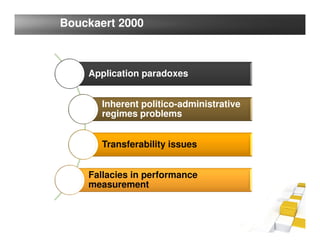
Bouckaert 2000


    Application paradoxes


       Inherent politico-administrative
       regimes problems


       Transferability issues


    Fallacies in performance
    measurement
UNDERSTANDING
ADMINISTRATIVE REFORM
Meaning-1
                                 Change
 Rehabilitation
                  Revolution        Redesigning
Transformation
                 Remedy        Revitalization
 Renovation                            Improvement
                  Restructuration

Reengineering                     Rearrangement
                   Development
Meaning-2

Intended change (Lee &
Samonte 2004)

Transformation towards big
change (Khan 1992)

Artificial inducement against
resistance (Caiden 1969)

Reengineering bureaucratic
procedure (Quah 2004)
Why Reform?: Ideal


                           Intern         Extern
a mean, not an end
Why Reform?: Pragmatic


           Pressures from international
                       Org.
            Prerequisite in multilateral
                  cooperation

          Marketable political campaign

            New project, new income
                    source
Scope


  Vertical    Horizontal   Contents


   Central                  Function


                             Policy
              Government
   Regional
               Sectors
                            Structure

    Local                    Ethics
Trajectory Line of Reform


                                Desired
                                Goals


            Trajectories
Existing
Condition
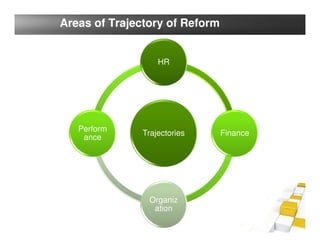
Areas of Trajectory of Reform


                   HR


   Perform
               Trajectories     Finance
    ance


                Organiz
                 ation
Trajectories-1: HR
Trajectories-2: Finance
Trajectories-3: Organization


      SPECIALIZATION   COORDINATION


     CENTRALIZATION       SCALE
Trajectories-4: Performance Measurement


   Input          Process          Output


Productivity     Efficiency       Outcome
Determinants
• Political leadership
• Citizen support
• Clear grand strategy
• Appropriate public sector capability
• Reliable surveillance mechanism
• Administrative procedure
• Concentrated actor to exert state
  functions
• Demographic change
• Incidental events
Main References
• Pollit, Christopher, and Geert Bouckaert. 2004.
  Public Management Reform: An International
  Comparison, 2nd Edition. Oxford: Oxford
  University Press.
• Prasojo, Eko. 2009. Reformasi Kedua:
  Melanjutkan Estafet Reformasi. Jakarta:
  Penerbit Salemba.
• Dwiyanto, Agus, et al. 2002. Reformasi Birokrasi
  Publik di Indonesia. Yogyakarta: Pusat Studi
  Kependudukan & Kebijakan UGM.
• Prasojo, Eko, Teguh Kurniawan, Defny Holidin.
  2007. State Reform in Indonesia. Jakarta: DIA-
  FISIP Universitas Indonesia.

Administrative Reform

  • 1.
    ADMINISTRATIVE REFORM M.K. Pengantar Ilmu Administrasi Negara Defny Holidin
  • 2.
    Defny Holidin: DistinguishedResearches • Practical Bureaucratic Reform (GIZ, 2012) • Knowledge to Policy for Bureaucracy Reform (AusAID, 2012) • Integrity & Accountability of Distribution of Subsidized Fertilizer (PATTIRO, 2012) • Local Participation in New Recent Municipalities (LoGoWa, 2011) • Problematic Local Governance in Prolified Municipalities (UI, 2010) • Governance Reform in Papua (USAID, 2010) • Bureaucratic Reform & Innovation (Yappika- CIDA, 2006-2007)
  • 3.
    Outline • General Problems in Administration • Meaning • Why Reform? • Scope • Trajectories • Determinants
  • 4.
  • 5.
    Administrative Problem withinSocietal Development • Societal Development (Riggs 1985)
  • 6.
    Wallis 1989 Non- Too bureaucratic bureaucratic influence
  • 7.
    Heady 1995 Imitative colonial masters’ influences Insufficient capability Personal interest-oriented Discrepancy between form & reality Out of public control
  • 8.
    Bouckaert 2000 Application paradoxes Inherent politico-administrative regimes problems Transferability issues Fallacies in performance measurement
  • 9.
  • 10.
    Meaning-1 Change Rehabilitation Revolution Redesigning Transformation Remedy Revitalization Renovation Improvement Restructuration Reengineering Rearrangement Development
  • 11.
    Meaning-2 Intended change (Lee& Samonte 2004) Transformation towards big change (Khan 1992) Artificial inducement against resistance (Caiden 1969) Reengineering bureaucratic procedure (Quah 2004)
  • 12.
    Why Reform?: Ideal Intern Extern a mean, not an end
  • 13.
    Why Reform?: Pragmatic Pressures from international Org. Prerequisite in multilateral cooperation Marketable political campaign New project, new income source
  • 14.
    Scope Vertical Horizontal Contents Central Function Policy Government Regional Sectors Structure Local Ethics
  • 15.
    Trajectory Line ofReform Desired Goals Trajectories Existing Condition
  • 16.
    Areas of Trajectoryof Reform HR Perform Trajectories Finance ance Organiz ation
  • 17.
  • 18.
  • 19.
    Trajectories-3: Organization SPECIALIZATION COORDINATION CENTRALIZATION SCALE
  • 20.
    Trajectories-4: Performance Measurement Input Process Output Productivity Efficiency Outcome
  • 21.
    Determinants • Political leadership •Citizen support • Clear grand strategy • Appropriate public sector capability • Reliable surveillance mechanism • Administrative procedure • Concentrated actor to exert state functions • Demographic change • Incidental events
  • 22.
    Main References • Pollit,Christopher, and Geert Bouckaert. 2004. Public Management Reform: An International Comparison, 2nd Edition. Oxford: Oxford University Press. • Prasojo, Eko. 2009. Reformasi Kedua: Melanjutkan Estafet Reformasi. Jakarta: Penerbit Salemba. • Dwiyanto, Agus, et al. 2002. Reformasi Birokrasi Publik di Indonesia. Yogyakarta: Pusat Studi Kependudukan & Kebijakan UGM. • Prasojo, Eko, Teguh Kurniawan, Defny Holidin. 2007. State Reform in Indonesia. Jakarta: DIA- FISIP Universitas Indonesia.