Latin America: Freedom and Ideologies
Historical Overview 18 th  Century Enlightenment Liberalism (vs Conservatism) 19 th  Century Romanticism Positivism- Realism Indigenism 20 th  Century Cold War: Communism/Socialism/Neo-liberalism Liberation Theology Neo-liberalism
Ideological influences on ‘revolutions’ 1 st  ‘Revolutions’ – Independence, 18 th  Century 2 nd  ‘Revolutions’ – Conservative/Liberals, 19 th  Century 3 rd  ‘Revolutions’ – 20 th  Century
Why? Democracy? Revolutions seeking democracy? Revolutions seeking development? Revolutions seeking identity? Empowerment?
18th-19th Century – Independence French and American Revolutions: liberty, republicanism, free trade, equality(?) Enlightenment Individual reason ‘ I have arrived at only a few sure conclusions:  1) For us, America is ungovernable,  2) He who serves a revolution ploughs in the sea,  3) The only thing we can do in America is emigrate 4)This country will eventually fall into the hands of the unbridled mob, and will proceed to almost imperceptible petty tyrannies of all complexions and races’ (Bolivar).
Lack of ‘elite’ consensus Economic foundation/Church/Society Conservatives Liberals – Second Conquest, mid-19 th  Century Ex. Sarmiento Caudillos Ex. Santa Ana
Positivism Comte: “love as the base, order as the means, progress as the goal” Spencer: social Darwinism Human Cost Ex. Brazil Ex. Mexico’s Porfiriato
Mexican Revolution -- Refer to handout
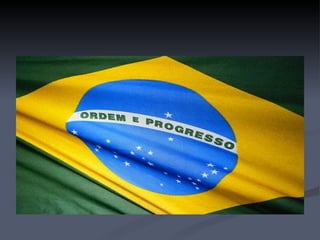
Brazil and Positivism In Bz positivism was also largely followed. Emperor had played a moderating influence between Conservatives and Liberals but in 1870s-1880s Republican movements against the monarchy developed. With positivism they were given a model of development and a reason to dominate inferior classes.  Given weak military no great bloody revolt in Brazil.  Coup 1889 1889-1894 military dominates politics, the elites of Rio, Sao, Minas, share power.  1891 constitution modelled in the US and positivsm—new flag: ordem e progresso (order and progress) Republic highly controlled and decentralized – each elite controlled its urban area while the interior was left undisturbed and led by the ‘colonels’ (think of them as local caudillos).
 
Expressions in Literature Reality expresses Art? Art expresses reality? Realism Romanticism Noble Savage Heroic Individual Force of Nature
Modernism End of 19th C  Turned to emotion, mysticism, spirituality, magic – rather than simply applying enlightenment’s rationality, science, and technological advancements. ‘Cosmopolitan aesthetes’ against all that is conventional: in society, morality, and art, emphasise experimentation
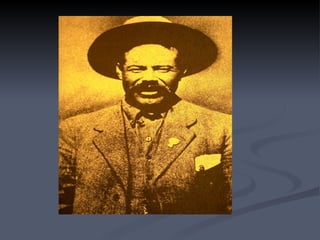
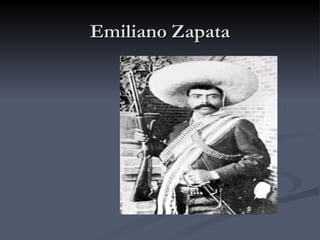
Mexican Revolution Background Agrarian society with repressed peasants Famines – land ownership Middle-class developed by Porfiriato (appeased as  cientificos) Trigger: Francisco Madero’s victory Uprising Rancheros – Pascual, Orozco, and Pancho Villa Peasants – Emiliano Zapata 1920-1920: civil war: 10% of population dies 1910-13 Madero takes power but is killed by Grl.. Victoriano Huerta  1913-14 – Counterrevoltuion: supported by US as Wilson opposes Huerta 1914-1917 – Firght for control among revolutionary leaders 1917 Carranza elected, start of new Constitution 1920 Obregon takes power Alvaro Obregon and Plutarco Elias Changes: New military, new ministry of labour, land reform (ejidos), state appropriates subsoil, limits Church (vs. Cristero movement) Poor mexico, so far from god, so close to the united states’ Mexican identity Lazaro Cardenas consolidates PRI
 
Emiliano Zapata
Highlight Characteristics of population Role of population Influence of economics Influence of ‘elite’ structures
Great Depression ISI – nationalism, protectionism Modernization -- Development Populism Caudillismo Urban-rural migrations Influence of previous ideologies: romanticism, realism Ex. Peron, Velasco Ibarra
 
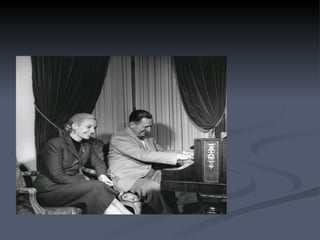
Argentina Advantage of backwardness  Take over pampas and populate them – 18 th  and 19 th  century  Hipolito Yrigoyen – Radical Party (Union Civica Radica UCR) Great Depression – Military steps into power  WWII brings back prosperity 1943 rising of Juan Domingo Peron, second wife Eva –  1955 military coup 50s -80s military coups Peron in Panama 1973 Peron returns, but dies soon after, third wife, Isabele takes over.  Military deposes her and embark on  dirty war 1980s economic collapse, Falkland War Menem
 
‘ Socialism(s)’ Capitalism From each according to his ability to each according to what he owns Socialism From each according to his ability to each according to his needs Marxism Class relations led by the ownership of the means of production History moving to common ownership Communism coined by Marx to distinguish himself from other socialisms Lenin  Revolution led by vanguard Need to impose dictatorship of the proletariat Imperialism Mao Peasants
Cold War Bipolar power struggle Zero Sum Game Ideological/economic  Role of ‘Third World’ Train military – National Security Doctrine
Guatemala Population: largely illiterate, life expectancy 40 years, infant mortality above 50% 2%N owed > 70% T United Fruit Co., formed in the 1899, very influential University student protests 1944  Juan Jose Arevalo elected.  US intervenes 1945 1945-51: limited labour code, mild land reform, rural literacy campaigns, mild economic nationalism, BUT described as ‘spiritual socialism’  Jacobo Arbenz elected in 1951 More intense land reform – United Fruit 1954 CIA staged coup, Carlos Castillo Armas is put in power.  Civil violence Most blatant example of us intervention for us interests?
Cuban Revolution From the 19th C sugar dominated Cuba and us dominated Cuba US intervention in Spanish War  in 1989, then US occupies Cuba for three decades from 1902 After 1934 us government strongly supported Fulgencio Batista  1940s political opening -- Fidel Castro Ruiz, inspired by Jose Marti 1952 Batista returns to power in a military coup  July 26, 1953 assault on Moncada barracks – ‘History will absolve me’ Fidel released, goes into exile to Mexico, where Che joins the group 1956 head for Cuba on the Granma, 81 men, most were killed those who survive go into the jungle. Simultaneously urban resistance had formed New years 1958 Batista flees to Dominican Republic Dec 1961 Revolution declared Marxist-Leninist 1962 Bay of Pigs, Embargo, Russian Missile crisis Changes, International interventions, Internal fights Dependency on USSR Cuban influence in US, Marielitos Ideological Influence Castro now
End of exam material

Lectures 8 and 9

  • 1.
    Latin America: Freedomand Ideologies
  • 2.
    Historical Overview 18th Century Enlightenment Liberalism (vs Conservatism) 19 th Century Romanticism Positivism- Realism Indigenism 20 th Century Cold War: Communism/Socialism/Neo-liberalism Liberation Theology Neo-liberalism
  • 3.
    Ideological influences on‘revolutions’ 1 st ‘Revolutions’ – Independence, 18 th Century 2 nd ‘Revolutions’ – Conservative/Liberals, 19 th Century 3 rd ‘Revolutions’ – 20 th Century
  • 4.
    Why? Democracy? Revolutionsseeking democracy? Revolutions seeking development? Revolutions seeking identity? Empowerment?
  • 5.
    18th-19th Century –Independence French and American Revolutions: liberty, republicanism, free trade, equality(?) Enlightenment Individual reason ‘ I have arrived at only a few sure conclusions: 1) For us, America is ungovernable, 2) He who serves a revolution ploughs in the sea, 3) The only thing we can do in America is emigrate 4)This country will eventually fall into the hands of the unbridled mob, and will proceed to almost imperceptible petty tyrannies of all complexions and races’ (Bolivar).
  • 6.
    Lack of ‘elite’consensus Economic foundation/Church/Society Conservatives Liberals – Second Conquest, mid-19 th Century Ex. Sarmiento Caudillos Ex. Santa Ana
  • 7.
    Positivism Comte: “loveas the base, order as the means, progress as the goal” Spencer: social Darwinism Human Cost Ex. Brazil Ex. Mexico’s Porfiriato
  • 8.
    Mexican Revolution --Refer to handout
  • 9.
    Brazil and PositivismIn Bz positivism was also largely followed. Emperor had played a moderating influence between Conservatives and Liberals but in 1870s-1880s Republican movements against the monarchy developed. With positivism they were given a model of development and a reason to dominate inferior classes. Given weak military no great bloody revolt in Brazil. Coup 1889 1889-1894 military dominates politics, the elites of Rio, Sao, Minas, share power. 1891 constitution modelled in the US and positivsm—new flag: ordem e progresso (order and progress) Republic highly controlled and decentralized – each elite controlled its urban area while the interior was left undisturbed and led by the ‘colonels’ (think of them as local caudillos).
  • 10.
  • 11.
    Expressions in LiteratureReality expresses Art? Art expresses reality? Realism Romanticism Noble Savage Heroic Individual Force of Nature
  • 12.
    Modernism End of19th C Turned to emotion, mysticism, spirituality, magic – rather than simply applying enlightenment’s rationality, science, and technological advancements. ‘Cosmopolitan aesthetes’ against all that is conventional: in society, morality, and art, emphasise experimentation
  • 13.
    Mexican Revolution BackgroundAgrarian society with repressed peasants Famines – land ownership Middle-class developed by Porfiriato (appeased as cientificos) Trigger: Francisco Madero’s victory Uprising Rancheros – Pascual, Orozco, and Pancho Villa Peasants – Emiliano Zapata 1920-1920: civil war: 10% of population dies 1910-13 Madero takes power but is killed by Grl.. Victoriano Huerta 1913-14 – Counterrevoltuion: supported by US as Wilson opposes Huerta 1914-1917 – Firght for control among revolutionary leaders 1917 Carranza elected, start of new Constitution 1920 Obregon takes power Alvaro Obregon and Plutarco Elias Changes: New military, new ministry of labour, land reform (ejidos), state appropriates subsoil, limits Church (vs. Cristero movement) Poor mexico, so far from god, so close to the united states’ Mexican identity Lazaro Cardenas consolidates PRI
  • 14.
  • 15.
  • 16.
    Highlight Characteristics ofpopulation Role of population Influence of economics Influence of ‘elite’ structures
  • 17.
    Great Depression ISI– nationalism, protectionism Modernization -- Development Populism Caudillismo Urban-rural migrations Influence of previous ideologies: romanticism, realism Ex. Peron, Velasco Ibarra
  • 18.
  • 19.
    Argentina Advantage ofbackwardness Take over pampas and populate them – 18 th and 19 th century Hipolito Yrigoyen – Radical Party (Union Civica Radica UCR) Great Depression – Military steps into power WWII brings back prosperity 1943 rising of Juan Domingo Peron, second wife Eva – 1955 military coup 50s -80s military coups Peron in Panama 1973 Peron returns, but dies soon after, third wife, Isabele takes over. Military deposes her and embark on dirty war 1980s economic collapse, Falkland War Menem
  • 20.
  • 21.
    ‘ Socialism(s)’ CapitalismFrom each according to his ability to each according to what he owns Socialism From each according to his ability to each according to his needs Marxism Class relations led by the ownership of the means of production History moving to common ownership Communism coined by Marx to distinguish himself from other socialisms Lenin Revolution led by vanguard Need to impose dictatorship of the proletariat Imperialism Mao Peasants
  • 22.
    Cold War Bipolarpower struggle Zero Sum Game Ideological/economic Role of ‘Third World’ Train military – National Security Doctrine
  • 23.
    Guatemala Population: largelyilliterate, life expectancy 40 years, infant mortality above 50% 2%N owed > 70% T United Fruit Co., formed in the 1899, very influential University student protests 1944 Juan Jose Arevalo elected. US intervenes 1945 1945-51: limited labour code, mild land reform, rural literacy campaigns, mild economic nationalism, BUT described as ‘spiritual socialism’ Jacobo Arbenz elected in 1951 More intense land reform – United Fruit 1954 CIA staged coup, Carlos Castillo Armas is put in power. Civil violence Most blatant example of us intervention for us interests?
  • 24.
    Cuban Revolution Fromthe 19th C sugar dominated Cuba and us dominated Cuba US intervention in Spanish War in 1989, then US occupies Cuba for three decades from 1902 After 1934 us government strongly supported Fulgencio Batista 1940s political opening -- Fidel Castro Ruiz, inspired by Jose Marti 1952 Batista returns to power in a military coup July 26, 1953 assault on Moncada barracks – ‘History will absolve me’ Fidel released, goes into exile to Mexico, where Che joins the group 1956 head for Cuba on the Granma, 81 men, most were killed those who survive go into the jungle. Simultaneously urban resistance had formed New years 1958 Batista flees to Dominican Republic Dec 1961 Revolution declared Marxist-Leninist 1962 Bay of Pigs, Embargo, Russian Missile crisis Changes, International interventions, Internal fights Dependency on USSR Cuban influence in US, Marielitos Ideological Influence Castro now
  • 25.
    End of exammaterial