Way too often we hear the lament “We can’t get anyone to our
chapter events. Everyone’s too busy.” We’ll counter with, yes,
people are busy, however event attendance is strong.
November 14, 2019
Adding Snap,
Crackle & Pop to
Chapter Events
Got chapters? We’ve got solutions. Billhighway gives your
chapters the tools to automate and simplify operations while
creating data visibility across your entire organization. This
empowers you and your chapters to focus more on member
value and grow your association.
About Hosts
Billhighway & Mariner
Mariner Management & Marketing is your partner in helping
association volunteers and staff create the greatest possible
value for your members and in ensuring the long term
health and growth of your association.
43%
• 43% of GEN Y Millennials attending
more workshops, seminars,
conventions and exhibitions
• Propensity to attend high across all
generations driven by a strong
desire for continual learning
ASAE’s 2017 Decision to Attend study
Experiences That Draw
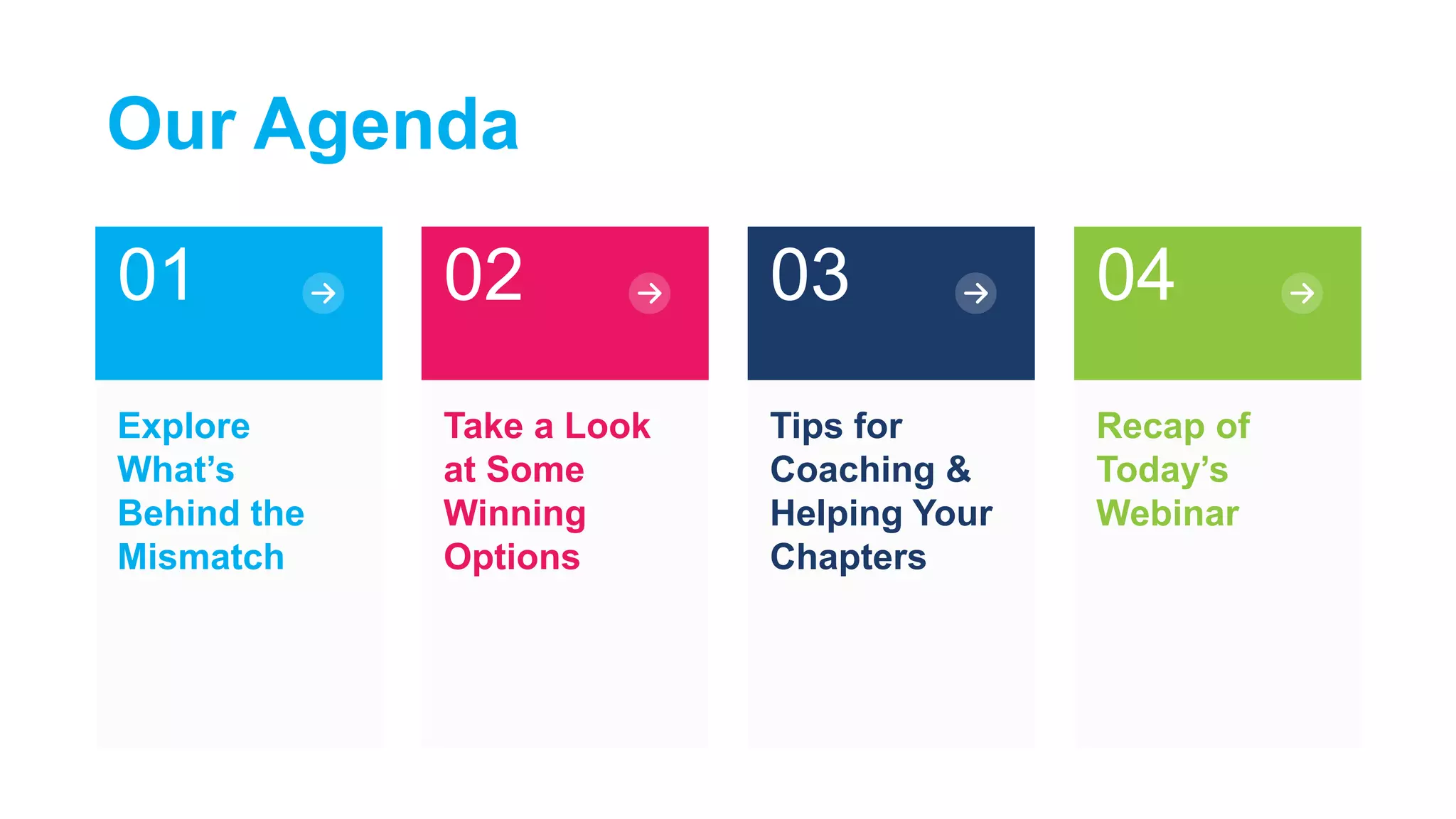
Explore
What’s
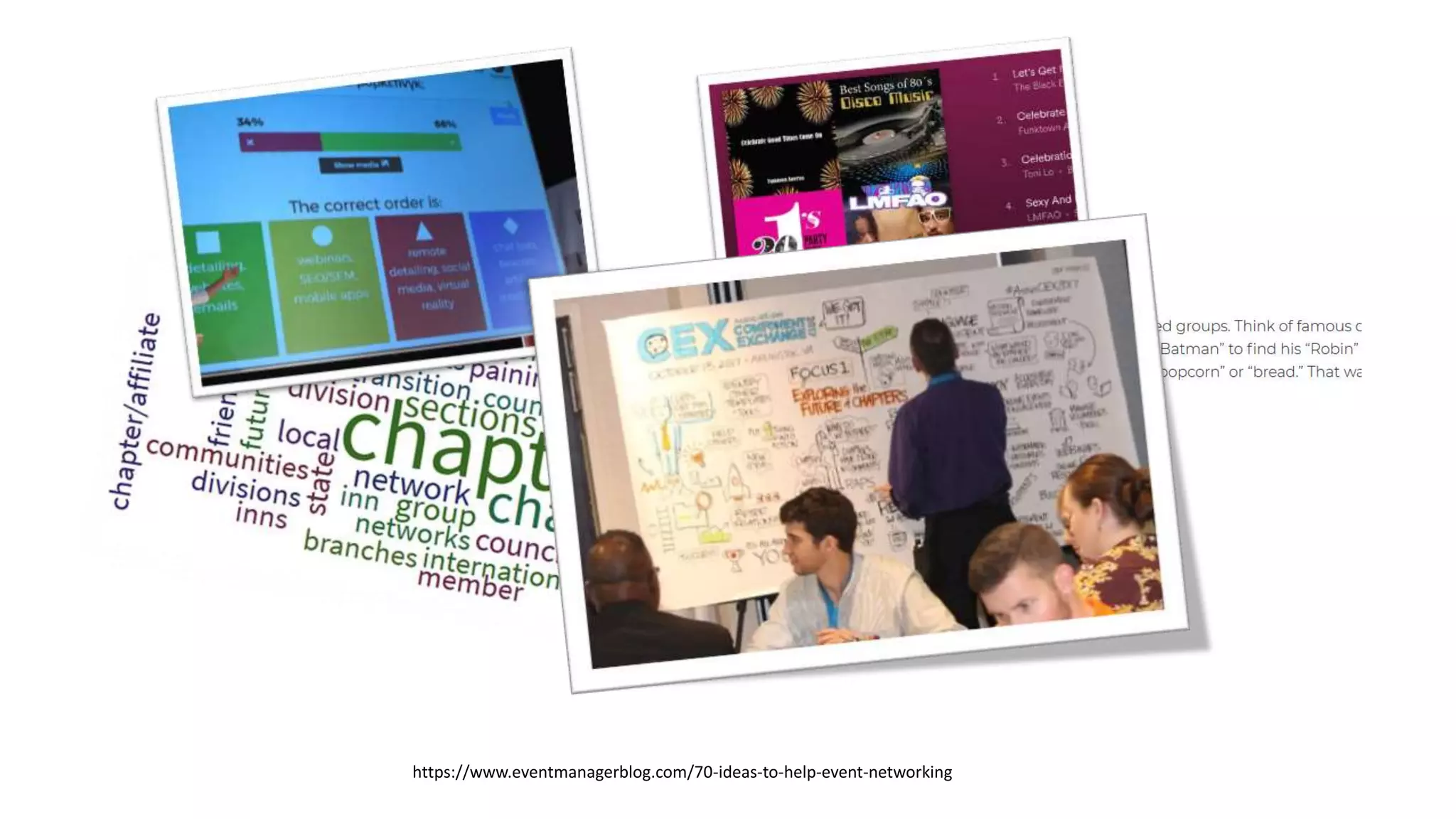
Behind the
Mismatch
Take a Look
at Some
Winning
Options
Tips for
Coaching &
Helping Your
Chapters
Recap of
Today’s
Webinar
01 02 03 04
Our Agenda
Poll
Do you require a certain number of
events or activities as part of your
chapter agreement?
• Yes (tell us how many in the Chat)
• No
• Used to/Considering (tell us more
in the Chat)
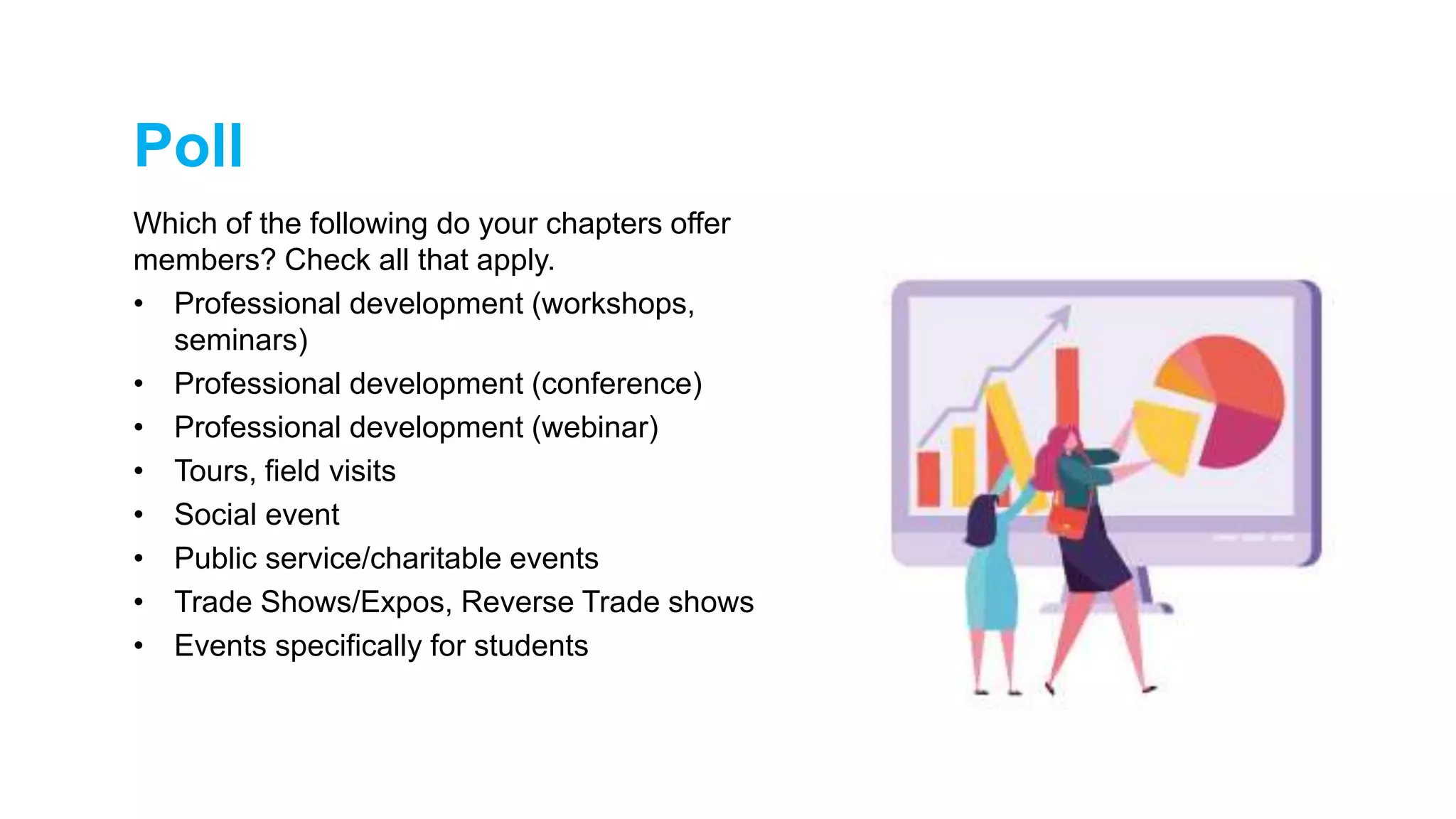
Poll
Which of the following do your chapters offer
members? Check all that apply.
• Professional development (workshops,
seminars)
• Professional development (conference)
• Professional development (webinar)
• Tours, field visits
• Social event
• Public service/charitable events
• Trade Shows/Expos, Reverse Trade shows
• Events specifically for students
Poll
Do your chapters offer:
• HQ-developed education
• Chapter-developed education
• Both
Connection
Why people would come? Not
professional dev per se; get
that lots of places.
Experience
What’s a key driver?
Experience around the learning
Communication
Communications that engage;
Same old boring email, using
limited channels
What’s the Mismatch?
9
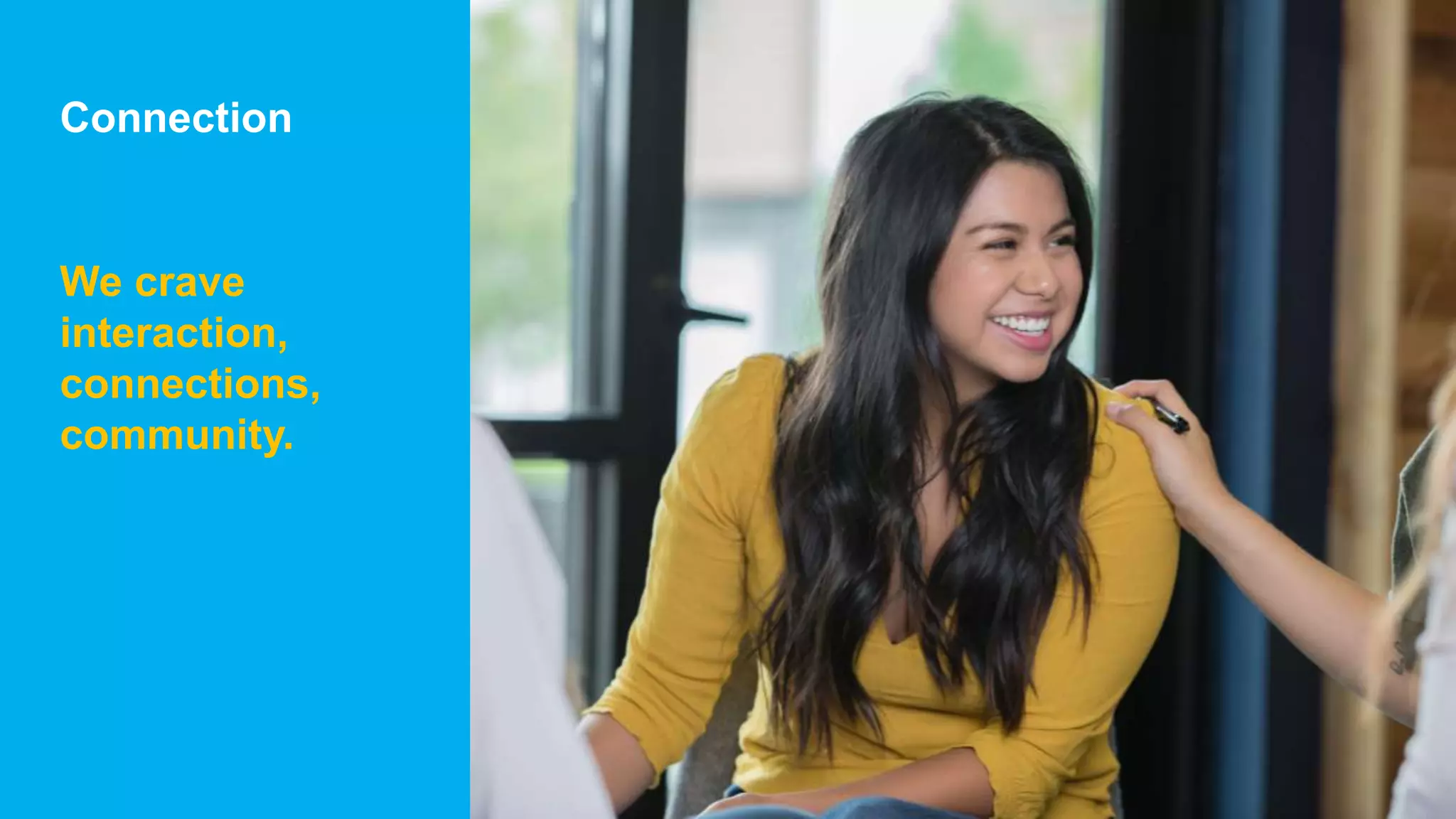
Connection
We crave
interaction,
connections,
community.
“…we crave interaction and connection.
It's groups of people interacting face-to-
face and creating shared experiences that
stimulate all five senses — that’s the
creation of memories.”
Peter McGrath, FreemanXP
11
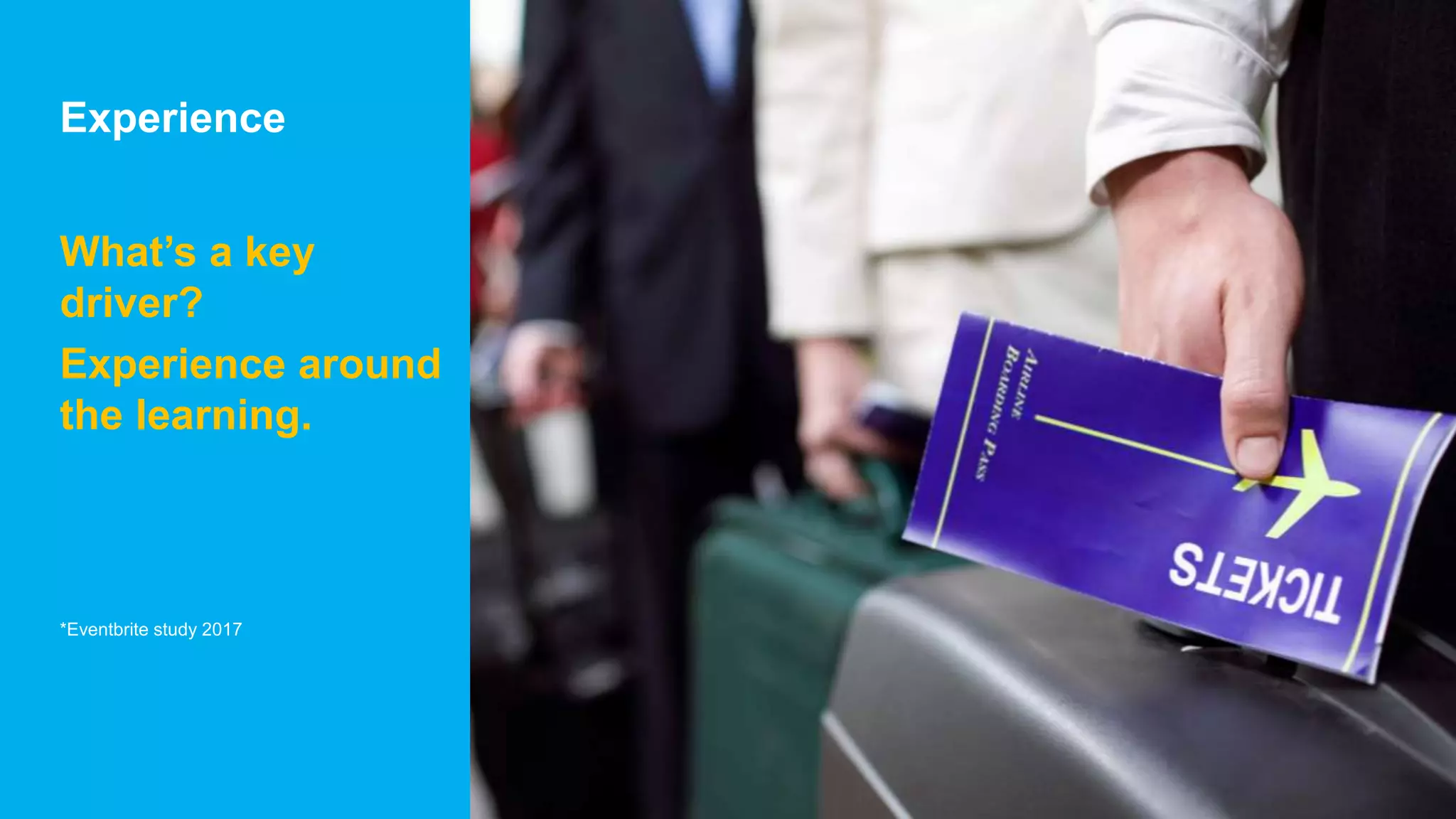
Experience
What’s a key
driver?
Experience around
the learning.
*Eventbrite study 2017
Eight in ten Millennials said
experiences help shape their identity
and create lifelong experiences.
Source: Eventbrite 2017 Study
Essentially, they’re investing in
themselves instead of the stock market.
YPO Pittsburgh: Crafting a Successful Chapter Event
Mix 2 world-famous Sumo wrestlers, celebrity judges, YPO & the YMCA
Source/Photo Credit: www.ypo.org
“I attended the convention this last week
and it was amazing. I learned a lot of
teaching methods for all instruments and
even things for just life in general. … and
was worth the nineteen hour drive
crammed in a fifteen passenger bus with
twelve people and no trunk space.”
15
Communication
• Communications
that engage
• Avoid the same old
boring email
• Expand channels
Poll
How innovative are your chapters
in creating events?
• Overall very innovative
• A few are, many aren’t
• Little innovation across the
system
• Innovation? What’s that?
How can your chapters
add snap, crackle & pop to
their events?
18
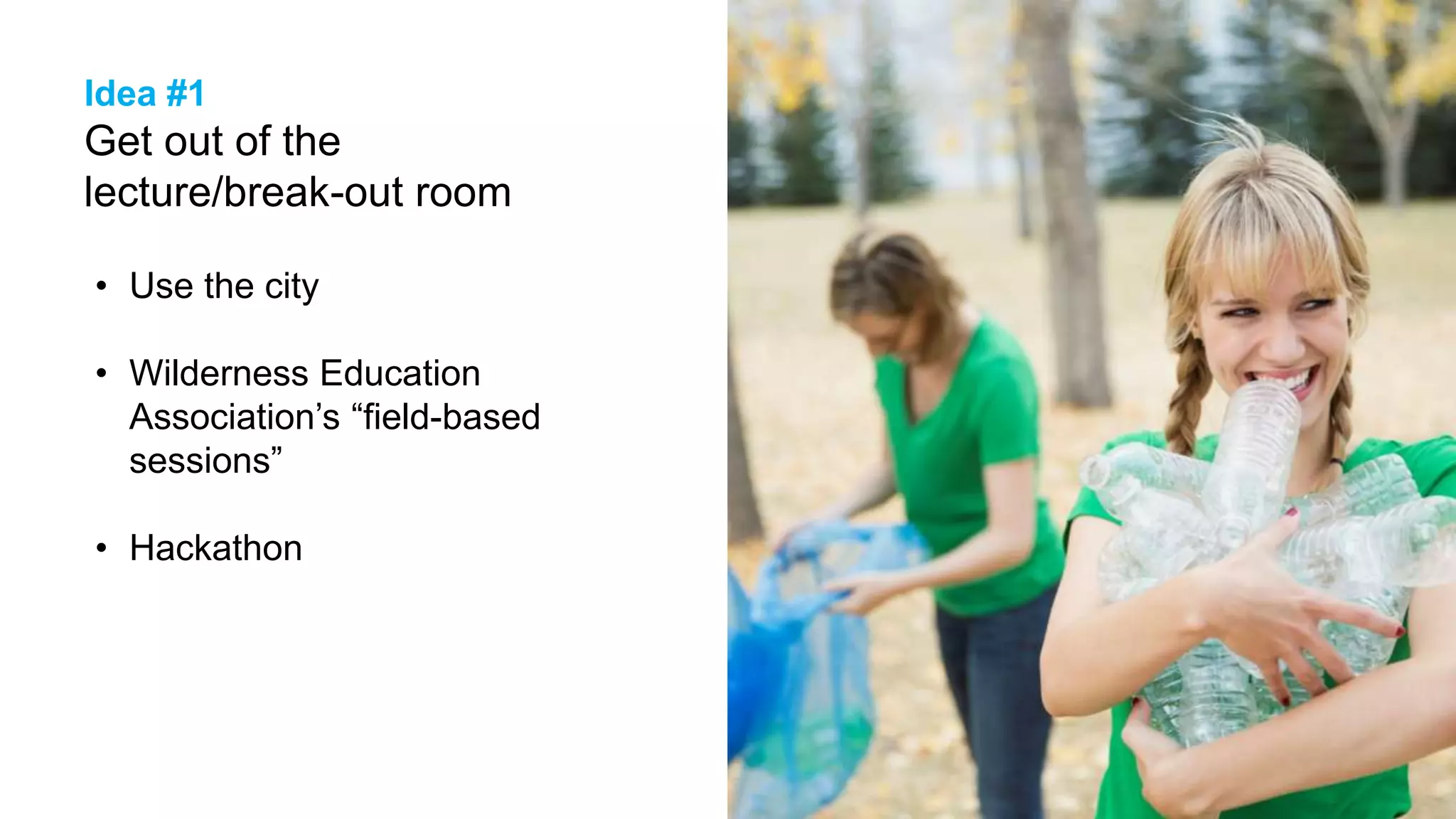
Idea #1
Get out of the
lecture/break-out room
• Use the city
• Wilderness Education
Association’s “field-based
sessions”
• Hackathon
“Brain science shows that learning
in an unexpected environment, like
outside in nature, triggers the
release of dopamine to the
hippocampus, the part of the brain
that creates memories.”
21
Idea #2
Create small pods in
large meetings
• small hand-on tech sessions
• roundtables
• fireside chats
• dinners
• masterminds
• workshops
23
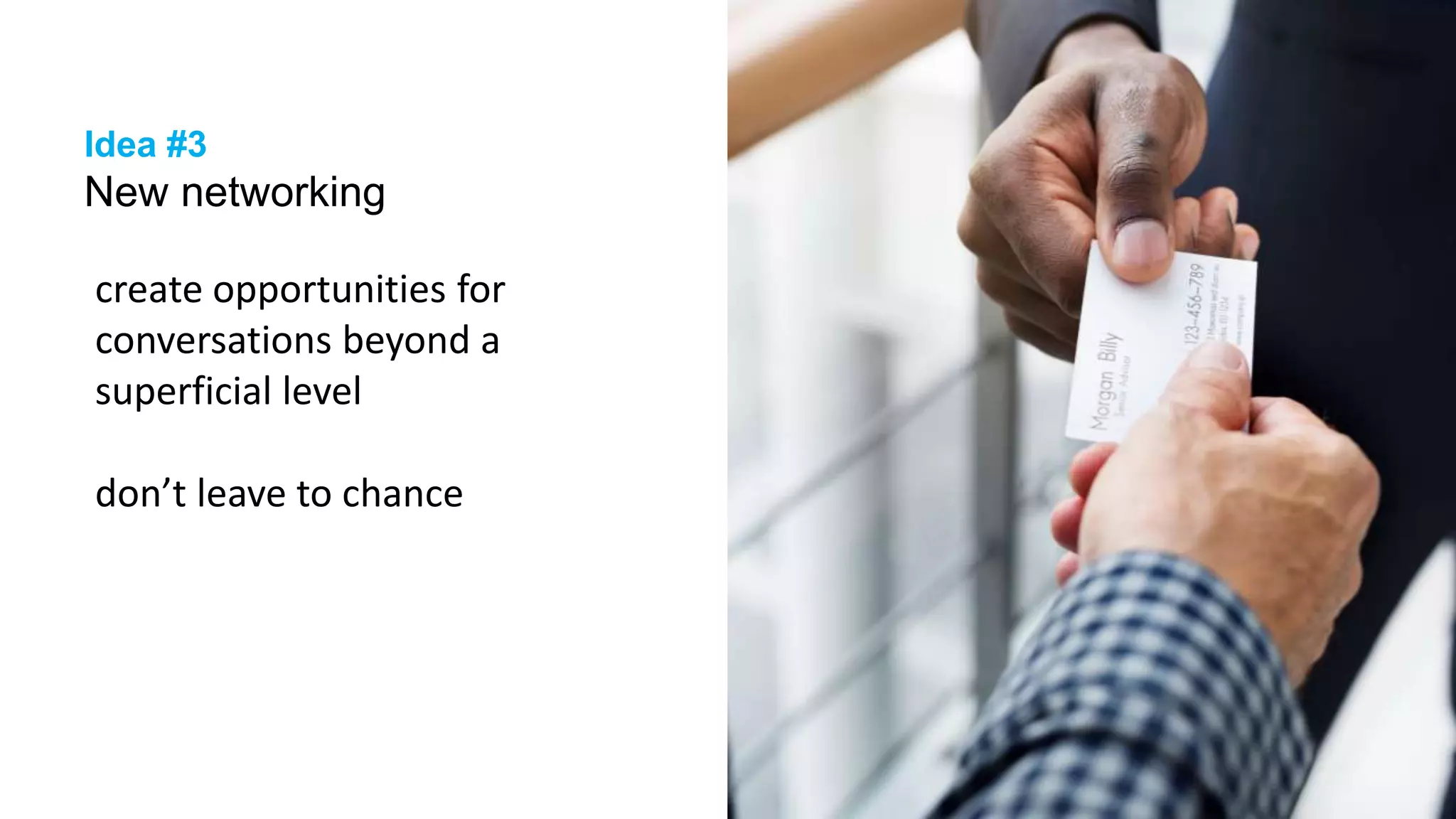
Idea #3
New networking
create opportunities for
conversations beyond a
superficial level
don’t leave to chance
25
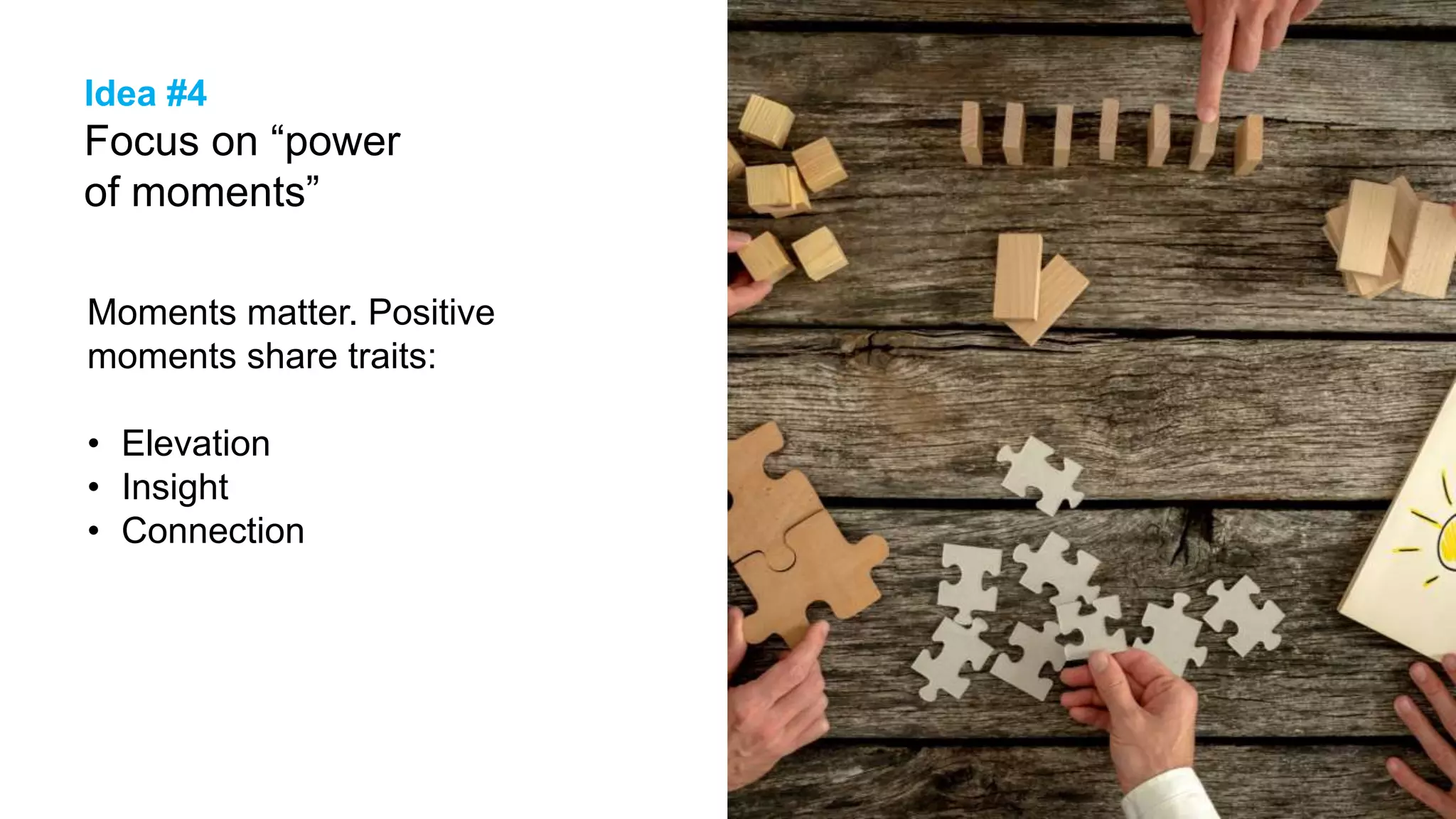
Idea #4
Focus on “power
of moments”
Moments matter. Positive
moments share traits:
• Elevation
• Insight
• Connection
27
Idea #5
Create conversation
“Talking — the network of
conversations — actually
catalyzes action.”
The Systems Thinker
https://www.eventmanagerblog.com/70-ideas-to-help-event-networking
Website
Use a mix
Power Up
Communications
Emails
Social media
Video
Change up subject line
Where Can You Start For
Coaching Your Chapters?
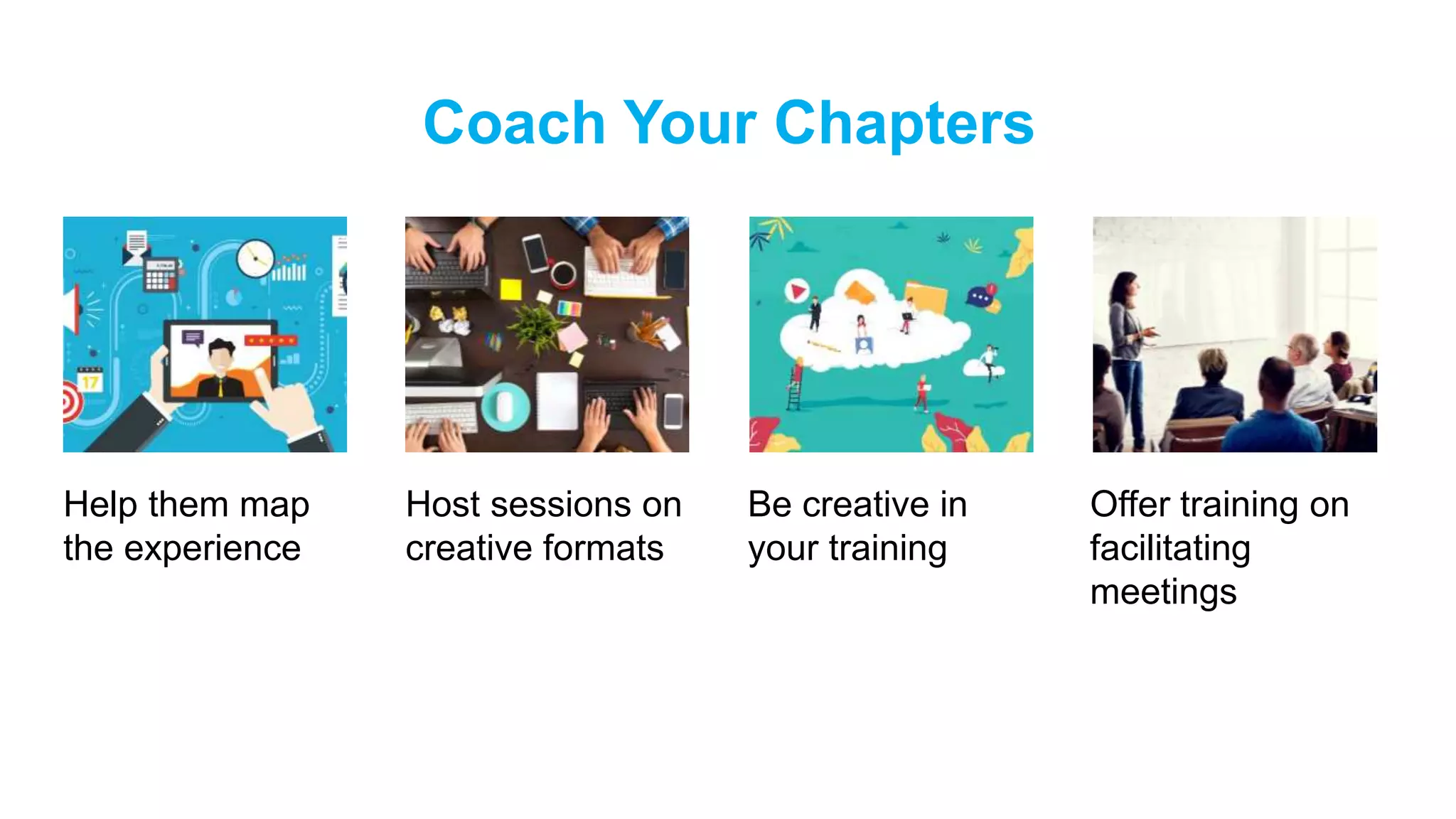
Coach Your Chapters
Help them map
the experience
Host sessions on
creative formats
Be creative in
your training
Offer training on
facilitating
meetings
List the major
touchpoints
throughout your
event lifecycle
01 02 03 04
For each
touchpoint, list the
opportunities and
ideas for creating a
memorable
experience.
Look at how your
event brand and
messaging are
being used at each
touchpoint
Tie in technology to
enhance the
attendee journey
Help Them Map the Experience
What Will You Do Next?
Download the report at
http://bit.ly/chapterbenchmark2019
2019 Chapter
Benchmarking
Report
2020 Date Coming Soon

Adding Snap, Crackle & Pop to Chapter Events

  • 1.
    Way too oftenwe hear the lament “We can’t get anyone to our chapter events. Everyone’s too busy.” We’ll counter with, yes, people are busy, however event attendance is strong. November 14, 2019 Adding Snap, Crackle & Pop to Chapter Events
  • 2.
    Got chapters? We’vegot solutions. Billhighway gives your chapters the tools to automate and simplify operations while creating data visibility across your entire organization. This empowers you and your chapters to focus more on member value and grow your association. About Hosts Billhighway & Mariner Mariner Management & Marketing is your partner in helping association volunteers and staff create the greatest possible value for your members and in ensuring the long term health and growth of your association.
  • 3.
    43% • 43% ofGEN Y Millennials attending more workshops, seminars, conventions and exhibitions • Propensity to attend high across all generations driven by a strong desire for continual learning ASAE’s 2017 Decision to Attend study Experiences That Draw
  • 4.
    Explore What’s Behind the Mismatch Take aLook at Some Winning Options Tips for Coaching & Helping Your Chapters Recap of Today’s Webinar 01 02 03 04 Our Agenda
  • 5.
    Poll Do you requirea certain number of events or activities as part of your chapter agreement? • Yes (tell us how many in the Chat) • No • Used to/Considering (tell us more in the Chat)
  • 6.
    Poll Which of thefollowing do your chapters offer members? Check all that apply. • Professional development (workshops, seminars) • Professional development (conference) • Professional development (webinar) • Tours, field visits • Social event • Public service/charitable events • Trade Shows/Expos, Reverse Trade shows • Events specifically for students
  • 7.
    Poll Do your chaptersoffer: • HQ-developed education • Chapter-developed education • Both
  • 8.
    Connection Why people wouldcome? Not professional dev per se; get that lots of places. Experience What’s a key driver? Experience around the learning Communication Communications that engage; Same old boring email, using limited channels What’s the Mismatch?
  • 9.
  • 10.
    “…we crave interactionand connection. It's groups of people interacting face-to- face and creating shared experiences that stimulate all five senses — that’s the creation of memories.” Peter McGrath, FreemanXP
  • 11.
    11 Experience What’s a key driver? Experiencearound the learning. *Eventbrite study 2017
  • 12.
    Eight in tenMillennials said experiences help shape their identity and create lifelong experiences. Source: Eventbrite 2017 Study Essentially, they’re investing in themselves instead of the stock market.
  • 13.
    YPO Pittsburgh: Craftinga Successful Chapter Event Mix 2 world-famous Sumo wrestlers, celebrity judges, YPO & the YMCA Source/Photo Credit: www.ypo.org
  • 14.
    “I attended theconvention this last week and it was amazing. I learned a lot of teaching methods for all instruments and even things for just life in general. … and was worth the nineteen hour drive crammed in a fifteen passenger bus with twelve people and no trunk space.”
  • 15.
    15 Communication • Communications that engage •Avoid the same old boring email • Expand channels
  • 16.
    Poll How innovative areyour chapters in creating events? • Overall very innovative • A few are, many aren’t • Little innovation across the system • Innovation? What’s that?
  • 17.
    How can yourchapters add snap, crackle & pop to their events?
  • 18.
    18 Idea #1 Get outof the lecture/break-out room • Use the city • Wilderness Education Association’s “field-based sessions” • Hackathon
  • 20.
    “Brain science showsthat learning in an unexpected environment, like outside in nature, triggers the release of dopamine to the hippocampus, the part of the brain that creates memories.”
  • 21.
    21 Idea #2 Create smallpods in large meetings • small hand-on tech sessions • roundtables • fireside chats • dinners • masterminds • workshops
  • 23.
    23 Idea #3 New networking createopportunities for conversations beyond a superficial level don’t leave to chance
  • 25.
    25 Idea #4 Focus on“power of moments” Moments matter. Positive moments share traits: • Elevation • Insight • Connection
  • 27.
    27 Idea #5 Create conversation “Talking— the network of conversations — actually catalyzes action.” The Systems Thinker
  • 28.
  • 29.
    Website Use a mix PowerUp Communications Emails Social media Video Change up subject line
  • 30.
    Where Can YouStart For Coaching Your Chapters?
  • 31.
    Coach Your Chapters Helpthem map the experience Host sessions on creative formats Be creative in your training Offer training on facilitating meetings
  • 32.
    List the major touchpoints throughoutyour event lifecycle 01 02 03 04 For each touchpoint, list the opportunities and ideas for creating a memorable experience. Look at how your event brand and messaging are being used at each touchpoint Tie in technology to enhance the attendee journey Help Them Map the Experience
  • 33.
    What Will YouDo Next?
  • 34.
    Download the reportat http://bit.ly/chapterbenchmark2019 2019 Chapter Benchmarking Report
  • 35.

Editor's Notes

  • #3 Hosts
  • #4 Hear the lament “we can’t get anyone to our chapter events. Everyone’s too busy.” ASAE’s 2017 Decision to Attend study: 43% of GEN Y Millennials attending more workshops, seminars, conventions and exhibitions; propensity to attend high across all generations driven by a strong desire for continual learning. Where’s the mismatch?
  • #5 Our agenda Explore what’s behind the mismatch Take a look at some winning options Tips for coaching/helping your chapters
  • #10 Why people would come? Not professional dev per se; get that lots of places – it’s about the connection. We crave interaction, connections, community
  • #12 2) What’s a key driver? Experience around the learning 78 percent of Millennials would rather spend money on experiences than things—like concerts, travel, festivals, and dining out. Bring on the experience economy. Eventbrite study 2017
  • #13  There are a few reasons why this is happening: Millennials grew up during the recession when families had to be watchful of spending. Paired with stagnant wages, the 2008 crash, and burdensome student loans, it’s obvious why the sharing economy has taken off (in 2015, 51 percent of U.S. millennials said they had used a sharing economy service). Thanks to a generation of rent-not-buy, the sharing economy has permeated industries ranging from clothing to cars; they make the minimalist lifestyle easier than ever and put luxury within reach without commitment. Millennials are generally thrifty and conscious of value, buying more but spending less on average than baby boomers or Gen Xers.
  • #14 So what is an experience? A recipe for a successful chapter event, benefiting the local area while pushing members’ boundaries. For Chapter Learning Officer Kevin Rabbitt (YPO Pittsburgh), all of these elements were key to creating a memorable family experience — a two-part program featuring a private session with Sumo wrestlers Byamba and Yama and a public event raising funds for local charities featuring the Greater Pittsburgh YMCA. “In designing a final event on my education calendar, I really wanted to accomplish three things: stay true to YPO’s mission of lifelong learning, push our members and their families outside of their comfort zones, and give back to the community,” he said. Kevin, along with Day Chair Dana Hanna (spouse, YPO Pittsburgh), excelled on all fronts. The private YPO family event provided opportunities for attendees to learn about the history, rituals and basics of Sumo wrestling in addition to one-on-one wrestling time with members’ children and Byamba and Yama. For the public event in the evening, Kevin and three other YPO Pittsburgh members donned their own mawashis (Sumo wrestling belts) in front of a crowd of more than 1,000 to wrestle Sumo style against local celebrities, including former Pittsburgh Steeler Josh Miller, comedian Jim Krenn and local morning show DJ, BubbaThe voice of the Pittsburgh Steelers, Larry Richert, emceed the event. At the end of the night, the event raised nearly USD60,000 with USD40,000 going to the YMCA. “This project brought our chapter together in a very focused and productive way,” said Dana. “Of course, there was the opportunity to socialize and learn, but more importantly, our decision that the event should benefit a local non-profit gave the work purpose and held us accountable. An additional benefit was the opportunity to forge a new friendship with one of the city’s oldest non-profits.” Kevin added, “In addition to helping out the community, the event really helped boost the profile of YPO in the Pittsburgh area.” Kevin and Dana advise other chapters to adapt and customize this program for their area. “Many of our members support nonprofits in their personal and professional lives, and it was important to incorporate that sense of giving into a family event,” said Dana. “Showing our children that success comes with social responsibility is a valuable lesson. We chose a featured charity that reaches our entire region and gives back to youth for this event.”
  • #15 Travel Quote: captures the experience and connections – and refutes that we won’t get in the car
  • #16 Communications that engage; Same old boring email, using limited channels Guilty of same email, limited channels Limit to market the event No continuing the conversation
  • #17 Let’s look at 5 ways chapters can add Snap, Crackle, Pop
  • #18 Get out of the lecture/break-out room hackathon; pop-ups; use the city: off-site innovation centers; walking; photo safari; glass blowers; add shuttle bus Size doesn’t matter and it can be a negative – creating small pods within large events; mighty meetings keeping small New networking [Heath – power of moment] connection is a critical element, … simplest ways is by creating opportunities for attendees to have conversations that go beyond a superficial level; don’t leave to chance. [MeetingsNet] help attendees find creative answers to their own challenges. For instance, if a planner brings into a meeting a roster of experienced people from one or more companies located in the meeting destination to take part in an extended lunch-and-conversation session—with different tables designated for specific topics—both the attendees and the visiting professionals stand to learn from each other's experiences and perspectives. + produce long-lasting relationships between participants from different companies, expanding their professional advisory networks for years. Rather than generic post-event drinks (although these are important too), consider who your attendees are – their age and cultural background are a good place to start – and what they find valuable. Be sure to offer a range of alternatives accordingly, such as one-to-one meetings for those keen to do business, topical roundtable discussions or even things like live, online polls for attendees who might prefer engaging in discussion via digital means.  Focus on “power of moments”1 Dogs Provide entertainment in unexpected locations — like at entry lines String board Use art to bring out attendees’ playful side Extend the experience beyond the event Create conversation
  • #19 Get out of the lecture/break-out room Hackathon; pop-ups; use the city: off-site innovation centers; walking; photo safari; glass blowers; add shuttle bus Zoo Do good bus Pub crawl Tree planting Escape room Wilderness Education Association, which will have 30- to 45-minute “field-based sessions”
  • #20 Get out of the lecture/break-out room Hackathon; pop-ups; use the city: off-site innovation centers; walking; photo safari; glass blowers; add shuttle bus Zoo Do good bus Pub crawl Tree planting Escape room Wilderness Education Association, which will have 30- to 45-minute “field-based sessions”
  • #21 International Association of Conference Centers’ newly released “Meeting Room of the Future” white paper. “You might think that holding a meeting outside, the attendees will be distracted,” says the report. “Brain science shows that learning in an unexpected environment, like outside in nature, triggers the release of dopamine to the hippocampus, the part of the brain that creates memories.”
  • #22 Creating small pods in large meeting … Roundtables, fireside chats, dinners, masterminds, workshops—these are just a few of the small-meeting formats that might work well for your association. The challenge: Providing engaging content, year after year National Restaurant Assn “One of the things we saw in our research is that people want to network more and to talk about topics they’re interested in,” Lapides says. The solution: For the 2018 show, the Water Cooler, a new space on the show floor, was set up to host crowdsourced conversations and group meetups. Showgoers voted for their favorite discussion topics on social media; the schedule listed the issues up for discussion, and the show staff seeded some of the discussions and topics since this was the first time out for the Water Cooler concept. Meetups gave members of special-interest groups—students at the show, sustainability devotees, mixologists—a central place to connect. “It was usually full of people,” Lapides says. “We saw busy whiteboards (large Post-it notes, to be exact) and lots of small group conversations.”
  • #23 Creating small pods in large meeting … Roundtables, fireside chats, dinners, masterminds, workshops—these are just a few of the small-meeting formats that might work well for your association. The challenge: Providing engaging content, year after year National Restaurant Assn “One of the things we saw in our research is that people want to network more and to talk about topics they’re interested in,” Lapides says. The solution: For the 2018 show, the Water Cooler, a new space on the show floor, was set up to host crowdsourced conversations and group meetups. Showgoers voted for their favorite discussion topics on social media; the schedule listed the issues up for discussion, and the show staff seeded some of the discussions and topics since this was the first time out for the Water Cooler concept. Meetups gave members of special-interest groups—students at the show, sustainability devotees, mixologists—a central place to connect. “It was usually full of people,” Lapides says. “We saw busy whiteboards (large Post-it notes, to be exact) and lots of small group conversations.”
  • #24 PMI Speed Networking New networking [Heath – power of moment] connection is a critical element, … simplest ways is by creating opportunities for attendees to have conversations that go beyond a superficial level; don’t leave to chance. [MeetingsNet] help attendees find creative answers to their own challenges. For instance, if a planner brings into a meeting a roster of experienced people from one or more companies located in the meeting destination to take part in an extended lunch-and-conversation session—with different tables designated for specific topics—both the attendees and the visiting professionals stand to learn from each other's experiences and perspectives. + produce long-lasting relationships between participants from different companies, expanding their professional advisory networks for years. Rather than generic post-event drinks (although these are important too), consider who your attendees are – their age and cultural background are a good place to start – and what they find valuable. Be sure to offer a range of alternatives accordingly, such as one-to-one meetings for those keen to do business, topical roundtable discussions or even things like live, online polls for attendees who might prefer engaging in discussion via digital means. 
  • #25 PMI Speed Networking Learning Circles Heath – power of moment MeetingsNet Rather than generic post-event drinks –what do your attendees find valuable? PMI Speed Networking Human Library New networking [Heath – power of moment] connection is a critical element, … simplest ways is by creating opportunities for attendees to have conversations that go beyond a superficial level; don’t leave to chance. [MeetingsNet] help attendees find creative answers to their own challenges. For instance, if a planner brings into a meeting a roster of experienced people from one or more companies located in the meeting destination to take part in an extended lunch-and-conversation session—with different tables designated for specific topics—both the attendees and the visiting professionals stand to learn from each other's experiences and perspectives. + produce long-lasting relationships between participants from different companies, expanding their professional advisory networks for years. Rather than generic post-event drinks (although these are important too), consider who your attendees are – their age and cultural background are a good place to start – and what they find valuable. Be sure to offer a range of alternatives accordingly, such as one-to-one meetings for those keen to do business, topical roundtable discussions or even things like live, online polls for attendees who might prefer engaging in discussion via digital means. 
  • #26 Moments matter. And our research suggests that people’s most positive moments share certain traits in common–traits such as elevation, or being lifted out of the ordinary. (You pick up a mysterious red phone and someone answers, “Popsicle Hotline, may I help you?”). Traits such as insight (shaping the way we see the world) and connection (deepening our ties with others). A wedding ceremony, for instance, features all three: The elevation of fine food and dancing and fancy clothes, and the insight afforded by toasts and stories, and the connection of sharing the moment with loved ones. https://www.fastcompany.com/40472116/the-power-of-moments-why-certain-experiences-have-extraordinary-impact
  • #27 Focus on “power of moments”1 Dogs Columbus Provide entertainment in unexpected locations — like at entry lines String board Use art to bring out attendees’ playful side Extend the experience beyond the event
  • #28 https://thesystemsthinker.com/conversation-as-a-core-business-process/ When we consider the power of conversation to generate new insight or committed action, its importance in our work lives is quite obvious. Fernando Flores, one of the first to highlight this crucial link has said that “an organization’s results are determined through webs of human commitments, born in webs of human conversations. ”We share a common heritage as fundamentally social beings who, together in conversation, organize for action and create a common future. Paradoxically, what we are discovering is that the talking — the network of conversations — actually catalyzes action. Through conversation we discover who cares about what, and who will take accountability for next steps. It is the means through which requests are initiated and commitments made. From this perspective, a more useful operating principle for organizational life might be “start talking and get to work!”
  • #29 Create conversation Name tags Polling Kahoot Graphic Artist
  • #30 Use a mix: website, emails, social media; add video; change up the subj line
  • #31 List the major touchpoints throughout your event lifecycle where each of your key stakeholder groups will be impacted. The journey for an attendee will be different from a speaker or sponsor. Therefore, the flow needs to be considered from each of their viewpoints. This includes before, during, and after your event. Under each major touchpoint, list the opportunities and ideas for creating a memorable experience. This can be in the form of little touches all the way through to big elements that surprise and delight. Be sure to take into account the venue space and event floor plan. There might be interesting ways to use the space. Keep in mind how your event brand and messaging are being used at each touchpoint. It could be in the form of a logo presence, or there could be more tangible ways to communicate the brand and bring to life your organization’s culture and ethos. Consider how to use technology to enhance the attendee journey at the different touchpoints. Event tech can be leveraged at any point within the event lifecycle to create a more impactful experience for the stakeholder.
  • #33 (1) Help them map the experience List the major touchpoints throughout your event lifecycle where each of your key stakeholder groups will be impacted. The journey for an attendee will be different from a speaker or sponsor. Therefore, the flow needs to be considered from each of their viewpoints. This includes before, during, and after your event. Under each major touchpoint, list the opportunities and ideas for creating a memorable experience. This can be in the form of little touches all the way through to big elements that surprise and delight. Be sure to take into account the venue space and event floor plan. There might be interesting ways to use the space. Keep in mind how your event brand and messaging are being used at each touchpoint. It could be in the form of a logo presence, or there could be more tangible ways to communicate the brand and bring to life your organization’s culture and ethos. Consider how to use technology to enhance the attendee journey at the different touchpoints. Event tech can be leveraged at any point within the event lifecycle to create a more impactful experience for the stakeholder.
  • #34 List the major touchpoints throughout your event lifecycle where each of your key stakeholder groups will be impacted. The journey for an attendee will be different from a speaker or sponsor. Therefore, the flow needs to be considered from each of their viewpoints. This includes before, during, and after your event. Under each major touchpoint, list the opportunities and ideas for creating a memorable experience. This can be in the form of little touches all the way through to big elements that surprise and delight. Be sure to take into account the venue space and event floor plan. There might be interesting ways to use the space. Keep in mind how your event brand and messaging are being used at each touchpoint. It could be in the form of a logo presence, or there could be more tangible ways to communicate the brand and bring to life your organization’s culture and ethos. Consider how to use technology to enhance the attendee journey at the different touchpoints. Event tech can be leveraged at any point within the event lifecycle to create a more impactful experience for the stakeholder.