Proactive Selling
 pro·ac·tive
 Adjective
(of a person, policy, or action) Creating or
controlling a situation by causing something
to happen rather than responding to it
after...
Why use a Proactive Approach?
• Most sales people run into challenges on
  every sale
• Most challenges are similar from sale to
  sale
• Objections to cost, shopping competition,
  or the belief the product/company doesn’t
  fit their needs
Preparation
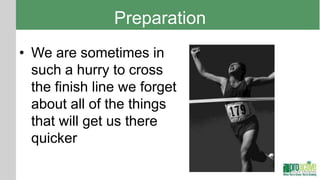
• We are sometimes in
  such a hurry to cross
  the finish line we forget
  about all of the things
  that will get us there
  quicker
Preparation Examples
• What information needs to be updated?
• What 3rd party independent info can we use?
• What are our specific competitive strengths?
• How we will handle common objections
  before they come up?
• What will we say? How will we get better
  saying it?
Update your information
• Pew Research Center study said 58% of
  Americans did online research before
  buying
• This means that there is a good chance
  that have up-to-date correct or
  misinformation themselves.
Know your strengths
• Determine your client bases’ buying
  motives and find out what strengths you
  have over your competition. Example-Build
  Quality may justify a higher price
• Collect independent information, reviews,
  and articles whenever possible. 15 minutes of
  research a day goes a long way
Some helpful research questions
• Where do my clients go to learn about
  this/us?
• What has been said in the press/online?
  Has anything changed since then?
• Where can I find industry information?
Proactive Objection Handling
• Instead of waiting until the end, getting an
  objection, and having the client put up
  their defenses; try this instead…
• Think of all of your most common
  objections, share information during the
  sales process to try and overcome these
  things
Objection Example
• Here is a typical greeting in a retail
  situation “Hi. Can I help you?”
• Client says “No. Just Looking.”
• Salesperson justifies why they need to sit
  with him/her and need his help.
• Let’s look at a proactive way
Proactive Greeting
• When appropriate after brief pleasantries
• “Mr. Johnson. Why don’t we have a seat
  for just 5 short minutes, I’ll find out exactly
  what you are looking for in this ___. That
  way I can save you a lot of time by
  showing you exactly what you are looking
  for. How does that sound?”
Proactive Greeting
• This works more often or not because:
1. You are telling them what you are doing
2. You are giving them benefits for doing it
   (save time, less hassle, less walking,
   weather, etc.)
3. You gave them a short time expectation, so
   you have “faded the heat” on this concern
Proactive Greeting
• In a retail setting this greeting would then
  allow you to:
1. find out your customer’s needs
2. help them select the right product
3. Share independent information with them
4. And show you’re a professional
Common Objections
1. Cost too much     The chance of these can
2. Not what we’re    be lessened during the
   looking for       proactive sales process.
3. Shopping around   If not you can then
                     overcome them with
4. Shopping
   competition       professional, practiced
                     objection techniques
5. Company/Product
   history
Want to know more


                                 Email:
                                 hillyerb@proactivesalestraining.com


                                 Visit our website at
                                 www.proactivesalestraining.com


www.proactivesalestraining.com
23 years of sales and training experience
          Call for a Free initial needs consultation

                  Call: 630-667-5562
              Specializing in Helping companies grow their
              employees strengths and offering different
              training to meet your needs
              • Live in person
              • Instructor Led Online-Interactive Small Groups
              • Self-paced pre-recorded videos


                       Thank You for your time

Proactive Selling Presentation

  • 1.
    Proactive Selling pro·ac·tive Adjective (of a person, policy, or action) Creating or controlling a situation by causing something to happen rather than responding to it after...
  • 2.
    Why use aProactive Approach? • Most sales people run into challenges on every sale • Most challenges are similar from sale to sale • Objections to cost, shopping competition, or the belief the product/company doesn’t fit their needs
  • 3.
    Preparation • We aresometimes in such a hurry to cross the finish line we forget about all of the things that will get us there quicker
  • 4.
    Preparation Examples • Whatinformation needs to be updated? • What 3rd party independent info can we use? • What are our specific competitive strengths? • How we will handle common objections before they come up? • What will we say? How will we get better saying it?
  • 5.
    Update your information •Pew Research Center study said 58% of Americans did online research before buying • This means that there is a good chance that have up-to-date correct or misinformation themselves.
  • 6.
    Know your strengths •Determine your client bases’ buying motives and find out what strengths you have over your competition. Example-Build Quality may justify a higher price • Collect independent information, reviews, and articles whenever possible. 15 minutes of research a day goes a long way
  • 7.
    Some helpful researchquestions • Where do my clients go to learn about this/us? • What has been said in the press/online? Has anything changed since then? • Where can I find industry information?
  • 8.
    Proactive Objection Handling •Instead of waiting until the end, getting an objection, and having the client put up their defenses; try this instead… • Think of all of your most common objections, share information during the sales process to try and overcome these things
  • 9.
    Objection Example • Hereis a typical greeting in a retail situation “Hi. Can I help you?” • Client says “No. Just Looking.” • Salesperson justifies why they need to sit with him/her and need his help. • Let’s look at a proactive way
  • 10.
    Proactive Greeting • Whenappropriate after brief pleasantries • “Mr. Johnson. Why don’t we have a seat for just 5 short minutes, I’ll find out exactly what you are looking for in this ___. That way I can save you a lot of time by showing you exactly what you are looking for. How does that sound?”
  • 11.
    Proactive Greeting • Thisworks more often or not because: 1. You are telling them what you are doing 2. You are giving them benefits for doing it (save time, less hassle, less walking, weather, etc.) 3. You gave them a short time expectation, so you have “faded the heat” on this concern
  • 12.
    Proactive Greeting • Ina retail setting this greeting would then allow you to: 1. find out your customer’s needs 2. help them select the right product 3. Share independent information with them 4. And show you’re a professional
  • 13.
    Common Objections 1. Costtoo much The chance of these can 2. Not what we’re be lessened during the looking for proactive sales process. 3. Shopping around If not you can then overcome them with 4. Shopping competition professional, practiced objection techniques 5. Company/Product history
  • 14.
    Want to knowmore Email: hillyerb@proactivesalestraining.com Visit our website at www.proactivesalestraining.com www.proactivesalestraining.com
  • 15.
    23 years ofsales and training experience Call for a Free initial needs consultation Call: 630-667-5562 Specializing in Helping companies grow their employees strengths and offering different training to meet your needs • Live in person • Instructor Led Online-Interactive Small Groups • Self-paced pre-recorded videos Thank You for your time