Epigastric pain
 Divided in to:
1. Acute epigastric pain
2. Chronic epigastric pain
By: Dr. Jwan Ali Alsofi
Acute epigastric pain
L1
By: Dr. Jwan Ali Alsofi
Introduction
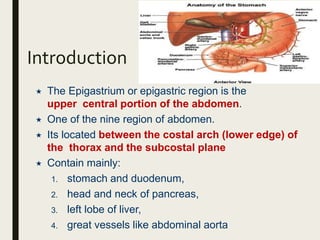
 The Epigastrium or epigastric region is the
upper central portion of the abdomen.
 One of the nine region of abdomen.
 Its located between the costal arch (lower edge) of
the thorax and the subcostal plane
 Contain mainly:
1. stomach and duodenum,
2. head and neck of pancreas,
3. left lobe of liver,
4. great vessels like abdominal aorta
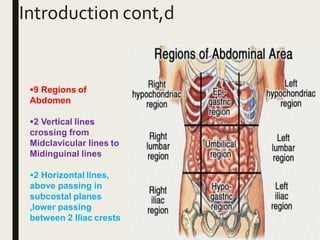
Introduction cont,d
9 Regions of
Abdomen
2 Vertical lines
crossing from
Midclavicular lines to
Midinguinal lines
2 Horizontal lines,
above passing in
subcostal planes
,lower passing
between 2 Iliac crests
Acute Epigastric Pain
1. Patients are not as seriously ill as acute abdomen.
2. Indications for early laparotomy present in acute
abdomen while not for AEP.
3. Various diseases are common to both.
4. Diseases less severe in patients with AEP
5. More time exists for diagnosis.
6. Most causes can be managed by conservative non-
surgical treatment.
Acute Epigastric Pain
Causes :
1. Acute gastritis
2. Acute exacerbation of duodenal ulcer
3. Biliary colic and acute cholecystitis
4. Acute (oedematous)pancreatitis
5. Non-ulcer dyspepsia
6. Less common causes
ACUTE EPIGASTRIC
PAIN
History
Acute gastritis:
 May be due to:
1. Bacterial(H.Pylori)
2. Viral infection
3. Duodenal reflux gastritis
4. Drugs(NSAID,Aspirin,Steroid…….)
5. Irradiation therapy
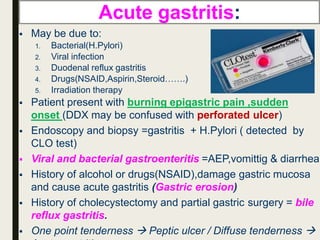
 Patient present with burning epigastric pain ,sudden
onset (DDX may be confused with perforated ulcer)
 Endoscopy and biopsy =gastritis + H.Pylori ( detected by
CLO test)
 Viral and bacterial gastroenteritis =AEP,vomittig & diarrhea
 History of alcohol or drugs(NSAID),damage gastric mucosa
and cause acute gastritis (Gastric erosion)
 History of cholecystectomy and partial gastric surgery = bile
reflux gastritis.
 One point tenderness  Peptic ulcer / Diffuse tenderness 
Acute exacerbation of duodenal ulcer:
 Complicated DU present as AEP, due to acute exacerbation or
localized perforation (leakage).
 Triggered by alcohol, drugs(NSAID),H.Pylori or bile reflux.
 ¾ have past history of ulcer.
 Details of past surgical history:
o Sealing of a small perforation in patients had past abdominal surgery
o Presence of scar suggest adhesive small bowel obstruction or
postgastrectomy bile gastritis.
 In about 1/3 of cases with an acute abdomen from perforated ulcer 
a prodromal period exists during which a small leak initially localises
before free perforation occurs. This period can last for several hours and
should be borne in mind when seeing a patient in the ED with AEP that
has partially resolved.
 H.Pylori should be considered as a causative agent for PU- ulcer
disease
 Diagnosis confirmed and eradication therapy instituted
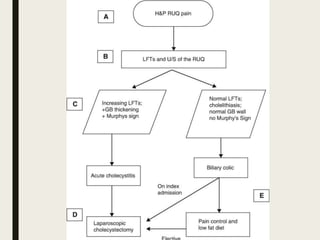
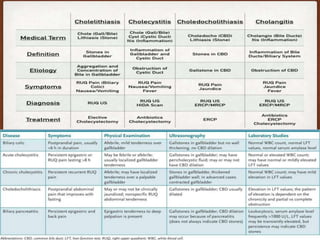
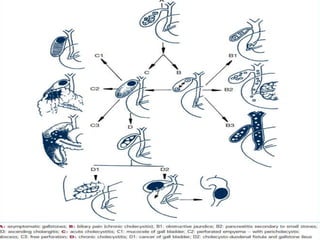
Biliary colic and acute cholecystitis
Biliary colic Acute cholecystitis
• Most episodes of biliary colic
last for no more than a few
hours
• recur intermittently,
• often associated with fatty or
oily food ingestion.
• Not associated with fever/
leucocytosis / Negative
Murphys’ sign
• Many of these patients see a
doctor electively with the
problem of chronic episodic
epigastric pain.
• Pt. has severe persisting acute pain,
• Biliary pain has an abrupt onset,
• is felt in the epigastrium or the RUQ
• The pain is often referred to back.
• can fluctuate in severity.
• Narcotic analgesics are usually
necessary for pain relief once the
diagnosis of acute biliary pain has
been made.
• Most patients have a past history of
attacks of biliary colic.
• with or without fever / gallbladder
tenderness / leucocytosis.
• will call a doctor or present to an ED.
• an attack of persisting acute
cholecystitis as the first clinical
evidence of gall-stones is less
common.
acute cholecystitis
■ When rapid resolution of symptoms occurs, the patient can be investigated
electively with ultrasound for gallstones.
■ Continued pain for more than 12 hours suggests acute cholecystitis.
■ Bacteria can be cultured from the bile in 70% of patients with cholecystitis.
■ Admission to hospital is necessary for persistent pain and for associated
systemic effects.
■ In 95% of patients, acute cholecystitis results from persistent obstruction of
the cystic duct by a gallstone impacted in Hartmann’s pouch.
■ Most attacks will resolve spontaneously in hospital, if left; some progress to
abscess formation and occasionally to free perforation with generalised
peritonitis
■ Jaundice occurs in only 10% of patients and suggests:
– stone in the bile duct,
– Mirizzi’s syndrome (bile duct compression by oedematous gallbladder)
– acalculous cholecystitis,
– gangrenous cholecystitis.
■ Jaundice + high fever suggests ascending cholangitis.
AEP, Acute acalculous cholecystitis
■ Acute acalculous cholecystitis usually occurs in:
– postoperative,
– posttraumatic
– severely ill hypotensive patients.
– It is also more common in patients with diabetes.
■ Gangrene may proceed to perforation, which may be
fatal.
■ Physical signs may be minimal.
■ In an unwell ‘in-hospital patient for another reason’ (e.g.
post CAGS) patient, with vague upper abdominal pain
or tenderness of new onset, it is definitely worth asking
for an ultrasound to exclude this diagnosis.
AEP, Acute (oedematous)pancreatitis
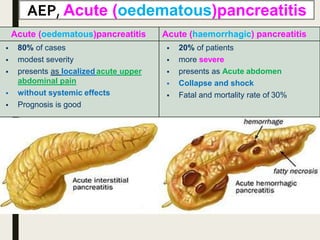
Acute (oedematous)pancreatitis Acute (haemorrhagic) pancreatitis
 80% of cases
 modest severity
 presents as localizedacute upper
abdominal pain
 without systemic effects
 Prognosis is good
 20% of patients
 more severe
 presents as Acute abdomen
 Collapse and shock
 Fatal and mortality rate of 30%
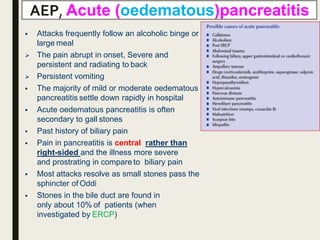
 Attacks frequently follow an alcoholic binge or
large meal
 The pain abrupt in onset, Severe and
persistent and radiating to back
 Persistent vomiting
 The majority of mild or moderate oedematous
pancreatitis settle down rapidly in hospital
 Acute oedematous pancreatitis is often
secondary to gall stones
 Past history of biliary pain
 Pain in pancreatitis is central rather than
right-sided and the illness more severe
and prostrating in compare to biliary pain
 Most attacks resolve as small stones pass the
sphincter of Oddi
 Stones in the bile duct are found in
only about 10% of patients (when
investigated by ERCP)
AEP, Acute (oedematous)pancreatitis
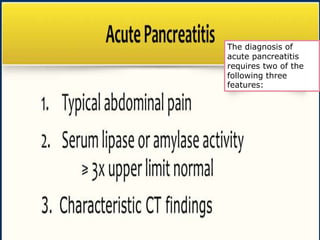
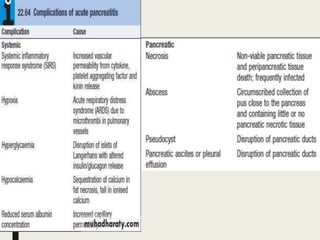
The diagnosis of
acute pancreatitis
requires two of the
following three
features:
ACUTE EPIGASTRIC
PAIN
Examination
Gastritis and DU
 In acute gastritis moderate epigastric tenderness.
 In patients with sealed perforation, muscle
tenderness and guarding are present to a greater
extent than in patients with acute oedematous
pancreatitis
 Unless a periduodenal abscess has developed
patients with an acute exacerbation of DU have no
systemic signs of toxicity.
Cholecystis
1. Right upper quadrant tenderness and guarding are present.
2. Tenderness beneath the right costal margin on inspiration is
characteristic (Murphy’s sign).
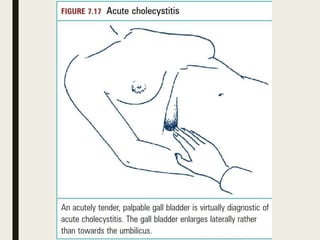
3. In about a third of patients the inflamed gall bladder is palpable.
 A palpable mass is found more frequently after the first 24 hours;
before this, the abdominal tenderness often masks the presence of
the gall bladder mass.
4. Mild fever is common, as are moderate tachycardia and leucocytosis
 In contrast, patients with biliary colic have no significant findings
on examination.
 High fever and chills are uncommon and suggest either
 the presence of empyema of the gall bladder, in which case the
diagnosis is incorrect, or
 Common duct stone with cholangitis is a complication.
Acute pancreatitis
• The signs depend on severity
1. Despite severe pain ,examination of the abdomen reveals that
guarding is not as marked as would be expected.
2. An epigastric mass may be found 
(due to inflammatory oedemaof the pancreas)
3. Peripheral circulatory and respiratory failure are uncommon– these
are features of the more severe form of acute pancreatitis
4. Temperature normal or slightly elevated
5. Moderate degree of leukocytosis
6. Clinical evidence of secondary basal atelectasis and pleural
effusion on the left side of chest
 Most case with mild disease clinical condition rapidly settles with
treatment
ACUTE EPIGASTRIC
PAIN
Diagnostic plan
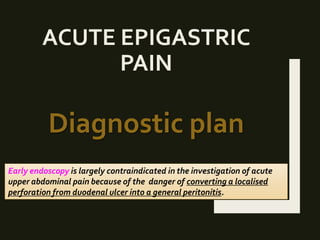
Early endoscopy is largely contraindicated in the investigation of acute
upper abdominal pain because of the danger of converting a localised
perforation from duodenal ulcer into a general peritonitis.
Haematological and
biochemical examination
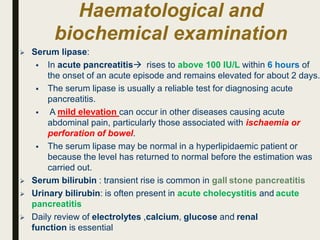
 Serum lipase:
 In acute pancreatitis rises to above 100 IU/L within 6 hours of
the onset of an acute episode and remains elevated for about 2 days.
 The serum lipase is usually a reliable test for diagnosing acute
pancreatitis.
 A mild elevation can occur in other diseases causing acute
abdominal pain, particularly those associated with ischaemia or
perforation of bowel.
 The serum lipase may be normal in a hyperlipidaemic patient or
because the level has returned to normal before the estimation was
carried out.
 Serum bilirubin : transient rise is common in gall stone pancreatitis
 Urinary bilirubin: is often present in acute cholecystitis and acute
pancreatitis
 Daily review of electrolytes ,calcium, glucose and renal
function is essential
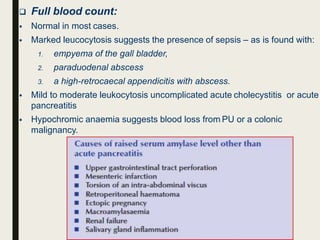
 Full blood count:
 Normal in most cases.
 Marked leucocytosis suggests the presence of sepsis – as is found with:
1. empyema of the gall bladder,
2. paraduodenal abscess
3. a high-retrocaecal appendicitis with abscess.
 Mild to moderate leukocytosis uncomplicated acute cholecystitis or acute
pancreatitis
 Hypochromic anaemia suggests blood loss from PU or a colonic
malignancy.
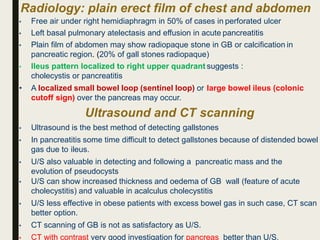
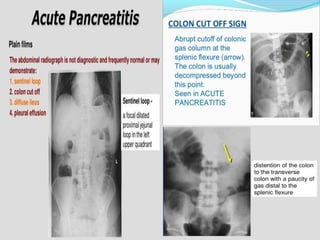
Radiology: plain erect film of chest and abdomen
• Free air under right hemidiaphragm in 50% of cases in perforated ulcer
• Left basal pulmonary atelectasis and effusion in acute pancreatitis
• Plain film of abdomen may show radiopaque stone in GB or calcification in
pancreatic region. (20% of gall stones radiopaque)
• Ileus pattern localized to right upper quadrant suggests :
cholecystis or pancreatitis
• A localized small bowel loop (sentinel loop) or large bowel ileus (colonic
cutoff sign) over the pancreas may occur.
Ultrasound and CT scanning
• Ultrasound is the best method of detecting gallstones
• In pancreatitis some time difficult to detect gallstones because of distended bowel
gas due to ileus.
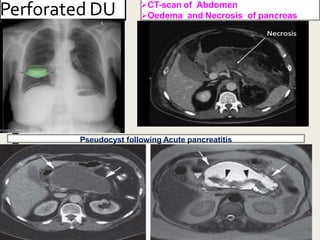
• U/S also valuable in detecting and following a pancreatic mass and the
evolution of pseudocysts
• U/S can show increased thickness and oedema of GB wall (feature of acute
cholecystitis) and valuable in acalculus cholecystitis
• U/S less effective in obese patients with excess bowel gas in such case, CT scan
better option.
• CT scanning of GB is not as satisfactory as U/S.
• CT with contrast very good investigation for pancreas better than U/S.
Perforated DU CT-scan of Abdomen
Oedema and Necrosis of pancreas
Pseudocyst following Acute pancreatitis
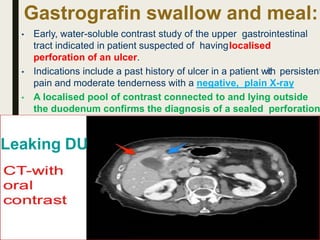
Gastrografin swallow and meal:
• Early, water-soluble contrast study of the upper gastrointestinal
tract indicated in patient suspected of havinglocalised
perforation of an ulcer.
• Indications include a past history of ulcer in a patient with persistent
pain and moderate tenderness with a negative, plain X-ray
• A localised pool of contrast connected to and lying outside
the duodenum confirms the diagnosis of a sealed perforation
Leaking DU
Radionuclide excretion scan
• When a policy of early surgery for acute cholecystitis is
being followed.
• The diagnosis on clinical grounds will be wrong in l0- 20% of
cases.
• Ultrasound and radionuclide (99Tcm CHIDA) scan make
accurate diagnosis possible in most cases.
• HIDA scan of the gallbladder is a useful method of
diagnosing the presence of acute cholecystitis, by
demonstrating non-function of the gall bladder.
Late endoscopy and ERCP:
• Endoscopy should be delayed in undiagnosed
case until resolution of symptoms occurs.
• In patients with acute gastritis or nonulcer dyspepsia,
biopsy and silver stain of antral mucosa may reveal the
presence of H. pylori.
• ERCP may be indicated in the patient with
postcholecystectomy pain if a stone in the bile duct is
suspected, particularly in patients with dilated
extrahepatic ducts and altered liver function.
ACUTE EPIGASTRIC
PAIN
Treatment plan
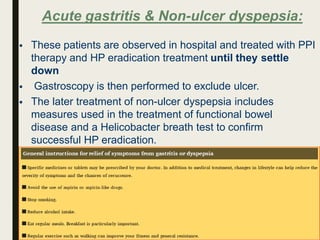
Acute gastritis & Non-ulcer dyspepsia:
 These patients are observed in hospital and treated with PPI
therapy and HP eradication treatment until they settle
down
 Gastroscopy is then performed to exclude ulcer.
 The later treatment of non-ulcer dyspepsia includes
measures used in the treatment of functional bowel
disease and a Helicobacter breath test to confirm
successful HP eradication.
Acute exacerbation of duodenal ulcer
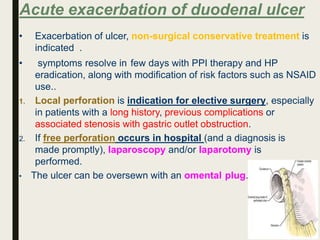
• Exacerbation of ulcer, non-surgical conservative treatment is
indicated .
• symptoms resolve in few days with PPI therapy and HP
eradication, along with modification of risk factors such as NSAID
use..
1. Local perforation is indication for elective surgery, especially
in patients with a long history, previous complications or
associated stenosis with gastric outlet obstruction.
2. If free perforation occurs in hospital (and a diagnosis is
made promptly), laparoscopy and/or laparotomy is
performed.
• The ulcer can be oversewn with an omental plug.
 Intravenous fluids and antibiotics are commenced.
With acute cholecystitis, pain and tenderness often resolve
within 48 hours in about two-thirds of cases.
In the past it was recommended that these cases have an
interval cholecystectomy after 2–3 months.
Clinical trials have shown that early laparoscopic
cholecystectomy before discharge from hospital can be
performed safely.
Most patients are therefore best operated upon at the first
convenient opportunity.
Biliary colic and acute cholecystitis
Acute (oedematous) pancreatitis
• Most patients with oedematous pancreatitis settle down rapidly in
hospital with non-operative supportive treatment
• The principles of treatment are:
1. control of pain, using pethidine rather than morphine, the latter
causing spasm of the sphincter of Oddi
2. prevention of renal and respiratory insufficiency by careful
replacement of fluids, chest physiotherapy and intranasal
oxygen.
3. Nasogastric suction may be used if there is symptomatic ileus
(i.e. protracted vomiting)
4. Antibiotics may be used (respiratory infection)
5. More intensive management, such as physiotherapy and
ventilatory support, is necessary in severely ill patients
• Gallstone pancreatitis, current opinion favors performing a
cholecystectomy during the initial hospital stay so that the risk of another
attack is avoided.
• In aged patients, endoscopic sphincterotomy may be a safer alternative
initial form of treatment.
Less common causes
These may be gastrointestinal or nongastrointestinal.
 Preicteric hepatitis can be confused with acute cholecystitis.
 Prodromal symptoms of nausea and anorexia and signs of tender
hepatomegaly with disordered liver function tests help make the Dx.
 Hydronephrosls pain is often felt in the epigastrium
 Silent myocardial infarction, acute Right ventricular failure causing
painful hepatic engorgement, can Present with acute upper abdominal
pain.
 Basal pneumonia
 may Present, especially in the young, with upper abdominal pain and
guarding
 An important sign of abdominal pain due to respiratory infection is
associated respiratory distress.
 Chest signs may be basal crepitations.
 Appendicitis in a high retrocaecal position beneath the liver can closely
mimic acute cholecystitis.
 Obstructing carcinoma of the right transverse colon with a mass.
 can present with colicky upper abdominal pain worse by food.
 Importantly, these patients often have an iron deficiency anaemia.
 Nerve root pain (T6-10)
 can cause acute upper abdominal pain.
 In most cases the clue to the diagnosis is radiation of the pain from the
back.
 Osteoarthritis with spur formation and shingles are the most common
causes of rootpain
 Aortic aneurysm
 Presents with acute epigastric or left hypochondrial pain when
rupture is imminent.
 More commonly presents asacute abdomen
 An interval of several hours may exist between the first episode of self-
limited bleeding and later retroperitoneal rupture
 Splenic infarction
 may present with acute left hypochondrial pain.
 Splenic infarcts occur in association with:
1. bacterial endocarditis,
2. lymphoma
3. patients with splenomegaly secondary to alcoholic cirrhosis of the liver.
 Occasionally, blood from the pelvis may produce signs primarily in the upper
abdomen with left shoulder tip pain, as may delayed bleeding from rupture of
the spleen occurring some days after injury.
Summary
 Acute epigastric pain different from acute abdomen in which there is
more time for investigations and no need early surgery
 Most causes of acute epigastric pain can be treated conservatively in
initial phases
 Commonest causes of acute epigastric pain due to pathology in stomach
and duodenum
 Although clinical history and examinations can lead physicians to
correct diagnosis but there are investigations very valuable to
confirm exact cause of AEP
 Most time AEP can be treated by conservative treatment but
still some cases need surgical interference.
 Apart from intraabdominal causes of AEP ,there are causes
due to extraabdominal structures.

Acute epigastric pain

  • 1.
    Epigastric pain  Dividedin to: 1. Acute epigastric pain 2. Chronic epigastric pain By: Dr. Jwan Ali Alsofi
  • 2.
    Acute epigastric pain L1 By:Dr. Jwan Ali Alsofi
  • 3.
    Introduction  The Epigastriumor epigastric region is the upper central portion of the abdomen.  One of the nine region of abdomen.  Its located between the costal arch (lower edge) of the thorax and the subcostal plane  Contain mainly: 1. stomach and duodenum, 2. head and neck of pancreas, 3. left lobe of liver, 4. great vessels like abdominal aorta
  • 4.
    Introduction cont,d 9 Regionsof Abdomen 2 Vertical lines crossing from Midclavicular lines to Midinguinal lines 2 Horizontal lines, above passing in subcostal planes ,lower passing between 2 Iliac crests
  • 5.
    Acute Epigastric Pain 1.Patients are not as seriously ill as acute abdomen. 2. Indications for early laparotomy present in acute abdomen while not for AEP. 3. Various diseases are common to both. 4. Diseases less severe in patients with AEP 5. More time exists for diagnosis. 6. Most causes can be managed by conservative non- surgical treatment.
  • 6.
    Acute Epigastric Pain Causes: 1. Acute gastritis 2. Acute exacerbation of duodenal ulcer 3. Biliary colic and acute cholecystitis 4. Acute (oedematous)pancreatitis 5. Non-ulcer dyspepsia 6. Less common causes
  • 7.
  • 8.
    Acute gastritis:  Maybe due to: 1. Bacterial(H.Pylori) 2. Viral infection 3. Duodenal reflux gastritis 4. Drugs(NSAID,Aspirin,Steroid…….) 5. Irradiation therapy  Patient present with burning epigastric pain ,sudden onset (DDX may be confused with perforated ulcer)  Endoscopy and biopsy =gastritis + H.Pylori ( detected by CLO test)  Viral and bacterial gastroenteritis =AEP,vomittig & diarrhea  History of alcohol or drugs(NSAID),damage gastric mucosa and cause acute gastritis (Gastric erosion)  History of cholecystectomy and partial gastric surgery = bile reflux gastritis.  One point tenderness  Peptic ulcer / Diffuse tenderness 
  • 9.
    Acute exacerbation ofduodenal ulcer:  Complicated DU present as AEP, due to acute exacerbation or localized perforation (leakage).  Triggered by alcohol, drugs(NSAID),H.Pylori or bile reflux.  ¾ have past history of ulcer.  Details of past surgical history: o Sealing of a small perforation in patients had past abdominal surgery o Presence of scar suggest adhesive small bowel obstruction or postgastrectomy bile gastritis.  In about 1/3 of cases with an acute abdomen from perforated ulcer  a prodromal period exists during which a small leak initially localises before free perforation occurs. This period can last for several hours and should be borne in mind when seeing a patient in the ED with AEP that has partially resolved.  H.Pylori should be considered as a causative agent for PU- ulcer disease  Diagnosis confirmed and eradication therapy instituted
  • 10.
    Biliary colic andacute cholecystitis Biliary colic Acute cholecystitis • Most episodes of biliary colic last for no more than a few hours • recur intermittently, • often associated with fatty or oily food ingestion. • Not associated with fever/ leucocytosis / Negative Murphys’ sign • Many of these patients see a doctor electively with the problem of chronic episodic epigastric pain. • Pt. has severe persisting acute pain, • Biliary pain has an abrupt onset, • is felt in the epigastrium or the RUQ • The pain is often referred to back. • can fluctuate in severity. • Narcotic analgesics are usually necessary for pain relief once the diagnosis of acute biliary pain has been made. • Most patients have a past history of attacks of biliary colic. • with or without fever / gallbladder tenderness / leucocytosis. • will call a doctor or present to an ED. • an attack of persisting acute cholecystitis as the first clinical evidence of gall-stones is less common.
  • 11.
    acute cholecystitis ■ Whenrapid resolution of symptoms occurs, the patient can be investigated electively with ultrasound for gallstones. ■ Continued pain for more than 12 hours suggests acute cholecystitis. ■ Bacteria can be cultured from the bile in 70% of patients with cholecystitis. ■ Admission to hospital is necessary for persistent pain and for associated systemic effects. ■ In 95% of patients, acute cholecystitis results from persistent obstruction of the cystic duct by a gallstone impacted in Hartmann’s pouch. ■ Most attacks will resolve spontaneously in hospital, if left; some progress to abscess formation and occasionally to free perforation with generalised peritonitis ■ Jaundice occurs in only 10% of patients and suggests: – stone in the bile duct, – Mirizzi’s syndrome (bile duct compression by oedematous gallbladder) – acalculous cholecystitis, – gangrenous cholecystitis. ■ Jaundice + high fever suggests ascending cholangitis.
  • 15.
    AEP, Acute acalculouscholecystitis ■ Acute acalculous cholecystitis usually occurs in: – postoperative, – posttraumatic – severely ill hypotensive patients. – It is also more common in patients with diabetes. ■ Gangrene may proceed to perforation, which may be fatal. ■ Physical signs may be minimal. ■ In an unwell ‘in-hospital patient for another reason’ (e.g. post CAGS) patient, with vague upper abdominal pain or tenderness of new onset, it is definitely worth asking for an ultrasound to exclude this diagnosis.
  • 16.
    AEP, Acute (oedematous)pancreatitis Acute(oedematous)pancreatitis Acute (haemorrhagic) pancreatitis  80% of cases  modest severity  presents as localizedacute upper abdominal pain  without systemic effects  Prognosis is good  20% of patients  more severe  presents as Acute abdomen  Collapse and shock  Fatal and mortality rate of 30%
  • 17.
     Attacks frequentlyfollow an alcoholic binge or large meal  The pain abrupt in onset, Severe and persistent and radiating to back  Persistent vomiting  The majority of mild or moderate oedematous pancreatitis settle down rapidly in hospital  Acute oedematous pancreatitis is often secondary to gall stones  Past history of biliary pain  Pain in pancreatitis is central rather than right-sided and the illness more severe and prostrating in compare to biliary pain  Most attacks resolve as small stones pass the sphincter of Oddi  Stones in the bile duct are found in only about 10% of patients (when investigated by ERCP) AEP, Acute (oedematous)pancreatitis
  • 18.
    The diagnosis of acutepancreatitis requires two of the following three features:
  • 20.
  • 21.
    Gastritis and DU In acute gastritis moderate epigastric tenderness.  In patients with sealed perforation, muscle tenderness and guarding are present to a greater extent than in patients with acute oedematous pancreatitis  Unless a periduodenal abscess has developed patients with an acute exacerbation of DU have no systemic signs of toxicity.
  • 22.
    Cholecystis 1. Right upperquadrant tenderness and guarding are present. 2. Tenderness beneath the right costal margin on inspiration is characteristic (Murphy’s sign). 3. In about a third of patients the inflamed gall bladder is palpable.  A palpable mass is found more frequently after the first 24 hours; before this, the abdominal tenderness often masks the presence of the gall bladder mass. 4. Mild fever is common, as are moderate tachycardia and leucocytosis  In contrast, patients with biliary colic have no significant findings on examination.  High fever and chills are uncommon and suggest either  the presence of empyema of the gall bladder, in which case the diagnosis is incorrect, or  Common duct stone with cholangitis is a complication.
  • 24.
    Acute pancreatitis • Thesigns depend on severity 1. Despite severe pain ,examination of the abdomen reveals that guarding is not as marked as would be expected. 2. An epigastric mass may be found  (due to inflammatory oedemaof the pancreas) 3. Peripheral circulatory and respiratory failure are uncommon– these are features of the more severe form of acute pancreatitis 4. Temperature normal or slightly elevated 5. Moderate degree of leukocytosis 6. Clinical evidence of secondary basal atelectasis and pleural effusion on the left side of chest  Most case with mild disease clinical condition rapidly settles with treatment
  • 26.
    ACUTE EPIGASTRIC PAIN Diagnostic plan Earlyendoscopy is largely contraindicated in the investigation of acute upper abdominal pain because of the danger of converting a localised perforation from duodenal ulcer into a general peritonitis.
  • 27.
    Haematological and biochemical examination Serum lipase:  In acute pancreatitis rises to above 100 IU/L within 6 hours of the onset of an acute episode and remains elevated for about 2 days.  The serum lipase is usually a reliable test for diagnosing acute pancreatitis.  A mild elevation can occur in other diseases causing acute abdominal pain, particularly those associated with ischaemia or perforation of bowel.  The serum lipase may be normal in a hyperlipidaemic patient or because the level has returned to normal before the estimation was carried out.  Serum bilirubin : transient rise is common in gall stone pancreatitis  Urinary bilirubin: is often present in acute cholecystitis and acute pancreatitis  Daily review of electrolytes ,calcium, glucose and renal function is essential
  • 28.
     Full bloodcount:  Normal in most cases.  Marked leucocytosis suggests the presence of sepsis – as is found with: 1. empyema of the gall bladder, 2. paraduodenal abscess 3. a high-retrocaecal appendicitis with abscess.  Mild to moderate leukocytosis uncomplicated acute cholecystitis or acute pancreatitis  Hypochromic anaemia suggests blood loss from PU or a colonic malignancy.
  • 29.
    Radiology: plain erectfilm of chest and abdomen • Free air under right hemidiaphragm in 50% of cases in perforated ulcer • Left basal pulmonary atelectasis and effusion in acute pancreatitis • Plain film of abdomen may show radiopaque stone in GB or calcification in pancreatic region. (20% of gall stones radiopaque) • Ileus pattern localized to right upper quadrant suggests : cholecystis or pancreatitis • A localized small bowel loop (sentinel loop) or large bowel ileus (colonic cutoff sign) over the pancreas may occur. Ultrasound and CT scanning • Ultrasound is the best method of detecting gallstones • In pancreatitis some time difficult to detect gallstones because of distended bowel gas due to ileus. • U/S also valuable in detecting and following a pancreatic mass and the evolution of pseudocysts • U/S can show increased thickness and oedema of GB wall (feature of acute cholecystitis) and valuable in acalculus cholecystitis • U/S less effective in obese patients with excess bowel gas in such case, CT scan better option. • CT scanning of GB is not as satisfactory as U/S. • CT with contrast very good investigation for pancreas better than U/S.
  • 31.
    Perforated DU CT-scanof Abdomen Oedema and Necrosis of pancreas Pseudocyst following Acute pancreatitis
  • 32.
    Gastrografin swallow andmeal: • Early, water-soluble contrast study of the upper gastrointestinal tract indicated in patient suspected of havinglocalised perforation of an ulcer. • Indications include a past history of ulcer in a patient with persistent pain and moderate tenderness with a negative, plain X-ray • A localised pool of contrast connected to and lying outside the duodenum confirms the diagnosis of a sealed perforation Leaking DU
  • 33.
    Radionuclide excretion scan •When a policy of early surgery for acute cholecystitis is being followed. • The diagnosis on clinical grounds will be wrong in l0- 20% of cases. • Ultrasound and radionuclide (99Tcm CHIDA) scan make accurate diagnosis possible in most cases. • HIDA scan of the gallbladder is a useful method of diagnosing the presence of acute cholecystitis, by demonstrating non-function of the gall bladder.
  • 34.
    Late endoscopy andERCP: • Endoscopy should be delayed in undiagnosed case until resolution of symptoms occurs. • In patients with acute gastritis or nonulcer dyspepsia, biopsy and silver stain of antral mucosa may reveal the presence of H. pylori. • ERCP may be indicated in the patient with postcholecystectomy pain if a stone in the bile duct is suspected, particularly in patients with dilated extrahepatic ducts and altered liver function.
  • 35.
  • 36.
    Acute gastritis &Non-ulcer dyspepsia:  These patients are observed in hospital and treated with PPI therapy and HP eradication treatment until they settle down  Gastroscopy is then performed to exclude ulcer.  The later treatment of non-ulcer dyspepsia includes measures used in the treatment of functional bowel disease and a Helicobacter breath test to confirm successful HP eradication.
  • 37.
    Acute exacerbation ofduodenal ulcer • Exacerbation of ulcer, non-surgical conservative treatment is indicated . • symptoms resolve in few days with PPI therapy and HP eradication, along with modification of risk factors such as NSAID use.. 1. Local perforation is indication for elective surgery, especially in patients with a long history, previous complications or associated stenosis with gastric outlet obstruction. 2. If free perforation occurs in hospital (and a diagnosis is made promptly), laparoscopy and/or laparotomy is performed. • The ulcer can be oversewn with an omental plug.
  • 38.
     Intravenous fluidsand antibiotics are commenced. With acute cholecystitis, pain and tenderness often resolve within 48 hours in about two-thirds of cases. In the past it was recommended that these cases have an interval cholecystectomy after 2–3 months. Clinical trials have shown that early laparoscopic cholecystectomy before discharge from hospital can be performed safely. Most patients are therefore best operated upon at the first convenient opportunity. Biliary colic and acute cholecystitis
  • 39.
    Acute (oedematous) pancreatitis •Most patients with oedematous pancreatitis settle down rapidly in hospital with non-operative supportive treatment • The principles of treatment are: 1. control of pain, using pethidine rather than morphine, the latter causing spasm of the sphincter of Oddi 2. prevention of renal and respiratory insufficiency by careful replacement of fluids, chest physiotherapy and intranasal oxygen. 3. Nasogastric suction may be used if there is symptomatic ileus (i.e. protracted vomiting) 4. Antibiotics may be used (respiratory infection) 5. More intensive management, such as physiotherapy and ventilatory support, is necessary in severely ill patients • Gallstone pancreatitis, current opinion favors performing a cholecystectomy during the initial hospital stay so that the risk of another attack is avoided. • In aged patients, endoscopic sphincterotomy may be a safer alternative initial form of treatment.
  • 40.
    Less common causes Thesemay be gastrointestinal or nongastrointestinal.  Preicteric hepatitis can be confused with acute cholecystitis.  Prodromal symptoms of nausea and anorexia and signs of tender hepatomegaly with disordered liver function tests help make the Dx.  Hydronephrosls pain is often felt in the epigastrium  Silent myocardial infarction, acute Right ventricular failure causing painful hepatic engorgement, can Present with acute upper abdominal pain.  Basal pneumonia  may Present, especially in the young, with upper abdominal pain and guarding  An important sign of abdominal pain due to respiratory infection is associated respiratory distress.  Chest signs may be basal crepitations.  Appendicitis in a high retrocaecal position beneath the liver can closely mimic acute cholecystitis.  Obstructing carcinoma of the right transverse colon with a mass.  can present with colicky upper abdominal pain worse by food.  Importantly, these patients often have an iron deficiency anaemia.
  • 41.
     Nerve rootpain (T6-10)  can cause acute upper abdominal pain.  In most cases the clue to the diagnosis is radiation of the pain from the back.  Osteoarthritis with spur formation and shingles are the most common causes of rootpain  Aortic aneurysm  Presents with acute epigastric or left hypochondrial pain when rupture is imminent.  More commonly presents asacute abdomen  An interval of several hours may exist between the first episode of self- limited bleeding and later retroperitoneal rupture  Splenic infarction  may present with acute left hypochondrial pain.  Splenic infarcts occur in association with: 1. bacterial endocarditis, 2. lymphoma 3. patients with splenomegaly secondary to alcoholic cirrhosis of the liver.  Occasionally, blood from the pelvis may produce signs primarily in the upper abdomen with left shoulder tip pain, as may delayed bleeding from rupture of the spleen occurring some days after injury.
  • 42.
    Summary  Acute epigastricpain different from acute abdomen in which there is more time for investigations and no need early surgery  Most causes of acute epigastric pain can be treated conservatively in initial phases  Commonest causes of acute epigastric pain due to pathology in stomach and duodenum  Although clinical history and examinations can lead physicians to correct diagnosis but there are investigations very valuable to confirm exact cause of AEP  Most time AEP can be treated by conservative treatment but still some cases need surgical interference.  Apart from intraabdominal causes of AEP ,there are causes due to extraabdominal structures.