Acute Asthma in
Adults


     Krit Kuruchaiyapanich, MD
Definition
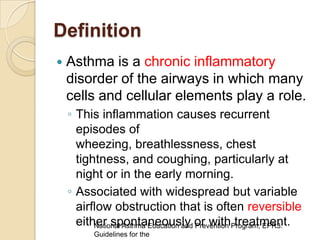
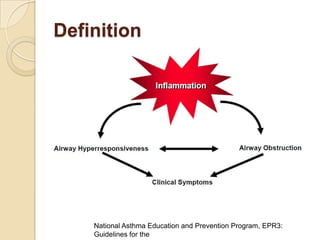
   Asthma is a chronic inflammatory
    disorder of the airways in which many
    cells and cellular elements play a role.
    ◦ This inflammation causes recurrent
      episodes of
      wheezing, breathlessness, chest
      tightness, and coughing, particularly at
      night or in the early morning.
    ◦ Associated with widespread but variable
      airflow obstruction that is often reversible
      either spontaneously or withProgram, EPR3:
          National Asthma Education and Prevention treatment.
          Guidelines for the
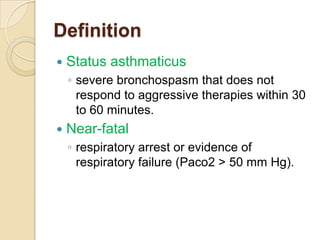
Definition
   Status asthmaticus
    ◦ severe bronchospasm that does not
      respond to aggressive therapies within 30
      to 60 minutes.
   Near-fatal
    ◦ respiratory arrest or evidence of
      respiratory failure (Paco2 > 50 mm Hg).
Definition


    National Asthma Education and Prevention Program, EPR3:
    Guidelines for the
Severe/Refractory asthma


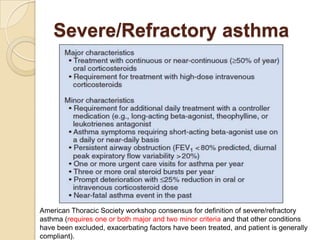
American Thoracic Society workshop consensus for definition of severe/refractory
asthma (requires one or both major and two minor criteria and that other conditions
have been excluded, exacerbating factors have been treated, and patient is generally
compliant).
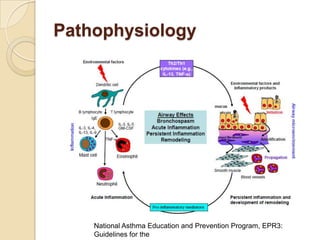
Pathophysiology
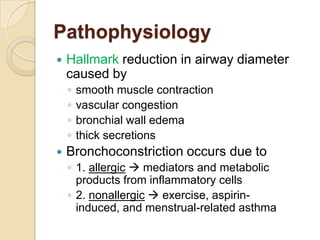
   Hallmark reduction in airway diameter
    caused by
    ◦   smooth muscle contraction
    ◦   vascular congestion
    ◦   bronchial wall edema
    ◦   thick secretions
   Bronchoconstriction occurs due to
    ◦ 1. allergic  mediators and metabolic
      products from inflammatory cells
    ◦ 2. nonallergic  exercise, aspirin-
      induced, and menstrual-related asthma
Pathophysiology
Pathophysiology


    National Asthma Education and Prevention Program, EPR3:
    Guidelines for the
Pathophysiology
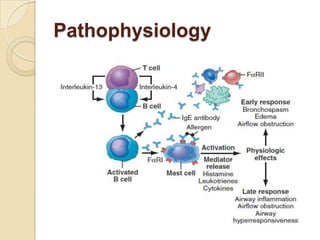
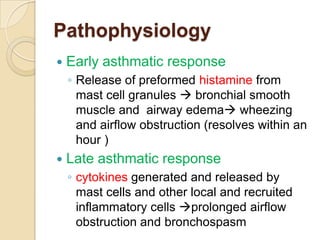
   Early asthmatic response
    ◦ Release of preformed histamine from
      mast cell granules  bronchial smooth
      muscle and airway edema wheezing
      and airflow obstruction (resolves within an
      hour )
   Late asthmatic response
    ◦ cytokines generated and released by
      mast cells and other local and recruited
      inflammatory cells prolonged airflow
      obstruction and bronchospasm
Pathophysiology
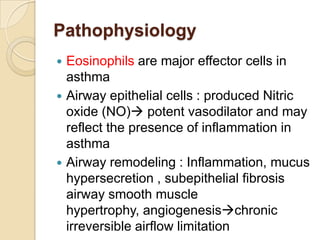
 Eosinophils are major effector cells in
  asthma
 Airway epithelial cells : produced Nitric
  oxide (NO) potent vasodilator and may
  reflect the presence of inflammation in
  asthma
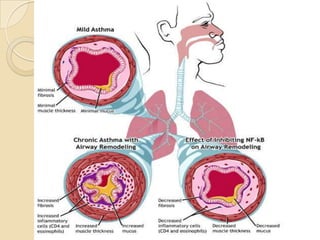
 Airway remodeling : Inflammation, mucus
  hypersecretion , subepithelial fibrosis
  airway smooth muscle
  hypertrophy, angiogenesischronic
  irreversible airflow limitation
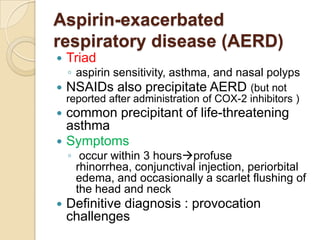
Aspirin-exacerbated
respiratory disease (AERD)
   Triad
    ◦ aspirin sensitivity, asthma, and nasal polyps
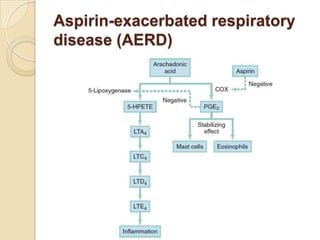
   NSAIDs also precipitate AERD (but not
    reported after administration of COX-2 inhibitors )
 common precipitant of life-threatening
  asthma
 Symptoms
    ◦ occur within 3 hoursprofuse
      rhinorrhea, conjunctival injection, periorbital
      edema, and occasionally a scarlet flushing of
      the head and neck
   Definitive diagnosis : provocation
    challenges
Aspirin-exacerbated respiratory
disease (AERD)
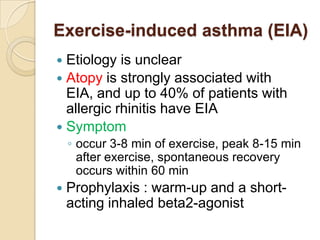
Exercise-induced asthma (EIA)
 Etiology is unclear
 Atopy is strongly associated with
  EIA, and up to 40% of patients with
  allergic rhinitis have EIA
 Symptom
    ◦ occur 3-8 min of exercise, peak 8-15 min
      after exercise, spontaneous recovery
      occurs within 60 min
   Prophylaxis : warm-up and a short-
    acting inhaled beta2-agonist
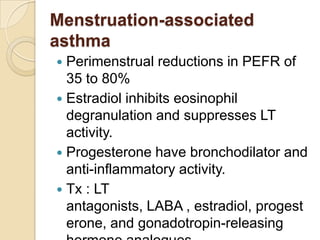
Menstruation-associated
asthma
 Perimenstrual reductions in PEFR of
  35 to 80%
 Estradiol inhibits eosinophil
  degranulation and suppresses LT
  activity.
 Progesterone have bronchodilator and
  anti-inflammatory activity.
 Tx : LT
  antagonists, LABA , estradiol, progest
  erone, and gonadotropin-releasing
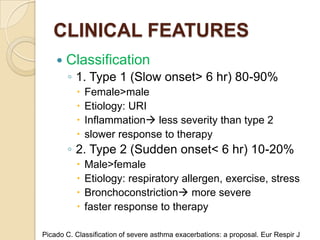
CLINICAL FEATURES
       Classification
        ◦ 1. Type 1 (Slow onset> 6 hr) 80-90%
             Female>male
             Etiology: URI
             Inflammation less severity than type 2
             slower response to therapy
        ◦ 2. Type 2 (Sudden onset< 6 hr) 10-20%
             Male>female
             Etiology: respiratory allergen, exercise, stress
             Bronchoconstriction more severe
             faster response to therapy

Picado C. Classification of severe asthma exacerbations: a proposal. Eur Respir J
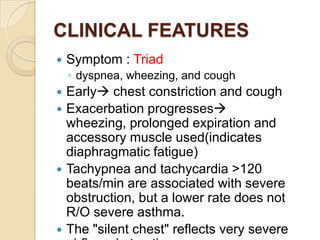
CLINICAL FEATURES
   Symptom : Triad
    ◦ dyspnea, wheezing, and cough
 Early chest constriction and cough
 Exacerbation progresses
  wheezing, prolonged expiration and
  accessory muscle used(indicates
  diaphragmatic fatigue)
 Tachypnea and tachycardia >120
  beats/min are associated with severe
  obstruction, but a lower rate does not
  R/O severe asthma.
 The "silent chest" reflects very severe
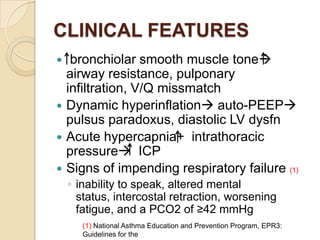
CLINICAL FEATURES
  bronchiolar smooth muscle tone
  airway resistance, pulponary
  infiltration, V/Q missmatch
 Dynamic hyperinflation auto-PEEP
  pulsus paradoxus, diastolic LV dysfn
 Acute hypercapnia+ intrathoracic
  pressure ICP
 Signs of impending respiratory failure (1)
    ◦ inability to speak, altered mental
      status, intercostal retraction, worsening
      fatigue, and a PCO2 of ≥42 mmHg
       (1) National Asthma Education and Prevention Program, EPR3:
       Guidelines for the
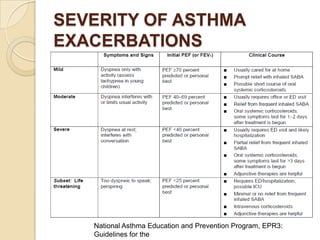
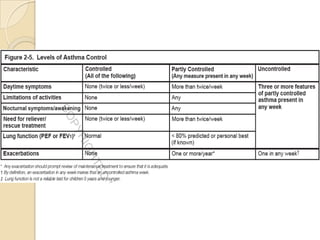
SEVERITY OF ASTHMA
EXACERBATIONS


   National Asthma Education and Prevention Program, EPR3:
   Guidelines for the
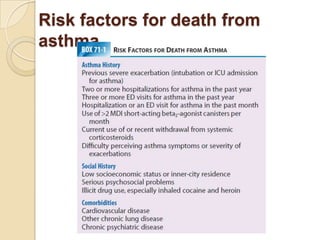
Risk factors for death from
asthma
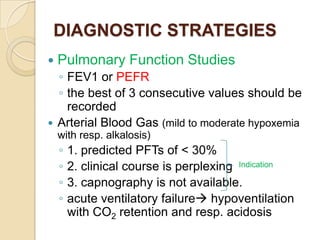
DIAGNOSTIC STRATEGIES
   Pulmonary Function Studies
  ◦ FEV1 or PEFR
  ◦ the best of 3 consecutive values should be
    recorded
 Arterial Blood Gas (mild to moderate hypoxemia
    with resp. alkalosis)
    ◦   1. predicted PFTs of < 30%
    ◦   2. clinical course is perplexing Indication
    ◦   3. capnography is not available.
    ◦   acute ventilatory failure hypoventilation
        with CO2 retention and resp. acidosis
DIAGNOSTIC STRATEGIES
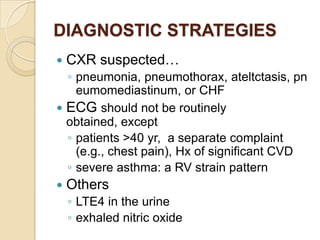
   CXR suspected…
  ◦ pneumonia, pneumothorax, ateltctasis, pn
    eumomediastinum, or CHF
 ECG should not be routinely
  obtained, except
  ◦ patients >40 yr, a separate complaint
    (e.g., chest pain), Hx of significant CVD
  ◦ severe asthma: a RV strain pattern
   Others
    ◦ LTE4 in the urine
    ◦ exhaled nitric oxide
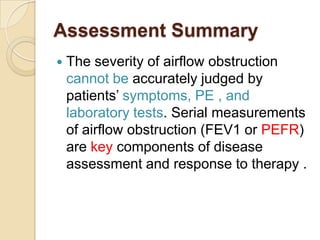
Assessment Summary
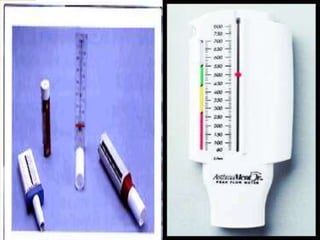
   The severity of airflow obstruction
    cannot be accurately judged by
    patients’ symptoms, PE , and
    laboratory tests. Serial measurements
    of airflow obstruction (FEV1 or PEFR)
    are key components of disease
    assessment and response to therapy .
Peak Flow Meter
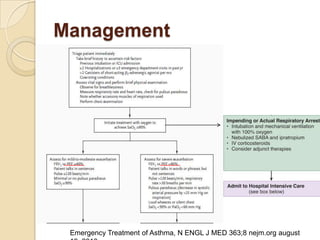
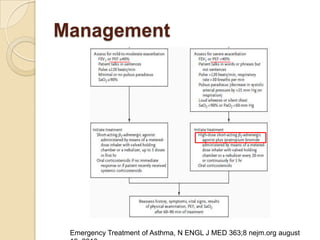
Management


 Emergency Treatment of Asthma, N ENGL J MED 363;8 nejm.org august
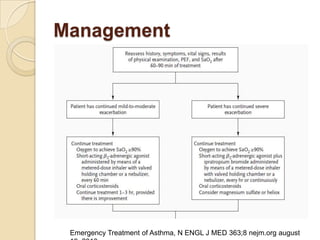
Management


 Emergency Treatment of Asthma, N ENGL J MED 363;8 nejm.org august
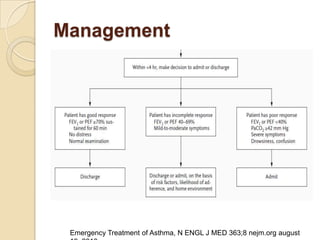
Management


 Emergency Treatment of Asthma, N ENGL J MED 363;8 nejm.org august
Management


 Emergency Treatment of Asthma, N ENGL J MED 363;8 nejm.org august
Medication
The goal of treatment of acute asthma in
the ED is to reverse airflow obstruction
rapidly by repetitive or continuous
administration of inhaled B 2-
agonists, ensure adequate oxygenation, and
relieve inflammation
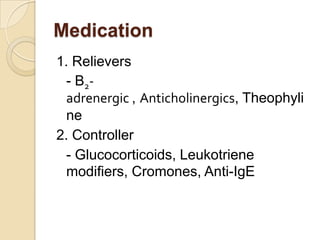
Medication
1. Relievers
  - B2-
  adrenergic , Anticholinergics, Theophyli
  ne
2. Controller
  - Glucocorticoids, Leukotriene
  modifiers, Cromones, Anti-IgE
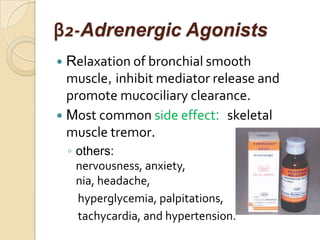
β2-Adrenergic Agonists
 Relaxation of bronchial smooth
  muscle, inhibit mediator release and
  promote mucociliary clearance.
 Most common side effect: skeletal
  muscle tremor.
    ◦ others:
      nervousness, anxiety,            insom
      nia, headache,
      hyperglycemia, palpitations,
      tachycardia, and hypertension.
β2-Adrenergic Agonists
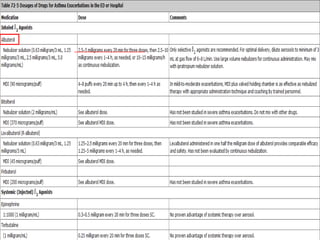
   SABA (Solution=MDI)
    ◦ First line drug
    ◦ Nebulization = MDI + spacer (prefer
      nebulization)
    ◦ Salbutamol 2.5 – 5 * 3 time/hr
    ◦ MDI with spacer 4– 8 puffs q 20 min up to
      4 h, then q 1–4 h as needed.
β2-Adrenergic Agonists
   IV form (not recommened in USA)
    ◦ severe nonresponsive acute asthma.
    ◦ albuterol loading dose 4 μg/kg for 2-5 min
      then infusion of 0.1 to 0.2 μg/kg/min
    ◦ Epinephrine IV titrated to effect (average 1.5
      μg/min with a range of 0.5–13.3 μg/min)
   SC form
    ◦ may be used in pt who cannot adequately
      inhale albuterol or who experience severe
      bronchospasm.
    ◦ Epinephrine (1:1000 ) 0.2-0.5 mL q 20 -30
      min
    ◦ Terbutaline 0.25 mg SC q 20 min * 3 dose
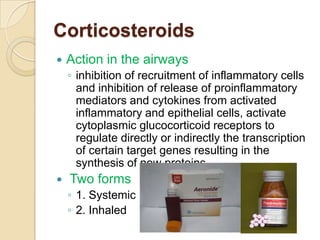
Corticosteroids
   Action in the airways
    ◦ inhibition of recruitment of inflammatory cells
      and inhibition of release of proinflammatory
      mediators and cytokines from activated
      inflammatory and epithelial cells, activate
      cytoplasmic glucocorticoid receptors to
      regulate directly or indirectly the transcription
      of certain target genes resulting in the
      synthesis of new proteins.
   Two forms
    ◦ 1. Systemic
    ◦ 2. Inhaled
Corticosteroids
   1. Systemic (IV and oral)
    ◦ speeds the resolution of airflow
      obstruction, reduces the rate of relapse and
      may decrease admissions in severe, but
      not in mild to moderate attacks.
    ◦ Prednisone 40-60 mg oral loading
    ◦ Methylprednisolone 40–80 mg/day in one
      dose or two divided doses
    ◦ Demethasone 5 mg
    ◦ given q 6 hr until PEFR reaches 70% of
      predicted value or a personal best value
Corticosteroids
 IV = oral
 Side effects
    ◦ short-term (hours or days) reversible
      increases in glucose (important in
      diabetics) and decreases in
      potassium, fluid retention with wt
      gain, mood alterations including rare
      psychosis, hypertension, peptic
      ulcers, aseptic necrosis of the femur
Corticosteroids
   2. Inhaled
       ICS + SABA NB: reducing airway reactivity and
        edema more effectively
       reduce rates of hospitalization
       Side effect : Dysphonia, Reflex cough and
        bronchospasm, Oral candidiasis
   Discharged
       Prednisone 40-60 mg oral for 7 day
       ICS high-dose budesonide (400 μg, two puffs
        twice per day)
Anticholinergic Agents


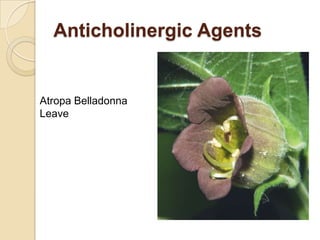
Atropa Belladonna
Leave
Anticholinergic Agents
 Block smooth muscle constrictor and
  secretory consequences of the
  PNS, blocking reflex bronchoconstriction
  and reversing acute airway obstruction.
 affect large, central airways, but
  adrenergic drugs dilate smaller airways.
 Side effect
    ◦ dry mouth, thirst, and difficulty swallowing. Less
      commonly, tachycardia, restlessness, irritability,
      confusion, difficulty in micturition, ileus, blurring
      of vision, or an increase in IOP
Anticholinergic Agents
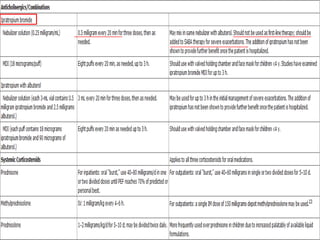
   Inhaled-ipratropium bromide
    ◦ Nebulizer solution (0.25 mg/ml) 0.5 mg q 20
      min for 1 hr (three doses), then as needed;
    ◦ MDI (18 μg/puff) 8 puffs q 20 min as
      needed, for up to 3 hr
    ◦ not recommended as monotherapy in ED
      slow onset of action
    ◦ added to SABA for a greater and longer-
      lasting bronchodilator effect, reduce rates of
      hospitalization by approximately 25% in
      severe asthma


    Emergency Treatment of Asthma, N ENGL J MED 363;8 nejm.org august
Magnesium Sulfate
 relaxes bronchial smooth muscle and
  dilates asthmatic airways.
 I/C (recommended IV > NB)
    ◦ severe asthma attacks (FEV1 < 25%
      predicted) improves airflow obstruction and
      decreases the need for hospital admission
    ◦ MgSO4 2 -3 g IV over 20 min or at rates of
      up to 1 g/min to patients with severe
      refractory asthma
   Side effect
    ◦ warmth, flushing, sweating, N/V, muscle
      weakness and loss of DTR, hypotension, and
      respiratory depression.
Treatments That Are Not
Recommended
   1. Methylxanthines
    ◦ lack of demonstrated efficacy and increases
      in adverse events
   2. Antibiotics
    ◦ should be reserved for pt with bacterial
      infection (e.g., pneumonia or sinusitis)
      seems likely.
 3. Aggressive hydration
 4. Mucolytic agents
    ◦ worsen cough or airflow obstruction
   5. Sedation
      Emergency Treatment of Asthma, N ENGL J MED 363;8 nejm.org august
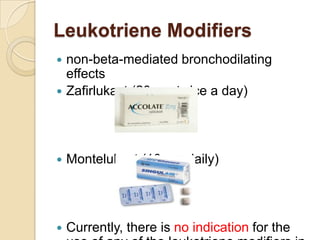
Leukotriene Modifiers
 non-beta-mediated bronchodilating
  effects
 Zafirlukast (20 mg twice a day)


   Montelukast (10 mg daily)


   Currently, there is no indication for the
Pregnancy
   The principles of managing acute asthma in
    pregnancy and during lactation are similar
    to those for the nonpregnant state.
   Early intervention during acute
    exacerbation is key to the prevention of
    impaired maternal and fetal oxygenation.
   PaO2 <70 mm Hg  severe hypoxemia
   PaCO2 >35 mm Hg  respiratory failure
   B2-agonist and ICS : safe during pregnancy
    and are recommended as a routine part of
    asthma management
NPPV
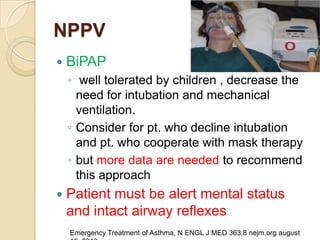
   BiPAP
    ◦ well tolerated by children , decrease the
      need for intubation and mechanical
      ventilation.
    ◦ Consider for pt. who decline intubation
      and pt. who cooperate with mask therapy
    ◦ but more data are needed to recommend
      this approach
   Patient must be alert mental status
    and intact airway reflexes
    Emergency Treatment of Asthma, N ENGL J MED 363;8 nejm.org august
Ketamine
 potent bronchodilator effects
 no randomized trials have been
  conducted.
 not recommended for therapy of acute
  asthma in the nonintubated patient
 Ketamine 1–2 mg/kg IV
 Side effect
    ◦ increased airway secretions and
      emergence reactions
Intubation and Ventilator
Strategy
   Avoid nasotracheal route
     Intubate before the crisis of respiratory
      arrest
     Selected largest ET-tube as soon as
      possible.
     Pretreatment
      ◦ Lidocaine 1.5 mg/kg IV
     Induction
      ◦ Midazolam 1 mg IV q 2-3 min
      ◦ Ketamine 1–2 mg/kg IV
     Neuromuscular blocking agent
      ◦ Preferred Rocuronium (1 mg/kg) >
  Rodrigo GJ, Rodrigo C, Hall JB. Acute asthma in adult: a review. Chest 2004; 125:
Intubation and Ventilator
Strategy
    Ventilator strategy
     ◦ adequate oxygenation and
       ventilation, minimizing high airway
       pressure, barotrauma, and systemic
       hypotension
    Permissive hypercapnia technique
     ◦   TV 6–8 mL/kg, MV 6-8 LPM
     ◦   I:E > 1:3, RR 11-14 /min
     ◦   End-inspiratory pressure < 35 cmH2O
     ◦   pH maintained at 7.15–7.2
     ◦   Paco2 <100 mm Hg
Intubation and Ventilator
Strategy
     Complications of mechanical
      ventilation
      ◦ Hypotension and barotrauma
      ◦ Pneumothorax !!!
        sudden clinical deterioration
        hypotension
        significant rise in peak inspiratory ventilator
         pressures and falling oxygen saturation.
     External lateral chest compression :
      patients cannot exhale esp; children
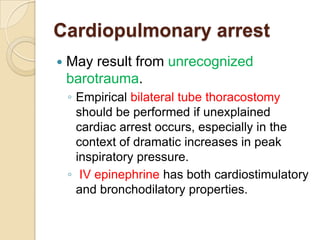
Cardiopulmonary arrest
   May result from unrecognized
    barotrauma.
    ◦ Empirical bilateral tube thoracostomy
      should be performed if unexplained
      cardiac arrest occurs, especially in the
      context of dramatic increases in peak
      inspiratory pressure.
    ◦ IV epinephrine has both cardiostimulatory
      and bronchodilatory properties.
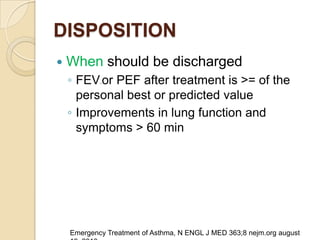
DISPOSITION
   When should be discharged
    ◦ FEV or PEF after treatment is >= of the
            11


      personal best or predicted value
    ◦ Improvements in lung function and
      symptoms > 60 min


    Emergency Treatment of Asthma, N ENGL J MED 363;8 nejm.org august
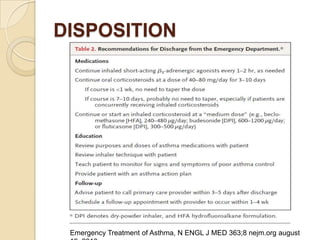
DISPOSITION


 Emergency Treatment of Asthma, N ENGL J MED 363;8 nejm.org august
THANK YOU

Acute asthma in adults

  • 1.
    Acute Asthma in Adults Krit Kuruchaiyapanich, MD
  • 2.
    Definition  Asthma is a chronic inflammatory disorder of the airways in which many cells and cellular elements play a role. ◦ This inflammation causes recurrent episodes of wheezing, breathlessness, chest tightness, and coughing, particularly at night or in the early morning. ◦ Associated with widespread but variable airflow obstruction that is often reversible either spontaneously or withProgram, EPR3: National Asthma Education and Prevention treatment. Guidelines for the
  • 3.
    Definition  Status asthmaticus ◦ severe bronchospasm that does not respond to aggressive therapies within 30 to 60 minutes.  Near-fatal ◦ respiratory arrest or evidence of respiratory failure (Paco2 > 50 mm Hg).
  • 4.
    Definition National Asthma Education and Prevention Program, EPR3: Guidelines for the
  • 5.
    Severe/Refractory asthma American ThoracicSociety workshop consensus for definition of severe/refractory asthma (requires one or both major and two minor criteria and that other conditions have been excluded, exacerbating factors have been treated, and patient is generally compliant).
  • 6.
    Pathophysiology  Hallmark reduction in airway diameter caused by ◦ smooth muscle contraction ◦ vascular congestion ◦ bronchial wall edema ◦ thick secretions  Bronchoconstriction occurs due to ◦ 1. allergic  mediators and metabolic products from inflammatory cells ◦ 2. nonallergic  exercise, aspirin- induced, and menstrual-related asthma
  • 7.
  • 8.
    Pathophysiology National Asthma Education and Prevention Program, EPR3: Guidelines for the
  • 9.
    Pathophysiology  Early asthmatic response ◦ Release of preformed histamine from mast cell granules  bronchial smooth muscle and airway edema wheezing and airflow obstruction (resolves within an hour )  Late asthmatic response ◦ cytokines generated and released by mast cells and other local and recruited inflammatory cells prolonged airflow obstruction and bronchospasm
  • 10.
    Pathophysiology  Eosinophils aremajor effector cells in asthma  Airway epithelial cells : produced Nitric oxide (NO) potent vasodilator and may reflect the presence of inflammation in asthma  Airway remodeling : Inflammation, mucus hypersecretion , subepithelial fibrosis airway smooth muscle hypertrophy, angiogenesischronic irreversible airflow limitation
  • 12.
    Aspirin-exacerbated respiratory disease (AERD)  Triad ◦ aspirin sensitivity, asthma, and nasal polyps  NSAIDs also precipitate AERD (but not reported after administration of COX-2 inhibitors )  common precipitant of life-threatening asthma  Symptoms ◦ occur within 3 hoursprofuse rhinorrhea, conjunctival injection, periorbital edema, and occasionally a scarlet flushing of the head and neck  Definitive diagnosis : provocation challenges
  • 13.
  • 14.
    Exercise-induced asthma (EIA) Etiology is unclear  Atopy is strongly associated with EIA, and up to 40% of patients with allergic rhinitis have EIA  Symptom ◦ occur 3-8 min of exercise, peak 8-15 min after exercise, spontaneous recovery occurs within 60 min  Prophylaxis : warm-up and a short- acting inhaled beta2-agonist
  • 15.
    Menstruation-associated asthma  Perimenstrual reductionsin PEFR of 35 to 80%  Estradiol inhibits eosinophil degranulation and suppresses LT activity.  Progesterone have bronchodilator and anti-inflammatory activity.  Tx : LT antagonists, LABA , estradiol, progest erone, and gonadotropin-releasing
  • 16.
    CLINICAL FEATURES  Classification ◦ 1. Type 1 (Slow onset> 6 hr) 80-90%  Female>male  Etiology: URI  Inflammation less severity than type 2  slower response to therapy ◦ 2. Type 2 (Sudden onset< 6 hr) 10-20%  Male>female  Etiology: respiratory allergen, exercise, stress  Bronchoconstriction more severe  faster response to therapy Picado C. Classification of severe asthma exacerbations: a proposal. Eur Respir J
  • 17.
    CLINICAL FEATURES  Symptom : Triad ◦ dyspnea, wheezing, and cough  Early chest constriction and cough  Exacerbation progresses wheezing, prolonged expiration and accessory muscle used(indicates diaphragmatic fatigue)  Tachypnea and tachycardia >120 beats/min are associated with severe obstruction, but a lower rate does not R/O severe asthma.  The "silent chest" reflects very severe
  • 18.
    CLINICAL FEATURES  bronchiolar smooth muscle tone airway resistance, pulponary infiltration, V/Q missmatch  Dynamic hyperinflation auto-PEEP pulsus paradoxus, diastolic LV dysfn  Acute hypercapnia+ intrathoracic pressure ICP  Signs of impending respiratory failure (1) ◦ inability to speak, altered mental status, intercostal retraction, worsening fatigue, and a PCO2 of ≥42 mmHg (1) National Asthma Education and Prevention Program, EPR3: Guidelines for the
  • 19.
    SEVERITY OF ASTHMA EXACERBATIONS National Asthma Education and Prevention Program, EPR3: Guidelines for the
  • 20.
    Risk factors fordeath from asthma
  • 23.
    DIAGNOSTIC STRATEGIES  Pulmonary Function Studies ◦ FEV1 or PEFR ◦ the best of 3 consecutive values should be recorded  Arterial Blood Gas (mild to moderate hypoxemia with resp. alkalosis) ◦ 1. predicted PFTs of < 30% ◦ 2. clinical course is perplexing Indication ◦ 3. capnography is not available. ◦ acute ventilatory failure hypoventilation with CO2 retention and resp. acidosis
  • 24.
    DIAGNOSTIC STRATEGIES  CXR suspected… ◦ pneumonia, pneumothorax, ateltctasis, pn eumomediastinum, or CHF  ECG should not be routinely obtained, except ◦ patients >40 yr, a separate complaint (e.g., chest pain), Hx of significant CVD ◦ severe asthma: a RV strain pattern  Others ◦ LTE4 in the urine ◦ exhaled nitric oxide
  • 25.
    Assessment Summary  The severity of airflow obstruction cannot be accurately judged by patients’ symptoms, PE , and laboratory tests. Serial measurements of airflow obstruction (FEV1 or PEFR) are key components of disease assessment and response to therapy .
  • 26.
  • 27.
    Management Emergency Treatmentof Asthma, N ENGL J MED 363;8 nejm.org august
  • 28.
    Management Emergency Treatmentof Asthma, N ENGL J MED 363;8 nejm.org august
  • 29.
    Management Emergency Treatmentof Asthma, N ENGL J MED 363;8 nejm.org august
  • 30.
    Management Emergency Treatmentof Asthma, N ENGL J MED 363;8 nejm.org august
  • 33.
    Medication The goal oftreatment of acute asthma in the ED is to reverse airflow obstruction rapidly by repetitive or continuous administration of inhaled B 2- agonists, ensure adequate oxygenation, and relieve inflammation
  • 34.
    Medication 1. Relievers - B2- adrenergic , Anticholinergics, Theophyli ne 2. Controller - Glucocorticoids, Leukotriene modifiers, Cromones, Anti-IgE
  • 35.
    β2-Adrenergic Agonists  Relaxationof bronchial smooth muscle, inhibit mediator release and promote mucociliary clearance.  Most common side effect: skeletal muscle tremor. ◦ others: nervousness, anxiety, insom nia, headache, hyperglycemia, palpitations, tachycardia, and hypertension.
  • 36.
    β2-Adrenergic Agonists  SABA (Solution=MDI) ◦ First line drug ◦ Nebulization = MDI + spacer (prefer nebulization) ◦ Salbutamol 2.5 – 5 * 3 time/hr ◦ MDI with spacer 4– 8 puffs q 20 min up to 4 h, then q 1–4 h as needed.
  • 37.
    β2-Adrenergic Agonists  IV form (not recommened in USA) ◦ severe nonresponsive acute asthma. ◦ albuterol loading dose 4 μg/kg for 2-5 min then infusion of 0.1 to 0.2 μg/kg/min ◦ Epinephrine IV titrated to effect (average 1.5 μg/min with a range of 0.5–13.3 μg/min)  SC form ◦ may be used in pt who cannot adequately inhale albuterol or who experience severe bronchospasm. ◦ Epinephrine (1:1000 ) 0.2-0.5 mL q 20 -30 min ◦ Terbutaline 0.25 mg SC q 20 min * 3 dose
  • 38.
    Corticosteroids  Action in the airways ◦ inhibition of recruitment of inflammatory cells and inhibition of release of proinflammatory mediators and cytokines from activated inflammatory and epithelial cells, activate cytoplasmic glucocorticoid receptors to regulate directly or indirectly the transcription of certain target genes resulting in the synthesis of new proteins.  Two forms ◦ 1. Systemic ◦ 2. Inhaled
  • 39.
    Corticosteroids  1. Systemic (IV and oral) ◦ speeds the resolution of airflow obstruction, reduces the rate of relapse and may decrease admissions in severe, but not in mild to moderate attacks. ◦ Prednisone 40-60 mg oral loading ◦ Methylprednisolone 40–80 mg/day in one dose or two divided doses ◦ Demethasone 5 mg ◦ given q 6 hr until PEFR reaches 70% of predicted value or a personal best value
  • 40.
    Corticosteroids  IV =oral  Side effects ◦ short-term (hours or days) reversible increases in glucose (important in diabetics) and decreases in potassium, fluid retention with wt gain, mood alterations including rare psychosis, hypertension, peptic ulcers, aseptic necrosis of the femur
  • 41.
    Corticosteroids  2. Inhaled  ICS + SABA NB: reducing airway reactivity and edema more effectively  reduce rates of hospitalization  Side effect : Dysphonia, Reflex cough and bronchospasm, Oral candidiasis  Discharged  Prednisone 40-60 mg oral for 7 day  ICS high-dose budesonide (400 μg, two puffs twice per day)
  • 42.
  • 43.
    Anticholinergic Agents  Blocksmooth muscle constrictor and secretory consequences of the PNS, blocking reflex bronchoconstriction and reversing acute airway obstruction.  affect large, central airways, but adrenergic drugs dilate smaller airways.  Side effect ◦ dry mouth, thirst, and difficulty swallowing. Less commonly, tachycardia, restlessness, irritability, confusion, difficulty in micturition, ileus, blurring of vision, or an increase in IOP
  • 44.
    Anticholinergic Agents  Inhaled-ipratropium bromide ◦ Nebulizer solution (0.25 mg/ml) 0.5 mg q 20 min for 1 hr (three doses), then as needed; ◦ MDI (18 μg/puff) 8 puffs q 20 min as needed, for up to 3 hr ◦ not recommended as monotherapy in ED slow onset of action ◦ added to SABA for a greater and longer- lasting bronchodilator effect, reduce rates of hospitalization by approximately 25% in severe asthma Emergency Treatment of Asthma, N ENGL J MED 363;8 nejm.org august
  • 45.
    Magnesium Sulfate  relaxesbronchial smooth muscle and dilates asthmatic airways.  I/C (recommended IV > NB) ◦ severe asthma attacks (FEV1 < 25% predicted) improves airflow obstruction and decreases the need for hospital admission ◦ MgSO4 2 -3 g IV over 20 min or at rates of up to 1 g/min to patients with severe refractory asthma  Side effect ◦ warmth, flushing, sweating, N/V, muscle weakness and loss of DTR, hypotension, and respiratory depression.
  • 46.
    Treatments That AreNot Recommended  1. Methylxanthines ◦ lack of demonstrated efficacy and increases in adverse events  2. Antibiotics ◦ should be reserved for pt with bacterial infection (e.g., pneumonia or sinusitis) seems likely.  3. Aggressive hydration  4. Mucolytic agents ◦ worsen cough or airflow obstruction  5. Sedation Emergency Treatment of Asthma, N ENGL J MED 363;8 nejm.org august
  • 47.
    Leukotriene Modifiers  non-beta-mediatedbronchodilating effects  Zafirlukast (20 mg twice a day)  Montelukast (10 mg daily)  Currently, there is no indication for the
  • 48.
    Pregnancy  The principles of managing acute asthma in pregnancy and during lactation are similar to those for the nonpregnant state.  Early intervention during acute exacerbation is key to the prevention of impaired maternal and fetal oxygenation.  PaO2 <70 mm Hg  severe hypoxemia  PaCO2 >35 mm Hg  respiratory failure  B2-agonist and ICS : safe during pregnancy and are recommended as a routine part of asthma management
  • 49.
    NPPV  BiPAP ◦ well tolerated by children , decrease the need for intubation and mechanical ventilation. ◦ Consider for pt. who decline intubation and pt. who cooperate with mask therapy ◦ but more data are needed to recommend this approach  Patient must be alert mental status and intact airway reflexes Emergency Treatment of Asthma, N ENGL J MED 363;8 nejm.org august
  • 50.
    Ketamine  potent bronchodilatoreffects  no randomized trials have been conducted.  not recommended for therapy of acute asthma in the nonintubated patient  Ketamine 1–2 mg/kg IV  Side effect ◦ increased airway secretions and emergence reactions
  • 51.
    Intubation and Ventilator Strategy  Avoid nasotracheal route  Intubate before the crisis of respiratory arrest  Selected largest ET-tube as soon as possible.  Pretreatment ◦ Lidocaine 1.5 mg/kg IV  Induction ◦ Midazolam 1 mg IV q 2-3 min ◦ Ketamine 1–2 mg/kg IV  Neuromuscular blocking agent ◦ Preferred Rocuronium (1 mg/kg) > Rodrigo GJ, Rodrigo C, Hall JB. Acute asthma in adult: a review. Chest 2004; 125:
  • 52.
    Intubation and Ventilator Strategy  Ventilator strategy ◦ adequate oxygenation and ventilation, minimizing high airway pressure, barotrauma, and systemic hypotension  Permissive hypercapnia technique ◦ TV 6–8 mL/kg, MV 6-8 LPM ◦ I:E > 1:3, RR 11-14 /min ◦ End-inspiratory pressure < 35 cmH2O ◦ pH maintained at 7.15–7.2 ◦ Paco2 <100 mm Hg
  • 53.
    Intubation and Ventilator Strategy  Complications of mechanical ventilation ◦ Hypotension and barotrauma ◦ Pneumothorax !!!  sudden clinical deterioration  hypotension  significant rise in peak inspiratory ventilator pressures and falling oxygen saturation.  External lateral chest compression : patients cannot exhale esp; children
  • 54.
    Cardiopulmonary arrest  May result from unrecognized barotrauma. ◦ Empirical bilateral tube thoracostomy should be performed if unexplained cardiac arrest occurs, especially in the context of dramatic increases in peak inspiratory pressure. ◦ IV epinephrine has both cardiostimulatory and bronchodilatory properties.
  • 55.
    DISPOSITION  When should be discharged ◦ FEV or PEF after treatment is >= of the 11 personal best or predicted value ◦ Improvements in lung function and symptoms > 60 min Emergency Treatment of Asthma, N ENGL J MED 363;8 nejm.org august
  • 56.
    DISPOSITION Emergency Treatmentof Asthma, N ENGL J MED 363;8 nejm.org august
  • 58.