Pharmacotherapy of Asthma
Dr.Raghavendra S.Hegde, D.Pharm., Pharm.D(PB)
Lecturer & Clinical Pharmacist
Department of Clinical Pharmacy
H.S.K College of Pharmacy, Bagalkot
LEARNING OBJECTIVES
1.Describe the pathophysiology and clinical presentation of acute
and chronic asthma.
2. List the treatment goals for asthma.
3. Identify environmental factors associated with worsening asthma
control.
4. Select inhaled drug delivery devices based upon patient
characteristics.
5. Evaluate current metered-dose inhaler technique.
6. Recommend a therapeutic plan based upon asthma control and
severity.
7. Develop an individualized asthma action plan.
Upon completion of the chapter, you will be able to:
Definition
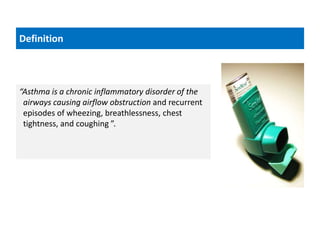
“Asthma is a chronic inflammatory disorder of the
airways causing airflow obstruction and recurrent
episodes of wheezing, breathlessness, chest
tightness, and coughing ”.
Pathophysiology
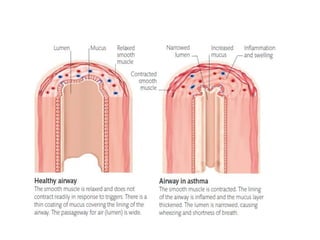
• There is a variable degree of airflow obstruction (related to bronchospasm,
edema, and hypersecretion), bronchial hyperresponsiveness (BHR), and
airway inflammation.
• In acute inflammation, inhaled allergens in allergic patients causes early-
phase allergic reaction with activation of cells bearing allergen-specific
immunoglobulin E (IgE) antibodies.
• After rapid activation, airway mast cells and macrophages release
proinflammatory mediators such as histamine and eicosanoids that induce
contraction of airway smooth muscle, mucus secretion, vasodilatation, and
exudation of plasma in the airways.
• Plasma protein leakage induces a thickened, engorged, edematous airway
wall and narrowing of lumen with reduced mucus clearance.
• Late-phase inflammatory reaction occurs 6 to 9 hours after allergen
provocation and involves recruitment and activation of eosinophils,
T -lymphocytes, basophils, neutrophils, and macrophages.
• Eosinophils migrate to airways and release inflammatory mediators.
• T-lymphocyte activation leads to release of cytokines from type 2 T-helper
(TH2) cells that mediate allergic inflammation (interleukin [IL]-4, IL-5, and
IL 13).
• Conversely, type 1 T-helper (TH1) cells produce IL-2 and interferon-γ that
are essential for cellular defense mechanisms.
• Allergic asthmatic inflammation may result from imbalance between TH1
and TH2 cells.
Pathophysiology
• Mast cell degranulation results in release of mediators such as histamine;
eosinophil and neutrophil chemotactic factors; leukotrienes C4, D4, and
E4; prostaglandins; and platelet-activating factor (PAF).
• Histamine can induce smooth muscle constriction and bronchospasm and
may contribute to mucosal edema and mucus secretion.
• Alveolar macrophages release inflammatory mediators, including PAF and
leukotrienes B4, C4, and D4.
• Production of neutrophil chemotactic factor and eosinophil chemotactic
factor furthers the inflammatory process.
• Neutrophils also release mediators (PAFs, prostaglandins, thromboxanes,
and leukotrienes) that contribute to BHR and airway inflammation.
• Leukotrienes C4, D4, and E4 are released during inflammatory processes in
the lung and produce bronchospasm, mucus secretion, microvascular
permeability, and airway edema.
Pathophysiology
• Bronchial epithelial cells participate in inflammation by releasing
eicosanoids, peptidases, matrix proteins, cytokines, and nitric oxide.
• Epithelial shedding results in heightened airway responsiveness, altered
permeability of airway mucosa, depletion of epithelial-derived relaxant
factors, and loss of enzymes responsible for degrading inflammatory
neuropeptides.
• The exudative inflammatory process and sloughing of epithelial cells into
the airway lumen impair mucociliary transport.
• Bronchial glands increase in size, and goblet cells increase in size and
number.
Pathophysiology
• The airway is innervated by parasympathetic, sympathetic, and
nonadrenergic inhibitory nerves.
• Normal resting tone of airway smooth muscle is maintained by vagal
efferent activity, and bronchoconstriction can be mediated by vagal
stimulation in small bronchi.
• Airway smooth muscle contains noninnervated β2 -adrenergic receptors
that produce bronchodilation.
• The nonadrenergic, noncholinergic nervous system in the trachea and
bronchi may amplify inflammation by releasing nitric oxide.
Pathophysiology
CLINICAL PRESENTATION
• Symptoms include episodes of dyspnea, chest tightness, coughing
(particularly at night), wheezing, or a whistling sound when breathing.
These often occur with exercise but may occur spontaneously or in
association with known allergens.
• Signs include expiratory wheezing on auscultation; dry, hacking cough; and
atopy (eg, allergic rhinitis or eczema).
CHRONIC ASTHMA
• Asthma can vary from chronic daily symptoms to only intermittent
symptoms. Intervals between symptoms may be days, weeks, months, or
years.
• Severity is determined by lung function, symptoms, nighttime awakenings,
and interference with normal activity prior to therapy. Patients can present
with mild intermittent symptoms that require no medications or only
occasional short-acting inhaled β2-agonists to severe chronic symptoms
despite multiple medications.
CLINICAL PRESENTATION
CHRONIC ASTHMA
ACUTE SEVERE ASTHMA
• Uncontrolled asthma can progress to an acute state in which
inflammation, airway edema, mucus accumulation, and severe
bronchospasm result in profound airway narrowing that is poorly
responsive to bronchodilator therapy.
• Patients may be anxious in acute distress and complain of severe
dyspnea, shortness of breath, chest tightness, or burning. They may
be able to say only a few words with each breath. Symptoms are
unresponsive to usual measures (short-acting inhaled β-agonists).
• Signs include expiratory and inspiratory wheezing on auscultation;
dry, hacking cough; tachypnea; tachycardia; pallor or cyanosis; and
hyperinflated chest with intercostal and supraclavicular retractions.
Breath sounds may be diminished with severe obstruction.
CLINICAL PRESENTATION
DIAGNOSIS
• Diagnosis is made primarily by history of recurrent episodes of coughing,
wheezing, chest tightness, or shortness of breath and confirmatory
spirometry.
• Patients may have family history of allergy or asthma or symptoms of
allergic rhinitis. History of exercise or cold air precipitating dyspnea or
increased symptoms during specific allergen seasons suggests asthma.
• Spirometry demonstrates obstruction (forced expiratory volume in 1 second
[FEV1]/ forced vital capacity [FVC] <80%) with reversibility after inhaled β2-
agonist administration (at least 12% improvement in FEV1).
• If baseline spirometry is normal, challenge testing with exercise, histamine,
or methacholine can be used to elicit BHR.
CHRONIC ASTHMA
ACUTE SEVERE ASTHMA
• Peak expiratory flow (PEF) and FEV1 are less than 40% of normal predicted
values.
• Pulse oximetry reveals decreased arterial oxygen and O2 saturations.
• The best predictor of outcome is early response to treatment as measured
by improvement in FEV1 at 30 minutes after inhaled β2-agonists.
• Arterial blood gases may reveal metabolic acidosis and low partial pressure
of oxygen (PaO2).
• History and physical examination should be obtained while initial therapy is
provided. blood count may be appropriate for patients with fever or
purulent sputum.
• History of previous asthma exacerbations (e.g, hospitalizations, intubations)
and complicating illnesses (e.g, cardiac disease, diabetes) should be
documented.
• Patient should be examined to assess hydration status; use of accessory
muscles of respiration; and the presence of cyanosis, pneumonia,
pneumothorax, pneumomediastinum, and upper airway obstruction.
Complete
ACUTE SEVERE ASTHMA
TREATMENT
• Goals of Treatment: Goals for chronic asthma management include:
✓ Reducing impairment:
(1)prevent chronic and troublesome symptoms (eg, coughing or
breathlessness in the daytime, at night, or after exertion).
(2) require infrequent use (≤2 days/wk) of inhaled short-acting β2-agonist for
quick relief of symptoms (not including prevention of exercise-induced
bronchospasm [EIB]),
(3) maintain (near-) normal pulmonary function
(4) maintain normal activity levels (including exercise and attendance at work
or school), and
(5) meet patients’ and families’ expectations and satisfaction with care.
✓ Reducing risk:
(1) prevent recurrent exacerbations and minimize need for emergency
department visits or hospitalizations
(2) prevent loss of lung function; for children, prevent reduced lung growth
(3) minimal or no adverse effects of therapy.
• For acute severe asthma, treatment goals are to
(1) correct significant hypoxemia,
(2) rapidly reverse airway obstruction (within minutes)
(3) reduce likelihood of recurrence of severe airflow obstruction, and
(4) develop a written action plan in case of future exacerbation.
NONPHARMACOLOGIC THERAPY
• Patient education is mandatory to improve medication adherence, self-
management skills, and use of healthcare services.
• Objective measurements of airflow obstruction with a home peak flow
meter may not improve patient outcomes. NAEPP advocates PEF
monitoring only for patients with severe persistent asthma who have
difficulty perceiving airway obstruction.
• Avoidance of known allergenic triggers can improve symptoms, reduce
medication use, and decrease BHR. Environmental triggers (eg, animals)
should be avoided in sensitive patients, and smokers should be
encouraged to quit.
• Patients with acute severe asthma should receive oxygen to maintain PaO2
greater than 90% (>95% in pregnancy and heart disease). Dehydration
should be corrected; urine specific gravity may help guide therapy in
children when assessment of hydration status is difficult.
PHARMACOTHERAPY
β2-Agonists
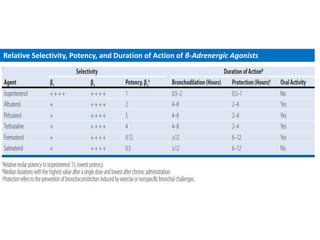
• Short-acting β2-agonists (Table ) are the most effective bronchodilators.
Aerosol administration enhances bronchoselectivity and provides more
rapid response and greater protection against provocations (eg, exercise,
allergen challenges) than systemic administration.
• Albuterol and other inhaled short-acting selective β2-agonists are
indicated for intermittent episodes of bronchospasm and are the
treatment of choice for acute severe asthma and EIB. Regular treatment
(four times daily) does not improve symptom control over as-needed use
β2-Agonists
• Formoterol and salmeterol are inhaled long-acting β2-agonists for adjunctive
longterm control for patients with symptoms who are already on low to medium
doses of inhaled corticosteroids prior to advancing to medium- or high-dose inhaled
corticosteroids.
• Short-acting β2-agonists should be continued for acute exacerbations.
• Long-acting agents are ineffective for acute severe asthma because it can take up to
20 minutes for onset and 1 to 4 hours for maximum bronchodilation.
• In acute severe asthma, continuous nebulization of short-acting β2-agonists (eg,
albuterol) is recommended for patients having unsatisfactory response after three
doses (every 20 min) of aerosolized β2-agonists and potentially for patients
presenting initially with PEF or FEV1 values less than 30% of predicted normal.
β2-Agonists
• Inhaled β2-agonists agents are the treatment of choice for
EIB. Short acting agents provide complete protection for at
least 2 hours; long-acting agents provide significant
protection for 8 to 12 hours initially, but duration decreases
with chronic regular use.
• In nocturnal asthma, long-acting inhaled β2-agonists are
preferred over oral sustained-release β2-agonists or
sustained-release theophylline. However, nocturnal asthma
may be an indicator of inadequate anti-inflammatory
treatment.
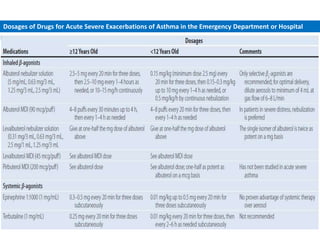
Dosing guidelines are presented in Table.
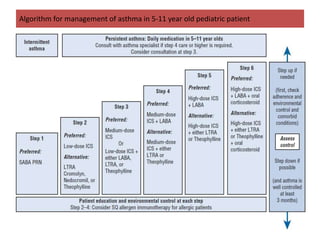
Algorithm for management of asthma in 5-11 year old pediatric patient
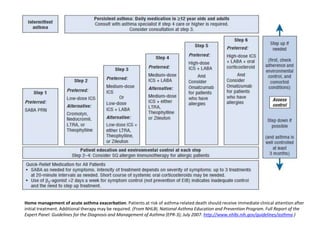
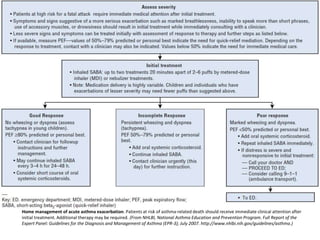
Home management of acute asthma exacerbation. Patients at risk of asthma-related death should receive immediate clinical attention after
initial treatment. Additional therapy may be required. (From NHLBI, National Asthma Education and Prevention Program. Full Report of the
Expert Panel: Guidelines for the Diagnosis and Management of Asthma (EPR-3); July 2007. http://www.nhlbi.nih.gov/guidelines/asthma.)
Home management of acute asthma exacerbation. Patients at risk of asthma-related death should receive immediate clinical attention after
initial treatment. Additional therapy may be required. (From NHLBI, National Asthma Education and Prevention Program. Full Report of the
Expert Panel: Guidelines for the Diagnosis and Management of Asthma (EPR-3); July 2007. http://www.nhlbi.nih.gov/guidelines/asthma.)
Relative Selectivity, Potency, and Duration of Action of β-Adrenergic Agonists
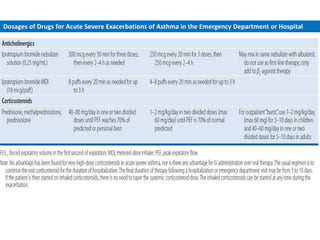
Dosages of Drugs for Acute Severe Exacerbations of Asthma in the Emergency Department or Hospital
Corticosteroids
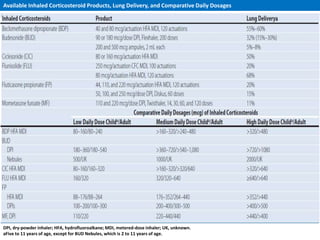
• Inhaled corticosteroids are the preferred long-term control therapy
for persistent asthma because of potency and consistent
effectiveness; they are the only therapy shown to reduce risk of
dying from asthma. Comparative doses are included in Table.
• Most patients with moderate disease can be controlled with twice-
daily dosing; some products have once-daily dosing indications.
Patients with more severe disease require multiple daily dosing.
• Because inflammation inhibits steroid receptor binding, patients
should be started on higher and more frequent doses and then
tapered down once control has been achieved. Response to inhaled
corticosteroids is delayed; symptoms improve in most patients within
the first 1 to 2 weeks and reach maximum improvement in 4 to 8
weeks.
• Maximum improvement in FEV1 and PEF rates may require 3 to 6
weeks.
• Systemic toxicity of inhaled corticosteroids is minimal with low to
moderate doses, but risk of systemic effects increases with high
doses. Local adverse effects include dose-dependent oropharyngeal
candidiasis and dysphonia, which can be reduced by using a spacer
device.
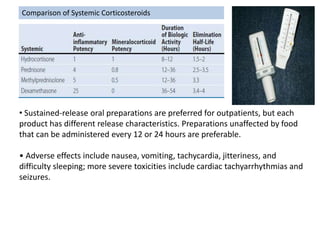
• Systemic corticosteroids (Table ) are indicated in all patients with
acute severe asthma not responding completely to initial inhaled β2-
agonist administration (every 20 min for 3 or 4 doses). Prednisone, 1
to 2 mg/kg/day (up to 40–60 mg/ day), is administered orally in two
divided doses for 3 to 10 days. Because short-term (1–2 week), high-
dose systemic steroids do not produce serious toxicities, the ideal
method is to use a short burst and then maintain appropriate long-
term control therapy with inhaled corticosteroids.
• In patients who require chronic systemic corticosteroids for asthma
control, the lowest possible dose should be used. Toxicities may be
decreased by alternate-day therapy or high-dose inhaled
corticosteroids.
Corticosteroids
Methylxanthines
• Theophylline appears to produce bronchodilation
through nonselective phosphodiesterase inhibition.
Methylxanthines are ineffective by aerosol and must be
taken systemically (orally or IV).
• Sustained-release theophylline is the preferred oral
preparation, whereas its complex with ethylenediamine
(aminophylline) is the preferred parenteral product due to
increased solubility. IV theophylline is also available.
• Theophylline is eliminated primarily by metabolism via
hepatic CYP P450 enzymes (primarily CYP1A2 and CYP3A4)
with less than or equal to10% excreted unchanged in urine.
CYP P450 enzymes are susceptible to induction and
inhibition by environmental factors and drugs.
Methylxanthines
• Significant reductions in clearance can result from cotherapy with
cimetidine, erythromycin, clarithromycin, allopurinol, propranolol,
ciprofloxacin, interferon, ticlopidine, zileuton, and other drugs. Some
substances that enhance clearance are rifampin, carbamazepine,
phenobarbital, phenytoin, charcoalbroiled meat, and cigarette smoking.
• Because of large interpatient variability in theophylline clearance, routine
monitoring of serum theophylline concentrations is essential for safe and
effective use. A steady-state range of 5 to 15 mcg/mL (27.75–83.25 μmol/L)
is effective and safe for most patients.
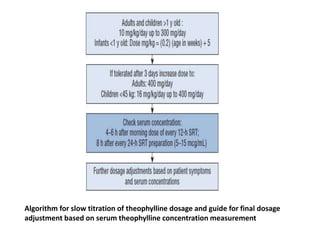
• Figure :gives recommended dosages, monitoring schedules, and dosage
adjustments for theophylline.
Available Inhaled Corticosteroid Products, Lung Delivery, and Comparative Daily Dosages
DPI, dry-powder inhaler; HFA, hydrofluoroalkane; MDI, metered-dose inhaler; UK, unknown.
aFive to 11 years of age, except for BUD Nebules, which is 2 to 11 years of age.
• Sustained-release oral preparations are preferred for outpatients, but each
product has different release characteristics. Preparations unaffected by food
that can be administered every 12 or 24 hours are preferable.
• Adverse effects include nausea, vomiting, tachycardia, jitteriness, and
difficulty sleeping; more severe toxicities include cardiac tachyarrhythmias and
seizures.
Comparison of Systemic Corticosteroids
• Sustained-release theophylline is less effective than inhaled corticosteroids
and no more effective than oral sustained-release β2-agonists, cromolyn, or
leukotriene antagonists.
• Addition of theophylline to optimal inhaled corticosteroids is similar to
doubling the dose of the inhaled corticosteroid and is less effective overall
than long-acting β2-agonists as adjunctive therapy
Methylxanthines
Anticholinergics
• Ipratropium bromide and tiotropium bromide produce bronchodilation
only in cholinergic-mediated bronchoconstriction.
• Anticholinergics are effective bronchodilators but are not as effective as β2-
agonists.
• They attenuate but do not block allergenor exercise-induced asthma in a
dose-dependent fashion.
Algorithm for slow titration of theophylline dosage and guide for final dosage
adjustment based on serum theophylline concentration measurement
• For infants younger than 1 year of age, the initial daily dosage can be
calculated by the following regression equation:
• Dose (mg/kg) = (0.2) (age in weeks) + 5.
• Whenever side effects occur, dosage should be reduced to a previously
tolerated lower dose. (SRT , sustained-release theophylline.)
Anticholinergics
• Time to reach maximum bronchodilation from aerosolized
ipratropium is longer than from aerosolized short-acting β2-
agonists (30–60 min vs 5–10 min).
• However, some bronchodilation is seen within 30 seconds,
and 50% of maximum response occurs within 3 minutes.
• Ipratropium bromide has a duration of action of 4 to 8
hours; tiotropium bromide has a duration of 24 hours.
• Inhaled ipratropium bromide is only indicated as adjunctive
therapy in severe acute asthma not completely responsive
to β2-agonists alone because it does not improve outcomes
in chronic asthma. Studies of tiotropium bromide in asthma
are ongoing.
Anticholinergics
Mast Cell Stabilizers
• Cromolyn sodium has beneficial effects that are believed to result from
stabilization of mast cell membranes.
• It inhibits the response to allergen challenge as well as EIB but does not
cause bronchodilation.
• Cromolyn is effective only by inhalation and is available as a nebulizer
solution. Cough and wheezing have been reported after inhalation.
• Cromolyn is indicated for prophylaxis of mild persistent asthma in
children and adults.
• Effectiveness is comparable to theophylline or leukotriene antagonists.
• It is not as effective as inhaled β2-agonists for preventing EIB, but it can be
used in conjunction for patients not responding completely to inhaled β2-
agonists.
• Most patients experience improvement in 1 to 2 weeks, but it may take
longer to achieve maximum benefit.
• Patients should initially receive cromolyn four times daily; after
stabilization of symptoms, the frequency may be reduced to three times
daily.
Mast Cell Stabilizers
Leukotriene Modifiers
• Zafirlukast (Accolate) and montelukast (Singulair) are oral leukotriene
receptor antagonists that reduce the proinflammatory (increased
microvascular permeability and airway edema) and bronchoconstriction
effects of leukotriene D4.
• In persistent asthma, they improve pulmonary function tests, decrease
nocturnal awakenings and β2-agonist use, and improve symptoms.
However, they are less effective than low-dose inhaled corticosteroids..
• They are not used to treat acute exacerbations and must be taken on a
regular basis, even during symptom-free periods.
• Adult zafirlukast dose is 20 mg twice daily, taken at least 1 hour before or
2 hours after meals; dose for children ages 5 through 11 years is 10 mg
twice daily.
• Montelukast adult dose is 10 mg once daily, taken in the evening without
regard to food; dose for children ages 6 to 14 years is one 5-mg chewable
tablet daily in the evening
Leukotriene Modifiers
• Rare elevations in serum aminotransferase concentrations and clinical
hepatitis have been reported.
• An idiosyncratic syndrome similar to the Churg–Strauss syndrome, with
marked circulating eosinophilia, heart failure, and associated eosinophilic
vasculitis, has been reported rarely; a direct causal association has not
been established.
Leukotriene Modifiers
• Zileuton (Zyflo) is a 5-lipoxygenase inhibitor; use is limited due to
potential for elevated hepatic enzymes, especially in first 3 months of
therapy, and inhibition of metabolism of some drugs metabolized by
CYP3A4 (eg, theophylline and warfarin).
• Dose of zileuton tablets is 600 mg four times daily with meals and at
bedtime.
• Dose of zileuton extended-release tablets is two 600-mg tablets twice
daily, within 1 hour after morning and evening meals (total daily dose
2400 mg).
Leukotriene Modifiers
Combination Controller Therapy
• Addition of a second long-term control medication to inhaled corticosteroid
therapy is one recommended treatment option in moderate to severe
persistent asthma.
• Single-inhaler combination products containing fluticasone propionate and
salmeterol (Advair) or budesonide and formoterol (Symbicort) are currently
available.
• The inhalers contain varied doses of the inhaled corticosteroid with a fixed
dose of the long-acting β2-agonist. Addition of a long-acting β2-agonist
allows 50% reduction in inhaled corticosteroid dosage in most patients with
persistent asthma. Combination therapy is more effective than higher-dose
inhaled corticosteroids alone in reducing asthma exacerbations in patients
with persistent asthma.
Omalizumab
• Omalizumab (Xolair) is an anti-IgE antibody approved for
treatment of allergic asthma not well controlled by oral or inhaled
corticosteroids.
• Dosage is determined by baseline total serum IgE (international
units/mL) and body weight (kg).
• Doses range from 150 to 375 mg subcutaneously at either 2- or 4-
week intervals.
• Because of high cost, omalizumab is only indicated as step 5 or 6
care for patients with allergies and severe persistent asthma
inadequately controlled with combination of high-dose inhaled
corticosteroids and long-acting β2-agonists and at risk for severe
exacerbations.
• Because of 0.2% incidence of anaphylaxis, observe patients for a
reasonable period after injection because 70% of reactions occur
within 2 hours. Some reactions have occurred up to 24 hours after
injection.
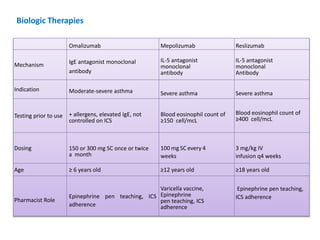
Omalizumab Mepolizumab Reslizumab
Mechanism IgE antagonist monoclonal
antibody
IL-5 antagonist
monoclonal
antibody
IL-5 antagonist
monoclonal
Antibody
Indication Moderate-severe asthma Severe asthma Severe asthma
Testing prior to use + allergens, elevated IgE, not
controlled on ICS
Blood eosinophil count of
≥150 cell/mcL
Blood eosinophil count of
≥400 cell/mcL
Dosing 150 or 300 mg SC once or twice
a month
100 mg SC every 4
weeks
3 mg/kg IV
infusion q4 weeks
Age ≥ 6 years old ≥12 years old ≥18 years old
Pharmacist Role
Epinephrine pen teaching, ICS
adherence
Varicella vaccine,
Epinephrine
pen teaching, ICS
adherence
Epinephrine pen teaching,
ICS adherence
Biologic Therapies
EVALUATION OF THERAPEUTIC OUTCOMES
CHRONIC ASTHMA
• Asthma control involves reducing both impairment and risk domains.
Regular follow-up is essential at 1- to 6-month intervals, depending on
control.
• Components of assessment include symptoms, nighttime awakenings,
interference
with normal activities, pulmonary function, quality of life, exacerbations,
adherence,
treatment-related adverse effects, and satisfaction with care.
• Ask patients about exercise tolerance.
• Categories of well controlled, not well controlled, and very poorly controlled
are recommended. Validated questionnaires can be administered regularly,
such as Asthma Therapy Assessment Questionnaire, Asthma Control
Questionnaire, and Asthma Control Test.
ACUTE SEVERE ASTHMA
• Patients at risk for acute severe exacerbations should monitor morning
peak flows at home.
• Monitor lung function, either spirometry or peak flows, 5 to 10 minutes
after each treatment. Monitoring of pulse oximetry, lung auscultation, and
observation for supraclavicular retractions are useful.
• Most patients respond within the first hour of initial inhaled β-agonists.
Monitor patients not achieving initial response every 0.5 to 1 hour.
• Spirometric tests are recommended at initial assessment, after treatment
is initiated, and then every 1 to 2 years.
• Peak flow monitoring is recommended in moderate to severe persistent
asthma.
• All patients on inhaled drugs should have their inhalation technique
evaluated monthly initially and then every 3 to 6 months.
• After initiation of anti-inflammatory therapy or increase in dosage, most
patients should experience decreased symptoms within 1 to 2 weeks and
achieve maximum improvement within 4 to 8 weeks. Improvement in
baseline FEV1 or PEF should follow a similar time course, but decrease in
BHR as measured by morning PEF, PEF variability, and exercise tolerance
may take longer and improve over 1 to 3 months.
ACUTE SEVERE ASTHMA
Reference
• Pharmacotherapy Handbook by dipiro,9th edition.
• Asthma, authored by H. William Kelly and Christine A. Sorkness, for a more
detailed discussion of this topic.
• (From NHLBI, National Asthma Education and Prevention Program).
• Full Report of the Expert Panel: Guidelines for the Diagnosis and
Management of Asthma (EPR-3); July 2007.
http://www.nhlbi.nih.gov/guidelines/asthma.)
http://www.nhlbi.nih.gov/guidelines/asthma/asthgdln.pdf
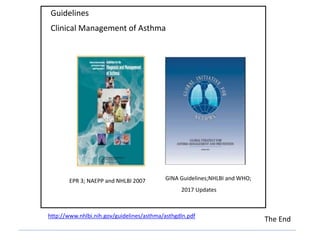
GINA Guidelines;NHLBI and WHO;
2017 Updates
EPR 3; NAEPP and NHLBI 2007
Guidelines
Clinical Management of Asthma
The End

Asthma Management

  • 1.
    Pharmacotherapy of Asthma Dr.RaghavendraS.Hegde, D.Pharm., Pharm.D(PB) Lecturer & Clinical Pharmacist Department of Clinical Pharmacy H.S.K College of Pharmacy, Bagalkot
  • 2.
    LEARNING OBJECTIVES 1.Describe thepathophysiology and clinical presentation of acute and chronic asthma. 2. List the treatment goals for asthma. 3. Identify environmental factors associated with worsening asthma control. 4. Select inhaled drug delivery devices based upon patient characteristics. 5. Evaluate current metered-dose inhaler technique. 6. Recommend a therapeutic plan based upon asthma control and severity. 7. Develop an individualized asthma action plan. Upon completion of the chapter, you will be able to:
  • 3.
    Definition “Asthma is achronic inflammatory disorder of the airways causing airflow obstruction and recurrent episodes of wheezing, breathlessness, chest tightness, and coughing ”.
  • 4.
    Pathophysiology • There isa variable degree of airflow obstruction (related to bronchospasm, edema, and hypersecretion), bronchial hyperresponsiveness (BHR), and airway inflammation. • In acute inflammation, inhaled allergens in allergic patients causes early- phase allergic reaction with activation of cells bearing allergen-specific immunoglobulin E (IgE) antibodies. • After rapid activation, airway mast cells and macrophages release proinflammatory mediators such as histamine and eicosanoids that induce contraction of airway smooth muscle, mucus secretion, vasodilatation, and exudation of plasma in the airways.
  • 5.
    • Plasma proteinleakage induces a thickened, engorged, edematous airway wall and narrowing of lumen with reduced mucus clearance. • Late-phase inflammatory reaction occurs 6 to 9 hours after allergen provocation and involves recruitment and activation of eosinophils, T -lymphocytes, basophils, neutrophils, and macrophages. • Eosinophils migrate to airways and release inflammatory mediators. • T-lymphocyte activation leads to release of cytokines from type 2 T-helper (TH2) cells that mediate allergic inflammation (interleukin [IL]-4, IL-5, and IL 13). • Conversely, type 1 T-helper (TH1) cells produce IL-2 and interferon-γ that are essential for cellular defense mechanisms. • Allergic asthmatic inflammation may result from imbalance between TH1 and TH2 cells. Pathophysiology
  • 6.
    • Mast celldegranulation results in release of mediators such as histamine; eosinophil and neutrophil chemotactic factors; leukotrienes C4, D4, and E4; prostaglandins; and platelet-activating factor (PAF). • Histamine can induce smooth muscle constriction and bronchospasm and may contribute to mucosal edema and mucus secretion. • Alveolar macrophages release inflammatory mediators, including PAF and leukotrienes B4, C4, and D4. • Production of neutrophil chemotactic factor and eosinophil chemotactic factor furthers the inflammatory process. • Neutrophils also release mediators (PAFs, prostaglandins, thromboxanes, and leukotrienes) that contribute to BHR and airway inflammation. • Leukotrienes C4, D4, and E4 are released during inflammatory processes in the lung and produce bronchospasm, mucus secretion, microvascular permeability, and airway edema. Pathophysiology
  • 7.
    • Bronchial epithelialcells participate in inflammation by releasing eicosanoids, peptidases, matrix proteins, cytokines, and nitric oxide. • Epithelial shedding results in heightened airway responsiveness, altered permeability of airway mucosa, depletion of epithelial-derived relaxant factors, and loss of enzymes responsible for degrading inflammatory neuropeptides. • The exudative inflammatory process and sloughing of epithelial cells into the airway lumen impair mucociliary transport. • Bronchial glands increase in size, and goblet cells increase in size and number. Pathophysiology
  • 8.
    • The airwayis innervated by parasympathetic, sympathetic, and nonadrenergic inhibitory nerves. • Normal resting tone of airway smooth muscle is maintained by vagal efferent activity, and bronchoconstriction can be mediated by vagal stimulation in small bronchi. • Airway smooth muscle contains noninnervated β2 -adrenergic receptors that produce bronchodilation. • The nonadrenergic, noncholinergic nervous system in the trachea and bronchi may amplify inflammation by releasing nitric oxide. Pathophysiology
  • 10.
    CLINICAL PRESENTATION • Symptomsinclude episodes of dyspnea, chest tightness, coughing (particularly at night), wheezing, or a whistling sound when breathing. These often occur with exercise but may occur spontaneously or in association with known allergens. • Signs include expiratory wheezing on auscultation; dry, hacking cough; and atopy (eg, allergic rhinitis or eczema). CHRONIC ASTHMA
  • 11.
    • Asthma canvary from chronic daily symptoms to only intermittent symptoms. Intervals between symptoms may be days, weeks, months, or years. • Severity is determined by lung function, symptoms, nighttime awakenings, and interference with normal activity prior to therapy. Patients can present with mild intermittent symptoms that require no medications or only occasional short-acting inhaled β2-agonists to severe chronic symptoms despite multiple medications. CLINICAL PRESENTATION CHRONIC ASTHMA
  • 12.
    ACUTE SEVERE ASTHMA •Uncontrolled asthma can progress to an acute state in which inflammation, airway edema, mucus accumulation, and severe bronchospasm result in profound airway narrowing that is poorly responsive to bronchodilator therapy. • Patients may be anxious in acute distress and complain of severe dyspnea, shortness of breath, chest tightness, or burning. They may be able to say only a few words with each breath. Symptoms are unresponsive to usual measures (short-acting inhaled β-agonists). • Signs include expiratory and inspiratory wheezing on auscultation; dry, hacking cough; tachypnea; tachycardia; pallor or cyanosis; and hyperinflated chest with intercostal and supraclavicular retractions. Breath sounds may be diminished with severe obstruction. CLINICAL PRESENTATION
  • 13.
    DIAGNOSIS • Diagnosis ismade primarily by history of recurrent episodes of coughing, wheezing, chest tightness, or shortness of breath and confirmatory spirometry. • Patients may have family history of allergy or asthma or symptoms of allergic rhinitis. History of exercise or cold air precipitating dyspnea or increased symptoms during specific allergen seasons suggests asthma. • Spirometry demonstrates obstruction (forced expiratory volume in 1 second [FEV1]/ forced vital capacity [FVC] <80%) with reversibility after inhaled β2- agonist administration (at least 12% improvement in FEV1). • If baseline spirometry is normal, challenge testing with exercise, histamine, or methacholine can be used to elicit BHR. CHRONIC ASTHMA
  • 14.
    ACUTE SEVERE ASTHMA •Peak expiratory flow (PEF) and FEV1 are less than 40% of normal predicted values. • Pulse oximetry reveals decreased arterial oxygen and O2 saturations. • The best predictor of outcome is early response to treatment as measured by improvement in FEV1 at 30 minutes after inhaled β2-agonists. • Arterial blood gases may reveal metabolic acidosis and low partial pressure of oxygen (PaO2). • History and physical examination should be obtained while initial therapy is provided. blood count may be appropriate for patients with fever or purulent sputum.
  • 15.
    • History ofprevious asthma exacerbations (e.g, hospitalizations, intubations) and complicating illnesses (e.g, cardiac disease, diabetes) should be documented. • Patient should be examined to assess hydration status; use of accessory muscles of respiration; and the presence of cyanosis, pneumonia, pneumothorax, pneumomediastinum, and upper airway obstruction. Complete ACUTE SEVERE ASTHMA
  • 16.
    TREATMENT • Goals ofTreatment: Goals for chronic asthma management include: ✓ Reducing impairment: (1)prevent chronic and troublesome symptoms (eg, coughing or breathlessness in the daytime, at night, or after exertion). (2) require infrequent use (≤2 days/wk) of inhaled short-acting β2-agonist for quick relief of symptoms (not including prevention of exercise-induced bronchospasm [EIB]), (3) maintain (near-) normal pulmonary function (4) maintain normal activity levels (including exercise and attendance at work or school), and (5) meet patients’ and families’ expectations and satisfaction with care.
  • 17.
    ✓ Reducing risk: (1)prevent recurrent exacerbations and minimize need for emergency department visits or hospitalizations (2) prevent loss of lung function; for children, prevent reduced lung growth (3) minimal or no adverse effects of therapy. • For acute severe asthma, treatment goals are to (1) correct significant hypoxemia, (2) rapidly reverse airway obstruction (within minutes) (3) reduce likelihood of recurrence of severe airflow obstruction, and (4) develop a written action plan in case of future exacerbation.
  • 18.
    NONPHARMACOLOGIC THERAPY • Patienteducation is mandatory to improve medication adherence, self- management skills, and use of healthcare services. • Objective measurements of airflow obstruction with a home peak flow meter may not improve patient outcomes. NAEPP advocates PEF monitoring only for patients with severe persistent asthma who have difficulty perceiving airway obstruction. • Avoidance of known allergenic triggers can improve symptoms, reduce medication use, and decrease BHR. Environmental triggers (eg, animals) should be avoided in sensitive patients, and smokers should be encouraged to quit. • Patients with acute severe asthma should receive oxygen to maintain PaO2 greater than 90% (>95% in pregnancy and heart disease). Dehydration should be corrected; urine specific gravity may help guide therapy in children when assessment of hydration status is difficult.
  • 19.
    PHARMACOTHERAPY β2-Agonists • Short-acting β2-agonists(Table ) are the most effective bronchodilators. Aerosol administration enhances bronchoselectivity and provides more rapid response and greater protection against provocations (eg, exercise, allergen challenges) than systemic administration. • Albuterol and other inhaled short-acting selective β2-agonists are indicated for intermittent episodes of bronchospasm and are the treatment of choice for acute severe asthma and EIB. Regular treatment (four times daily) does not improve symptom control over as-needed use
  • 20.
    β2-Agonists • Formoterol andsalmeterol are inhaled long-acting β2-agonists for adjunctive longterm control for patients with symptoms who are already on low to medium doses of inhaled corticosteroids prior to advancing to medium- or high-dose inhaled corticosteroids. • Short-acting β2-agonists should be continued for acute exacerbations. • Long-acting agents are ineffective for acute severe asthma because it can take up to 20 minutes for onset and 1 to 4 hours for maximum bronchodilation. • In acute severe asthma, continuous nebulization of short-acting β2-agonists (eg, albuterol) is recommended for patients having unsatisfactory response after three doses (every 20 min) of aerosolized β2-agonists and potentially for patients presenting initially with PEF or FEV1 values less than 30% of predicted normal.
  • 21.
    β2-Agonists • Inhaled β2-agonistsagents are the treatment of choice for EIB. Short acting agents provide complete protection for at least 2 hours; long-acting agents provide significant protection for 8 to 12 hours initially, but duration decreases with chronic regular use. • In nocturnal asthma, long-acting inhaled β2-agonists are preferred over oral sustained-release β2-agonists or sustained-release theophylline. However, nocturnal asthma may be an indicator of inadequate anti-inflammatory treatment. Dosing guidelines are presented in Table.
  • 22.
    Algorithm for managementof asthma in 5-11 year old pediatric patient
  • 23.
    Home management ofacute asthma exacerbation. Patients at risk of asthma-related death should receive immediate clinical attention after initial treatment. Additional therapy may be required. (From NHLBI, National Asthma Education and Prevention Program. Full Report of the Expert Panel: Guidelines for the Diagnosis and Management of Asthma (EPR-3); July 2007. http://www.nhlbi.nih.gov/guidelines/asthma.)
  • 24.
    Home management ofacute asthma exacerbation. Patients at risk of asthma-related death should receive immediate clinical attention after initial treatment. Additional therapy may be required. (From NHLBI, National Asthma Education and Prevention Program. Full Report of the Expert Panel: Guidelines for the Diagnosis and Management of Asthma (EPR-3); July 2007. http://www.nhlbi.nih.gov/guidelines/asthma.)
  • 25.
    Relative Selectivity, Potency,and Duration of Action of β-Adrenergic Agonists
  • 26.
    Dosages of Drugsfor Acute Severe Exacerbations of Asthma in the Emergency Department or Hospital
  • 27.
    Dosages of Drugsfor Acute Severe Exacerbations of Asthma in the Emergency Department or Hospital
  • 28.
    Corticosteroids • Inhaled corticosteroidsare the preferred long-term control therapy for persistent asthma because of potency and consistent effectiveness; they are the only therapy shown to reduce risk of dying from asthma. Comparative doses are included in Table. • Most patients with moderate disease can be controlled with twice- daily dosing; some products have once-daily dosing indications. Patients with more severe disease require multiple daily dosing. • Because inflammation inhibits steroid receptor binding, patients should be started on higher and more frequent doses and then tapered down once control has been achieved. Response to inhaled corticosteroids is delayed; symptoms improve in most patients within the first 1 to 2 weeks and reach maximum improvement in 4 to 8 weeks. • Maximum improvement in FEV1 and PEF rates may require 3 to 6 weeks.
  • 29.
    • Systemic toxicityof inhaled corticosteroids is minimal with low to moderate doses, but risk of systemic effects increases with high doses. Local adverse effects include dose-dependent oropharyngeal candidiasis and dysphonia, which can be reduced by using a spacer device. • Systemic corticosteroids (Table ) are indicated in all patients with acute severe asthma not responding completely to initial inhaled β2- agonist administration (every 20 min for 3 or 4 doses). Prednisone, 1 to 2 mg/kg/day (up to 40–60 mg/ day), is administered orally in two divided doses for 3 to 10 days. Because short-term (1–2 week), high- dose systemic steroids do not produce serious toxicities, the ideal method is to use a short burst and then maintain appropriate long- term control therapy with inhaled corticosteroids. • In patients who require chronic systemic corticosteroids for asthma control, the lowest possible dose should be used. Toxicities may be decreased by alternate-day therapy or high-dose inhaled corticosteroids. Corticosteroids
  • 30.
    Methylxanthines • Theophylline appearsto produce bronchodilation through nonselective phosphodiesterase inhibition. Methylxanthines are ineffective by aerosol and must be taken systemically (orally or IV). • Sustained-release theophylline is the preferred oral preparation, whereas its complex with ethylenediamine (aminophylline) is the preferred parenteral product due to increased solubility. IV theophylline is also available. • Theophylline is eliminated primarily by metabolism via hepatic CYP P450 enzymes (primarily CYP1A2 and CYP3A4) with less than or equal to10% excreted unchanged in urine. CYP P450 enzymes are susceptible to induction and inhibition by environmental factors and drugs.
  • 31.
    Methylxanthines • Significant reductionsin clearance can result from cotherapy with cimetidine, erythromycin, clarithromycin, allopurinol, propranolol, ciprofloxacin, interferon, ticlopidine, zileuton, and other drugs. Some substances that enhance clearance are rifampin, carbamazepine, phenobarbital, phenytoin, charcoalbroiled meat, and cigarette smoking. • Because of large interpatient variability in theophylline clearance, routine monitoring of serum theophylline concentrations is essential for safe and effective use. A steady-state range of 5 to 15 mcg/mL (27.75–83.25 μmol/L) is effective and safe for most patients. • Figure :gives recommended dosages, monitoring schedules, and dosage adjustments for theophylline.
  • 32.
    Available Inhaled CorticosteroidProducts, Lung Delivery, and Comparative Daily Dosages DPI, dry-powder inhaler; HFA, hydrofluoroalkane; MDI, metered-dose inhaler; UK, unknown. aFive to 11 years of age, except for BUD Nebules, which is 2 to 11 years of age.
  • 33.
    • Sustained-release oralpreparations are preferred for outpatients, but each product has different release characteristics. Preparations unaffected by food that can be administered every 12 or 24 hours are preferable. • Adverse effects include nausea, vomiting, tachycardia, jitteriness, and difficulty sleeping; more severe toxicities include cardiac tachyarrhythmias and seizures. Comparison of Systemic Corticosteroids
  • 34.
    • Sustained-release theophyllineis less effective than inhaled corticosteroids and no more effective than oral sustained-release β2-agonists, cromolyn, or leukotriene antagonists. • Addition of theophylline to optimal inhaled corticosteroids is similar to doubling the dose of the inhaled corticosteroid and is less effective overall than long-acting β2-agonists as adjunctive therapy Methylxanthines
  • 35.
    Anticholinergics • Ipratropium bromideand tiotropium bromide produce bronchodilation only in cholinergic-mediated bronchoconstriction. • Anticholinergics are effective bronchodilators but are not as effective as β2- agonists. • They attenuate but do not block allergenor exercise-induced asthma in a dose-dependent fashion.
  • 36.
    Algorithm for slowtitration of theophylline dosage and guide for final dosage adjustment based on serum theophylline concentration measurement
  • 37.
    • For infantsyounger than 1 year of age, the initial daily dosage can be calculated by the following regression equation: • Dose (mg/kg) = (0.2) (age in weeks) + 5. • Whenever side effects occur, dosage should be reduced to a previously tolerated lower dose. (SRT , sustained-release theophylline.) Anticholinergics
  • 38.
    • Time toreach maximum bronchodilation from aerosolized ipratropium is longer than from aerosolized short-acting β2- agonists (30–60 min vs 5–10 min). • However, some bronchodilation is seen within 30 seconds, and 50% of maximum response occurs within 3 minutes. • Ipratropium bromide has a duration of action of 4 to 8 hours; tiotropium bromide has a duration of 24 hours. • Inhaled ipratropium bromide is only indicated as adjunctive therapy in severe acute asthma not completely responsive to β2-agonists alone because it does not improve outcomes in chronic asthma. Studies of tiotropium bromide in asthma are ongoing. Anticholinergics
  • 39.
    Mast Cell Stabilizers •Cromolyn sodium has beneficial effects that are believed to result from stabilization of mast cell membranes. • It inhibits the response to allergen challenge as well as EIB but does not cause bronchodilation. • Cromolyn is effective only by inhalation and is available as a nebulizer solution. Cough and wheezing have been reported after inhalation.
  • 40.
    • Cromolyn isindicated for prophylaxis of mild persistent asthma in children and adults. • Effectiveness is comparable to theophylline or leukotriene antagonists. • It is not as effective as inhaled β2-agonists for preventing EIB, but it can be used in conjunction for patients not responding completely to inhaled β2- agonists. • Most patients experience improvement in 1 to 2 weeks, but it may take longer to achieve maximum benefit. • Patients should initially receive cromolyn four times daily; after stabilization of symptoms, the frequency may be reduced to three times daily. Mast Cell Stabilizers
  • 41.
    Leukotriene Modifiers • Zafirlukast(Accolate) and montelukast (Singulair) are oral leukotriene receptor antagonists that reduce the proinflammatory (increased microvascular permeability and airway edema) and bronchoconstriction effects of leukotriene D4. • In persistent asthma, they improve pulmonary function tests, decrease nocturnal awakenings and β2-agonist use, and improve symptoms. However, they are less effective than low-dose inhaled corticosteroids..
  • 42.
    • They arenot used to treat acute exacerbations and must be taken on a regular basis, even during symptom-free periods. • Adult zafirlukast dose is 20 mg twice daily, taken at least 1 hour before or 2 hours after meals; dose for children ages 5 through 11 years is 10 mg twice daily. • Montelukast adult dose is 10 mg once daily, taken in the evening without regard to food; dose for children ages 6 to 14 years is one 5-mg chewable tablet daily in the evening Leukotriene Modifiers
  • 43.
    • Rare elevationsin serum aminotransferase concentrations and clinical hepatitis have been reported. • An idiosyncratic syndrome similar to the Churg–Strauss syndrome, with marked circulating eosinophilia, heart failure, and associated eosinophilic vasculitis, has been reported rarely; a direct causal association has not been established. Leukotriene Modifiers
  • 44.
    • Zileuton (Zyflo)is a 5-lipoxygenase inhibitor; use is limited due to potential for elevated hepatic enzymes, especially in first 3 months of therapy, and inhibition of metabolism of some drugs metabolized by CYP3A4 (eg, theophylline and warfarin). • Dose of zileuton tablets is 600 mg four times daily with meals and at bedtime. • Dose of zileuton extended-release tablets is two 600-mg tablets twice daily, within 1 hour after morning and evening meals (total daily dose 2400 mg). Leukotriene Modifiers
  • 45.
    Combination Controller Therapy •Addition of a second long-term control medication to inhaled corticosteroid therapy is one recommended treatment option in moderate to severe persistent asthma. • Single-inhaler combination products containing fluticasone propionate and salmeterol (Advair) or budesonide and formoterol (Symbicort) are currently available. • The inhalers contain varied doses of the inhaled corticosteroid with a fixed dose of the long-acting β2-agonist. Addition of a long-acting β2-agonist allows 50% reduction in inhaled corticosteroid dosage in most patients with persistent asthma. Combination therapy is more effective than higher-dose inhaled corticosteroids alone in reducing asthma exacerbations in patients with persistent asthma.
  • 46.
    Omalizumab • Omalizumab (Xolair)is an anti-IgE antibody approved for treatment of allergic asthma not well controlled by oral or inhaled corticosteroids. • Dosage is determined by baseline total serum IgE (international units/mL) and body weight (kg). • Doses range from 150 to 375 mg subcutaneously at either 2- or 4- week intervals. • Because of high cost, omalizumab is only indicated as step 5 or 6 care for patients with allergies and severe persistent asthma inadequately controlled with combination of high-dose inhaled corticosteroids and long-acting β2-agonists and at risk for severe exacerbations. • Because of 0.2% incidence of anaphylaxis, observe patients for a reasonable period after injection because 70% of reactions occur within 2 hours. Some reactions have occurred up to 24 hours after injection.
  • 47.
    Omalizumab Mepolizumab Reslizumab MechanismIgE antagonist monoclonal antibody IL-5 antagonist monoclonal antibody IL-5 antagonist monoclonal Antibody Indication Moderate-severe asthma Severe asthma Severe asthma Testing prior to use + allergens, elevated IgE, not controlled on ICS Blood eosinophil count of ≥150 cell/mcL Blood eosinophil count of ≥400 cell/mcL Dosing 150 or 300 mg SC once or twice a month 100 mg SC every 4 weeks 3 mg/kg IV infusion q4 weeks Age ≥ 6 years old ≥12 years old ≥18 years old Pharmacist Role Epinephrine pen teaching, ICS adherence Varicella vaccine, Epinephrine pen teaching, ICS adherence Epinephrine pen teaching, ICS adherence Biologic Therapies
  • 48.
    EVALUATION OF THERAPEUTICOUTCOMES CHRONIC ASTHMA • Asthma control involves reducing both impairment and risk domains. Regular follow-up is essential at 1- to 6-month intervals, depending on control. • Components of assessment include symptoms, nighttime awakenings, interference with normal activities, pulmonary function, quality of life, exacerbations, adherence, treatment-related adverse effects, and satisfaction with care. • Ask patients about exercise tolerance. • Categories of well controlled, not well controlled, and very poorly controlled are recommended. Validated questionnaires can be administered regularly, such as Asthma Therapy Assessment Questionnaire, Asthma Control Questionnaire, and Asthma Control Test.
  • 49.
    ACUTE SEVERE ASTHMA •Patients at risk for acute severe exacerbations should monitor morning peak flows at home. • Monitor lung function, either spirometry or peak flows, 5 to 10 minutes after each treatment. Monitoring of pulse oximetry, lung auscultation, and observation for supraclavicular retractions are useful. • Most patients respond within the first hour of initial inhaled β-agonists. Monitor patients not achieving initial response every 0.5 to 1 hour. • Spirometric tests are recommended at initial assessment, after treatment is initiated, and then every 1 to 2 years. • Peak flow monitoring is recommended in moderate to severe persistent asthma.
  • 50.
    • All patientson inhaled drugs should have their inhalation technique evaluated monthly initially and then every 3 to 6 months. • After initiation of anti-inflammatory therapy or increase in dosage, most patients should experience decreased symptoms within 1 to 2 weeks and achieve maximum improvement within 4 to 8 weeks. Improvement in baseline FEV1 or PEF should follow a similar time course, but decrease in BHR as measured by morning PEF, PEF variability, and exercise tolerance may take longer and improve over 1 to 3 months. ACUTE SEVERE ASTHMA
  • 51.
    Reference • Pharmacotherapy Handbookby dipiro,9th edition. • Asthma, authored by H. William Kelly and Christine A. Sorkness, for a more detailed discussion of this topic. • (From NHLBI, National Asthma Education and Prevention Program). • Full Report of the Expert Panel: Guidelines for the Diagnosis and Management of Asthma (EPR-3); July 2007. http://www.nhlbi.nih.gov/guidelines/asthma.)
  • 52.
    http://www.nhlbi.nih.gov/guidelines/asthma/asthgdln.pdf GINA Guidelines;NHLBI andWHO; 2017 Updates EPR 3; NAEPP and NHLBI 2007 Guidelines Clinical Management of Asthma The End