Ventilator
By:- Bharti Rana
GNM 2nd year
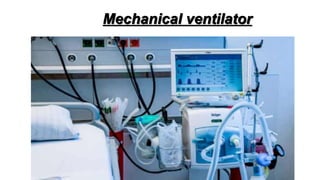
Mechanical ventilator
Definition
A machine that mechanically assist
a patient in exchange of oxygen,
carbon dioxide and deliver breathe
to the patient , who is physically
unable to breathe .
Purpose
Maintain the ventilation and
oxygen for a prolong time .
Indicators
1. Acute respiratory failure
2. Prophylactic ventilatory
support
3. Hyperventilation
therapy
1. Bradypnea
2. Apnea
3. Hypernea
4. Respiratory failure
5. Shock
6. Myasthenia gravis
7. Chronic respiratory failure
8. Status asthmatic , coma
9. Acute respiratory distress syndrome
10.CNS disease
Indicators
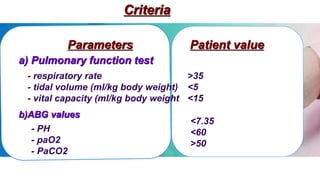
Criteria
Parameters Patient value
a) Pulmonary function test
- respiratory rate
- tidal volume (ml/kg body weight)
- vital capacity (ml/kg body weight
>35
<5
<15
b)ABG values
- PH
- paO2
- PaCO2
<7.35
<60
>50
25% 40% 15%
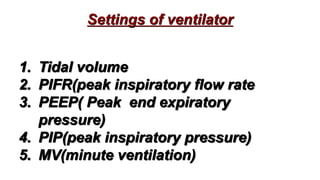
Settings of ventilator
1. Tidal volume
2. PIFR(peak inspiratory flow rate
3. PEEP( Peak end expiratory
pressure)
4. PIP(peak inspiratory pressure)
5. MV(minute ventilation)
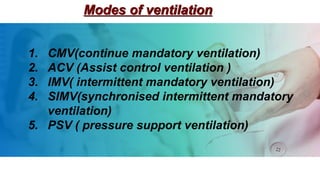
Modes of ventilation
1. CMV(continue mandatory ventilation)
2. ACV (Assist control ventilation )
3. IMV( intermittent mandatory ventilation)
4. SIMV(synchronised intermittent mandatory
ventilation)
5. PSV ( pressure support ventilation)
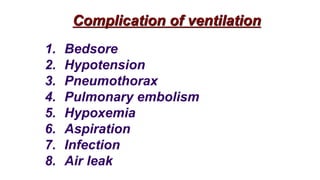
Complication of ventilation
1. Bedsore
2. Hypotension
3. Pneumothorax
4. Pulmonary embolism
5. Hypoxemia
6. Aspiration
7. Infection
8. Air leak
Nursing responsibility of ventilator
patient
1. Assess vital signs , lung sounds , respiratory
status, pulse oximetry reading and breathing
patterns .
2. Maintain skin colour, particularly in the lips and
nail beds.
3. Provides chest physiotherapy .
6. Assess the need of sectioning and provide
if needed.
7. Assess ventilator settings.
8. Assess the level of water in the humidifier
and temperature of the humidification system
.
9. Turn the client at least every two hours to
prevent from bed sore and complications of
immobility.
10. Provide passive exercise.
11. Have resuscitation equipment
available at bedside.
12. Hyperventilate the patient before
suctioning.
13. Documentation.
Thank you 😊

Ventilator

  • 1.
  • 2.
  • 3.
    Definition A machine thatmechanically assist a patient in exchange of oxygen, carbon dioxide and deliver breathe to the patient , who is physically unable to breathe .
  • 4.
    Purpose Maintain the ventilationand oxygen for a prolong time .
  • 5.
    Indicators 1. Acute respiratoryfailure 2. Prophylactic ventilatory support 3. Hyperventilation therapy
  • 6.
    1. Bradypnea 2. Apnea 3.Hypernea 4. Respiratory failure 5. Shock 6. Myasthenia gravis 7. Chronic respiratory failure 8. Status asthmatic , coma 9. Acute respiratory distress syndrome 10.CNS disease Indicators
  • 7.
    Criteria Parameters Patient value a)Pulmonary function test - respiratory rate - tidal volume (ml/kg body weight) - vital capacity (ml/kg body weight >35 <5 <15 b)ABG values - PH - paO2 - PaCO2 <7.35 <60 >50
  • 8.
    25% 40% 15% Settingsof ventilator 1. Tidal volume 2. PIFR(peak inspiratory flow rate 3. PEEP( Peak end expiratory pressure) 4. PIP(peak inspiratory pressure) 5. MV(minute ventilation)
  • 9.
    Modes of ventilation 1.CMV(continue mandatory ventilation) 2. ACV (Assist control ventilation ) 3. IMV( intermittent mandatory ventilation) 4. SIMV(synchronised intermittent mandatory ventilation) 5. PSV ( pressure support ventilation)
  • 11.
    Complication of ventilation 1.Bedsore 2. Hypotension 3. Pneumothorax 4. Pulmonary embolism 5. Hypoxemia 6. Aspiration 7. Infection 8. Air leak
  • 12.
    Nursing responsibility ofventilator patient 1. Assess vital signs , lung sounds , respiratory status, pulse oximetry reading and breathing patterns . 2. Maintain skin colour, particularly in the lips and nail beds. 3. Provides chest physiotherapy .
  • 13.
    6. Assess theneed of sectioning and provide if needed. 7. Assess ventilator settings. 8. Assess the level of water in the humidifier and temperature of the humidification system . 9. Turn the client at least every two hours to prevent from bed sore and complications of immobility.
  • 14.
    10. Provide passiveexercise. 11. Have resuscitation equipment available at bedside. 12. Hyperventilate the patient before suctioning. 13. Documentation.
  • 15.