ARTURO CALVILLO MUÑOZ 5IV14 
PASSUVE VOICE
WHAT IS THE PASSIVE VOICE ? 
PASSIVE VOICE IS USED WHEN THE FOCUS 
IS ON THE ACTION. IT IS NOT IMPORTANT 
OR NOT KNOWN, HOWEVER, WHO OR WHAT IS 
PERFORMING THE ACTION.
Passive voice has three 
characteristics: 
•THERE IS ALWAYS A FORM OF THE 
VERB TO BE. 
THERE IS ALWAYS A PAST 
PARTICIPLE. 
THE SUBJECT IS BEING ACTED 
UPON; THE SUBJECT IS NOT ACTING.
The first characteristic 
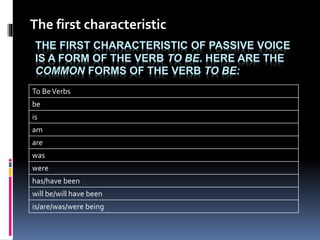
THE FIRST CHARACTERISTIC OF PASSIVE VOICE 
IS A FORM OF THE VERB TO BE. HERE ARE THE 
COMMON FORMS OF THE VERB TO BE: 
To Be Verbs 
be 
is 
am 
are 
was 
were 
has/have been 
will be/will have been 
is/are/was/were being
The second characteristic : 
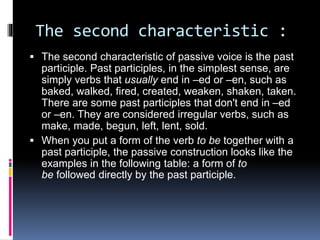
 The second characteristic of passive voice is the past 
participle. Past participles, in the simplest sense, are 
simply verbs that usually end in –ed or –en, such as 
baked, walked, fired, created, weaken, shaken, taken. 
There are some past participles that don't end in –ed 
or –en. They are considered irregular verbs, such as 
make, made, begun, left, lent, sold. 
 When you put a form of the verb to be together with a 
past participle, the passive construction looks like the 
examples in the following table: a form of to 
be followed directly by the past participle.
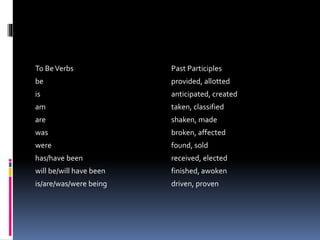
To Be Verbs Past Participles 
be provided, allotted 
is anticipated, created 
am taken, classified 
are shaken, made 
was broken, affected 
were found, sold 
has/have been received, elected 
will be/will have been finished, awoken 
is/are/was/were being driven, proven
Finally 
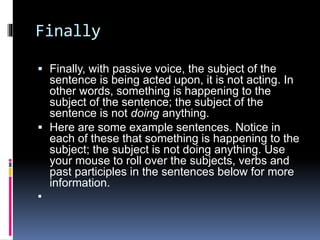
 Finally, with passive voice, the subject of the 
sentence is being acted upon, it is not acting. In 
other words, something is happening to the 
subject of the sentence; the subject of the 
sentence is not doing anything. 
 Here are some example sentences. Notice in 
each of these that something is happening to the 
subject; the subject is not doing anything. Use 
your mouse to roll over the subjects, verbs and 
past participles in the sentences below for more 
information. 

Examples 
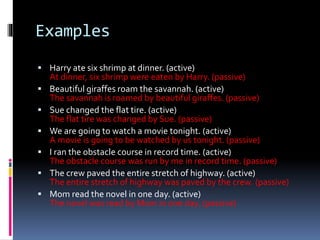
 Harry ate six shrimp at dinner. (active) 
At dinner, six shrimp were eaten by Harry. (passive) 
 Beautiful giraffes roam the savannah. (active) 
The savannah is roamed by beautiful giraffes. (passive) 
 Sue changed the flat tire. (active) 
The flat tire was changed by Sue. (passive) 
 We are going to watch a movie tonight. (active) 
A movie is going to be watched by us tonight. (passive) 
 I ran the obstacle course in record time. (active) 
The obstacle course was run by me in record time. (passive) 
 The crew paved the entire stretch of highway. (active) 
The entire stretch of highway was paved by the crew. (passive) 
 Mom read the novel in one day. (active) 
The novel was read by Mom in one day. (passive)

passive voice

  • 1.
    ARTURO CALVILLO MUÑOZ5IV14 PASSUVE VOICE
  • 2.
    WHAT IS THEPASSIVE VOICE ? PASSIVE VOICE IS USED WHEN THE FOCUS IS ON THE ACTION. IT IS NOT IMPORTANT OR NOT KNOWN, HOWEVER, WHO OR WHAT IS PERFORMING THE ACTION.
  • 3.
    Passive voice hasthree characteristics: •THERE IS ALWAYS A FORM OF THE VERB TO BE. THERE IS ALWAYS A PAST PARTICIPLE. THE SUBJECT IS BEING ACTED UPON; THE SUBJECT IS NOT ACTING.
  • 4.
    The first characteristic THE FIRST CHARACTERISTIC OF PASSIVE VOICE IS A FORM OF THE VERB TO BE. HERE ARE THE COMMON FORMS OF THE VERB TO BE: To Be Verbs be is am are was were has/have been will be/will have been is/are/was/were being
  • 5.
    The second characteristic:  The second characteristic of passive voice is the past participle. Past participles, in the simplest sense, are simply verbs that usually end in –ed or –en, such as baked, walked, fired, created, weaken, shaken, taken. There are some past participles that don't end in –ed or –en. They are considered irregular verbs, such as make, made, begun, left, lent, sold.  When you put a form of the verb to be together with a past participle, the passive construction looks like the examples in the following table: a form of to be followed directly by the past participle.
  • 6.
    To Be VerbsPast Participles be provided, allotted is anticipated, created am taken, classified are shaken, made was broken, affected were found, sold has/have been received, elected will be/will have been finished, awoken is/are/was/were being driven, proven
  • 7.
    Finally  Finally,with passive voice, the subject of the sentence is being acted upon, it is not acting. In other words, something is happening to the subject of the sentence; the subject of the sentence is not doing anything.  Here are some example sentences. Notice in each of these that something is happening to the subject; the subject is not doing anything. Use your mouse to roll over the subjects, verbs and past participles in the sentences below for more information. 
  • 8.
    Examples  Harryate six shrimp at dinner. (active) At dinner, six shrimp were eaten by Harry. (passive)  Beautiful giraffes roam the savannah. (active) The savannah is roamed by beautiful giraffes. (passive)  Sue changed the flat tire. (active) The flat tire was changed by Sue. (passive)  We are going to watch a movie tonight. (active) A movie is going to be watched by us tonight. (passive)  I ran the obstacle course in record time. (active) The obstacle course was run by me in record time. (passive)  The crew paved the entire stretch of highway. (active) The entire stretch of highway was paved by the crew. (passive)  Mom read the novel in one day. (active) The novel was read by Mom in one day. (passive)