Thara Noel
MSc (N) Medical
Surgical Nursing
ACIDS &BASES
Acid
Any compound which can give up a H⁺ ion
in solution (proton donors)
e.g. Carbonic acid releases H⁺ ions to
form bicarbonate(HCO3-)•
Base
Any compound which can accept a H⁺ ion
in solution (proton acceptors)
eg:Bicarbonate(HCO3⁻) accepts H+ ions
to form carbonic acid(H2CO3- )
 Acidosis- Physiological state resulting
from abnormally low plasma pH
 Alkalosis- Physiological state resulting
from abnormally high plasma pH
 Acidemia: plasma pH < 7.35
 Alkalemia: plasma pH > 7.45
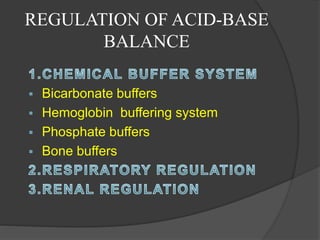
REGULATION OF ACID-BASE
BALANCE
 Bicarbonate buffers
 Hemoglobin buffering system
 Phosphate buffers
 Bone buffers
BICARBONATE BUFFER SYSTEM
 The body cells constantly generate
carbon dioxide
 Most carbondioxide,a by-product of
cellular metabolism, is dissolved in the
blood and converted to carbonic acid.
 Most of the carbonic acid then
dissociates to bicarbonate and
hydrogen ions.
BICARBONATE BUFFER
SYSTEM
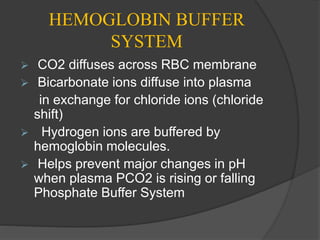
HEMOGLOBIN BUFFER
SYSTEM
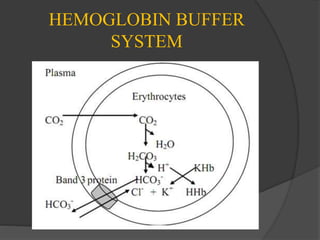
 CO2 diffuses across RBC membrane
 Bicarbonate ions diffuse into plasma
in exchange for chloride ions (chloride
shift)
 Hydrogen ions are buffered by
hemoglobin molecules.
 Helps prevent major changes in pH
when plasma PCO2 is rising or falling
Phosphate Buffer System
HEMOGLOBIN BUFFER
SYSTEM
ROLE OF LUNG AND KIDNEY IN
ACID-BASE BALANCE
ACID BASE
IMBALANCES
CAUSES
AIRWAY
OBSTRUCTION
PULMONARY
SYSTEMIC
NEURO
MUSCULAR
CNS
METABOLIC
CLINICAL FEATURES
 Dyspnoea,Tachypnoea
 Restlessness, Confusion
 Diaphoresis,Lathargy
 Cyanosis
 Dilated Conjunctival and facial blood
vessel
 Ventricular dysrrhythmias
 coma
TREATMENT
 Treat underlying cause
 Oxygen supplement
 CPT,Postural drainage
 Suctioning
 Intubation and mechanical ventilation
 Deep breathing exercise
 Antibiotics,Bronchodialators
CAUSES OF RESPIRATORY
ALKALOSIS
 Direct stimulation of respiratory centre
 Anxiety,Fear,Pain
 Salicylates(stimulate respiratory center)
 Mechanical hyperventilation
 Intracerebral trauma
 Gram negative sepsis
 Pregnancy
 Hepatic insufficiency
CLINICAL MANIFESTATIONS
 Anxiety
 Light headedness
 Paresthesia
 Circumoral numbness
 Confusion
 Arrhythmias
 Tetany, Syncope
 Seizures
MANAGEMENT OF
RESPIRATORYALKALOSIS
.
• Treat Underlying cause
• Sedatives and tranquilizers
.
• Rebreath into paper bag
• Pulsoxymetry
.
• Pain management
• Decrease ventilation(Rate, VT)
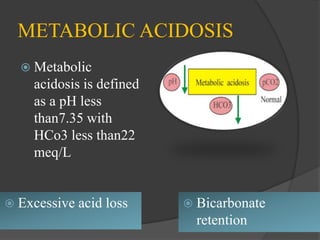
METABOLIC ACIDOSIS
 Metabolic
acidosis is defined
as a pH less
than7.35 with
HCo3 less than22
meq/L
 Excessive acid loss  Bicarbonate
retention
CAUSES OF METABOLIC
ACIDOSIS
 Loss of Bicarbonate
 Excess acid production
 Excess acid ingestion
 Inability of the kidney to excrete
ion load
MANAGEMENT
 Treat underlying cause
 In DKA, Fluids and Insulin
 For CRF Hemodialysis, Peritoneal
dialysis.
 Oral bicarbonate ,IV Sodium
bicarbonate(2 to 5 mEq/kg IV infusion
over 4 to 8 hours; subsequent doses
should be based on patient's acid-base
status)
CAUSES OF METABOLIC
ALKALOSIS
 Vomiting, Nasogastric suctioning
 Diuretics(Loop diuretics,Thiazide
diuretics)
 Mineralo corticoids
 Hyper calcemia,Hypo parathyroidism
 Hypokalemia
 CHO Refeeding after starvation
Cont…..
 Administration or Ingestion of
Bicarbonate
 Massive blood transfusion
 Diuretics
 Cystic fibrosis
MANAGEMENT
 Treat underlying cause
 Treat hypokalemia with oral or IV
Potassium salts
 Isotonic saline infusion to correct volume
deficits
 Azetazolamide in congestive heart
failure
Acid base imbalance
Acid base imbalance

Acid base imbalance

  • 1.
    Thara Noel MSc (N)Medical Surgical Nursing
  • 2.
    ACIDS &BASES Acid Any compoundwhich can give up a H⁺ ion in solution (proton donors) e.g. Carbonic acid releases H⁺ ions to form bicarbonate(HCO3-)• Base Any compound which can accept a H⁺ ion in solution (proton acceptors) eg:Bicarbonate(HCO3⁻) accepts H+ ions to form carbonic acid(H2CO3- )
  • 4.
     Acidosis- Physiologicalstate resulting from abnormally low plasma pH  Alkalosis- Physiological state resulting from abnormally high plasma pH  Acidemia: plasma pH < 7.35  Alkalemia: plasma pH > 7.45
  • 6.
    REGULATION OF ACID-BASE BALANCE Bicarbonate buffers  Hemoglobin buffering system  Phosphate buffers  Bone buffers
  • 7.
    BICARBONATE BUFFER SYSTEM The body cells constantly generate carbon dioxide  Most carbondioxide,a by-product of cellular metabolism, is dissolved in the blood and converted to carbonic acid.  Most of the carbonic acid then dissociates to bicarbonate and hydrogen ions.
  • 8.
  • 9.
    HEMOGLOBIN BUFFER SYSTEM  CO2diffuses across RBC membrane  Bicarbonate ions diffuse into plasma in exchange for chloride ions (chloride shift)  Hydrogen ions are buffered by hemoglobin molecules.  Helps prevent major changes in pH when plasma PCO2 is rising or falling Phosphate Buffer System
  • 10.
  • 14.
    ROLE OF LUNGAND KIDNEY IN ACID-BASE BALANCE
  • 17.
  • 20.
  • 21.
    CLINICAL FEATURES  Dyspnoea,Tachypnoea Restlessness, Confusion  Diaphoresis,Lathargy  Cyanosis  Dilated Conjunctival and facial blood vessel  Ventricular dysrrhythmias  coma
  • 23.
    TREATMENT  Treat underlyingcause  Oxygen supplement  CPT,Postural drainage  Suctioning  Intubation and mechanical ventilation  Deep breathing exercise  Antibiotics,Bronchodialators
  • 25.
    CAUSES OF RESPIRATORY ALKALOSIS Direct stimulation of respiratory centre  Anxiety,Fear,Pain  Salicylates(stimulate respiratory center)  Mechanical hyperventilation  Intracerebral trauma  Gram negative sepsis  Pregnancy  Hepatic insufficiency
  • 26.
    CLINICAL MANIFESTATIONS  Anxiety Light headedness  Paresthesia  Circumoral numbness  Confusion  Arrhythmias  Tetany, Syncope  Seizures
  • 27.
    MANAGEMENT OF RESPIRATORYALKALOSIS . • TreatUnderlying cause • Sedatives and tranquilizers . • Rebreath into paper bag • Pulsoxymetry . • Pain management • Decrease ventilation(Rate, VT)
  • 28.
    METABOLIC ACIDOSIS  Metabolic acidosisis defined as a pH less than7.35 with HCo3 less than22 meq/L  Excessive acid loss  Bicarbonate retention
  • 29.
    CAUSES OF METABOLIC ACIDOSIS Loss of Bicarbonate  Excess acid production  Excess acid ingestion  Inability of the kidney to excrete ion load
  • 31.
    MANAGEMENT  Treat underlyingcause  In DKA, Fluids and Insulin  For CRF Hemodialysis, Peritoneal dialysis.  Oral bicarbonate ,IV Sodium bicarbonate(2 to 5 mEq/kg IV infusion over 4 to 8 hours; subsequent doses should be based on patient's acid-base status)
  • 33.
    CAUSES OF METABOLIC ALKALOSIS Vomiting, Nasogastric suctioning  Diuretics(Loop diuretics,Thiazide diuretics)  Mineralo corticoids  Hyper calcemia,Hypo parathyroidism  Hypokalemia  CHO Refeeding after starvation
  • 34.
    Cont…..  Administration orIngestion of Bicarbonate  Massive blood transfusion  Diuretics  Cystic fibrosis
  • 35.
    MANAGEMENT  Treat underlyingcause  Treat hypokalemia with oral or IV Potassium salts  Isotonic saline infusion to correct volume deficits  Azetazolamide in congestive heart failure