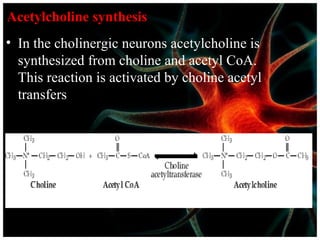
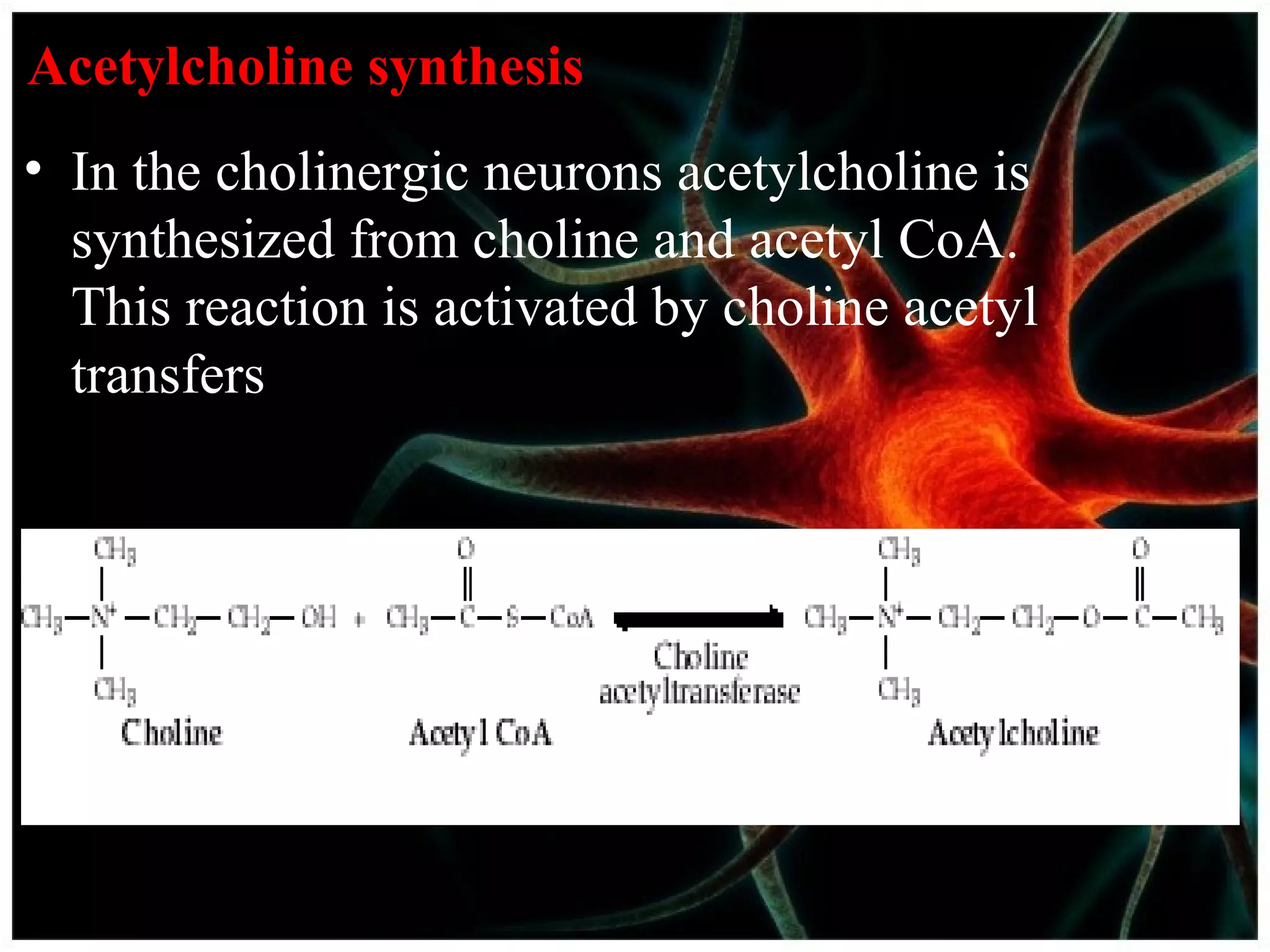
Acetylcholine synthesis
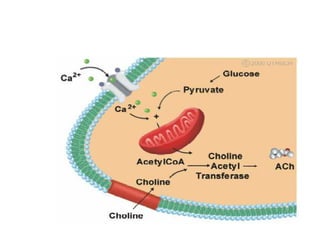
• In the cholinergic neurons acetylcholine is
synthesized from choline and acetyl CoA.
This reaction is activated by choline acetyl
transfers
Acetylcholine degradation
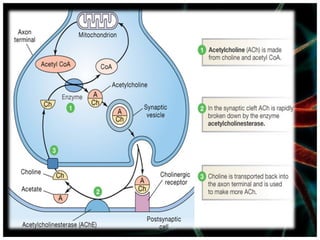
• The enzyme Acetylcholinsetrase converts
acetylcholine into inactive metabolites choline and
acetate.
• Equation.
• The enzyme :
1. is abundant in the synaptic cleft.
2. Its role clearing free acetylcholine from synapse and
this essential for proper muscle function.
3. Deficiency causes paralysis.
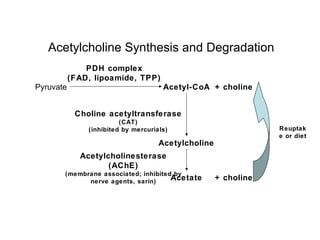
Acetylcholine Synthesis and Degradation
+ cholineAcetyl-CoAPyruvate
PDH complex
(FAD, lipoamide, TPP)
Choline acetyltransferase
(CAT)
(inhibited by mercurials)
Acetylcholine
Acetylcholinesterase
(AChE)
(membrane associated; inhibited by
nerve agents, sarin) Acetate + choline
Reuptak
e or diet
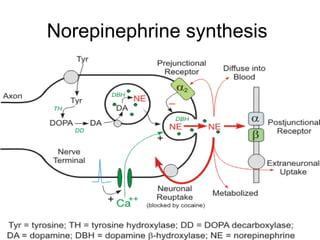
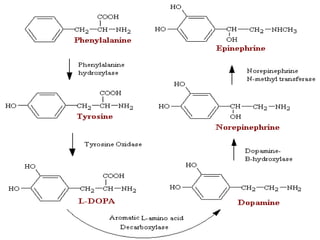
Norepinephrine synthesis
 
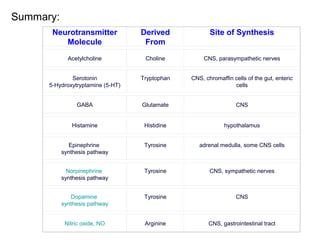
Neurotransmitter
Molecule
Derived
From
Site of Synthesis
Acetylcholine Choline CNS, parasympathetic nerves
Serotonin
5-Hydroxytryptamine (5-HT)
Tryptophan CNS, chromaffin cells of the gut, enteric
cells
GABA Glutamate CNS
Histamine Histidine hypothalamus
Epinephrine
synthesis pathway
Tyrosine adrenal medulla, some CNS cells
Norpinephrine
synthesis pathway
Tyrosine CNS, sympathetic nerves
Dopamine
synthesis pathway
Tyrosine CNS
Nitric oxide, NO Arginine CNS, gastrointestinal tract
Summary:
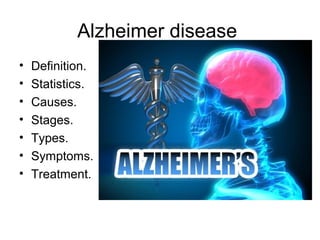
Alzheimer disease
• Definition.
• Statistics.
• Causes.
• Stages.
• Types.
• Symptoms.
• Treatment.
Alzheimer disease
• Definition :
Alzheimer's disease is an organic mental
illness. that usually involves loss of
memory, changes in personality, and
decreasing ability to think rationally,
solve problems, and perform tasks
needed for daily life.
Causes
• The causes of Alzheimer's disease is not known.
1. Although, accumulation of the protein amyloid in the
brain is suspected to play a role.
2. progressive damage to brain cells .
3. subsequent loss of the chemicals that they
produce.known as neurotransmitters. One of these
neurotransmitters is acetylcholine,
Symptoms
There are 10 classic warning signs :
1. memory loss.
2. difficulty performing familiar tasks.
3. problems with language.
4. disorientation to time and place.
5. poor or decreased judgment.
6. problems with abstract thinking.
7. misplacing things.
8. changes in mood or behavior.
9. changes in personality.
10. and loss of initiative.
Stages
1. Pre-dementia
2. Early
3. Moderate
4. Advanced
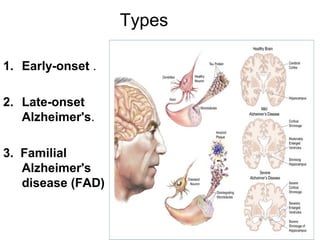
Types
1. Early-onset .
2. Late-onset
Alzheimer's.
3. Familial
Alzheimer's
disease (FAD)
statistics
• Generally, it is diagnosed in people over
65 years of age, although the less-
prevalent early onset of Alzheimer’s can
occur much earlier.
• In 2006, there were 26.6 million sufferers
worldwide.
• Alzheimer’s is predicted to affect 1 in 85
people globally by 2050.
Treatment
1. medication based:
• cholinesterase inhibitors.
• partial glutamate antagonists.
2. non-medication based treatments:
• Music.
• Pet therapy.
• Art therapy.
• Religious activities.
• Aromatherapy.
• Storytelling.
.

Acetylcholine

  • 1.
    Acetylcholine synthesis • Inthe cholinergic neurons acetylcholine is synthesized from choline and acetyl CoA. This reaction is activated by choline acetyl transfers
  • 2.
    Acetylcholine degradation • Theenzyme Acetylcholinsetrase converts acetylcholine into inactive metabolites choline and acetate. • Equation. • The enzyme : 1. is abundant in the synaptic cleft. 2. Its role clearing free acetylcholine from synapse and this essential for proper muscle function. 3. Deficiency causes paralysis.
  • 4.
    Acetylcholine Synthesis andDegradation + cholineAcetyl-CoAPyruvate PDH complex (FAD, lipoamide, TPP) Choline acetyltransferase (CAT) (inhibited by mercurials) Acetylcholine Acetylcholinesterase (AChE) (membrane associated; inhibited by nerve agents, sarin) Acetate + choline Reuptak e or diet
  • 6.
  • 8.
      Neurotransmitter Molecule Derived From Site of Synthesis AcetylcholineCholine CNS, parasympathetic nerves Serotonin 5-Hydroxytryptamine (5-HT) Tryptophan CNS, chromaffin cells of the gut, enteric cells GABA Glutamate CNS Histamine Histidine hypothalamus Epinephrine synthesis pathway Tyrosine adrenal medulla, some CNS cells Norpinephrine synthesis pathway Tyrosine CNS, sympathetic nerves Dopamine synthesis pathway Tyrosine CNS Nitric oxide, NO Arginine CNS, gastrointestinal tract Summary:
  • 9.
    Alzheimer disease • Definition. •Statistics. • Causes. • Stages. • Types. • Symptoms. • Treatment.
  • 10.
    Alzheimer disease • Definition: Alzheimer's disease is an organic mental illness. that usually involves loss of memory, changes in personality, and decreasing ability to think rationally, solve problems, and perform tasks needed for daily life.
  • 11.
    Causes • The causesof Alzheimer's disease is not known. 1. Although, accumulation of the protein amyloid in the brain is suspected to play a role. 2. progressive damage to brain cells . 3. subsequent loss of the chemicals that they produce.known as neurotransmitters. One of these neurotransmitters is acetylcholine,
  • 12.
    Symptoms There are 10classic warning signs : 1. memory loss. 2. difficulty performing familiar tasks. 3. problems with language. 4. disorientation to time and place. 5. poor or decreased judgment. 6. problems with abstract thinking. 7. misplacing things. 8. changes in mood or behavior. 9. changes in personality. 10. and loss of initiative.
  • 13.
  • 14.
    Types 1. Early-onset . 2.Late-onset Alzheimer's. 3. Familial Alzheimer's disease (FAD)
  • 15.
    statistics • Generally, itis diagnosed in people over 65 years of age, although the less- prevalent early onset of Alzheimer’s can occur much earlier. • In 2006, there were 26.6 million sufferers worldwide. • Alzheimer’s is predicted to affect 1 in 85 people globally by 2050.
  • 16.
    Treatment 1. medication based: •cholinesterase inhibitors. • partial glutamate antagonists. 2. non-medication based treatments: • Music. • Pet therapy. • Art therapy. • Religious activities. • Aromatherapy. • Storytelling. .

Editor's Notes

  • #5 PDH: pyruvate dehydrogenase FAD: flavin adenine dinucleotide TPP: thiamine pyrophosphate (vitamin B1) AChE: acetylcholinesterase Choline may be obtained from eggs, liver, beef steak, soy (lecithin = phosphatidyl choline) CAT deficiency found in Alzheimer’s disease, amyotrophic lateral sclerosis (ALS), schizophrenia