PWM based single phase ac induction 
motor with close loop controller. 
Introduction :- 
Closed-loop control allows single-phase ac motors to close the 
gap in performance and efficiency that exists between these 
motors and other higher-performance, higher-cost motors. These 
control techniques enable design solutions that are competitive for 
a wide range of applications while maintaining their low-cost 
appeal. This paper explores several key aspects of these speed 
controls utilizing a traditional low-cost phase-control (TRIAC-drive) 
technique.
Introduction 
Here is a very simple example of AC motor speed control given 
by changing firing angle of TRIAC with the help of 555 TIMER Ics. 
Varying speed of AC motor by means of changing firing angle of any 
thyristor is very widely used method. One very nice example is fan 
regulator in which a fan motor is 1 AC motor used and its speed is 
varied using DIAC-TRIAC method. A zero crossing detector circuit 
is used here to interrupt 555 timer after every 10 ms. After getting an 
interrupt timer will fire TRIAC after some delay from 1 to 9 ms. This 
will cut the current supplied to motor and so the speed of motor will 
reduce. Thus by varying the delay after which the TRIAC is triggered 
one can change the speed of motor.
What is closed loop control ? 
An automatic control system is a preset closed-loop 
control system that requires no operator action. This 
assumes the process remains in the normal range for 
the control system. A controlled variable is the 
process variable that is maintained at a specified 
value or within a specified range.
Design principle 
Motor control 
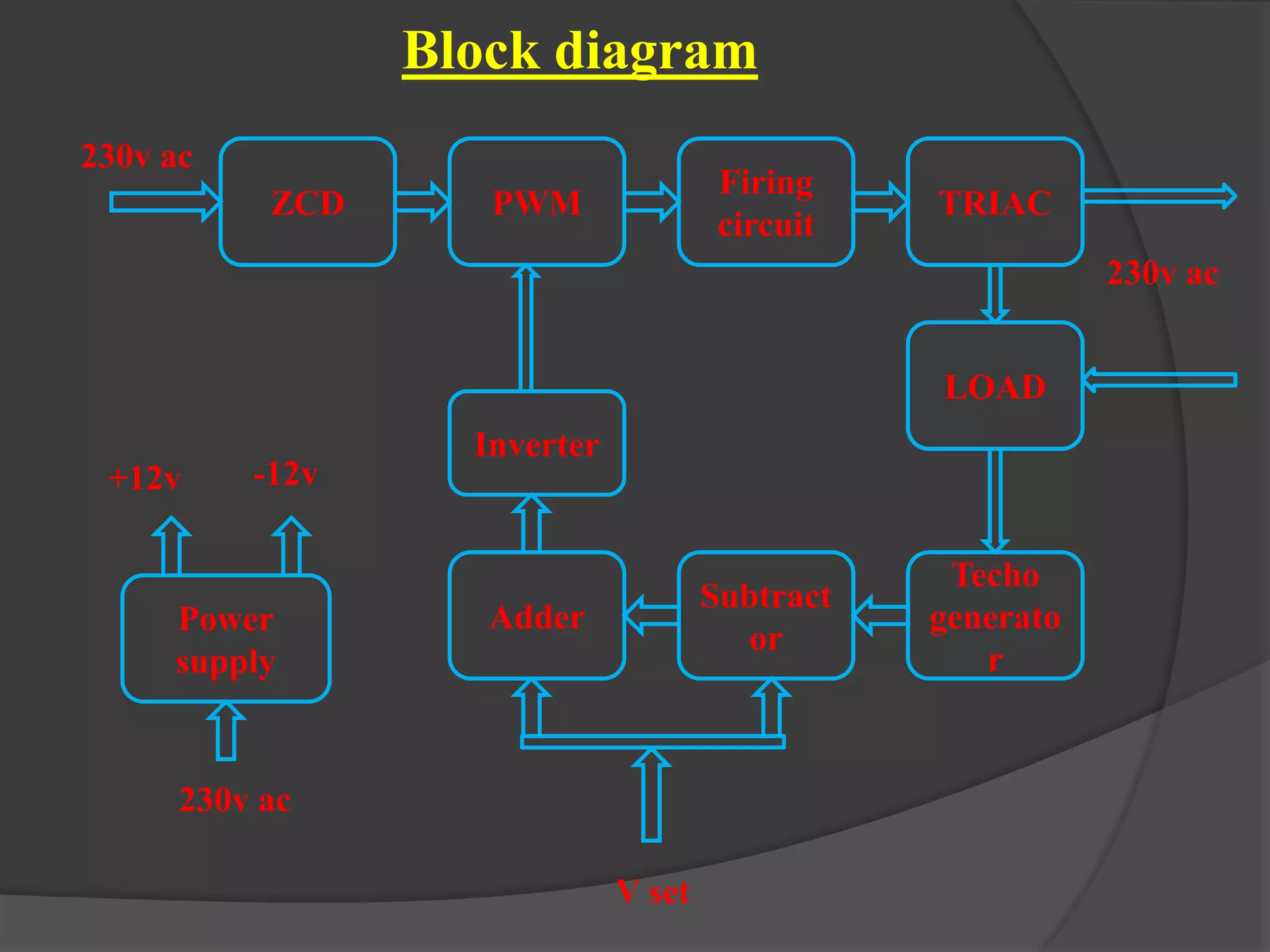
In this project the mains and the sample voltage is isolated from the 
main through an opto isolator. The output of the opto isolator as a 
square wave and used as a ZCD output. The ZCD output pulses are 
inverted and feed to the mono-short based PWM genarator configured 
on a 555 Timer IC. and the output is a TTL compatible pulse of 1ms 
to 10ms pulse width. These pulses are used as the synchronization 
pulses for determining the firing angle. The monoshot is used for 
varying the firing pulse by varying its resistor and this o/p is given to 
the triac driver to drive the TRIAC through the driving circuit. Which 
can be incremented or decremented by an external variable resistor.
Design principle 
Closed-loop control 
A techo generator is coupled with that motor for closed loop control. 
Its o/p voltage is directly propertional with the main motor. This o/p 
voltage is rectified and sampled and then given to a subtractor. By 
using subtractor we are calculate the error voltage by subtracting set 
voltage and techo voltage. Then that error voltage added with the set 
voltage and goes to the PWM generator. To roate the motor in 
different speed you have to vary the set voltage.
Block diagram 
ZCD PWM 
Firing 
circuit 
TRIAC 
LOAD 
Techo 
generato 
r 
Subtract 
or 
Adder 
V set 
230v ac 
+12v -12v 
Power 
supply 
230v ac 
230v ac 
Inverter
Circuit description 
Power supply :- 
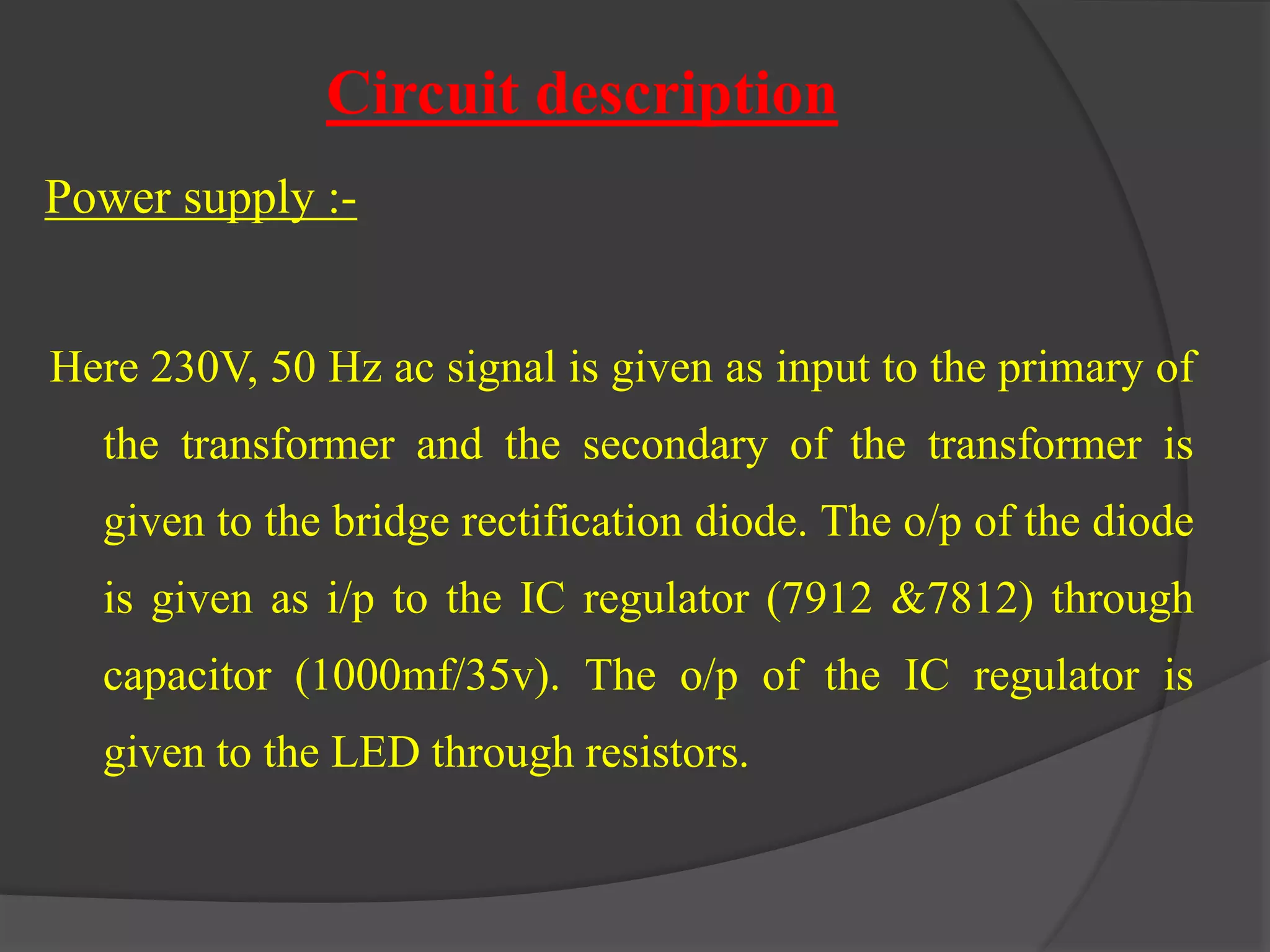
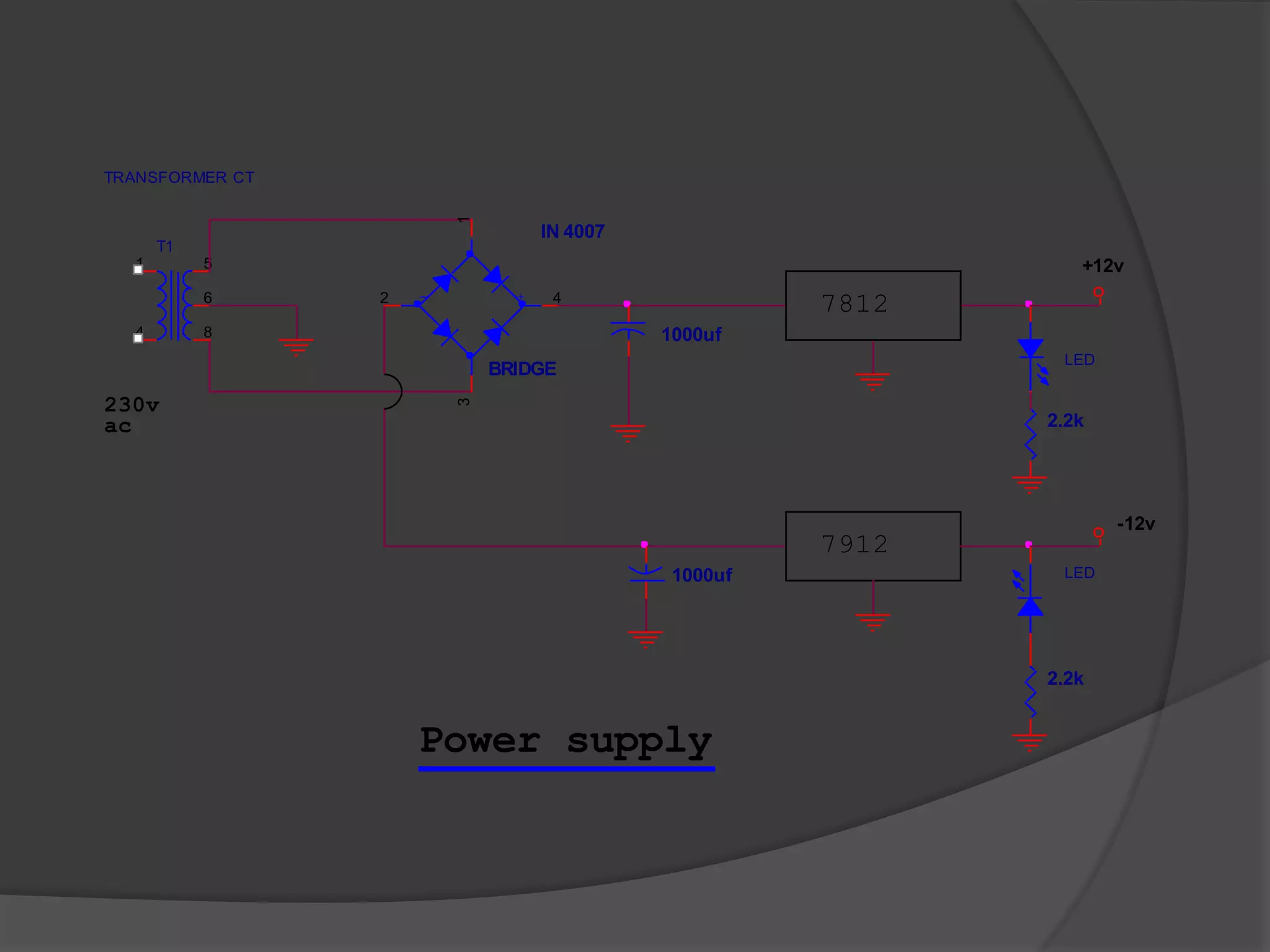
Here 230V, 50 Hz ac signal is given as input to the primary of 
the transformer and the secondary of the transformer is 
given to the bridge rectification diode. The o/p of the diode 
is given as i/p to the IC regulator (7912 &7812) through 
capacitor (1000mf/35v). The o/p of the IC regulator is 
given to the LED through resistors.
+12v 
2.2k 
7912 
LED 
TRANSFORMER CT 
T1 
1 5 
6 
4 8 
- + 
IN 4007 
BRIDGE 
1 
4 
3 
2 
1000uf LED 
Power supply 
2.2k 
7812 
1000uf 
230v 
ac 
-12v
Advantages 
Energy savings and process control are the two primary reasons for 
using adjustable speed drives. 
1. Energy savings is gained by using speed control of fans or 
pumps as a means of flow control. 
2. Speed control as a means of process control can: 
3. Provide smoother operation 
4. Provide acceleration control
Advantages 
5. Accommodate the requirements of different processes with 
one machine 
6. Compensate for changing process variables 
7. Allow slow operation for setup purposes 
8. Adjust the rate of production 
9. Allow accurate positioning 
10.Control torque or tension
Future expansion 
This project is designed with limitation of time but this can be 
developed in the following directions as follows, 
• With slight modification a PID controller can be developed with 
low cost and simple design. 
• A multi stage amplifier and filter can be provided to improve the 
output signal condition.

Ac motor closedloo[p

  • 1.
    PWM based singlephase ac induction motor with close loop controller. Introduction :- Closed-loop control allows single-phase ac motors to close the gap in performance and efficiency that exists between these motors and other higher-performance, higher-cost motors. These control techniques enable design solutions that are competitive for a wide range of applications while maintaining their low-cost appeal. This paper explores several key aspects of these speed controls utilizing a traditional low-cost phase-control (TRIAC-drive) technique.
  • 2.
    Introduction Here isa very simple example of AC motor speed control given by changing firing angle of TRIAC with the help of 555 TIMER Ics. Varying speed of AC motor by means of changing firing angle of any thyristor is very widely used method. One very nice example is fan regulator in which a fan motor is 1 AC motor used and its speed is varied using DIAC-TRIAC method. A zero crossing detector circuit is used here to interrupt 555 timer after every 10 ms. After getting an interrupt timer will fire TRIAC after some delay from 1 to 9 ms. This will cut the current supplied to motor and so the speed of motor will reduce. Thus by varying the delay after which the TRIAC is triggered one can change the speed of motor.
  • 3.
    What is closedloop control ? An automatic control system is a preset closed-loop control system that requires no operator action. This assumes the process remains in the normal range for the control system. A controlled variable is the process variable that is maintained at a specified value or within a specified range.
  • 4.
    Design principle Motorcontrol In this project the mains and the sample voltage is isolated from the main through an opto isolator. The output of the opto isolator as a square wave and used as a ZCD output. The ZCD output pulses are inverted and feed to the mono-short based PWM genarator configured on a 555 Timer IC. and the output is a TTL compatible pulse of 1ms to 10ms pulse width. These pulses are used as the synchronization pulses for determining the firing angle. The monoshot is used for varying the firing pulse by varying its resistor and this o/p is given to the triac driver to drive the TRIAC through the driving circuit. Which can be incremented or decremented by an external variable resistor.
  • 5.
    Design principle Closed-loopcontrol A techo generator is coupled with that motor for closed loop control. Its o/p voltage is directly propertional with the main motor. This o/p voltage is rectified and sampled and then given to a subtractor. By using subtractor we are calculate the error voltage by subtracting set voltage and techo voltage. Then that error voltage added with the set voltage and goes to the PWM generator. To roate the motor in different speed you have to vary the set voltage.
  • 6.
    Block diagram ZCDPWM Firing circuit TRIAC LOAD Techo generato r Subtract or Adder V set 230v ac +12v -12v Power supply 230v ac 230v ac Inverter
  • 7.
    Circuit description Powersupply :- Here 230V, 50 Hz ac signal is given as input to the primary of the transformer and the secondary of the transformer is given to the bridge rectification diode. The o/p of the diode is given as i/p to the IC regulator (7912 &7812) through capacitor (1000mf/35v). The o/p of the IC regulator is given to the LED through resistors.
  • 8.
    +12v 2.2k 7912 LED TRANSFORMER CT T1 1 5 6 4 8 - + IN 4007 BRIDGE 1 4 3 2 1000uf LED Power supply 2.2k 7812 1000uf 230v ac -12v
  • 9.
    Advantages Energy savingsand process control are the two primary reasons for using adjustable speed drives. 1. Energy savings is gained by using speed control of fans or pumps as a means of flow control. 2. Speed control as a means of process control can: 3. Provide smoother operation 4. Provide acceleration control
  • 10.
    Advantages 5. Accommodatethe requirements of different processes with one machine 6. Compensate for changing process variables 7. Allow slow operation for setup purposes 8. Adjust the rate of production 9. Allow accurate positioning 10.Control torque or tension
  • 11.
    Future expansion Thisproject is designed with limitation of time but this can be developed in the following directions as follows, • With slight modification a PID controller can be developed with low cost and simple design. • A multi stage amplifier and filter can be provided to improve the output signal condition.