GROUP MEMBERS
Kamran Mumtaz 229
Ahmedzaib Khaliq 135
Raja Fawad Afsar 215
Faheem ur rehman Siddique 235
Design and
Implementation of
Induction motor drive
Project Title:
For complete project Details:
Kamranmumtaz41@yahoo.com
www.facebook.com/kami229
+923460756123
Progress Report:
What We Done:
 Components Testing
 PWM signals programming
 Prototype circuit Testing
 Proper circuit
 Development of android App
 Android interfacing with Arduino
 Report completion
Outline:
1. Variable Frequency Drive
2. Components
3. Product Rating
4. Block Diagram
5. Schematic Diagram
6. Android APP Development
7. Output Result
Variable Frequency Drive:
– A variable frequency drive is a specific type of adjustable-speed drive.
– Control speed of motor
 according to user requirement or
 according to system requirement.(feedback system)
– Energy saving devices
– Simple installation
– Increase efficiency of system
Components:-
1. Single phase Induction Motor
2. Micro-controller (Arduino UNO)
3. MOSFET board
4. Capacitor Bank
5. Tap changing Transformer
6. Power Diodes
7. Heat Sinks (For Power diodes)
8. Tacho-meter
Mosfet Board:-
 We are using this to covert DC voltage to AC voltage.
 It requires 2 inputs, 1st one is DC voltage while the second is controlled pulses.
 It generates the output voltage (at drain) in AC depending upon the frequency of the PWM.
Capacitor Bank:
 The capacitor bank used in our project consists of 9 capacitors each of 100 V and 10000 micro Farad.
 All these 9 capacitors are connected parallel on the PCB board.
 We used 9 capacitors because it gives us the efficient removal of ripples from the pulsating DC.
Power Diodes:
 We use power diode to convert alternating current (AC) to direct current (DC), a process known as
rectification.
 Two power diodes are used in this project to convert AC to DC coming out from the transformer.
Heat Sinks:
 Heat sinks are used for the components which gets heated during their operation.
 Its main objective is to keep the components cool during their operation.
 We used heat sink to cool down the PD during operation
Bluetooth Module:
 The Bluetooth module hc-05 is used to connect android with the controller.
Arduino Uno:
 The Arduino Uno is a microcontroller board based on the ATmega328.
 We use pin 5 and pin 6 to generate the pulses which we give to the invertor.
Single Phase Induction Motor:
The induction motor basic speed formula is:
.
 poles of the motor are fixed when we construct it.
 So we only change the frequency to regulate motor speed.
Induction motors are widely used in many :
Residential or commercial (90% usage)
Water pump, washing machine, Air conditioner, dryer etc
Industrial
Auxiliaries(Both single and three phase)
Product requirements
Serial no. Product Name Rating No of Products
01 Induction Motor 0.5 hp
220-230 volts
50-60 Hz
01
02 Tap changing T/F 1000 watts 02
03 Power Diodes 25-35 A 02
04 Capacitor 10,000 uF
100 volts
09
05 MOSFIT board 1000 watts 01
06 Heat Sink 02
07 Circuit Breaker 240-415 volts 01
08 Micro Controller Nano v-3.0 01
09 Bluetooth Module Donor/Accepter 01
The table of the
product requirement
for the project is
given in table :
schematic diagram:
Block diagram:
Android App Development(optional)
The last and optional implementational stage is the Android App development.
the android app is developed by the online invertor which is MIT App invertor.
This invertor is designed for the beginner and the engineers to develop the basic app and for their
projects too.
APP Description:-
The App consists of 6 screens. The first screen is the login page for the user and after this the main
screen of the project is shown which consists of way to go to other screens like project description,
motor run, supervisor detail and about us.
Section 1:
 WAPDA as an input
 Step Down Transformer 220v to 12v
 Rectification
 Capacitor Bank
Section 2:
 User Input
 Micro-cotroler
 Pulses to Invertor
Section 3:
 Invertor
 Step Up Transformer
 Induction Motor
Section 4:
 Digital tacho-meter
 Displaying Voltage
Section1(Rectification result)
Section2(PWM result)
Section3(Output sine wave)
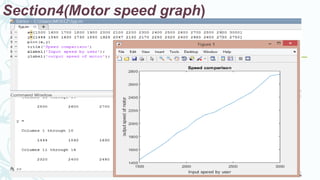
Section4(Motor speed graph)
induction Motor Drive (sped control)

induction Motor Drive (sped control)

  • 2.
    GROUP MEMBERS Kamran Mumtaz229 Ahmedzaib Khaliq 135 Raja Fawad Afsar 215 Faheem ur rehman Siddique 235
  • 3.
    Design and Implementation of Inductionmotor drive Project Title: For complete project Details: Kamranmumtaz41@yahoo.com www.facebook.com/kami229 +923460756123
  • 4.
    Progress Report: What WeDone:  Components Testing  PWM signals programming  Prototype circuit Testing  Proper circuit  Development of android App  Android interfacing with Arduino  Report completion
  • 5.
    Outline: 1. Variable FrequencyDrive 2. Components 3. Product Rating 4. Block Diagram 5. Schematic Diagram 6. Android APP Development 7. Output Result
  • 6.
    Variable Frequency Drive: –A variable frequency drive is a specific type of adjustable-speed drive. – Control speed of motor  according to user requirement or  according to system requirement.(feedback system) – Energy saving devices – Simple installation – Increase efficiency of system
  • 7.
    Components:- 1. Single phaseInduction Motor 2. Micro-controller (Arduino UNO) 3. MOSFET board 4. Capacitor Bank 5. Tap changing Transformer 6. Power Diodes 7. Heat Sinks (For Power diodes) 8. Tacho-meter
  • 8.
    Mosfet Board:-  Weare using this to covert DC voltage to AC voltage.  It requires 2 inputs, 1st one is DC voltage while the second is controlled pulses.  It generates the output voltage (at drain) in AC depending upon the frequency of the PWM. Capacitor Bank:  The capacitor bank used in our project consists of 9 capacitors each of 100 V and 10000 micro Farad.  All these 9 capacitors are connected parallel on the PCB board.  We used 9 capacitors because it gives us the efficient removal of ripples from the pulsating DC. Power Diodes:  We use power diode to convert alternating current (AC) to direct current (DC), a process known as rectification.  Two power diodes are used in this project to convert AC to DC coming out from the transformer.
  • 9.
    Heat Sinks:  Heatsinks are used for the components which gets heated during their operation.  Its main objective is to keep the components cool during their operation.  We used heat sink to cool down the PD during operation Bluetooth Module:  The Bluetooth module hc-05 is used to connect android with the controller. Arduino Uno:  The Arduino Uno is a microcontroller board based on the ATmega328.  We use pin 5 and pin 6 to generate the pulses which we give to the invertor.
  • 10.
    Single Phase InductionMotor: The induction motor basic speed formula is: .  poles of the motor are fixed when we construct it.  So we only change the frequency to regulate motor speed. Induction motors are widely used in many : Residential or commercial (90% usage) Water pump, washing machine, Air conditioner, dryer etc Industrial Auxiliaries(Both single and three phase)
  • 11.
    Product requirements Serial no.Product Name Rating No of Products 01 Induction Motor 0.5 hp 220-230 volts 50-60 Hz 01 02 Tap changing T/F 1000 watts 02 03 Power Diodes 25-35 A 02 04 Capacitor 10,000 uF 100 volts 09 05 MOSFIT board 1000 watts 01 06 Heat Sink 02 07 Circuit Breaker 240-415 volts 01 08 Micro Controller Nano v-3.0 01 09 Bluetooth Module Donor/Accepter 01 The table of the product requirement for the project is given in table :
  • 12.
  • 13.
  • 14.
    Android App Development(optional) Thelast and optional implementational stage is the Android App development. the android app is developed by the online invertor which is MIT App invertor. This invertor is designed for the beginner and the engineers to develop the basic app and for their projects too. APP Description:- The App consists of 6 screens. The first screen is the login page for the user and after this the main screen of the project is shown which consists of way to go to other screens like project description, motor run, supervisor detail and about us.
  • 15.
    Section 1:  WAPDAas an input  Step Down Transformer 220v to 12v  Rectification  Capacitor Bank Section 2:  User Input  Micro-cotroler  Pulses to Invertor Section 3:  Invertor  Step Up Transformer  Induction Motor Section 4:  Digital tacho-meter  Displaying Voltage
  • 16.
  • 17.
  • 18.
  • 19.