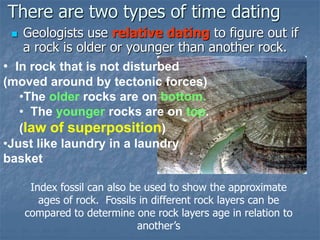
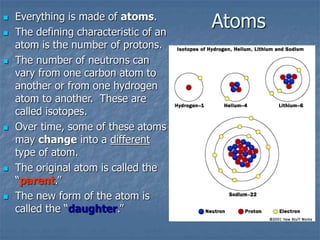
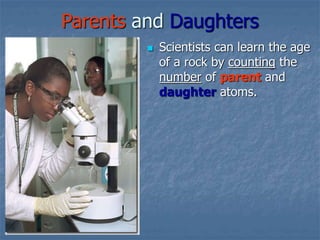
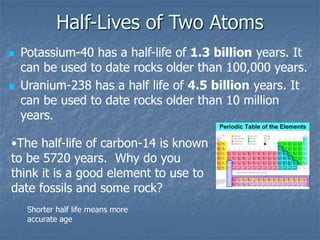
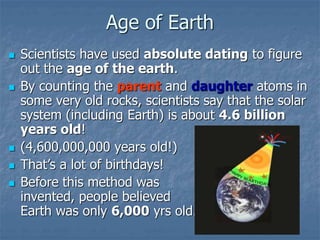
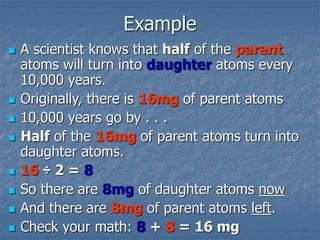
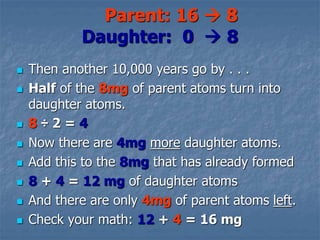
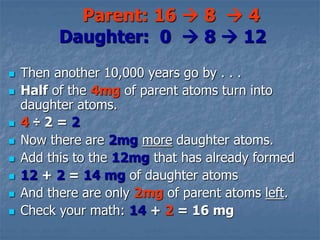
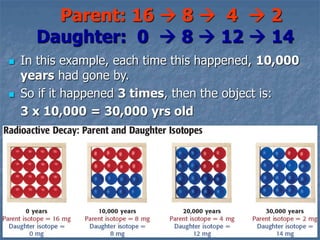
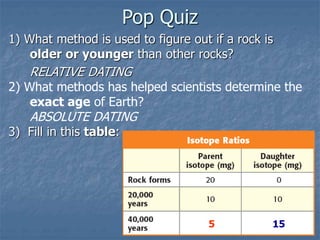
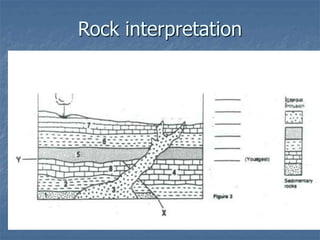
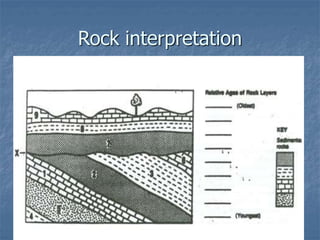
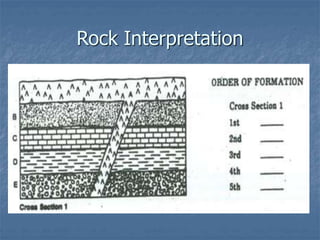
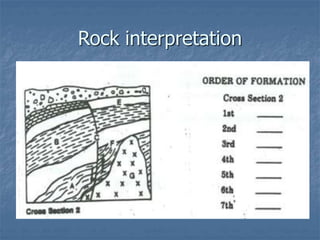
Scientists use two main methods to determine the age of rocks and fossils. Relative dating methods, like the law of superposition, allow geologists to determine if one rock layer is older or younger than another. Absolute or radiometric dating methods are used to determine a precise numerical age. Radiometric dating relies on the natural radioactive decay of isotopes like potassium-40 and uranium-238 to carbon-14. By measuring the ratio of radioactive parent isotopes to daughter isotopes in a sample, scientists can calculate the age of the rock or fossil in thousands or millions of years. This method has allowed scientists to determine that the age of the Earth is approximately 4.6 billion years old.