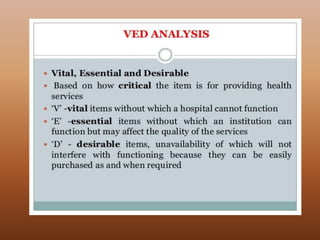
VED ANALYSIS
DR.ANJALATCHI
M.SC(N)MD(AM) MBA(HA)
LEARNING OBJECTIVE
• To introduce the topic
• To define the VED analysis
• To list out the purposes of VED analysis
• To describe the method of VED analysis
• To explain the mixed method of ABC & VED analysis
• To understand the control method of VED analysis
• To summarize the topic
• To conclude the content
• To review the references related to the topic.
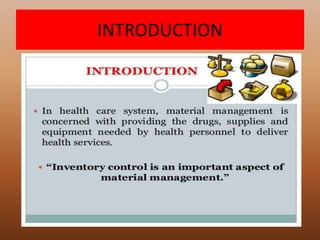
INTRODUCTION
DEFINITION OF VED ANALYSIS
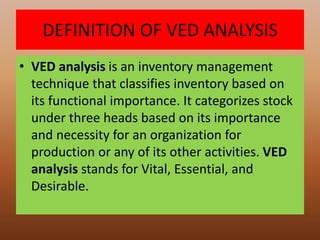
• VED analysis is an inventory management
technique that classifies inventory based on
its functional importance. It categorizes stock
under three heads based on its importance
and necessity for an organization for
production or any of its other activities. VED
analysis stands for Vital, Essential, and
Desirable.
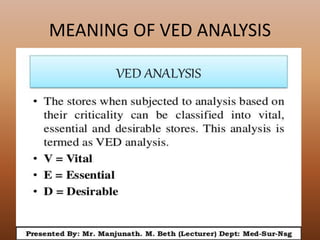
MEANING OF VED ANALYSIS
PURPOSE OF VED
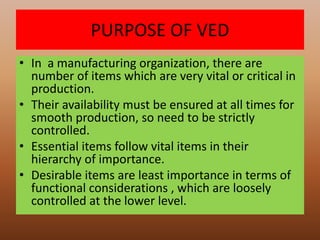
• In a manufacturing organization, there are
number of items which are very vital or critical in
production.
• Their availability must be ensured at all times for
smooth production, so need to be strictly
controlled.
• Essential items follow vital items in their
hierarchy of importance.
• Desirable items are least importance in terms of
functional considerations , which are loosely
controlled at the lower level.
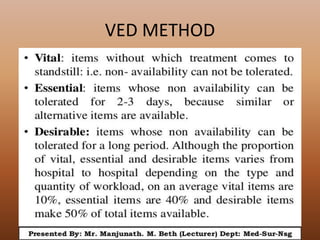
VED METHOD
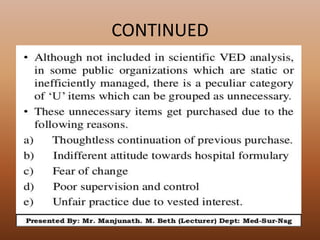
CONTINUED
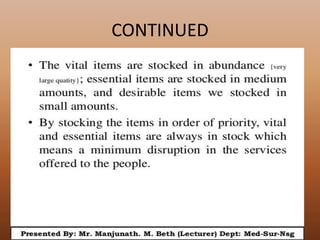
CONTINUED
IMPORTANCE OF VED ANALYSIS
• It is of utmost importance to any organization
to maintain an optimum level of inventory.
Maintaining inventory has its costs, and
hence, this analysis bifurcates inventory in
three parts to help in managerial decisions on
inventory maintenance. There are four types
of costs to maintain stock which are:
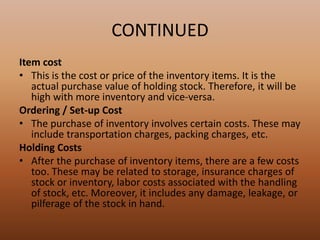
CONTINUED
Item cost
• This is the cost or price of the inventory items. It is the
actual purchase value of holding stock. Therefore, it will be
high with more inventory and vice-versa.
Ordering / Set-up Cost
• The purchase of inventory involves certain costs. These may
include transportation charges, packing charges, etc.
Holding Costs
• After the purchase of inventory items, there are a few costs
too. These may be related to storage, insurance charges of
stock or inventory, labor costs associated with the handling
of stock, etc. Moreover, it includes any damage, leakage, or
pilferage of the stock in hand.
CONTINUED
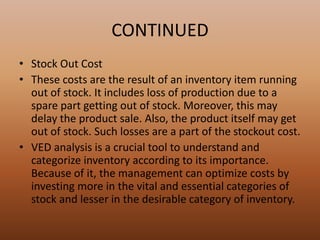
• Stock Out Cost
• These costs are the result of an inventory item running
out of stock. It includes loss of production due to a
spare part getting out of stock. Moreover, this may
delay the product sale. Also, the product itself may get
out of stock. Such losses are a part of the stockout cost.
• VED analysis is a crucial tool to understand and
categorize inventory according to its importance.
Because of it, the management can optimize costs by
investing more in the vital and essential categories of
stock and lesser in the desirable category of inventory.
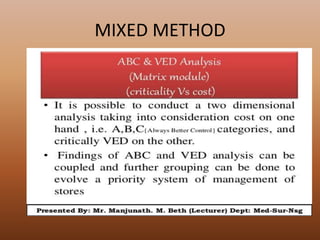
MIXED METHOD
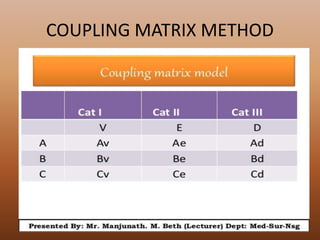
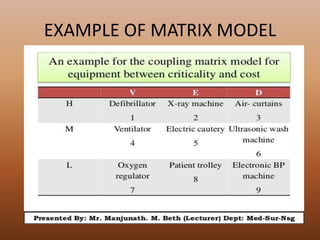
COUPLING MATRIX METHOD
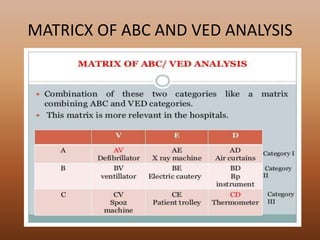
MATRICX OF ABC AND VED ANALYSIS
EXAMPLE OF MATRIX MODEL
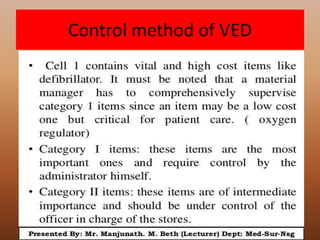
Control method of VED
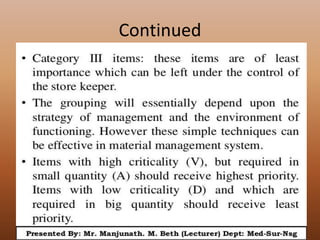
Continued
SUMMARY
• Still now we have discussed about VED
analysis like introduction, definition, Purpose,
methods, classification, control method of
inventory system. I hope you all understand
about VED analysis and its significance.
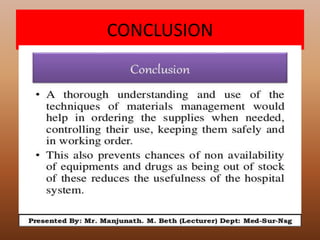
CONCLUSION
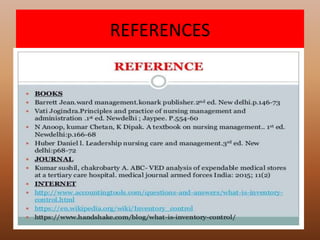
REFERENCES
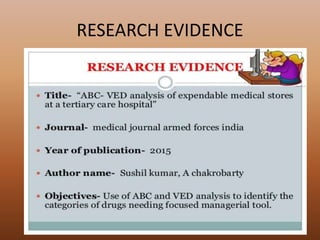
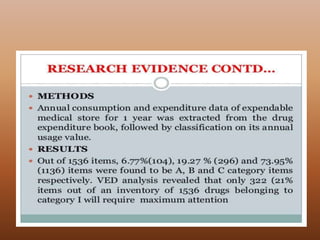
RESEARCH EVIDENCE
Unit-VII material  management -VED  analysis slide share

Unit-VII material management -VED analysis slide share

  • 1.
  • 2.
    LEARNING OBJECTIVE • Tointroduce the topic • To define the VED analysis • To list out the purposes of VED analysis • To describe the method of VED analysis • To explain the mixed method of ABC & VED analysis • To understand the control method of VED analysis • To summarize the topic • To conclude the content • To review the references related to the topic.
  • 3.
  • 5.
    DEFINITION OF VEDANALYSIS • VED analysis is an inventory management technique that classifies inventory based on its functional importance. It categorizes stock under three heads based on its importance and necessity for an organization for production or any of its other activities. VED analysis stands for Vital, Essential, and Desirable.
  • 6.
  • 7.
    PURPOSE OF VED •In a manufacturing organization, there are number of items which are very vital or critical in production. • Their availability must be ensured at all times for smooth production, so need to be strictly controlled. • Essential items follow vital items in their hierarchy of importance. • Desirable items are least importance in terms of functional considerations , which are loosely controlled at the lower level.
  • 8.
  • 9.
  • 10.
  • 11.
    IMPORTANCE OF VEDANALYSIS • It is of utmost importance to any organization to maintain an optimum level of inventory. Maintaining inventory has its costs, and hence, this analysis bifurcates inventory in three parts to help in managerial decisions on inventory maintenance. There are four types of costs to maintain stock which are:
  • 12.
    CONTINUED Item cost • Thisis the cost or price of the inventory items. It is the actual purchase value of holding stock. Therefore, it will be high with more inventory and vice-versa. Ordering / Set-up Cost • The purchase of inventory involves certain costs. These may include transportation charges, packing charges, etc. Holding Costs • After the purchase of inventory items, there are a few costs too. These may be related to storage, insurance charges of stock or inventory, labor costs associated with the handling of stock, etc. Moreover, it includes any damage, leakage, or pilferage of the stock in hand.
  • 13.
    CONTINUED • Stock OutCost • These costs are the result of an inventory item running out of stock. It includes loss of production due to a spare part getting out of stock. Moreover, this may delay the product sale. Also, the product itself may get out of stock. Such losses are a part of the stockout cost. • VED analysis is a crucial tool to understand and categorize inventory according to its importance. Because of it, the management can optimize costs by investing more in the vital and essential categories of stock and lesser in the desirable category of inventory.
  • 14.
  • 15.
  • 16.
    MATRICX OF ABCAND VED ANALYSIS
  • 17.
  • 18.
  • 19.
  • 20.
    SUMMARY • Still nowwe have discussed about VED analysis like introduction, definition, Purpose, methods, classification, control method of inventory system. I hope you all understand about VED analysis and its significance.
  • 21.
  • 22.
  • 23.