Rhonda Alexander IC Science Robert E. Lee

B.12.A interpret relationships, including predation, parasitism, commensalism, mutualism,
and competition among organisms
Species interactions may involve only occasional or
indirect contact (predation or competition) or they
may involve a close association between species.
Symbiosis is a term that encompasses a variety of
such close associations, including parasitism (a form
of exploitation), mutualism, and commensalism.

Competition
• Organisms of different species competing over
limited resources
• Resources are any necessity of life Competition is
one of the most familiar of species relationships. It
occurs both within (intraspecific) and between
(interspecific) species.
‣ Individuals compete for resources such as food,
space, and mates. In all cases of competition, both
parties (the competitors) are harmed to varying
extents by the interaction.
• Neighboring plants compete for light, water, and
nutrients. Interactions involving competition between
animals for food are dominated by the largest, most
aggressive species (or individuals).
Symbiosis
• A relationship in
nature where two organisms
live very closely together
•
Mutualism
• A symbiotic relationship in which both organisms benefit
from the relationship
Mutualistic Relationships
Mutualistic relationships occur between some birds (such
as oxpeckers) and large herbivores (such as zebra, Cape
buffalo, and rhinoceros). The herbivore is cleaned of
parasites and the oxpecker gains access to food.
Lichens are an obligate mutualism between a fungus and
either a green alga or a cynobacterium. The fungus
obtains organic carbon from the alga. The alga obtains
water and nutrient salts from the fungus.

Commensalism
• A symbiotic relationship in which one organism
benefits and the other is neither helped nor
harmed
Commensal Relationships
‣ In commensal relationships, one party (the
commensal) benefits, while the host is unaffected.
• Epiphytes (perching plants) gain access to a
better position in the forest canopy, with more light for
photosynthesis, but do no harm to the host tree.
• Commensal anemone shrimps (Periclimenes spp.)
live within the tentacles of host sea anemones. The
shrimp gains protection from predators, but the anemone
is neither harmed nor benefitted.
Parasitism
• A symbiotic relationship in which one organism lives in
or on another organism (the host) and harms it to gain
food.
Plant Parasites
• A great diversity of plant parasites exist. Some depend
only partly on their host plant for nutrition; they are
photosynthetic but utilize the host’s nutrients, e.g. mistletoe.
• Others are entirely parasitic and are unable to photosynthesize, e.g. cancer root
(Conopholis americana) dodder, and wood rose (Dactylanthus taylorii).

Mistletoe Phoradendren spp. are
hemiparasites; photosynthesizing but
lack their own roots and rob their
host plant of water and nutrients.

Aaaaaaaaaaaaaaaaaaaaaaaaaaaaaaaaaaaaaaaaaaaaaaaaaaaaaaaaaaaaaaaaaaaa 12 a signe

  • 1.
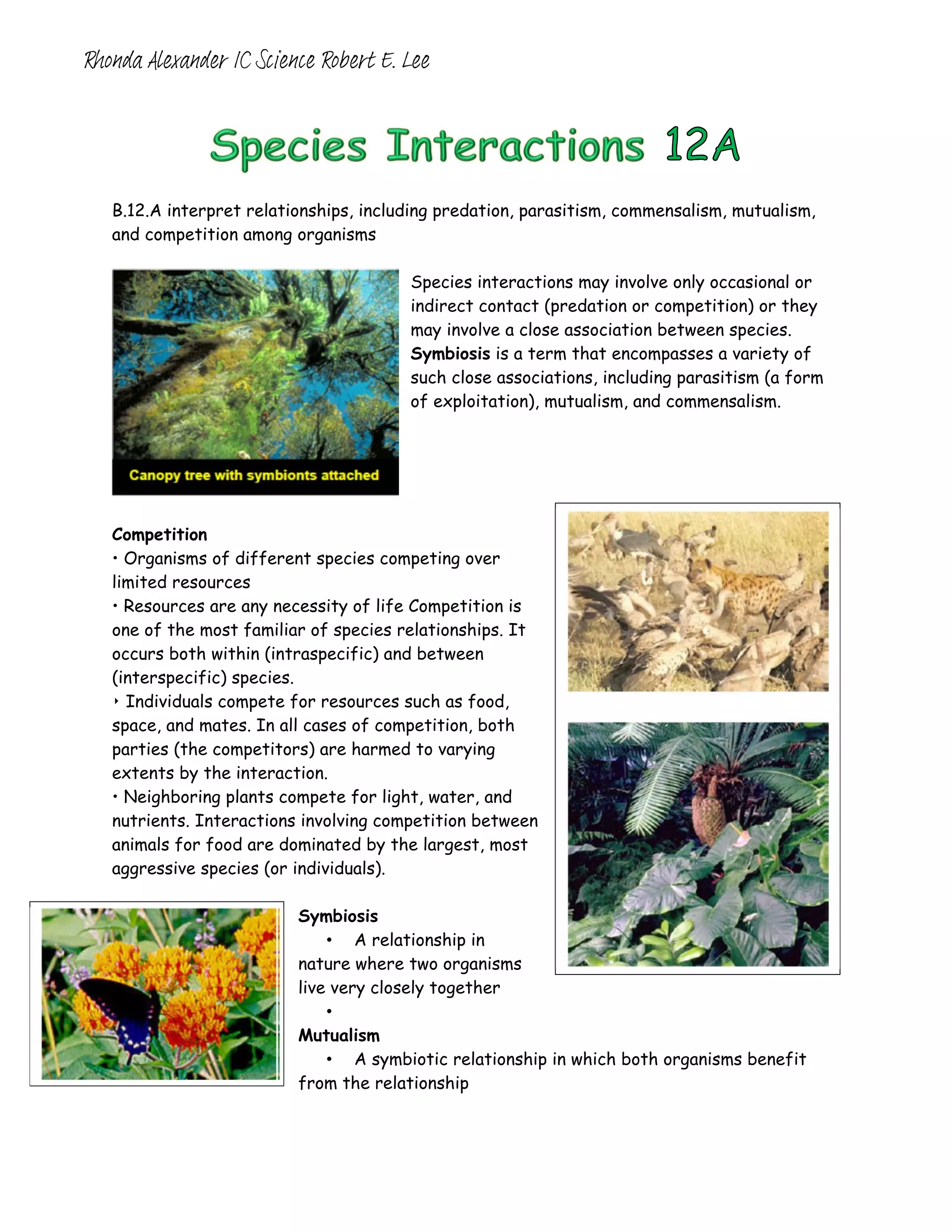
    Rhonda Alexander ICScience Robert E. Lee B.12.A interpret relationships, including predation, parasitism, commensalism, mutualism, and competition among organisms Species interactions may involve only occasional or indirect contact (predation or competition) or they may involve a close association between species. Symbiosis is a term that encompasses a variety of such close associations, including parasitism (a form of exploitation), mutualism, and commensalism. Competition • Organisms of different species competing over limited resources • Resources are any necessity of life Competition is one of the most familiar of species relationships. It occurs both within (intraspecific) and between (interspecific) species. ‣ Individuals compete for resources such as food, space, and mates. In all cases of competition, both parties (the competitors) are harmed to varying extents by the interaction. • Neighboring plants compete for light, water, and nutrients. Interactions involving competition between animals for food are dominated by the largest, most aggressive species (or individuals). Symbiosis • A relationship in nature where two organisms live very closely together • Mutualism • A symbiotic relationship in which both organisms benefit from the relationship
  • 2.
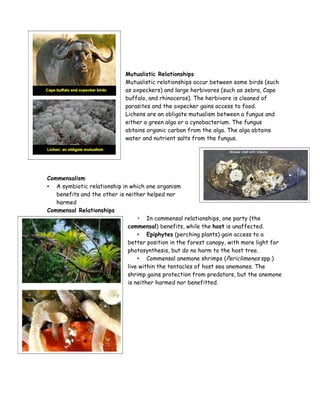
    Mutualistic Relationships Mutualistic relationshipsoccur between some birds (such as oxpeckers) and large herbivores (such as zebra, Cape buffalo, and rhinoceros). The herbivore is cleaned of parasites and the oxpecker gains access to food. Lichens are an obligate mutualism between a fungus and either a green alga or a cynobacterium. The fungus obtains organic carbon from the alga. The alga obtains water and nutrient salts from the fungus. Commensalism • A symbiotic relationship in which one organism benefits and the other is neither helped nor harmed Commensal Relationships ‣ In commensal relationships, one party (the commensal) benefits, while the host is unaffected. • Epiphytes (perching plants) gain access to a better position in the forest canopy, with more light for photosynthesis, but do no harm to the host tree. • Commensal anemone shrimps (Periclimenes spp.) live within the tentacles of host sea anemones. The shrimp gains protection from predators, but the anemone is neither harmed nor benefitted.
  • 3.
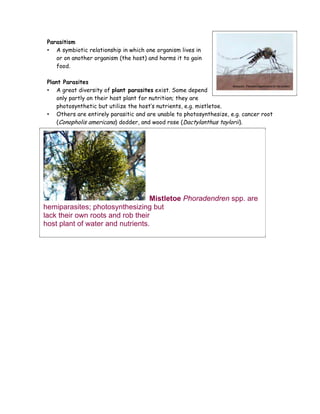
    Parasitism • A symbioticrelationship in which one organism lives in or on another organism (the host) and harms it to gain food. Plant Parasites • A great diversity of plant parasites exist. Some depend only partly on their host plant for nutrition; they are photosynthetic but utilize the host’s nutrients, e.g. mistletoe. • Others are entirely parasitic and are unable to photosynthesize, e.g. cancer root (Conopholis americana) dodder, and wood rose (Dactylanthus taylorii). Mistletoe Phoradendren spp. are hemiparasites; photosynthesizing but lack their own roots and rob their host plant of water and nutrients.