Difficult Landing Zone
for AAA Intervention
Harapan Kita Experience 2013-2014
Dicky A.Wartono, MD FIHA FICA
Cardiac & Vascular Surgeon
National Cardiac & Vascular Centre Harapan Kita
Jakarta 2015
Conflict of interest: none declared.
PROBLEMS
• Intervention it self 15-20.000 USD
• Re Intervention 10 – 15.000 USD
• Surgical Intervention 10 – 15.000 USD
• Primary Surgery 5 – 10.000 USD
• Hybrid OR 5.000.000 USD
Murphy’s law
Female 77yo
Pulsating Abdominal Mass
Uncontroled Hipertension
HHD, ASHD, CAD
CHF IV
– 20 to 30% required a secondary intervention during the next 6
months
– related to the development of endoleaks
– conversion to open repair is necessary in 2 to 10% of patients
– Late ruptures after endovascular repair were reported
which reintervention/convertion were postpone.
The incidence was highest in the trial that began the earliest
– occur in patients who have not undergone postoperative
monitoring or those for whom a decision has been made not to
reintervene.
• patients recommended long-term surveillance by means of CT at 1
month and 12 months after the intervention
80 yo male
Asymptomatic A-I Aneurysm
CHF IV, AF, HHD, ASHD
Hosptl for ALO
D-0, the patient complained of mild left lower-leg numbness,
No complaints of pain and demonstrated intact motor and sensory function of all extremities.
Normal palpable pedal pulses were present and were unchanged from the patient’s preoperative
D-1, developed a sudden decrease in urine output
Focal left buttock pain and left lower-leg weakness and numbness with intact proximal strength
and sensation.
Normal peripheral pulses remained present, making an acute distal ischemic insult unlikely
D-2, developed increasing tenseness of the left buttock
Motor weakness of the leg in the distribution of the sciatic nerve
Surgical Consult
diagnosis of gluteal compartment syndrome was made,
Yano, 2001
Karch, 2000
Criado, 2000
Mehta, 2001
IIA occlusion
cases
103
22
39
154
Pelvic ischemia complications
total
cases
22 (21%)
10 (42%)
6 (15%)
71 (46%)
buttock
claudication
95%
70%
83%
79%
colonic
ischemia
5%
30%
0%
6%
others
17%
15%
2.25% pelvic ischemic complications appears to equal that described for open
repair, approxi- mately 1% to 2%
treatment of embolizing arterial lesions with stent grafts.
In our study westaged coil embolization and EVAR by
1 or 2 days. There isno consensus regarding the appropri-
ate staging interval between embolization of asingle hypo-
gastric artery and EVAR. Indeed, some authors have pro-
posed that simply covering the hypogastric artery during
EVAR does not increase the risk for endoleak or ischemia
and avertsthe need for apreoperative embolization proce-
dure.2 6
Nevertheless, most authors agree that when bilat-
eral hypogastric artery embolization is planned, EVAR
should be delayed by 2 to 4 weeks.1 3 , 1 8 , 2 3
Interruption of bilateral internal iliac arteries has also
been reported to be free from colon ischemia. Englke et
al2 7
reviewed 16 patientswith bilateral embolization before
EVAR, and found buttock claudication and sexual dysfunc-
tion to bethe only adverseevents. Othersare morewary of
interrupting important pelviccollateral vesselsin thesetting
of EVAR.1 4 , 1 8 , 2 2 , 2 8 - 3 0
Leyden et al1 8
report 1 of 21 pa-
tients(4.3%) with colonic ischemia after hypogastric artery
embolization. Likewise, Karp et al3 1
reviewed 24 patients
with either coiled or unintentional covering of a hypogas-
tric artery during EVAR, and found 3 patients (12%) in
Internal iliac artery interruption and ischemic complications after
endovascular abdominal aortic aneurysm repair. Note: 16.3%of all
patients treated with coil embolization had an ischemic event,
compared with 8.0%of patientswho underwent internal iliac artery
embolization (P .091).
JOURNAL OF VASCULAR SURGERY
Volume 40, Number 4 Maldonado et al 707
The overall ischemic complications
after interruption of hypogastric
arteries before EVAR was 16.3%,
compared with 8% in intact
hypogastric arteries
The incidence of buttock
claudication ranges from 11% to 50%
after coil embolization of one or
both internal iliac arteries
WHAT CAN WE DO ???
Antegrade and
Retrograde Periscoping
Technique for visceral
revascularization"
s for Sandwich grafts"
Comparison of fenestrated endovascular aneurysm repair
and chimney graft techniques for pararenal aortic
aneurysm
Hiroshi Banno, MD, PhD, Frédéric Cochennec, MD, Jean Marzelle, MD, Jean-
Pierre Becquemin, MD, FRCS
Department of Vascular Surgery, Henri Mondor Hospital, University Paris XII,
Créteil, France
Received: September 3, 2013; Accepted: January 18, 2014; Published Online:
February 20, 2014
Conclusions
In this limited retrospective series, short-term and midterm
results of f-EVAR and c-EVAR were not statistically different.
c-EVAR could be an attractive option for patients not
suitable for f-EVAR.
Critical Analysis of the Mid-term Results after Chimney
EVAR: Cause for Concern
Salvatore T. Scali, Robert J. Feezor, Catherine K. Chang, Alyson Waterman-Pugh,
Scott A. Berceli, Thomas S. Huber, Adam W. Beck
University of Florida- Gainesville, Gainesville, FL
CONCLUSIONS: These results demonstrate that chEVAR can
be completed with a high degree of initial success. Significant
rates of both perioperative complications and major adverse
events during follow-up, including loss of chimney patency
and endoleak, are not uncommon thus underscoring the
critical need for close surveillance. Elective use of chEVAR
should be performed with caution and comparison to open
and/or fenestrated EVAR is needed to determine the long-
term efficacy of this technique.
Critical Analysis of the Mid-term Results after Chimney
EVAR: Cause for Concern
Salvatore T. Scali, Robert J. Feezor, Catherine K. Chang, Alyson Waterman-Pugh,
Scott A. Berceli, Thomas S. Huber, Adam W. Beck
University of Florida- Gainesville, Gainesville, FL
CONCLUSIONS: These results demonstrate that chEVAR can
be completed with a high degree of initial success. Significant
rates of both perioperative complications and major adverse
events during follow-up, including loss of chimney patency
and endoleak, are not uncommon thus underscoring the
critical need for close surveillance. Elective use of chEVAR
should be performed with caution and comparison to open
and/or fenestrated EVAR is needed to determine the long-
term efficacy of this technique.
discharge. Primary end-points included chimney stent patency and freedom from MAE.
Secondary end-points included complications and long-term survival.
RESULTS: From 2008-2012, 41 patients [age ± standard deviation (SD); 72.7±8.3; male
65.9%(N=27)] were treated with a total of 76 chimney stents (renal, N=51; superior
mesenteric artery, N=16 celiac artery, N=9) for a variety of pathologic indications,
including: juxtarenal aneurysm, 41.5% (N=17, 1 rupture); suprarenal aneurysm, 17.1%
(N=7), thoracoabdominal aneurysm, 17.1% (N=7), aortic anastomotic pseudoaneurysm,
14.6% (N=6; 3 ruptures), type 1a endoleak after EVAR, 7.3% (N=3), and atheromatous
disease, 2.4% (N=1). Two patients had a single target vessel abandoned due to
cannulation failure and 1 patient had a type 1a endoleak at case completion (technical
success = 92.7%). Intraoperative complications occurred in 7 (17.1%) cases: graft
maldeployment with unplanned mesenteric chimney (N=2) and access vessel injury
requiring repair (N=5). Major postoperative complications developed in 19.5% (N=8).
30-day and in-hospital mortality were 4.9% (N=2) and 7.3% (N=3), respectively.
At median follow-up of 18.2 (range 1.4-41.5) months, 22% (N=9) of patients developed
endoleak at some point during follow-up [type 1a, 7.3% (N=3); type 2, 9.6% (N=4);
indeterminate, 7.3% (N=3)]. One patient (2.4%) underwent surgical conversion who was
initially treated for dissection-related suprarenal aneurysm. The estimated probability of
freedom from reintervention (±standard error mean) was 96±4%
at both 1 and 3 years. Primary patency of all chimney stents was 88±5% and 85±5% at 1
and 3 years, respectively (Figure 1). Corresponding freedom from MAE was 83±7% and
57±10% at 1 and 3 years (Figure 2). The 1 and 5-year actuarial estimated survival for all
patients was 85±6% and 65±8%, respectively.
.
•! 72 patients in 2 centres"
•! 46 balloon-ex (V-12 and Endurant) and 81
self-ex (Viabahn and Excluder)"
•! Only 1 vessel occlusion and 1 persistent Type
I endoleak"
•! No deterioration in renal function"
•! Success persisted out to 2 years"
JVS Dec 2011!
Future Applications"
Off the Sh
Fenestrate
Graft
Endologi
VENTAN
Intent of Hybrid Approaches:
Expand the Landing Zone for Endoluminal Grafting
by Rerouting Arterial Branches
Hybrid Procedures-
• No randomized trials
• Small case volumes
• Application of a variety
of techniques (no
uniformity)
• No commercial products
• Requires customization
Surgical
Endovascular
Hybrid procedures have several advantages over
conventional open repair, including avoiding :
- thoracotomy,
- single-lung ventilation,
- aortic cross-clamping, and
- minimizing end-organ ischemia
several centers with large complex aortic volume,
systematic reviews, and a national registry have shown
that hybrid procedures carry high mortality rates
NACAAD registry 2011
208 patients complex abdominal aneurysms at 14 centers in North America.
a mean age 71 years
Mortality 14% for all patients, 16% for TAAAs, and 9% for pararenal aneurysms.
Independent predictors of early mortality included
three-vessel reconstruction,
coronary artery disease,
congestive heart failure,
high SVS scores,
chronic kidney disease stage >
morbidity occurred
Morbidity
pulmonary (22%), renal (19%),
gastrointestinal (14%)
Spinal cord injury (10%), and
ischemic coli- tis (6%).
OUR ROUTINE
• FOR A PERFECT FIT
– Multidisiplinary Team
– Patient for Good & Bad Cases
– Device, “know our device”
– Planning
– Surveillace
• IMAGING IS CRITICAL
– Selection, Patients & Device
– Additional Proc
Good “ideal” anatomy
Nice-long neck
Nice straight iliac arteries
Proximal Neck
Diameter
Length
Angle
Thrombus
Calcification
Distal Landing Zone
Diameter
Length
Angle
Thrombus
Calcification
Neck
Proximal anchoring zone
Diameter < 32 mm
Length > 15 mm
Angle < 75°
No thrombus
No calcification
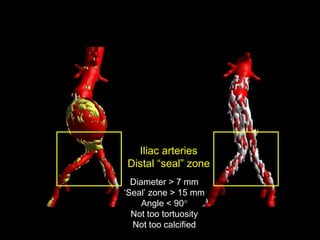
Iliac arteries
Distal “seal” zone
Diameter > 7 mm
‘Seal’ zone > 15 mm
Angle < 90°
Not too tortuosity
Not too calcified
Neck
Too wide (> 25 mm – AneuRx, >32 mm - Talent)
Too short (< 15 mm)
Too angulated (>60°)
Too diseased
Cone-shaped Iliacs
Too tortuous
Too small (< 7 mm)
Too calcified
There are always challenges
>90° 80°
Neck Angulation
65°
Neck Angulation
65° angulation neck Implant angio shows endoleak
Angulated but long neck
LR_4HKL2046 80°
Angulated but long neck
LR_4HKL2046
Angulated but long neck
Neck Angulation
< 60 degrees angulation
Angulated and long neck “might” be OK
Angulated and short neck “is bad”
Short and angulated Neck
Angulated neck, 75Angulated neck, 75ºº
20 mm20 mm
16 mm16 mmNeck Length 10 mmNeck Length 10 mm
Short and angulated Neck
Cone-shaped Neck
Cone-shaped Neck
Cone-shaped Neck
Device migration
Neck Filling Defect
Neck Filling Defect (>50%)
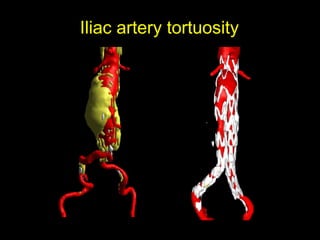
Iliac artery tortuosity
Iliac Artery Stenosis
10 mm10 mm
4 mm4 mm
8 mm8 mm
6 mm6 mm
Iliac Artery Stenosis
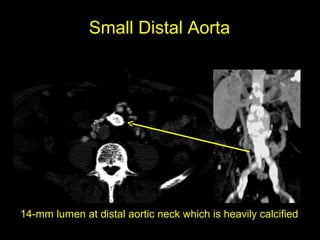
Small Distal Aorta
14-mm lumen at distal aortic neck which is heavily calcified
Accessory Renal Artery
Accessory renal arteryAccessory renal artery
Low right accessory renal artery
Accessory Renal Artery
Enlarged CIA: 30% of cases
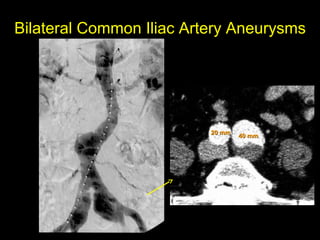
22 mm
18 mm
R L
Bilateral Common Iliac Artery Aneurysms
40 mm40 mm20 mm20 mm
Bilateral Common Iliac Artery Aneurysms
Right CIARight CIA
AneurysmAneurysm
Coil occlusionCoil occlusion
right internal iliacright internal iliac
EndograftEndograft
extendedextended
IIA occlusion and limb extension
Yano, 2001
Karch, 2000
Criado, 2000
Mehta, 2001
IIA occlusion
cases
103
22
39
154
Pelvic ischemia complications
total
cases
22 (21%)
10 (42%)
6 (15%)
71 (46%)
buttock
claudication
95%
70%
83%
79%
colonic
ischemia
5%
30%
0%
6%
others
17%
15%
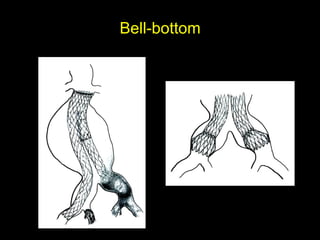
Bell-bottom
Bell-bottom
Thank you
Aaa hibrida sby15 x

Aaa hibrida sby15 x

  • 1.
    Difficult Landing Zone forAAA Intervention Harapan Kita Experience 2013-2014 Dicky A.Wartono, MD FIHA FICA Cardiac & Vascular Surgeon National Cardiac & Vascular Centre Harapan Kita Jakarta 2015
  • 2.
    Conflict of interest:none declared.
  • 3.
    PROBLEMS • Intervention itself 15-20.000 USD • Re Intervention 10 – 15.000 USD • Surgical Intervention 10 – 15.000 USD • Primary Surgery 5 – 10.000 USD • Hybrid OR 5.000.000 USD
  • 4.
  • 5.
    Female 77yo Pulsating AbdominalMass Uncontroled Hipertension HHD, ASHD, CAD CHF IV
  • 10.
    – 20 to30% required a secondary intervention during the next 6 months – related to the development of endoleaks – conversion to open repair is necessary in 2 to 10% of patients – Late ruptures after endovascular repair were reported which reintervention/convertion were postpone. The incidence was highest in the trial that began the earliest – occur in patients who have not undergone postoperative monitoring or those for whom a decision has been made not to reintervene. • patients recommended long-term surveillance by means of CT at 1 month and 12 months after the intervention
  • 12.
    80 yo male AsymptomaticA-I Aneurysm CHF IV, AF, HHD, ASHD Hosptl for ALO
  • 14.
    D-0, the patientcomplained of mild left lower-leg numbness, No complaints of pain and demonstrated intact motor and sensory function of all extremities. Normal palpable pedal pulses were present and were unchanged from the patient’s preoperative D-1, developed a sudden decrease in urine output Focal left buttock pain and left lower-leg weakness and numbness with intact proximal strength and sensation. Normal peripheral pulses remained present, making an acute distal ischemic insult unlikely D-2, developed increasing tenseness of the left buttock Motor weakness of the leg in the distribution of the sciatic nerve Surgical Consult diagnosis of gluteal compartment syndrome was made,
  • 15.
    Yano, 2001 Karch, 2000 Criado,2000 Mehta, 2001 IIA occlusion cases 103 22 39 154 Pelvic ischemia complications total cases 22 (21%) 10 (42%) 6 (15%) 71 (46%) buttock claudication 95% 70% 83% 79% colonic ischemia 5% 30% 0% 6% others 17% 15%
  • 16.
    2.25% pelvic ischemiccomplications appears to equal that described for open repair, approxi- mately 1% to 2%
  • 17.
    treatment of embolizingarterial lesions with stent grafts. In our study westaged coil embolization and EVAR by 1 or 2 days. There isno consensus regarding the appropri- ate staging interval between embolization of asingle hypo- gastric artery and EVAR. Indeed, some authors have pro- posed that simply covering the hypogastric artery during EVAR does not increase the risk for endoleak or ischemia and avertsthe need for apreoperative embolization proce- dure.2 6 Nevertheless, most authors agree that when bilat- eral hypogastric artery embolization is planned, EVAR should be delayed by 2 to 4 weeks.1 3 , 1 8 , 2 3 Interruption of bilateral internal iliac arteries has also been reported to be free from colon ischemia. Englke et al2 7 reviewed 16 patientswith bilateral embolization before EVAR, and found buttock claudication and sexual dysfunc- tion to bethe only adverseevents. Othersare morewary of interrupting important pelviccollateral vesselsin thesetting of EVAR.1 4 , 1 8 , 2 2 , 2 8 - 3 0 Leyden et al1 8 report 1 of 21 pa- tients(4.3%) with colonic ischemia after hypogastric artery embolization. Likewise, Karp et al3 1 reviewed 24 patients with either coiled or unintentional covering of a hypogas- tric artery during EVAR, and found 3 patients (12%) in Internal iliac artery interruption and ischemic complications after endovascular abdominal aortic aneurysm repair. Note: 16.3%of all patients treated with coil embolization had an ischemic event, compared with 8.0%of patientswho underwent internal iliac artery embolization (P .091). JOURNAL OF VASCULAR SURGERY Volume 40, Number 4 Maldonado et al 707 The overall ischemic complications after interruption of hypogastric arteries before EVAR was 16.3%, compared with 8% in intact hypogastric arteries The incidence of buttock claudication ranges from 11% to 50% after coil embolization of one or both internal iliac arteries
  • 18.
  • 20.
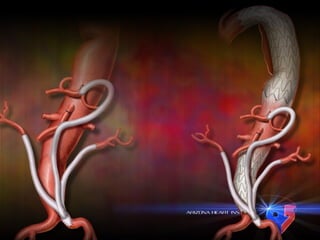
    Antegrade and Retrograde Periscoping Techniquefor visceral revascularization" s for Sandwich grafts"
  • 21.
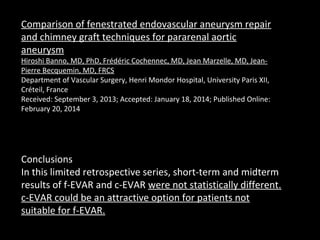
    Comparison of fenestratedendovascular aneurysm repair and chimney graft techniques for pararenal aortic aneurysm Hiroshi Banno, MD, PhD, Frédéric Cochennec, MD, Jean Marzelle, MD, Jean- Pierre Becquemin, MD, FRCS Department of Vascular Surgery, Henri Mondor Hospital, University Paris XII, Créteil, France Received: September 3, 2013; Accepted: January 18, 2014; Published Online: February 20, 2014 Conclusions In this limited retrospective series, short-term and midterm results of f-EVAR and c-EVAR were not statistically different. c-EVAR could be an attractive option for patients not suitable for f-EVAR.
  • 22.
    Critical Analysis ofthe Mid-term Results after Chimney EVAR: Cause for Concern Salvatore T. Scali, Robert J. Feezor, Catherine K. Chang, Alyson Waterman-Pugh, Scott A. Berceli, Thomas S. Huber, Adam W. Beck University of Florida- Gainesville, Gainesville, FL CONCLUSIONS: These results demonstrate that chEVAR can be completed with a high degree of initial success. Significant rates of both perioperative complications and major adverse events during follow-up, including loss of chimney patency and endoleak, are not uncommon thus underscoring the critical need for close surveillance. Elective use of chEVAR should be performed with caution and comparison to open and/or fenestrated EVAR is needed to determine the long- term efficacy of this technique.
  • 23.
    Critical Analysis ofthe Mid-term Results after Chimney EVAR: Cause for Concern Salvatore T. Scali, Robert J. Feezor, Catherine K. Chang, Alyson Waterman-Pugh, Scott A. Berceli, Thomas S. Huber, Adam W. Beck University of Florida- Gainesville, Gainesville, FL CONCLUSIONS: These results demonstrate that chEVAR can be completed with a high degree of initial success. Significant rates of both perioperative complications and major adverse events during follow-up, including loss of chimney patency and endoleak, are not uncommon thus underscoring the critical need for close surveillance. Elective use of chEVAR should be performed with caution and comparison to open and/or fenestrated EVAR is needed to determine the long- term efficacy of this technique.
  • 25.
    discharge. Primary end-pointsincluded chimney stent patency and freedom from MAE. Secondary end-points included complications and long-term survival. RESULTS: From 2008-2012, 41 patients [age ± standard deviation (SD); 72.7±8.3; male 65.9%(N=27)] were treated with a total of 76 chimney stents (renal, N=51; superior mesenteric artery, N=16 celiac artery, N=9) for a variety of pathologic indications, including: juxtarenal aneurysm, 41.5% (N=17, 1 rupture); suprarenal aneurysm, 17.1% (N=7), thoracoabdominal aneurysm, 17.1% (N=7), aortic anastomotic pseudoaneurysm, 14.6% (N=6; 3 ruptures), type 1a endoleak after EVAR, 7.3% (N=3), and atheromatous disease, 2.4% (N=1). Two patients had a single target vessel abandoned due to cannulation failure and 1 patient had a type 1a endoleak at case completion (technical success = 92.7%). Intraoperative complications occurred in 7 (17.1%) cases: graft maldeployment with unplanned mesenteric chimney (N=2) and access vessel injury requiring repair (N=5). Major postoperative complications developed in 19.5% (N=8). 30-day and in-hospital mortality were 4.9% (N=2) and 7.3% (N=3), respectively. At median follow-up of 18.2 (range 1.4-41.5) months, 22% (N=9) of patients developed endoleak at some point during follow-up [type 1a, 7.3% (N=3); type 2, 9.6% (N=4); indeterminate, 7.3% (N=3)]. One patient (2.4%) underwent surgical conversion who was initially treated for dissection-related suprarenal aneurysm. The estimated probability of freedom from reintervention (±standard error mean) was 96±4% at both 1 and 3 years. Primary patency of all chimney stents was 88±5% and 85±5% at 1 and 3 years, respectively (Figure 1). Corresponding freedom from MAE was 83±7% and 57±10% at 1 and 3 years (Figure 2). The 1 and 5-year actuarial estimated survival for all patients was 85±6% and 65±8%, respectively. .
  • 27.
    •! 72 patientsin 2 centres" •! 46 balloon-ex (V-12 and Endurant) and 81 self-ex (Viabahn and Excluder)" •! Only 1 vessel occlusion and 1 persistent Type I endoleak" •! No deterioration in renal function" •! Success persisted out to 2 years" JVS Dec 2011!
  • 28.
    Future Applications" Off theSh Fenestrate Graft Endologi VENTAN
  • 32.
    Intent of HybridApproaches: Expand the Landing Zone for Endoluminal Grafting by Rerouting Arterial Branches Hybrid Procedures- • No randomized trials • Small case volumes • Application of a variety of techniques (no uniformity) • No commercial products • Requires customization Surgical Endovascular
  • 33.
    Hybrid procedures haveseveral advantages over conventional open repair, including avoiding : - thoracotomy, - single-lung ventilation, - aortic cross-clamping, and - minimizing end-organ ischemia several centers with large complex aortic volume, systematic reviews, and a national registry have shown that hybrid procedures carry high mortality rates
  • 34.
    NACAAD registry 2011 208patients complex abdominal aneurysms at 14 centers in North America. a mean age 71 years Mortality 14% for all patients, 16% for TAAAs, and 9% for pararenal aneurysms. Independent predictors of early mortality included three-vessel reconstruction, coronary artery disease, congestive heart failure, high SVS scores, chronic kidney disease stage > morbidity occurred Morbidity pulmonary (22%), renal (19%), gastrointestinal (14%) Spinal cord injury (10%), and ischemic coli- tis (6%).
  • 36.
    OUR ROUTINE • FORA PERFECT FIT – Multidisiplinary Team – Patient for Good & Bad Cases – Device, “know our device” – Planning – Surveillace • IMAGING IS CRITICAL – Selection, Patients & Device – Additional Proc
  • 37.
  • 38.
  • 39.
  • 40.
    Proximal Neck Diameter Length Angle Thrombus Calcification Distal LandingZone Diameter Length Angle Thrombus Calcification
  • 41.
    Neck Proximal anchoring zone Diameter< 32 mm Length > 15 mm Angle < 75° No thrombus No calcification
  • 42.
    Iliac arteries Distal “seal”zone Diameter > 7 mm ‘Seal’ zone > 15 mm Angle < 90° Not too tortuosity Not too calcified
  • 43.
    Neck Too wide (>25 mm – AneuRx, >32 mm - Talent) Too short (< 15 mm) Too angulated (>60°) Too diseased Cone-shaped Iliacs Too tortuous Too small (< 7 mm) Too calcified There are always challenges
  • 44.
  • 45.
    65° Neck Angulation 65° angulationneck Implant angio shows endoleak
  • 46.
  • 47.
  • 48.
  • 49.
    Neck Angulation < 60degrees angulation Angulated and long neck “might” be OK Angulated and short neck “is bad”
  • 50.
    Short and angulatedNeck Angulated neck, 75Angulated neck, 75ºº 20 mm20 mm 16 mm16 mmNeck Length 10 mmNeck Length 10 mm
  • 51.
  • 52.
  • 53.
  • 54.
  • 56.
  • 57.
  • 58.
  • 59.
  • 60.
    Iliac Artery Stenosis 10mm10 mm 4 mm4 mm 8 mm8 mm 6 mm6 mm
  • 61.
  • 62.
    Small Distal Aorta 14-mmlumen at distal aortic neck which is heavily calcified
  • 63.
    Accessory Renal Artery Accessoryrenal arteryAccessory renal artery
  • 64.
    Low right accessoryrenal artery Accessory Renal Artery
  • 65.
    Enlarged CIA: 30%of cases 22 mm 18 mm
  • 66.
    R L Bilateral CommonIliac Artery Aneurysms
  • 67.
    40 mm40 mm20mm20 mm Bilateral Common Iliac Artery Aneurysms
  • 68.
    Right CIARight CIA AneurysmAneurysm CoilocclusionCoil occlusion right internal iliacright internal iliac EndograftEndograft extendedextended IIA occlusion and limb extension
  • 69.
    Yano, 2001 Karch, 2000 Criado,2000 Mehta, 2001 IIA occlusion cases 103 22 39 154 Pelvic ischemia complications total cases 22 (21%) 10 (42%) 6 (15%) 71 (46%) buttock claudication 95% 70% 83% 79% colonic ischemia 5% 30% 0% 6% others 17% 15%
  • 71.
  • 72.
  • 73.

Editor's Notes

  • #2 Pengalamn harkit… endo u aaa (mostly), n bbrp night mare.. Learning curve u endo.. Open sdh bukan challenge lg. Selain aneu, jg AI obstruction.. Diseksi hampir ga ada
  • #4 Avoid cost but still standart accord guideline Di tempat training.. Easy money
  • #21 Endoleak, ruptur dsb dsb dsb
  • #34 A total of 659 visceral arteries were reconstructed using single-stage debranching in 92 patients (44%) or a two- stage approach in 116 patients (56%). Arch debranching was needed in 22 patients (11%) to provide an adequate proximal landing zone. The inflow for visceral reconstruc- tion was based on the iliac arteries in 63%, aorta or aorticgraft in 29%, or a hepatic/splenic artery in 8%. The extent of visceral reconstruction included one or two vessels in 58 patients (28%) and three or four vessels in 150 patients (72%). Thirty-day or in-hospital mortality was 14% for all patients, 16% for TAAAs, and 9% for pararenal aneurysms. Mortality rates ranged from 0% to 21% in centers with &amp;gt; 10 cases. In this study, mortality was associated with the sever- ity of comorbidities as determined by SVS clinical scores:3% for low-risk patients (SVS score &amp;lt; 9) and 17% for high- risk patients (score &amp;gt; 9). Independent predictors of early mortality included &amp;gt; three-vessel reconstruction, coronary artery disease, congestive heart failure, high SVS scores, and chronic kidney disease stage &amp;gt; 3. Any morbidity occurredin 73% of the patients, most commonly, pulmonary (22%), renal (19%), and gastrointestinal (14%) complications. Spinal cord injury occurred in 21 patients (10%), and ischemic coli- tis occurred in 13 patients (6%). The mean length of hospital stay was 21 days. Patient sur- vival at 1 and 5 years was 77% ± 3% and 61% ± 5%, respec- tively, and predictors of late mortality included chronic kid- ney disease (stage &amp;gt; 3), high SVS scores, and &amp;gt; three-vessel reconstruction. After a median follow-up of 21 months, 70% of the patients had repeat aortic imaging. Endoleaks occurred in 23 patients (13%) and were classified as type I in 3%, type II in 8%, and type III in 1%. Primary visceral graft patency and freedom from reinterventions were 90% ± 2% and 85% ± 3% at 1 year, respectively.
  • #35 coronary artery disease in 58%, chronic pulmonary disease in 43%, previous aortic repair in 42%, chronic kidney disease stage &amp;gt; 3 (eGFR &amp;lt; 60 mL/hr/1.73 m2) in 28%. Aneurysm diameter averaged 6.6 ± 1.3 cm, extent included 163 TAAAs (type I in 6%, type II in 25%, type III in 31%, and type IV) and 45 pararenal aneurysms.
  • #38 Beberapa pengalaman kami ec kasusu tdk ada yg ideal… bbrp nightmare.. Beberapa ga tll night mare Bbrp kadang bisa diabaikan.
  • #59 Problm waktu mulai.. Tlh sheath masuk.. aman
  • #63 Dibaloon dl ato sama2 deploy