NARRATIVE 
THEORY 
By Harry Barrett and Harrison 
Costi
MAIN THEORISTS 
• Claude Levi-Strauss 
• Tzvetan Todorov 
• Vladimir Propp 
• Roland Barthes
CLAUDE LEVI-STRAUSS 
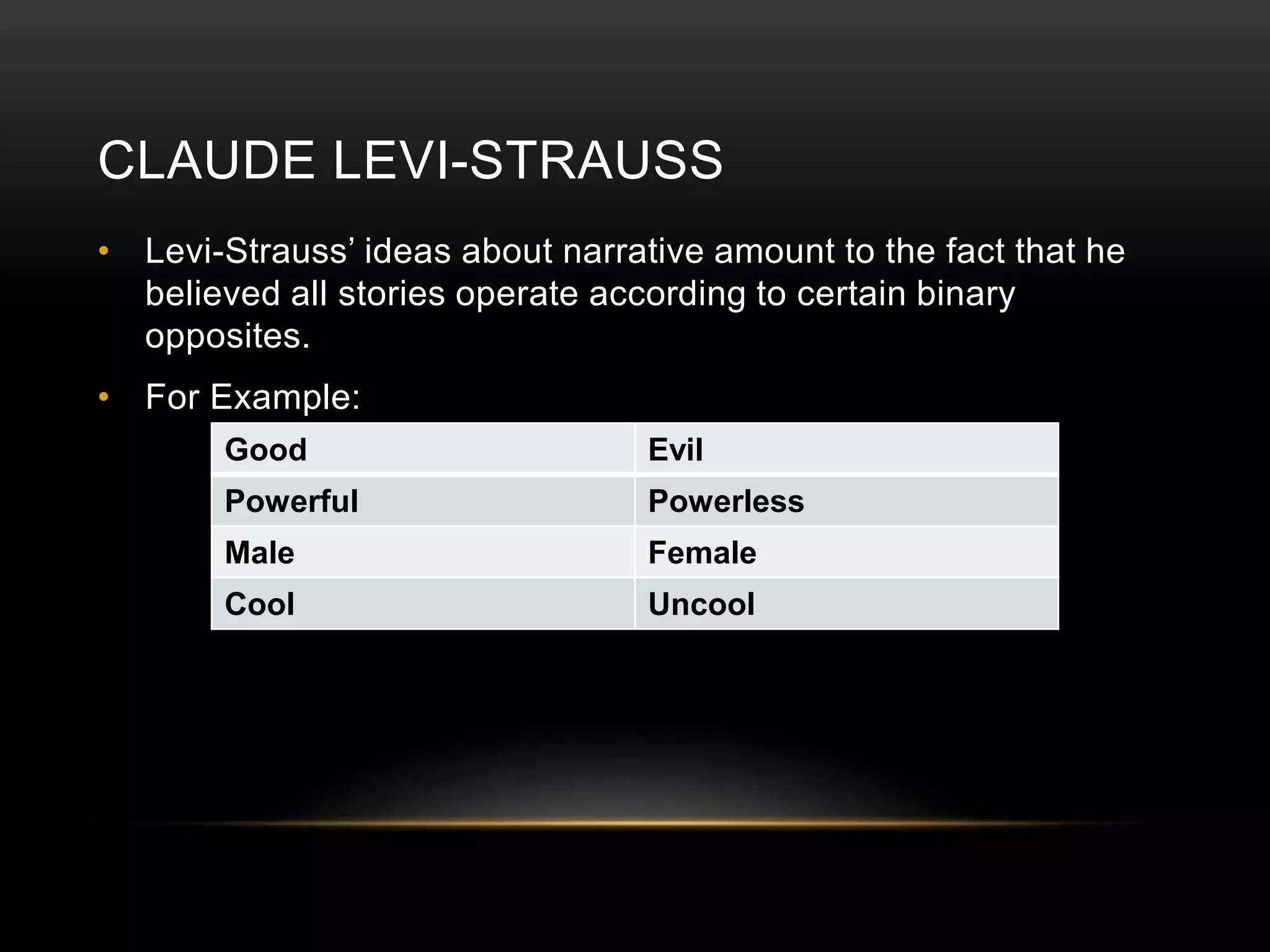
• Levi-Strauss’ ideas about narrative amount to the fact that he 
believed all stories operate according to certain binary 
opposites. 
• For Example: 
Good Evil 
Powerful Powerless 
Male Female 
Cool Uncool
TZVENTAN TODOROV 
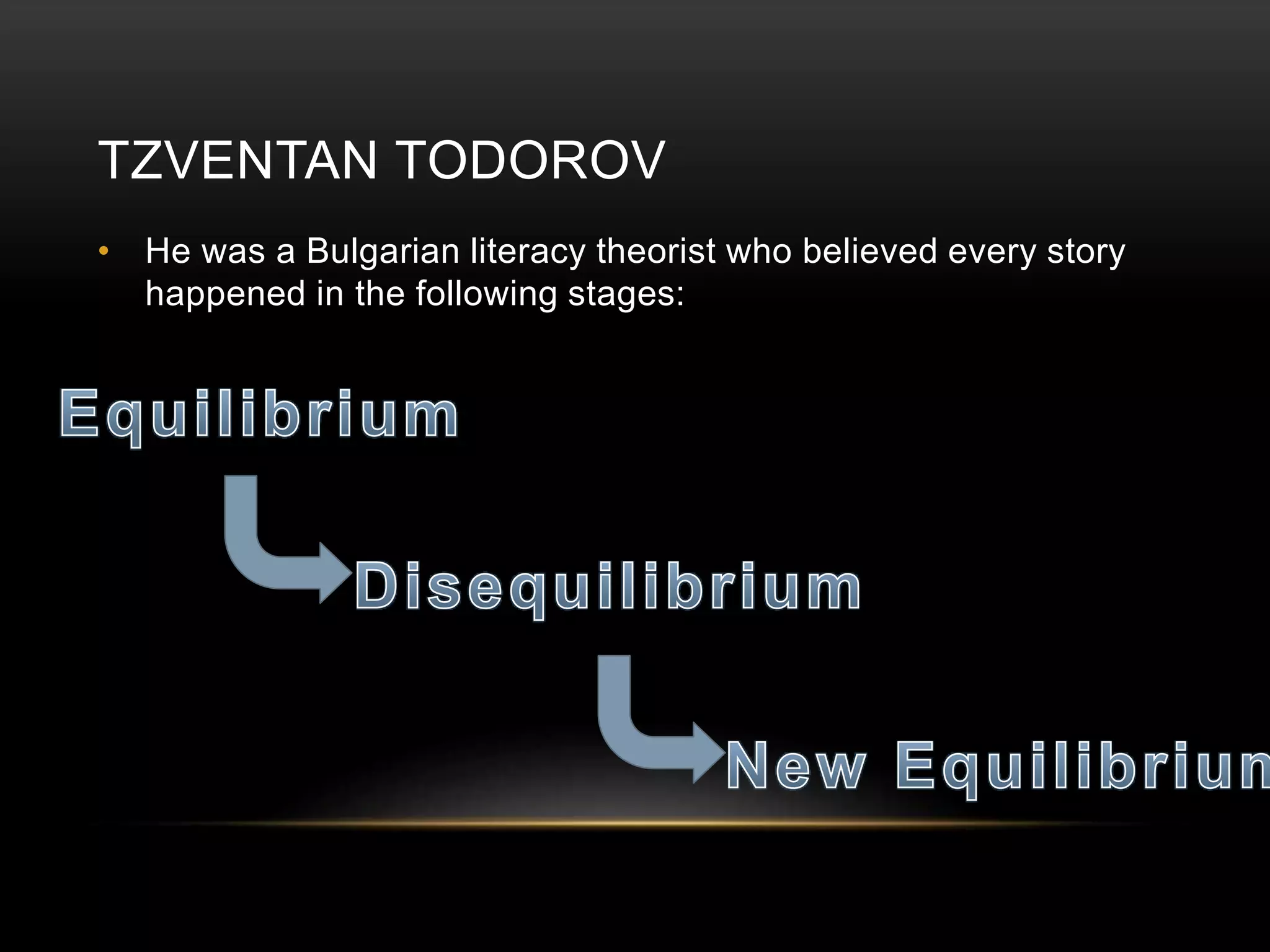
• He was a Bulgarian literacy theorist who believed every story 
happened in the following stages:
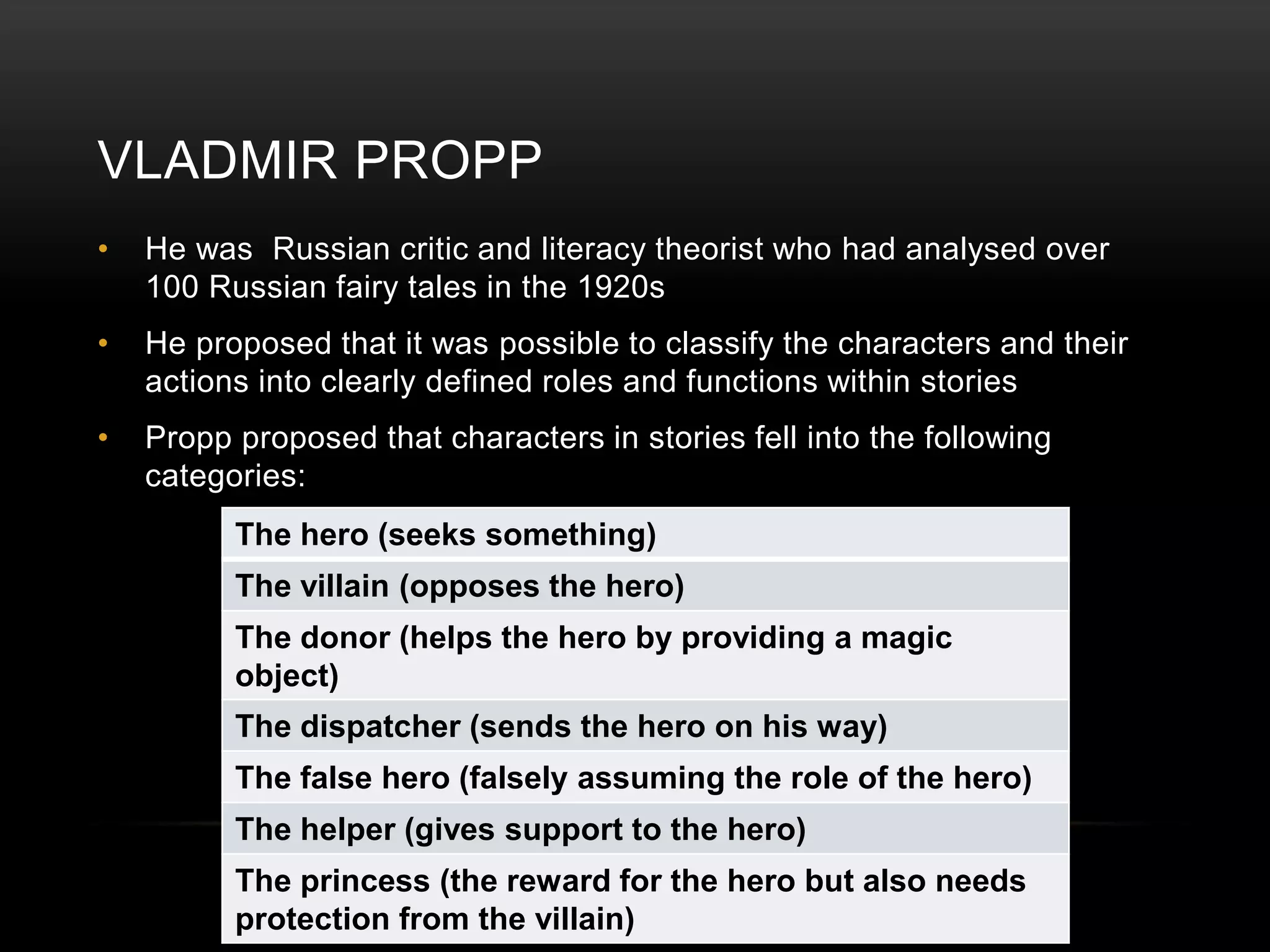
VLADMIR PROPP 
• He was Russian critic and literacy theorist who had analysed over 
100 Russian fairy tales in the 1920s 
• He proposed that it was possible to classify the characters and their 
actions into clearly defined roles and functions within stories 
• Propp proposed that characters in stories fell into the following 
categories: 
The hero (seeks something) 
The villain (opposes the hero) 
The donor (helps the hero by providing a magic 
object) 
The dispatcher (sends the hero on his way) 
The false hero (falsely assuming the role of the hero) 
The helper (gives support to the hero) 
The princess (the reward for the hero but also needs 
protection from the villain)
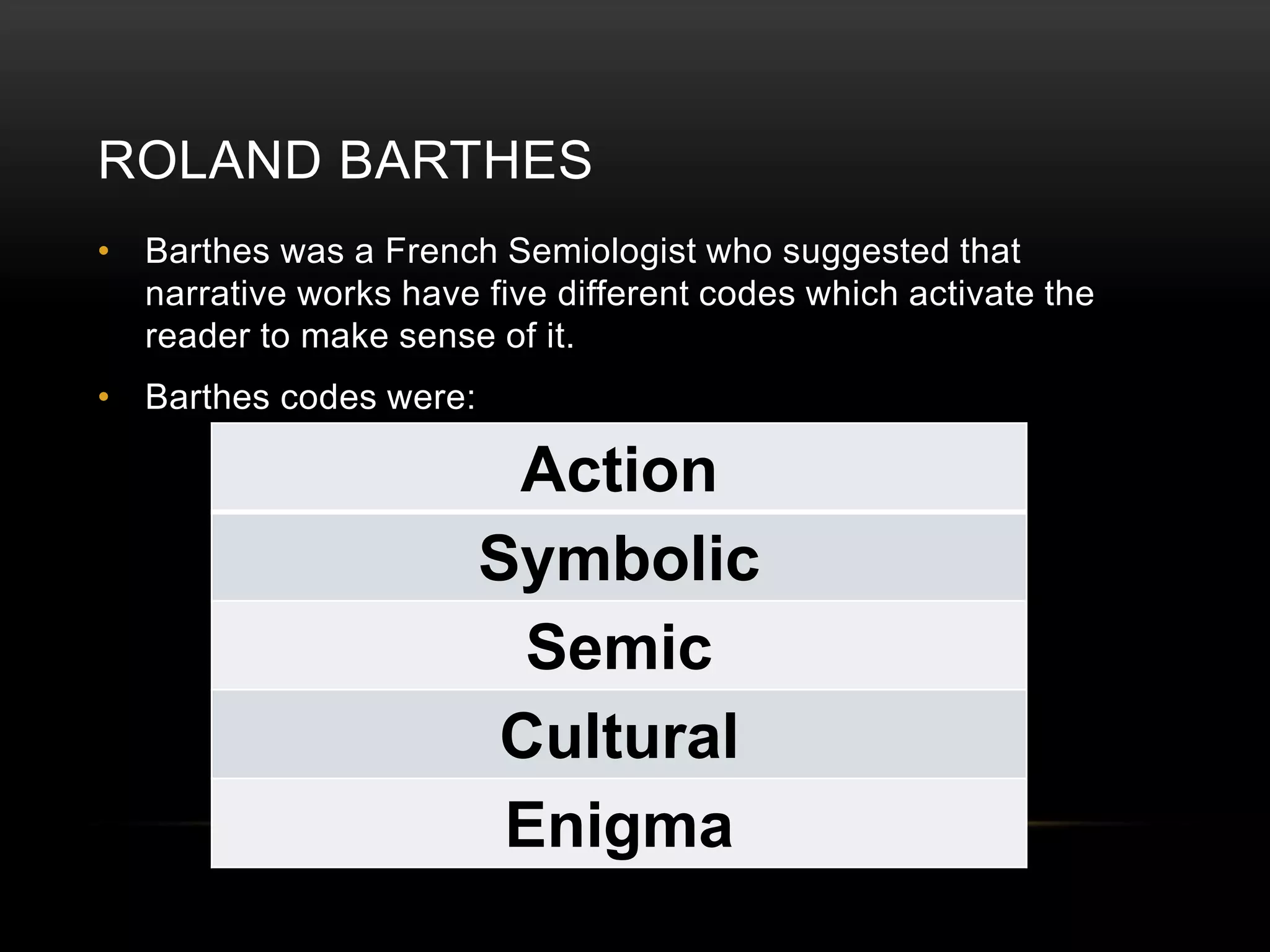
ROLAND BARTHES 
• Barthes was a French Semiologist who suggested that 
narrative works have five different codes which activate the 
reader to make sense of it. 
• Barthes codes were: 
Action 
Symbolic 
Semic 
Cultural 
Enigma
THANKS FOR WATCHING!

A2 Media Studies - Narrative Theory

  • 1.
    NARRATIVE THEORY ByHarry Barrett and Harrison Costi
  • 2.
    MAIN THEORISTS •Claude Levi-Strauss • Tzvetan Todorov • Vladimir Propp • Roland Barthes
  • 3.
    CLAUDE LEVI-STRAUSS •Levi-Strauss’ ideas about narrative amount to the fact that he believed all stories operate according to certain binary opposites. • For Example: Good Evil Powerful Powerless Male Female Cool Uncool
  • 4.
    TZVENTAN TODOROV •He was a Bulgarian literacy theorist who believed every story happened in the following stages:
  • 5.
    VLADMIR PROPP •He was Russian critic and literacy theorist who had analysed over 100 Russian fairy tales in the 1920s • He proposed that it was possible to classify the characters and their actions into clearly defined roles and functions within stories • Propp proposed that characters in stories fell into the following categories: The hero (seeks something) The villain (opposes the hero) The donor (helps the hero by providing a magic object) The dispatcher (sends the hero on his way) The false hero (falsely assuming the role of the hero) The helper (gives support to the hero) The princess (the reward for the hero but also needs protection from the villain)
  • 6.
    ROLAND BARTHES •Barthes was a French Semiologist who suggested that narrative works have five different codes which activate the reader to make sense of it. • Barthes codes were: Action Symbolic Semic Cultural Enigma
  • 7.