Biofuels: The Potential of Algae
Most algae are single-celled organisms that grow in either marine (saltwater) or
freshwater environments. Most strains are photosynthetic and represent the
world’s fastest growing plants. Like other plants, they convert sunlight, water,
CO2, and other nutrients into energy and biomass and release large amounts of
oxygen into the atmosphere. A number of algae strains and marine organisms
derive energy from organic carbon, rather than atmospheric carbon (through
photosyntesis. There are over 65,000 known species of algae, including many
different varieties such as red, green, brown, and blue-green (cyanobacteria).

Potential Pathways to Biofuels
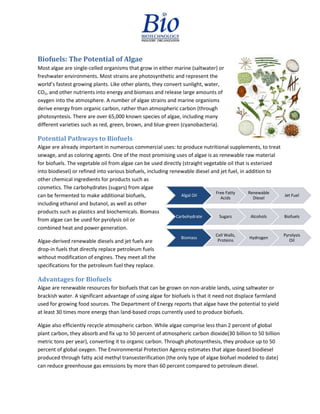
Algae are already important in numerous commercial uses: to produce nutritional supplements, to treat
sewage, and as coloring agents. One of the most promising uses of algae is as renewable raw material
for biofuels. The vegetable oil from algae can be used directly (straight vegetable oil that is esterized
into biodiesel) or refined into various biofuels, including renewable diesel and jet fuel, in addition to
other chemical ingredients for products such as
cosmetics. The carbohydrates (sugars) from algae
                                                                               Free Fatty      Renewable
can be fermented to make additional biofuels,                    Algal Oil
                                                                                  Acids          Diesel
                                                                                                          Jet Fuel
including ethanol and butanol, as well as other
products such as plastics and biochemicals. Biomass
                                                               Carbohydrate      Sugars         Alcohols  Biofuels
from algae can be used for pyrolysis oil or
combined heat and power generation.
                                                                             Cell Walls,                    Pyrolysis
                                                              Biomass                       Hydrogen
Algae-derived renewable diesels and jet fuels are                             Proteins                         Oil
drop-in fuels that directly replace petroleum fuels
without modification of engines. They meet all the
specifications for the petroleum fuel they replace.

Advantages for Biofuels
Algae are renewable resources for biofuels that can be grown on non‐arable lands, using saltwater or
brackish water. A significant advantage of using algae for biofuels is that it need not displace farmland
used for growing food sources. The Department of Energy reports that algae have the potential to yield
at least 30 times more energy than land-based crops currently used to produce biofuels.

Algae also efficiently recycle atmospheric carbon. While algae comprise less than 2 percent of global
plant carbon, they absorb and fix up to 50 percent of atmospheric carbon dioxide(30 billion to 50 billion
metric tons per year), converting it to organic carbon. Through photosynthesis, they produce up to 50
percent of global oxygen. The Environmental Protection Agency estimates that algae-based biodiesel
produced through fatty acid methyl transesterification (the only type of algae biofuel modeled to date)
can reduce greenhouse gas emissions by more than 60 percent compared to petroleum diesel.
Commercial Development
Biofuel companies are currently seeking to scale commercial production of algae and are pursuing
several engineering approaches to the design of an economical system for growing algae. Companies are
investigating use of closed systems and open pond systems. In closed systems, engineers can precisely
regulate algae growth conditions. Closed systems include both photobioreactors for photosynthetic
algae strains and traditional bioreactors (enclosed tanks such as those used in other microbial growth)
for those, such as cyanobacteria, that do not require sunlight. Open pond systems
have been used in many settings, but can be sensitive to various environmental
factors, such as contamination by other algae strains, or variations in nutrients, heat
and light. Pond systems covered by thin plastic films and combination closed/open
systems are being developed to control these factors.

The Defense Advanced Research Projects Agency is working with teams led by
Science Applications International Corp. (SAIC) and General Atomics to produce cost-
effective military jet fuel (JP-8) from algae. Testing is expected to begin in 2011. The
Navy’s Defense Energy Support Center has also purchased and begun testing algae-
derived diesel distillates from Solazyme. And Continental Airlines and Japan Airlines
have successfully tested Jet A from Sapphire Energy and UOP Renewables in
commercial jets, including Boeing 737 and 747 planes.

Industrial Research & Development
Currently, many BIO Member Companies are focused on research in this area. Some companies include:

        Company                 Facility Location           Capacity (GPY)                 Start Date


      Algae2Omega             Ft. Lauderdale, Fla.             500,000


         Algenol                Lee County, Fla.               100,000                       2012


 Algenol - Dow Chemical
                                Freeport, Texas                100,000                       2012
            Co.


     Aurora Biofuels             Coastal Florida                 1,000                     Aug. 2007


                            Massachusetts Military
     Cape Cod Algae
                             Reservation, Bourne,              1 million                   Fall 2010
       Biorefinery
                                    Mass.


    Cellana (Shell - HR     Kona Pilot Facility (KPF),
                                                                                             2010
     BioPetroleum)                 Kona, Hi.
Phyta-Pond Type II
 Culturing Solutions    PhotoBioreactor, Tampa,   500,000
                                  Fla.


HR BioPetroleum, Inc.     Ma'alaea, Maui, Hi.


     Inventure               Seattle, Wash.


Joule Biotechnologies       Leander, Texas                    June 2010


   LiveFuels, Inc.         Brownsville, Texas                 Aug. 2009


     PetroAlgae              Fellsmere, Fla.


       Phycal              Honolulu, Hawaii                   Dec. 2010


  Sapphire Energy           Columbus, N.M.        1 million


     Solazyme                 Danville, Pa.


                            Coyote Gulch
    Solix Biofuel        Demonstration Facility    6,000      July 2009
                            Durango, Colo.


     US Biofuels             Fresno, Calif.       4 million   Dec. 2010

Algae the New BioEnergy Fuel

  • 1.
    Biofuels: The Potentialof Algae Most algae are single-celled organisms that grow in either marine (saltwater) or freshwater environments. Most strains are photosynthetic and represent the world’s fastest growing plants. Like other plants, they convert sunlight, water, CO2, and other nutrients into energy and biomass and release large amounts of oxygen into the atmosphere. A number of algae strains and marine organisms derive energy from organic carbon, rather than atmospheric carbon (through photosyntesis. There are over 65,000 known species of algae, including many different varieties such as red, green, brown, and blue-green (cyanobacteria). Potential Pathways to Biofuels Algae are already important in numerous commercial uses: to produce nutritional supplements, to treat sewage, and as coloring agents. One of the most promising uses of algae is as renewable raw material for biofuels. The vegetable oil from algae can be used directly (straight vegetable oil that is esterized into biodiesel) or refined into various biofuels, including renewable diesel and jet fuel, in addition to other chemical ingredients for products such as cosmetics. The carbohydrates (sugars) from algae Free Fatty Renewable can be fermented to make additional biofuels, Algal Oil Acids Diesel Jet Fuel including ethanol and butanol, as well as other products such as plastics and biochemicals. Biomass Carbohydrate Sugars Alcohols Biofuels from algae can be used for pyrolysis oil or combined heat and power generation. Cell Walls, Pyrolysis Biomass Hydrogen Algae-derived renewable diesels and jet fuels are Proteins Oil drop-in fuels that directly replace petroleum fuels without modification of engines. They meet all the specifications for the petroleum fuel they replace. Advantages for Biofuels Algae are renewable resources for biofuels that can be grown on non‐arable lands, using saltwater or brackish water. A significant advantage of using algae for biofuels is that it need not displace farmland used for growing food sources. The Department of Energy reports that algae have the potential to yield at least 30 times more energy than land-based crops currently used to produce biofuels. Algae also efficiently recycle atmospheric carbon. While algae comprise less than 2 percent of global plant carbon, they absorb and fix up to 50 percent of atmospheric carbon dioxide(30 billion to 50 billion metric tons per year), converting it to organic carbon. Through photosynthesis, they produce up to 50 percent of global oxygen. The Environmental Protection Agency estimates that algae-based biodiesel produced through fatty acid methyl transesterification (the only type of algae biofuel modeled to date) can reduce greenhouse gas emissions by more than 60 percent compared to petroleum diesel.
  • 2.
    Commercial Development Biofuel companiesare currently seeking to scale commercial production of algae and are pursuing several engineering approaches to the design of an economical system for growing algae. Companies are investigating use of closed systems and open pond systems. In closed systems, engineers can precisely regulate algae growth conditions. Closed systems include both photobioreactors for photosynthetic algae strains and traditional bioreactors (enclosed tanks such as those used in other microbial growth) for those, such as cyanobacteria, that do not require sunlight. Open pond systems have been used in many settings, but can be sensitive to various environmental factors, such as contamination by other algae strains, or variations in nutrients, heat and light. Pond systems covered by thin plastic films and combination closed/open systems are being developed to control these factors. The Defense Advanced Research Projects Agency is working with teams led by Science Applications International Corp. (SAIC) and General Atomics to produce cost- effective military jet fuel (JP-8) from algae. Testing is expected to begin in 2011. The Navy’s Defense Energy Support Center has also purchased and begun testing algae- derived diesel distillates from Solazyme. And Continental Airlines and Japan Airlines have successfully tested Jet A from Sapphire Energy and UOP Renewables in commercial jets, including Boeing 737 and 747 planes. Industrial Research & Development Currently, many BIO Member Companies are focused on research in this area. Some companies include: Company Facility Location Capacity (GPY) Start Date Algae2Omega Ft. Lauderdale, Fla. 500,000 Algenol Lee County, Fla. 100,000 2012 Algenol - Dow Chemical Freeport, Texas 100,000 2012 Co. Aurora Biofuels Coastal Florida 1,000 Aug. 2007 Massachusetts Military Cape Cod Algae Reservation, Bourne, 1 million Fall 2010 Biorefinery Mass. Cellana (Shell - HR Kona Pilot Facility (KPF), 2010 BioPetroleum) Kona, Hi.
  • 3.
    Phyta-Pond Type II Culturing Solutions PhotoBioreactor, Tampa, 500,000 Fla. HR BioPetroleum, Inc. Ma'alaea, Maui, Hi. Inventure Seattle, Wash. Joule Biotechnologies Leander, Texas June 2010 LiveFuels, Inc. Brownsville, Texas Aug. 2009 PetroAlgae Fellsmere, Fla. Phycal Honolulu, Hawaii Dec. 2010 Sapphire Energy Columbus, N.M. 1 million Solazyme Danville, Pa. Coyote Gulch Solix Biofuel Demonstration Facility 6,000 July 2009 Durango, Colo. US Biofuels Fresno, Calif. 4 million Dec. 2010