Different strains of Microalgae
suitable for biodiesel production.
8/20/20151
Presented by-Velentina Das
Research Scholar
Department of Energy
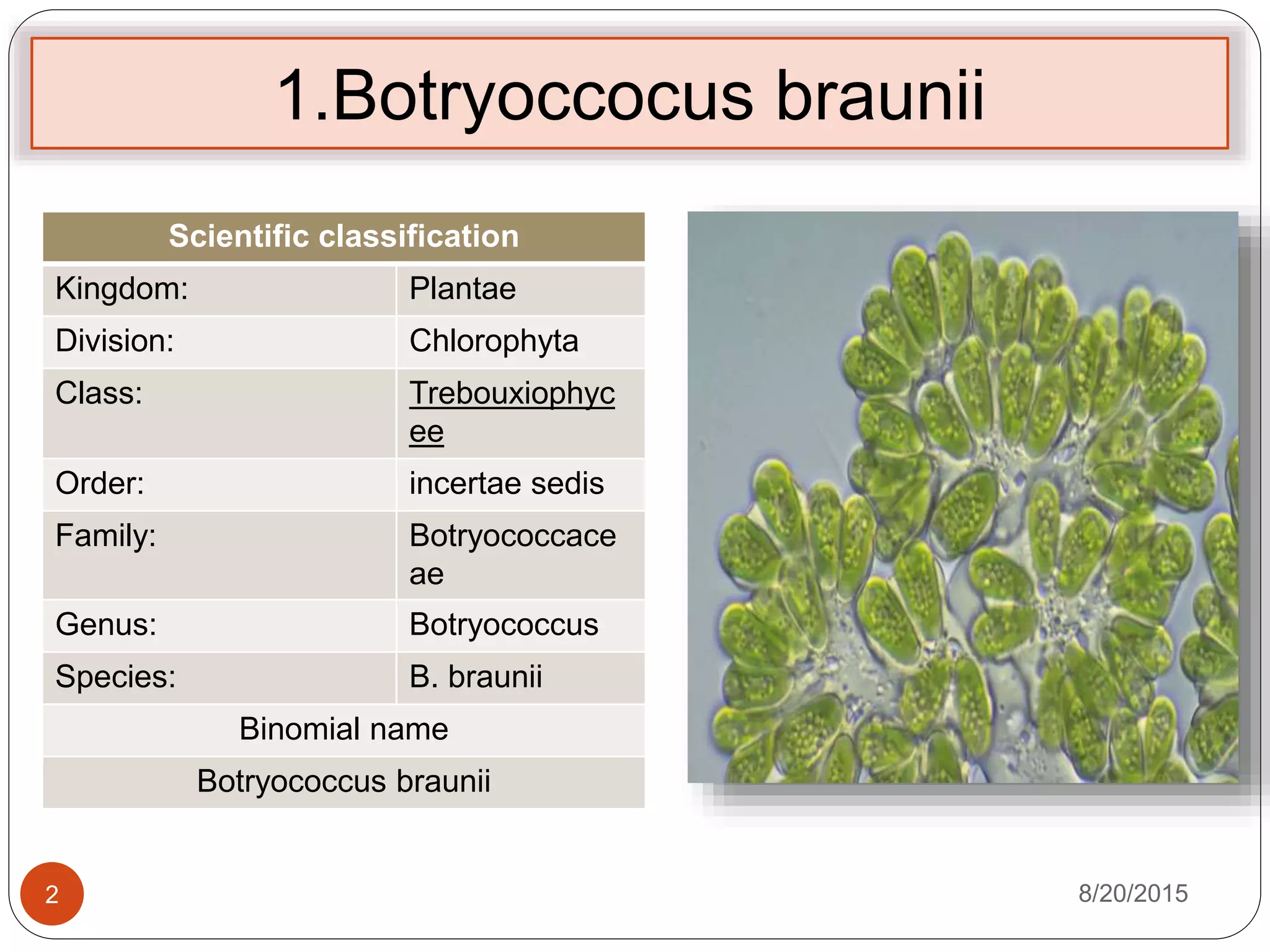
1.Botryoccocus braunii
Scientific classification
Kingdom: Plantae
Division: Chlorophyta
Class: Trebouxiophyc
ee
Order: incertae sedis
Family: Botryococcace
ae
Genus: Botryococcus
Species: B. braunii
Binomial name
Botryococcus braunii
8/20/20152
Biofuel applications of Botryococcus oils
• The practice of farming cultivating is known as algaculture. Botryococcus braunii has
great potential for algaculture because of the hydrocarbons it produces, which can be
chemically converted into fuels. Up to 86% of the dry weight of Botryococcus
braunii can be long chain hydrocarbons. The vast majority of these hydrocarbons are
botryocuccus oils: botryococcenes, alkadienes and alkatrienes.
• Transesterification can NOT be used to make biodiesel from Botryococcus oils. This is
because these oils are not vegetable oils in the common meaning, in which they
are fatty acid triglycerides.
• While Botryococcus oils are oils of vegetable origin, they are inedible and chemically
very different, being triterpenes, and lack the free oxygen atom needed for
transesterification. Botryococcus oils can be used as feedstock for hydrocracking in
an oil refinery to produce octane (gasoline, a.k.a. petrol), kerosene, and diesel.
Botryococcenes are preferred over alkadienes and alkatrienes for hydrocracking as
botryococcenes will likely be transformed into a fuel with a higher octane rating.
8/20/20153
2.Chlorella species
Scientific classification
Domain: Eukaryota
Kingdom: Viridiplantae
Division: Chlorophyta
Class: Trebouxiophycea
e
Order: Chlorellales
Family: Chlorellaceae
Genus: Chlorella
Species
•Chlorella autotrophica
•Chlorella minutissima
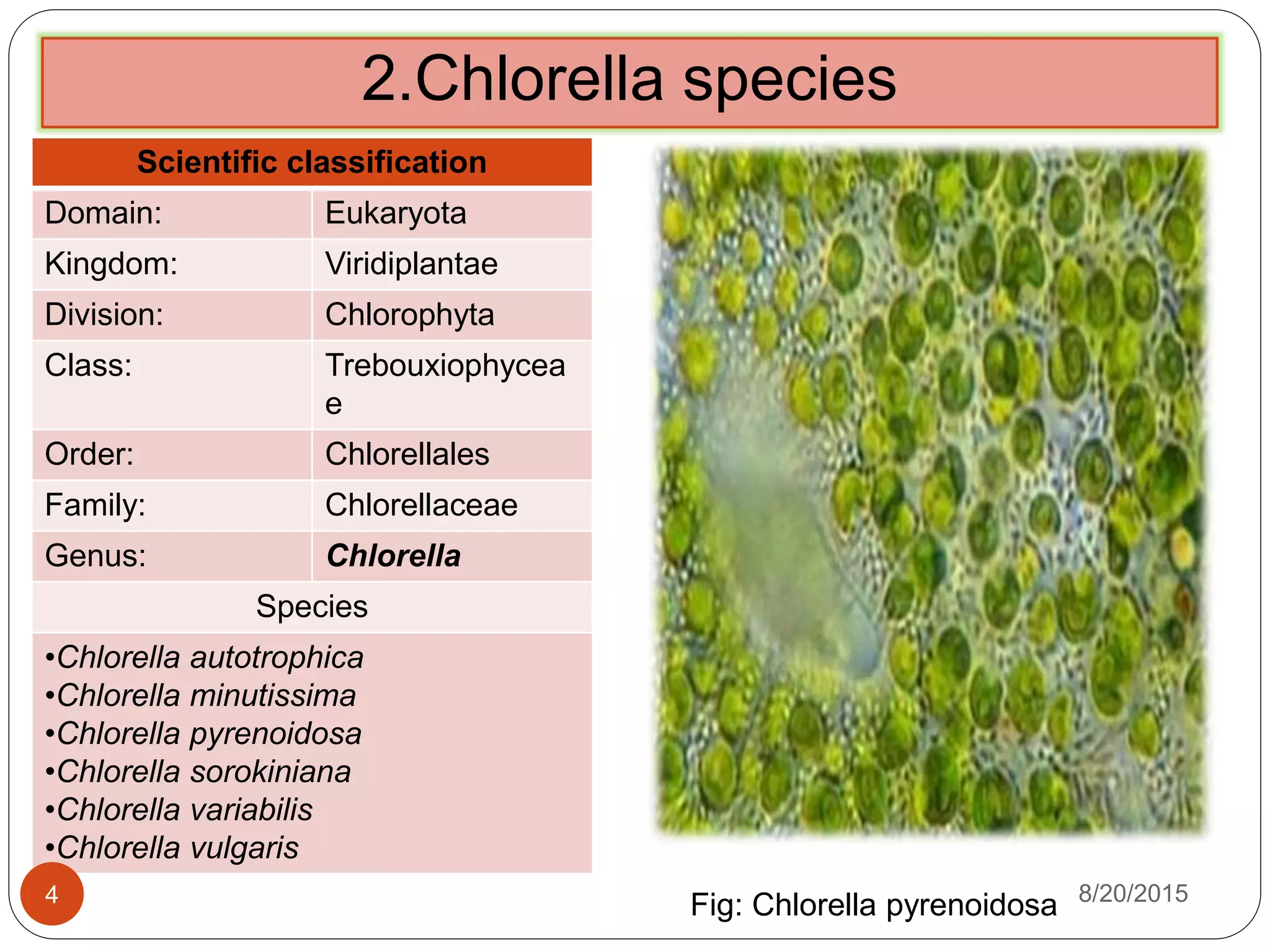
•Chlorella pyrenoidosa
•Chlorella sorokiniana
•Chlorella variabilis
•Chlorella vulgaris
Fig: Chlorella pyrenoidosa 8/20/20154
Biofuel applications of Chlorella pyrenoidosa
 Microalgae can accumulate considerable amounts of lipids under
different nutrient-deficient conditions, making them as one of the most
promising sustainable sources for biofuel production. These inducible
processes provide a powerful experimental basis for fully understanding
the mechanisms of physiological acclimation, lipid hyperaccumulation
and gene expression in algae. In nutrient-deficiency strategies, viz
nitrogen-, phosphorus- and iron-deficiency were applied to trigger the
lipid hyperaccumulation in an oleaginous Chlorella pyrenoidosa. Regular
patterns of growth characteristics, lipid accumulation, physiological
parameters, as well as the expression patterns of lipid biosynthesis-
related genes were fully analyzed and compared. nutrient stress
conditions could enhance the lipid content considerably compared with
the control. The total lipid and neutral lipid contents exhibit the most
marked increment under nitrogen deficiency, achieving 50.32% and
34.29% of dry cell weight at the end of cultivation, respectively. Both
photosynthesis indicators and reactive oxygen species parameters reveal
that physiological stress turned up when exposed to nutrient depletions.
8/20/20155
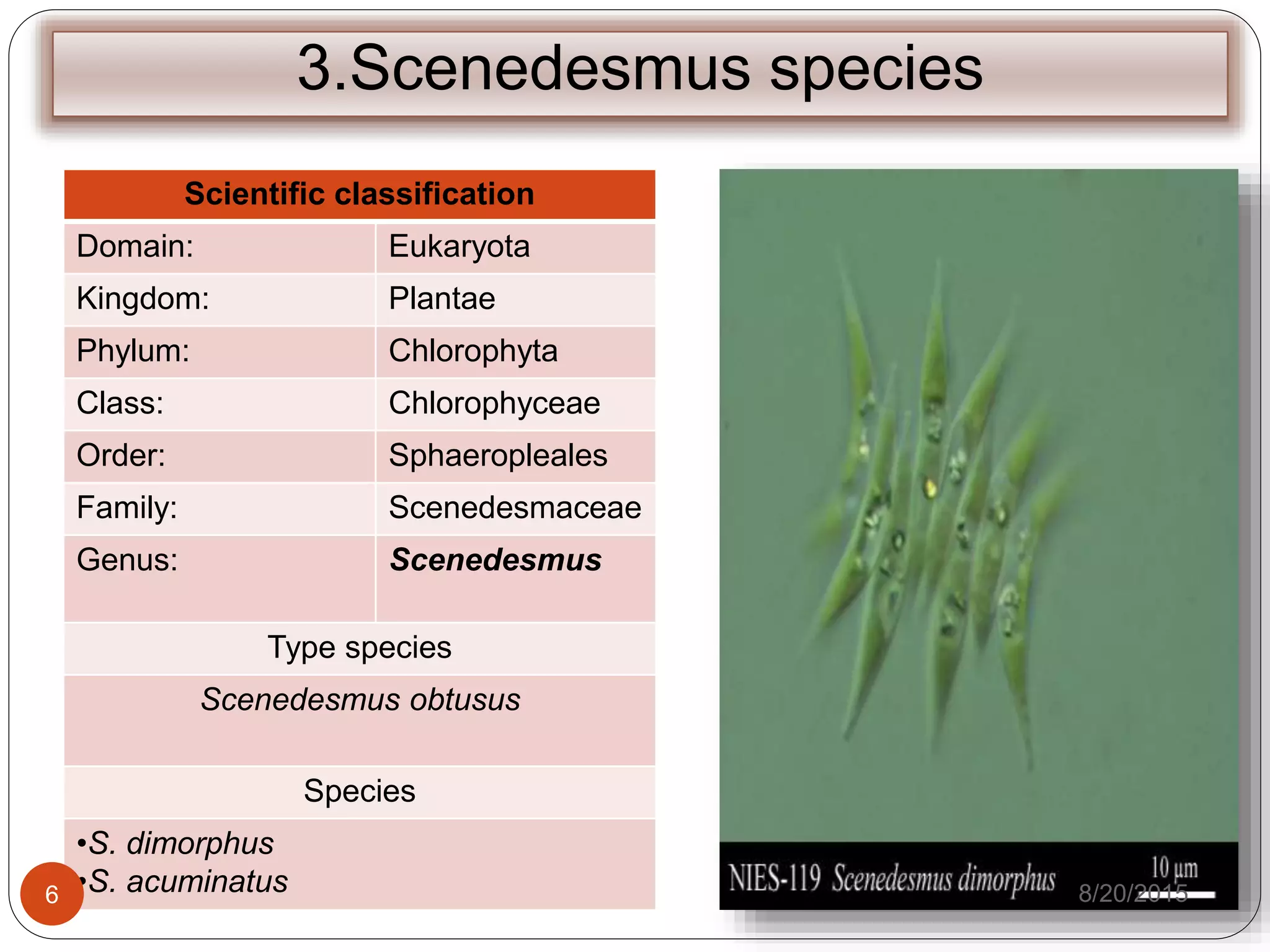
3.Scenedesmus species
Scientific classification
Domain: Eukaryota
Kingdom: Plantae
Phylum: Chlorophyta
Class: Chlorophyceae
Order: Sphaeropleales
Family: Scenedesmaceae
Genus: Scenedesmus
Type species
Scenedesmus obtusus
Species
•S. dimorphus
•S. acuminatus 8/20/20156
Biofuel application of Scenedesmus sp.
 Although Scenedesmus is capable of producing many kinds of bio-fuels such as bio-
hydrogen, biodiesel, bioethanol and drop-in fuels, most extensive research has been done
on the use of Scenedesmus for bio-diesel production. Like all algae systems, the
implementation of integrated biofuel production of Scenedesmus from the laboratory
findings has challenges in large-scale production. Major challenges include nutrient
supply and recycling, gas transfer and exchange, PAR (Photosynthetically Active
Radiation) delivery, cultural integrity, environmental control, land and water availability,
harvesting, and genetic and metabolic engineering.
 Scenedesmus is known to have high biomass productivity among green algae, and has
been actively researched for its use for bio-diesel production. Its heterotrophic production
of biomass and lipid in optimized conditions is reported to have higher efficiency than its
autotrophic production .Optimization of biomass productivity as well as lipid content
through varying concentration of supplemental nutrients has been done in numerous
studies; currently, Scenedesmus lipid yield after optimization has reached ~60% dry cell
weight, lower than some other algae .However, Scenedesmus is more efficient at capturing
CO2 than other algae. Like many algae species, Scenedesmus required nitrate-deficient
condition to profoundly increase its lipid yield. A significant improvement (up to six-fold)
of feedstock yields was achieved by adding varying concentrations of ethanol under a 12-
hr photoperiod and in the Extraction of oils with methanol or ethanol from the
Scenedesmus remains a challenge and its lower lipid content adds to the cost of The alga
increased significantly in biomass and lipid content with the nitrogen concentration of
0.32g/L of nitrogen. A two-step transesterification was found to be best suited
for transesterification, while Folch extraction was best for lipid extraction.
8/20/20157
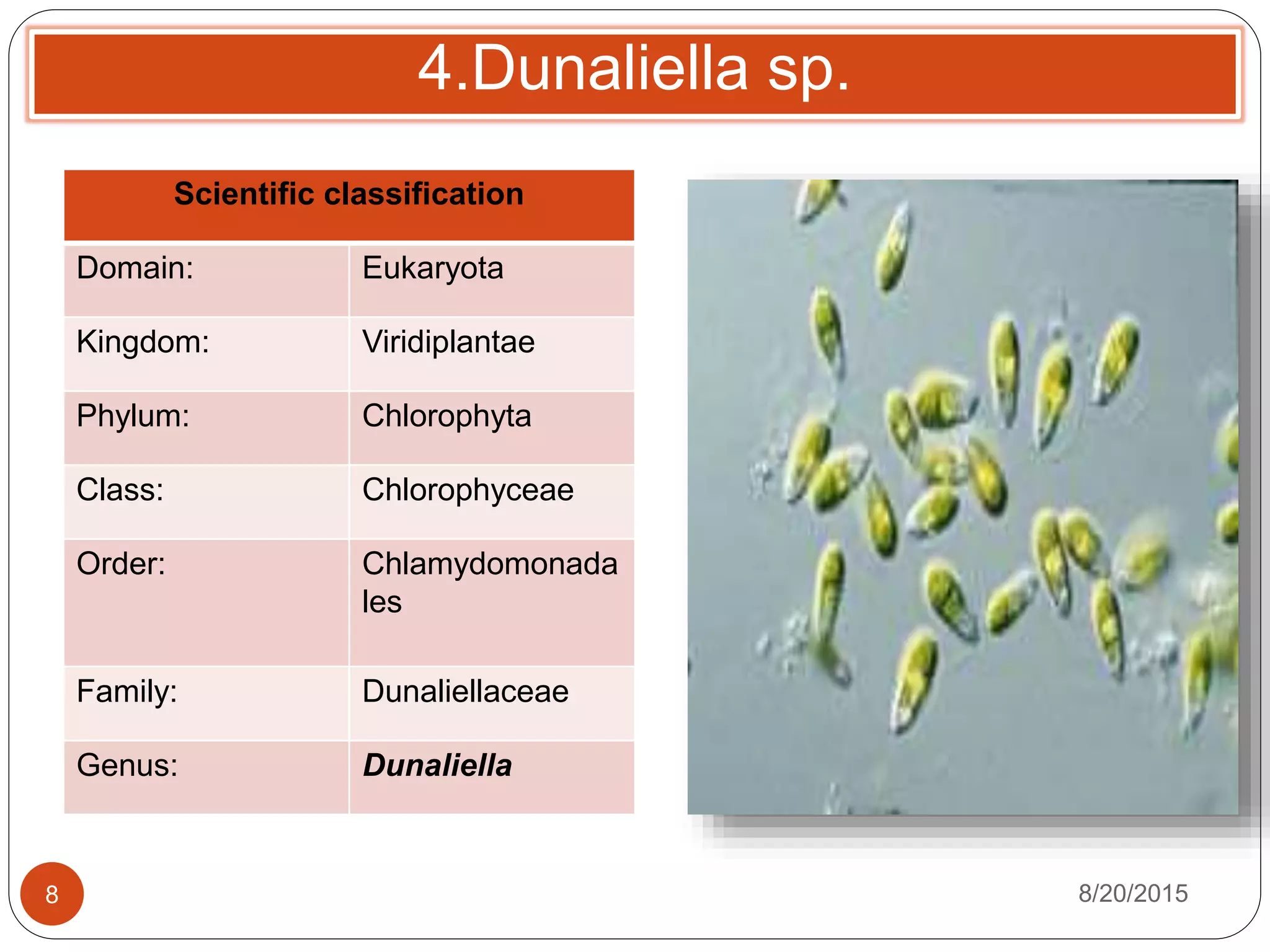
4.Dunaliella sp.
Scientific classification
Domain: Eukaryota
Kingdom: Viridiplantae
Phylum: Chlorophyta
Class: Chlorophyceae
Order: Chlamydomonada
les
Family: Dunaliellaceae
Genus: Dunaliella
8/20/20158
Biofuel application of Dunaliella tertiolecta
 The direct transesterification of microalgae biomass
shows good biodiesel yield where Dunaliella sp. yielded
66.6 %.
 The commercial production of biodiesel from this
microalgae practically successful in developed
countries. Moreover the microalgae are attractive is
that they can assimilate carbon dioxide as the carbon
source for growth which contributes to atmospheric
CO2 reduction. In addition, microalgal biofuel is similar
to those produced by fossil and crops and it can be
used directly to run existing diesel engines or as a
mixture with crude oil diesel.
8/20/20159
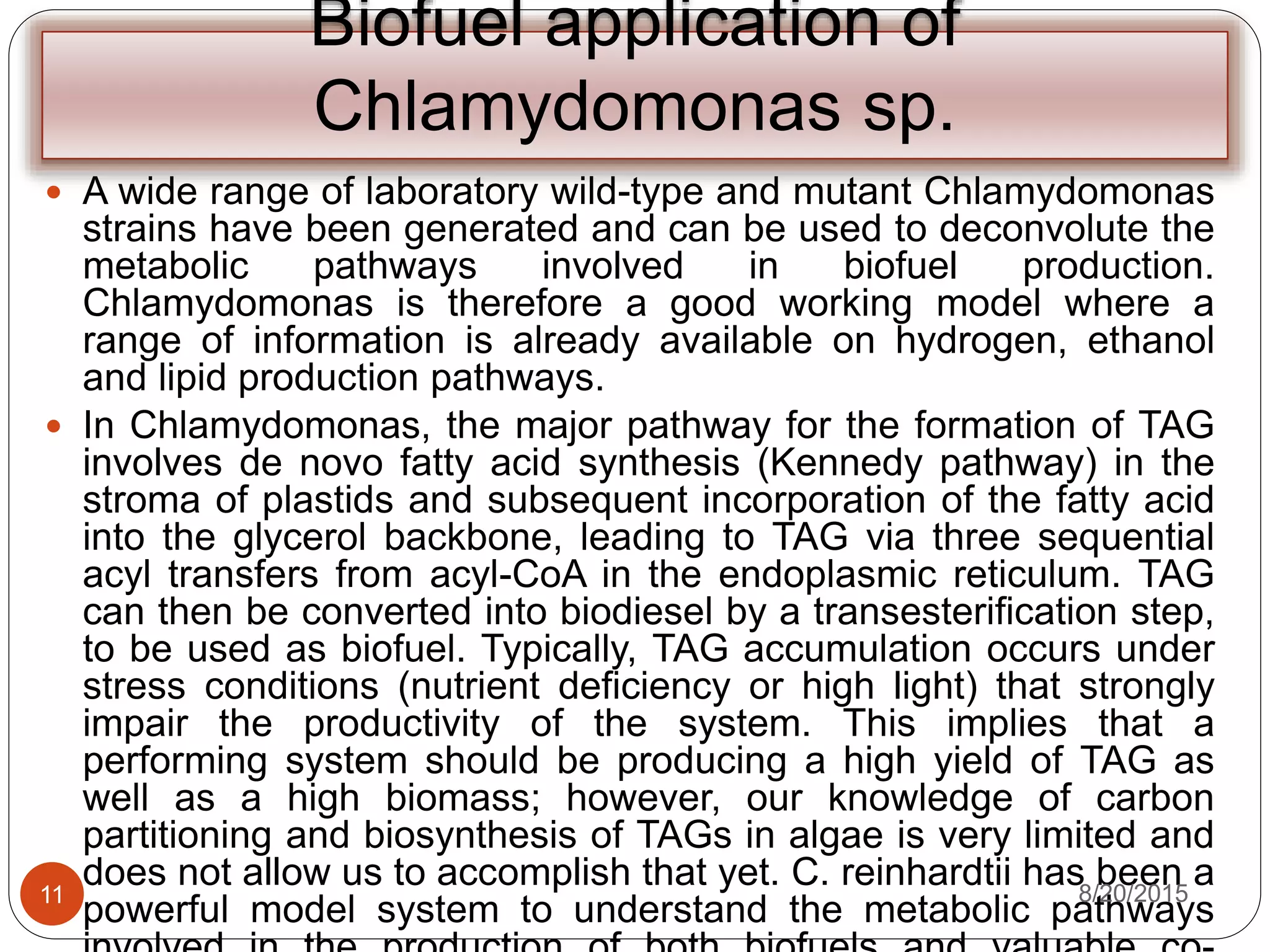
5.Chlamydomonas sp.
Scientific classification
Domain: Protista
Kingdom: Viridiplantae
Division: Chlorophyta
Class: Chlorophycea
e
Order: Volvocales
Family: Green Algae
Genus: Chlamydomo
nas
8/20/201510
Biofuel application of
Chlamydomonas sp.
 A wide range of laboratory wild-type and mutant Chlamydomonas
strains have been generated and can be used to deconvolute the
metabolic pathways involved in biofuel production.
Chlamydomonas is therefore a good working model where a
range of information is already available on hydrogen, ethanol
and lipid production pathways.
 In Chlamydomonas, the major pathway for the formation of TAG
involves de novo fatty acid synthesis (Kennedy pathway) in the
stroma of plastids and subsequent incorporation of the fatty acid
into the glycerol backbone, leading to TAG via three sequential
acyl transfers from acyl-CoA in the endoplasmic reticulum. TAG
can then be converted into biodiesel by a transesterification step,
to be used as biofuel. Typically, TAG accumulation occurs under
stress conditions (nutrient deficiency or high light) that strongly
impair the productivity of the system. This implies that a
performing system should be producing a high yield of TAG as
well as a high biomass; however, our knowledge of carbon
partitioning and biosynthesis of TAGs in algae is very limited and
does not allow us to accomplish that yet. C. reinhardtii has been a
powerful model system to understand the metabolic pathways
8/20/201511
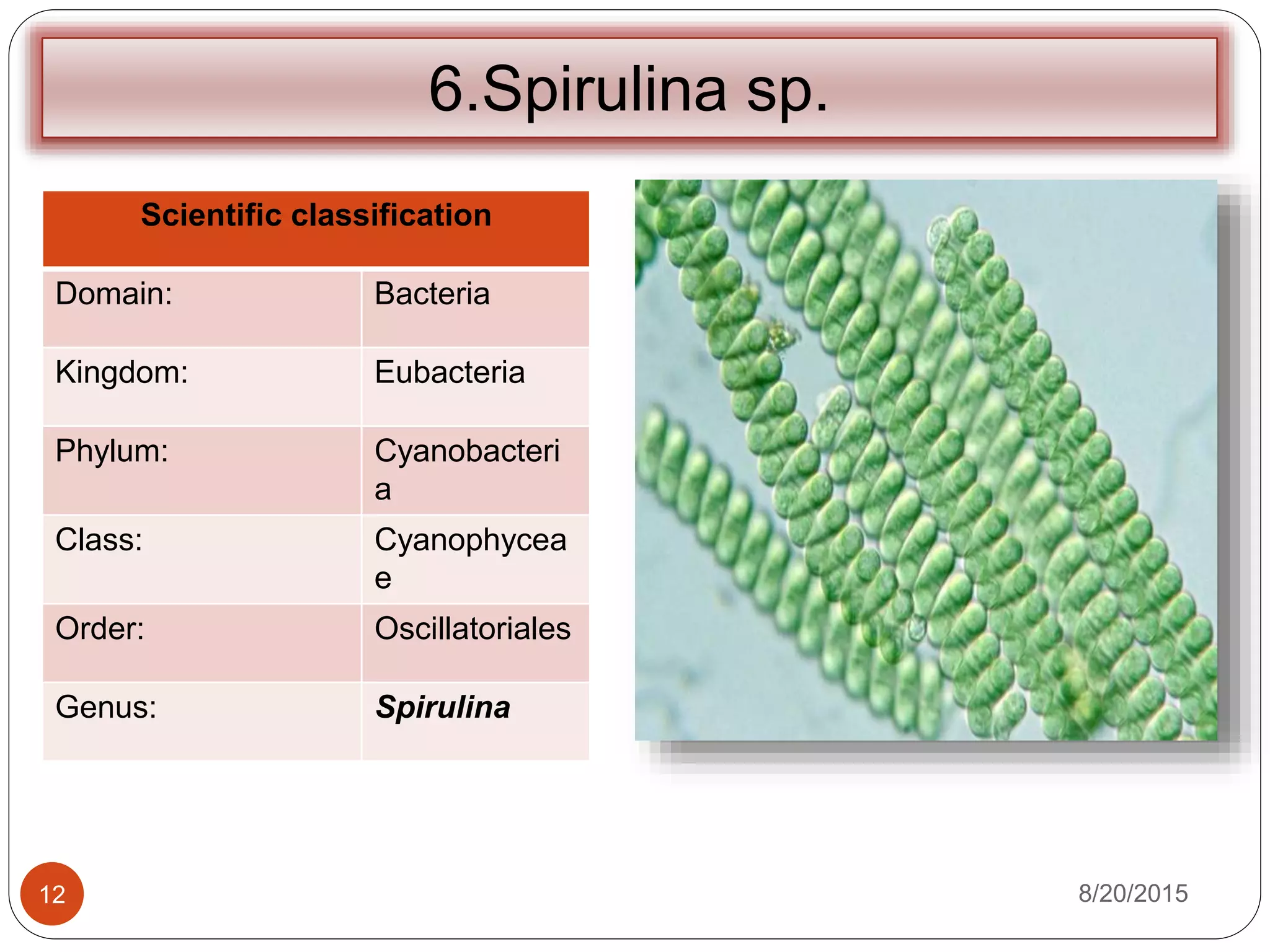
6.Spirulina sp.
Scientific classification
Domain: Bacteria
Kingdom: Eubacteria
Phylum: Cyanobacteri
a
Class: Cyanophycea
e
Order: Oscillatoriales
Genus: Spirulina
8/20/201512
Biofuel application of Spirulina sp.
 The research investigates the effect of reaction variables that
strongly affect the cost of biodiesel production from non-
edible Spirulina-Platensis microalgae lipids, and use the acid-
catalyzed in situ transesterification process. Experiments were
designed to determine how variations in volume of reacting
methanol, the concentration of anacid catalyst, time,
temperature and stirring affected the biodiesel yield. The total
lipid content of Spirulina-Platensis microalgae was obtained
to be 0.1095g/g biomass. The weight of the by-product glycerol
obtained was used to predict the percentage yield conversion
of microalgae oil biodiesel. Best results (84.7%), a yield of fatty
acid methyl ester (FAME), were obtained at 100% (wt./wt.oil)
catalyst concentration, 80 ml methanol volumes, 8 h reaction
time and 65℃ reaction temperature with continuous stirring at
650 rpm. Properties of the produced biodiesel were measured8/20/201513
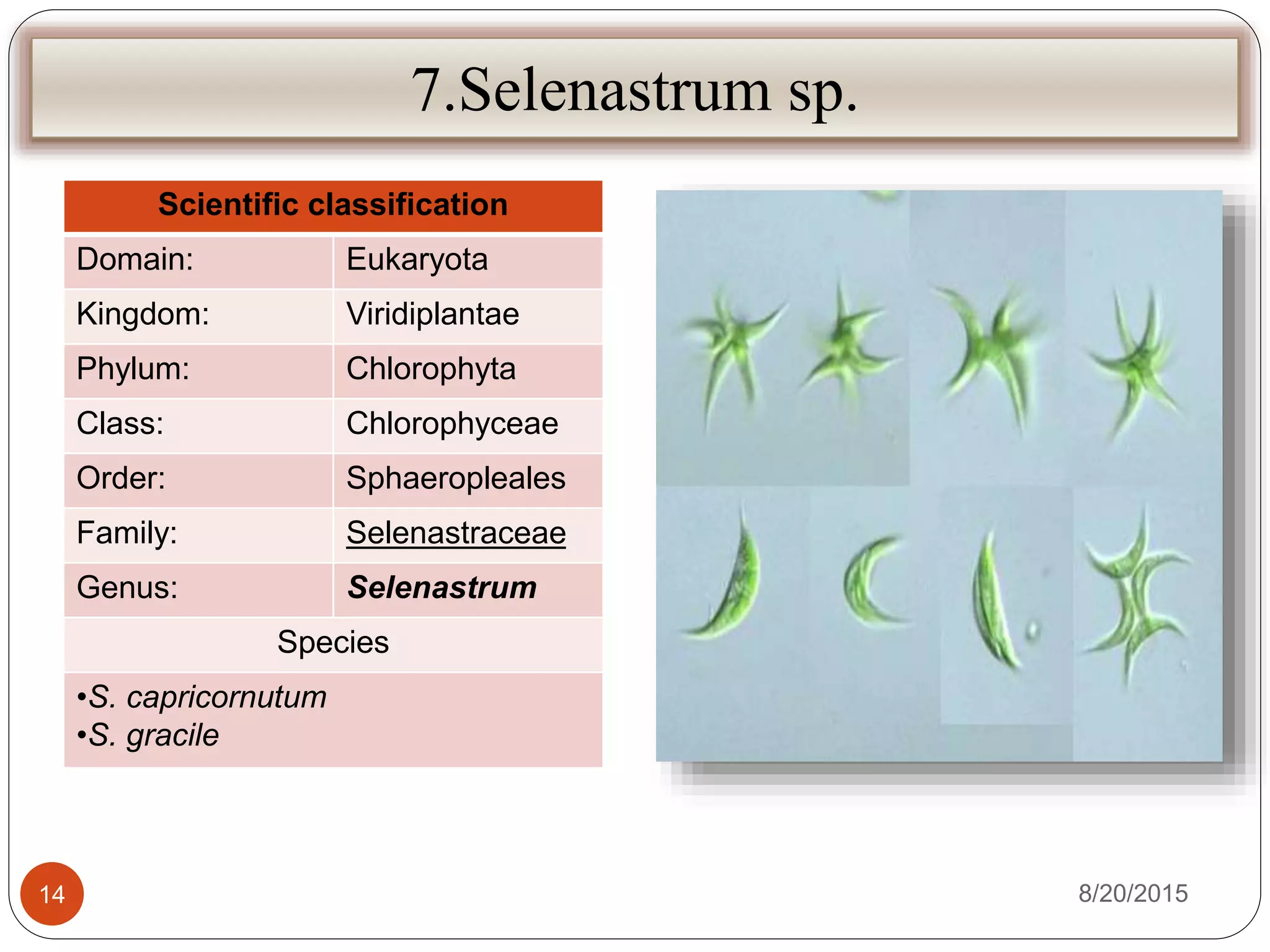
7.Selenastrum sp.
Scientific classification
Domain: Eukaryota
Kingdom: Viridiplantae
Phylum: Chlorophyta
Class: Chlorophyceae
Order: Sphaeropleales
Family: Selenastraceae
Genus: Selenastrum
Species
•S. capricornutum
•S. gracile
8/20/201514
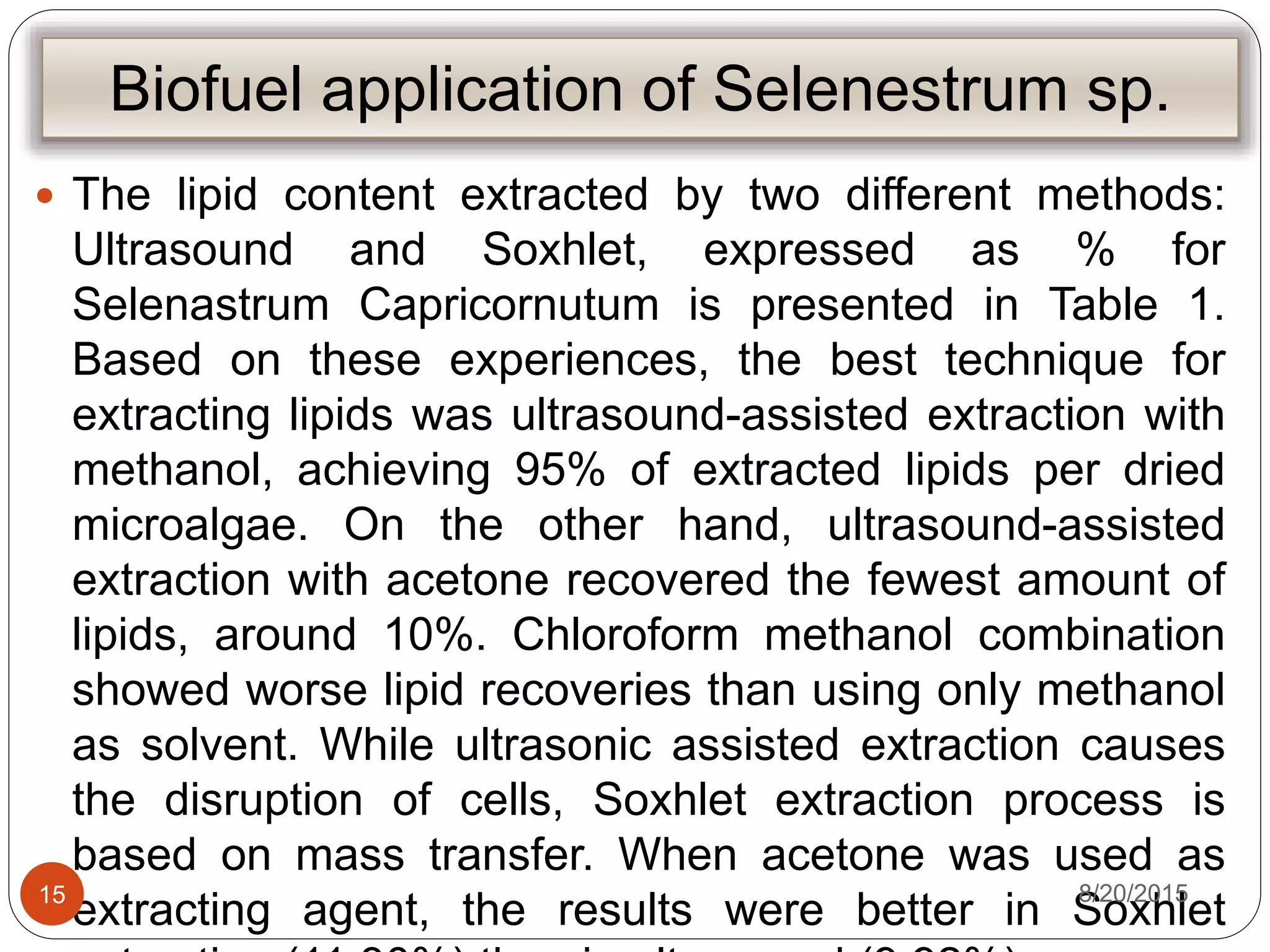
Biofuel application of Selenestrum sp.
 The lipid content extracted by two different methods:
Ultrasound and Soxhlet, expressed as % for
Selenastrum Capricornutum is presented in Table 1.
Based on these experiences, the best technique for
extracting lipids was ultrasound-assisted extraction with
methanol, achieving 95% of extracted lipids per dried
microalgae. On the other hand, ultrasound-assisted
extraction with acetone recovered the fewest amount of
lipids, around 10%. Chloroform methanol combination
showed worse lipid recoveries than using only methanol
as solvent. While ultrasonic assisted extraction causes
the disruption of cells, Soxhlet extraction process is
based on mass transfer. When acetone was used as
extracting agent, the results were better in Soxhlet
8/20/201515
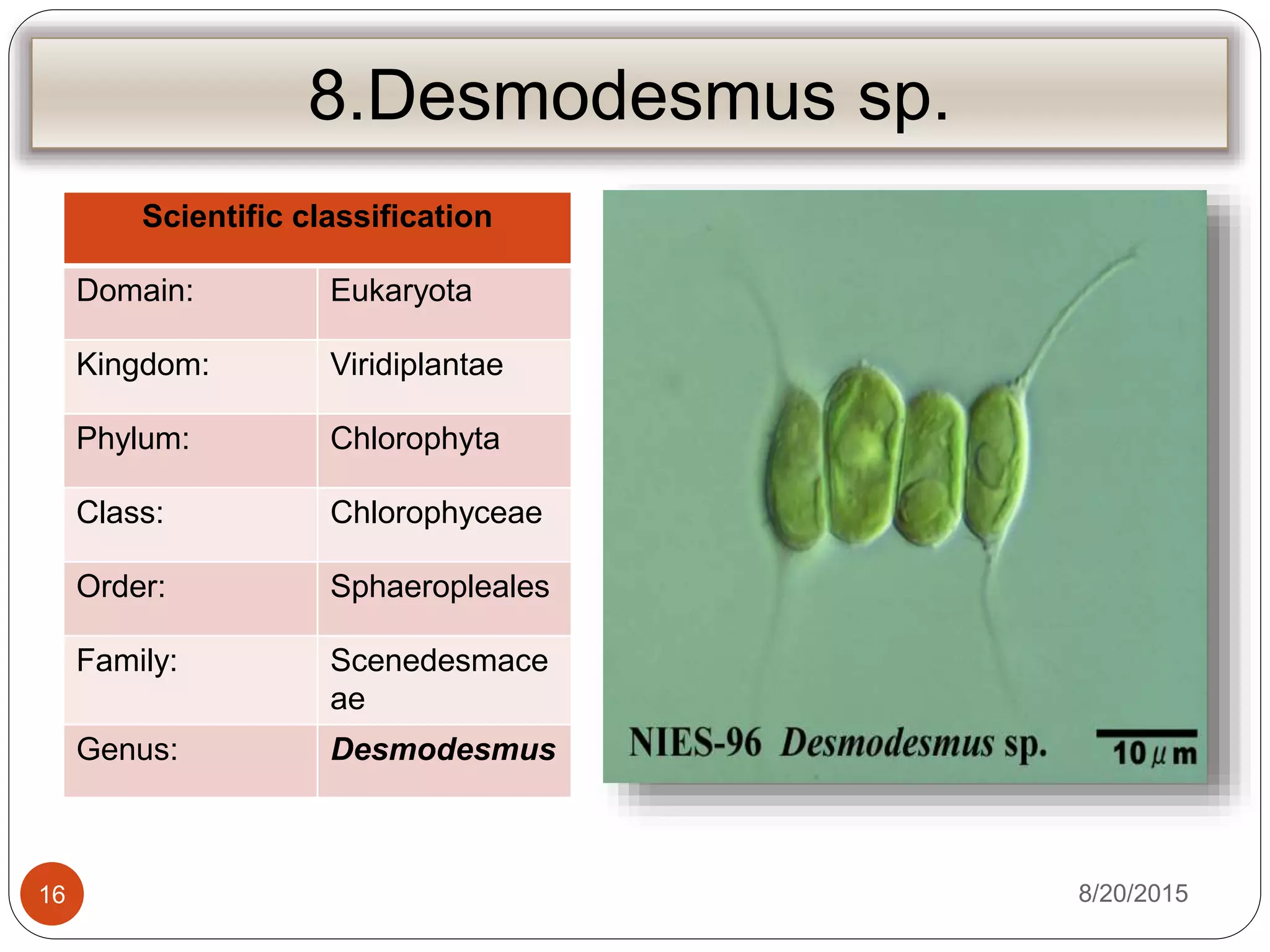
8.Desmodesmus sp.
Scientific classification
Domain: Eukaryota
Kingdom: Viridiplantae
Phylum: Chlorophyta
Class: Chlorophyceae
Order: Sphaeropleales
Family: Scenedesmace
ae
Genus: Desmodesmus
8/20/201516
Biofuel application of Desmodesmus
sp.
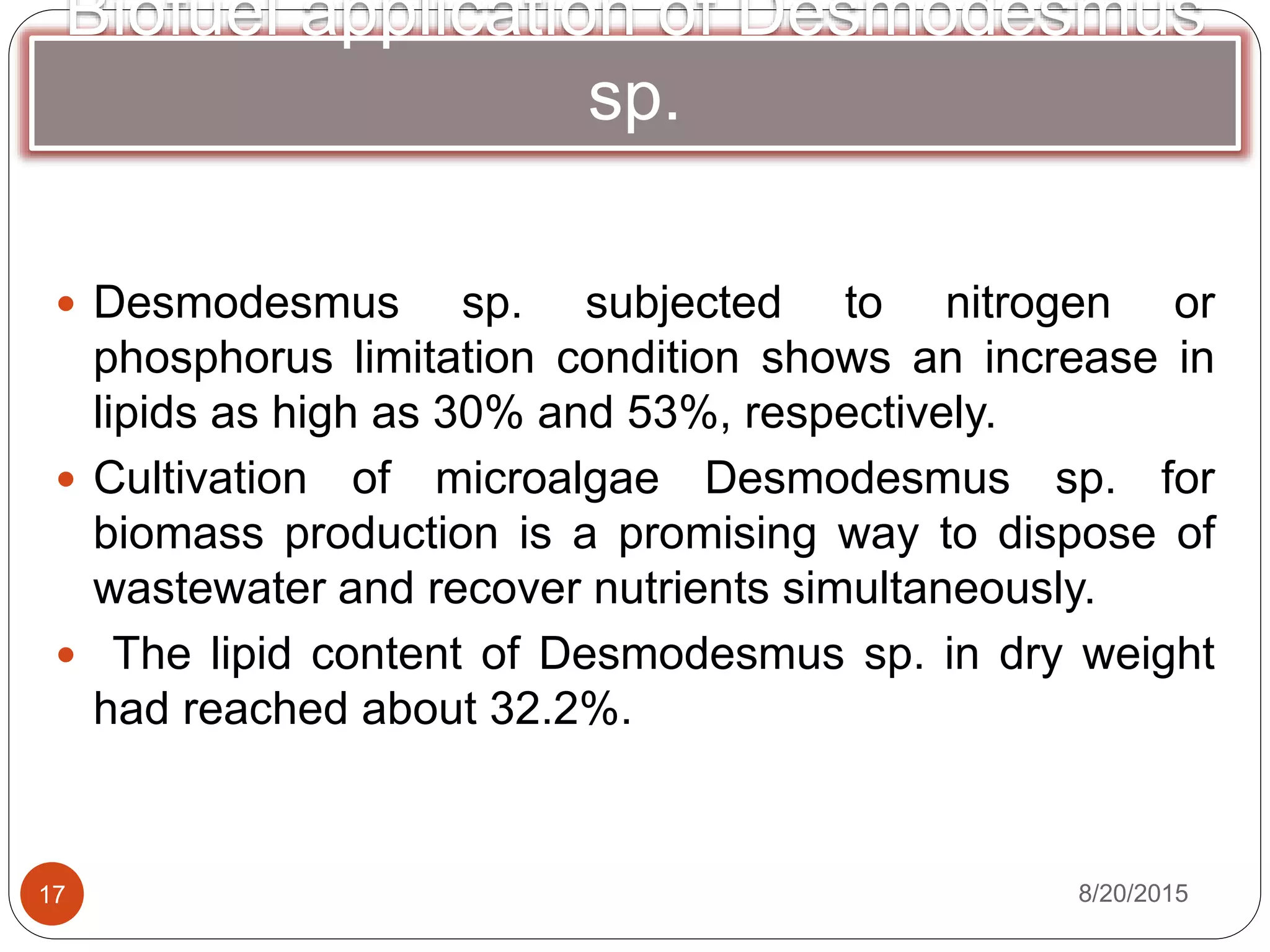
 Desmodesmus sp. subjected to nitrogen or
phosphorus limitation condition shows an increase in
lipids as high as 30% and 53%, respectively.
 Cultivation of microalgae Desmodesmus sp. for
biomass production is a promising way to dispose of
wastewater and recover nutrients simultaneously.
 The lipid content of Desmodesmus sp. in dry weight
had reached about 32.2%.
8/20/201517
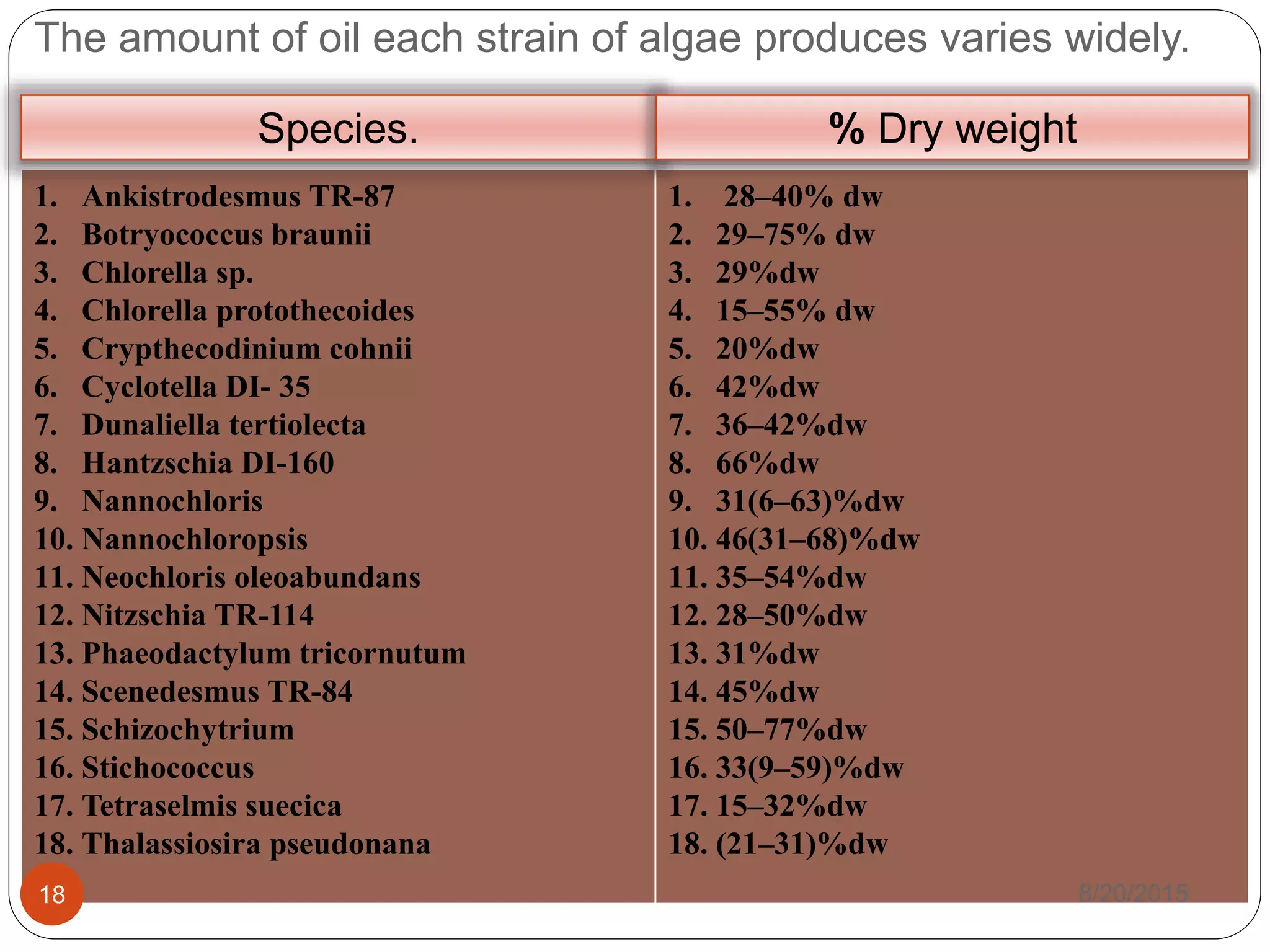
The amount of oil each strain of algae produces varies widely.
1. Ankistrodesmus TR-87
2. Botryococcus braunii
3. Chlorella sp.
4. Chlorella protothecoides
5. Crypthecodinium cohnii
6. Cyclotella DI- 35
7. Dunaliella tertiolecta
8. Hantzschia DI-160
9. Nannochloris
10. Nannochloropsis
11. Neochloris oleoabundans
12. Nitzschia TR-114
13. Phaeodactylum tricornutum
14. Scenedesmus TR-84
15. Schizochytrium
16. Stichococcus
17. Tetraselmis suecica
18. Thalassiosira pseudonana
1. 28–40% dw
2. 29–75% dw
3. 29%dw
4. 15–55% dw
5. 20%dw
6. 42%dw
7. 36–42%dw
8. 66%dw
9. 31(6–63)%dw
10. 46(31–68)%dw
11. 35–54%dw
12. 28–50%dw
13. 31%dw
14. 45%dw
15. 50–77%dw
16. 33(9–59)%dw
17. 15–32%dw
18. (21–31)%dw
Species. % Dry weight
8/20/201518
8/20/201519

Different strains of Microalgae suitable for biodiesel production 1

  • 1.
    Different strains ofMicroalgae suitable for biodiesel production. 8/20/20151 Presented by-Velentina Das Research Scholar Department of Energy
  • 2.
    1.Botryoccocus braunii Scientific classification Kingdom:Plantae Division: Chlorophyta Class: Trebouxiophyc ee Order: incertae sedis Family: Botryococcace ae Genus: Botryococcus Species: B. braunii Binomial name Botryococcus braunii 8/20/20152
  • 3.
    Biofuel applications ofBotryococcus oils • The practice of farming cultivating is known as algaculture. Botryococcus braunii has great potential for algaculture because of the hydrocarbons it produces, which can be chemically converted into fuels. Up to 86% of the dry weight of Botryococcus braunii can be long chain hydrocarbons. The vast majority of these hydrocarbons are botryocuccus oils: botryococcenes, alkadienes and alkatrienes. • Transesterification can NOT be used to make biodiesel from Botryococcus oils. This is because these oils are not vegetable oils in the common meaning, in which they are fatty acid triglycerides. • While Botryococcus oils are oils of vegetable origin, they are inedible and chemically very different, being triterpenes, and lack the free oxygen atom needed for transesterification. Botryococcus oils can be used as feedstock for hydrocracking in an oil refinery to produce octane (gasoline, a.k.a. petrol), kerosene, and diesel. Botryococcenes are preferred over alkadienes and alkatrienes for hydrocracking as botryococcenes will likely be transformed into a fuel with a higher octane rating. 8/20/20153
  • 4.
    2.Chlorella species Scientific classification Domain:Eukaryota Kingdom: Viridiplantae Division: Chlorophyta Class: Trebouxiophycea e Order: Chlorellales Family: Chlorellaceae Genus: Chlorella Species •Chlorella autotrophica •Chlorella minutissima •Chlorella pyrenoidosa •Chlorella sorokiniana •Chlorella variabilis •Chlorella vulgaris Fig: Chlorella pyrenoidosa 8/20/20154
  • 5.
    Biofuel applications ofChlorella pyrenoidosa  Microalgae can accumulate considerable amounts of lipids under different nutrient-deficient conditions, making them as one of the most promising sustainable sources for biofuel production. These inducible processes provide a powerful experimental basis for fully understanding the mechanisms of physiological acclimation, lipid hyperaccumulation and gene expression in algae. In nutrient-deficiency strategies, viz nitrogen-, phosphorus- and iron-deficiency were applied to trigger the lipid hyperaccumulation in an oleaginous Chlorella pyrenoidosa. Regular patterns of growth characteristics, lipid accumulation, physiological parameters, as well as the expression patterns of lipid biosynthesis- related genes were fully analyzed and compared. nutrient stress conditions could enhance the lipid content considerably compared with the control. The total lipid and neutral lipid contents exhibit the most marked increment under nitrogen deficiency, achieving 50.32% and 34.29% of dry cell weight at the end of cultivation, respectively. Both photosynthesis indicators and reactive oxygen species parameters reveal that physiological stress turned up when exposed to nutrient depletions. 8/20/20155
  • 6.
    3.Scenedesmus species Scientific classification Domain:Eukaryota Kingdom: Plantae Phylum: Chlorophyta Class: Chlorophyceae Order: Sphaeropleales Family: Scenedesmaceae Genus: Scenedesmus Type species Scenedesmus obtusus Species •S. dimorphus •S. acuminatus 8/20/20156
  • 7.
    Biofuel application ofScenedesmus sp.  Although Scenedesmus is capable of producing many kinds of bio-fuels such as bio- hydrogen, biodiesel, bioethanol and drop-in fuels, most extensive research has been done on the use of Scenedesmus for bio-diesel production. Like all algae systems, the implementation of integrated biofuel production of Scenedesmus from the laboratory findings has challenges in large-scale production. Major challenges include nutrient supply and recycling, gas transfer and exchange, PAR (Photosynthetically Active Radiation) delivery, cultural integrity, environmental control, land and water availability, harvesting, and genetic and metabolic engineering.  Scenedesmus is known to have high biomass productivity among green algae, and has been actively researched for its use for bio-diesel production. Its heterotrophic production of biomass and lipid in optimized conditions is reported to have higher efficiency than its autotrophic production .Optimization of biomass productivity as well as lipid content through varying concentration of supplemental nutrients has been done in numerous studies; currently, Scenedesmus lipid yield after optimization has reached ~60% dry cell weight, lower than some other algae .However, Scenedesmus is more efficient at capturing CO2 than other algae. Like many algae species, Scenedesmus required nitrate-deficient condition to profoundly increase its lipid yield. A significant improvement (up to six-fold) of feedstock yields was achieved by adding varying concentrations of ethanol under a 12- hr photoperiod and in the Extraction of oils with methanol or ethanol from the Scenedesmus remains a challenge and its lower lipid content adds to the cost of The alga increased significantly in biomass and lipid content with the nitrogen concentration of 0.32g/L of nitrogen. A two-step transesterification was found to be best suited for transesterification, while Folch extraction was best for lipid extraction. 8/20/20157
  • 8.
    4.Dunaliella sp. Scientific classification Domain:Eukaryota Kingdom: Viridiplantae Phylum: Chlorophyta Class: Chlorophyceae Order: Chlamydomonada les Family: Dunaliellaceae Genus: Dunaliella 8/20/20158
  • 9.
    Biofuel application ofDunaliella tertiolecta  The direct transesterification of microalgae biomass shows good biodiesel yield where Dunaliella sp. yielded 66.6 %.  The commercial production of biodiesel from this microalgae practically successful in developed countries. Moreover the microalgae are attractive is that they can assimilate carbon dioxide as the carbon source for growth which contributes to atmospheric CO2 reduction. In addition, microalgal biofuel is similar to those produced by fossil and crops and it can be used directly to run existing diesel engines or as a mixture with crude oil diesel. 8/20/20159
  • 10.
    5.Chlamydomonas sp. Scientific classification Domain:Protista Kingdom: Viridiplantae Division: Chlorophyta Class: Chlorophycea e Order: Volvocales Family: Green Algae Genus: Chlamydomo nas 8/20/201510
  • 11.
    Biofuel application of Chlamydomonassp.  A wide range of laboratory wild-type and mutant Chlamydomonas strains have been generated and can be used to deconvolute the metabolic pathways involved in biofuel production. Chlamydomonas is therefore a good working model where a range of information is already available on hydrogen, ethanol and lipid production pathways.  In Chlamydomonas, the major pathway for the formation of TAG involves de novo fatty acid synthesis (Kennedy pathway) in the stroma of plastids and subsequent incorporation of the fatty acid into the glycerol backbone, leading to TAG via three sequential acyl transfers from acyl-CoA in the endoplasmic reticulum. TAG can then be converted into biodiesel by a transesterification step, to be used as biofuel. Typically, TAG accumulation occurs under stress conditions (nutrient deficiency or high light) that strongly impair the productivity of the system. This implies that a performing system should be producing a high yield of TAG as well as a high biomass; however, our knowledge of carbon partitioning and biosynthesis of TAGs in algae is very limited and does not allow us to accomplish that yet. C. reinhardtii has been a powerful model system to understand the metabolic pathways 8/20/201511
  • 12.
    6.Spirulina sp. Scientific classification Domain:Bacteria Kingdom: Eubacteria Phylum: Cyanobacteri a Class: Cyanophycea e Order: Oscillatoriales Genus: Spirulina 8/20/201512
  • 13.
    Biofuel application ofSpirulina sp.  The research investigates the effect of reaction variables that strongly affect the cost of biodiesel production from non- edible Spirulina-Platensis microalgae lipids, and use the acid- catalyzed in situ transesterification process. Experiments were designed to determine how variations in volume of reacting methanol, the concentration of anacid catalyst, time, temperature and stirring affected the biodiesel yield. The total lipid content of Spirulina-Platensis microalgae was obtained to be 0.1095g/g biomass. The weight of the by-product glycerol obtained was used to predict the percentage yield conversion of microalgae oil biodiesel. Best results (84.7%), a yield of fatty acid methyl ester (FAME), were obtained at 100% (wt./wt.oil) catalyst concentration, 80 ml methanol volumes, 8 h reaction time and 65℃ reaction temperature with continuous stirring at 650 rpm. Properties of the produced biodiesel were measured8/20/201513
  • 14.
    7.Selenastrum sp. Scientific classification Domain:Eukaryota Kingdom: Viridiplantae Phylum: Chlorophyta Class: Chlorophyceae Order: Sphaeropleales Family: Selenastraceae Genus: Selenastrum Species •S. capricornutum •S. gracile 8/20/201514
  • 15.
    Biofuel application ofSelenestrum sp.  The lipid content extracted by two different methods: Ultrasound and Soxhlet, expressed as % for Selenastrum Capricornutum is presented in Table 1. Based on these experiences, the best technique for extracting lipids was ultrasound-assisted extraction with methanol, achieving 95% of extracted lipids per dried microalgae. On the other hand, ultrasound-assisted extraction with acetone recovered the fewest amount of lipids, around 10%. Chloroform methanol combination showed worse lipid recoveries than using only methanol as solvent. While ultrasonic assisted extraction causes the disruption of cells, Soxhlet extraction process is based on mass transfer. When acetone was used as extracting agent, the results were better in Soxhlet 8/20/201515
  • 16.
    8.Desmodesmus sp. Scientific classification Domain:Eukaryota Kingdom: Viridiplantae Phylum: Chlorophyta Class: Chlorophyceae Order: Sphaeropleales Family: Scenedesmace ae Genus: Desmodesmus 8/20/201516
  • 17.
    Biofuel application ofDesmodesmus sp.  Desmodesmus sp. subjected to nitrogen or phosphorus limitation condition shows an increase in lipids as high as 30% and 53%, respectively.  Cultivation of microalgae Desmodesmus sp. for biomass production is a promising way to dispose of wastewater and recover nutrients simultaneously.  The lipid content of Desmodesmus sp. in dry weight had reached about 32.2%. 8/20/201517
  • 18.
    The amount ofoil each strain of algae produces varies widely. 1. Ankistrodesmus TR-87 2. Botryococcus braunii 3. Chlorella sp. 4. Chlorella protothecoides 5. Crypthecodinium cohnii 6. Cyclotella DI- 35 7. Dunaliella tertiolecta 8. Hantzschia DI-160 9. Nannochloris 10. Nannochloropsis 11. Neochloris oleoabundans 12. Nitzschia TR-114 13. Phaeodactylum tricornutum 14. Scenedesmus TR-84 15. Schizochytrium 16. Stichococcus 17. Tetraselmis suecica 18. Thalassiosira pseudonana 1. 28–40% dw 2. 29–75% dw 3. 29%dw 4. 15–55% dw 5. 20%dw 6. 42%dw 7. 36–42%dw 8. 66%dw 9. 31(6–63)%dw 10. 46(31–68)%dw 11. 35–54%dw 12. 28–50%dw 13. 31%dw 14. 45%dw 15. 50–77%dw 16. 33(9–59)%dw 17. 15–32%dw 18. (21–31)%dw Species. % Dry weight 8/20/201518
  • 19.