LIVER
FUNCTION
TESTS
PRESENTED BY
DR. SHRUTI GERA
JR PATHOLOGY
FUNCTIONS OF
LIVER
1) METABOLIC FUNCTION
Carbohydrate metabolism : glycolysis, glycogen synthesis, breakdown,
gluconeogenesis and HMP shunt
 Lipid metabolism : fatty acid synthesis, ketogenesis, cholesterol synthesis and
excretion, bile acid synthesis, 25- hydroxylation of vitamin D and lipoprotein
synthesis.
Protein metabolism : urea synthesis from ammonia, synthesis of plasma
proteins(except immunoglobulins) and some coagulation factor synthesis.
Hormone metabolism : metabolism and excretion of steroid hormones and
metabolism of peptide hormone.
2) Synthesis function : synthesis of plasma proteins, clotting factors, cholesterol,
TAG and lipoproteins.
3) Excretory function : excretion of bile pigments and bile salts into the bile.
4) Detoxification : ammonia is detoxified to urea ; drugs and other xenobiotics are
detoxified and excreted.
5) Regulation of blood glucose levels : by hepatic glycogenolysis and
gluconeogenesis.
6) Storage function : glycogen, vitamins A, D, K, B12 and iron.
LIVER FUNCTION
TESTS
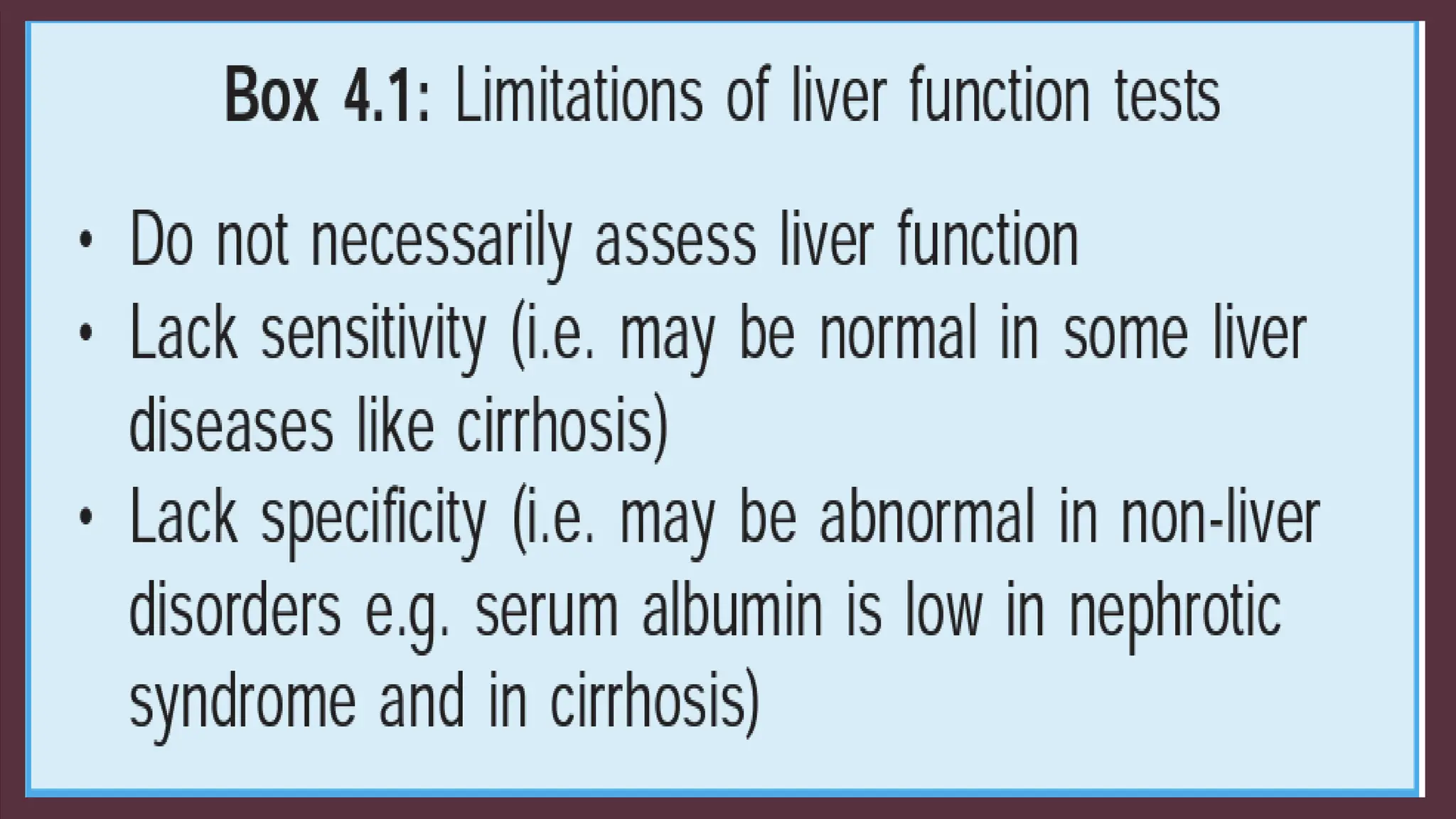
• Laboratory tests for evaluation of liver disease are based on evaluation of
these normal functions of liver.
• Function tests are the tests carried out to assess whether a particular organ
is functioning normally or not.
• Liver function tests are a group of tests that help in diagnosis, assessing
prognosis and monitoring therapy.
INDICATIONS OF LIVER FUNCTION TESTS
Jaundice
Suspected liver metastasis
Alcoholic liver disease
Any undiagnosed chronic illness
Annual check up of diabetic patient
Coagulation disorders
Therapy with statins to check hepatotoxicity
• Liver function tests can be classified into five classes according to the function of
the liver.
1) Tests based of excretory function :
1) serum bilirubin
2) Urine bilirubin
3) Urine bile salts
4) BSP dye tests
1) Tests based on detoxification function :
1) Blood ammonia and bilirubin
2) Hippuric acid test
3) Tests based on synthetic function:
 Plasma proteins, albumin and globulins
 Prothrombin time
4) Tests based on metabolic function:
 Galactose tolerance test
 Determination of serum cholesterol and ratio of free to
esterified cholesterol
 Serum protein estimation
 Serum ammonia estimation
5) Determination of serum enzymes:
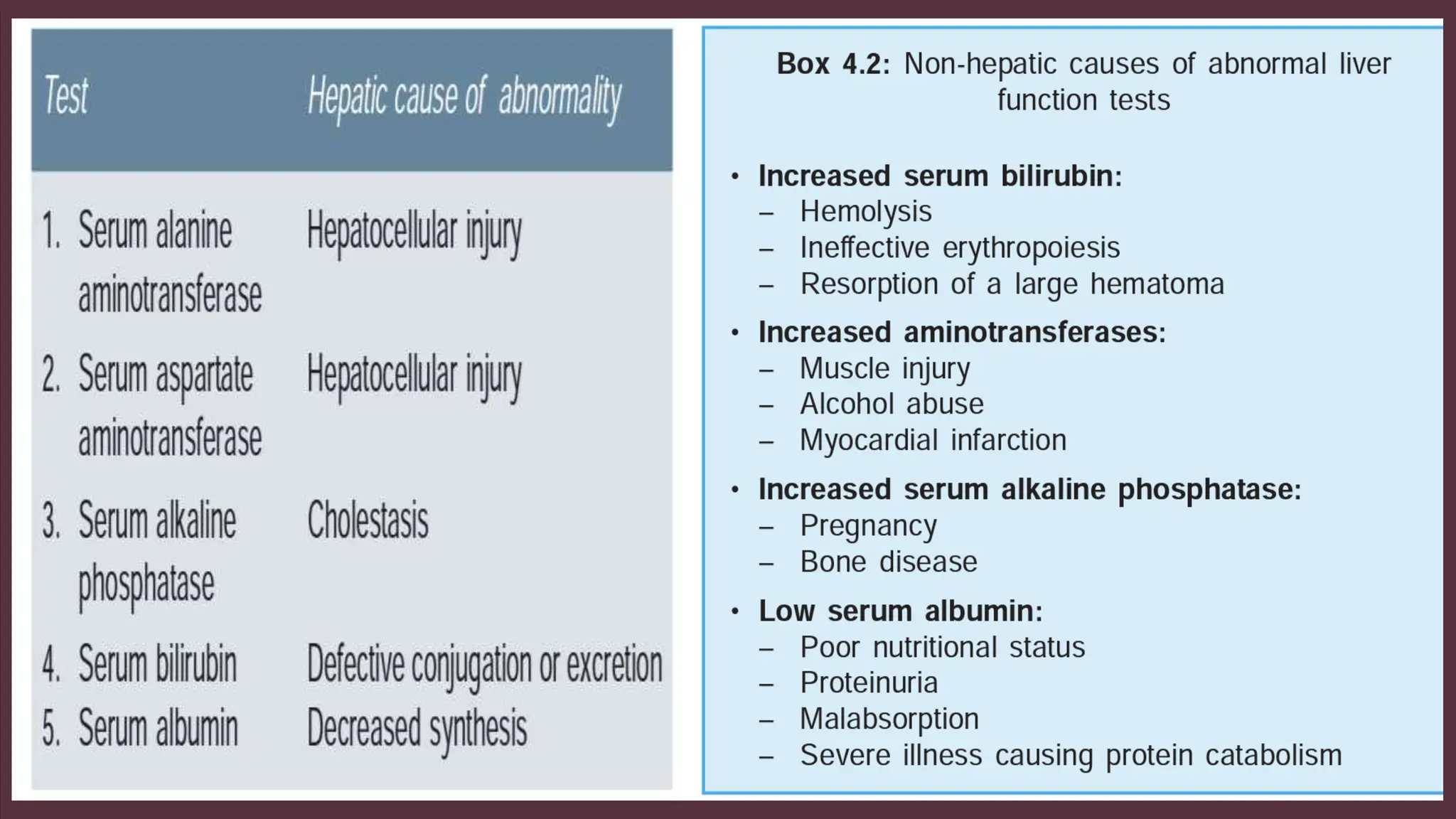
 Serum alanine transaminase (ALT)
 Serum aspartate transaminase (AST)
 Serum alkaline phosphatase (ALP)
SPECIAL TESTS (TESTS FOR METABOLIC LIVER
DISEASE)
 Ceruloplasmin
Ferritin and iron
Alpha-1 antitrypsin
Beta-2 microglobulin
Alpha fetoprotein (AFP)
LIVER FUNCTION TEST BASED ON
EXCRETORY FUNCTION
TESTS BASED ON BILIRUBIN
METABOLISM
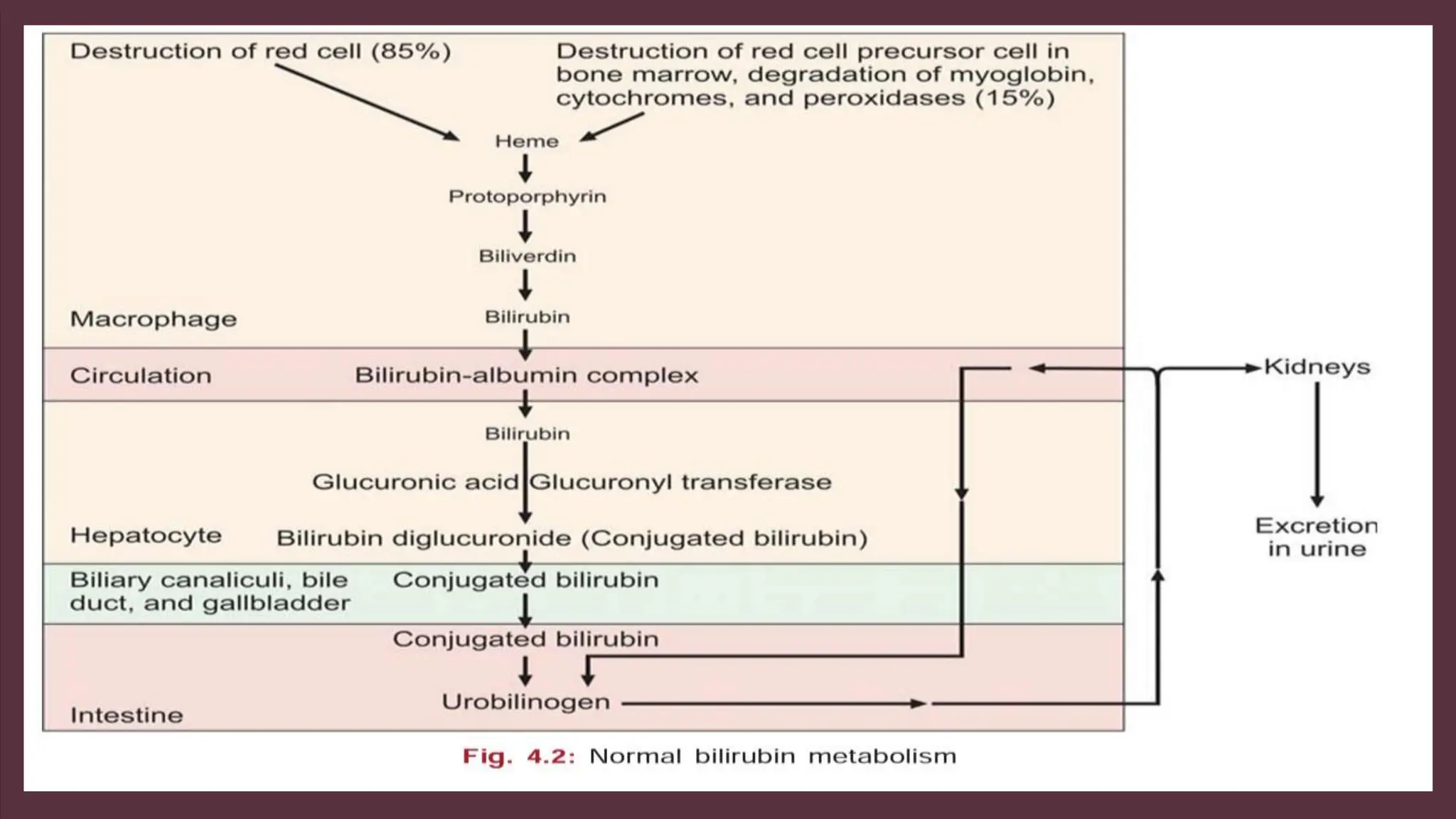
 Bilirubin is the excretory end product of heme.
 It is conjugated to form bilirubin diglucuronide (aka direct bilirubin).
 Bilirubin (unconjugated/indirect) is insoluble in water but bilirubin diglucuronide is
soluble in water.
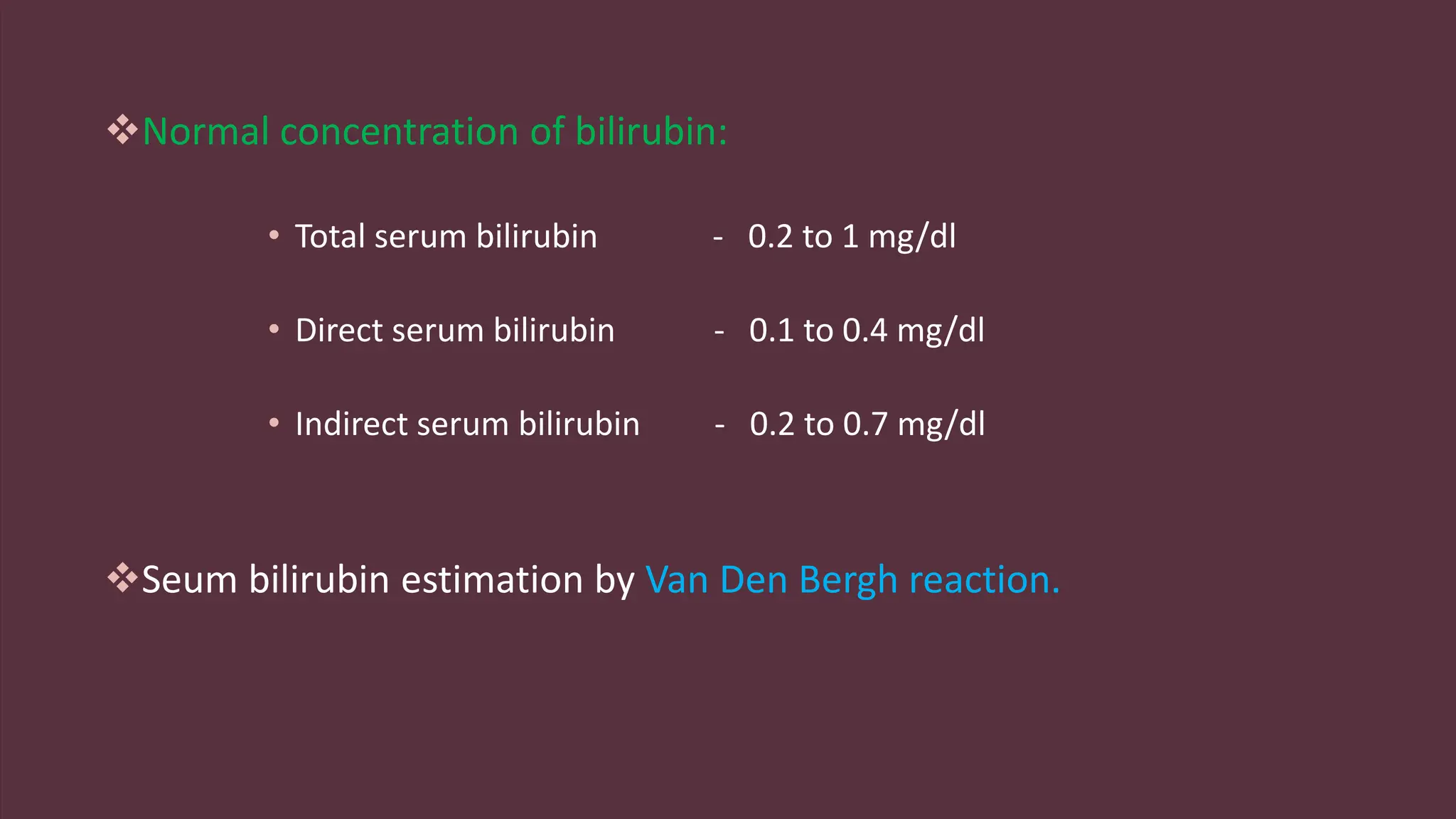
Normal concentration of bilirubin:
• Total serum bilirubin - 0.2 to 1 mg/dl
• Direct serum bilirubin - 0.1 to 0.4 mg/dl
• Indirect serum bilirubin - 0.2 to 0.7 mg/dl
Seum bilirubin estimation by Van Den Bergh reaction.
CLINICAL INTERPRETATION
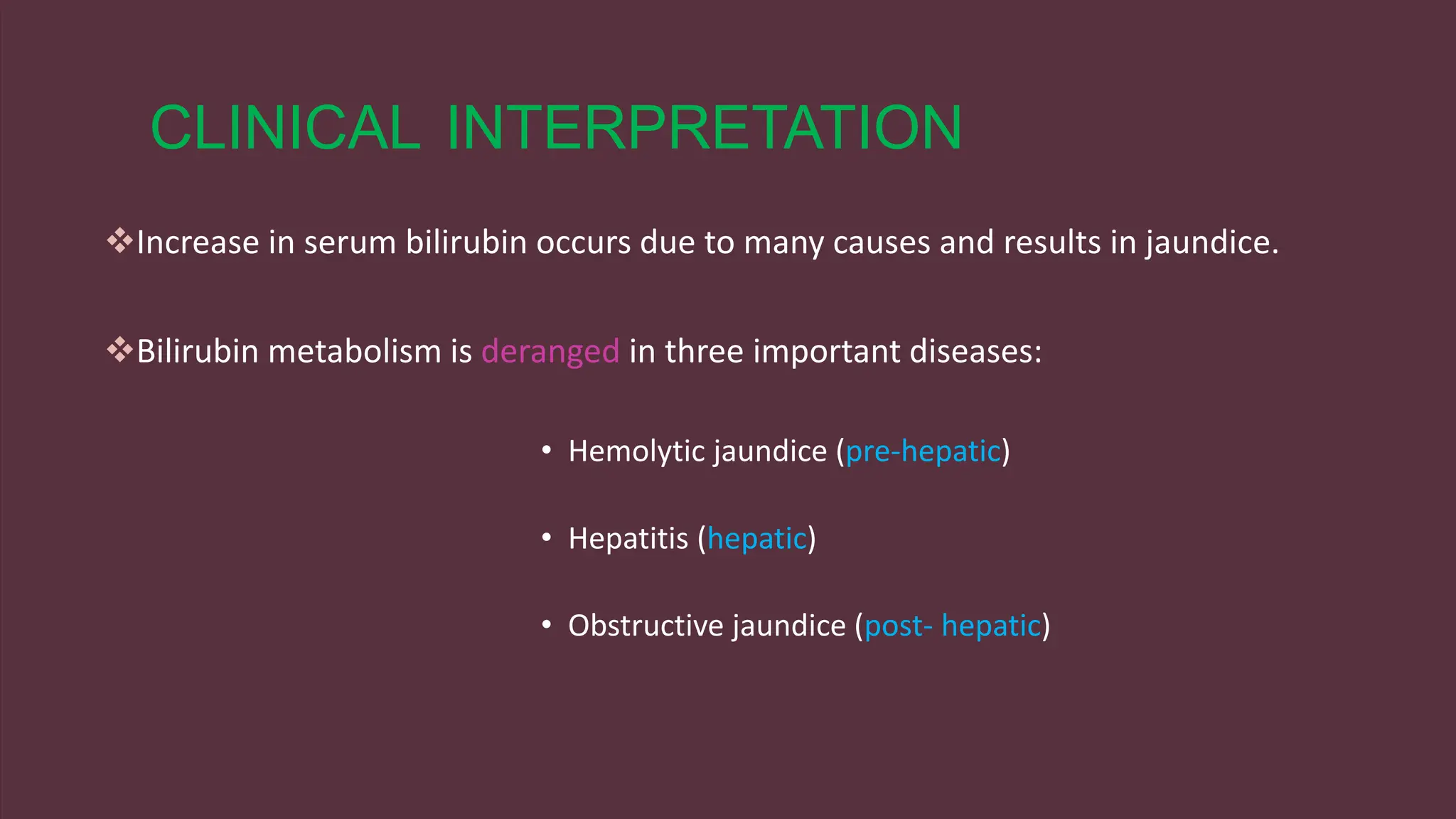
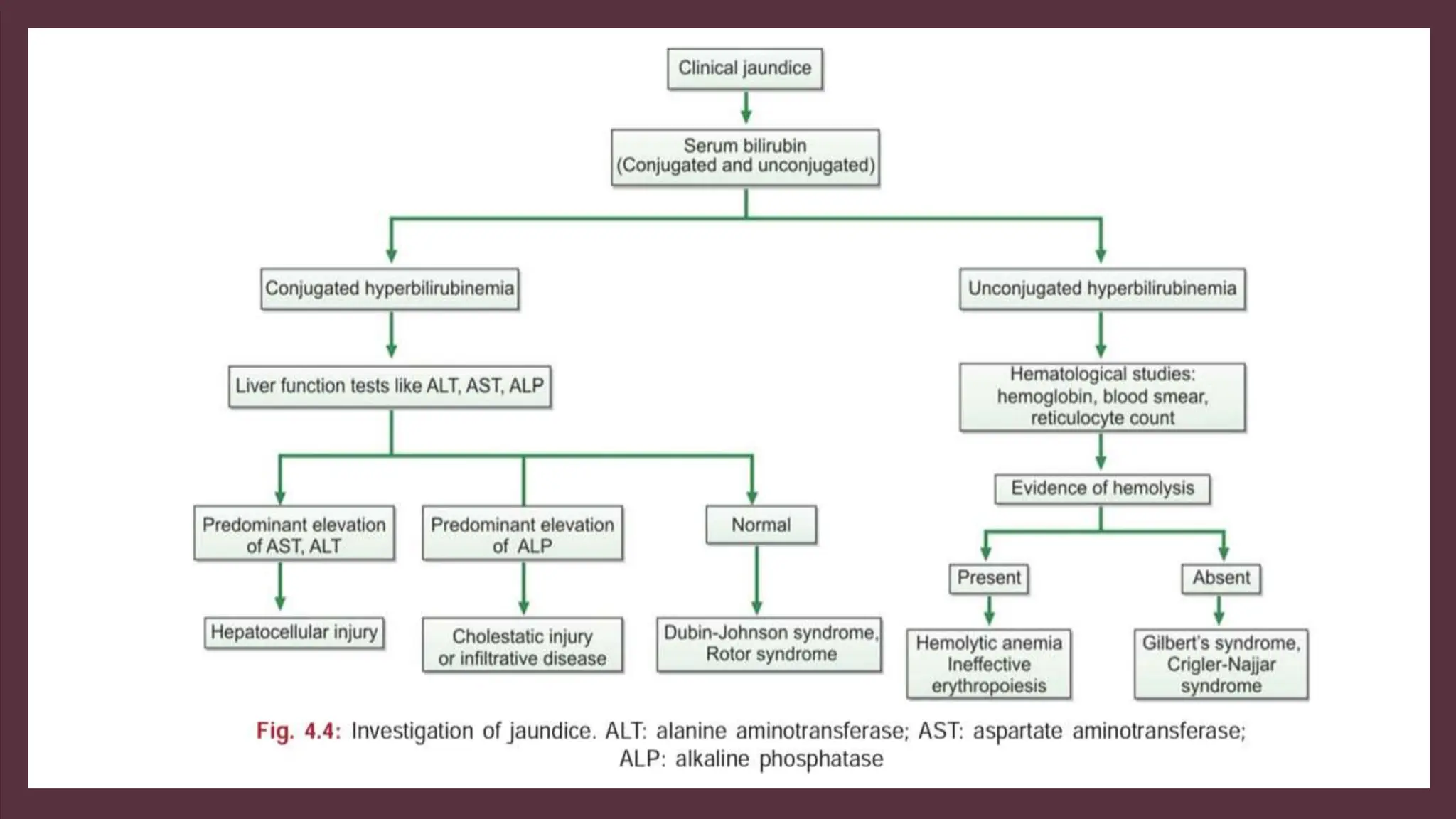
Increase in serum bilirubin occurs due to many causes and results in jaundice.
Bilirubin metabolism is deranged in three important diseases:
• Hemolytic jaundice (pre-hepatic)
• Hepatitis (hepatic)
• Obstructive jaundice (post- hepatic)
TESTS BASED ON DETOXIFICATION
FUNCTION
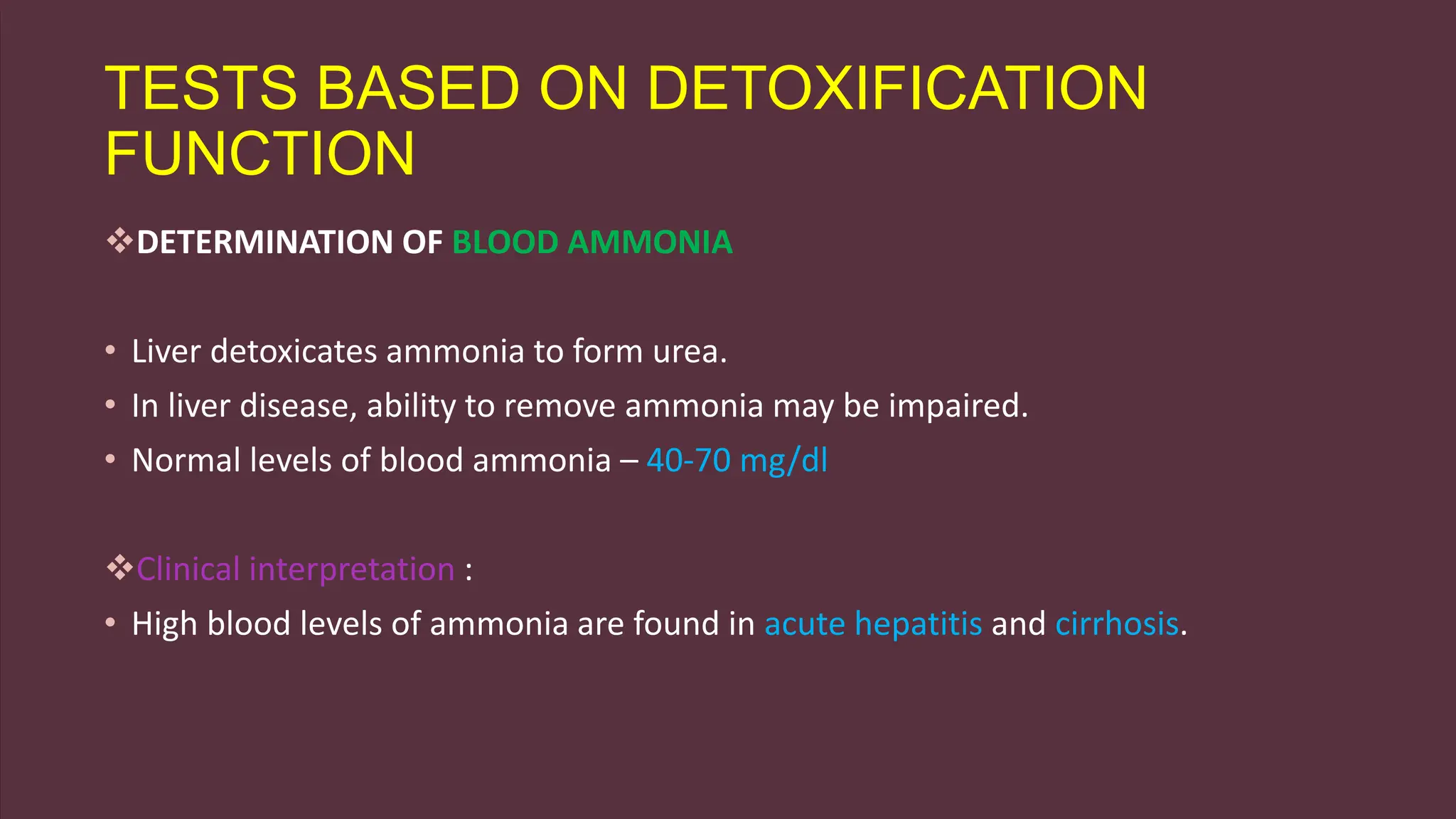
DETERMINATION OF BLOOD AMMONIA
• Liver detoxicates ammonia to form urea.
• In liver disease, ability to remove ammonia may be impaired.
• Normal levels of blood ammonia – 40-70 mg/dl
Clinical interpretation :
• High blood levels of ammonia are found in acute hepatitis and cirrhosis.
TESTS BASED ON SYNTHETIC FUNCTION
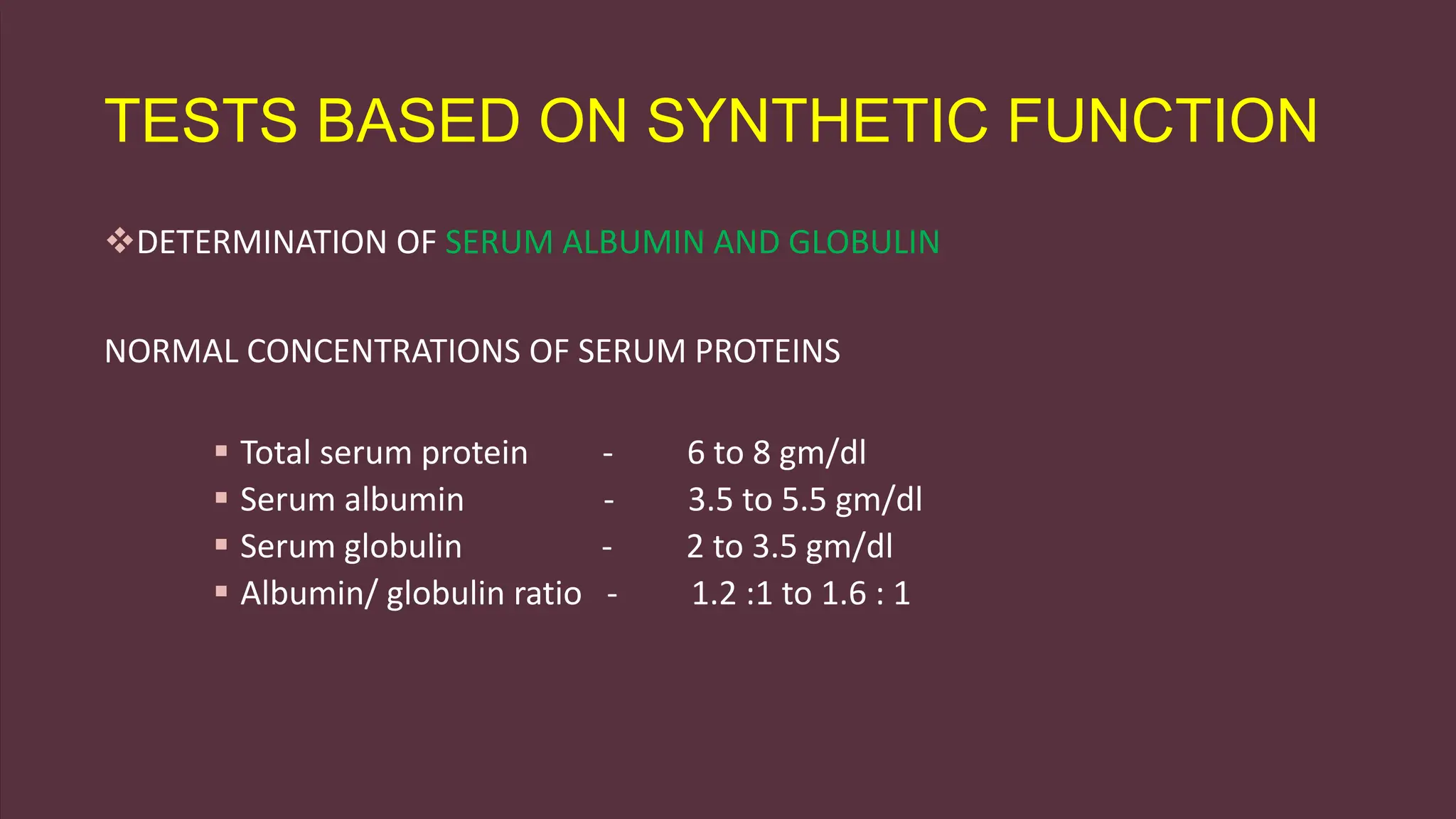
DETERMINATION OF SERUM ALBUMIN AND GLOBULIN
NORMAL CONCENTRATIONS OF SERUM PROTEINS
 Total serum protein - 6 to 8 gm/dl
 Serum albumin - 3.5 to 5.5 gm/dl
 Serum globulin - 2 to 3.5 gm/dl
 Albumin/ globulin ratio - 1.2 :1 to 1.6 : 1
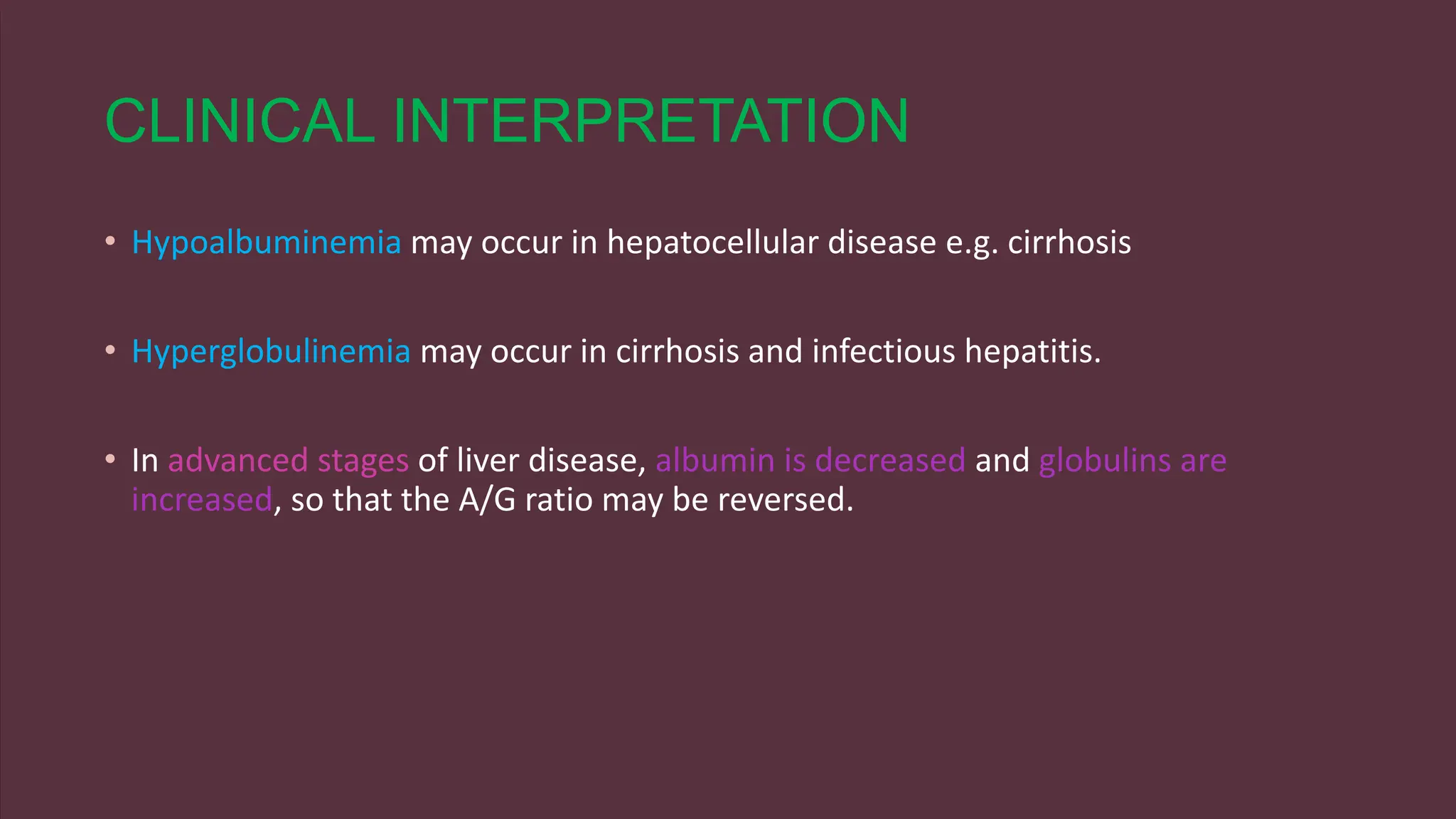
CLINICAL INTERPRETATION
• Hypoalbuminemia may occur in hepatocellular disease e.g. cirrhosis
• Hyperglobulinemia may occur in cirrhosis and infectious hepatitis.
• In advanced stages of liver disease, albumin is decreased and globulins are
increased, so that the A/G ratio may be reversed.
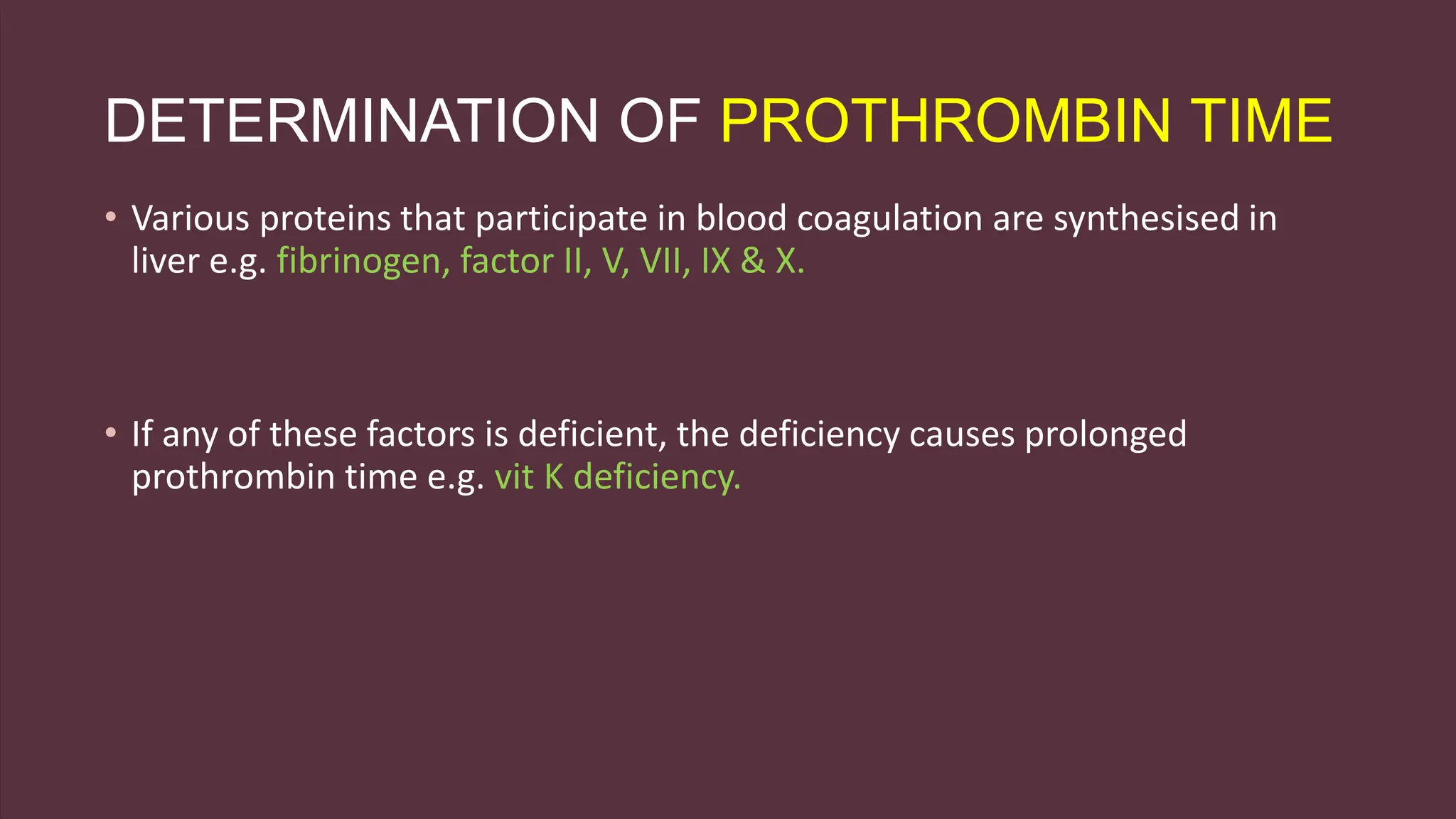
DETERMINATION OF PROTHROMBIN TIME
• Various proteins that participate in blood coagulation are synthesised in
liver e.g. fibrinogen, factor II, V, VII, IX & X.
• If any of these factors is deficient, the deficiency causes prolonged
prothrombin time e.g. vit K deficiency.
TESTS RELATED TO ENZYMES
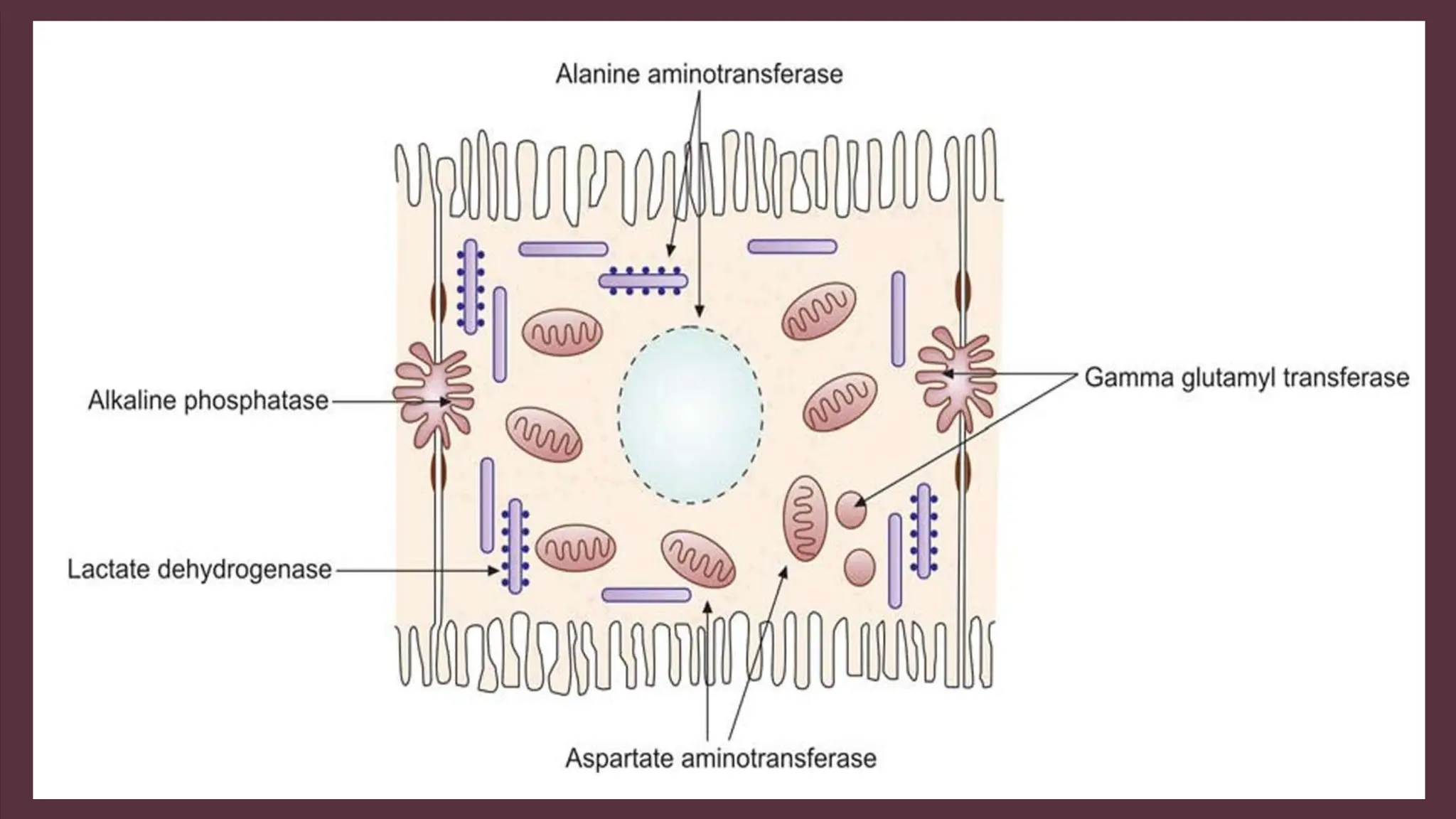
• Liver cells contain several enzymes.
• In liver damage, these enzymes are released into blood which leads to
increase in their levels in blood.
MOST COMMONLY AND ROUTINELY USED ENZYMES:
• SERUM ASPARTATE TRANSAMINASE (AST)
• SERUM SERUM ALANINE TRANSAMINASE (ALT)
• SERUM ALKALINE PHOSPHATASE (ALP)
OTHER ENZYMES (not used routinely) :
• Serum nucleotidase
• Lactate dehydrogenase
• Isocitrate dehydrogenase
• γ- glutamyl transferase
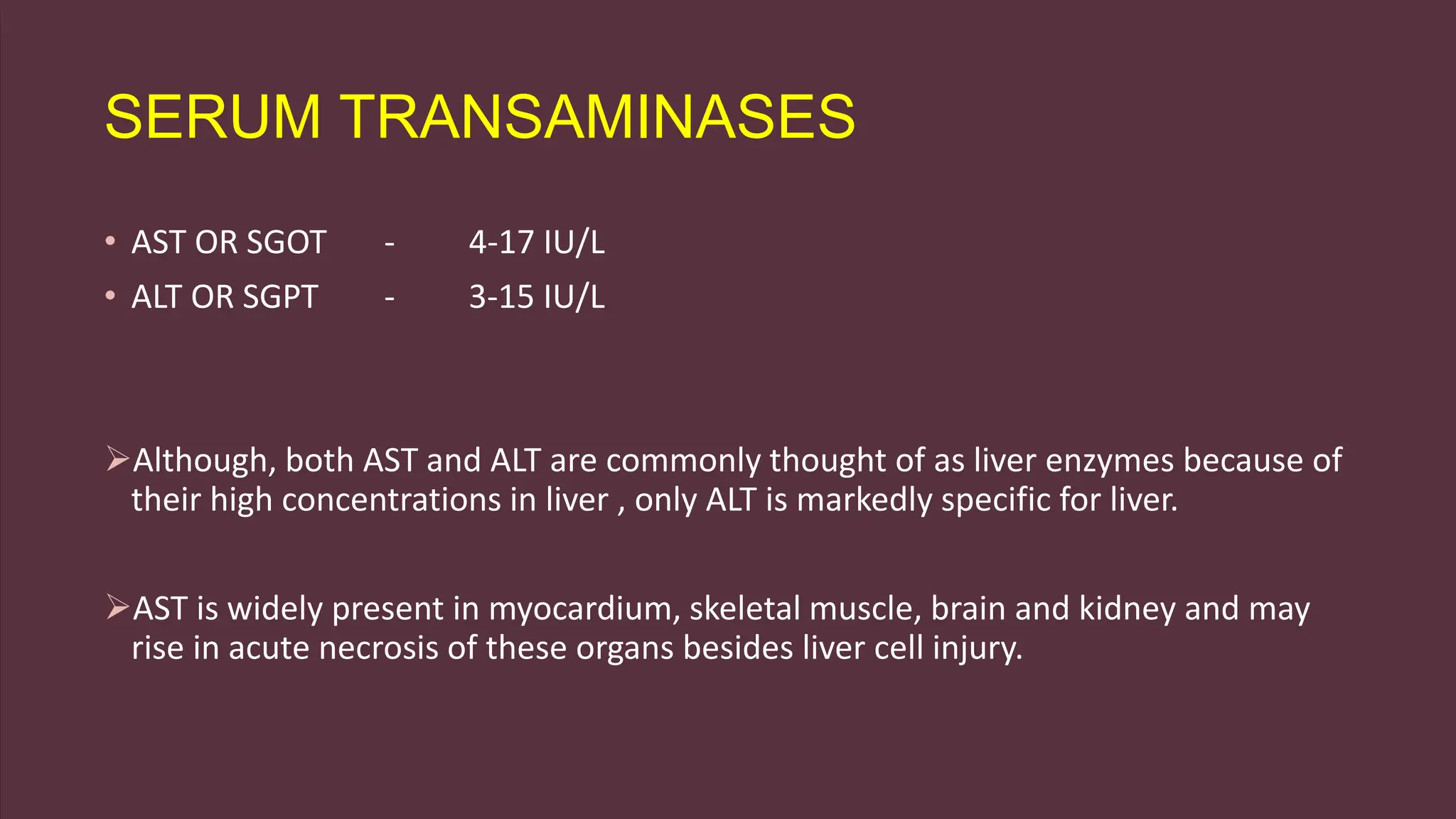
SERUM TRANSAMINASES
• AST OR SGOT - 4-17 IU/L
• ALT OR SGPT - 3-15 IU/L
Although, both AST and ALT are commonly thought of as liver enzymes because of
their high concentrations in liver , only ALT is markedly specific for liver.
AST is widely present in myocardium, skeletal muscle, brain and kidney and may
rise in acute necrosis of these organs besides liver cell injury.
AST > ALT is seen in alcoholic liver disease (ratio of AST/ ALT > 2 is quite
suggestive).
Moderate elevation of amino transferases (100-300 U/L) is seen in alcoholic
hepatitis, autoimmune hepatitis, wilson’s disease and non alcoholic chronic
hepatitis.
Minor elevations (<100 U/L) is seen in chronic viral hepatitis(hep C), fatty liver and
non alcoholic steatohepatitis (NASH).
CLINICAL SIGNIFICANCE OF AST/ ALT RATIO:
Normal AST:ALT is 0.8
Ratio > 2 is seen in-
• Alcoholic hepatitis
• Hepatitis with cirrhosis
• NASH
• Liver metastasis
• Myocardial infarction
• Erythromycin treatment
CLINICAL INTERPRETATION:
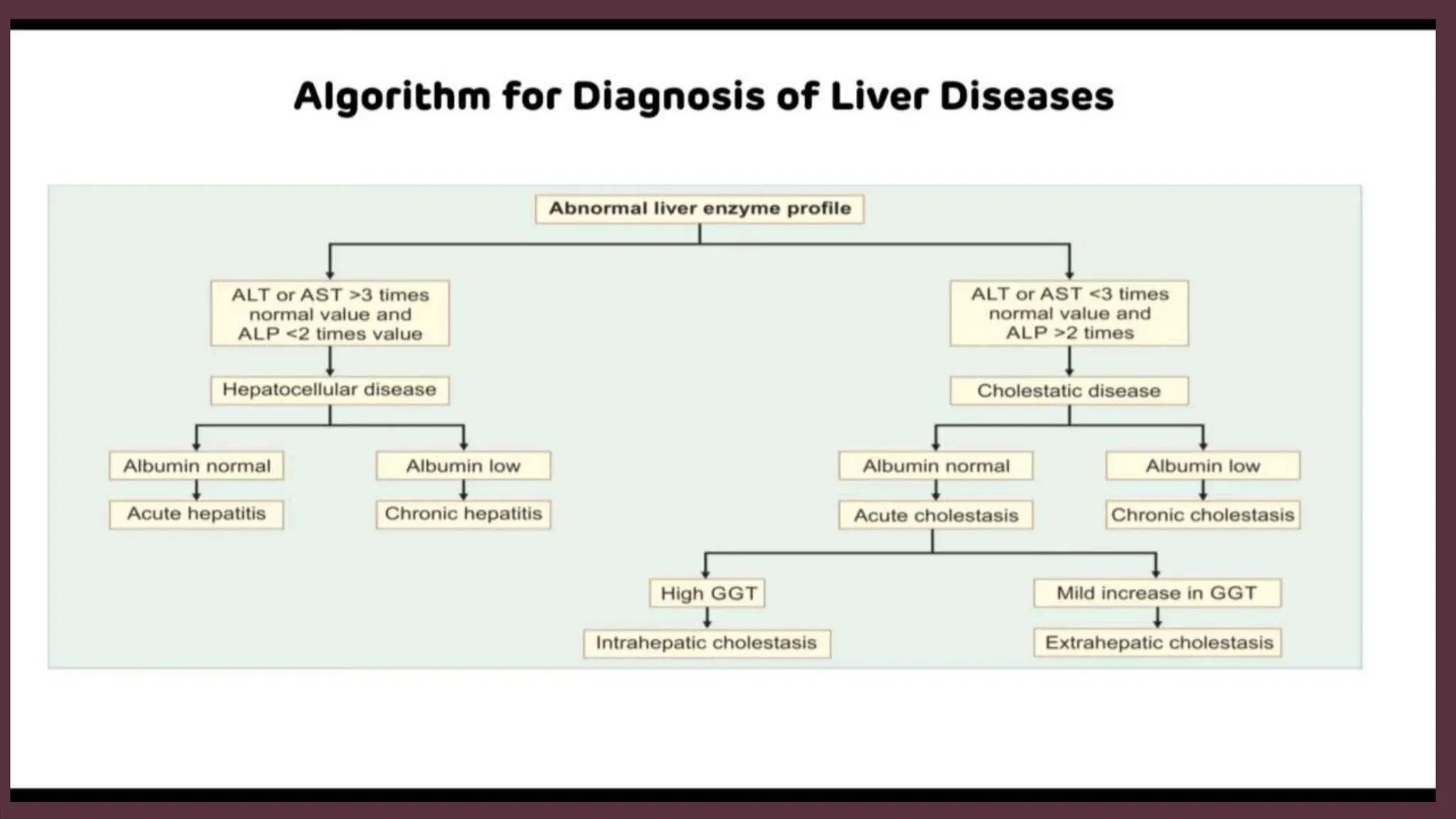
• ALT estimations are useful in early diagnosis to evaluate severity and prognosis of
liver disease.
• In hepatitis, the levels of both these enzymes are increased (500-1500 IU/L).
• In obstructive jaundice, also increase occurs but doesnot exceed 200-300 IU/L.
• In hemolytic jaundice, levels of these enzymes are normal.
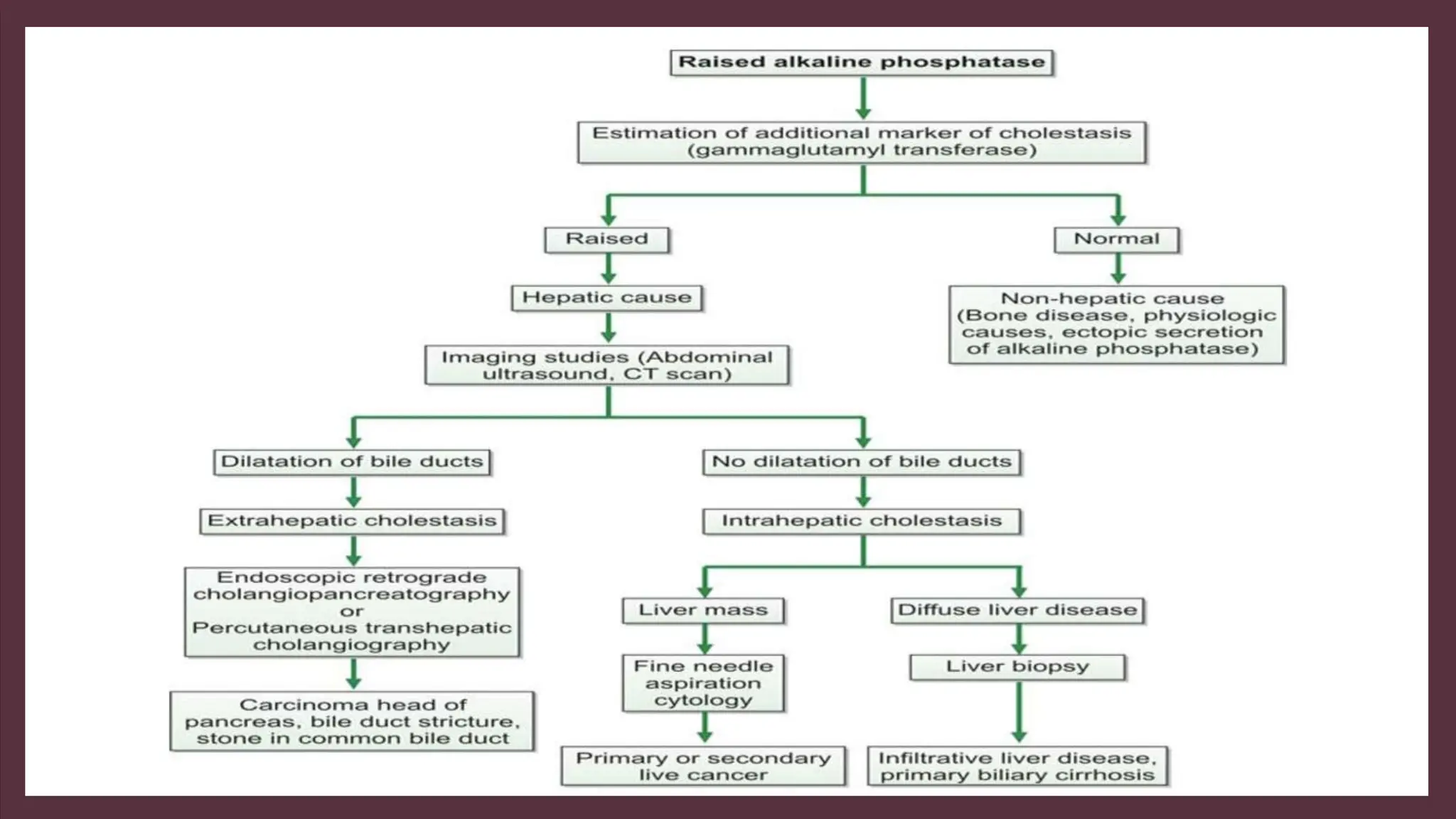
ALKALINE PHOSPHATASE (ALP)
• ALP is produced by many tissues, especially bone, liver, intestine and placenta and
is excreted in the bile.
• In absence of bone disease and pregnancy, the levels are generally increased due
to hepatobiliary disease.
• Normal levels in plasma 3-13 KA units/100ml.
• ALP is normally excreted through bile, so raised levels are seen in obstructive
jaundice.
THANKYOU

Liver function tests.pptx

  • 1.
  • 3.
  • 4.
    1) METABOLIC FUNCTION Carbohydratemetabolism : glycolysis, glycogen synthesis, breakdown, gluconeogenesis and HMP shunt  Lipid metabolism : fatty acid synthesis, ketogenesis, cholesterol synthesis and excretion, bile acid synthesis, 25- hydroxylation of vitamin D and lipoprotein synthesis.
  • 5.
    Protein metabolism :urea synthesis from ammonia, synthesis of plasma proteins(except immunoglobulins) and some coagulation factor synthesis. Hormone metabolism : metabolism and excretion of steroid hormones and metabolism of peptide hormone.
  • 6.
    2) Synthesis function: synthesis of plasma proteins, clotting factors, cholesterol, TAG and lipoproteins. 3) Excretory function : excretion of bile pigments and bile salts into the bile. 4) Detoxification : ammonia is detoxified to urea ; drugs and other xenobiotics are detoxified and excreted. 5) Regulation of blood glucose levels : by hepatic glycogenolysis and gluconeogenesis. 6) Storage function : glycogen, vitamins A, D, K, B12 and iron.
  • 9.
  • 10.
    • Laboratory testsfor evaluation of liver disease are based on evaluation of these normal functions of liver. • Function tests are the tests carried out to assess whether a particular organ is functioning normally or not. • Liver function tests are a group of tests that help in diagnosis, assessing prognosis and monitoring therapy.
  • 11.
    INDICATIONS OF LIVERFUNCTION TESTS Jaundice Suspected liver metastasis Alcoholic liver disease Any undiagnosed chronic illness Annual check up of diabetic patient Coagulation disorders Therapy with statins to check hepatotoxicity
  • 12.
    • Liver functiontests can be classified into five classes according to the function of the liver. 1) Tests based of excretory function : 1) serum bilirubin 2) Urine bilirubin 3) Urine bile salts 4) BSP dye tests 1) Tests based on detoxification function : 1) Blood ammonia and bilirubin 2) Hippuric acid test
  • 13.
    3) Tests basedon synthetic function:  Plasma proteins, albumin and globulins  Prothrombin time 4) Tests based on metabolic function:  Galactose tolerance test  Determination of serum cholesterol and ratio of free to esterified cholesterol  Serum protein estimation  Serum ammonia estimation
  • 14.
    5) Determination ofserum enzymes:  Serum alanine transaminase (ALT)  Serum aspartate transaminase (AST)  Serum alkaline phosphatase (ALP)
  • 15.
    SPECIAL TESTS (TESTSFOR METABOLIC LIVER DISEASE)  Ceruloplasmin Ferritin and iron Alpha-1 antitrypsin Beta-2 microglobulin Alpha fetoprotein (AFP)
  • 16.
    LIVER FUNCTION TESTBASED ON EXCRETORY FUNCTION
  • 17.
    TESTS BASED ONBILIRUBIN METABOLISM  Bilirubin is the excretory end product of heme.  It is conjugated to form bilirubin diglucuronide (aka direct bilirubin).  Bilirubin (unconjugated/indirect) is insoluble in water but bilirubin diglucuronide is soluble in water.
  • 19.
    Normal concentration ofbilirubin: • Total serum bilirubin - 0.2 to 1 mg/dl • Direct serum bilirubin - 0.1 to 0.4 mg/dl • Indirect serum bilirubin - 0.2 to 0.7 mg/dl Seum bilirubin estimation by Van Den Bergh reaction.
  • 20.
    CLINICAL INTERPRETATION Increase inserum bilirubin occurs due to many causes and results in jaundice. Bilirubin metabolism is deranged in three important diseases: • Hemolytic jaundice (pre-hepatic) • Hepatitis (hepatic) • Obstructive jaundice (post- hepatic)
  • 22.
    TESTS BASED ONDETOXIFICATION FUNCTION DETERMINATION OF BLOOD AMMONIA • Liver detoxicates ammonia to form urea. • In liver disease, ability to remove ammonia may be impaired. • Normal levels of blood ammonia – 40-70 mg/dl Clinical interpretation : • High blood levels of ammonia are found in acute hepatitis and cirrhosis.
  • 23.
    TESTS BASED ONSYNTHETIC FUNCTION DETERMINATION OF SERUM ALBUMIN AND GLOBULIN NORMAL CONCENTRATIONS OF SERUM PROTEINS  Total serum protein - 6 to 8 gm/dl  Serum albumin - 3.5 to 5.5 gm/dl  Serum globulin - 2 to 3.5 gm/dl  Albumin/ globulin ratio - 1.2 :1 to 1.6 : 1
  • 24.
    CLINICAL INTERPRETATION • Hypoalbuminemiamay occur in hepatocellular disease e.g. cirrhosis • Hyperglobulinemia may occur in cirrhosis and infectious hepatitis. • In advanced stages of liver disease, albumin is decreased and globulins are increased, so that the A/G ratio may be reversed.
  • 25.
    DETERMINATION OF PROTHROMBINTIME • Various proteins that participate in blood coagulation are synthesised in liver e.g. fibrinogen, factor II, V, VII, IX & X. • If any of these factors is deficient, the deficiency causes prolonged prothrombin time e.g. vit K deficiency.
  • 26.
    TESTS RELATED TOENZYMES • Liver cells contain several enzymes. • In liver damage, these enzymes are released into blood which leads to increase in their levels in blood.
  • 27.
    MOST COMMONLY ANDROUTINELY USED ENZYMES: • SERUM ASPARTATE TRANSAMINASE (AST) • SERUM SERUM ALANINE TRANSAMINASE (ALT) • SERUM ALKALINE PHOSPHATASE (ALP) OTHER ENZYMES (not used routinely) : • Serum nucleotidase • Lactate dehydrogenase • Isocitrate dehydrogenase • γ- glutamyl transferase
  • 29.
    SERUM TRANSAMINASES • ASTOR SGOT - 4-17 IU/L • ALT OR SGPT - 3-15 IU/L Although, both AST and ALT are commonly thought of as liver enzymes because of their high concentrations in liver , only ALT is markedly specific for liver. AST is widely present in myocardium, skeletal muscle, brain and kidney and may rise in acute necrosis of these organs besides liver cell injury.
  • 30.
    AST > ALTis seen in alcoholic liver disease (ratio of AST/ ALT > 2 is quite suggestive). Moderate elevation of amino transferases (100-300 U/L) is seen in alcoholic hepatitis, autoimmune hepatitis, wilson’s disease and non alcoholic chronic hepatitis. Minor elevations (<100 U/L) is seen in chronic viral hepatitis(hep C), fatty liver and non alcoholic steatohepatitis (NASH).
  • 31.
    CLINICAL SIGNIFICANCE OFAST/ ALT RATIO: Normal AST:ALT is 0.8 Ratio > 2 is seen in- • Alcoholic hepatitis • Hepatitis with cirrhosis • NASH • Liver metastasis • Myocardial infarction • Erythromycin treatment
  • 32.
    CLINICAL INTERPRETATION: • ALTestimations are useful in early diagnosis to evaluate severity and prognosis of liver disease. • In hepatitis, the levels of both these enzymes are increased (500-1500 IU/L). • In obstructive jaundice, also increase occurs but doesnot exceed 200-300 IU/L. • In hemolytic jaundice, levels of these enzymes are normal.
  • 33.
    ALKALINE PHOSPHATASE (ALP) •ALP is produced by many tissues, especially bone, liver, intestine and placenta and is excreted in the bile. • In absence of bone disease and pregnancy, the levels are generally increased due to hepatobiliary disease. • Normal levels in plasma 3-13 KA units/100ml. • ALP is normally excreted through bile, so raised levels are seen in obstructive jaundice.
  • 36.