A Printed Circuit Board Suitable for
Controlling a 22.8kVA IGBT Three-
Phase Inverter for DC Nanogrids in a
Laboratory Setup
Department of Mechanical, Energy
and Management Engineering
Laboratory of Electric Power Systems
and Renewables Energy Sources
G. Barone, A. Burgio, D. Menniti, M. Motta, A. Pinnarelli and N. Sorrentino
Department of Mechanical, Energy and Management Engineering
University of Calabria, Italy
Presenter: Alessandro Burgio
Milan 6-9 June 2017 - IEEE 17th International Conference on Environment and Electrical
Engineering (EEEIC)
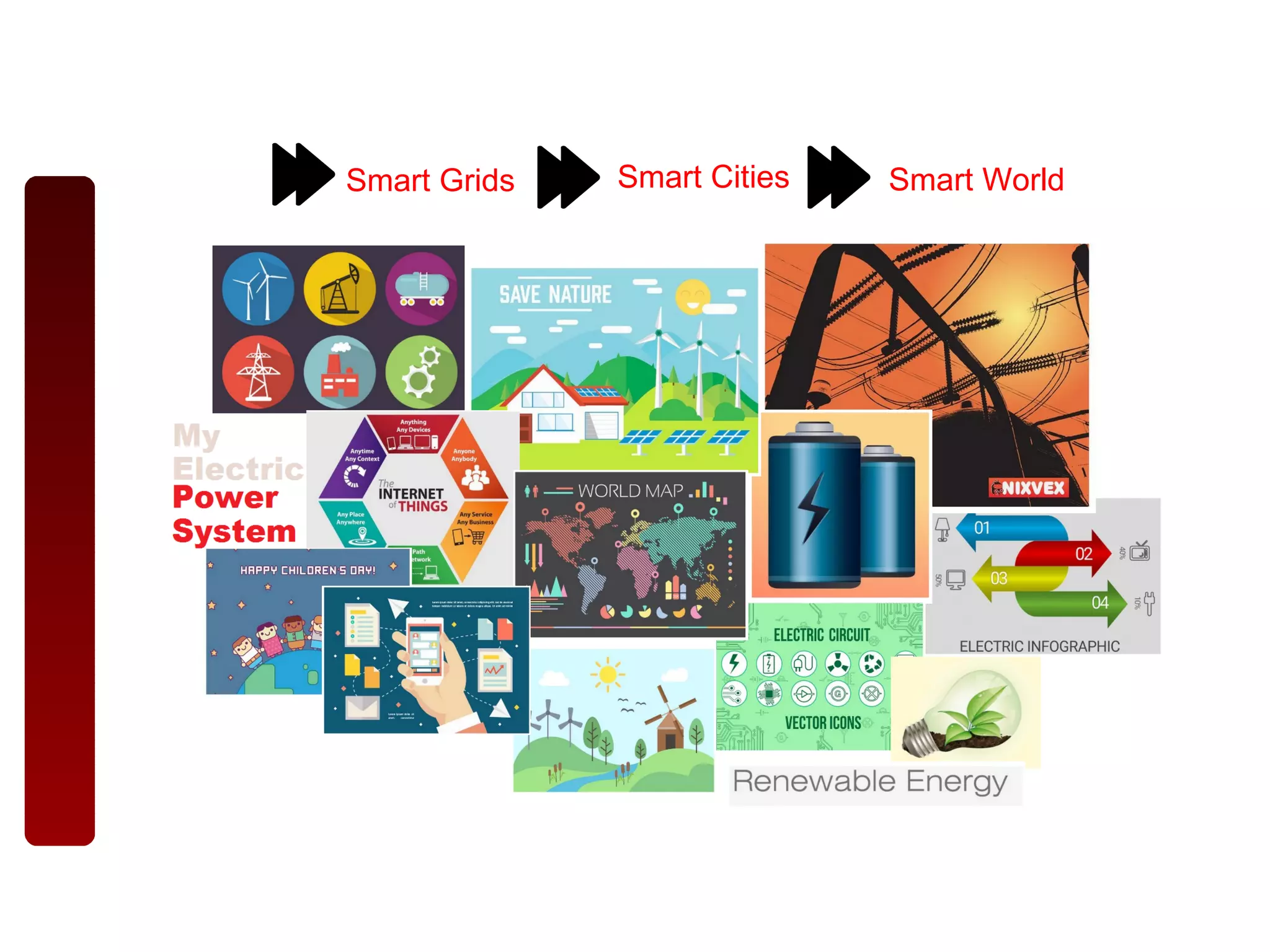
Smart Grids Smart Cities Smart World
Demand response programs: “Today’s killer app for Smart Grid” and “The key for
engaging consumers in the Smart Grid”.
Microgrids: integrated platform for supply-side, storage units and demand resources
located in a local distribution grid.
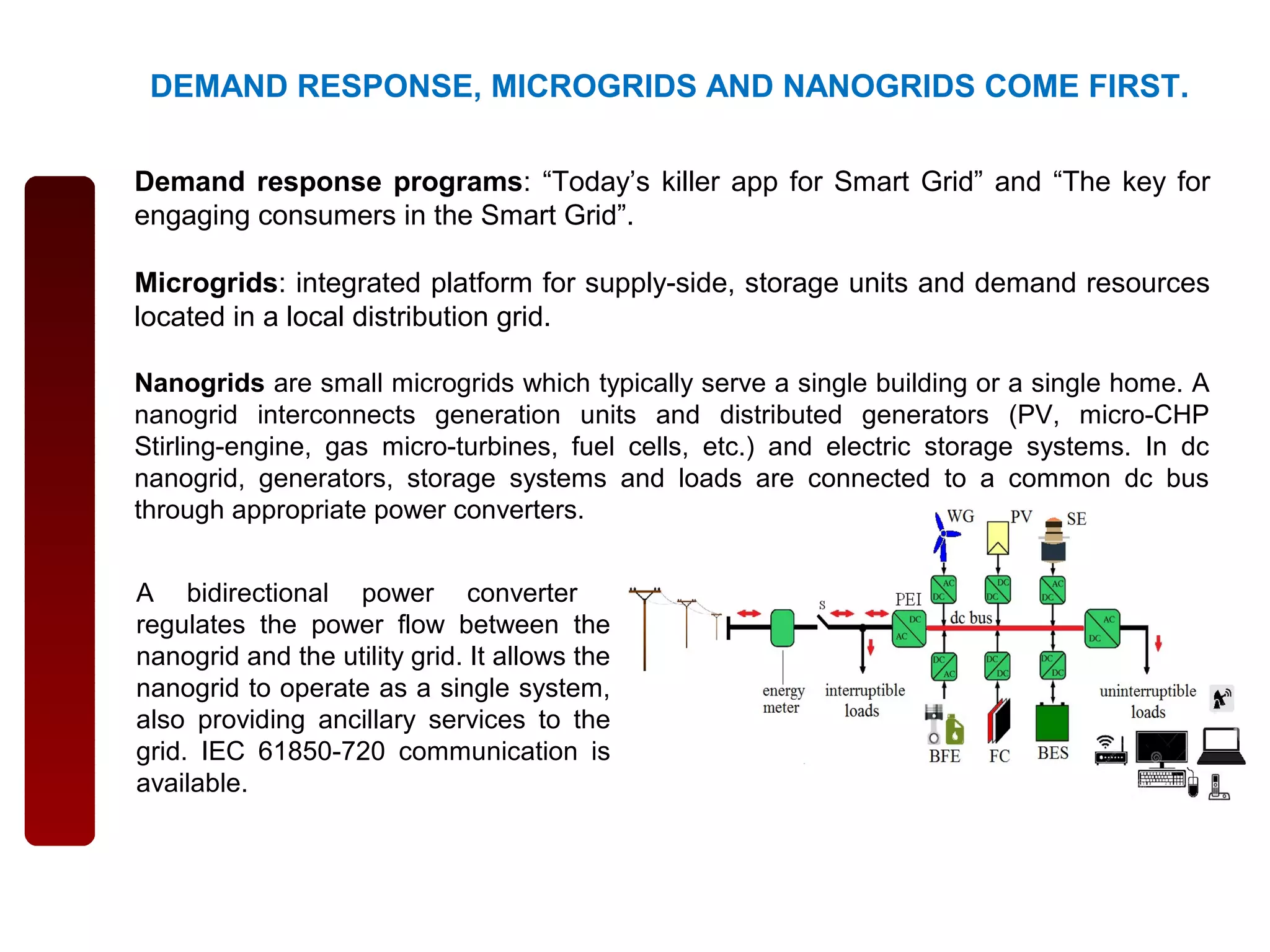
Nanogrids are small microgrids which typically serve a single building or a single home. A
nanogrid interconnects generation units and distributed generators (PV, micro-CHP
Stirling-engine, gas micro-turbines, fuel cells, etc.) and electric storage systems. In dc
nanogrid, generators, storage systems and loads are connected to a common dc bus
through appropriate power converters.
A bidirectional power converter
regulates the power flow between the
nanogrid and the utility grid. It allows the
nanogrid to operate as a single system,
also providing ancillary services to the
grid. IEC 61850-720 communication is
available.
DEMAND RESPONSE, MICROGRIDS AND NANOGRIDS COME FIRST.
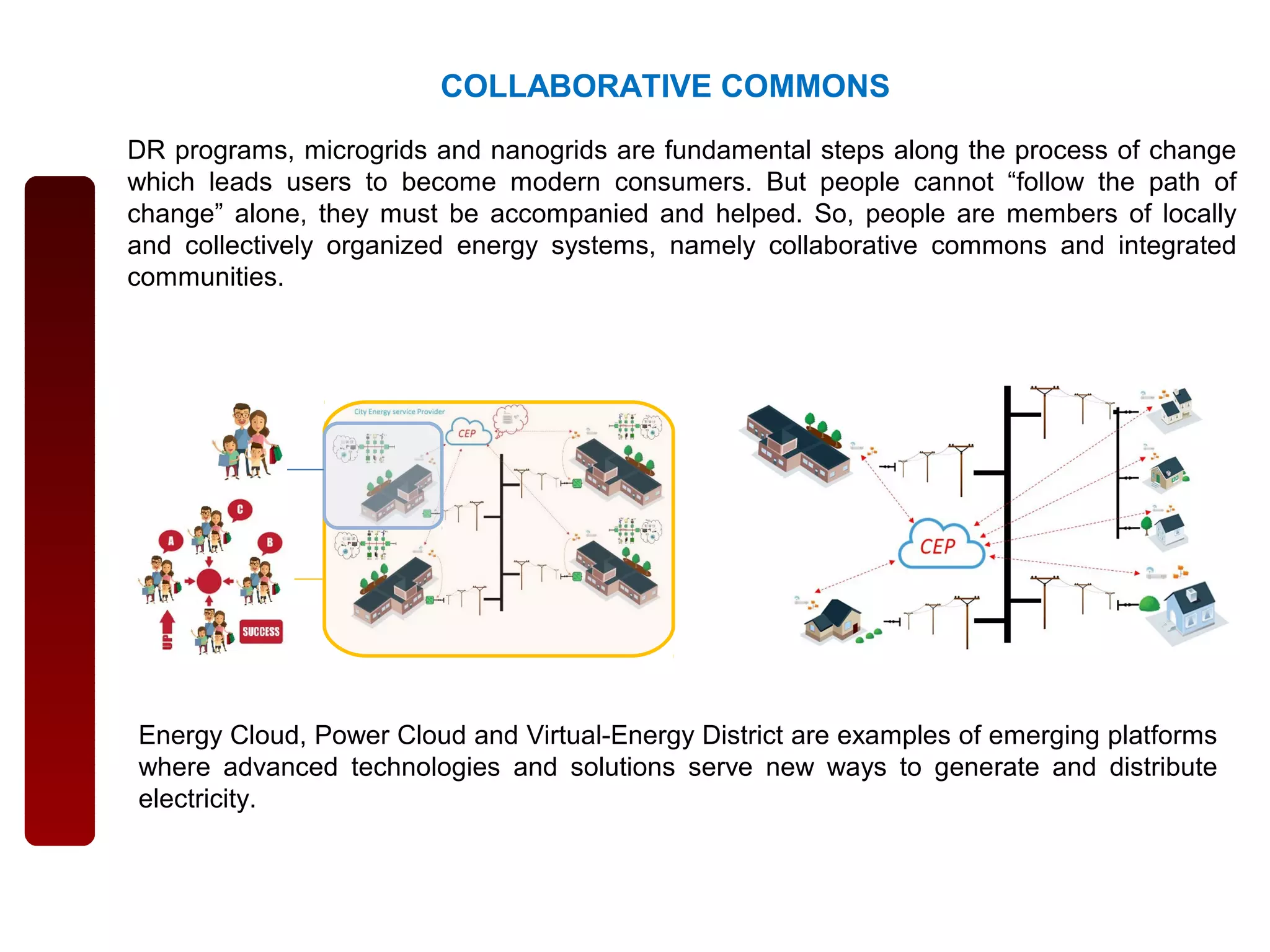
DR programs, microgrids and nanogrids are fundamental steps along the process of change
which leads users to become modern consumers. But people cannot “follow the path of
change” alone, they must be accompanied and helped. So, people are members of locally
and collectively organized energy systems, namely collaborative commons and integrated
communities.
COLLABORATIVE COMMONS
Energy Cloud, Power Cloud and Virtual-Energy District are examples of emerging platforms
where advanced technologies and solutions serve new ways to generate and distribute
electricity.
Citizens may produce energy and participate in the electricity market, selling energy to the
formers. The electricity market is accessible to all citizens that become real market operators
in aggregate form. Such a transformation would have an immediate economic return, relying
on price margins that exist between the wholesale and retail prices.
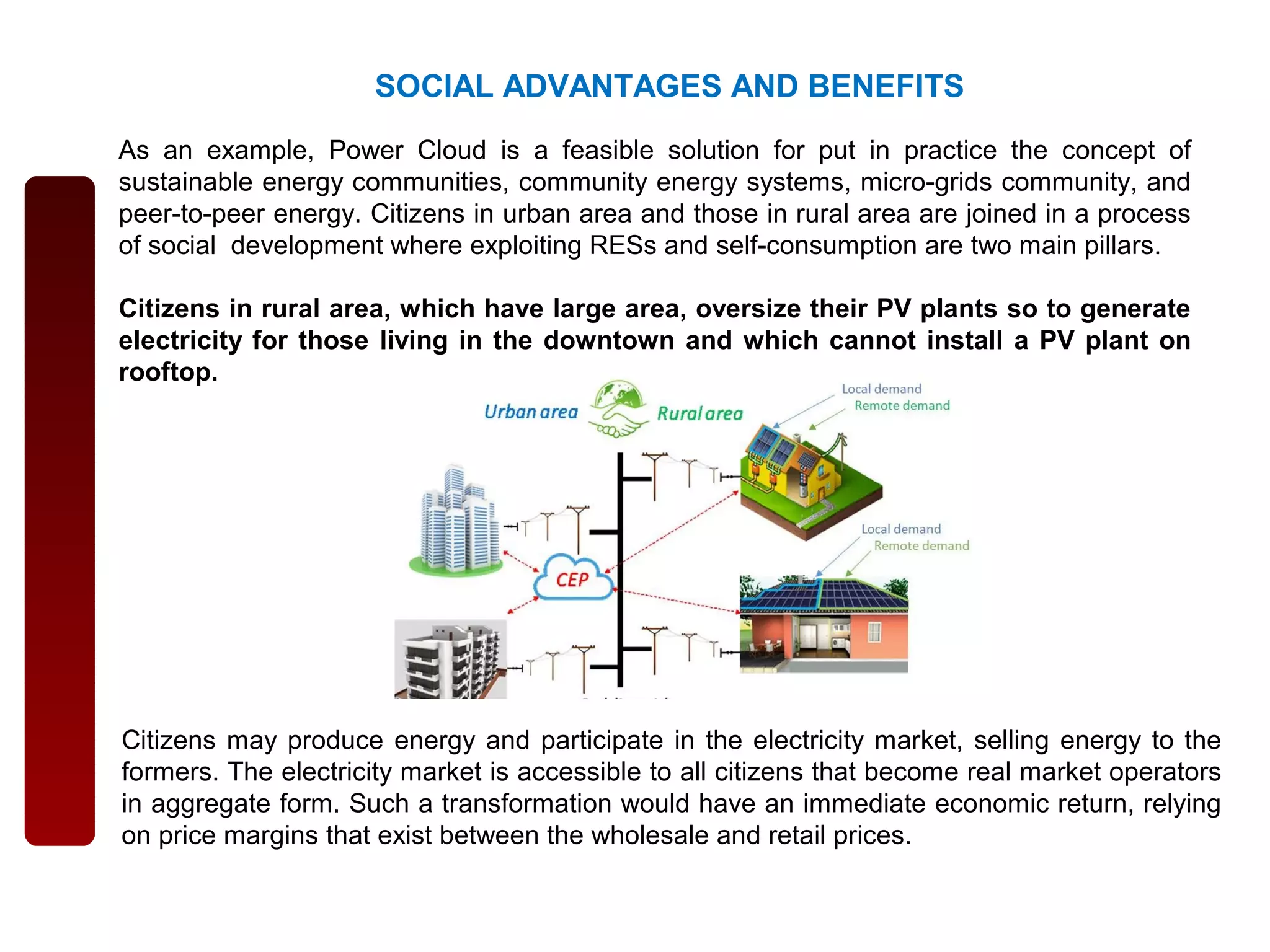
As an example, Power Cloud is a feasible solution for put in practice the concept of
sustainable energy communities, community energy systems, micro-grids community, and
peer-to-peer energy. Citizens in urban area and those in rural area are joined in a process
of social development where exploiting RESs and self-consumption are two main pillars.
Citizens in rural area, which have large area, oversize their PV plants so to generate
electricity for those living in the downtown and which cannot install a PV plant on
rooftop.
SOCIAL ADVANTAGES AND BENEFITS
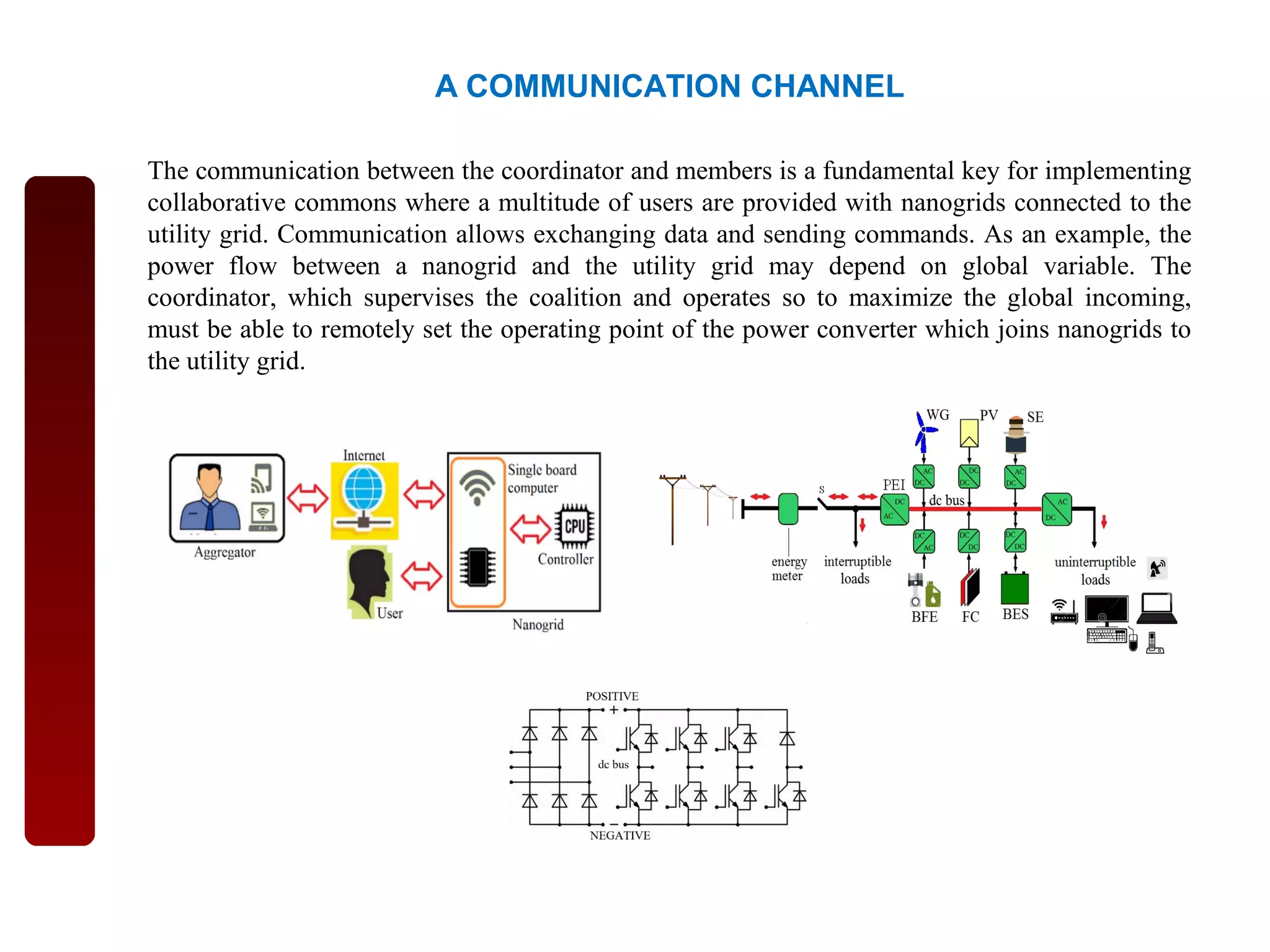
The communication between the coordinator and members is a fundamental key for implementing
collaborative commons where a multitude of users are provided with nanogrids connected to the
utility grid. Communication allows exchanging data and sending commands. As an example, the
power flow between a nanogrid and the utility grid may depend on global variable. The
coordinator, which supervises the coalition and operates so to maximize the global incoming,
must be able to remotely set the operating point of the power converter which joins nanogrids to
the utility grid.
A COMMUNICATION CHANNEL
CONTROL A BIDIRECTIONAL AC-DC CONVERTER
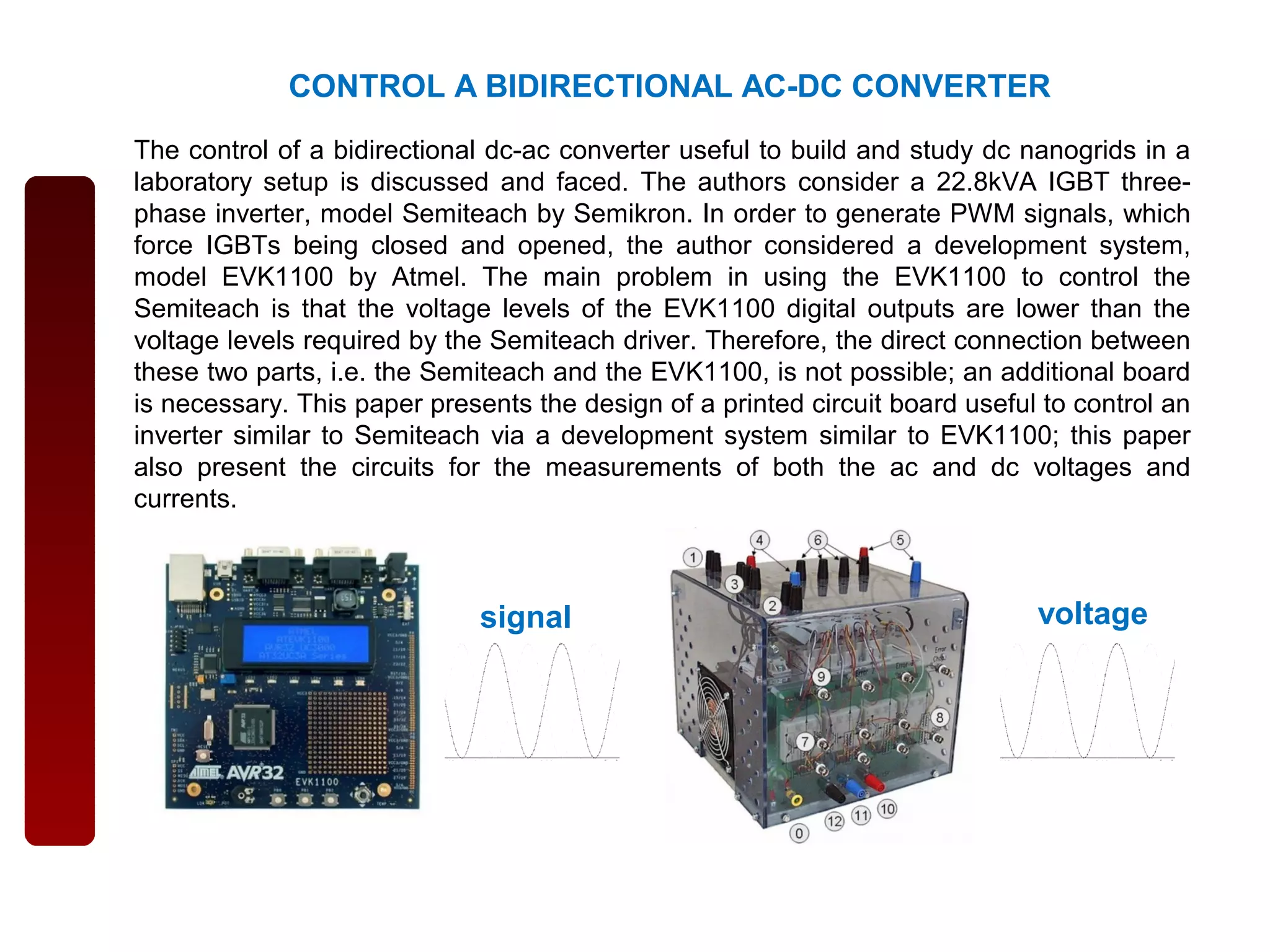
The control of a bidirectional dc-ac converter useful to build and study dc nanogrids in a
laboratory setup is discussed and faced. The authors consider a 22.8kVA IGBT three-
phase inverter, model Semiteach by Semikron. In order to generate PWM signals, which
force IGBTs being closed and opened, the author considered a development system,
model EVK1100 by Atmel. The main problem in using the EVK1100 to control the
Semiteach is that the voltage levels of the EVK1100 digital outputs are lower than the
voltage levels required by the Semiteach driver. Therefore, the direct connection between
these two parts, i.e. the Semiteach and the EVK1100, is not possible; an additional board
is necessary. This paper presents the design of a printed circuit board useful to control an
inverter similar to Semiteach via a development system similar to EVK1100; this paper
also present the circuits for the measurements of both the ac and dc voltages and
currents.
signal voltage
CONTROL A BIDIRECTIONAL AC-DC CONVERTER
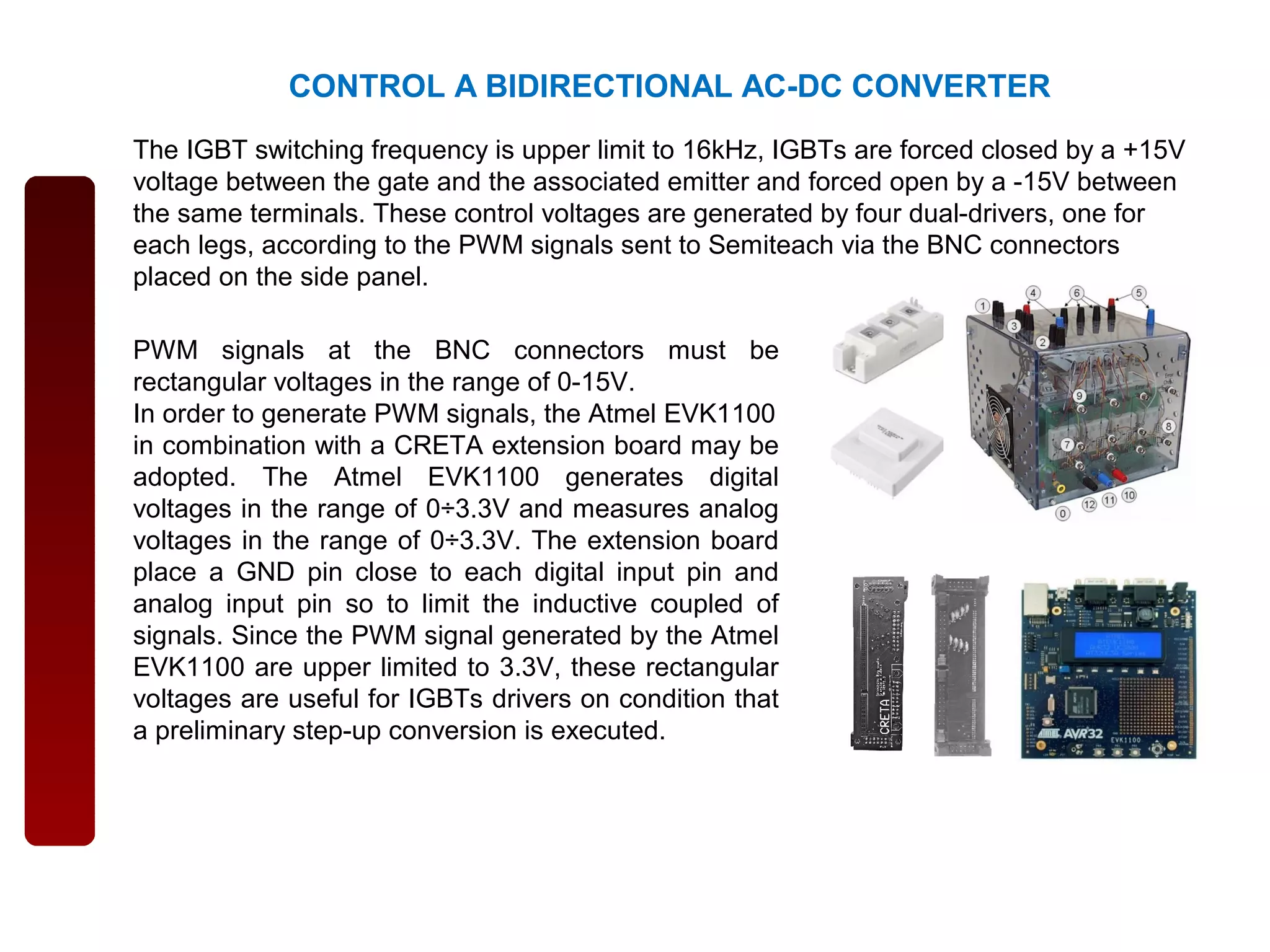
The IGBT switching frequency is upper limit to 16kHz, IGBTs are forced closed by a +15V
voltage between the gate and the associated emitter and forced open by a -15V between
the same terminals. These control voltages are generated by four dual-drivers, one for
each legs, according to the PWM signals sent to Semiteach via the BNC connectors
placed on the side panel.
PWM signals at the BNC connectors must be
rectangular voltages in the range of 0-15V.
In order to generate PWM signals, the Atmel EVK1100
in combination with a CRETA extension board may be
adopted. The Atmel EVK1100 generates digital
voltages in the range of 0÷3.3V and measures analog
voltages in the range of 0÷3.3V. The extension board
place a GND pin close to each digital input pin and
analog input pin so to limit the inductive coupled of
signals. Since the PWM signal generated by the Atmel
EVK1100 are upper limited to 3.3V, these rectangular
voltages are useful for IGBTs drivers on condition that
a preliminary step-up conversion is executed.
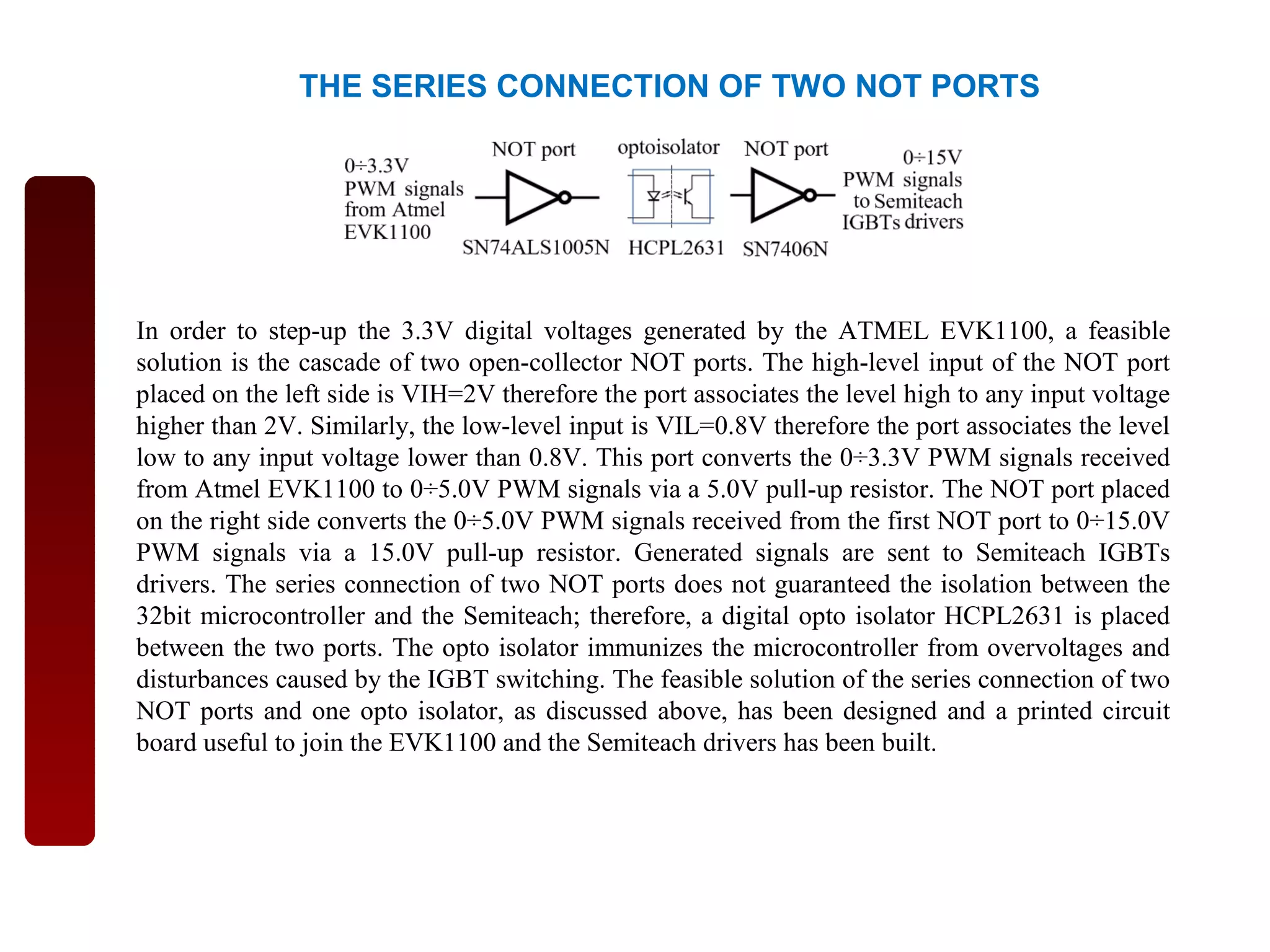
THE SERIES CONNECTION OF TWO NOT PORTS
In order to step-up the 3.3V digital voltages generated by the ATMEL EVK1100, a feasible
solution is the cascade of two open-collector NOT ports. The high-level input of the NOT port
placed on the left side is VIH=2V therefore the port associates the level high to any input voltage
higher than 2V. Similarly, the low-level input is VIL=0.8V therefore the port associates the level
low to any input voltage lower than 0.8V. This port converts the 0÷3.3V PWM signals received
from Atmel EVK1100 to 0÷5.0V PWM signals via a 5.0V pull-up resistor. The NOT port placed
on the right side converts the 0÷5.0V PWM signals received from the first NOT port to 0÷15.0V
PWM signals via a 15.0V pull-up resistor. Generated signals are sent to Semiteach IGBTs
drivers. The series connection of two NOT ports does not guaranteed the isolation between the
32bit microcontroller and the Semiteach; therefore, a digital opto isolator HCPL2631 is placed
between the two ports. The opto isolator immunizes the microcontroller from overvoltages and
disturbances caused by the IGBT switching. The feasible solution of the series connection of two
NOT ports and one opto isolator, as discussed above, has been designed and a printed circuit
board useful to join the EVK1100 and the Semiteach drivers has been built.
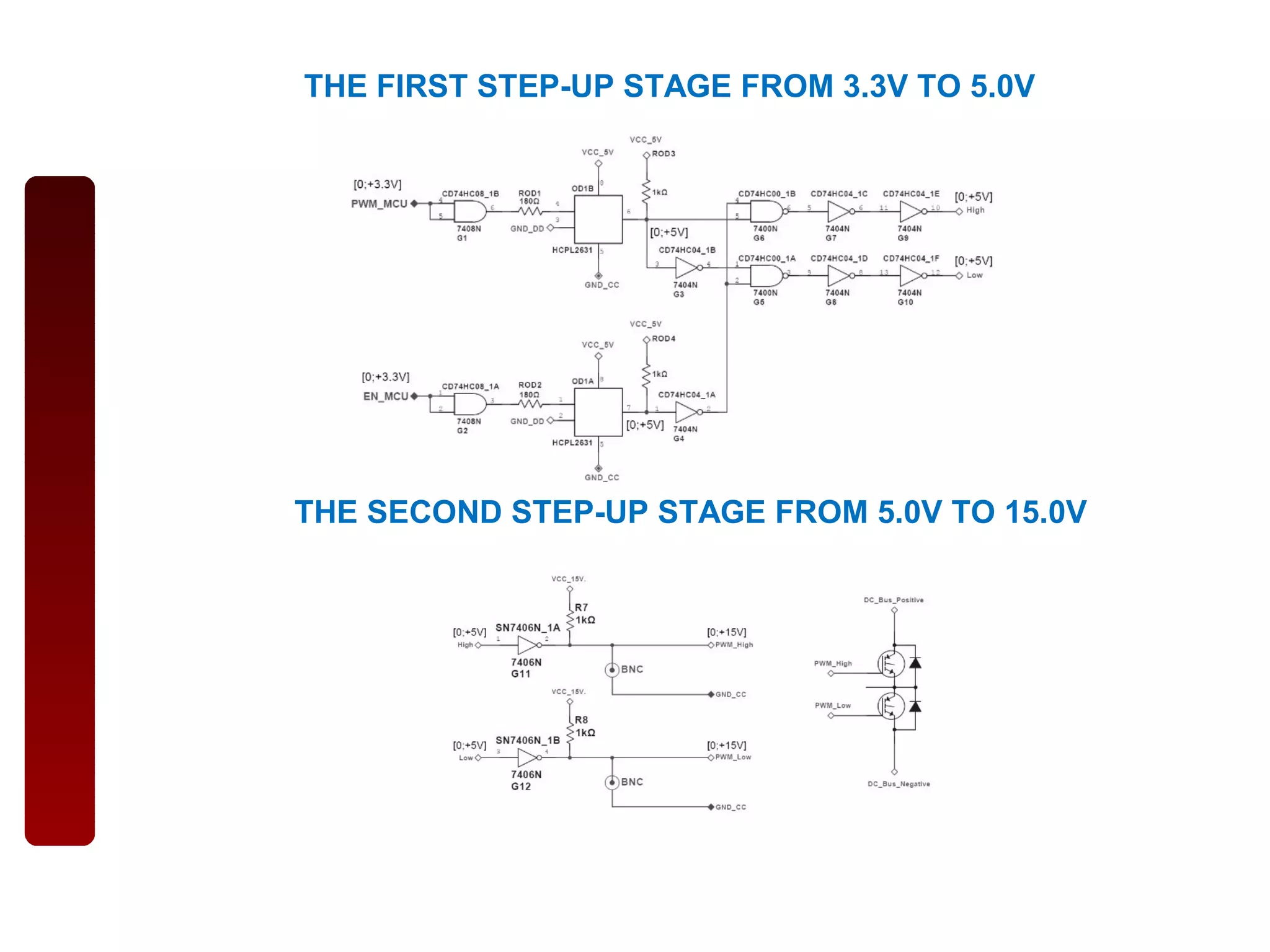
THE FIRST STEP-UP STAGE FROM 3.3V TO 5.0V
THE SECOND STEP-UP STAGE FROM 5.0V TO 15.0V
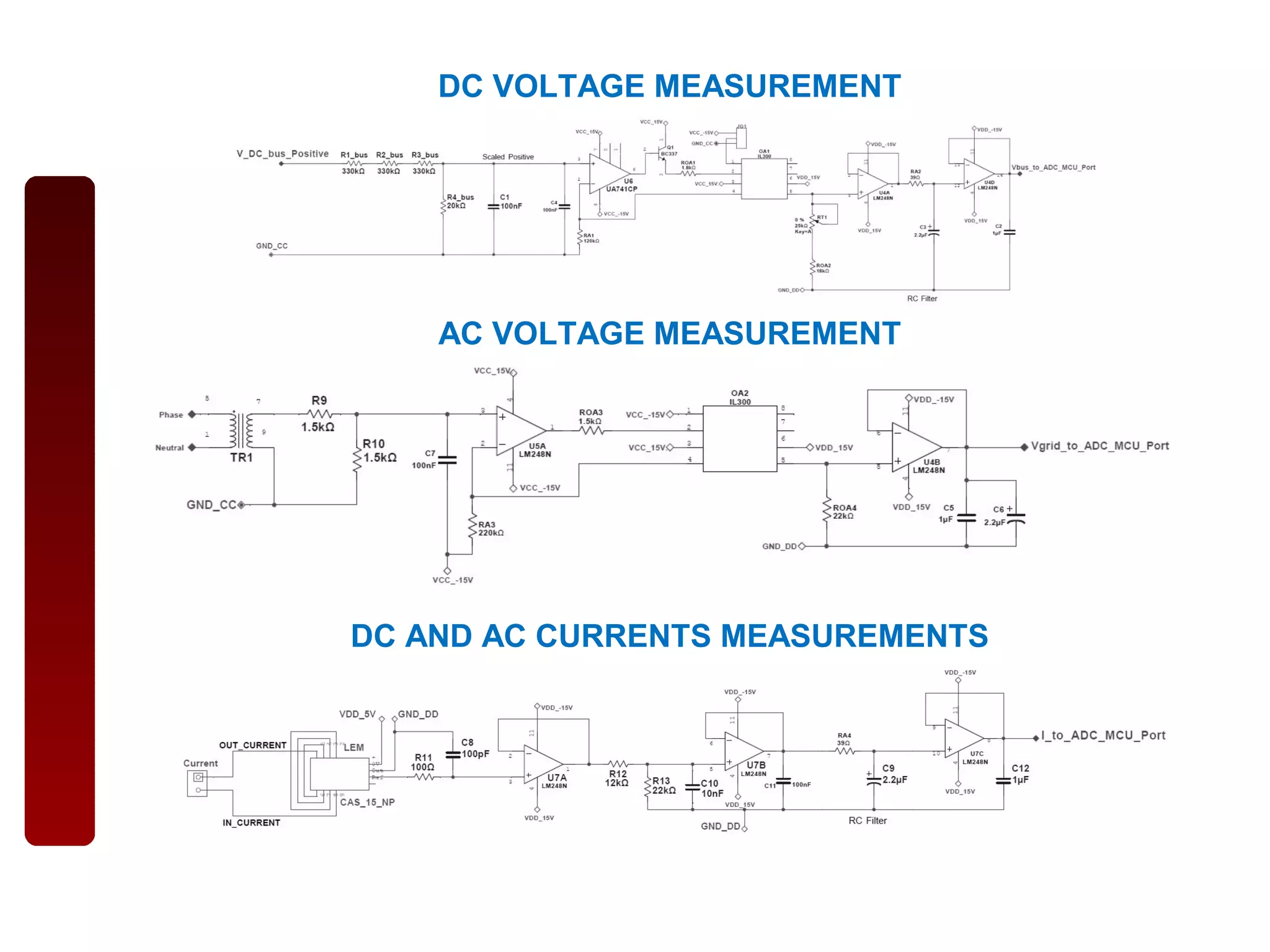
DC VOLTAGE MEASUREMENT
AC VOLTAGE MEASUREMENT
DC AND AC CURRENTS MEASUREMENTS
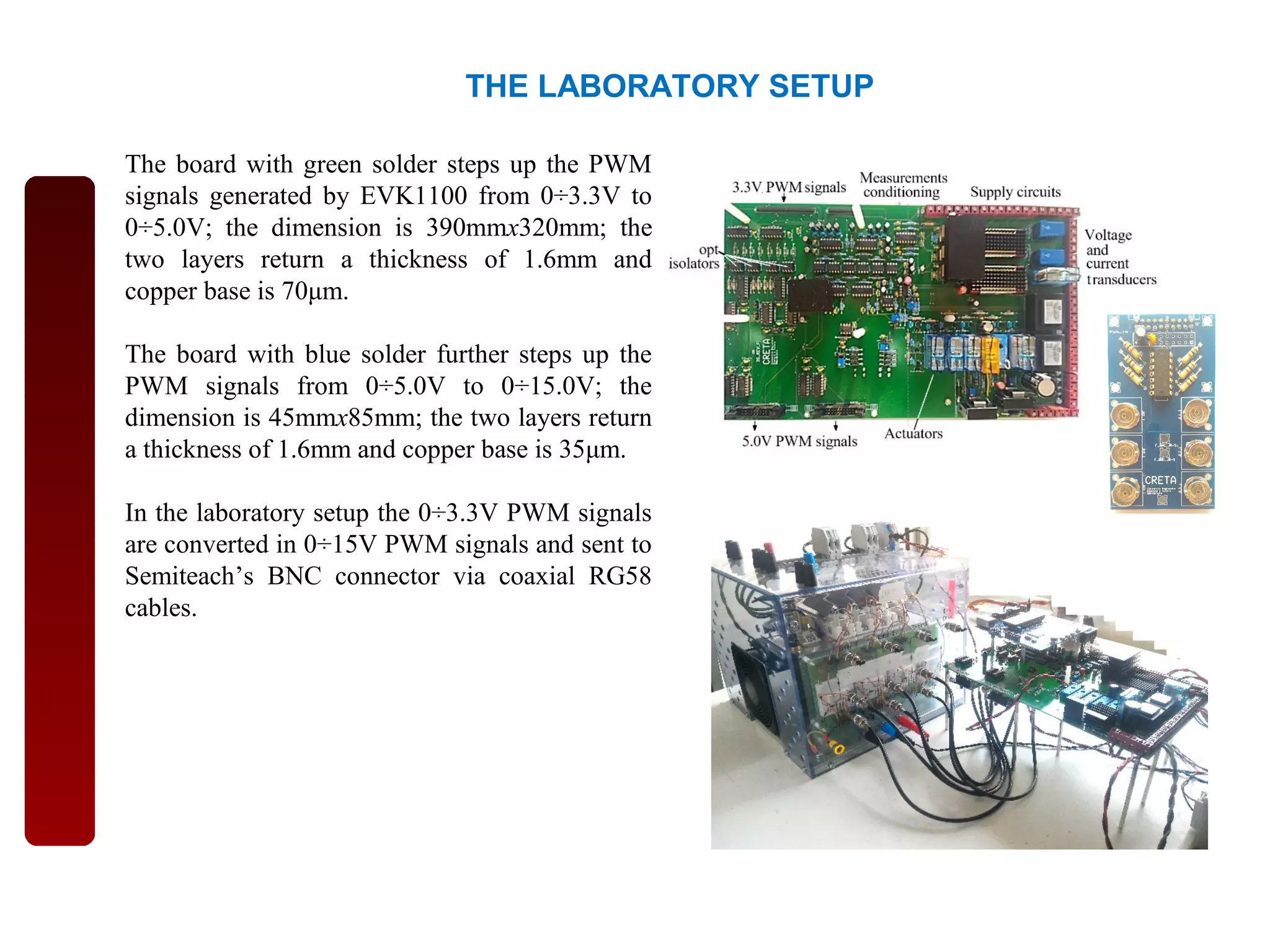
THE LABORATORY SETUP
The board with green solder steps up the PWM
signals generated by EVK1100 from 0÷3.3V to
0÷5.0V; the dimension is 390mmx320mm; the
two layers return a thickness of 1.6mm and
copper base is 70μm.
The board with blue solder further steps up the
PWM signals from 0÷5.0V to 0÷15.0V; the
dimension is 45mmx85mm; the two layers return
a thickness of 1.6mm and copper base is 35μm.
In the laboratory setup the 0÷3.3V PWM signals
are converted in 0÷15V PWM signals and sent to
Semiteach’s BNC connector via coaxial RG58
cables.
GENERATED VOLTAGE AND CURRENT
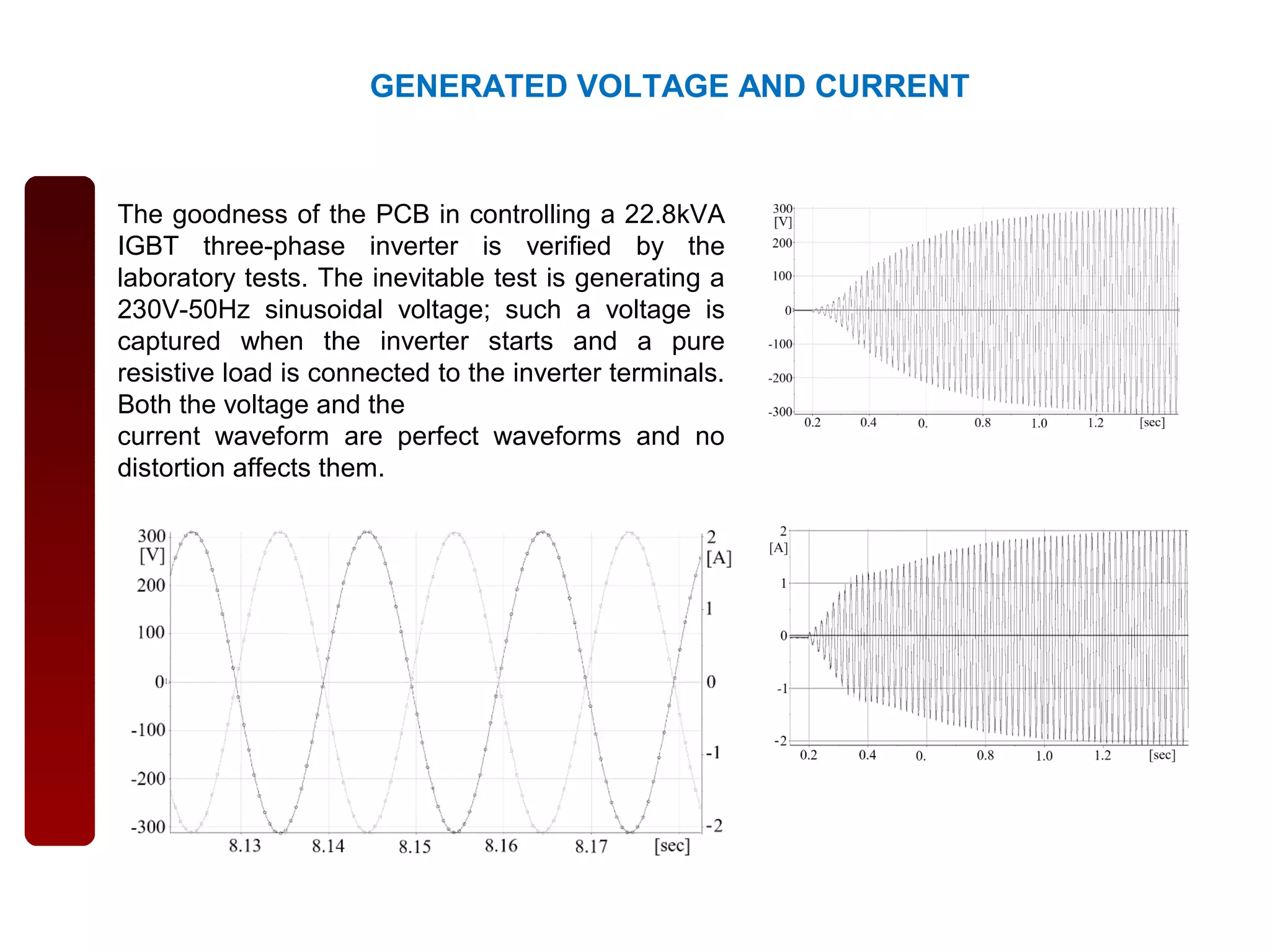
The goodness of the PCB in controlling a 22.8kVA
IGBT three-phase inverter is verified by the
laboratory tests. The inevitable test is generating a
230V-50Hz sinusoidal voltage; such a voltage is
captured when the inverter starts and a pure
resistive load is connected to the inverter terminals.
Both the voltage and the
current waveform are perfect waveforms and no
distortion affects them.
Thank you for your attention.
alessandro.burgio@unical.it

A Printed Circuit Board Suitable for Controlling a 22.8kVA IGBT Three-Phase Inverter for DC Nanogrids in a Laboratory Setup

  • 1.
    A Printed CircuitBoard Suitable for Controlling a 22.8kVA IGBT Three- Phase Inverter for DC Nanogrids in a Laboratory Setup Department of Mechanical, Energy and Management Engineering Laboratory of Electric Power Systems and Renewables Energy Sources G. Barone, A. Burgio, D. Menniti, M. Motta, A. Pinnarelli and N. Sorrentino Department of Mechanical, Energy and Management Engineering University of Calabria, Italy Presenter: Alessandro Burgio Milan 6-9 June 2017 - IEEE 17th International Conference on Environment and Electrical Engineering (EEEIC)
  • 2.
    Smart Grids SmartCities Smart World
  • 3.
    Demand response programs:“Today’s killer app for Smart Grid” and “The key for engaging consumers in the Smart Grid”. Microgrids: integrated platform for supply-side, storage units and demand resources located in a local distribution grid. Nanogrids are small microgrids which typically serve a single building or a single home. A nanogrid interconnects generation units and distributed generators (PV, micro-CHP Stirling-engine, gas micro-turbines, fuel cells, etc.) and electric storage systems. In dc nanogrid, generators, storage systems and loads are connected to a common dc bus through appropriate power converters. A bidirectional power converter regulates the power flow between the nanogrid and the utility grid. It allows the nanogrid to operate as a single system, also providing ancillary services to the grid. IEC 61850-720 communication is available. DEMAND RESPONSE, MICROGRIDS AND NANOGRIDS COME FIRST.
  • 4.
    DR programs, microgridsand nanogrids are fundamental steps along the process of change which leads users to become modern consumers. But people cannot “follow the path of change” alone, they must be accompanied and helped. So, people are members of locally and collectively organized energy systems, namely collaborative commons and integrated communities. COLLABORATIVE COMMONS Energy Cloud, Power Cloud and Virtual-Energy District are examples of emerging platforms where advanced technologies and solutions serve new ways to generate and distribute electricity.
  • 5.
    Citizens may produceenergy and participate in the electricity market, selling energy to the formers. The electricity market is accessible to all citizens that become real market operators in aggregate form. Such a transformation would have an immediate economic return, relying on price margins that exist between the wholesale and retail prices. As an example, Power Cloud is a feasible solution for put in practice the concept of sustainable energy communities, community energy systems, micro-grids community, and peer-to-peer energy. Citizens in urban area and those in rural area are joined in a process of social development where exploiting RESs and self-consumption are two main pillars. Citizens in rural area, which have large area, oversize their PV plants so to generate electricity for those living in the downtown and which cannot install a PV plant on rooftop. SOCIAL ADVANTAGES AND BENEFITS
  • 6.
    The communication betweenthe coordinator and members is a fundamental key for implementing collaborative commons where a multitude of users are provided with nanogrids connected to the utility grid. Communication allows exchanging data and sending commands. As an example, the power flow between a nanogrid and the utility grid may depend on global variable. The coordinator, which supervises the coalition and operates so to maximize the global incoming, must be able to remotely set the operating point of the power converter which joins nanogrids to the utility grid. A COMMUNICATION CHANNEL
  • 7.
    CONTROL A BIDIRECTIONALAC-DC CONVERTER The control of a bidirectional dc-ac converter useful to build and study dc nanogrids in a laboratory setup is discussed and faced. The authors consider a 22.8kVA IGBT three- phase inverter, model Semiteach by Semikron. In order to generate PWM signals, which force IGBTs being closed and opened, the author considered a development system, model EVK1100 by Atmel. The main problem in using the EVK1100 to control the Semiteach is that the voltage levels of the EVK1100 digital outputs are lower than the voltage levels required by the Semiteach driver. Therefore, the direct connection between these two parts, i.e. the Semiteach and the EVK1100, is not possible; an additional board is necessary. This paper presents the design of a printed circuit board useful to control an inverter similar to Semiteach via a development system similar to EVK1100; this paper also present the circuits for the measurements of both the ac and dc voltages and currents. signal voltage
  • 8.
    CONTROL A BIDIRECTIONALAC-DC CONVERTER The IGBT switching frequency is upper limit to 16kHz, IGBTs are forced closed by a +15V voltage between the gate and the associated emitter and forced open by a -15V between the same terminals. These control voltages are generated by four dual-drivers, one for each legs, according to the PWM signals sent to Semiteach via the BNC connectors placed on the side panel. PWM signals at the BNC connectors must be rectangular voltages in the range of 0-15V. In order to generate PWM signals, the Atmel EVK1100 in combination with a CRETA extension board may be adopted. The Atmel EVK1100 generates digital voltages in the range of 0÷3.3V and measures analog voltages in the range of 0÷3.3V. The extension board place a GND pin close to each digital input pin and analog input pin so to limit the inductive coupled of signals. Since the PWM signal generated by the Atmel EVK1100 are upper limited to 3.3V, these rectangular voltages are useful for IGBTs drivers on condition that a preliminary step-up conversion is executed.
  • 9.
    THE SERIES CONNECTIONOF TWO NOT PORTS In order to step-up the 3.3V digital voltages generated by the ATMEL EVK1100, a feasible solution is the cascade of two open-collector NOT ports. The high-level input of the NOT port placed on the left side is VIH=2V therefore the port associates the level high to any input voltage higher than 2V. Similarly, the low-level input is VIL=0.8V therefore the port associates the level low to any input voltage lower than 0.8V. This port converts the 0÷3.3V PWM signals received from Atmel EVK1100 to 0÷5.0V PWM signals via a 5.0V pull-up resistor. The NOT port placed on the right side converts the 0÷5.0V PWM signals received from the first NOT port to 0÷15.0V PWM signals via a 15.0V pull-up resistor. Generated signals are sent to Semiteach IGBTs drivers. The series connection of two NOT ports does not guaranteed the isolation between the 32bit microcontroller and the Semiteach; therefore, a digital opto isolator HCPL2631 is placed between the two ports. The opto isolator immunizes the microcontroller from overvoltages and disturbances caused by the IGBT switching. The feasible solution of the series connection of two NOT ports and one opto isolator, as discussed above, has been designed and a printed circuit board useful to join the EVK1100 and the Semiteach drivers has been built.
  • 10.
    THE FIRST STEP-UPSTAGE FROM 3.3V TO 5.0V THE SECOND STEP-UP STAGE FROM 5.0V TO 15.0V
  • 11.
    DC VOLTAGE MEASUREMENT ACVOLTAGE MEASUREMENT DC AND AC CURRENTS MEASUREMENTS
  • 12.
    THE LABORATORY SETUP Theboard with green solder steps up the PWM signals generated by EVK1100 from 0÷3.3V to 0÷5.0V; the dimension is 390mmx320mm; the two layers return a thickness of 1.6mm and copper base is 70μm. The board with blue solder further steps up the PWM signals from 0÷5.0V to 0÷15.0V; the dimension is 45mmx85mm; the two layers return a thickness of 1.6mm and copper base is 35μm. In the laboratory setup the 0÷3.3V PWM signals are converted in 0÷15V PWM signals and sent to Semiteach’s BNC connector via coaxial RG58 cables.
  • 13.
    GENERATED VOLTAGE ANDCURRENT The goodness of the PCB in controlling a 22.8kVA IGBT three-phase inverter is verified by the laboratory tests. The inevitable test is generating a 230V-50Hz sinusoidal voltage; such a voltage is captured when the inverter starts and a pure resistive load is connected to the inverter terminals. Both the voltage and the current waveform are perfect waveforms and no distortion affects them.
  • 14.
    Thank you foryour attention. alessandro.burgio@unical.it