

Hand and Power Tool Safety
Weekly Safety Meeting
Erbil Office
EDC ROMFOR LTD.
.2018
Regulations Covering Hand and Power Tools
• 1910 Subpart P, Hand and Portable Power Tools and Other Hand-Held
Equipment.
• 1910.241, Definitions.
• 1910.242, Hand and portable powered tools and equipment, general.
• 1910.243, Guarding of portable powered tools.
• 1910.244, Other portable tools and equipment.
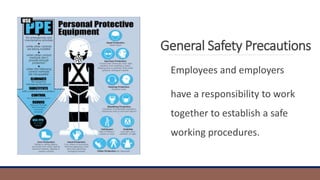
General Safety Precautions
Employees and employers
have a responsibility to work
together to establish a safe
working procedures.
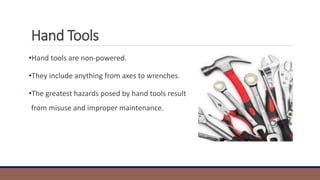
Hand Tools
•Hand tools are non-powered.
•They include anything from axes to wrenches.
•The greatest hazards posed by hand tools result
from misuse and improper maintenance.
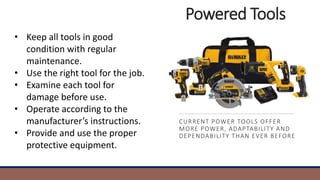
Powered Tools
CURRENT POWER TOOLS OFFER
MORE POWER, ADAPTABILITY AND
DEPENDABILITY THAN EVER BEFORE
• Keep all tools in good
condition with regular
maintenance.
• Use the right tool for the job.
• Examine each tool for
damage before use.
• Operate according to the
manufacturer’s instructions.
• Provide and use the proper
protective equipment.
General guidelines
•Wear proper apparel.
•Do not wear loose clothing, dangling objects or jewelry.
•Long hair must be restrained.
•Gloves should not be worn when operating certain power tools.
• Check appropriate tool manuals.
Testing Abrasive
wheels
•Powered abrasive grinding & cutting
wheels create special safety problems
because they may throw off flying
fragments.
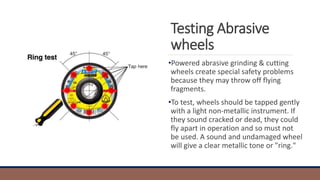
•To test, wheels should be tapped gently
with a light non-metallic instrument. If
they sound cracked or dead, they could
fly apart in operation and so must not
be used. A sound and undamaged wheel
will give a clear metallic tone or "ring."
Pneumatic Tools
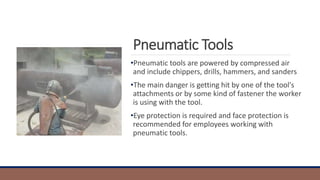
•Pneumatic tools are powered by compressed air
and include chippers, drills, hammers, and sanders
•The main danger is getting hit by one of the tool's
attachments or by some kind of fastener the worker
is using with the tool.
•Eye protection is required and face protection is
recommended for employees working with
pneumatic tools.
Hand and Power tools safety

Hand and Power tools safety

  • 1.
    Hand and PowerTool Safety Weekly Safety Meeting Erbil Office EDC ROMFOR LTD. .2018
  • 2.
    Regulations Covering Handand Power Tools • 1910 Subpart P, Hand and Portable Power Tools and Other Hand-Held Equipment. • 1910.241, Definitions. • 1910.242, Hand and portable powered tools and equipment, general. • 1910.243, Guarding of portable powered tools. • 1910.244, Other portable tools and equipment.
  • 3.
    General Safety Precautions Employeesand employers have a responsibility to work together to establish a safe working procedures.
  • 4.
    Hand Tools •Hand toolsare non-powered. •They include anything from axes to wrenches. •The greatest hazards posed by hand tools result from misuse and improper maintenance.
  • 5.
    Powered Tools CURRENT POWERTOOLS OFFER MORE POWER, ADAPTABILITY AND DEPENDABILITY THAN EVER BEFORE • Keep all tools in good condition with regular maintenance. • Use the right tool for the job. • Examine each tool for damage before use. • Operate according to the manufacturer’s instructions. • Provide and use the proper protective equipment.
  • 6.
    General guidelines •Wear properapparel. •Do not wear loose clothing, dangling objects or jewelry. •Long hair must be restrained. •Gloves should not be worn when operating certain power tools. • Check appropriate tool manuals.
  • 7.
    Testing Abrasive wheels •Powered abrasivegrinding & cutting wheels create special safety problems because they may throw off flying fragments. •To test, wheels should be tapped gently with a light non-metallic instrument. If they sound cracked or dead, they could fly apart in operation and so must not be used. A sound and undamaged wheel will give a clear metallic tone or "ring."
  • 8.
    Pneumatic Tools •Pneumatic toolsare powered by compressed air and include chippers, drills, hammers, and sanders •The main danger is getting hit by one of the tool's attachments or by some kind of fastener the worker is using with the tool. •Eye protection is required and face protection is recommended for employees working with pneumatic tools.

Editor's Notes

  • #4 Employees who use hand and power tools and who are exposed to the hazards of falling, flying, abrasive and splashing objects, or exposed to harmful dusts, fumes, mists, vapors, or gases must be provided with the particular personal equipment necessary to protect them from the hazard.
  • #5 The employer is responsible for the safe condition of tools and equipment used by employees but the employees have the responsibility for properly using and maintaining tools.
  • #6 The employer is responsible for the safe condition of tools and equipment used by employees but the employees have the responsibility for properly using and maintaining tools. There are several types of power tools, based on the power source they use: electric, pneumatic, liquid fuel, hydraulic, and powder-actuated
  • #8 Acoustic ring test To prevent the wheel from cracking, the user should be sure it fits freely on the spindle. The spindle nut must be tightened enough to hold the wheel in place, without distorting the flange. Follow the manufacturer's recommendations. Care must be taken to assure that the spindle wheel will not exceed the abrasive wheel specifications. Due to the possibility of a wheel disintegrating (exploding) during start-up, the employee should never stand directly in front of the wheel as it accelerates to full operating speed.
  • #9 Acoustic ring test To prevent the wheel from cracking, the user should be sure it fits freely on the spindle. The spindle nut must be tightened enough to hold the wheel in place, without distorting the flange. Follow the manufacturer's recommendations. Care must be taken to assure that the spindle wheel will not exceed the abrasive wheel specifications. Due to the possibility of a wheel disintegrating (exploding) during start-up, the employee should never stand directly in front of the wheel as it accelerates to full operating speed.