
Susan Newberry


                 1
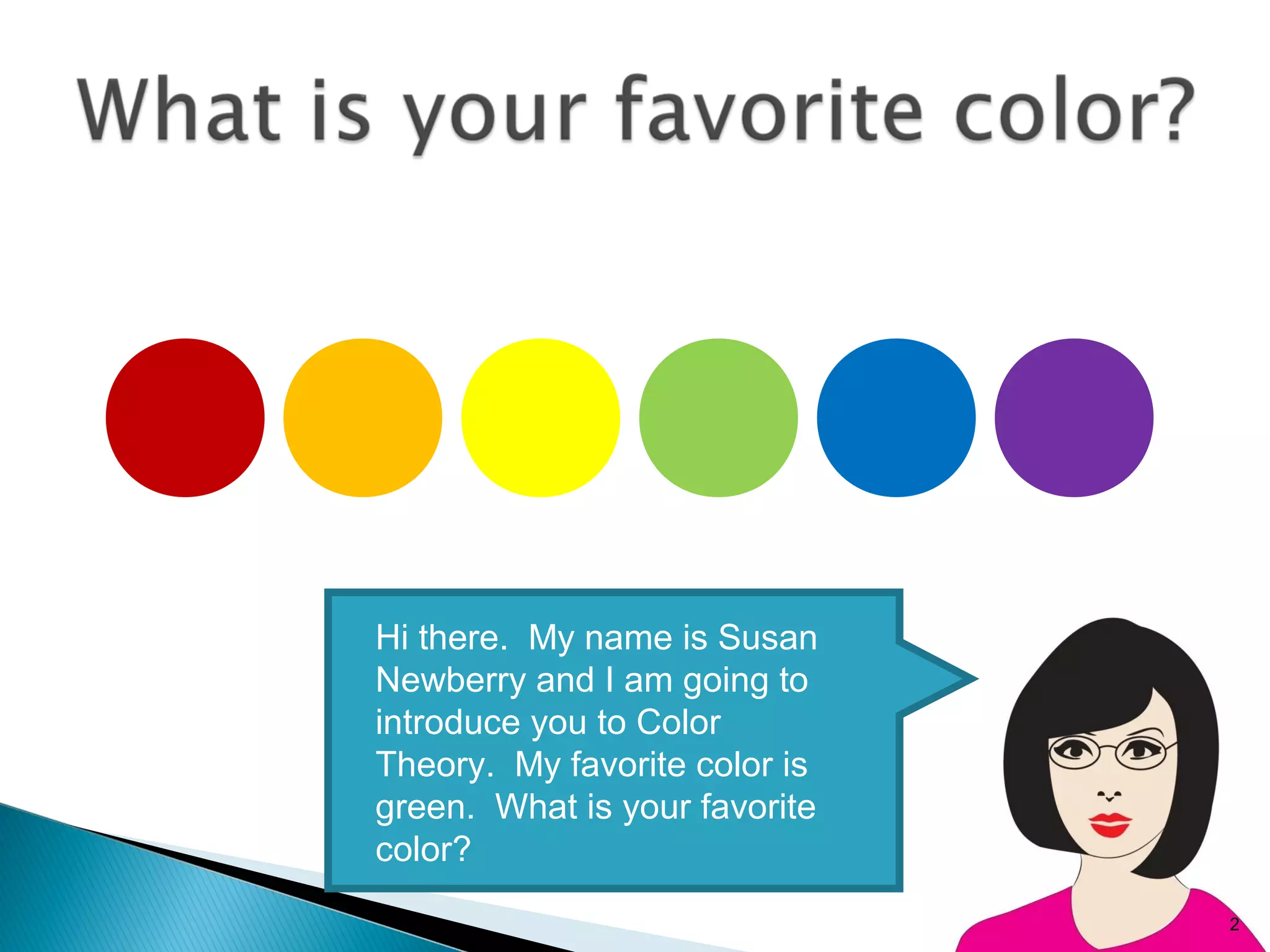
Hi there. My name is Susan
Newberry and I am going to
introduce you to Color
Theory. My favorite color is
green. What is your favorite
color?
                               2
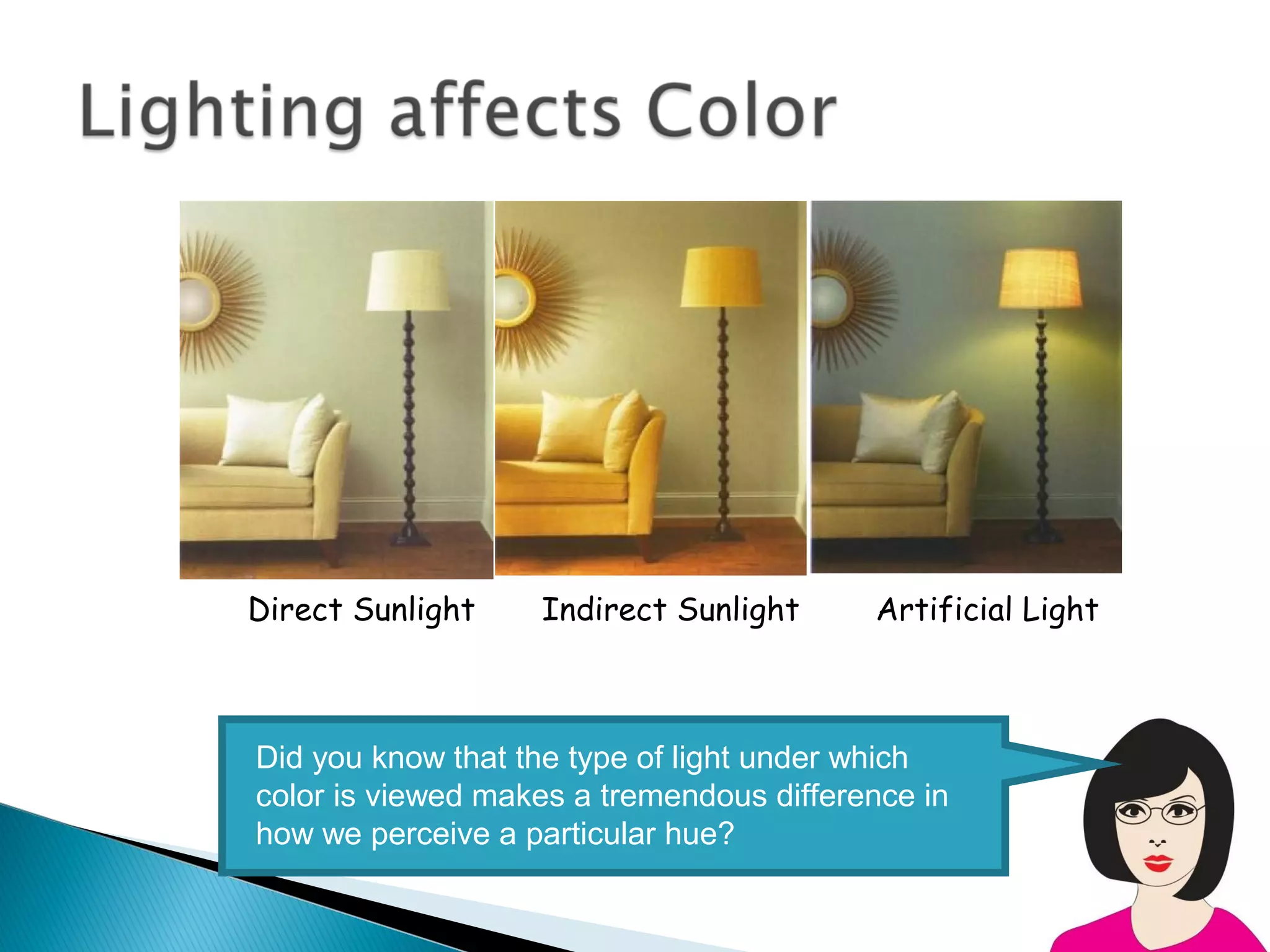
Direct Sunlight    Indirect Sunlight      Artificial Light


Did you know that the type of light under which
color is viewed makes a tremendous difference in
how we perceive a particular hue?
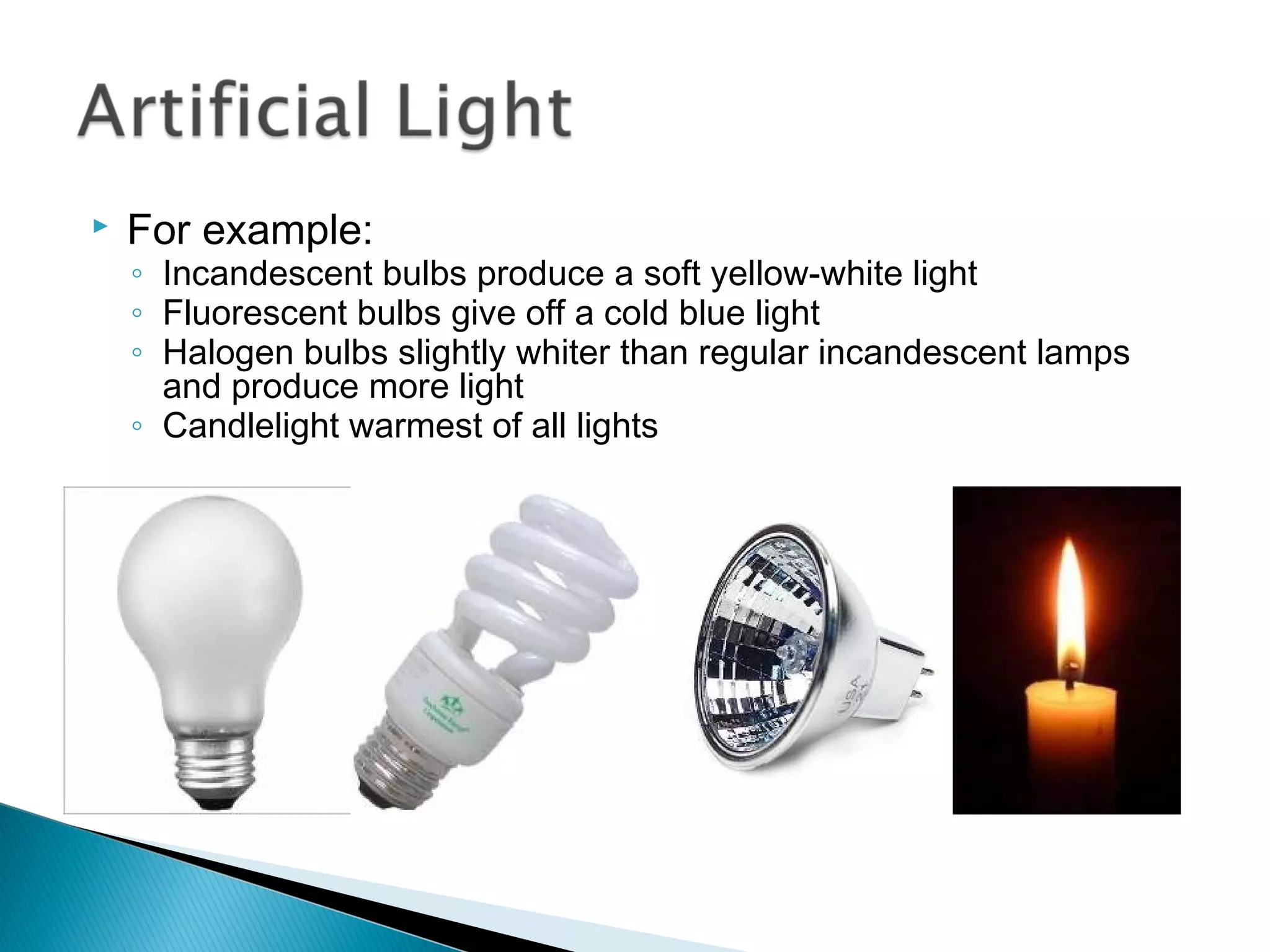
   For example:
    β—¦ Incandescent bulbs produce a soft yellow-white light
    β—¦ Fluorescent bulbs give off a cold blue light
    β—¦ Halogen bulbs slightly whiter than regular incandescent lamps
      and produce more light
    β—¦ Candlelight warmest of all lights
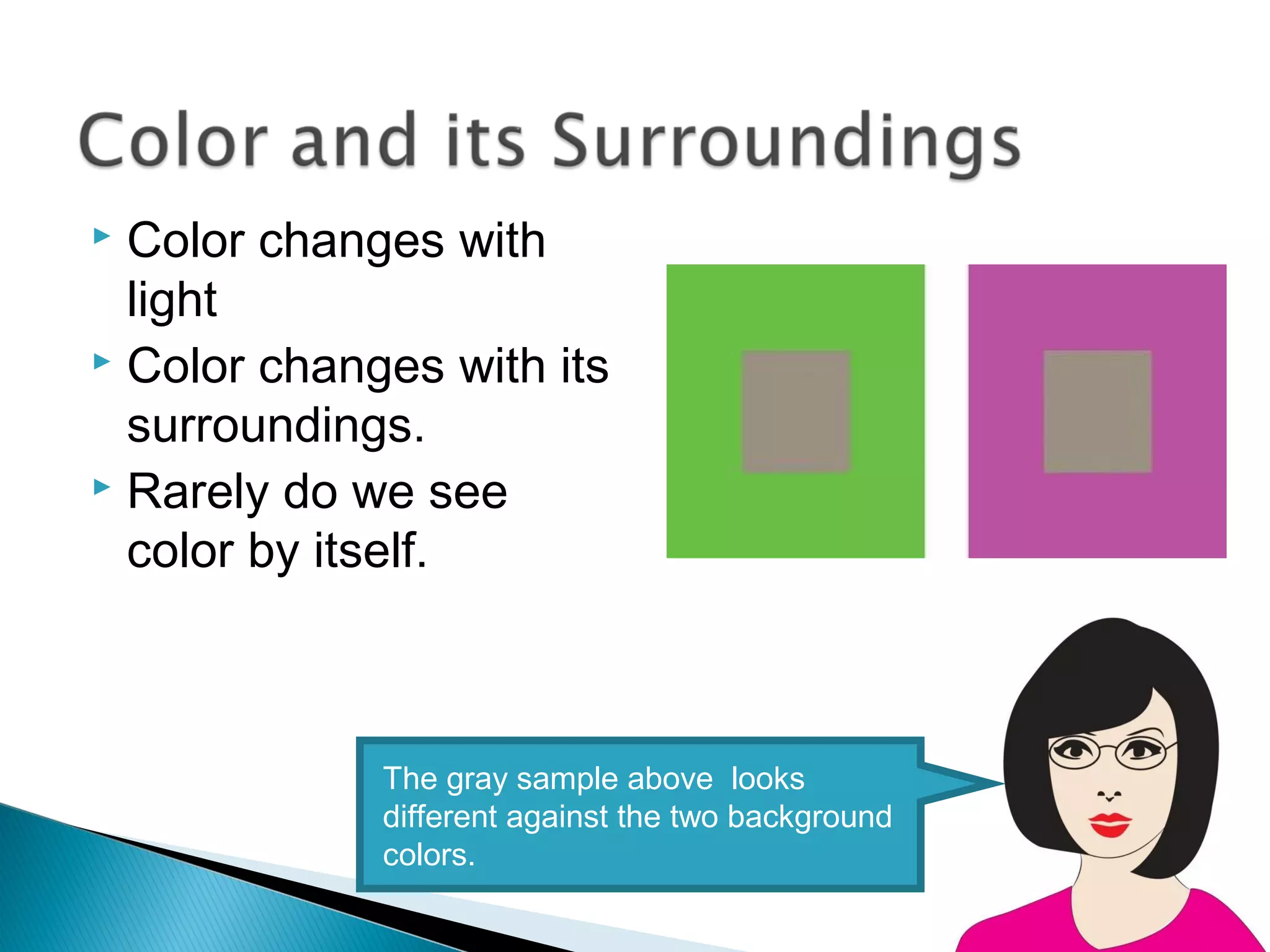
 Color changes with
  light
 Color changes with its

  surroundings.
 Rarely do we see

  color by itself.


             The gray sample above looks
             different against the two background
             colors.
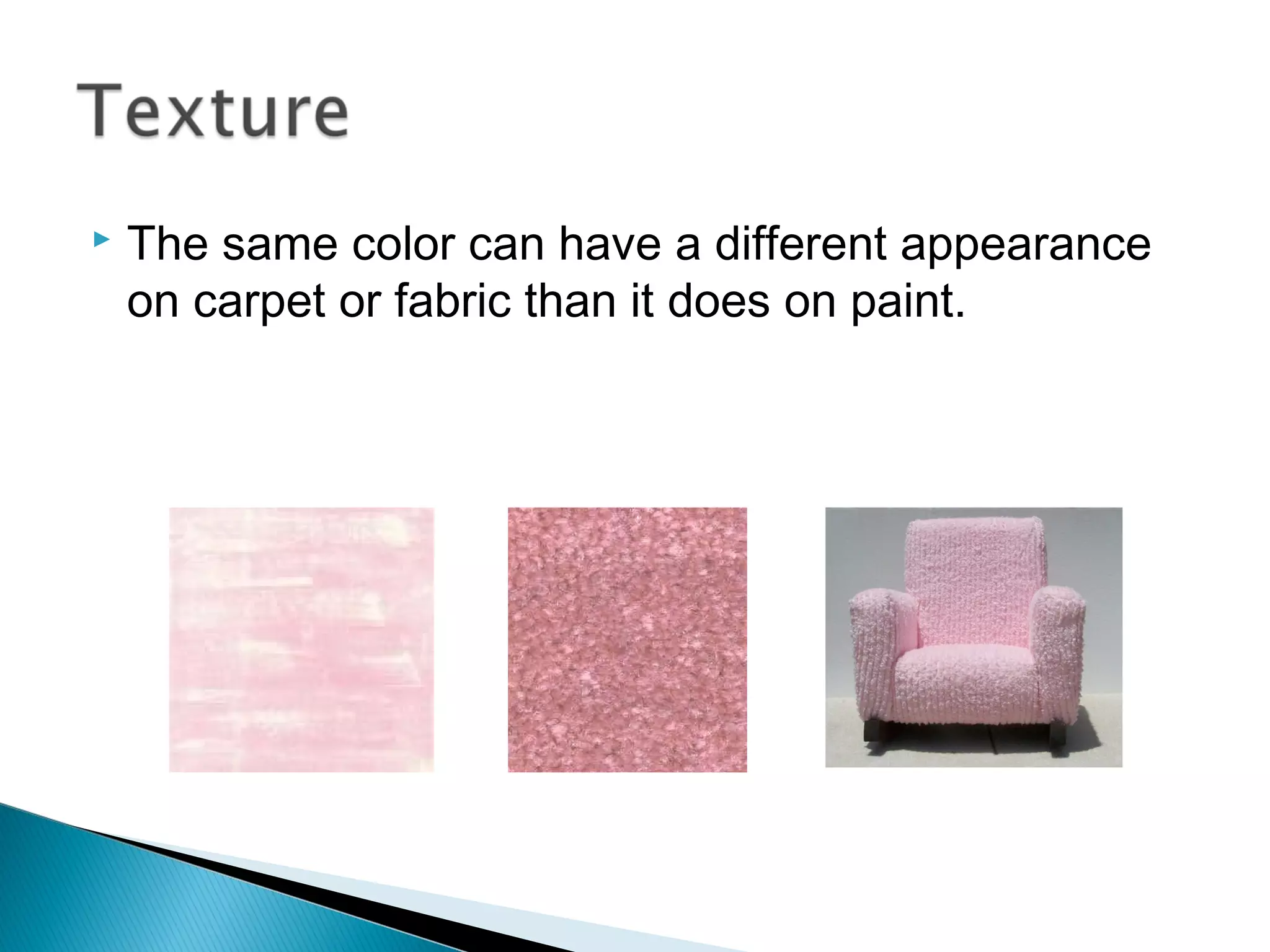
   The same color can have a different appearance
    on carpet or fabric than it does on paint.
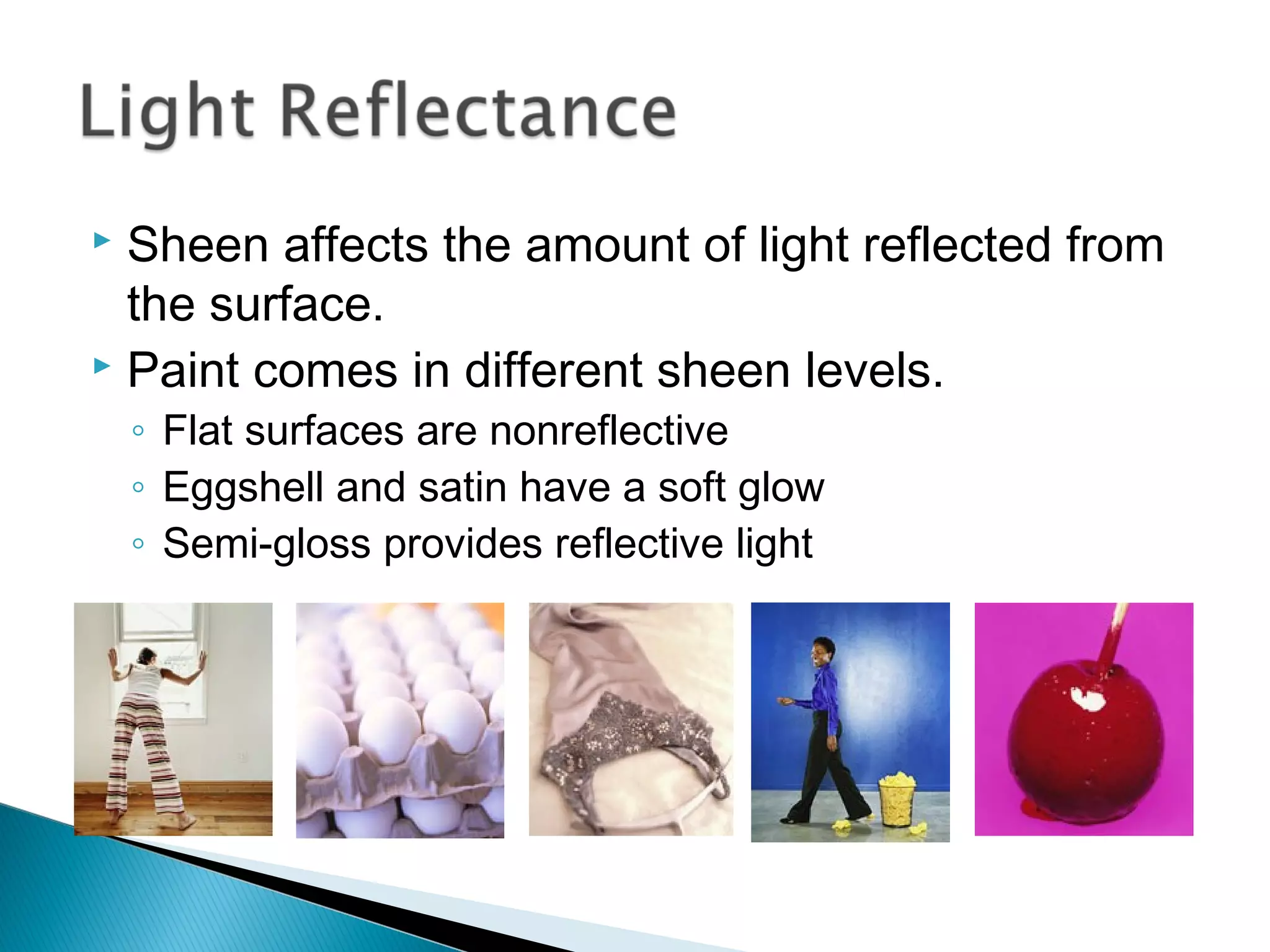
 Sheen affects the amount of light reflected from
  the surface.
 Paint comes in different sheen levels.

    β—¦ Flat surfaces are nonreflective
    β—¦ Eggshell and satin have a soft glow
    β—¦ Semi-gloss provides reflective light
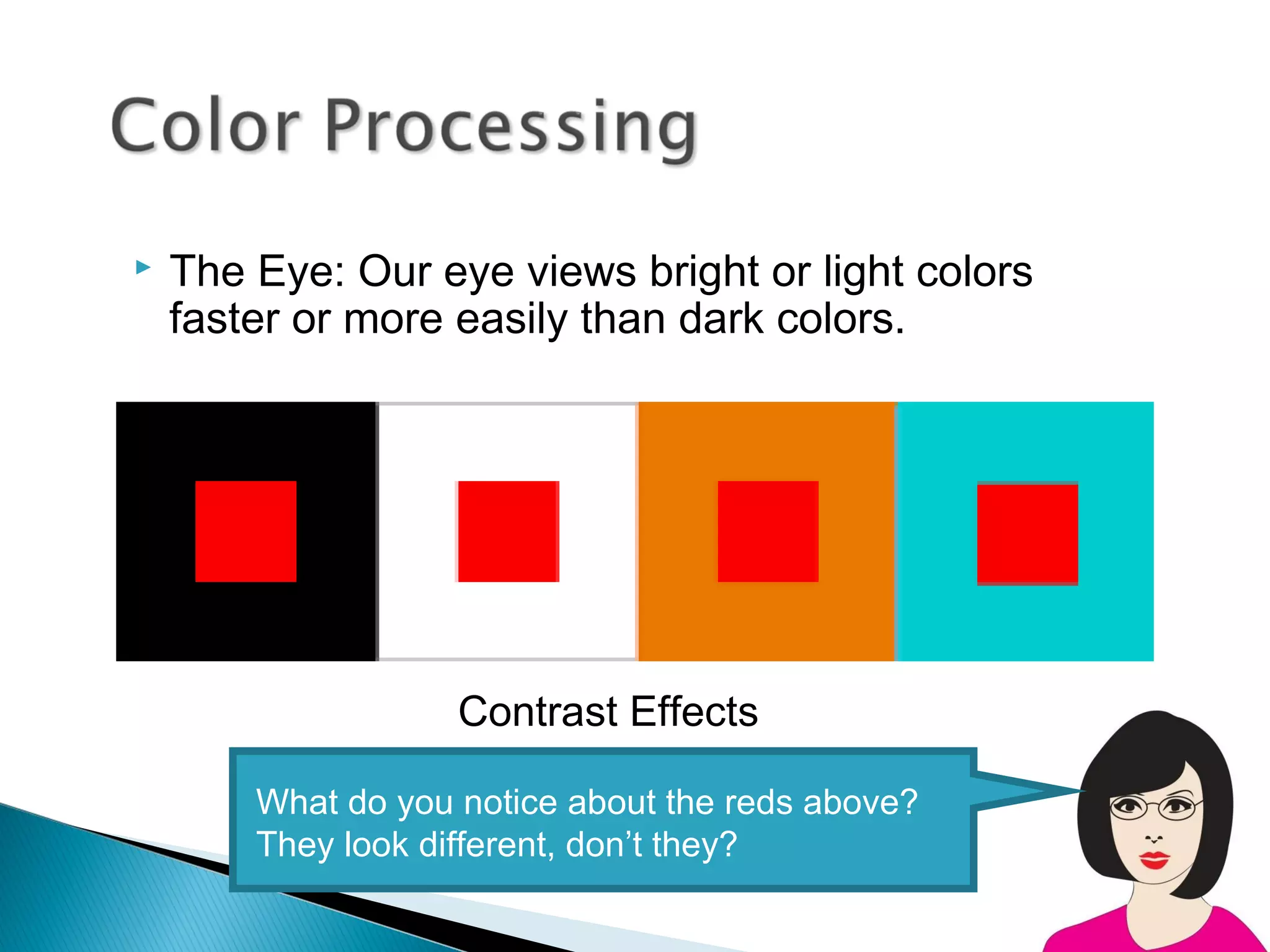
   The Eye: Our eye views bright or light colors
    faster or more easily than dark colors.


                    Contrast Effects

        What do you notice about the reds above?
        They look different, don’t they?
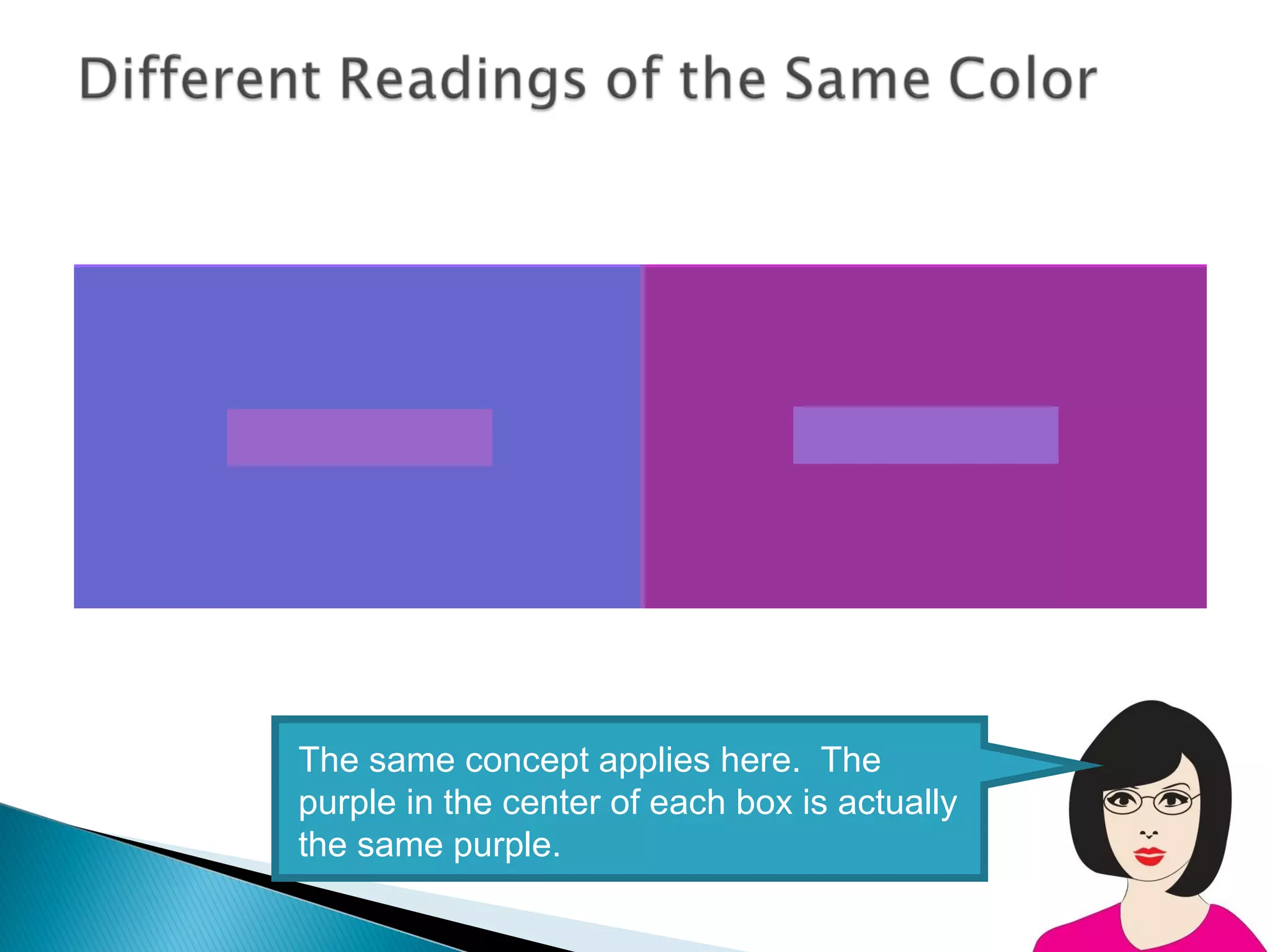
The same concept applies here. The
purple in the center of each box is actually
the same purple.
   Say the color of each line out loud…
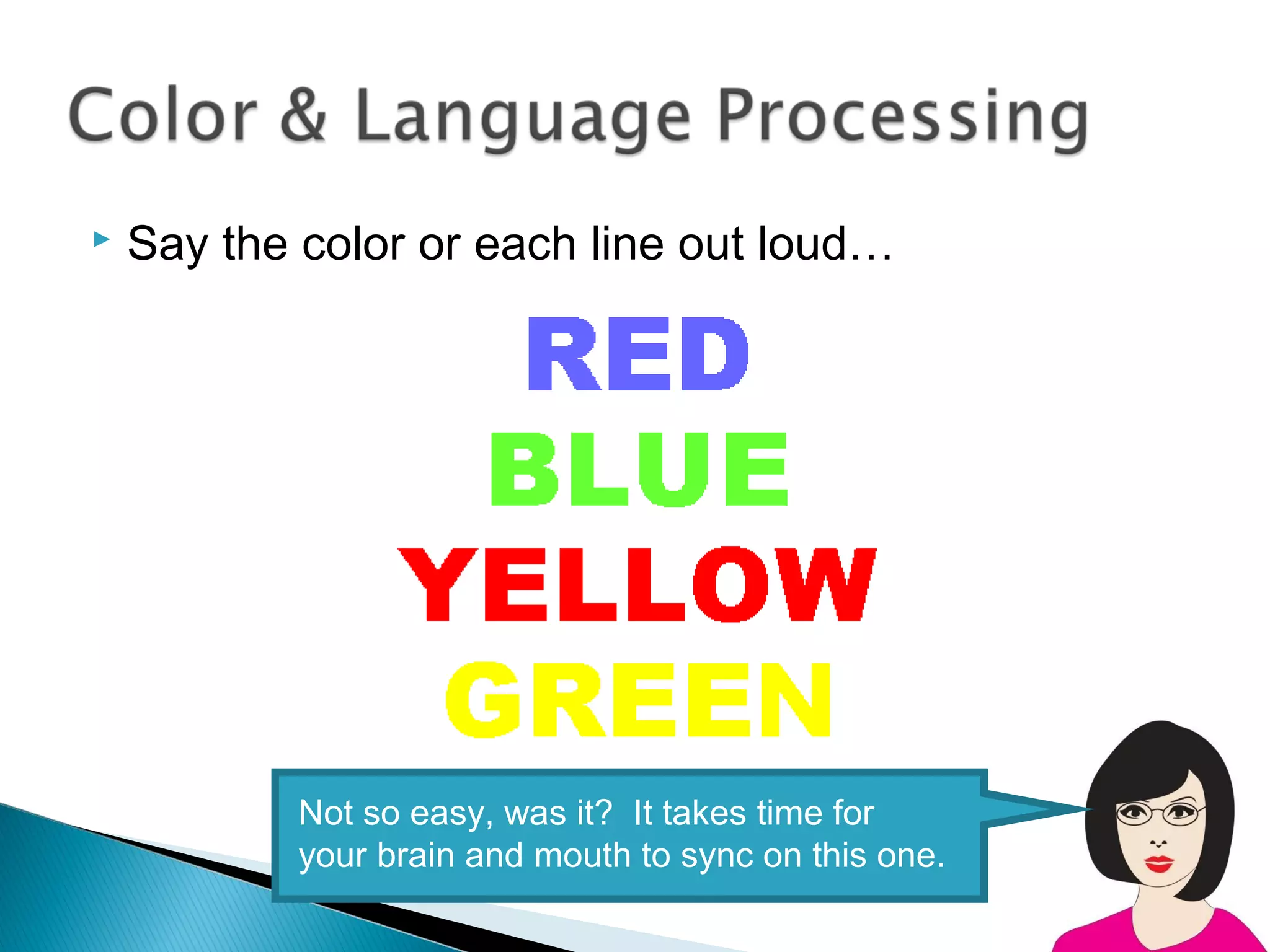
   Say the color or each line out loud…


            Not so easy, was it? It takes time for
            your brain and mouth to sync on this one.
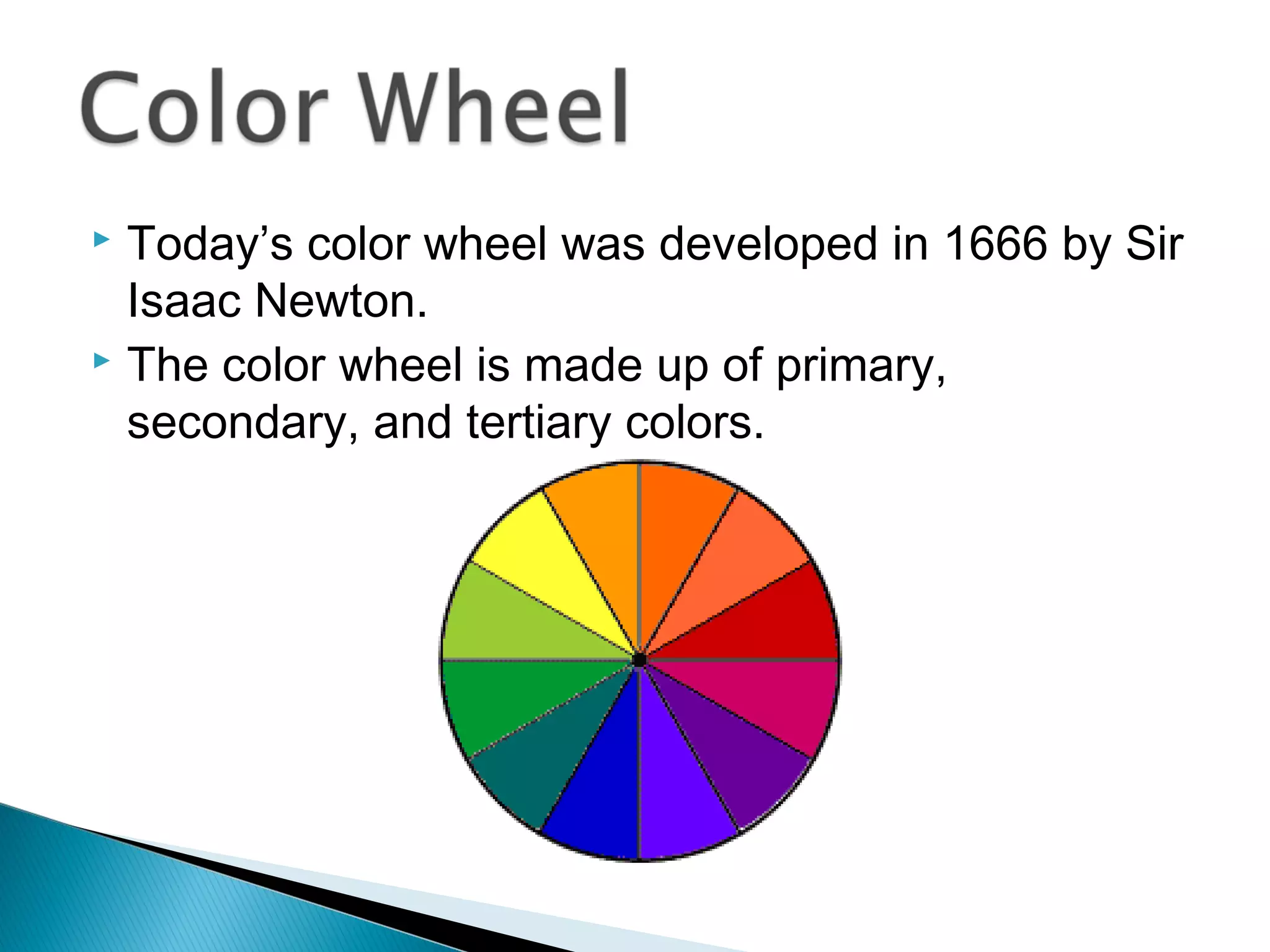
 Today’s color wheel was developed in 1666 by Sir
  Isaac Newton.
 The color wheel is made up of primary,

  secondary, and tertiary colors.
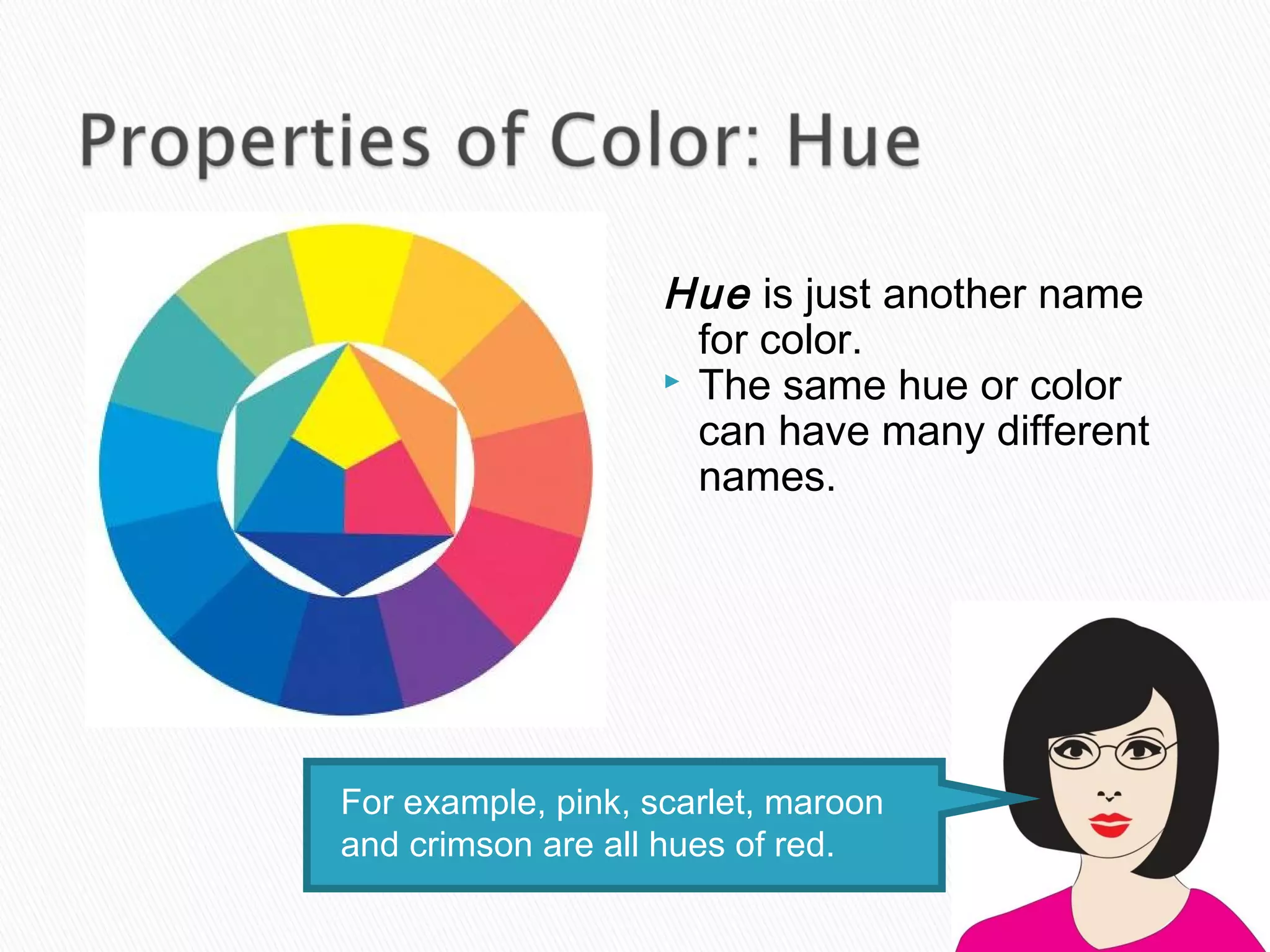
Hue is just another name
                      for color.
                     The same hue or color
                      can have many different
                      names.


For example, pink, scarlet, maroon
and crimson are all hues of red.
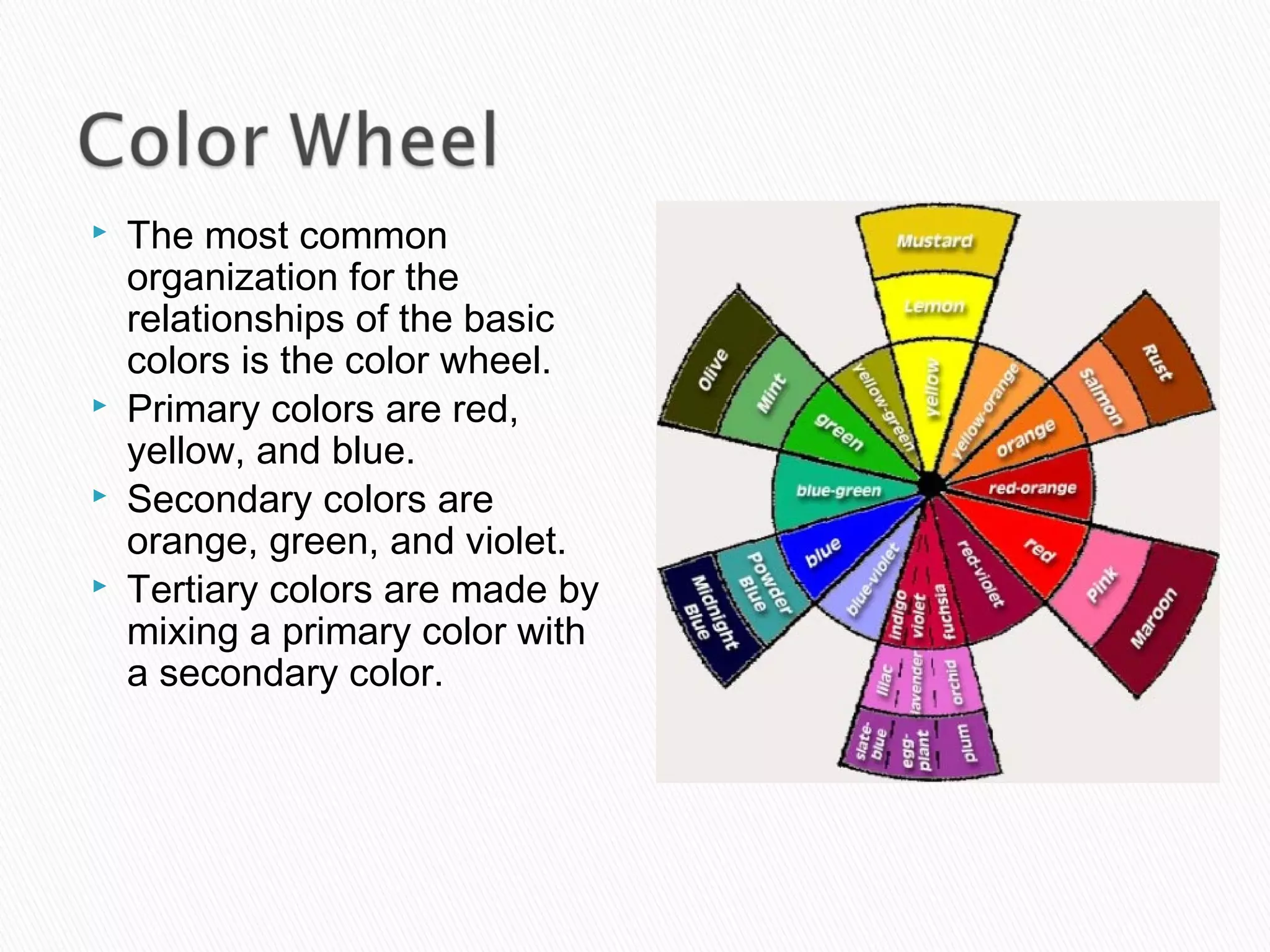
   The most common
    organization for the
    relationships of the basic
    colors is the color wheel.
   Primary colors are red,
    yellow, and blue.
   Secondary colors are
    orange, green, and violet.
   Tertiary colors are made by
    mixing a primary color with
    a secondary color.
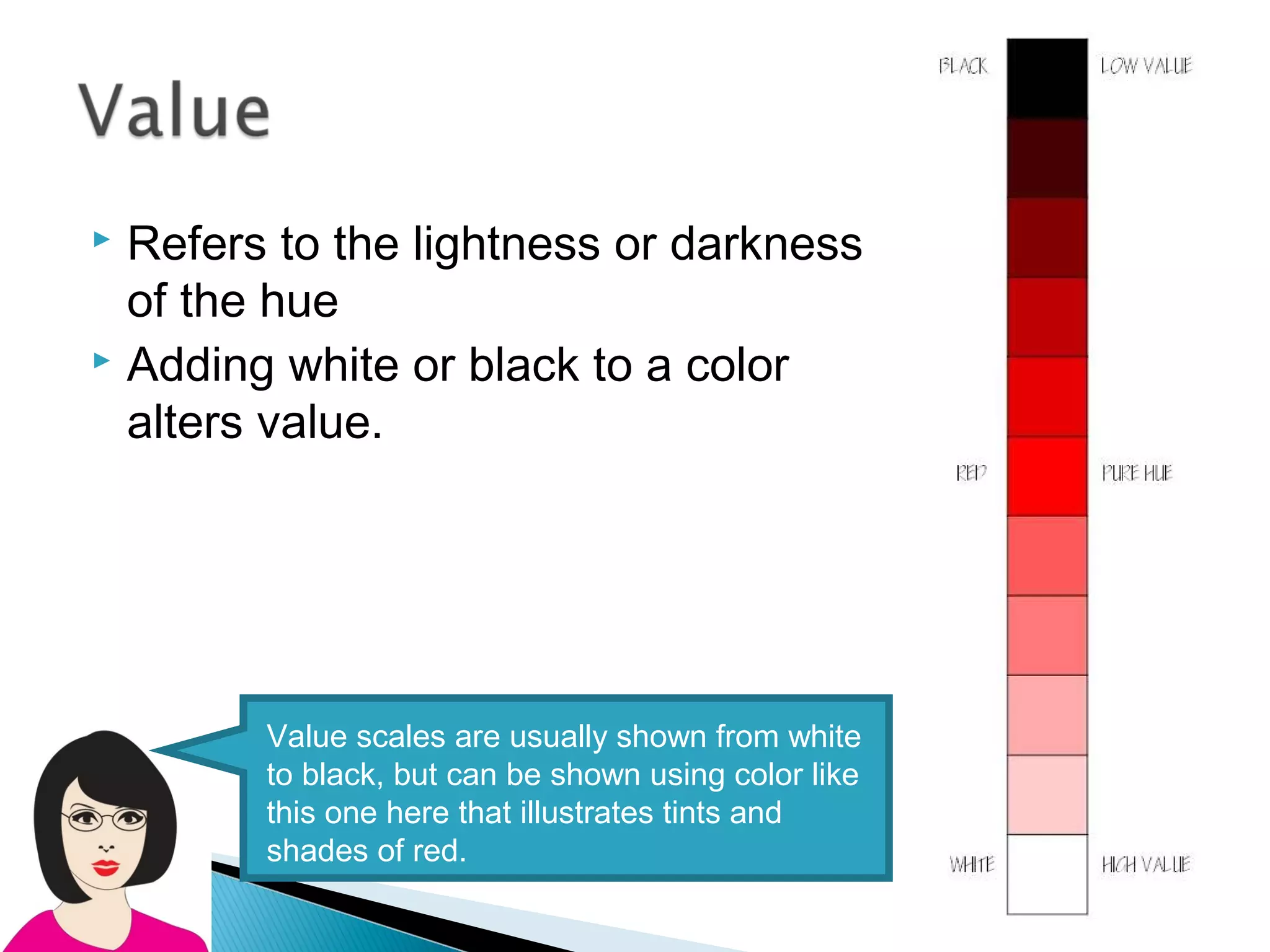
 Refers to the lightness or darkness
  of the hue
 Adding white or black to a color

  alters value.


        Value scales are usually shown from white
        to black, but can be shown using color like
        this one here that illustrates tints and
        shades of red.
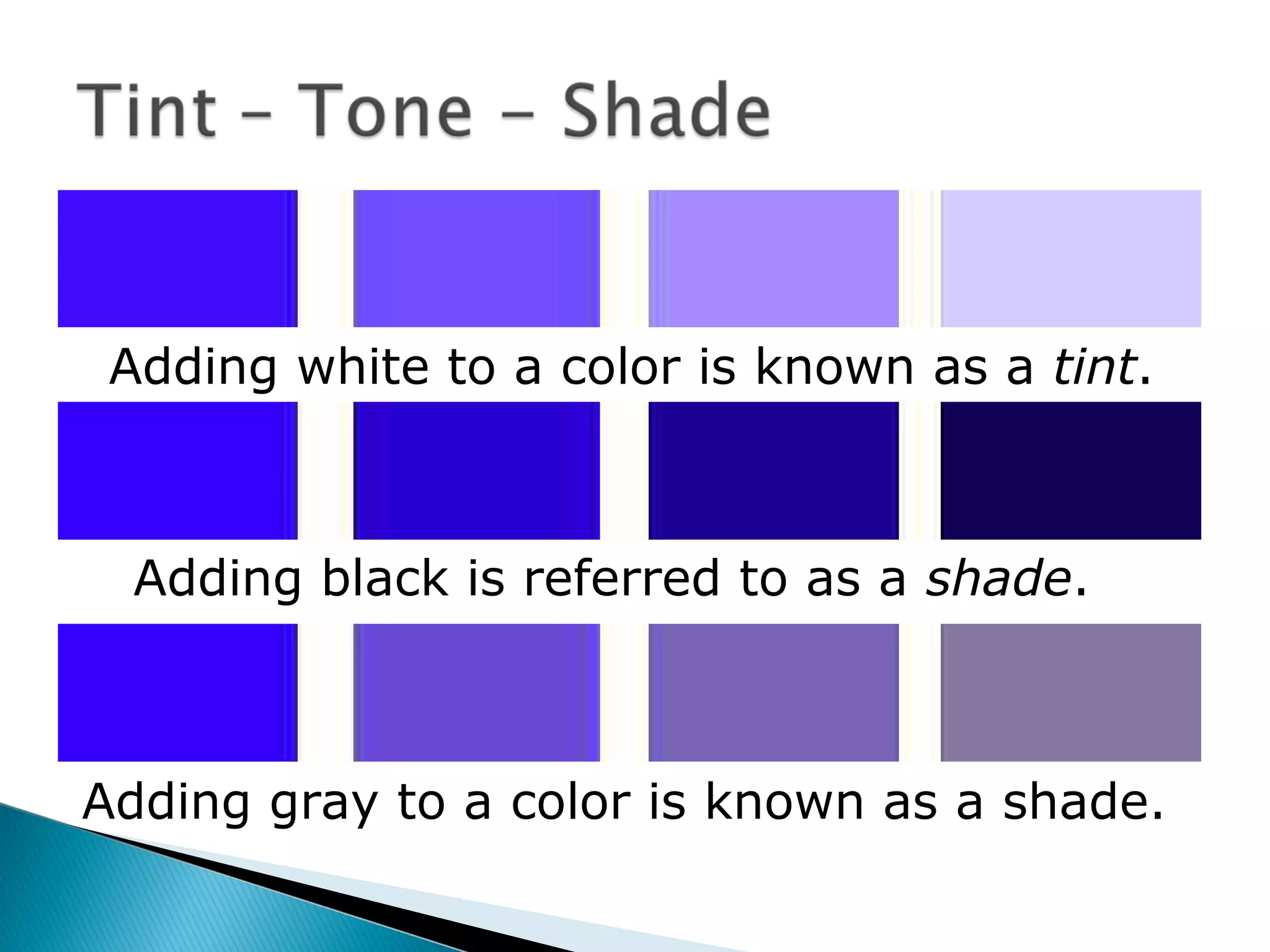
Adding white to a color is known as a tint.


  Adding black is referred to as a shade.


Adding gray to a color is known as a shade.
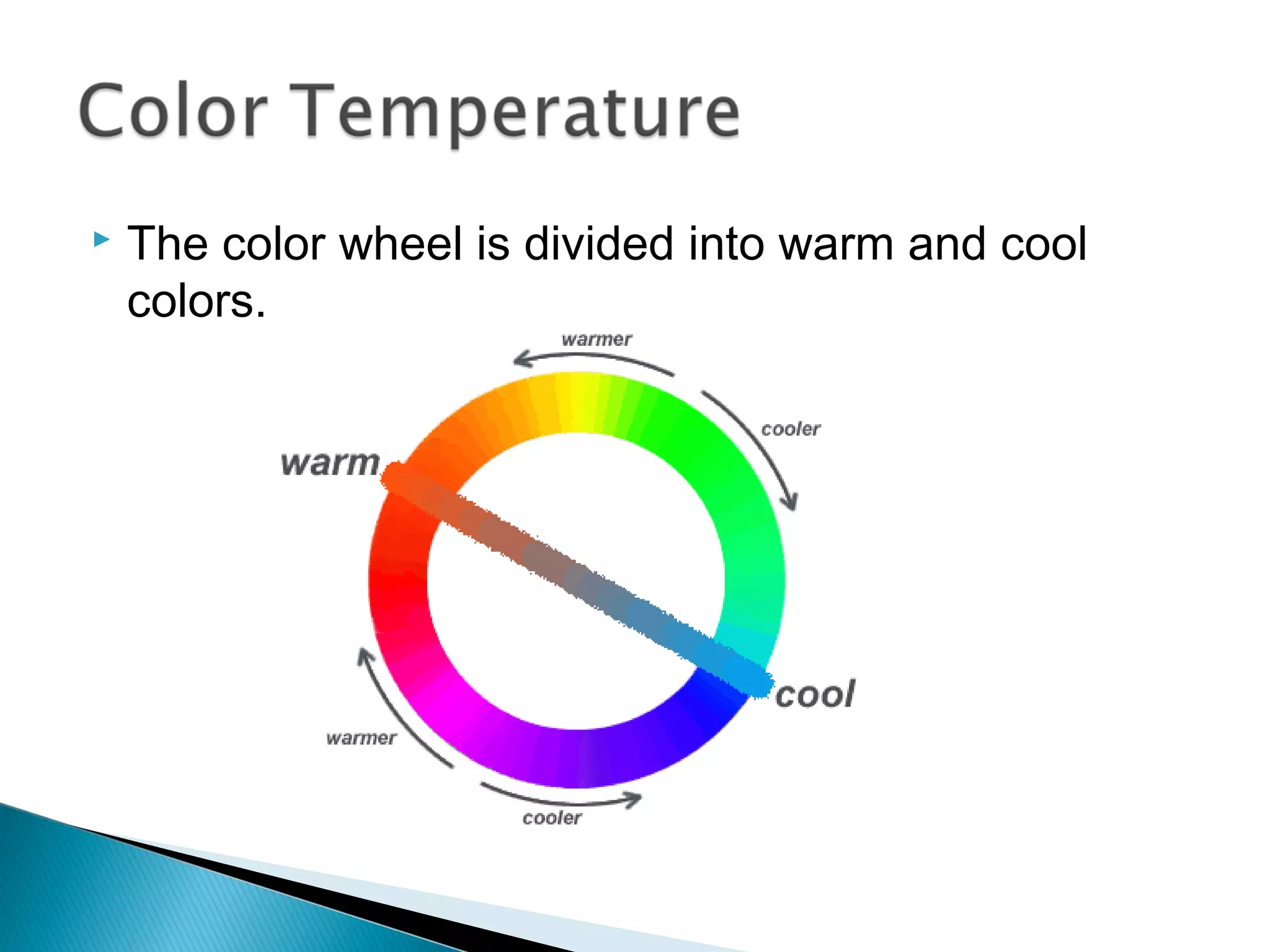
   The color wheel is divided into warm and cool
    colors.
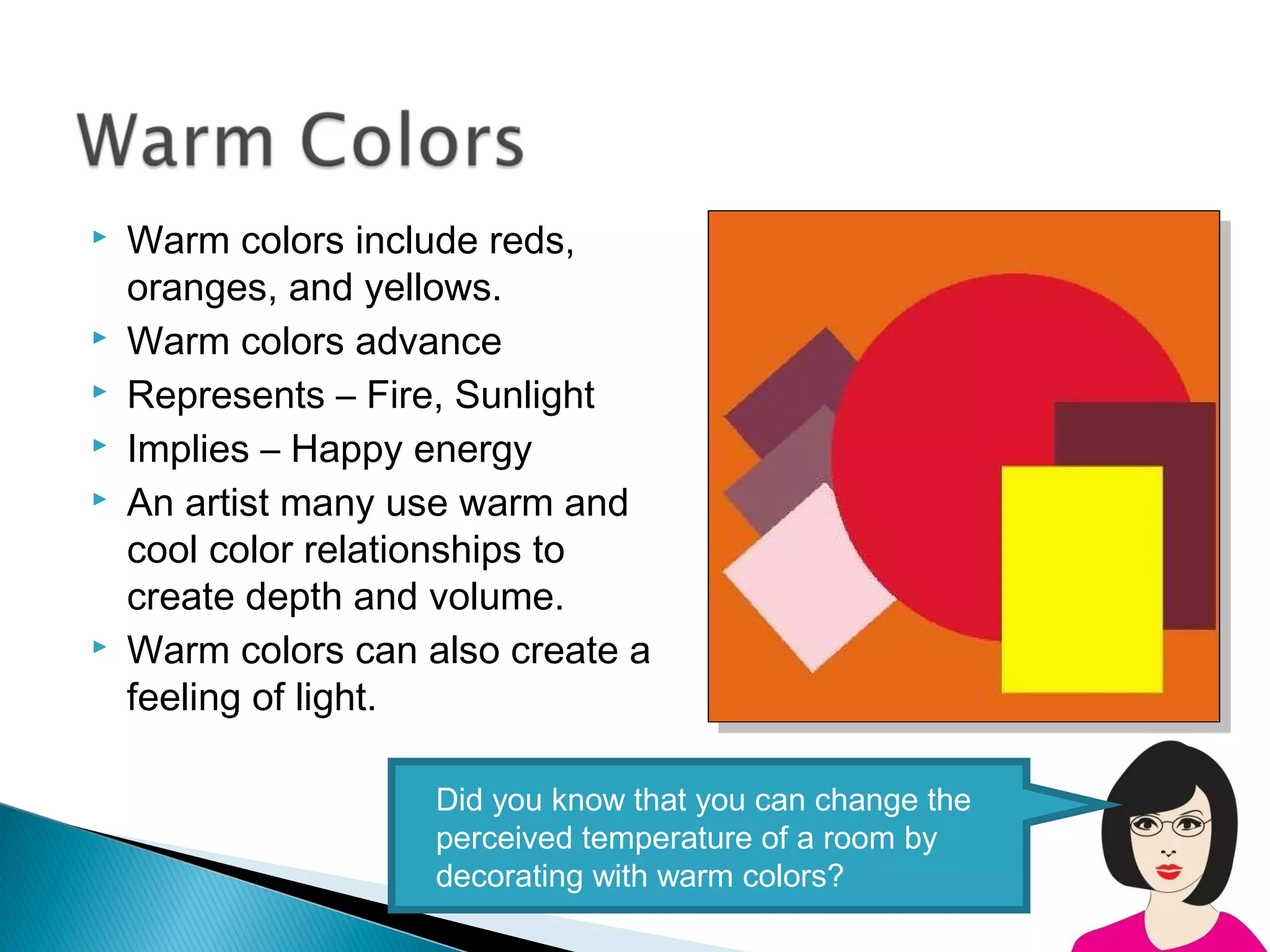
   Warm colors include reds,
    oranges, and yellows.
   Warm colors advance
   Represents – Fire, Sunlight
   Implies – Happy energy
   An artist many use warm and
    cool color relationships to
    create depth and volume.
   Warm colors can also create a
    feeling of light.

                     Did you know that you can change the
                     perceived temperature of a room by
                     decorating with warm colors?
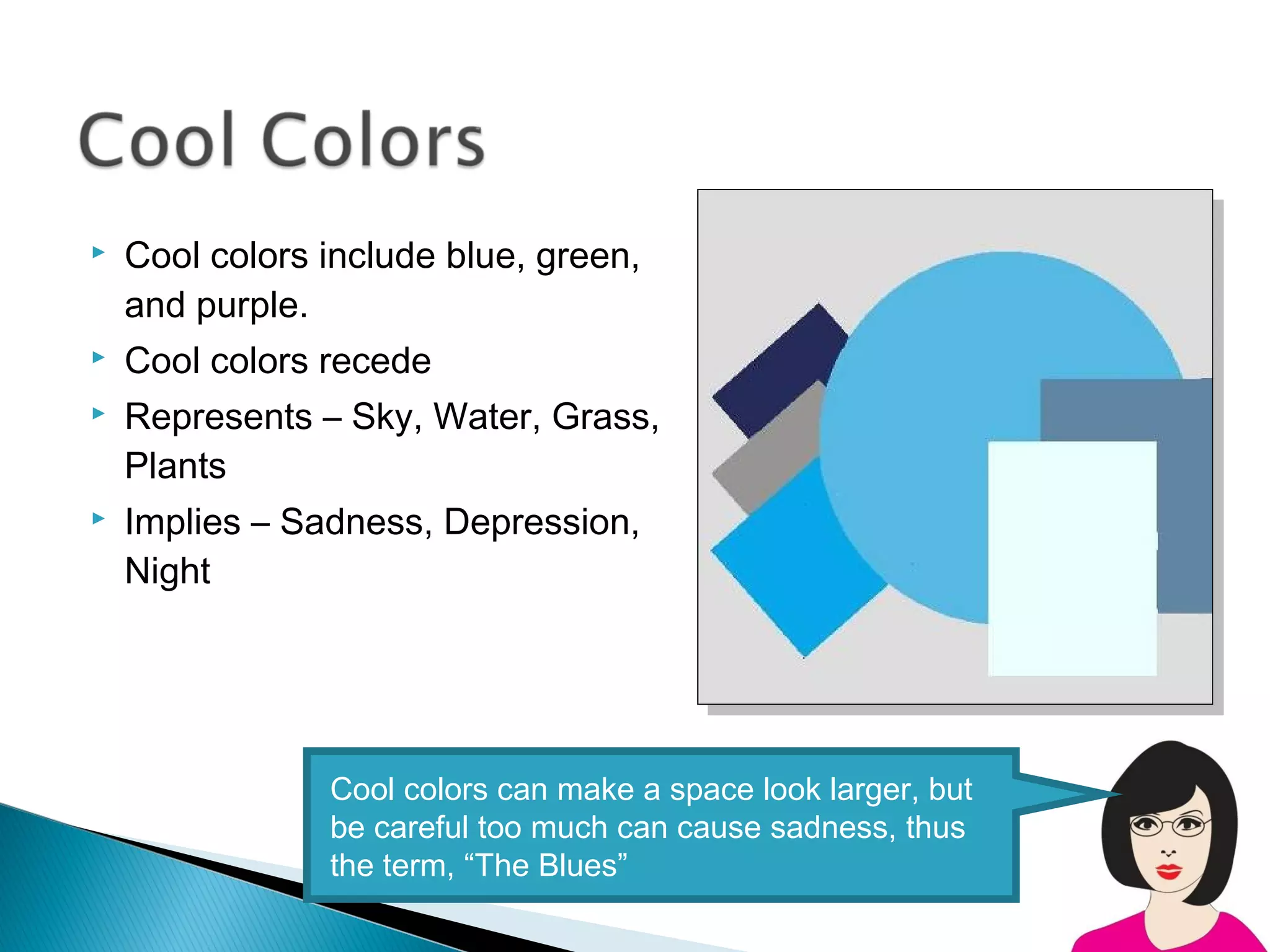
   Cool colors include blue, green,
    and purple.
   Cool colors recede
   Represents – Sky, Water, Grass,
    Plants
   Implies – Sadness, Depression,
    Night


                Cool colors can make a space look larger, but
                be careful too much can cause sadness, thus
                the term, β€œThe Blues”
 What did you learn about color?
 Key Terms to know:

    β—¦   Primary
    β—¦   Secondary
    β—¦   Tertiary
    β—¦   Color Wheel
    β—¦   Tint
    β—¦   Tone
    β—¦   Shade I hope you learned some new things
                 about Color Theory. Next week we’ll
                 talk about the different color schemes
                 and how color affects our moods.

A Brief Introduction to Color Theory

  • 1.
  • 2.
    Hi there. Myname is Susan Newberry and I am going to introduce you to Color Theory. My favorite color is green. What is your favorite color? 2
  • 3.
    Direct Sunlight Indirect Sunlight Artificial Light Did you know that the type of light under which color is viewed makes a tremendous difference in how we perceive a particular hue?
  • 4.
     For example: β—¦ Incandescent bulbs produce a soft yellow-white light β—¦ Fluorescent bulbs give off a cold blue light β—¦ Halogen bulbs slightly whiter than regular incandescent lamps and produce more light β—¦ Candlelight warmest of all lights
  • 5.
     Color changeswith light  Color changes with its surroundings.  Rarely do we see color by itself. The gray sample above looks different against the two background colors.
  • 6.
     The same color can have a different appearance on carpet or fabric than it does on paint.
  • 7.
     Sheen affectsthe amount of light reflected from the surface.  Paint comes in different sheen levels. β—¦ Flat surfaces are nonreflective β—¦ Eggshell and satin have a soft glow β—¦ Semi-gloss provides reflective light
  • 8.
     The Eye: Our eye views bright or light colors faster or more easily than dark colors. Contrast Effects What do you notice about the reds above? They look different, don’t they?
  • 9.
    The same conceptapplies here. The purple in the center of each box is actually the same purple.
  • 10.
     Say the color of each line out loud…
  • 11.
     Say the color or each line out loud… Not so easy, was it? It takes time for your brain and mouth to sync on this one.
  • 12.
     Today’s colorwheel was developed in 1666 by Sir Isaac Newton.  The color wheel is made up of primary, secondary, and tertiary colors.
  • 13.
    Hue is justanother name for color.  The same hue or color can have many different names. For example, pink, scarlet, maroon and crimson are all hues of red.
  • 14.
     The most common organization for the relationships of the basic colors is the color wheel.  Primary colors are red, yellow, and blue.  Secondary colors are orange, green, and violet.  Tertiary colors are made by mixing a primary color with a secondary color.
  • 15.
     Refers tothe lightness or darkness of the hue  Adding white or black to a color alters value. Value scales are usually shown from white to black, but can be shown using color like this one here that illustrates tints and shades of red.
  • 16.
    Adding white toa color is known as a tint. Adding black is referred to as a shade. Adding gray to a color is known as a shade.
  • 17.
     The color wheel is divided into warm and cool colors.
  • 18.
     Warm colors include reds, oranges, and yellows.  Warm colors advance  Represents – Fire, Sunlight  Implies – Happy energy  An artist many use warm and cool color relationships to create depth and volume.  Warm colors can also create a feeling of light. Did you know that you can change the perceived temperature of a room by decorating with warm colors?
  • 19.
     Cool colors include blue, green, and purple.  Cool colors recede  Represents – Sky, Water, Grass, Plants  Implies – Sadness, Depression, Night Cool colors can make a space look larger, but be careful too much can cause sadness, thus the term, β€œThe Blues”
  • 20.
     What didyou learn about color?  Key Terms to know: β—¦ Primary β—¦ Secondary β—¦ Tertiary β—¦ Color Wheel β—¦ Tint β—¦ Tone β—¦ Shade I hope you learned some new things about Color Theory. Next week we’ll talk about the different color schemes and how color affects our moods.