UNIT 3- COLOR
• COLOR is the most emotional and expressive
element of visual language.
• Light and the rainbow
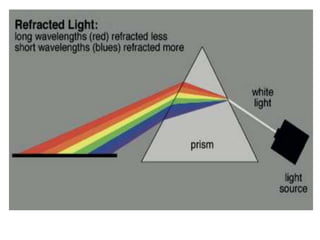
• When the white light goes through a prism,
it splits into different colors. This is called
refraction.
The same thing happens when it rains and the
light of the sun goes through the raindrops.
These are the seven colors of the rainbow.
• How do we see colours?
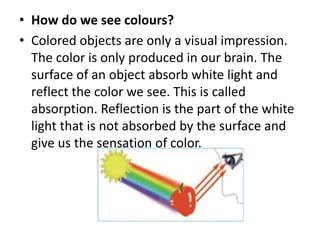
• Colored objects are only a visual impression.
The color is only produced in our brain. The
surface of an object absorb white light and
reflect the color we see. This is called
absorption. Reflection is the part of the white
light that is not absorbed by the surface and
give us the sensation of color.
• Color is present in our daily lives everyday,
from sunrise to sunset. We all know what
color is, however it is some way difficult to
give a definition. We could say that color
doesn't exist cause it totally depends on the
light. If there's no light there's no color. Color
is actually a sensation or impression, it is a
thought our brain has when it receives
information from the eyes. It travels through
the air as electromagnetic waves. Those waves
come from the light the objetcs' surfaces re
ect.
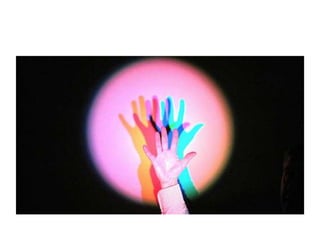
• So there are basically two types of colors:
Colored light and colored materials. Colored
Light, additive color, is a little harder to
understand and explain and it can be studied
from the Physics area of knwoledge. Material
colors, also called subtractive mixture, are
easier to understand and are all of them
based in colored pigments mixed with a
binder, both of them are the main ingredients
for any paint. Color Harmony studies all types
and classifcation of colors as well as the ways
to combine them in compositions.
COLOUR LIGTH AND COLOUR
PIGMENT
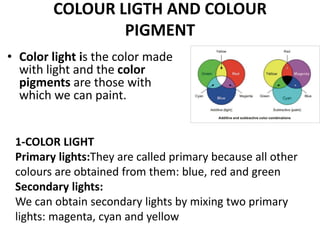
• Color light is the color made
with light and the color
pigments are those with
which we can paint.
1-COLOR LIGHT
Primary lights:They are called primary because all other
colours are obtained from them: blue, red and green
Secondary lights:
We can obtain secondary lights by mixing two primary
lights: magenta, cyan and yellow
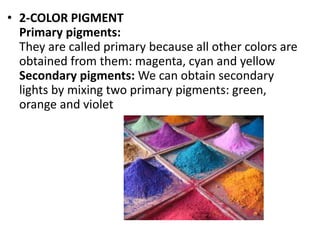
• 2-COLOR PIGMENT
Primary pigments:
They are called primary because all other colors are
obtained from them: magenta, cyan and yellow
Secondary pigments: We can obtain secondary
lights by mixing two primary pigments: green,
orange and violet
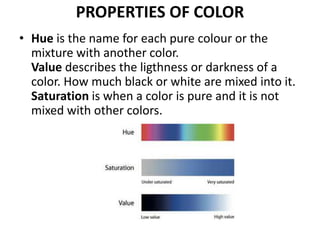
PROPERTIES OF COLOR
• Hue is the name for each pure colour or the
mixture with another color.
Value describes the ligthness or darkness of a
color. How much black or white are mixed into it.
Saturation is when a color is pure and it is not
mixed with other colors.
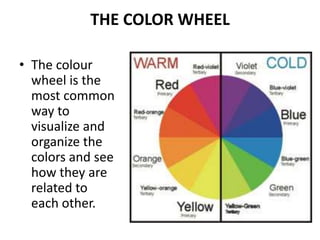
THE COLOR WHEEL
• The colour
wheel is the
most common
way to
visualize and
organize the
colors and see
how they are
related to
each other.
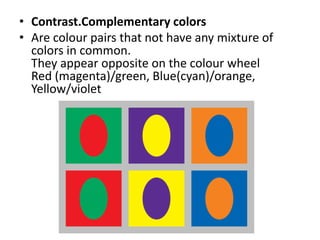
• Contrast.Complementary colors
• Are colour pairs that not have any mixture of
colors in common.
They appear opposite on the colour wheel
Red (magenta)/green, Blue(cyan)/orange,
Yellow/violet
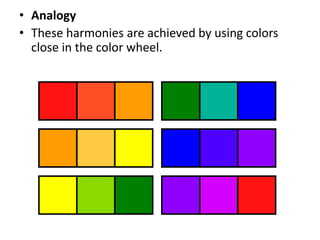
• Analogy
• These harmonies are achieved by using colors
close in the color wheel.
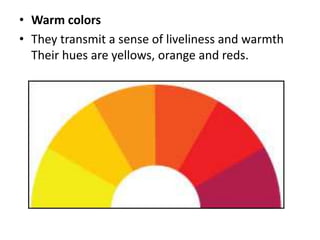
• Warm colors
• They transmit a sense of liveliness and warmth
Their hues are yellows, orange and reds.
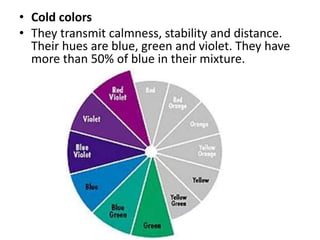
• Cold colors
• They transmit calmness, stability and distance.
Their hues are blue, green and violet. They have
more than 50% of blue in their mixture.
• COLOR SUBJECTIVE SYMBOLISM
RED: Intense, fire, blood, energy, war, danger, love, passionate,
strong, ambtion, agression, alertness, braveness, dominating,
dramatic,emtional, energti, ertotic...
PURPLE: Royalty, power, nobility, wealth, ambition, dignified,
mysterious, aristocracy, art, anxiety, beauty, compassion, conflict,
dream, dignity, enigma, extravagance...
YELLOW: Sunshine, joy, cheerfulness, intelect, energy, attention-
getter, activity, aspiration, alertness, brightness, richness,
happiness, idealism, imagination...
BLUE: Sky, sea, depth, stability, trust, masculine, acceptance,
authority, balance, calmness, coolness, cooperation, culture,
depression, distance, honesty, ...
GREEN: Nature, groth, fertility, freshness,healing, safety, money,
adventure, balance, effciency, cleanliness, faith, freedom,
generosity, good luck, poison, health,outdoors...
ORANGE: Warm, stimulating, enthusiasm, happiness, success,
creative, autumn, action, appetite, assurance, exagerated,
competent, cheerful, ring, outrageous...
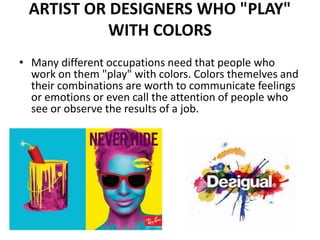
ARTIST OR DESIGNERS WHO "PLAY"
WITH COLORS
• Many different occupations need that people who
work on them "play" with colors. Colors themelves and
their combinations are worth to communicate feelings
or emotions or even call the attention of people who
see or observe the results of a job.
• ARTISTS AND PAINTERS
• Artists, specially painters, are thinking constantly about
which colors they use or not depending on what they want
to say, transmit or explain in their art.
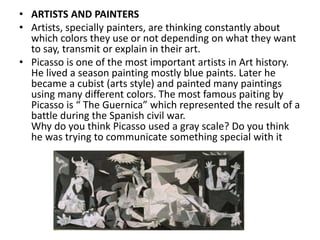
• Picasso is one of the most important artists in Art history.
He lived a season painting mostly blue paints. Later he
became a cubist (arts style) and painted many paintings
using many different colors. The most famous paiting by
Picasso is “ The Guernica” which represented the result of a
battle during the Spanish civil war.
Why do you think Picasso used a gray scale? Do you think
he was trying to communicate something special with it
• CLOTHES DESIGNERS
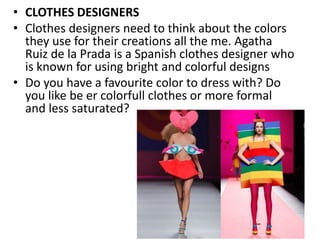
• Clothes designers need to think about the colors
they use for their creations all the me. Agatha
Ruiz de la Prada is a Spanish clothes designer who
is known for using bright and colorful designs
• Do you have a favourite color to dress with? Do
you like be er colorfull clothes or more formal
and less saturated?
CONSTRUCTION AND DECORATION
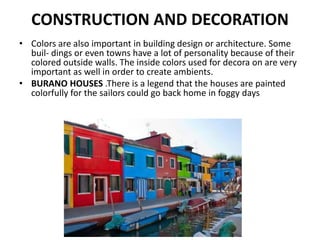
• Colors are also important in building design or architecture. Some
buil- dings or even towns have a lot of personality because of their
colored outside walls. The inside colors used for decora on are very
important as well in order to create ambients.
• BURANO HOUSES .There is a legend that the houses are painted
colorfully for the sailors could go back home in foggy days

Unit 3

  • 1.
  • 2.
    • COLOR isthe most emotional and expressive element of visual language. • Light and the rainbow • When the white light goes through a prism, it splits into different colors. This is called refraction. The same thing happens when it rains and the light of the sun goes through the raindrops. These are the seven colors of the rainbow.
  • 4.
    • How dowe see colours? • Colored objects are only a visual impression. The color is only produced in our brain. The surface of an object absorb white light and reflect the color we see. This is called absorption. Reflection is the part of the white light that is not absorbed by the surface and give us the sensation of color.
  • 5.
    • Color ispresent in our daily lives everyday, from sunrise to sunset. We all know what color is, however it is some way difficult to give a definition. We could say that color doesn't exist cause it totally depends on the light. If there's no light there's no color. Color is actually a sensation or impression, it is a thought our brain has when it receives information from the eyes. It travels through the air as electromagnetic waves. Those waves come from the light the objetcs' surfaces re ect.
  • 6.
    • So thereare basically two types of colors: Colored light and colored materials. Colored Light, additive color, is a little harder to understand and explain and it can be studied from the Physics area of knwoledge. Material colors, also called subtractive mixture, are easier to understand and are all of them based in colored pigments mixed with a binder, both of them are the main ingredients for any paint. Color Harmony studies all types and classifcation of colors as well as the ways to combine them in compositions.
  • 7.
    COLOUR LIGTH ANDCOLOUR PIGMENT • Color light is the color made with light and the color pigments are those with which we can paint. 1-COLOR LIGHT Primary lights:They are called primary because all other colours are obtained from them: blue, red and green Secondary lights: We can obtain secondary lights by mixing two primary lights: magenta, cyan and yellow
  • 9.
    • 2-COLOR PIGMENT Primarypigments: They are called primary because all other colors are obtained from them: magenta, cyan and yellow Secondary pigments: We can obtain secondary lights by mixing two primary pigments: green, orange and violet
  • 10.
    PROPERTIES OF COLOR •Hue is the name for each pure colour or the mixture with another color. Value describes the ligthness or darkness of a color. How much black or white are mixed into it. Saturation is when a color is pure and it is not mixed with other colors.
  • 11.
    THE COLOR WHEEL •The colour wheel is the most common way to visualize and organize the colors and see how they are related to each other.
  • 12.
    • Contrast.Complementary colors •Are colour pairs that not have any mixture of colors in common. They appear opposite on the colour wheel Red (magenta)/green, Blue(cyan)/orange, Yellow/violet
  • 13.
    • Analogy • Theseharmonies are achieved by using colors close in the color wheel.
  • 14.
    • Warm colors •They transmit a sense of liveliness and warmth Their hues are yellows, orange and reds.
  • 15.
    • Cold colors •They transmit calmness, stability and distance. Their hues are blue, green and violet. They have more than 50% of blue in their mixture.
  • 16.
    • COLOR SUBJECTIVESYMBOLISM RED: Intense, fire, blood, energy, war, danger, love, passionate, strong, ambtion, agression, alertness, braveness, dominating, dramatic,emtional, energti, ertotic... PURPLE: Royalty, power, nobility, wealth, ambition, dignified, mysterious, aristocracy, art, anxiety, beauty, compassion, conflict, dream, dignity, enigma, extravagance... YELLOW: Sunshine, joy, cheerfulness, intelect, energy, attention- getter, activity, aspiration, alertness, brightness, richness, happiness, idealism, imagination... BLUE: Sky, sea, depth, stability, trust, masculine, acceptance, authority, balance, calmness, coolness, cooperation, culture, depression, distance, honesty, ... GREEN: Nature, groth, fertility, freshness,healing, safety, money, adventure, balance, effciency, cleanliness, faith, freedom, generosity, good luck, poison, health,outdoors... ORANGE: Warm, stimulating, enthusiasm, happiness, success, creative, autumn, action, appetite, assurance, exagerated, competent, cheerful, ring, outrageous...
  • 17.
    ARTIST OR DESIGNERSWHO "PLAY" WITH COLORS • Many different occupations need that people who work on them "play" with colors. Colors themelves and their combinations are worth to communicate feelings or emotions or even call the attention of people who see or observe the results of a job.
  • 18.
    • ARTISTS ANDPAINTERS • Artists, specially painters, are thinking constantly about which colors they use or not depending on what they want to say, transmit or explain in their art. • Picasso is one of the most important artists in Art history. He lived a season painting mostly blue paints. Later he became a cubist (arts style) and painted many paintings using many different colors. The most famous paiting by Picasso is “ The Guernica” which represented the result of a battle during the Spanish civil war. Why do you think Picasso used a gray scale? Do you think he was trying to communicate something special with it
  • 19.
    • CLOTHES DESIGNERS •Clothes designers need to think about the colors they use for their creations all the me. Agatha Ruiz de la Prada is a Spanish clothes designer who is known for using bright and colorful designs • Do you have a favourite color to dress with? Do you like be er colorfull clothes or more formal and less saturated?
  • 20.
    CONSTRUCTION AND DECORATION •Colors are also important in building design or architecture. Some buil- dings or even towns have a lot of personality because of their colored outside walls. The inside colors used for decora on are very important as well in order to create ambients. • BURANO HOUSES .There is a legend that the houses are painted colorfully for the sailors could go back home in foggy days