Sleep
Csilla Egri, KIN 306 Spring 2012
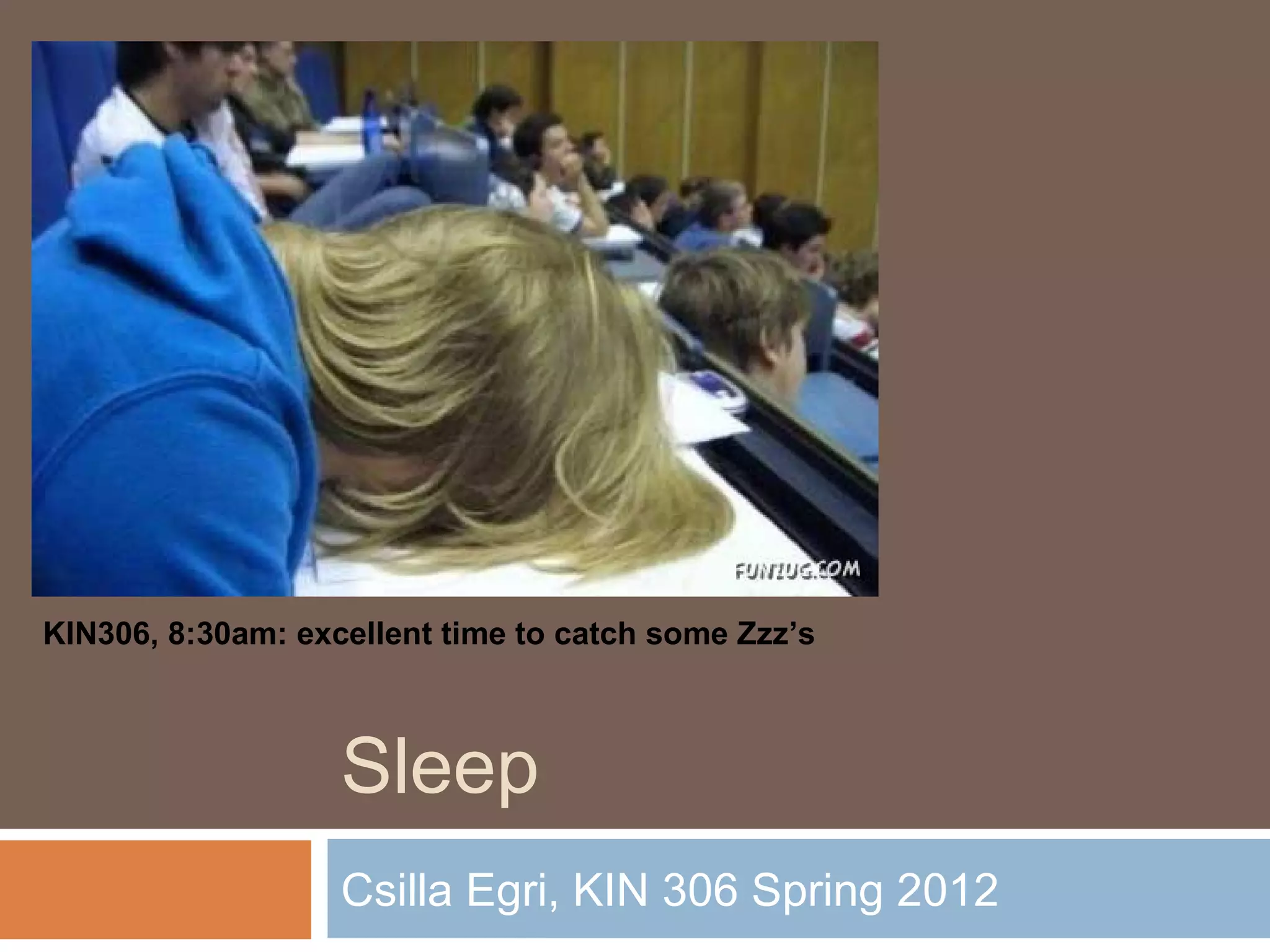
KIN306, 8:30am: excellent time to catch some Zzz’s
Outline
 What is sleep?
 What happens during sleep?
 What causes sleep?
 Functions of sleep??
2
What is sleep?
3
Sleep is an actively induced and highly
organized brain state with different phases.
Characterized by:
1.Reduced motor activity
2.Decreased response to stimulation
3.Stereotypic posture
4.Relatively easy reversibility
What happens during sleep?
4
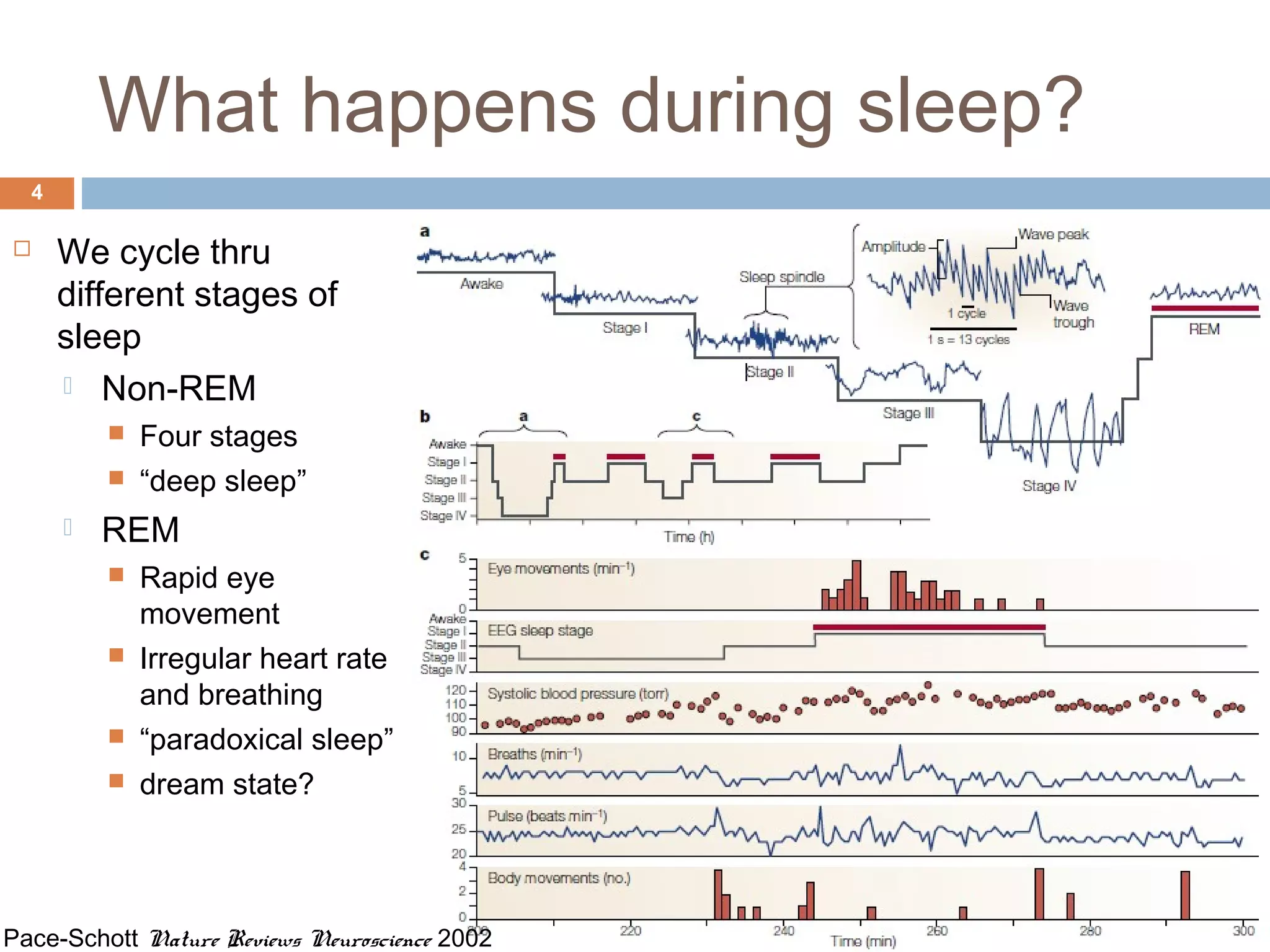
Pace-Schott Nature Reviews Neuroscience 2002
 We cycle thru
different stages of
sleep
 Non-REM
 Four stages
 “deep sleep”
 REM
 Rapid eye
movement
 Irregular heart rate
and breathing
 “paradoxical sleep”
 dream state?
What causes sleep?
5
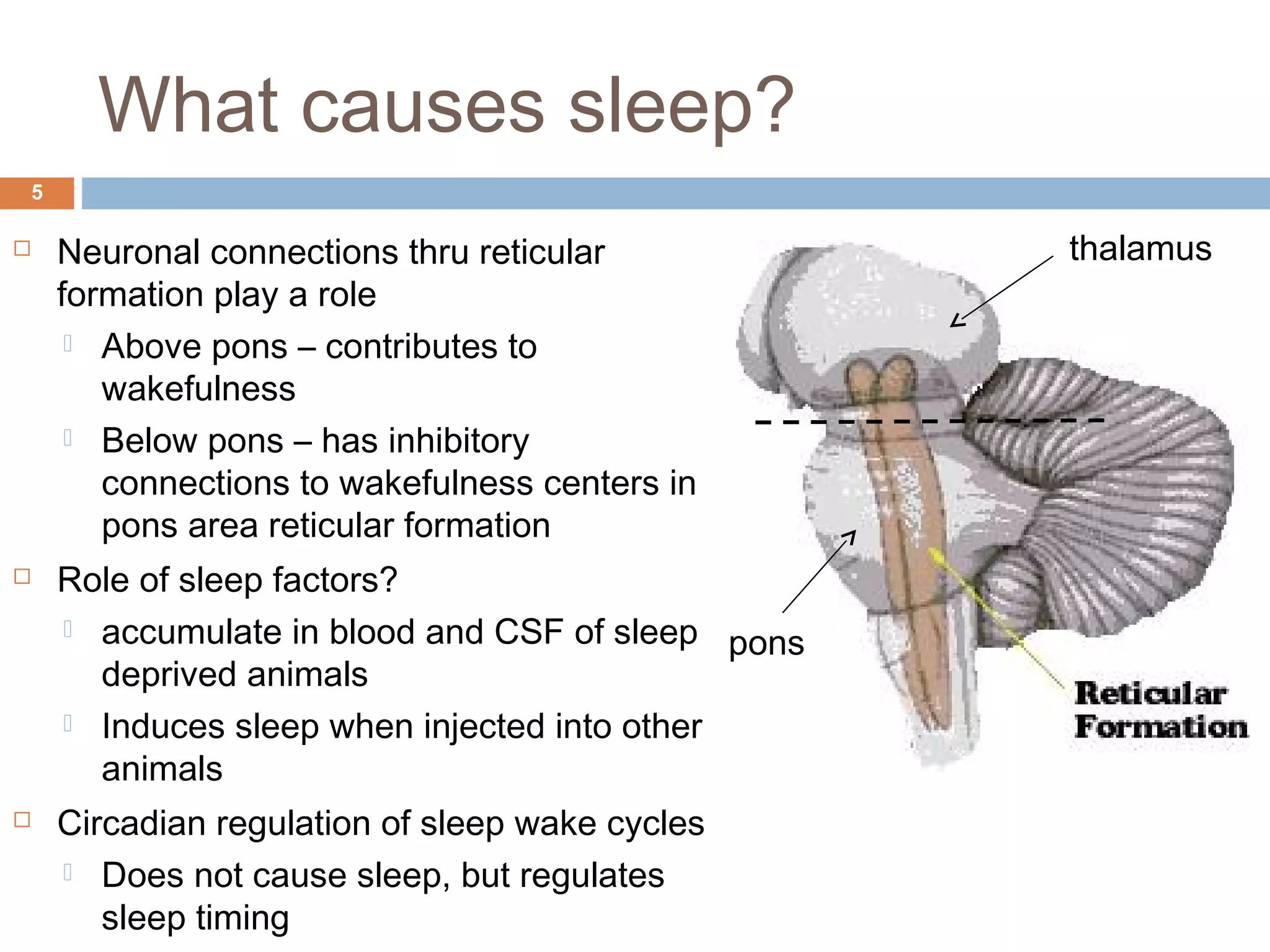
 Neuronal connections thru reticular
formation play a role
 Above pons – contributes to
wakefulness
 Below pons – has inhibitory
connections to wakefulness centers in
pons area reticular formation
 Role of sleep factors?
 accumulate in blood and CSF of sleep
deprived animals
 Induces sleep when injected into other
animals
 Circadian regulation of sleep wake cycles
 Does not cause sleep, but regulates
sleep timing
pons
thalamus
Effects on sleep: Caffeine
6
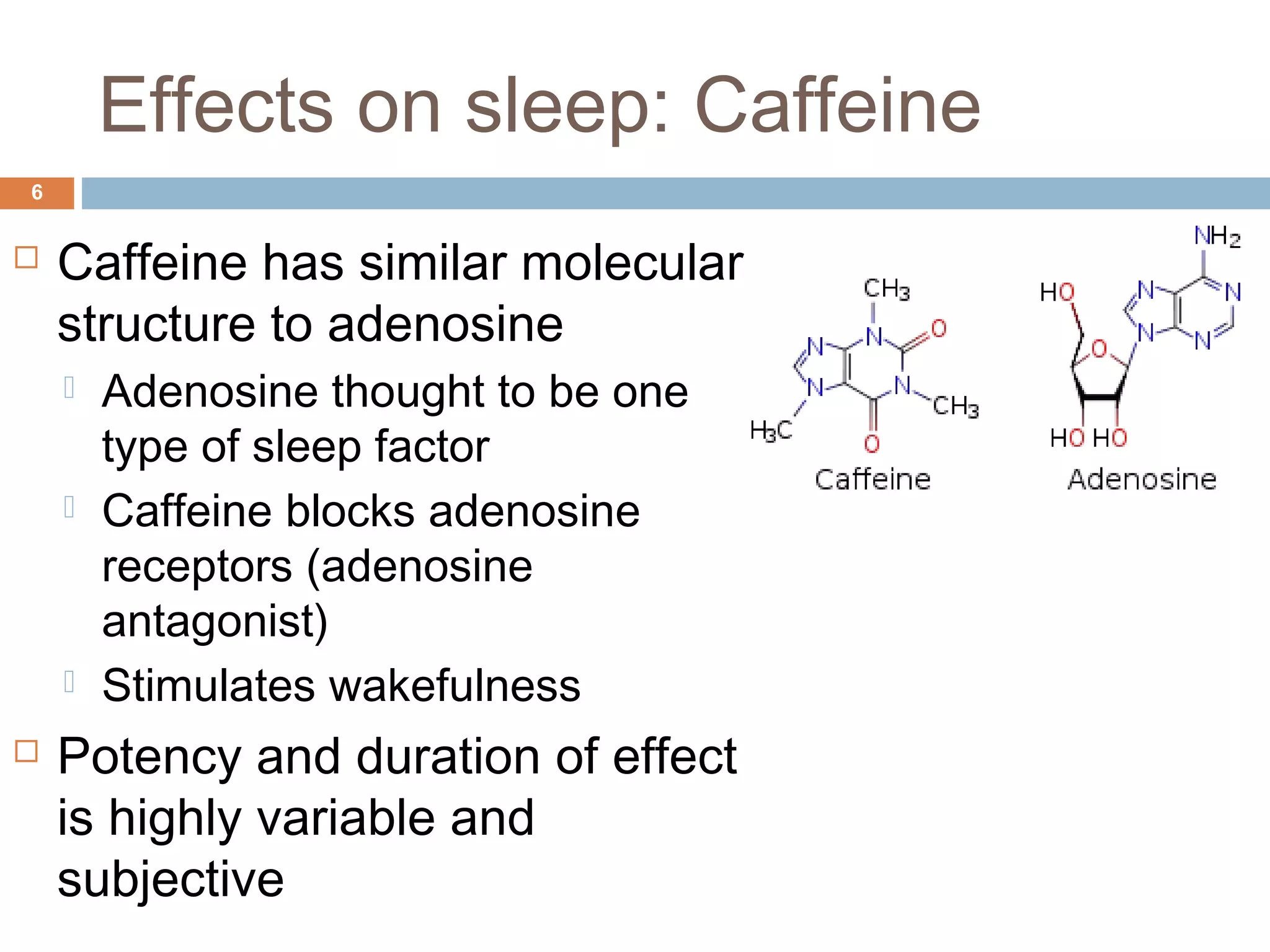
 Caffeine has similar molecular
structure to adenosine
 Adenosine thought to be one
type of sleep factor
 Caffeine blocks adenosine
receptors (adenosine
antagonist)
 Stimulates wakefulness
 Potency and duration of effect
is highly variable and
subjective
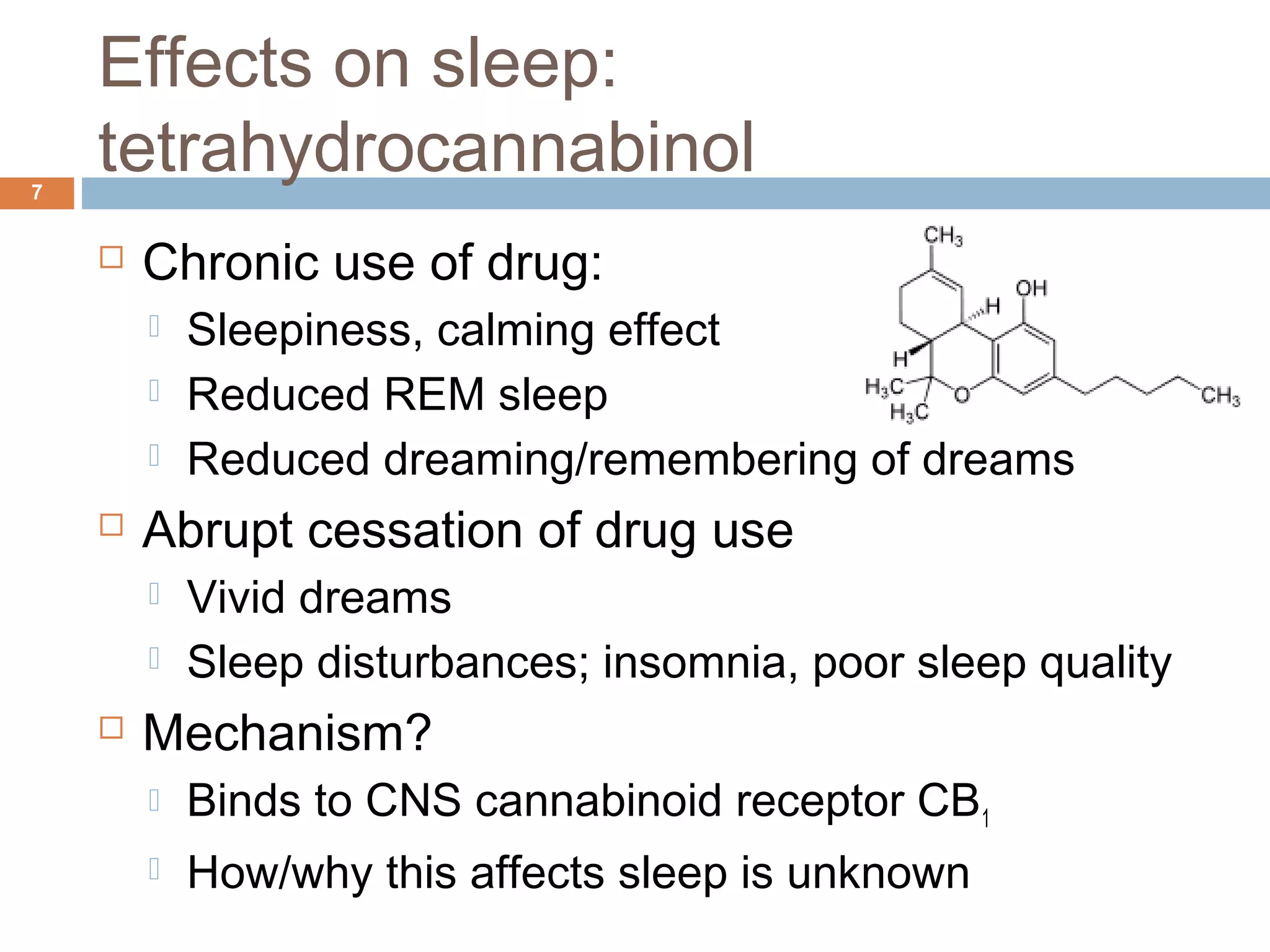
Effects on sleep:
tetrahydrocannabinol7
 Chronic use of drug:
 Sleepiness, calming effect
 Reduced REM sleep
 Reduced dreaming/remembering of dreams
 Abrupt cessation of drug use
 Vivid dreams
 Sleep disturbances; insomnia, poor sleep quality
 Mechanism?
 Binds to CNS cannabinoid receptor CB1
 How/why this affects sleep is unknown
Why do we sleep?
8
 Almost all animals require sleep
 Sleep deprivation causes irritability, reduced
cognitive functions, general malaise, death
 Sleep is required but physiological function is
speculative at best
 Neural maturation?
 Facilitation of learning, consolidation of
memories?
 Facilitation of development?
 Importance of REM sleep?
 Conservation of metabolic energy?
Objectives
After this lecture you should be able to:
 List the four characteristics of sleep
 Understand that sleep consists of different stages
 Compare the effects of caffeine and
tetrahydrocannabinol on sleep
 Describe some theories as to why we sleep
 Be really curious about the mechanism of sleep and
dreams and pursue a career as a researcher
After this section of the course you should:
 Be really fascinated about the complexities, intricacies
and mysteries of nervous system physiology and
pathophysiology and pursue a career as a scientist
9
10
1. If the brainstem is cut as per the dotted line in slide 5,
would sleep be stimulated or inhibited?
2. Caffeine binds to ______________ receptors and
stimulates wakefulness.
3. Why is REM sleep sometimes referred to as
paradoxical sleep?
Test your knowledge

A brief intro into the science of sleep

  • 1.
    Sleep Csilla Egri, KIN306 Spring 2012 KIN306, 8:30am: excellent time to catch some Zzz’s
  • 2.
    Outline  What issleep?  What happens during sleep?  What causes sleep?  Functions of sleep?? 2
  • 3.
    What is sleep? 3 Sleepis an actively induced and highly organized brain state with different phases. Characterized by: 1.Reduced motor activity 2.Decreased response to stimulation 3.Stereotypic posture 4.Relatively easy reversibility
  • 4.
    What happens duringsleep? 4 Pace-Schott Nature Reviews Neuroscience 2002  We cycle thru different stages of sleep  Non-REM  Four stages  “deep sleep”  REM  Rapid eye movement  Irregular heart rate and breathing  “paradoxical sleep”  dream state?
  • 5.
    What causes sleep? 5 Neuronal connections thru reticular formation play a role  Above pons – contributes to wakefulness  Below pons – has inhibitory connections to wakefulness centers in pons area reticular formation  Role of sleep factors?  accumulate in blood and CSF of sleep deprived animals  Induces sleep when injected into other animals  Circadian regulation of sleep wake cycles  Does not cause sleep, but regulates sleep timing pons thalamus
  • 6.
    Effects on sleep:Caffeine 6  Caffeine has similar molecular structure to adenosine  Adenosine thought to be one type of sleep factor  Caffeine blocks adenosine receptors (adenosine antagonist)  Stimulates wakefulness  Potency and duration of effect is highly variable and subjective
  • 7.
    Effects on sleep: tetrahydrocannabinol7 Chronic use of drug:  Sleepiness, calming effect  Reduced REM sleep  Reduced dreaming/remembering of dreams  Abrupt cessation of drug use  Vivid dreams  Sleep disturbances; insomnia, poor sleep quality  Mechanism?  Binds to CNS cannabinoid receptor CB1  How/why this affects sleep is unknown
  • 8.
    Why do wesleep? 8  Almost all animals require sleep  Sleep deprivation causes irritability, reduced cognitive functions, general malaise, death  Sleep is required but physiological function is speculative at best  Neural maturation?  Facilitation of learning, consolidation of memories?  Facilitation of development?  Importance of REM sleep?  Conservation of metabolic energy?
  • 9.
    Objectives After this lectureyou should be able to:  List the four characteristics of sleep  Understand that sleep consists of different stages  Compare the effects of caffeine and tetrahydrocannabinol on sleep  Describe some theories as to why we sleep  Be really curious about the mechanism of sleep and dreams and pursue a career as a researcher After this section of the course you should:  Be really fascinated about the complexities, intricacies and mysteries of nervous system physiology and pathophysiology and pursue a career as a scientist 9
  • 10.
    10 1. If thebrainstem is cut as per the dotted line in slide 5, would sleep be stimulated or inhibited? 2. Caffeine binds to ______________ receptors and stimulates wakefulness. 3. Why is REM sleep sometimes referred to as paradoxical sleep? Test your knowledge

Editor's Notes

  • #3 Gutyon is best
  • #6 Old explanation was that it results from reduced brain activity, brought about by fatigue, but infact it is an active process. Transecting the pons at this location greatly reduces sleep.
  • #8 The endocannabinoid system refers to a group of neuromodulatory lipids and their receptors that are involved in a variety of physiological processes including appetite, pain-sensation, mood, and memory; it mediates the psychoactive effects of cannabis and, broadly speaking, includes: