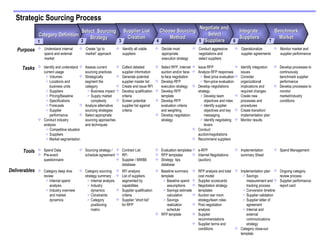
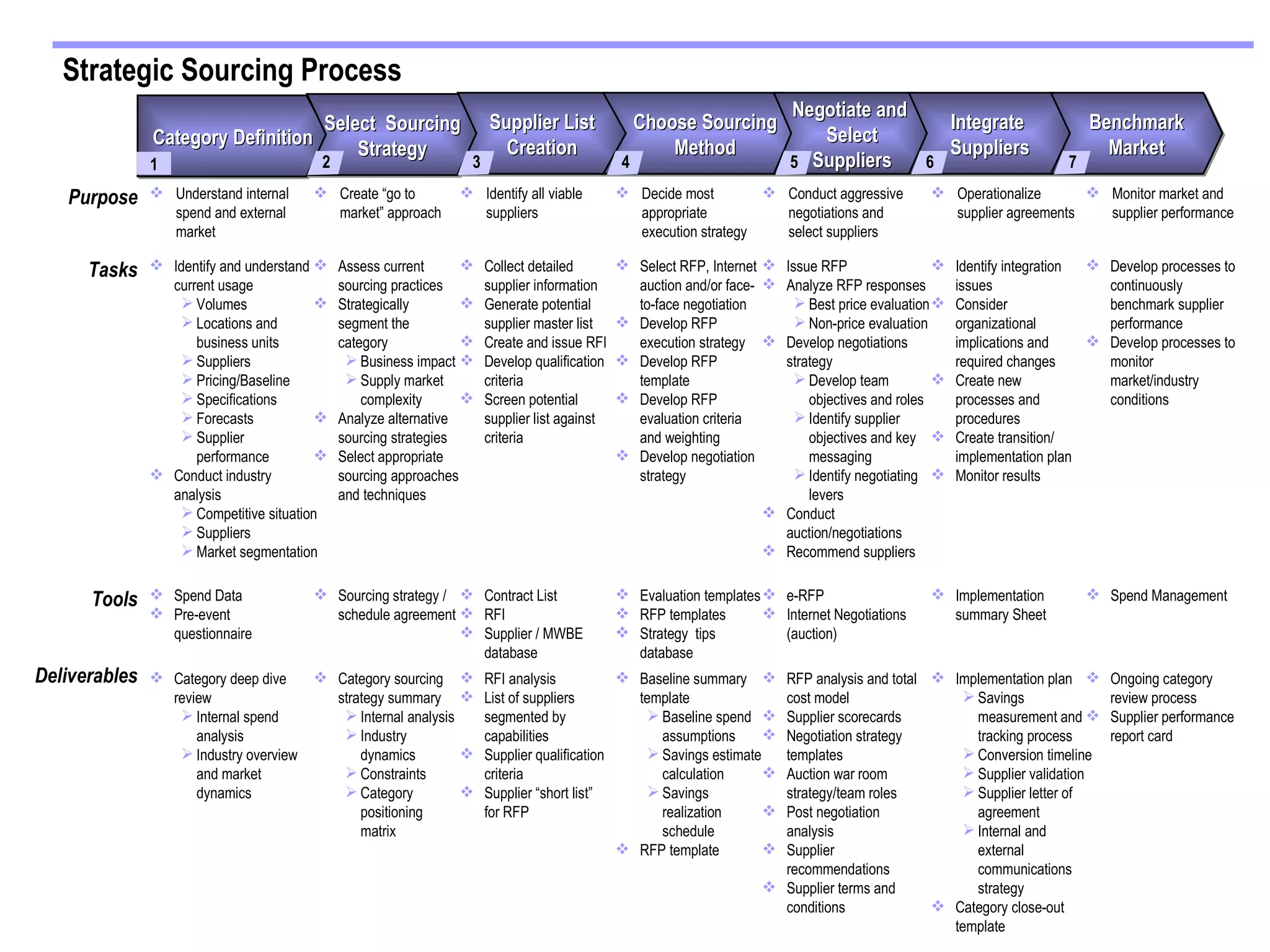
Strategic Sourcing Process Category Definition Identify and understand current usage Volumes Locations and business units Suppliers Pricing/Baseline Specifications Forecasts Supplier performance Conduct industry analysis Competitive situation Suppliers Market segmentation Tasks Select  Sourcing Strategy Supplier List Creation Collect detailed supplier information Generate potential supplier master list Create and issue RFI Develop qualification criteria Screen potential supplier list against criteria Assess current sourcing practices Strategically segment the category Business impact Supply market complexity Analyze alternative sourcing strategies Select appropriate sourcing approaches and techniques Choose Sourcing Method Select RFP, Internet auction and/or face-to-face negotiation Develop RFP execution strategy Develop RFP template Develop RFP evaluation criteria and weighting Develop negotiation strategy Negotiate and  Select Suppliers Issue RFP Analyze RFP responses Best price evaluation Non-price evaluation Develop negotiations strategy Develop team objectives and roles Identify supplier objectives and key messaging Identify negotiating levers Conduct auction/negotiations Recommend suppliers Integrate  Suppliers Identify integration issues Consider organizational implications and required changes Create new processes and procedures Create transition/ implementation plan Monitor results Benchmark Market Develop processes to continuously benchmark supplier performance Develop processes to monitor market/industry conditions Understand internal spend and external market Purpose Identify all viable suppliers Create “go to market” approach Decide most appropriate execution strategy Conduct aggressive negotiations and select suppliers Operationalize supplier agreements Monitor market and supplier performance Category deep dive review Internal spend analysis Industry overview and market dynamics Deliverables RFI analysis List of suppliers segmented by capabilities Supplier qualification criteria Supplier “short list” for RFP Category sourcing strategy summary Internal analysis Industry dynamics Constraints Category positioning matrix Baseline summary template Baseline spend assumptions Savings estimate calculation Savings realization schedule RFP template RFP analysis and total cost model Supplier scorecards Negotiation strategy templates Auction war room strategy/team roles Post negotiation analysis Supplier recommendations Supplier terms and conditions Implementation plan Savings measurement and tracking process Conversion timeline Supplier validation Supplier letter of agreement Internal and external communications strategy Category close-out template Ongoing category review process Supplier performance report card Spend Data Pre-event questionnaire Tools Contract List RFI Supplier / MWBE database Sourcing strategy / schedule agreement Evaluation templates RFP templates Strategy  tips database e-RFP Internet Negotiations (auction) Implementation summary Sheet Spend Management 1 2 3 4 5 6 7

Sourcing Process A

  • 1.
    Strategic Sourcing ProcessCategory Definition Identify and understand current usage Volumes Locations and business units Suppliers Pricing/Baseline Specifications Forecasts Supplier performance Conduct industry analysis Competitive situation Suppliers Market segmentation Tasks Select Sourcing Strategy Supplier List Creation Collect detailed supplier information Generate potential supplier master list Create and issue RFI Develop qualification criteria Screen potential supplier list against criteria Assess current sourcing practices Strategically segment the category Business impact Supply market complexity Analyze alternative sourcing strategies Select appropriate sourcing approaches and techniques Choose Sourcing Method Select RFP, Internet auction and/or face-to-face negotiation Develop RFP execution strategy Develop RFP template Develop RFP evaluation criteria and weighting Develop negotiation strategy Negotiate and Select Suppliers Issue RFP Analyze RFP responses Best price evaluation Non-price evaluation Develop negotiations strategy Develop team objectives and roles Identify supplier objectives and key messaging Identify negotiating levers Conduct auction/negotiations Recommend suppliers Integrate Suppliers Identify integration issues Consider organizational implications and required changes Create new processes and procedures Create transition/ implementation plan Monitor results Benchmark Market Develop processes to continuously benchmark supplier performance Develop processes to monitor market/industry conditions Understand internal spend and external market Purpose Identify all viable suppliers Create “go to market” approach Decide most appropriate execution strategy Conduct aggressive negotiations and select suppliers Operationalize supplier agreements Monitor market and supplier performance Category deep dive review Internal spend analysis Industry overview and market dynamics Deliverables RFI analysis List of suppliers segmented by capabilities Supplier qualification criteria Supplier “short list” for RFP Category sourcing strategy summary Internal analysis Industry dynamics Constraints Category positioning matrix Baseline summary template Baseline spend assumptions Savings estimate calculation Savings realization schedule RFP template RFP analysis and total cost model Supplier scorecards Negotiation strategy templates Auction war room strategy/team roles Post negotiation analysis Supplier recommendations Supplier terms and conditions Implementation plan Savings measurement and tracking process Conversion timeline Supplier validation Supplier letter of agreement Internal and external communications strategy Category close-out template Ongoing category review process Supplier performance report card Spend Data Pre-event questionnaire Tools Contract List RFI Supplier / MWBE database Sourcing strategy / schedule agreement Evaluation templates RFP templates Strategy tips database e-RFP Internet Negotiations (auction) Implementation summary Sheet Spend Management 1 2 3 4 5 6 7