Group 2
Strategies
PROCUREMENT AND SOURCING


Jasim Ghazali
present
Shaikh Mahmood Asif Quamar
Ankush
Aligarh Muslim University
MBA 20-22
What is
Procurement
01
Procurement Involves two parties:
Buyer
Procurement is the term that is used to
refer to the process or the act of
sourcing or obtaining service or goods
for a business
02
Seller
Types of Procurement
Service Procurement
(Professional services and software subscriptions)
Indirect Procurement
(Ex. Utilities, facility management and travel)
Direct Procurement
(Ex. Raw materials, machinery and resale items)
Components
of
Procurement
People
Process
Records
Procurement
Process
The procurement process refers to the
identification and implementation of certain
steps by businesses to ensure they can
acquire goods and services to meet their
requirements and achieve their objectives
A procurement process is important
because it has a direct impact on how much
a business can save
Inbound
Logistics


Procurement process,
focuses on the
transportation, receiving
and storage of incoming
goods from source or
suppliers to the business
Socially Responsible Procurement
Diversity and inclusion
Environmental Protection
Human Rights respect
Ethics and Financial Stewardship (Philanthropy)
Health and Safety
Community Involvement
This is the concept that an organization’s responsibilities transcends
economic considerations and should incorporate societal values and
objectives
Dimensions of Socially Responsible Procurement
Procurement's
Golden Triangle
For strategic impact
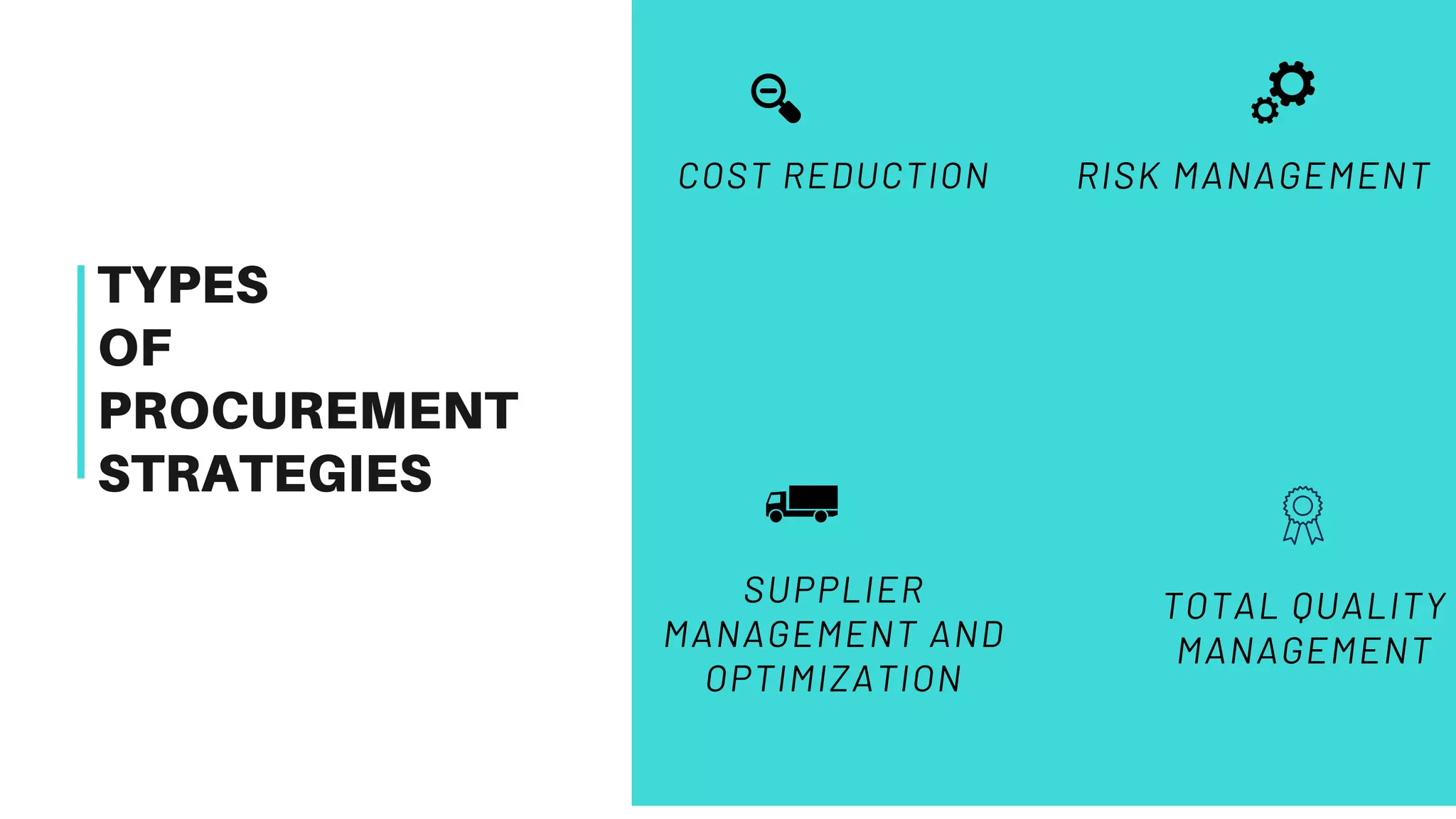
TYPES
OF
PROCUREMENT
STRATEGIES
COST REDUCTION


RISK MANAGEMENT


SUPPLIER
MANAGEMENT AND
OPTIMIZATION


TOTAL QUALITY
MANAGEMENT
1
2
3
4
5
6
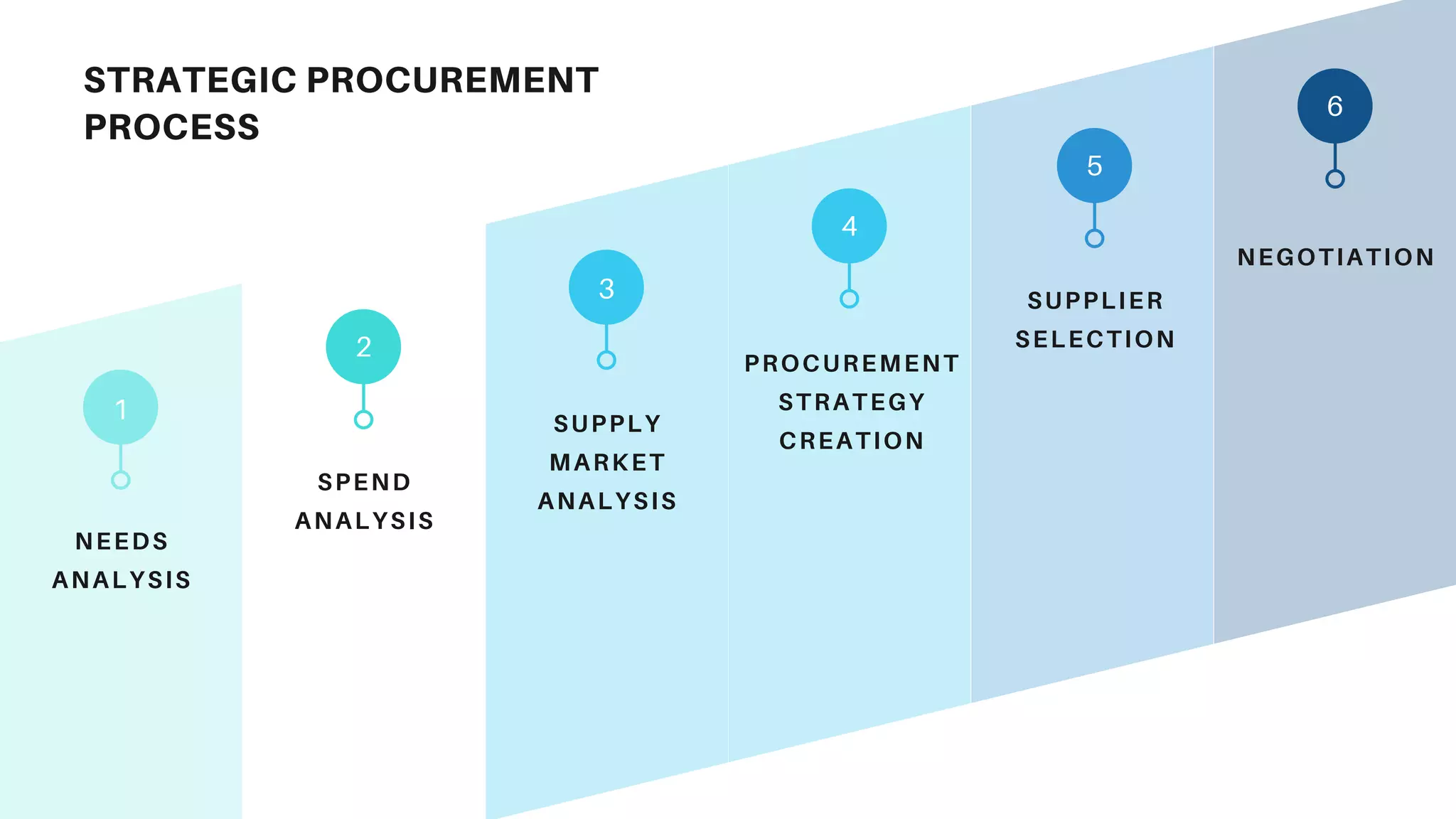
PROCUREMENT
STRATEGY
CREATION


NEEDS
ANALYSIS


SPEND
ANALYSIS


SUPPLY
MARKET
ANALYSIS


SUPPLIER
SELECTION


NEGOTIATION


STRATEGIC PROCUREMENT
PROCESS
Choosing suppliers that best match the
company’s business goals
Goals of
Strategic
Procurement
Procuring higher quality goods
Managing/minimizing supply chain risk
Building robust relationships with
suppliers
Collaborating with suppliers
Reduce the supplier base in order to
focus on key relationships and benefit
from economies of scale
What is
Sourcing
01
The process of sourcing products or
services is the first step in the supply
chain. It's about finding the balance
between the quality of products & raw
materials needed and affordalility
Sourcing is the process of selecting
right suppliers to provide the goods
and services people need to run their
business
02
Sourcing
Involves
Finding quality sources of goods
and services
Negotiation Contracts
Establishing Payment Terms
Market Research
Considering Outsourcing for Goods
Testing for Quality
Establishing Standards
Importance of Sourcing
-
Strategic planning in the sourcing process is central to
cost Management, stability, and managing risk for
businesses of all sizes
Sourcing allows companies to establish consistent
supply chains. This keeps shelves stocked and
customers happy
07
Cost
Management


sourcing provides benefits for
both buyers and suppliers.
Buyers can typically negotiate
lower unit pricing for high-
volume purchasing. This
reduces the costs of goods
and keeps retail prices
competitive. Suppliers benefit
because they have a
consistent outlet for their
goods which makes planning
and cash flow more
dependable.


Stability


When businesses find the right
source for their products, it
truly becomes a partnership.
Both businesses rely on each
other to keep the supply chain
intact. Developing a close
relationship can lead to higher
quality (and efficiency) as
suppliers and customers work
together to identify and
minimize the root causes of
any defects that hurt both
buyer and seller.


Managing
Risk


Besides identifying and solving
problems, a strong
relationship built of trust can
help mitigate risk. When both
parties know they can depend
on each other, it opens the
door to honest conversation.
For example, if one party is
having temporary cash flow
concerns, it can be discussed
openly. This lowers the risk for
both parties.


Cont...
Strategic Sourcing is a process driven by an
identified goal or need and consists of:
Strategic
Sourcing
Evaluating current and potential Sourcing
opportunities and relationships
Assessing their value and relevance according
according to long term goals and overall business
and supply management objectives
Evaluating current and potential Sourcing
opportunities and relationships
Strategic Sourcing
Analysis
01
Process /Competence
Analysis
Spend Analysis Supply Base
Analysis
02 03 04
Generate Options
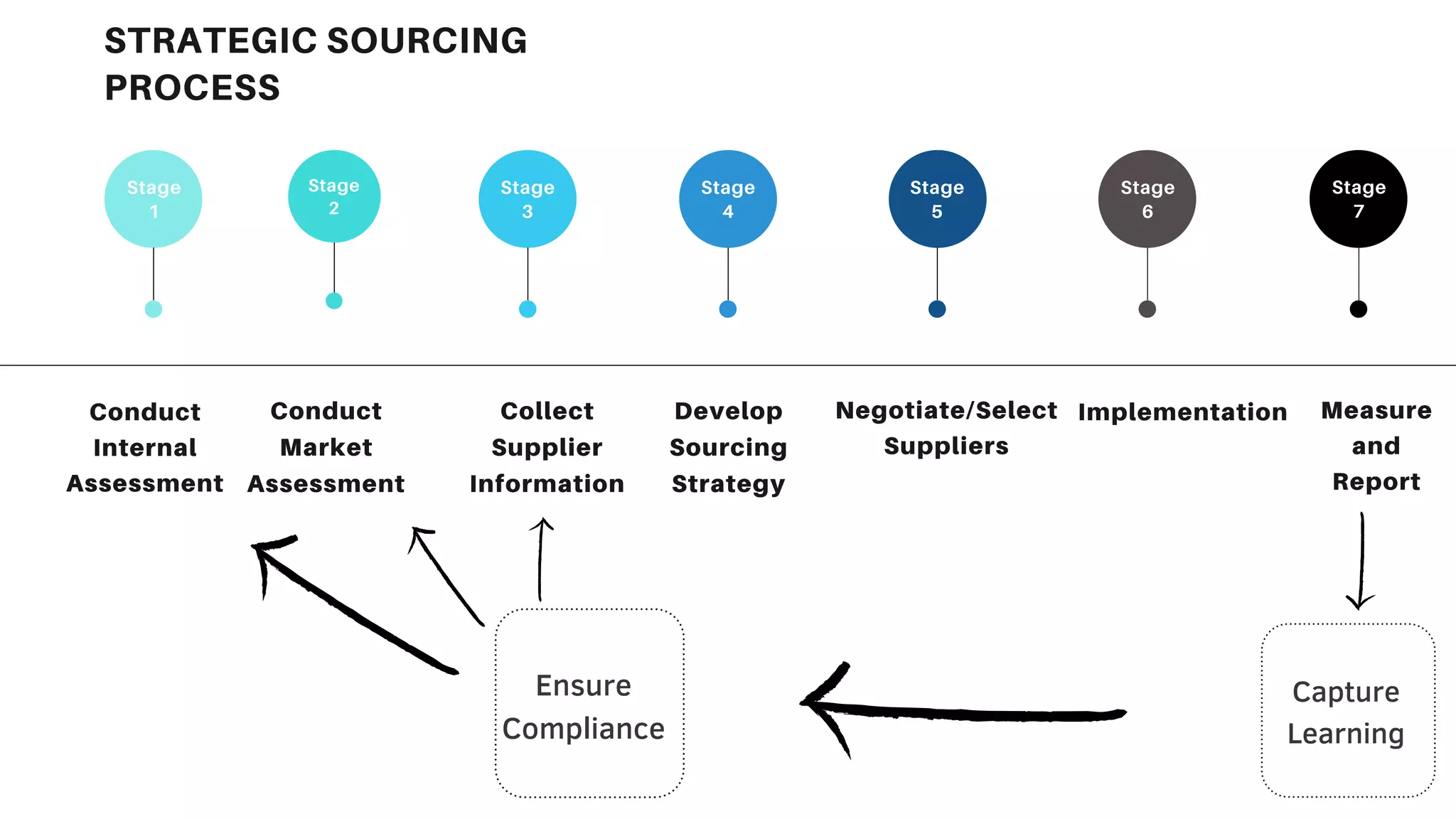
STRATEGIC SOURCING
PROCESS
Conduct
Internal
Assessment
Conduct
Market
Assessment
Collect
Supplier
Information
Develop
Sourcing
Strategy
Negotiate/Select
Suppliers
Measure
and
Report
Stage
1
Stage
2
Stage
3
Stage
4
Stage
5
Stage
6
Stage
7
Implementation
Capture
Learning
Ensure
Compliance
Improve price performance ratio
Goals of
Strategic
Sourcing
Identify possibilities for improvement
Review suppliers relationship across the
company
Promote best strategy throughout
company
Leverage comapny's expenditure
Conclusion
Strategic procurement is all but a necessity for organizations which intend to
remain competitive in the business climate for years to come.
A well developed strategic procurement process directly translates into improved
business performance by way of focusing on bottom line savings in the long-term
On the other hand, strategic sourcing allows companies to align their component
sourcing with their business goals, which increases efficiency and minimises risk
within the supply chain
By aligning the business goals and requirements to the right suppliers with the
right capabilities, organizations maximize their performance and gain a competitive
edge over their peers.
Thank you!

Procurement and Sourcing Strategies