Strategic sourcing as a way of your
procurement transformation in main competitive
advantage of your company
07 October 2015
About author
2
Vladislav Mandryka is procurement professional with
outstanding skills in strategic sourcing, supplier relationship
management, spend management, contract negotiation, project
management and process improvement in challenging dynamic
environment.
10-years of procurement career in world transnational
corporations of FMCG sector (SABMiller, Anadolu Efes).
Has a master degree in business administration in Open
University business school.
3
What does strategic sourcing mean?
Strategic sourcing is a process of systematic collection,
subsequent analysis and evaluation of the internal and
external data in order to develop the most appropriate
strategy for selection of the suppliers.
Main aim of strategic sourcing is optimization the spend
analysis and achievement a partnership with a limited
base of suppliers in order to decrease annual costs,
improve quality, increase ROI, increase the quantity of JIT
supplies etc.
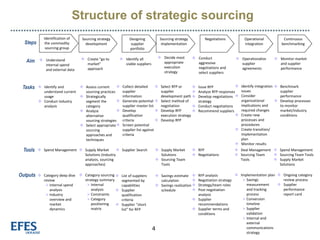
Structure of strategic sourcing
4
 Identify and
understand current
usage
 Conduct industry
analysis
Tasks  Collect detailed
supplier
information
 Generate potential
supplier master list
 Develop
qualification
criteria
 Screen potential
supplier list against
criteria
 Assess current
sourcing practices
 Strategically
segment the
category
 Analyze
alternative
sourcing strategies
 Select appropriate
sourcing
approaches and
techniques
 Select RFP or
supplier
development path
 Select method of
negotiation
 Develop RFP
execution strategy
 Develop RFP
 Issue RFP
 Analyze RFP responses
 Develop negotiations
strategy
 Conduct negotiations
 Recommend suppliers
 Identify integration
issues
 Consider
organizational
implications and
required changes
 Create new
processes and
procedures
 Create transition/
implementation
plan
 Monitor results
 Benchmark
supplier
performance
 Develop processes
to monitor
market/industry
conditions
 Understand
internal spend
and external data
Aim  Identify all
viable suppliers
 Create “go to
market”
approach
 Decide most
appropriate
execution
strategy
 Conduct
aggressive
negotiations and
select suppliers
 Operationalize
supplier
agreements
 Monitor market
and supplier
performance
 Category deep dive
review
 Internal spend
analysis
 Industry
overview and
market
dynamics
Outputs  List of suppliers
segmented by
capabilities
 Supplier
qualification
criteria
 Supplier “short
list” for RFP
 Category sourcing
strategy summary
 Internal
analysis
 Constraints
 Category
positioning
matrix
 Savings estimate
calculation
 Savings realization
schedule
 RFP analysis
 Negotiation strategy
 Strategy/team roles
 Post negotiation
analysis
 Supplier
recommendations
 Supplier terms and
conditions
 Implementation plan
 Savings
measurement
and tracking
process
 Conversion
timeline
 Supplier
validation
 Internal and
external
communications
strategy
 Ongoing category
review process
 Supplier
performance
report card
 Spend ManagementTools  Supplier Search Supply Market
Solutions (industry
analysis, sourcing
approaches)
 Supply Market
Solutions
 Sourcing Team
Tools
 RFP
 Negotiations
 Deal Management
 Sourcing Team
Tools
 Spend Management
 Sourcing Team Tools
 Supply Market
Solutions
Identification of
the commodity
sourcing group
Sourcing strategy
development
Designing
supplier
portfolio
Sourcing strategy
implementation
Negotiations Operational
integration
Continuous
benchmarkingSteps
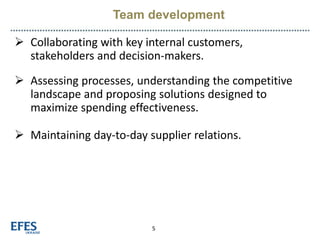
Team development
 Collaborating with key internal customers,
stakeholders and decision-makers.
 Assessing processes, understanding the competitive
landscape and proposing solutions designed to
maximize spending effectiveness.
 Maintaining day-to-day supplier relations.
5
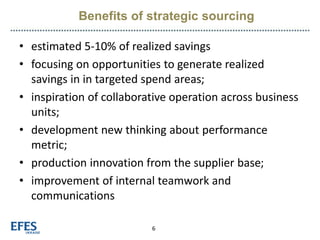
Benefits of strategic sourcing
• estimated 5-10% of realized savings
• focusing on opportunities to generate realized
savings in in targeted spend areas;
• inspiration of collaborative operation across business
units;
• development new thinking about performance
metric;
• production innovation from the supplier base;
• improvement of internal teamwork and
communications
6
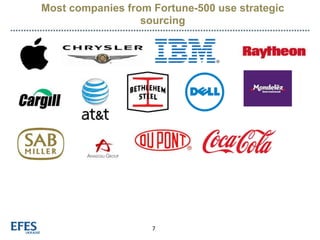
Most companies from Fortune-500 use strategic
sourcing
7

Strategic sourcing

  • 1.
    Strategic sourcing asa way of your procurement transformation in main competitive advantage of your company 07 October 2015
  • 2.
    About author 2 Vladislav Mandrykais procurement professional with outstanding skills in strategic sourcing, supplier relationship management, spend management, contract negotiation, project management and process improvement in challenging dynamic environment. 10-years of procurement career in world transnational corporations of FMCG sector (SABMiller, Anadolu Efes). Has a master degree in business administration in Open University business school.
  • 3.
    3 What does strategicsourcing mean? Strategic sourcing is a process of systematic collection, subsequent analysis and evaluation of the internal and external data in order to develop the most appropriate strategy for selection of the suppliers. Main aim of strategic sourcing is optimization the spend analysis and achievement a partnership with a limited base of suppliers in order to decrease annual costs, improve quality, increase ROI, increase the quantity of JIT supplies etc.
  • 4.
    Structure of strategicsourcing 4  Identify and understand current usage  Conduct industry analysis Tasks  Collect detailed supplier information  Generate potential supplier master list  Develop qualification criteria  Screen potential supplier list against criteria  Assess current sourcing practices  Strategically segment the category  Analyze alternative sourcing strategies  Select appropriate sourcing approaches and techniques  Select RFP or supplier development path  Select method of negotiation  Develop RFP execution strategy  Develop RFP  Issue RFP  Analyze RFP responses  Develop negotiations strategy  Conduct negotiations  Recommend suppliers  Identify integration issues  Consider organizational implications and required changes  Create new processes and procedures  Create transition/ implementation plan  Monitor results  Benchmark supplier performance  Develop processes to monitor market/industry conditions  Understand internal spend and external data Aim  Identify all viable suppliers  Create “go to market” approach  Decide most appropriate execution strategy  Conduct aggressive negotiations and select suppliers  Operationalize supplier agreements  Monitor market and supplier performance  Category deep dive review  Internal spend analysis  Industry overview and market dynamics Outputs  List of suppliers segmented by capabilities  Supplier qualification criteria  Supplier “short list” for RFP  Category sourcing strategy summary  Internal analysis  Constraints  Category positioning matrix  Savings estimate calculation  Savings realization schedule  RFP analysis  Negotiation strategy  Strategy/team roles  Post negotiation analysis  Supplier recommendations  Supplier terms and conditions  Implementation plan  Savings measurement and tracking process  Conversion timeline  Supplier validation  Internal and external communications strategy  Ongoing category review process  Supplier performance report card  Spend ManagementTools  Supplier Search Supply Market Solutions (industry analysis, sourcing approaches)  Supply Market Solutions  Sourcing Team Tools  RFP  Negotiations  Deal Management  Sourcing Team Tools  Spend Management  Sourcing Team Tools  Supply Market Solutions Identification of the commodity sourcing group Sourcing strategy development Designing supplier portfolio Sourcing strategy implementation Negotiations Operational integration Continuous benchmarkingSteps
  • 5.
    Team development  Collaboratingwith key internal customers, stakeholders and decision-makers.  Assessing processes, understanding the competitive landscape and proposing solutions designed to maximize spending effectiveness.  Maintaining day-to-day supplier relations. 5
  • 6.
    Benefits of strategicsourcing • estimated 5-10% of realized savings • focusing on opportunities to generate realized savings in in targeted spend areas; • inspiration of collaborative operation across business units; • development new thinking about performance metric; • production innovation from the supplier base; • improvement of internal teamwork and communications 6
  • 7.
    Most companies fromFortune-500 use strategic sourcing 7