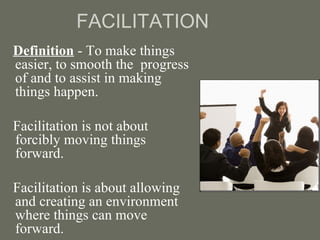
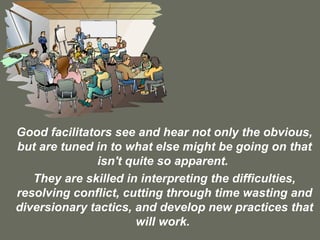
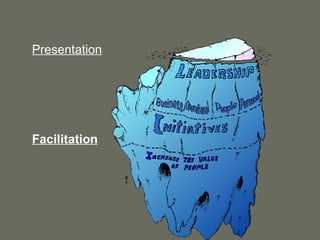
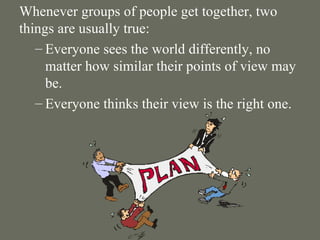
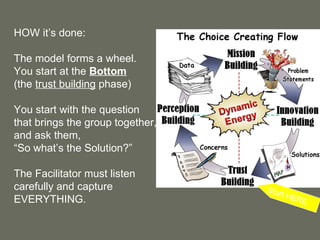
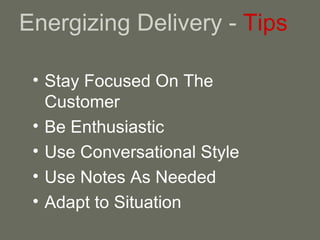
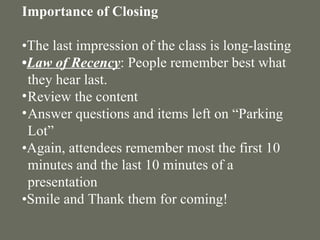
This document provides guidance on effective facilitation. It defines facilitation as making things easier and assisting to allow progress, rather than forcing progress. Good facilitators can interpret difficulties, resolve conflicts, and develop new practices. When facilitating groups, disparate views can be considered to arrive at a mutually agreed outcome. Facilitators act as translators to help others understand differing perspectives. The roles of a facilitator include being a knowledge expert, instructor, entertainer, coordinator, technician, motivator, and questioner. Effective facilitation uses multiple mediums, starts by building trust, listens carefully to capture all perspectives, and closes by reviewing content and thanking participants.