Better Facilitation with a Partner -
          Co-Facilitators
     Presented by Craig Sicilia and Penny Condoll
                   BISGN Coaches
                          1
Penny Condoll
Project Manager and Founder, BEST
BISGN Coach
Brain Injury Support Group Facilitator in Tacoma and
Puyallup


   Craig Sicilia
   Director, TBI Support Network
   BISGN Coach
   Brain Injury Support Group Facilitator in Spokane

   Janet Novinger: BISGN Training Coordinator
Objectives
• Understand the roles, skills and characteristics
  of a great facilitator

• How to find a co-facilitator

• Setting the stage for a successful relationship

• Defining strengths and interests

• Learn tips for Before, During and After the
  Meeting
                         3
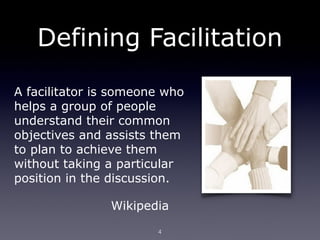
Defining Facilitation
A facilitator is someone who
helps a group of people
understand their common
objectives and assists them
to plan to achieve them
without taking a particular
position in the discussion.

               Wikipedia
                       4
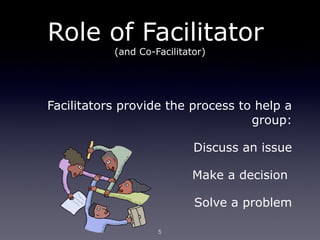
Role of Facilitator
           (and Co-Facilitator)


Facilitators provide the process to help a
                                   group:

                            Discuss an issue

                            Make a decision

                            Solve a problem

                    5
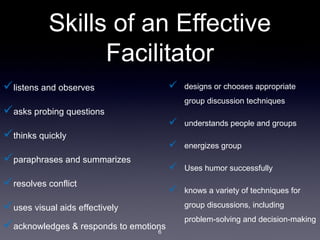
Skills of an Effective
                 Facilitator
listens and observes                     designs or chooses appropriate
                                           group discussion techniques
asks probing questions
                                          understands people and groups
thinks quickly
                                          energizes group
paraphrases and summarizes
                                          Uses humor successfully
resolves conflict
                                          knows a variety of techniques for

uses visual aids effectively              group discussions, including
                                           problem-solving and decision-making
acknowledges & responds to emotions
                                  6
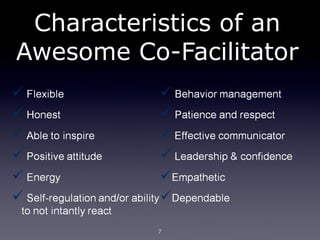
Characteristics of an
Awesome Co-Facilitator


           7
How to find the right
   co-facilitator
        • Evaluate the strengths and interests
          of your group members

        • Tell group your looking for help

        • Explain the benefits of being a
          facilitator

        • Let people try out a task before
          agreeing


            8
Before the Meeting
   Schedule ample time for planning

   Take some time to get to know each other and discuss each
    other’s style of planning and facilitating

   Avoid making assumptions about one another

   Take time to discuss your views about topics, especially
    examine areas of disagreement

   Discuss any concerns about potential challenges that
    participants may present

   Agree on common goals

   Review each other’s triggers
                                9
Before the Meeting
Find out whether and when it is okay to interrupt
Decide how to keep track of time
Strategize about how to stick to the original outline and how to switch
gears

Plan ways to give signals to one another
Divide facilitation of activities fairly
Share responsibility equally in preparing and bringing workshop materials
and resources

Agree to arrive in time to set up and check-in before the meeting begins
Schedule time afterwards to debrief
During the Meeting
   Remember to keep a professional demeanor at all times

   Keep communicating with each other throughout the meeting

   Support and validate one another

   During activities that don’t require constant attention, check-in with
    one another

   Include your co-facilitator even when you are leading an exercise or
    discussion, by asking, for example: “Do you have anything to add?”

   Use lots of eye contact

   Assert yourself if your co-facilitator is talking too much

   Remember that it is okay to make mistakes

   Take the initiative to step in if your co-facilitator misses an
    opportunity to address a myth 11
After the Meeting

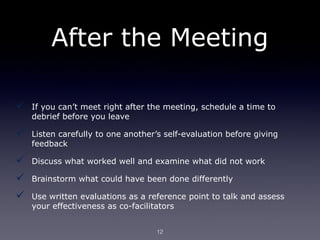
   If you can’t meet right after the meeting, schedule a time to
    debrief before you leave

   Listen carefully to one another’s self-evaluation before giving
    feedback

   Discuss what worked well and examine what did not work

   Brainstorm what could have been done differently

   Use written evaluations as a reference point to talk and assess
    your effectiveness as co-facilitators


                                   12
After the Meeting

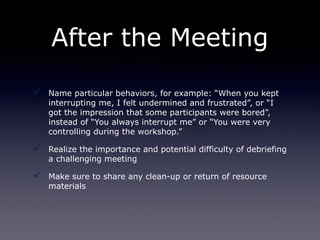
   Name particular behaviors, for example: “When you kept
    interrupting me, I felt undermined and frustrated”, or “I
    got the impression that some participants were bored”,
    instead of “You always interrupt me” or “You were very
    controlling during the workshop.”

   Realize the importance and potential difficulty of debriefing
    a challenging meeting

   Make sure to share any clean-up or return of resource
    materials
Closing Bow
Thank you for all you do

Co facilitator presentation

  • 1.
    Better Facilitation witha Partner - Co-Facilitators Presented by Craig Sicilia and Penny Condoll BISGN Coaches 1
  • 2.
    Penny Condoll Project Managerand Founder, BEST BISGN Coach Brain Injury Support Group Facilitator in Tacoma and Puyallup Craig Sicilia Director, TBI Support Network BISGN Coach Brain Injury Support Group Facilitator in Spokane Janet Novinger: BISGN Training Coordinator
  • 3.
    Objectives • Understand theroles, skills and characteristics of a great facilitator • How to find a co-facilitator • Setting the stage for a successful relationship • Defining strengths and interests • Learn tips for Before, During and After the Meeting 3
  • 4.
    Defining Facilitation A facilitatoris someone who helps a group of people understand their common objectives and assists them to plan to achieve them without taking a particular position in the discussion. Wikipedia 4
  • 5.
    Role of Facilitator (and Co-Facilitator) Facilitators provide the process to help a group: Discuss an issue Make a decision Solve a problem 5
  • 6.
    Skills of anEffective Facilitator listens and observes  designs or chooses appropriate group discussion techniques asks probing questions  understands people and groups thinks quickly  energizes group paraphrases and summarizes  Uses humor successfully resolves conflict  knows a variety of techniques for uses visual aids effectively group discussions, including problem-solving and decision-making acknowledges & responds to emotions 6
  • 7.
  • 8.
    How to findthe right co-facilitator • Evaluate the strengths and interests of your group members • Tell group your looking for help • Explain the benefits of being a facilitator • Let people try out a task before agreeing 8
  • 9.
    Before the Meeting  Schedule ample time for planning  Take some time to get to know each other and discuss each other’s style of planning and facilitating  Avoid making assumptions about one another  Take time to discuss your views about topics, especially examine areas of disagreement  Discuss any concerns about potential challenges that participants may present  Agree on common goals  Review each other’s triggers 9
  • 10.
    Before the Meeting Findout whether and when it is okay to interrupt Decide how to keep track of time Strategize about how to stick to the original outline and how to switch gears Plan ways to give signals to one another Divide facilitation of activities fairly Share responsibility equally in preparing and bringing workshop materials and resources Agree to arrive in time to set up and check-in before the meeting begins Schedule time afterwards to debrief
  • 11.
    During the Meeting  Remember to keep a professional demeanor at all times  Keep communicating with each other throughout the meeting  Support and validate one another  During activities that don’t require constant attention, check-in with one another  Include your co-facilitator even when you are leading an exercise or discussion, by asking, for example: “Do you have anything to add?”  Use lots of eye contact  Assert yourself if your co-facilitator is talking too much  Remember that it is okay to make mistakes  Take the initiative to step in if your co-facilitator misses an opportunity to address a myth 11
  • 12.
    After the Meeting  If you can’t meet right after the meeting, schedule a time to debrief before you leave  Listen carefully to one another’s self-evaluation before giving feedback  Discuss what worked well and examine what did not work  Brainstorm what could have been done differently  Use written evaluations as a reference point to talk and assess your effectiveness as co-facilitators 12
  • 13.
    After the Meeting  Name particular behaviors, for example: “When you kept interrupting me, I felt undermined and frustrated”, or “I got the impression that some participants were bored”, instead of “You always interrupt me” or “You were very controlling during the workshop.”  Realize the importance and potential difficulty of debriefing a challenging meeting  Make sure to share any clean-up or return of resource materials
  • 14.
    Closing Bow Thank youfor all you do