Downloaded 45 times

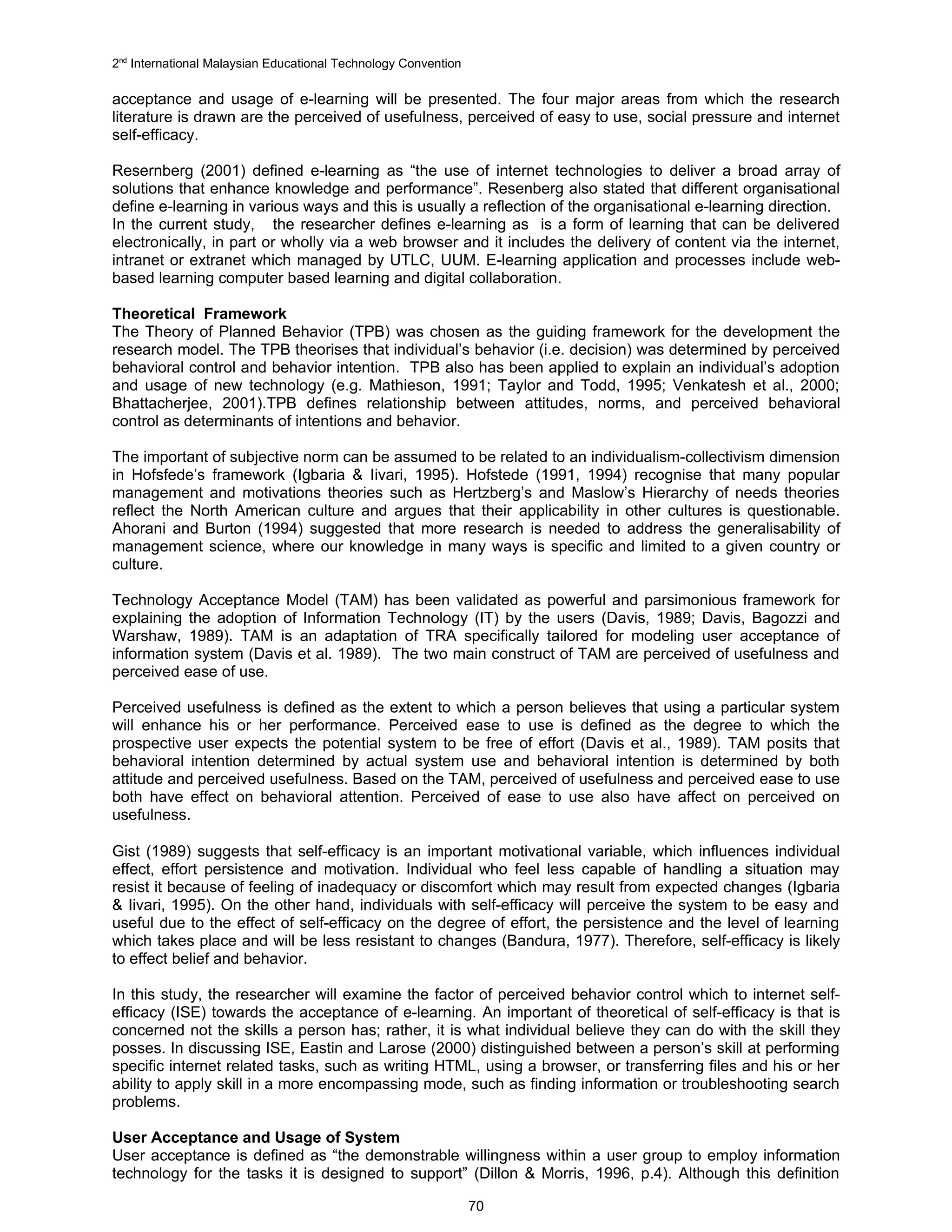

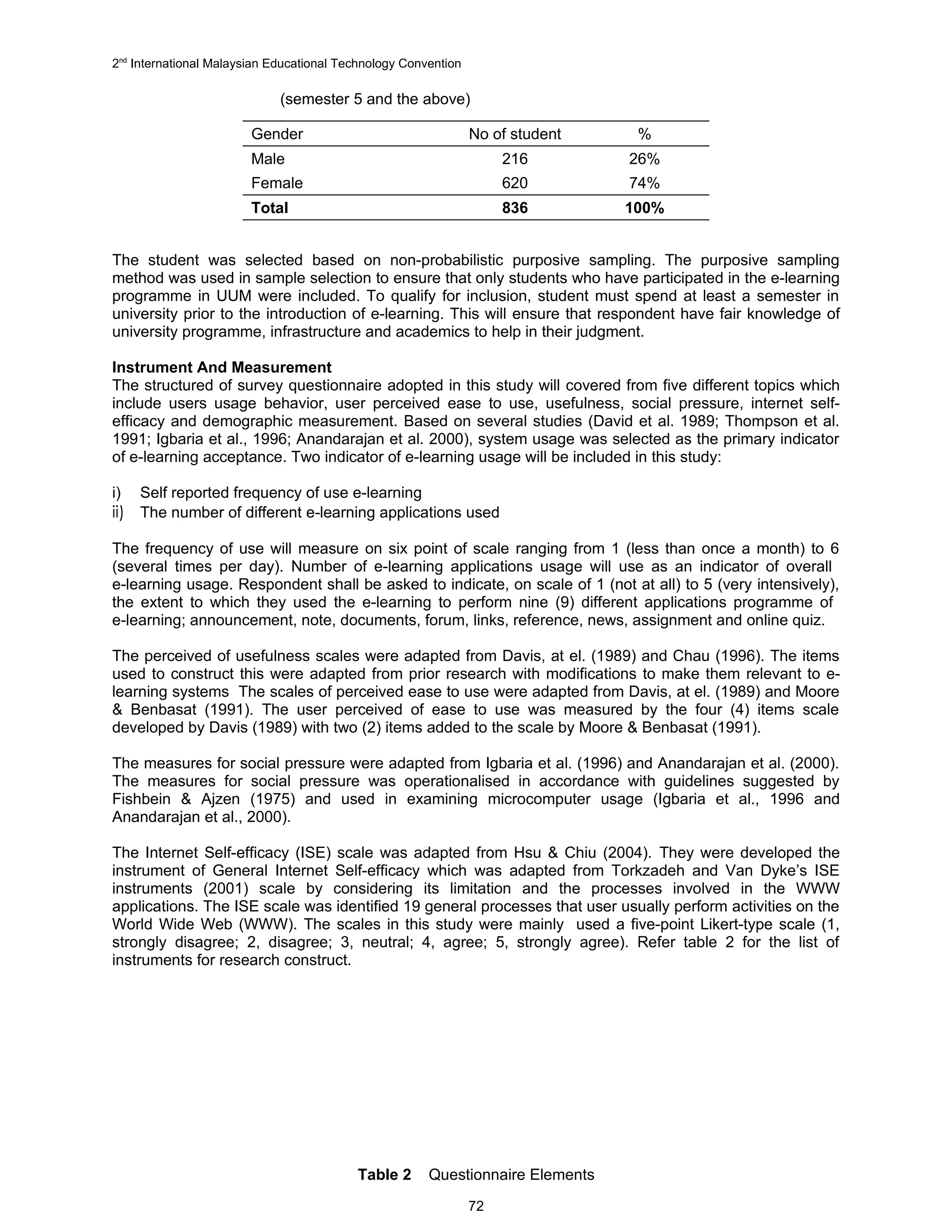


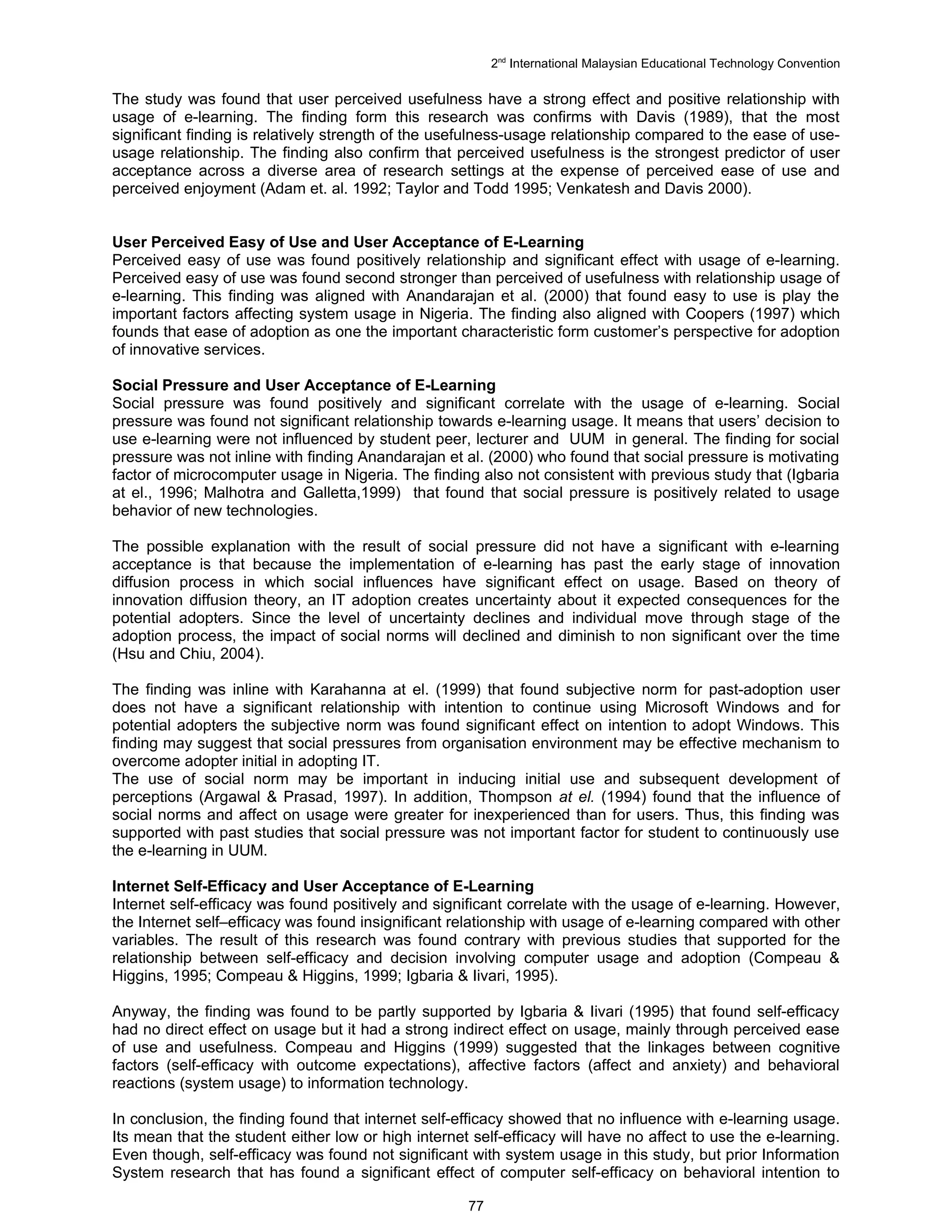
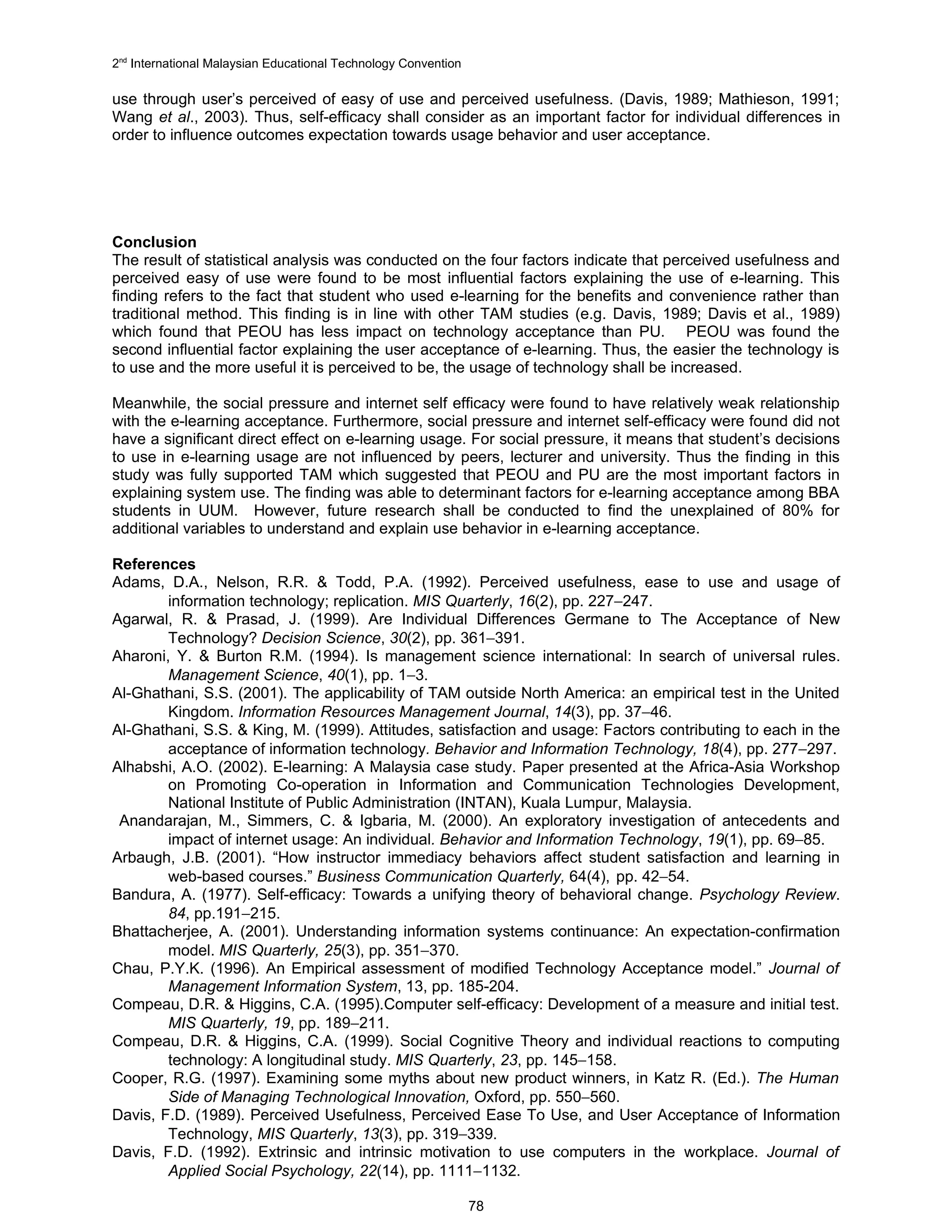


This document summarizes a study that investigated factors affecting acceptance of e-learning among students at Universiti Utara Malaysia (UUM). The study tested a model combining the Technology Acceptance Model (TAM) with variables from the Theory of Planned Behavior and Social Cognitive Theory. It found that perceived usefulness and perceived ease of use positively influenced e-learning usage, but social pressure and internet self-efficacy did not. The implications are that universities should focus on developing useful e-learning content to encourage student adoption. A survey of 256 business students found that most used e-learning a few times a week, indicating a moderate overall usage level.


